
Experts Matter. Find Yours.
Connect for media, speaking, professional opportunities & more.

Return to Office Mandates: Top 3 Challenges for Employers and Employees
Full time return-to-office (RTO) mandates – most recently from JPMorgan Chase, Amazon and now the U.S. federal government – have made headlines across the country and caused consternation among remote and hybrid employees. Whether one is – or is not – a supporter of remote and hybrid work, the challenges that arise with RTO and with remote/hybrid arrangements are important to consider from both sides – employers and employees. Baylor University management expert Sara Jansen Perry, Ph.D., who studies employee stress and well-being, including the role of remote/hybrid work and leadership, said working from home has existed in some form for decades, and research suggests it will continue to be an option for many workers and organizations. "We know many employees value remote work so much as a benefit that they will choose jobs based on whether it is an option,” Perry said. “Fortunately, we have seen many benefits of remote work as well, including employee productivity, cost savings, enhanced work-life balance and well-being, to name a few. Even if employees return to the office a few days a week, these benefits can still be realized, including longer term organizational benefits in terms of retention and applicant attraction. However, if an organization is set on returning to office full time, there are some challenges they should consider and proactively address.” Perry highlights 3 key challenges about Return to Office mandates from the perspectives of both employers and employees, applying foundational topics in organizational psychology, among them leadership, trust, culture, performance management and retention. Those three key challenges are a must read and part of the entire article attached below: Are you a journalist looking to know more? The let us help. Sara Jansen Perry, Ph.D., The Ben Williams Professor of Management in the Hankamer School of Business at Baylor University, is a nationally recognized researcher on employee stress and well-being, including the role of remote/hybrid work and leadership. Sara is available to speak with media about the recent Return to Work announcement for the federal bureaucracy. Simply click on her icon now to arrange an interview today.


Trump, Trade and Tariffs What to Expect, Will They Work and Who Benefits?
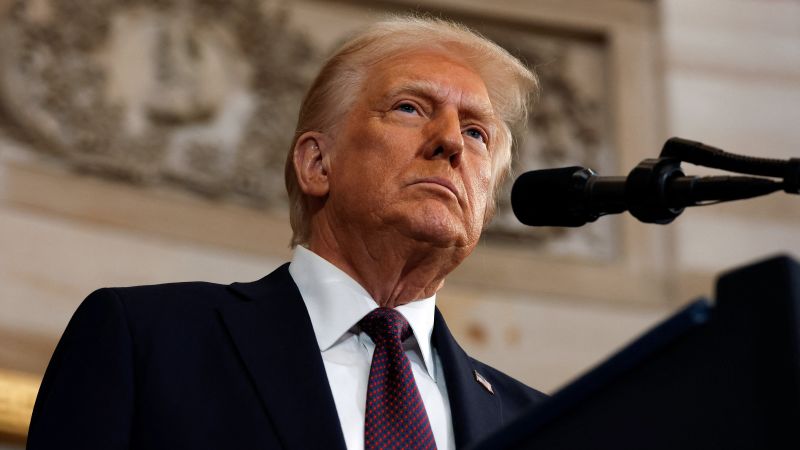
The threat of 25 % tariffs on Canada and Mexico had newsrooms buzzing, politicians scrambling and economists calculating who wins and who loses when trade wars break out among usually amicable neighbors. Factor in Greenland and China - and the story went global. It was a topic that headlined the news as many have watched and waited since the election for President Trump's first days in office to see what the country can expect with incoming policy changes. President Donald Trump said in an Oval Office signing ceremony Monday evening that his administration will impose 25% tariffs on Mexico and Canada on February 1, an extraordinary change in North American trade policy that could raise prices for American consumers. Trump still outlined his broader trade policy for his second term in an executive action Monday. But that action — described by sources as a “placeholder” — doesn’t institute new global tariffs that Trump promised on Day One. As a candidate, Trump proposed sweeping and across-the-board tariffs: up to 20% on imports from all countries, with a 25% tax on goods from Mexico and Canada, plus a punishing 60% levy on goods from China. He also pledged to use tariffs as a negotiating tool on other countries, including, for example, Denmark — putting pressure on the European nation to give control of Greenland to the United States. Asked Monday at an Oval Office signing ceremony about tariffs on China, Trump noted extensive tariffs he imposed during his first administration were still in effect after former President Joe Biden largely left them in place. And on universal tariffs, Trump punted, saying, “We may, but we’re not ready for that just yet.” The executive action signed Monday directed the secretaries of Commerce and Treasury and the United States Trade Representative to investigate the causes of America’s trade deficits with foreign nations, to determine how to build an “External Revenue Service” to collect tariffs, to identify unfair trade practices and to review existing trade agreements for potential improvements. It also directs the government agencies to analyze how the US-Mexico-Canada trade agreement (the USMCA) signed by Trump in his first term is affecting American workers and businesses — and whether America should remain in the free trade agreement. January 21 - CNN As business and political leaders in many countries, especially North America wait for what's ahead, there are questions to be asked: What industries will be targeted? Will tariffs cause higher prices for consumers and increased inflation? Who wins if an all-out trade war happens? How will interwoven sectors like the auto industry and agriculture be impacted? If you're a journalist covering this ongoing story - then let us help. William J. Luther, Ph.D., is an associate professor of economics at Florida Atlantic University, director of the American Institute for Economic Research’s Sound Money Project, and an adjunct scholar with the Cato Institute’s Center for Monetary and Financial Alternatives William is available to speak with media. Simply click on his icon now to arrange an interview today.


Researchers Seek Understanding of Early Life on Earth Following Chilean Expedition
In a discovery that may further our understanding of the early evolution of life on Earth, a research team, including associate professor Andrew Palmer and master’s student Caitlyn Hubric, identified Chile’s deepest and most northern cold seeps—openings in the ocean floor that emit gases and fluids— about 100 miles off the Chilean coast and thousands of feet below the surface. This most terrestrial of discoveries may also yield insights that could benefit future space exploration, Palmer said. Palmer, who runs the astrobiology and chemical ecology lab at Florida Tech, and Hubric, who has studied with him for the last three years, represented the university on Schmidt Ocean Institute’s (SOI) expedition through the Atacama Trench. The trench is a nearly 5-mile-deep oceanic trench in the eastern Pacific Ocean that has remained at the same latitude for the last 150 million years, suggesting an extremely stable and potentially ancient ecosystem. The trench’s seeps, found at a depth of 2,836 meters (9,304 feet), provide chemical energy for deep sea animals living without sunlight, according to SOI. Seeps like this one can help astrobiologists understand how life developed on Earth and how those survival strategies and chemical conditions might sustain life on other planets. Palmer and Hubric were members of the expedition’s microbiology team and were specifically searching for biosignatures. That meant looking out for novel microbes and chemical signatures, like proteins or carbohydrates, which may have existed in the region for millions of years. The benefits of their research extend beyond life on Earth. They could also shape future space exploration. A big part of why they’re investigating water ecosystems is because of the popularity around Saturn’s moon Enceladus and Jupiter’s Europa, Hubric said. She said it’s not a perfect analog, but it’s close enough that they can look for patterns in how life’s chemical processes might operate at these sites. “We hope that some of the questions we answer here find will help us in future endeavors when we do finally go explore the solar system,” Hubric said. Back on campus after the expedition, which ran from May 24 to June 6, they’ve started working to solve those questions by both identifying molecules that guide the search for life and by understanding the limitations of the instruments that can detect metabolites, or early signatures of life, Palmer said. “If [the instruments] can’t successfully identify traces of life on Earth, where we know there’s lots of life, how are they going to be successful in a place where it’s less likely than a needle in a haystack?” Palmer said. “It’s the bigger question of, what do we need to do in order to be successful in the search for life?” For Palmer and Hubric, research has only just begun. They’ll test water and sediment samples and the filtrate that they’ll remove from their water filters and investigate for microbes of interest. Searching for novel metabolisms will be an even more extensive process, Palmer said. “It’s weird doing something where you won’t be able to see the results for weeks or months,” Palmer said. “This is just the beginning.” Looking to know more about the Schmidt Ocean Institute’s (SOI) expedition through the Atacama Trench and Dr. Palmer's research? Then let us help. Dr. Andrew Palmer is an associate professor of biological sciences at Florida Tech and a go-to expert in the field of Martian farming. He is available to speak with media regarding this and related topics. Simply click on his icon now to arrange an interview.


Astrobiologist Manasvi Lingam, assistant professor of aerospace, physics and space sciences at Florida Tech, authored a new astrobiology textbook to serve as a resource for the rapidly growing multidisciplinary field. “From Stars to Life: A Quantitative Approach to Astrobiology,” published by Cambridge University Press, is primarily geared toward upper-level undergraduate and graduate students studying astrobiology, Lingam says. Co-authored by astrophysicist Amedeo Balbi (University of Rome), the book’s 15 chapters cover topics from the Big Bang theory to planetary habitability to the future of humankind. The book also includes practice problems that involve modern developments like GenerativeAI (e.g., ChatGPT). Lingam explained how he came up with the new textbook and why it can help shape astrobiology programs like Florida Tech’s. What inspired this textbook? Manasvi Lingam: [Florida Tech] was the first university in the whole world to start an undergraduate astrobiology major. We have a strong connection to the field. But it turns out, every time I teach the subject, I don’t have a textbook to use. I have my first book, which is “Life in the Cosmos,” but it’s 1,100 pages. It’s for graduate students. It’s not going to work for them. Every time I was trying to cobble together resources from different places. My co-author has the same problem except that he’s been teaching [astrobiology] for even longer, for 20 years. He doesn’t have a textbook either. There’s this old saying in English: if you want something done right, do it yourself. We decided, well, might as well just try to write it ourselves. That’s how it came to be. How does this textbook bridge the gap between introductory readings and graduate-level material? ML: Right now, there’s pretty much only one class of textbooks for astrobiology, and those are written for freshman- or sophomore-level undergraduates. There’s this emphasis on a broad overview but at an extremely qualitative level and sometimes offering somewhat weak explanations for various specific phenomena, such as, “Why did Mars lose its atmosphere? It just got eroded over time.” These kinds of limitations. Graduate literature is very specialized, oriented towards whatever subfield one is studying in astrobiology. You can have a whole book on the origin of life. You can have a whole book on just Mars. You can have a whole book on Titan and so on. The aforementioned introductory textbooks that exist are very broad, but they don’t really offer a tool to actually get started doing research in the more specialized field. There was this vital need to bridge the gap. That’s what this book is meant to do. How did you decide what content to include and what not to include? ML: This field begins almost with the Big Bang – the start of the universe – which is when the first elements were formed, including elements that are widespread in life like hydrogen. This tale begins almost with the beginning of the universe. It is a tale that is still ongoing and is going to unfold for trillions of years into the future. But, there was so much material to include in principle. We had to be quite selective about what topics to include. There are a number of courses that are taught around the world on this topic. We looked at dozens of them to find the common core within all of them, and then expanded on that core. That’s what constitutes our table of contents. While writing the textbook, how did you grow as a researcher and an educator? ML: There’s this implicit understanding in academia that if you can write something down clearly, and if you can articulate something clearly, that’s when you can really say you understand it. Often you can’t articulate what you need to say coherently and succinctly if it’s something very big. That’s what, of course, astrobiology is. In the process of writing the book as an educator, I think I was really able to see how various domains linked to each other. For instance, modulations of, say, the Earth’s climate that were driven not just by changes on Earth (including life itself!), but also by changes in the sun, by changes in the orbits of other solar system planets, but also phenomena that were taking place hundreds of light years away in the galaxy. You really see that everything is connected – there are hidden links to each other. I think that helped me discover the magic of the universe, so to speak, even more. From a research standpoint, there were some areas that I have not worked in a lot, but by writing this book, I’ve gotten a better understanding of those areas, like, say, Mars, and also certain microbiological and astrophysical aspects as well. I think that has provided new ideas that I hope to explore in the future. What do you want readers to learn throughout the book, and what should they walk away with? ML: What we want to do is build a holistic integrated understanding of different phenomena pertaining to life in the universe, but at a quantitative level, and still retain breadth without sacrificing depth in the process. It won’t necessarily make students ready for research because it’s still primarily an undergrad textbook, but it will give them a comprehensive understanding of how various processes are intertwined with each other. We want people to see the big picture without missing out on the detail, and to appreciate the beauty of life, Earth, the solar system, the Milky Way and the universe. Lingam plans to start teaching from this textbook in Spring 2025. The textbook is available for purchase on Amazon. Looking to know more about Astrobiology and the work Manasvi Lingam is doing at Florida Tech? Then let us help. Astrobiologist Manasvi Lingam, assistant professor of aerospace, physics and space sciences at Florida Tech and author is available to speak with media regarding this and related topics. Simply click on his icon now to arrange an interview.


Looking Back on the January 6th Insurrection
Dr. Meena Bose appeared on Canada’s Global News on January 6 to discuss the fourth anniversary of the Capitol Hill attack in Washington, where supporters of Donald Trump stormed the historic building in an attempt to overturn Joe Biden’s election win. Dr. Bose is a Hofstra University professor of political science, executive dean of the Public Policy and Public Service program, and director of the Kalikow Center for the Study of the American Presidency.


Secretary Buttigeg makes one of his final DOT stops at CMU's Safety 21
U.S. Secretary of Transportation Pete Buttigieg visited Carnegie Mellon University in one of his final stops as Transportation Secretary. Raj Rajkumar, director of Safety21 and George Westinghouse Professor in the Department of Electrical and Computer Engineering, with Ph.D. candidates Nishad Sahu and Gregory Su, demonstrated research on the safe navigation of autonomous driving systems in designated work zones, leveraging high-definition mapping, computer perception and vehicle connectivity. “The sophistication of the safety work that’s going on goes well beyond any commercially available automated or advanced driver assistance system is really inspiring,” Buttigieg said. “We’ve got to make sure it develops the right way, we’ve got to be cautious about how it’s deployed, but you can tell a lot of thought and, of course, a lot of incredibly sophisticated research is going into that.”


Two recent incidents highlight concerns about AI misuse - a man used ChatGPT to plan an attack in Las Vegas, and AI video tools were exploited to create harmful content. These events sparked debate about regulating AI and holding developers accountable for potential harm caused by their technology. Carnegie Mellon University professor Vincent Conitzer explained that “our understanding of generative AI is still limited" and that we can't fully explain its success, predict its outputs, or ensure its safety with current methods.


More than half of U.S. states allow the sale of raw milk directly from farms to consumers, a number that would likely increase if Robert F. Kennedy Jr. – a raw milk advocate – is confirmed to lead the Department of Health and Human Services (DHHS). Kali Kniel, a professor of microbial food safety at the University of Delaware, can discuss the dangers and potential benefits of drinking raw milk. Some have celebrated the legalization of raw milk around the country, claiming it tastes better and has some nutritional benefits. Meanwhile, the U.S. Food and Drug Administration, one of the DHHS agencies Kennedy would lead, cautions against drinking raw milk, which comes directly from cows, sheep or goats and has been banned from being sold across state lines since the 1980s. Concerns regarding raw milk have been elevated as a deadly strain of bird flu is infecting dairy farms around the country. In the following Q&A, Kniel talks about the pathogens that may be present in raw milk, ways to communicate food safety to the public and other topics. Milk and other dairy products that sit on shelves at the grocery store are pasteurized. What does this process involve and why is it important for dairy products? Pasteurization of milk is a process of heating milk and passing it between heated stainless steel plates until it reaches 161 degrees Fahrenheit. It is held at that temperature for around 15 seconds before it is quickly cooled to 39 degrees Fahrenheit. This process is intended to kill the pathogenic bacteria that could make a person sick. How does this process affect milk’s quality and nutritional value? Scientific studies have shown that pasteurization does not significantly change the nutritional value of milk. Unpasteurized milk may have more vitamin C, which does not survive the pasteurization process, but milk is not considered a good source of vitamin C, as it contains less than 10% of the Recommended Dietary Allowance (RDA), the average amount of nutrients it takes to meet a healthy person’s needs. There are no beneficial bacteria in raw milk. Milk (pasteurized or raw) is not a good source of probiotic or potentially beneficial bacteria, so for that consumers should choose yogurt and other fermented dairy products as well as other fermented products. Scientific studies using animal models have shown no difference in how calcium in raw milk and pasteurized milk is absorbed by the human body. Popularity in drinking raw milk is increasing, despite the U.S. Food and Drug Administration advising that it’s not safe to drink. What are the health risks that come with drinking raw milk? Raw milk may contain pathogenic bacteria, including Campylobacter, Salmonella, pathogenic types of E. coli, Listeria and Brucella, as well as the protozoan parasite Cryptosporidium. These are all zoonotic microbes, which means they can be transmitted from animals to humans. Often the animal does not appear ill, so it is not possible to determine if an ill animal is shedding these pathogens in its feces that can contaminate milk. Microbial testing of the finished product and environmental monitoring programs may be helpful, but do not guarantee that the raw milk is absent of these pathogens. Milk can be contaminated with these pathogens from direct contamination with feces or from environmental conditions. Cross-contamination from dairy workers can also happen, even when people are trying their best to reduce the risk of cross-contamination. The likelihood of a disease outbreak occurring associated with a person consuming raw milk is relatively high given that others may also be exposed. Unpasteurized milk will have a relatively short shelf life and may not be available for testing. Following good hygiene practices on the farm and during milking such as biosecurity around the farm, appropriately sanitizing equipment and monitoring the health of animals can reduce the chance of milk contamination, but not eliminate it. There have been numerous outbreaks of illness associated with raw milk as well as cheese made from raw milk. Persons most at risk of illness associated with drinking raw milk include children, in particular 5 years of age and under, individuals aged 65 and over, pregnant women and immunocompromised individuals. It should be noted that all outbreaks of illness associated with raw milk have included individuals under 19 years of age. Children may be most vulnerable, as they cannot voice an opinion on consumption and risk of raw milk if it is in their household. The Center for Disease Control and Prevention (CDC) collects data on foodborne disease outbreaks voluntarily reported by state, local or territorial health departments. According to the CDC from 2013 to 2018 there were 75 outbreaks of illness linked to raw milk consumption. These outbreaks include 675 illnesses and 98 hospitalizations. Most of these illnesses were caused by Campylobacter, shiga-toxigenic E. coli, or Salmonella. An increase in outbreaks has been correlated with changes in the availability of raw milk. For example, between 2009 and 2023, there were 25 documented outbreaks in the state of Utah, which has 16 raw milk retailers licensed by the Utah Department of Agriculture and Food. In all of these outbreaks, the raw milk was contaminated with the bacteria Campylobacter, which typically causes gastroenteritis symptoms like diarrhea and nausea, but may also cause chronic illness, including Guillain-Barré syndrome which can cause paralysis. How likely are these illnesses to happen from drinking raw milk? It is difficult to say. Foodborne illness is often underreported, depending on how severe people’s symptoms are. According to one study, only about 3.2% of the U.S. population drinks raw milk, while about 1.6% eats cheese made from raw milk. But compared with consumers of pasteurized dairy products, they are 840 times more likely to experience an illness and 45 times more likely to be hospitalized. The authors of this work used the CDC’s national reporting system to analyze data from 2009 to 2014. Despite health risks, why do some people still drink raw milk? Some people feel a nostalgic connection to raw milk, and others may feel that foods that are not treated with heat retain certain nutrients and enzymatic activity. I am not aware of any peer-reviewed rigorous scientific studies that indicate the nutritional benefits of consuming raw milk over time, given the risks of potential for illness, combined with a well balanced diet full of healthful food choices. It remains that raw milk is particularly risky for children to consume, as children can get sick from consuming fewer bacterial cells compared to adults. More than 900 cases of highly pathogenic avian influenza — the disease commonly known as bird flu — have been detected in dairy cattle across 16 states, and at least 40 people have been infected with the disease from close contact with dairy cows. Raw milk is being tested for the virus. With raw milk gaining interest among consumers, what are the possible consequences? Does it elevate the risk of bird flu spreading further to people? There remain clear risks of transmission of pathogenic bacteria through consumption of raw milk, and now with the potential for contamination of raw milk with avian influenza, it is even more important that consumers protect themselves by drinking pasteurized milk. The people most at risk right now are those involved with the milking process and in the handling of dairy cattle. So it is important that those individuals be aware of the risks and take appropriate precautions, including hand washing and wearing appropriate personal protective equipment like protective clothing, gloves, face shields and eye protection. As of December, the U.S. Department of Agriculture is requiring 13 states to share raw milk samples so the agency can test for bird flu viruses. How could this testing better help us understand the virus? I think it is very smart that USDA is leading the National Milk Testing Strategy, which will help us understand the extent of infected herds. Surveillance of microorganisms is an important way to assess risk so we can develop appropriate strategies to reduce and control these risks.


Expert comment available - the Government's announcement for the AI Opportunities Action Plan
Expert comment is available on the the Government's announcement for the AI Opportunities Action Plan in which it is aims to roll out AI across the UK. In a speech setting out the government's plans to use AI across the UK to boost growth and deliver services more efficiently, the Prime Minister said the government had a responsibility to make AI "work for working people". The government claims that the AI Opportunities Action Plan is backed by leading tech firms, some of which have committed £14bn towards various projects, creating 13,250 jobs. It includes plans for growth zones where development will be focused, and the technology will be used to help tackle issues such as potholes. Expert comment: "The plan is a necessary step in the right direction with appropriate investment. It should be coupled with a major training programme at business and public levels to bridge the skill gap and develop essential capabilities. "It is important to specify the role that the higher education sector will play in the delivery of such a plan particularly with regards to innovation and knowledge transfer partnerships. "The government used stated that the technology will be used to help tackle issues such as potholes, however AI should be used not only in the detection of potholes, but also in their prediction. Using predictive analytics would significantly reduce the number of cameras that must be deployed to monitor road surface conditions up and down the country." Professor Abdul Hamid Sadka, Professor of Visual Media Technologies, Director, The Sir Peter Rigby Digital Futures Institute, Aston University For further details contact Nicola Jones, Head of Press & Communications (interim) on (+44) 7825 342091 or email: n.jones6@aston.ac.uk


Image Credit: Petrovich9/Getty Images Plus Although time is a set duration of hours, minutes and seconds, the perception of time can vary dramatically based on the individual and especially during times of high stress and uncertainty such as disasters, recessions and most recently the COVID-19 lockdown. For example, ask anyone when a specific event occurred during the pandemic and they are likely to respond with, “That happened three months ago. Or did that happen three years ago?” While there have been studies on the feeling that there is not enough time or experiencing time as moving too slowly, Baylor University sociologists Matthew Andersson, Ph.D., and Paul Froese, Ph.D., investigated this sense of multifaceted time perceptions during the pandemic and their effects on mental well-being. Their findings – using national Gallup data collected in spring 2021 in the middle of the pandemic – were published in the journal Time & Society. “We know from existing research that people often experience time in altered ways whenever disasters strike, and we wanted to see if that was true during the pandemic as well,” Andersson said. The Baylor researchers found that Americans during the pandemic generally reported some degree of feeling rushed while also perceiving multiple types of time distortion involving slowness, quickness and days and weeks blending together. This disorientation also was frequently reported alongside other pandemic-related stressors, including economic strain, working from home, homeschooling a child and severe household conflict. Together, they complicated how people perceive time by disrupting routines and creating experiences of trauma, adding to the decline in mental well-being and an increase in feelings of loneliness. Time disorientation and mental well-being The top three findings of the study all demonstrate the connection between altered time perception and the mental states of an individual. “If time does not seem to be moving ‘normally,’ it is generally related to lower levels of mental well-being, such as increased depressive, anxiety symptoms or a lessened sense of control,” Andersson said. “We think this is because people tend to feel grounded or calm when they feel like time is moving as it should.” Secondly, the researchers found that individuals can often experience these time disorientations in multiple and contradictory ways, which can be related to even lower well-being. “Feeling rushed and feeling that time is slow are kind of opposites, but they are both related to having this sense of multifaceted blending of time,” Froese said. “We can show very clearly how these new stresses that were brought on by the pandemic created heightened senses of disorientation in terms of time.” More importantly, they found these time disorientations were affected by social, familial, physical and work situations, which created lower levels of mental well-being. “Specific forms of stress we were seeing during the pandemic, such as financial hardship, homeschooling, working from home and severe household conflict, all had relationships to experiencing different kinds of time distortions,” said Andersson. This was more evident in younger people “because it [lockdown] probably upended their daily routines in a much more dramatic way than it would have in somebody who's retired,” said Froese. Experience of time The rushed pace of industrialized society existed before the COVID-19 pandemic, but the stressors associated with the pandemic added to the feelings of time being out of control. “Our approach to capturing experiences of time rests on the assumption that individuals relate to time in complex ways,” Froese said. “We found original evidence to suggest that experiences of quickness, being rushed, slowness and indistinct boundaries of days all coincide, and that these multiple disorientations each relate to diminished mental wellbeing, to objective work and family demands, and to widespread exposures to pandemic-related stressors.” The survey was conducted as part of the Baylor Religion Survey, one of the most extensive national surveys of American religious beliefs, values and behaviors that produces unique data concerning religion, health and community in America today. The 2021 data collection by Gallup contained a section devoted to how the pandemic affected Americans’ activities, including how the pandemic changed the emotional lives of Americans. Looking to know more? We can help. Dr. Paul Froese is a professor of sociology and a research fellow for the Institute for Studies of Religion. He has been teaching and researching at Baylor since 2002. Dr. Matthew Andersson’s research focuses on health inequality as it unfolds across the life course. Specifically, he researches educational and socioeconomic inequalities in mental and physical well-being as they relate to childhood, adolescent and adulthood factors. Both experts are available to speak with media about this important topic - simply click on either expert's icon to arrange an interview time today.

