Experts Matter. Find Yours.
Connect for media, speaking, professional opportunities & more.

Big shift coming to the EV industry
Already a pioneer in the industry, the University of Delaware has once again played a key role in taking electric vehicles to the next level. Researchers there helped bring about new automotive standards that will drive lower-cost charging and vehicle-to-grid (V2G) integration and standardize Tesla’s connector so that future U.S.-made EVs will have this technology on it. The two newest standards for electric cars, both approved this month by standards committees of SAE International (formerly the Society of Automotive Engineers), should bring EV drivers great joy, according to Willett Kempton, professor at the University of Delaware’s Center for Transportation Electrification on UD’s Science, Technology and Advanced Research (STAR) Campus. Center director Rodney McGee was chairman of the two SAE committees, while postdoctoral researcher Garrett Ejzak, Kempton and administrative assistant Becky Cox played key roles in the engineering, research and policy work undergirding the new EV standards. “These developments mark a big shift for the EV industry,” said Kempton, who is affiliated with research centers in both the College of Earth, Ocean and Environment and the College of Engineering at UD. “Drivers will gain access to more charging stations and lower-cost charging. They will have new options for using their EV to help fight climate change and even make money when plugged in. These changes are likely to spur even greater adoption of EVs for clean, affordable transportation.” The so-called “V2G standard” (SAE J3068) provides the missing link for widespread use of vehicle-to-grid (V2G) technology, which Kempton and his colleagues invented at UD more than two decades ago. “We’ve been doing V2G for 20 years here at the University of Delaware, wondering when the rest of the world would catch on,” Kempton said. “One key missing piece has been a complete standard for controlling and managing V2G, which now exists within SAE J3068.” V2G allows you to plug your EV into an electrical outlet and send power from the car battery back to your local energy utility, making a little income while helping the nation’s power grid. This is becoming increasingly more important as more renewable sources of energy come online. When the sun isn’t shining or the wind isn’t blowing, EV owners can plug in and “perform important energy-balancing services,” according to Kempton. The savings from V2G can add up. “Our V2G demonstrations show an EV can earn between $100 a year and $1,500 a year. The wide variation is due to different markets and to regulations in different utilities. It also depends on the EV’s capabilities,” Kempton explained. Current EVs need a substantial update or retrofit to be able to do V2G, while new EVs equipped with the signaling technology are expected to be available by 2025. This standard also will make it possible to use your EV as backup power for your house. As extreme weather increases with climate change, that’s a good energy reserve to have when the lights go out. It takes one-and-a-half kilowatts to power the average house, Kempton said. Your electric car can produce 80 kilowatts of power, enough to run a whole house and more. “So, your EV can both help fight climate change and keep your house going when extreme storms happen,” Kempton said. With SAE J3400 now approved, the connector system Tesla developed for EV charging will now be standardized and can be included on future EVs of any brand. The first non-Tesla cars with this technology, also known as the North American Standard Connector, are expected to hit the market in 2025. “This will eliminate Tesla’s monopoly on their charging stations, making them available for use by any new EV,” Kempton said. According to Statista, the U.S. had more than 53,000 public EV charging stations and over 138,000 public charging outlets in May 2023. Visit Kempton's profile and click on the contact button to arrange an interview.


Small island states forging climate legacy
Comprising nations that are often overshadowed by larger counterparts on the economic stage, the Alliance of Small Island States (AOSIS) has become a formidable presence in shaping the discourse around climate change. Despite their limited economic clout, the AOSIS group wields influence by virtue of their vulnerability to the frontlines of climate impacts, making them pioneers in advocating for climate justice. Now at the heart of global climate negotiations, the AOSIS group has successfully spearheaded the establishment of a breakthrough in climate justice: A dedicated fund geared towards assisting less developed nations in bolstering their adaptation and resilience efforts. Kalim Shah, associate professor of energy and environmental policy at the University of Delaware, can comment on AOSIS and its role at The United Nations Framework Convention on Climate Change (also known as UNFCCC). He makes the following points: The AOSIS group, which is the negotiating body for small island developing states (SIDS) in The United Nations Framework Convention on Climate Change (UNFCCC), has emerged over the last decade as a major force in the global negotiations (even though the group comprises of small island nations which are typically not significant economic powerhouses=). They continue to lead on a number of key components of the UNFCCC climate agreement and wield this power largely because small islands are on the frontlines of climate impacts like seal level rise and are among the first to be impacted, even as they hold "no responsibility" for global warming. Small island states have now successfully led the negotiations for and approval of acknowledgement of "loss and damage" and a specific new loss and damage fund. This fund is dedicated to helping less developed countries with their adaptation and resilience building needs. “Loss and damage” is a general term used in UN climate negotiations to refer to the consequences of climate change that go beyond what people can adapt to, or when options exist but a community doesn’t have the resources to access or utilize them. This could be a turning point for the Alliance of Small Island States, since over 70% of climate funds to date have been allocated or distributed to climate mitigation efforts and very little to the SIDS. Since SIDS do not account for massive amounts of Greenhouse gas emissions, this was of little real help to them. But now the global consensus is understanding that the 1.5 degrees threshold of the Paris Accord will be passed and more efforts on the adaptation side must be available for the most vulnerable, such as SIDS to cope with climate impacts that are inevitable. To set up an interview with Professor Shah, visit his profile and click on the "contact" button.


Expert Perspective: Augusta University professor gives annual economic outlook for the region
For the 16th year, Augusta University’s Cree-Walker Chair and Professor of Economics in the Hull College of Business Simon Medcalfe, PhD, has given his analysis of the Augusta area economy. The biggest thing on the minds of many remains the possibility of a recession and the overall inflation nationwide. Medcalfe thinks it probably won’t look a lot different in 2024 as it did in 2023. If anything, there may be less of a chance of a recession. “I think the chances of recession have probably slipped a little. I think there’s less chance of a recession,” said Medcalfe. “Inflation is certainly still a concern. It’s running at 3.2%, which sounds kind of low, but because of the amount of inflation, we’ve had prices about 20% higher than two years ago, and it’s still a concern and still eating into people’s wages.” He indicated, looking at Google Trends and what people are searching, inflation is still a pretty high concern. As for the Augusta region, Medcalfe pointed out that Columbia County continues to see a population increase and will likely have the largest population in the area by the end of the decade on current trends. As you would expect, as the population grows, so too does the number of businesses. Looking at the different sectors of employment in the region, he said things haven’t really changed. The only sectors that have seen more than a 2% change in the share of total employment over the last 20 years are education and health services. Medcalfe also pointed out that the manufacturing industry has seen a sizable increase since 2014. He said it was the same time the Starbucks manufacturing facility arrived in South Augusta but didn’t say that was the exact reason for the increase, just a point of reference for the manufacturing industry increased ever since. “Manufacturing has showed a large increase over the last ten years or so, past post-COVID as well. So now manufacturing employment in the local area is at the highest it’s been since I’ve been here,” Medcafe said. Some research that Hull College is undertaking is the intersection of health care and business. He said it’s important to the economy in our region since Richmond, McDuffie and Burke counties all rank towards the bottom of county health rankings in Georgia. “One of the things we are looking at here in the business school and in the new School of Public Health is what are the factors that influence the population’s health but aren’t clinical? There’s a lot of things that impact people’s health. There’s socio-economic status, there’s the environment they live in, there’s education, there’s health behavior and all this kind of stuff. “About 25% of the research out of Hull College is now looking at health maps because it’s important. Not just the health of the population, but it then impacts the economy because we have a labor shortage and how much of that labor shortage is actually because some people can’t work,” said Medcalfe. Looking to know more? We can help. Simon Medcalfe, PhD, is a highly regarded economics expert in the Hull College of Business at Augusta University. Medcalfe is an expert that can talk on the national economy, as well as Georgia. He is available to speak with media – simply click on his icon now to arrange an interview today.


Is South Florida soon to be the next Las Vegas? Our expert can tell you if it's a good a bet or not?
There's a lot of buzz in Florida around gambling right now. Legal sports betting, live roulette and live craps might soon become a reality in the Sunshine State, adding to the economic bonanza and possible social consequences that comes with allowing these activities to expand. Expectations are high, and it's an idea getting a lot of coverage. In less than a month, in-person sports betting, craps and roulette will, presumably, begin at all South Florida casinos and elsewhere in the state, though that anticipated launch may hinge on a favorable ruling from the Florida Supreme Court. The launch is expected to drive tourists and businesses to South Florida and elsewhere in the state, create jobs, and bring in billions of dollars in revenue. Though investors and hotel owners might not want to push all their chips in just yet. There are serious legal issues that still need to be overcome as well as opposition from the Seminole Tribe and the anti-casino group No Casino. The idea though, has media contacting local experts like Florida Atlantic's Peter Ricci for perspective and insight. Peter Ricci, a Florida Atlantic University professor who specializes in hospitality and tourism industry trends, thinks that South Florida will see an uptick heading into the Super Bowl, but most of what he hears from local businesses and hospitality employees is uncertainty rather than excitement. “What I’ve heard is questions about ‘when is it starting?'” he said. ” … ‘Are they hiring for blackjack dealers? What does this mean? Will they expand the hotel?’ All these questions but nothing specifically pro or con about actual sports betting itself.” November 13 - Sun Sentinel Whether Florida can become the next Las Vegas is up to the courts, but if you are a reporter following this ongoing story - we're here to help. Peter Ricci is the Director of the Hospitality and Tourism Management program in Florida Atlantic University’s College of Business. He is a hospitality industry veteran with more than 20 years of managerial experience in segments including food service, lodging, incentive travel and destination marketing. Peter is available to speak with the media about tourism in Florida and the potential for gambling. Simply click on his icon to arrange an interview.



Public health workers faced unprecedented threats during the pandemic
A new study led by Jennifer Horney, founder of the University of Delaware's Epidemiology program, shows that threats to public health workers nearly doubled after the COVID-19 vaccine was released in August 2021. The results, recently published in an open-access commentary in Public Health in Practice, demonstrate a strong need for expanded legal protections for all frontline workers. They also illustrate a need to boost the resilience of the public health workforce, which can be achieved through training, coping, protective services and media management. While public health workers have always received threats, including during the SARS and Zika outbreaks, the COVID-19 pandemic threats were different. “These threats were more personal in nature,” said Horney, a professor in UD's College of Health Sciences. “Due to the proliferation of social media and the politicization of the pandemic, for the first time, public health leaders were finding protesters on their doorsteps or were being doxed.” Horney and her team surveyed staff at state and local health departments in 23 states – most of them epidemiology or communicable disease staff. The initial online survey found that 25% of respondents said someone in their public health agency had received personal threats. That percentage practically doubled to 41% in a follow-up survey. Of those, respondents said nearly all the personal threats were lodged by members of the public. Almost 40% reported receiving political threats. The threats reported by public health workers who responded to the survey ranged from death threats to blame for COVID-19 deaths due to incompetence. Horney is available for interviews to discuss the study and other topics related to the public health response to COVID-19 and the impacts of natural disasters on public health. Click on her profile below to contact Horney and the UD media relations team.


Unveiling the Emotional and Psychological Rewards of Gift-Giving
During the holiday season, the spirit of giving resonates with joy and warmth, extending beyond mere material exchange. Philip Gable, a professor of psychological and brain sciences at the University of Delaware, asserts that there's a science behind gift-giving, encompassing emotional nuances applicable to charitable work. Gable emphasizes that the significance of a gift contributes to the happiness derived from giving, taking various forms, from a personal investment of time to a budget-conscious monetary contribution. It transcends mere obligation, aiming to create a resonant impact. The professor has expertise in emotion and motivational science and can discuss this nuance, especially as we enter the winter holiday season. He can be reached by clicking his "View Profile" button.


Reinventing the laser diode: free public lecture by Professor Richard Hogg
Professor Richard Hogg joined Aston University in spring 2023 His inaugural lecture is about laser diodes, the tiny components that are a vital part of everyday life The free event will take place on Tuesday 28 November. The latest inaugural lecture at Aston University will explore the laser diode and what’s in store for it in the future. Professor Richard Hogg will explain how his future research might make laser diodes do some of the things that they currently can’t do. The laser diode turned 61 years old this month and the tiny components are a critical part of everyday life. Professor Hogg said: “They are now at the heart of the continuous transformation of society. “They transmit data to allow instantaneous, ubiquitous communication and data access. “They allow light to be used for cutting and welding, for sensing and imaging, for displays and illumination, and data storage. “And in the guise of a laser pointer they can even be used to entertain your cat!” He will discuss different classes of laser diode and their operation and applications. Professor Hogg joined Aston University in spring 2023 and is based at Aston Institute of Photonic Technologies (AIPT). It is one of the world’s leading photonics research centres and its scientific achievements range from medical lasers and bio-sensing for healthcare, to the high-speed optical communications technology that underpins the internet and the digital economy. The professor is also chief technology officer at III-V Epi, which provides compound semiconductor wafer foundry services. The free event will take place on the University campus at Conference Aston, on Tuesday 28 November from 6pm to 8pm and will be followed by a drinks reception. It can also be viewed online. To sign up for a place in person visit https://www.eventbrite.co.uk/e/717822585677?aff=oddtdtcreator To sign up for a place online visit https://www.eventbrite.co.uk/e/717824260687?aff=oddtdtcreator

Georgia Southern University launches ‘Together We Soar’ Campaign
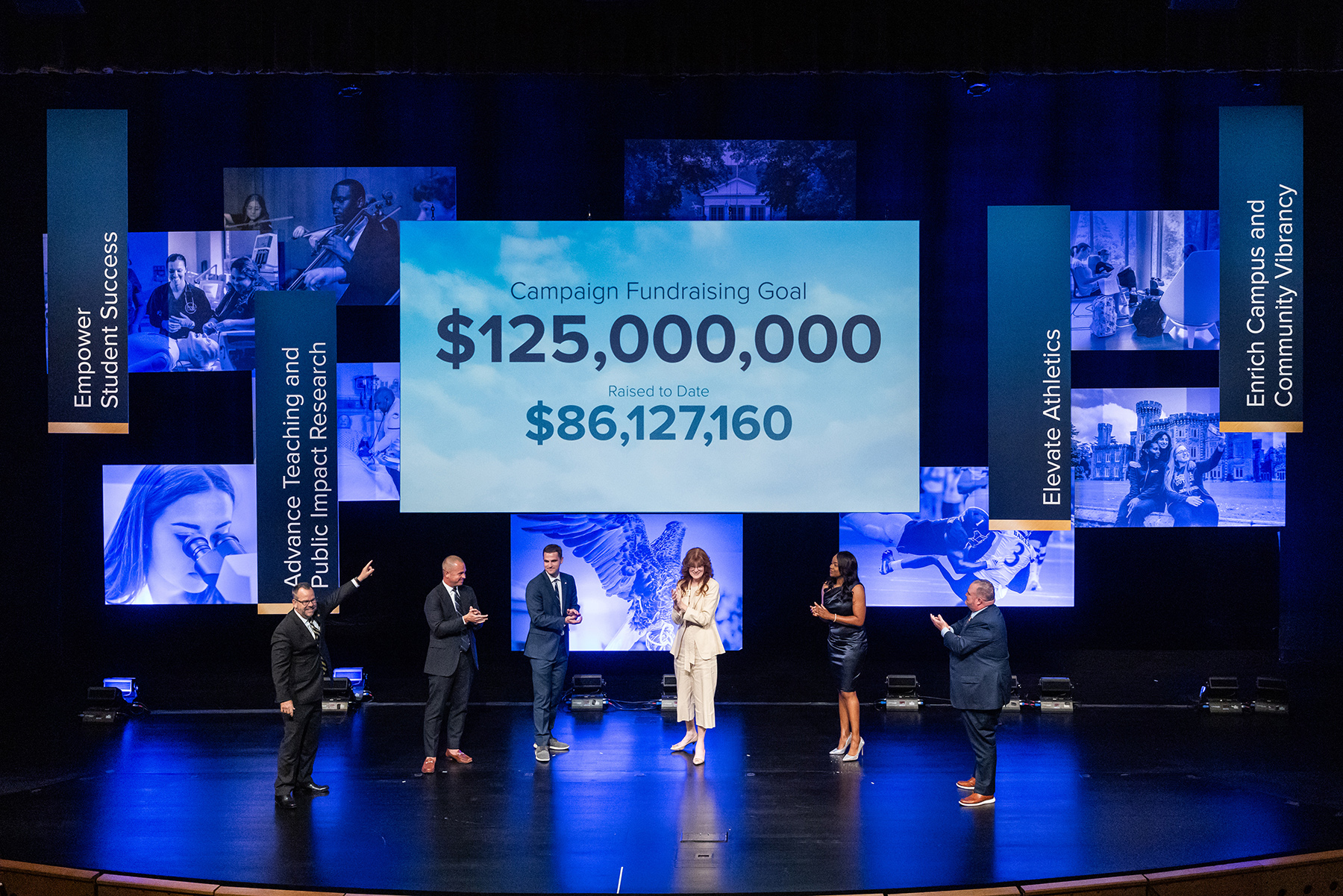
Georgia Southern University proudly announces the launch of its comprehensive campaign, “Together We Soar: The Campaign for Georgia Southern University.” This transformative initiative aims to elevate the University’s impact on students, faculty, research, athletics, and the communities it serves. Georgia Southern, renowned for its majestic campuses adorned with southern live oaks and towering pines, symbolizes not just American freedom but also the promise, achievement and boundless potential of its students. The University’s trajectory is on the rise, reaching for greater heights in education and community impact. Central to this momentum is the unwavering support from alumni, friends and the community. Publicly launched last Friday evening, Together We Soar: The Campaign for Georgia Southern University aims to raise $125 million by 2026. More than $86 million has already been secured. Dr. Kyle Marrero, President of Georgia Southern, expressed his gratitude and vision for the University. “Georgia Southern is on the move, in motion, and soaring to new heights. The ‘Together We Soar’ campaign—fueled by the generous support of our alumni, friends, and partners—will ensure our ability to drive innovation, develop talent, transform lives, and propel the economic development of a growing region.” (L-R) Georgia Southern President Kyle Marrero, Vice President for University Advancement Trip Addison, Deputy Athletics Director of Development Davis Hendrickson, Executive Director of Development Julie Gerbsch, Director of Alumni Relations Ava Edwards, and University Campaign Co-chair Leonard Bevill on stage at the Oct. 20 launch event for Together We Soar: The Campaign for Georgia Southern University. The campaign has identified four primary objectives: Empower Student Success: The campaign aims to stimulate learning by recruiting high-achieving students, increasing student access, and promoting inclusive excellence and career readiness. Advance Teaching and Public Impact Research: The focus is on meeting regional economic needs, increasing faculty expertise, and enhancing research capacity. Elevate Athletics: The campaign seeks to attract and retain elite student-athletes, provide top-notch facilities, and boost the Competitive Excellence Fund. Enrich Campuses and Community Vibrancy: The goal is to improve the communities surrounding the campuses and teach about local wildlife, among other initiatives. Campaign co-chairs Mike Sanders and Leonard Bevill shared their excitement for the campaign and what it will mean for Georgia Southern. “I could not be more excited about Georgia Southern and its possibilities. Opportunities abound for our University and the Together We Soar Campaign is the catalyst. It is time to do ‘more with more.’” - Mike Sanders “‘Together We Soar’ is spot on. From across campus to athletics and throughout our community, we’re perfectly aligned and equipped to launch to historic heights. I’m very blessed and excited to be involved.” Leonard Bevill The campaign also highlights the significant economic impact of Georgia Southern, with a regional economic contribution of $1.1 billion in fiscal year 2022. The University plays a critical role in the economic growth and transformation of Southeast Georgia. Marrero said Georgia Southern invites all its supporters, alumni and the community to join this transformative journey. With collective support, there’s no limit to how high Georgia Southern can soar. For more information or to contribute to the “Together We Soar” campaign, visit GeorgiaSouthern.edu/TogetherWeSoar.

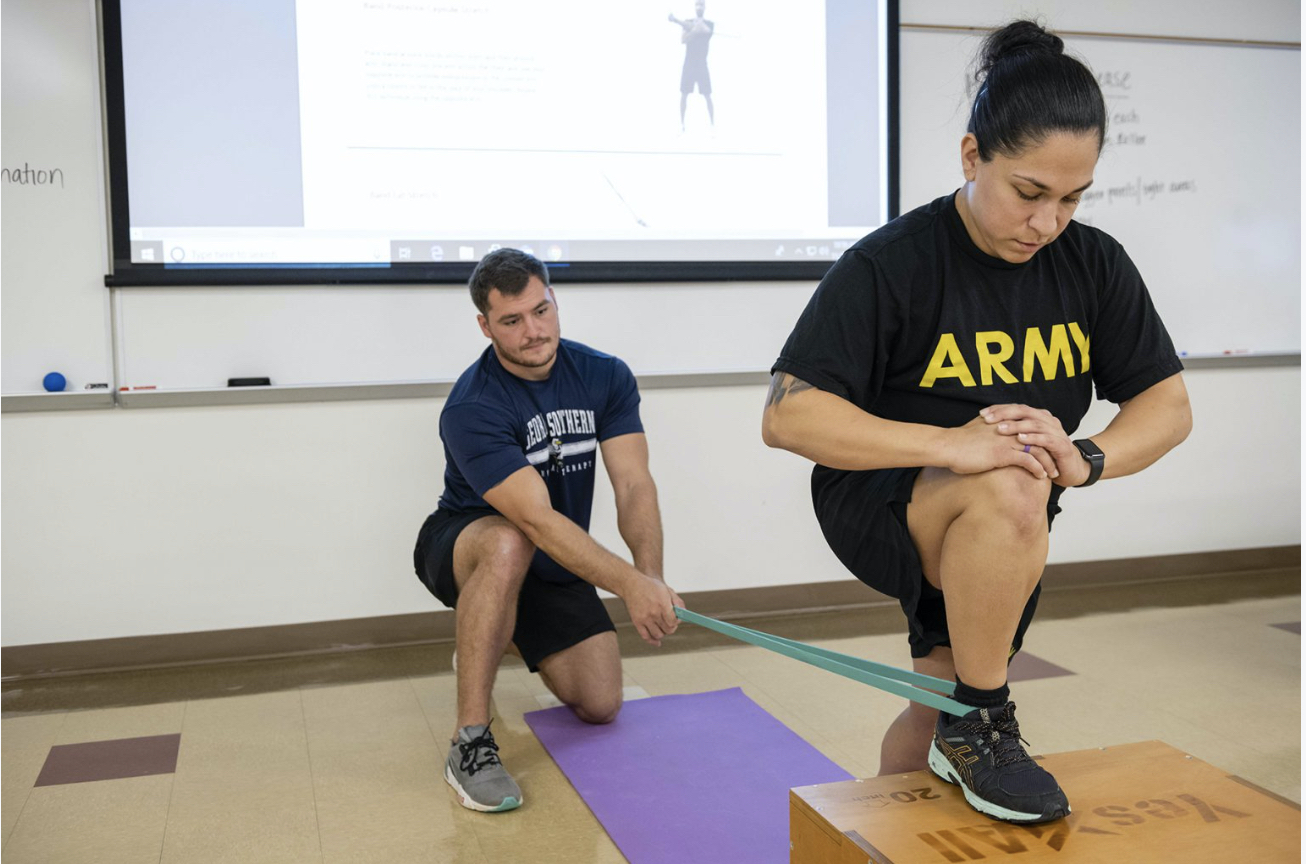
The Georgia Southern University Soldier Performance and Readiness (SPAR) program received a $1.5 million, two-year grant from the Department of Defense’s U.S. Army Medical Research and Development Command (USAMRDC). The grant will expand Georgia’s Southern research and programming capacity in injury prevention techniques that ensure force readiness for the Army. “Through this large-scale research study, Georgia Southern doctoral students have opportunities to be involved in the research process and work directly with soldiers,” said Nancy Henderson, Ph.D., assistant professor in the Doctor of Physical Therapy (DPT) program. “Additionally, the grant will fund graduate assistant positions in the Doctor of Physical Therapy program.” USAMRDC’s mission is to provide solutions to medical problems for American service members at home and abroad, as well as to the public at large. The scope of this effort and the priorities attached to specific projects are influenced by changes in military and civilian medical science and technology, operational requirements, military threat assessments and national defense strategies. Extramural research and development programs play a vital role in the fulfillment of the objectives established by the organization. Research and development funded through this are intended to benefit both military and civilian medical practices. “The grant investigates different physical training programs to identify those practices that best prevent non-combat injuries,” said Henderson. “Faculty on the research team will seek to advance the body of literature by determining the best educational models to educate soldiers on injury-prevention topics.” This is the first time that Georgia Southern will act as lead investigator on a collaborative research project with an Army research institute. However, SPAR has long been involved in multiple branches of research with community impact. “Georgia Southern has several initiatives underway to help improve the health, fitness and performance of military service members, law enforcement personnel and firefighting and rescue personnel,” said Joseph Kardouni, Ph.D., director of the Tactical Performance Group. “The Tactical Athlete Certificate (TAC) program is one of these initiatives that teaches service members exercise fundamentals to help mitigate training-related injuries. The funding coming through Medical Research and Development Command will improve evidence-based teaching methods and inform similar efforts to teach service members within this field. Leaders from health and human performance programs within the Army understand the importance of leveraging partnerships with academic institutions to work toward improving the quality of life, health and occupational performance of soldiers.” Faculty and students in the DPT program have educated soldiers on injury prevention topics since 2016 and this grant further provides students with the opportunity to assess effectiveness while learning how to improve educational methods with military service members. “This research is an important next step in delivering on the promise of the SPAR program and Georgia Southern’s close working relationship with Army research partners,” said Interim Vice President for Research and Economic Development Christopher Curtis, Ph.D. Curtis also noted that funding was made possible by the advocacy of U.S. Rep. Buddy Carter and the strong support of Georgia’s legislative delegation in Washington D.C. Interested in learning more or looking to talk with Nancy Henderson? Simply click on her icon now or Contact Georgia Southern's Director of Communications Jennifer Wise at jwise@georgiasouthern.edu to arrange an interview today.


Three strategies for dealing with toxic positivity in the workplace
Every workplace needs its cheerleaders who work lift their teammates up when the chips are down. But sometimes things really are that bad, and according to UD career expert Jill Gugino Panté, if that’s not acknowledged and dealt with, the situation will go further south. Panté, director of the Lerner Career Services Center at the University of Delaware, offered three tips for dealing with what is known as “toxic positivity.” Don’t force it. One example of toxic positivity in the workplace is always having to display and present positive emotions even when you might be feeling the opposite. So, feelings of frustration, anger or sadness are not acceptable on any given day. Forcing this type of toxic positivity can actually do the opposite and create feelings of resentment and burnout. Share with your supervisor. As an employee in this environment where toxic positivity runs rampant, you may want to have a one-on-one conversation with your supervisor to discuss the culture and ramifications of not being able to display authentic emotions. Perhaps letting your supervisor know that there are negative feelings festering under the “positive outside” that should be addressed. If you don’t feel comfortable going to your supervisor, find an advocate within the organization. And if you feel brave enough, try playing devil’s advocate in a meeting and state that discussing all angles could be helpful in problem solving. Be proactive with direct reports. Another example of toxic positivity is that everything, no matter the situation, is going to be alright. Sometimes situations are not going to turn out for the better. Sometimes situations are awful and horrible and people need to be allowed to feel that way. This constant “look on the bright side” can diminish a person’s experiences and feelings. It silences those who want to be able to express outrage, anger or sadness and doesn’t provide a supportive workplace. Eliminating this behavior starts at the top with creating an environment where people feel safe to express dissenting opinions or feelings. Panté is available for interviews. To set one up, simply click on her profile.