
Experts Matter. Find Yours.
Connect for media, speaking, professional opportunities & more.

The power of streaks: How apps like Snapchat and Wordle keep users hooked
There's a reason why kids and adults alike become hooked on apps like Snapchat and Wordle: The irresistible pull of the streak. There's also a reason why so many apps are successful in hooking users: According to recent research co-authored by Jackie Silverman, assistant professor of marketing at the University of Delaware, the streak is as important as the app or activity itself. In her collection of studies, "On or Off Track: How (Broken) Streaks Affect Consumer Decisions," published in April in the Journal of Consumer Research, Silverman found that: Companies now can track consumers' behaviors on their platforms, and in turn tell consumers about their past behaviors. I study how one apparent pattern shown through such tracking - a streak, or 3+ consecutive behaviors - affects consumer decisions. Highlighting streaks can create a new source of motivation; people are more likely to continue a behavior when they are told they have a streak, versus not. On the flip side, highlighted broken streaks are especially demotivating and decrease engagement in the behavior. These effects occur because consumers have a goal of keeping their streaks (as highlighted on these platforms) alive. To help mitigate the negative effects of broken streaks, companies can de-emphasize broken streaks or allow for consumers to do an action to repair their streaks. To quickly arrange an interview to speak with Silverman, simply click on the "contact" button on her profile.


Potential health crisis in the wake of deadly storm and flooding in Derna, Libya
The number of fatalities and missing persons continue to mount after a storm caused massive flooding in the town of Derna, located in the northeast region of Libya. While search and rescue will remain the most urgent priority in the near term, addressing acute health needs will be a major factor in the wake of this disaster, said Jennifer Horney, founder and director of the epidemiology program at the University of Delaware. The collapse of two dams are likely to cause long-term water borne diseases of all types. With little existing health infrastructure in the area, treating and managing health will be extremely difficult. Safe food and water will be scarce. There is a strong possibility of infectious disease outbreaks and the spread of communicable disease. Other experts from UD's Disaster Research Center who can comment on the flooding in Libya: Tricia Wachtendorf: Disaster relief and donations, and alignment post-disaster – i.e., making sure donations that aren't needed don't flood the supply chain. Wachtendorf can also discuss evacuation decision-making, volunteer efforts, disaster response and coordination. Sarah DeYoung: Dealing with unsolicited infant formula donations, and infant and maternal health. Can also discuss pets in emergencies, infant feeding in disasters and decision-making in evacuation. Jennifer Trivedi: Long-term recovery and challenges for people with disabilities during disaster.


Expert explainer - Storm Daniel and the Libya flooding
Expert: Dr Kiran Tota-Maharaj Reader in Civil & Environmental Engineering (Water and Environmental Engineering) College of Engineering and Physical Sciences, Aston University 1/ Do we have any basic measures on the volume of precipitation that triggered the collapse of the two dams that flooded Derna? How much rain over what period of time? Are there adequate records to put that in historical context? Were any records broken? Storm Daniel has the characteristics of a tropical depression, approximately 170 millimetres (6.7 inches) of rainfall occurred fell in Libya. Torrential rains of between 150 - 240 mm caused flash floods in several cities, including Al-Bayda, which recorded the highest rainfall rate of 414.1 mm. 2/ Do we know anything about the dams that failed? Where they old, near the end of their expected lifespan? Were they known to be fragile in any way? To what extent, in other words, might this have been a disaster waiting to happen? Flash floods, which is considered as one of the worst weather-related natural disasters are highly unpredictable following brief spells of heavy rain. This region in Libya is subjected to flash floods, where floods from the mountains causing heavy damage to hydraulic structures and features of Dams. These floods are made up of sudden, unexpected and heavy rains or a strong surge of water, which usually hit the steep sloped mountainous catchments and have inundated many regions in Libya. The sweeping flash floods also led to the death of many residents and great losses of property. Entire neighborhoods in Derna disappeared, along with their residents swept away by water after two ageing dams collapsed making the situation catastrophic and out of control, the city of Derna is surrounded by mountains, so the flash flooding occurred quite rapidly, taking over with surface-water levels rising as high as 3 metres (10 feet). Engineers have previously issued warnings about the risks of these dams bursting and the urgent need to strengthen their defenses, which unfortunately didn’t occur. Early Warning Systems (EWS)- which are effective ways to reduce the risks of flash floods have not been properly implemented. When EWS are issued before a flash flood event, additional time is created to take action and save lives and infrastructure. The unexpected arrival of a flash flood in Libya, combination with its force, limited understanding of the risks and small space-time scales provide explicit challenges for the development and implementation of an EWS system for flash floods. 3/ There is speculation about many thousands of deaths. Is this attributable almost entirely to the failed dams? Or was there massive and deadly flooding beside that? Thousands of people’s lives have been sadly lost after the massive flood ripped through the city of Derna as a result from the heave storm conditions and excessive rainfall. There have been several areas severely affected by widespread flooding, damage to infrastructure, and loss of life. The disastrous flooding event is likely the cause of the two dams’ collapses, making thousands of residents of the valley and the city of Derna, Libya vulnerable as a result of the storm. Entire neighbourhoods of Derna by the bank of the swollen river had been ravaged and washed away. For further details or to interview Dr Tota-Maharaj, contact Nicola Jones Press and Communications Manager, Aston University, Birmingham, UK n.jones6@aston.ac.uk or Mobile: (+44)7825 342091


Immediate and long-term recovery in post-earthquake Morocco
Sunday's earthquake in Morocco – the strongest to hit the center of the country in more than a century – has taken the lives of more than 2,500 people so far and leveled countless homes and businesses. Experts from the University of Delaware's Disaster Research Center can discuss various topics related to the tragedy. Tricia Wachtendorf: Disaster relief and donations, and alignment post-disaster – i.e., making sure donations that aren't needed don't flood the supply chain. Wachtendorf can also discuss evacuation decision-making, volunteer efforts, disaster response and coordination. Rachel Davidson: Can discuss building damage, and conducts research on natural disaster risk modeling and civil infrastructure systems. Davidson looks at lifelines (e.g., electric power, water supply) and risk from a regional perspective during and after earthquakes and other disasters. Jennifer Horney: Environmental impacts of disasters and potential public health impacts for chronic and infectious diseases. Sarah DeYoung: Dealing with unsolicited infant formula donations, and infant and maternal health. Can also discuss pets in emergencies, infant feeding in disasters and decision-making in evacuation. Jennifer Trivedi: Long-term recovery and challenges for people with disabilities during disaster. Click on the profiles below to contact any of these experts and set up an interview.


Back to School: Expert Tips for a Smooth Transition in the New Academic Year
With the start of school now upon us, Gary Henry, dean of the University of Delaware’s College of Education and Human Development and professor in the School of Education and the Joseph R. Biden, Jr. School of Public Policy & Administration, is here to answer some common questions educators and parents may have. What are your three biggest concerns about K-12 education going into this academic year? I think the overarching concern for many K-12 teachers and administrators is creating a sense of continuity as children and young adults go back to school. The three big concerns that contribute to this issue are teacher turnover, school leader turnover and the number of long-term substitutes who are not fully prepared to teach in classrooms. These trends were already in place before the pandemic, but the pandemic heightened this crisis. For the last 20 years, we’ve seen a crisis in the enrollment in traditional teacher preparation programs. Between 2010 and 2018, we saw about a 35% reduction in the number of undergraduates who enroll in education majors across the U.S., but in Delaware, that reduction was 60%. Teacher shortages are affecting every state around the country right now. What is the best way to address these chronic teacher shortages? Chronic teacher shortages are a systemic problem, which means it’s largely a result of the system in which we educate and support teachers. We know, for example, that many alternative teacher preparation programs — where students come in with a bachelor’s degree outside of the field of education and take only a few courses in preparation for teaching — actually contribute to teacher shortages. So part of the answer is investing in traditional teacher preparation programs and in financial aid. Our team at CEHD’s Center for Excellence and Equity in Teacher Preparation is working directly with Delaware students from motivation to pursue teaching, through recruitment into UD teacher preparation programs, through graduation from those degree programs and into schools within Delaware, whenever possible. For example, our Teachers of Tomorrow program introduces underrepresented high schoolers to the field of education through an immersive, two-week summer institute at UD where they can learn about our programs, meet current students and talk with educators. In partnership with high-needs Delaware school districts and the Delaware Department of Education, our Teacher Residency program allows early childhood education, elementary teacher education and secondary STEM education students to pursue yearlong, paid teaching placements in Delaware schools. Overall, we find that 80% of the students we recruit from Delaware stay in our schools to teach. What recommendations do you have for school leaders who are struggling with turnover challenges? The first thing to do is to have a human resources professional conduct exit interviews with teachers who are leaving and for building leaders to pay attention to their responses so they can really understand the key causes of turnover in their school. In my research, I have analyzed exit interview data and I’ve found that teachers are often very straightforward about why they are leaving. The second step is to act on those reasons. And the third step is to constantly check in with the teachers. Ask, “how are things going? What can we do to help you address your instructional needs?” Developing relationships around instructional issues and the teachers’ work with students is fundamental to diagnosing and addressing issues before they lead to teacher turnover. What advice would you give a brand-new teacher about to start their first year in charge of a classroom? I believe that all educators should view students and their families for their assets and recognize that a student’s culture at home is an asset. A relationship with parents and students that recognizes and values the family’s culture allows you to unite with the family, unite with the student and give the student the confidence to take risks, to work hard and to want to come to school because that’s where they feel welcomed and honored. If parents are interested in supporting their child's education, how can they do so? I think the key ingredient for parents is working with teachers and principals to articulate the outcomes that they’re seeking for their children. It’s much easier to get everyone on the same page if you start from a position of common ground. I would also encourage parents to seek the person in the school system that’s closest to the issue. So if your child is struggling in math, reach out to your child’s math teacher first. If the teacher identifies other resources that may be helpful, then seek out additional support from the school principal. Gary T. Henry has much more to talk about as the school year gets underway. He is available for interviews. Click the "View Profile" button to get in touch with him.

Southeast Asia's strategic balancing act amid U.S.-China rivalry
In the bustling geopolitical arena of Southeast Asia, the rivalry between the United States and China often takes center stage. This region, where great powers converge, has become a pivotal battleground for influence and control. But the reality is that this contest involves more than just these two giants. It's a multi-dimensional chessboard, and Southeast Asian nations aren't just passive pieces; they are active players with their own agendas. In a new analysis of the ongoing contest between these superpowers, University of Delaware professor Alice Ba discussed the ways in which Southeast Asian countries are not only impacted by the struggles over economic influence and military expansion but also can and will play a major role in the outcome. She can also address the following topics: The expansion of U.S.-China tensions into additional economic realms, especially the politicization of supply chains, and how that broadens the impact on Southeast Asia. For all Southeast Asian states, economics is regarded as the foundation for legitimacy and regime stability and thus, unlike the South China Sea, U.S. and Chinese economic policies are felt more widely across the region. The U.S.-China rivalry's destabilizing integration trends of the last four decades and the foundations on which Southeast Asian states have achieved highly prized degrees of regional stability, economic prosperity, diplomatic standing and regime legitimacy. Ba can talk about how Southeast Asian states can respond to this destabilization and new policies they can adopt to address the surging rivalry. The viewpoint that the United States has not taken sufficient advantage of Southeast Asian interest in greater economic and diplomatic engagement — a perception that for some states is also reinforced by Washington’s normative democracy agenda. Ba is available for interviews and can be contacted by clicking on her profile below.

Looking back at challenges pet owners faced after Maui's devastating wildfires
The deadly wildfires that ravaged Maui in August left thousands of people homeless. Many of them had companion animals – in fact, an estimated 3,000 pets were still missing more than a week later. Sarah DeYoung, associate professor of sociology and criminal justice and core faculty with the Disaster Research Center at the University of Delaware, is an expert on evacuation decision-making for people with companion animals and what happens to pets after disasters. DeYoung, who conducted research in Hawaii after the 2018 lava flows on Big Island, can discuss various aspects related to evacuation and care of pets after last month's wildfires. In a piece published by The Conversation last month, she discussed: What happens to pets after a catastrophic fire: Time is always a major factor in an owner's ability to save their pet when disaster strikes. The rush might also cause owners to forget carriers or leashes. Extra challenges with disasters on an island: Islands have limited space for the boarding and care of displaced animals. Nearly all of Hawaii’s animal shelters were already at full capacity due to the state’s pet overpopulation. Long-term problems for animal recovery: People sometimes surrender their pets after disasters because they can’t find temporary housing that allows dogs or cats, or due to breed restrictions. A wave of animal surrenders causes already full shelters to become overcrowded. DeYoung is available for interviews. To contact her, simply click on the contact button on her profile.

Exploring the role of social media in fomenting hatred and prejudice in society
Each day, it feels like there's a new social media platform to join, the latest one being Threads. While social media like Threads, Instagram, Twitter, TikTok and Facebook can be a space to bring people from different corners of the world together, it has also become a way to spread hatred and prejudice. Kassra Oskooii, associate professor of political science and international relations at the University of Delaware, studies the interplay between contextual and psychological determinants of political opinions on minority groups. He recently published work examining at how social media news consumption over the last two presidential cycles has heightened anti-Muslim views. He noted that social media works by creating information bubbles that echo and amplify views, and when political information is left unregulated, individuals can be exposed to false and prejudicial content that can shape their views toward marginalized groups. Oskooii's research was recently cited in the 2023 Economic Report of the President. He can speak about the role that social media continues to play on politics and everyday society. To arrange an interview, simply click on Professor Oskooii's profile and press the contact button.


It's déjà vu all over again. Less than a year after Hurricane Ian brought floods and destruction to Florida towns off the Gulf of Mexico, another storm, Hurricane Idalia, is expected to strengthen significantly ahead of its expected landfall on Wednesday. Experts from the University of Delaware's Disaster Research Center can talk about a variety of topics, including preparedness, sea-level rise, managed retreat, evacuations and recovery, as they relate to the latest hurricane to hit the Sunshine State. A.R. Siders: Expert on sea level rise and managed retreat – the concept of planned community movement away from coastlines and flood-prone areas. She can discuss the impact of the expected storm surge and what can be done in the future to prepare and avoid costly and deadly ramifications from the resulting flooding. Tricia Wachtendorf: Evacuation decision-making, disaster response and coordination, disaster relief (donations) and logistics, volunteer and emergent efforts, social vulnerability. Jennifer Horney: Environmental impacts of disasters and potential public health impacts for chronic and infectious diseases. Sarah DeYoung: Pets in emergencies, infant feeding in disasters and decision-making in evacuation. Jennifer Trivedi: Challenges for people with disabilities during disaster, cultural issues and long-term recovery. Joe Trainor: Post-storm housing decisions and insurance. To schedule an interview with any of these experts, simply click on their profile and send them a message.


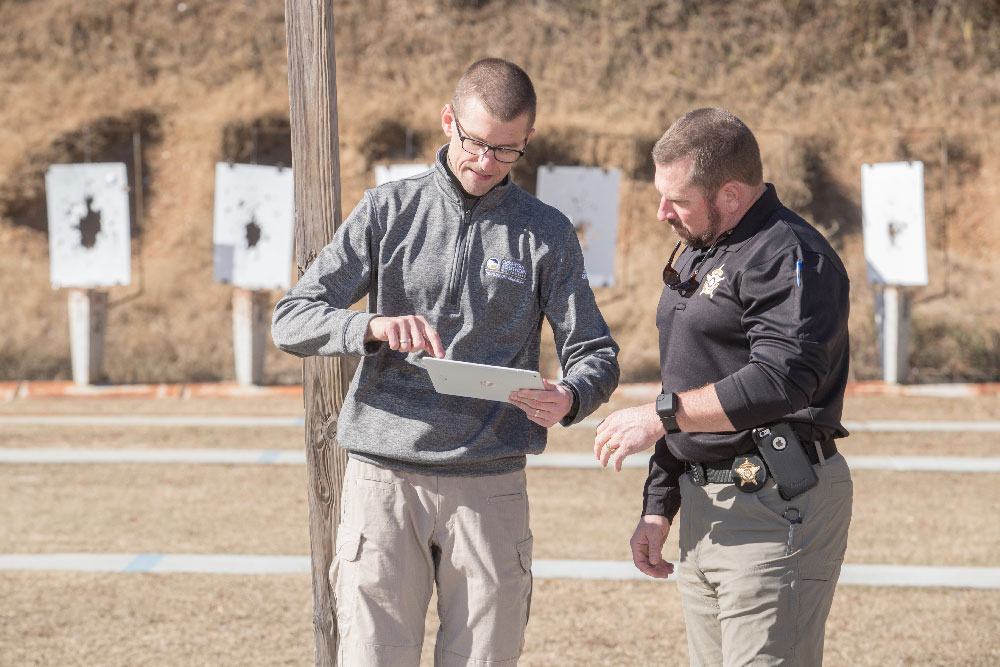
Georgia Southern University to offer new executive master’s in criminal justice degree
Georgia Southern University is offering members of the law enforcement community a chance to boost their careers with a brand new executive master’s in criminal justice (EMCJ), a program specifically tailored for law enforcement professionals seeking career advancement. This program is certified by the Georgia Peace Officer Standards & Training Council (P.O.S.T.) and offers a comprehensive curriculum designed to accommodate the demanding work schedules of law enforcement agencies. Students in the program follow a unique schedule that features two, three-week modules per semester, requiring only one week of on-site attendance at the Armstrong Campus in Savannah, Georgia. Program participants can complete their degree in just two years. “I am excited about this new and innovative executive-style graduate program designed for law enforcement professionals across Georgia,” said Ryan Schroeder, Ph.D., Dean of the College of Behavioral and Social Sciences. “Students in the program will be exposed to current research in criminology and criminal justice and develop research skills to advance their careers. Graduates are prepared to be leaders in law enforcement organizations across the state.” The EMCJ program is especially beneficial for officers in county and city law enforcement, sheriff’s department personnel, Georgia Bureau of Investigation, Georgia FBI, University System of Georgia law enforcement agencies and more. Through the coursework, students will refine their analytical, research and critical thinking skills, foster a superior understanding of criminal justice and have the chance to network with fellow officers, build relationships and enhance connections nationwide. “We’re excited to offer this executive master’s program to all our law enforcement partners throughout the state,” said Laura Mcullough, director of Public Safety and Chief of Police for Georgia Southern. “This program is designed to work specifically with the agencies and for the upcoming leaders in law enforcement within Georgia. As an agency head, the ability to develop our future leaders while being able to provide for the demands of our communities is invaluable. This program will allow officers to develop into better officers and stronger leaders within their agencies and community without demanding large amounts of time away from work or home.” The program does not require a nomination, but candidates must hold a bachelor’s degree from a regionally accredited institution and be a certified, registered or exempt peace officer currently employed with a Georgia law enforcement agency recognized by the Georgia P.O.S.T. Interested in learning more? Contact Georgia Southern's Director of Communications Jennifer Wise at jwise@georgiasouthern.edu to arrange an interview today.
