
Experts Matter. Find Yours.
Connect for media, speaking, professional opportunities & more.

Expert available to discuss Holmes trial verdict
Elizabeth Holmes, founder of the failed blood testing start-up Theranos, was found guilty Monday of four of 11 charges of fraud, after a closely watched trial that lasted nearly four months. A jury determined that she deliberately misled investors. Todd Haugh, associate professor of business law and ethics and the Arthur M. Weimer Faculty Fellow in Business Law at the Indiana University Kelley School of Business, is available to comment on the verdict and future sentencing. Haugh’s research focuses white collar and corporate crime, business and behavioral ethics, and federal sentencing policy, exploring the decision-making processes of the players most central to the commission and adjudication of economic crime and unethical business conduct. He can discuss: • The size of the potential sentencing and the calculation the judge will make in determining it (the statutory maximum is high -- 20 years; the sentencing guideline will be very high -- maybe life imprisonment; but the actual sentence will be much, much lower); • The impact the acquitted conduct will have on the sentence (none -- the law allows the judge to consider all conduct, even counts she was acquitted of) • The impact of Holmes going to trial versus pleading guilty (significant because she loses cooperation credit, for example); • The larger business ethics and compliance implications of the case, which Haugh believes are significant, given the high profile nature of Theranos and Holmes, the culture of Silicon Valley, and the rarity of a criminal trial in a case like this); Haugh can be reached at thaugh@indiana.edu and 812-855-6539


When students collectively save $748,925 in one semester and have easy access to textbooks on the first day of classes, coupled with Georgia Southern’s University Store’s ability to provide lower costs to students and avoid inventory delays, it’s a win-win for the campus community. The University-hosted Day1Access (D1A) program, a digital textbook model in collaboration with top publishers to reduce the cost of required course materials, ensures that all D1A materials are delivered at the lowest possible cost to the student – even lower than buying the material directly from the publisher. “The program itself grew out of the need to lower required materials cost and allow students to acquire that material on the first day of school,” said Derick Robertson, interim director for retail services at Georgia Southern. “Instructors no longer worry if the students have what they need and are ready to teach day one. We have allowed Day1Access to grow organically with instructors who see the benefits in the delivery method. Parents appreciate not having to search for their students’ material elsewhere for the cheapest option. The University Store appreciates the ease of delivery and not waiting on inventory to show up and running out of materials. In the end parents win, instructors win, students win and the University wins.” Through a partnership with Willo Labs, a leading digital resource provider, the program allows students to purchase their course material and have all the resources they need to begin their studies without having to visit the store. Access for all students begins the first day of class, with the option to opt-out of purchasing through the drop/add period. Each course utilizing D1A materials has received approval to digitally deliver required course materials to students from the instructor of that course. “The University Store is always looking to lower costs to students and provide the best service to the students of Georgia Southern University,” said Robertson. “Through Day1Access students have the required material they need at the cheapest price possible. As more departments adopt D1A the savings will continue to grow.” If you’re a journalist looking to learn more about Georgia Southern's digital textbook program– then let us help. The researchers behind this study are available, simply reach out to Georgia Southern Director of Communications Jennifer Wise at jwise@georgiasouthern.edu to arrange an interview today.


Georgia Southern University has established a new research and outreach center, the Institute for Water and Health, to investigate the complex interactions between water and human activities, and protect and restore public health in a changing environment. As part of the University’s focus on public impact research, the center will foster collaboration among scientists, government agencies, industry, nonprofit organizations and communities. Coastal Georgia is the perfect location for such an institute to conduct interdisciplinary research because it lies at the intersection of many social, economic and ecological issues. The center supports the region through research, workforce training for students, and actively involving communities in water resource management decision-making process, said Asli Aslan, Ph.D., associate professor in Georgia Southern’s Jiann-Ping Hsu College of Public Health Department of Biostatistics, Epidemiology and Environmental Health Sciences. Now also director of the Institute for Water and Health, Aslan is a water microbiologist, and her research program bridges ecosystem and human health. She has ongoing funded projects on tracking sources of water pollution and assessing health risks associated with exposure to chemical and microbial contaminants. She works with local communities and nonprofit organizations to encourage water stewardship behaviors. Aslan has served in various federal and state agencies and organizations as an adviser, reviewer, scientific committee member and affiliated faculty. She is also the founder and currently the co-chair of the Water and Health Committee of the American Public Health Association. “We want to create a nationally recognized institution that provides meaningful solutions for community needs,” said Aslan. “Our immediate plan is to develop a coalition with all stakeholders in the region to address issues related to increased water demand, impact of sea-level rise on water resources, and potential emerging contaminants in our urban and rural water infrastructure. We are in the process of establishing a community advisory group consisting of scientists from academic institutions, representatives from local and state governments, community leaders, non-profit organizations and businesses to identify and prioritize community needs in water research and education.” For example, she said, although one in every six households in Georgia has a private well, few residents realize any water testing, treatment or well maintenance is the sole responsibility of the property owner as per the Safe Drinking Water Act. Aslan said the Institute for Water and Health will work with the homeowners to help them recognize potential risks and provide solutions that will keep families safe in the long term. “We also look at sources of contaminants using state-of-the-art-methods. And if you know where the pollution is coming from precisely, it’s easier to go fix that problem once and for all, which has a direct impact on the decision-making process to protect water resources.” she said. These new techniques allow researchers with the institute to provide test results within a few hours, which helps end-users to be informed the same day instead of days where most water testing methods currently take about 48 hours. The implications of these methods are broad, as they can be used to identify pathogens in storm water or in household drinking water pipes; assess how new sustainable water treatment technologies efficiently remove contaminants, or provide same-day results for recreational beach monitoring. “We can do all this fancy research in the lab, but it will be very important for us to go out into the community and talk to people, ask them what their immediate needs – our goal is to involve communities from the very beginning of our research so that we co-develop meaningful solutions that will improve the quality of their everyday lives,” Aslan said. “Our group at Georgia Southern consists of established researchers from multiple disciplines such as environmental education, public health, social and behavioral sciences, environmental and computational engineering, coastal ecology, and we are growing everyday”. Carl L. Reiber, Ph.D., Georgia Southern’s provost and vice president for academic affairs, said the center will pull together faculty from across the University, many of whom have already established themselves as water experts within their own discipline. He expects the center to take a very visible role for the University and is renovating space in Savannah near the Armstrong campus to house the center and its labs. “The Institute for Water and Health will bring to southeast Georgia an awareness of the importance of water quality, water management and how tightly these areas are aligned with our health,” Reiber said. “The public impact of this institute is immeasurable and will ultimately increase the quality of life in our community.” If you're a journalist looking to know more about this topic or are looking to cover - then let us help. Asli Aslan, Ph.D., is a water microbiologist, and her research program bridges ecosystem and human health. She has ongoing funded projects on microbial source tracking, health risk assessment of water resources, and the ecology of pathogens in the aquatic environment. She is available to speak with reporters – simply click her icon now to arrange an interview today.

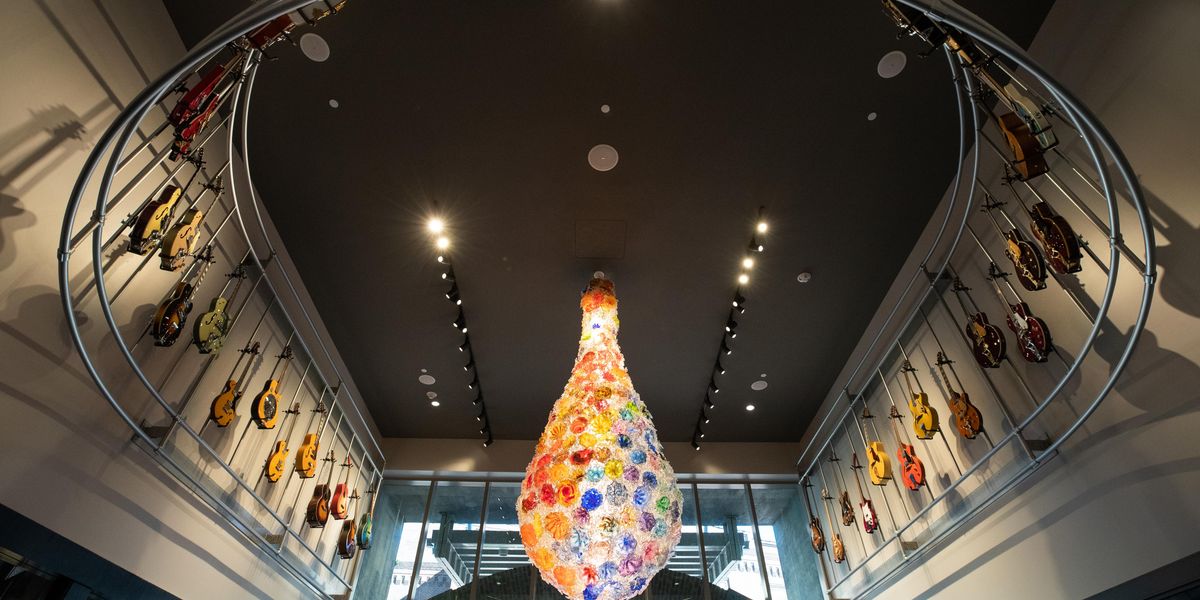
Striking a chord! New Savannah museum tells the storied history of Gretsch instruments
Drums, guitars, history, business and education have come together in a spectacular new interactive museum and exhibit in downtown Savannah that will pique the interest of any music lover. That Great Gretsch Sound! museum is a new destination where Georgia Southern University helps tell the story of a family-owned company that is still regarded as one of the music industry’s most influential and innovative instrument manufacturers. The permanent display of music memorabilia, highlighting more than 135 years of Gretsch instruments, is featured in District Live’s new lobby and performance space on the banks of the Savannah River. The museum is the latest addition to the Plant Riverside District. The museum’s opening was recently featured in Premium Guitar : The exhibit space highlights some of the most popular and unique pieces of Gretsch's historic catalog. The museum lobby features some of the most iconic instruments the company has produced, including the White Falcon™, the Chet Atkins® Country Gentleman®, a Brian Setzer Signature G6120, and a vintage 1963 Jet™ Firebird popularized by AC/DC's Malcolm Young. In the District Live performance hall, visitors will be treated to a visual timeline that will allow them to explore the evolution of Gretsch instruments dating back to the 1920s. Approximately 100 guitars are on display in the exhibit, 48 of which were recently on display in Nashville's Country Music Hall of Fame. The museum was developed through a special partnership between the Fred and Dinah Gretsch School of Music at Georgia Southern University and The Kessler Collection. In addition to the instruments that line the performance hall and upper section of the lobby, the museum features three sound dome displays with original videos that highlight Gretsch history, instrument production, the worldwide community of past and present Gretsch artists from Chet Atkins and George Harrison to Phil Collins, and the family's storied commitment to music education. Several other display cases take guests on a visual journey from Gretsch's beginnings as a local manufacturer of calf-skin drums, banjos, and accordions to one of the most popular and sought-after producers of guitars and drums during the height of the Rock & Roll era. Downtown Savannah is now helping tell that Gretsch story. The Gretsch museum includes Gretsch instruments and storyboards with QR code links to detailed narratives. "We hope this new museum will preserve the long history and legacy of the Gretsch Family and the Gretsch Brand," Dinah Gretsch said. "It is wonderful to share our history with the city of Savannah, the loyal Gretsch fans and all the tourists that will visit the museum." The museum's artifacts were curated and installed by Aaron Phillips, Georgia Southern's project curator for the Fred and Dinah Gretsch Artifacts Collection. Through his research to prepare the museum, he is confident that the Gretsch Museum will provide a unique musical experience. "My goal was to create a space that is expressive, inspirational, and true to the roots of the Gretsch family and community," Phillips said. "I am in awe of how this turned out!" To learn more – the full media release from Georgia Southern is attached below: If you’re a journalist looking to cover That Great Gretsch Sound! – then let us help. Aaron Phillips, Georgia Southern's project curator for the Fred and Dinah Gretsch Artifacts Collection is available, simply reach out to Georgia Southern Director of Communications Jennifer Wise at jwise@georgiasouthern.edu to arrange an interview today.

Recently, the expertise of Georgia Southern University’s researchers was featured in an in-depth piece by Business Insider Magazine. U.S. oncology company OncoTEX has made a significant leap in the future of cancer treatment. A part of the bioscience development portfolio The iQ Group Global, OncoTEX has licensed a gold compound platform technology, AuraTEX, that helps destroy cancer cells by using the body’s immune system. The gold-based compounds enter cancer cells and attack them from the inside. Through this process, the tumours are disrupted, and cancer cells are made visible, causing the human body’s immune response to kick in. With the immune system and gold compounds working together, killer T-cells and the drug destroy the remaining cancer. The futuristic technology was developed in collaboration with the University of Texas at Austin, Georgia Southern University, and Wright State University, before being licensed to OncoTEX. In the coming months, OncoTEX and the University of Texas at Austin will test the gold compounds in rigorous studies to learn more about the treatment and its potential in fighting various forms of cancer. December 16 - Business Insider The full article is attached. And, If you’re a journalist looking to cover this new research that Georgia Southern is a major part of - – then let us help. We have experts available to answer your questions - simply reach out to Georgia Southern Director of Communications Jennifer Wise at jwise@georgiasouthern.edu to arrange an interview today.
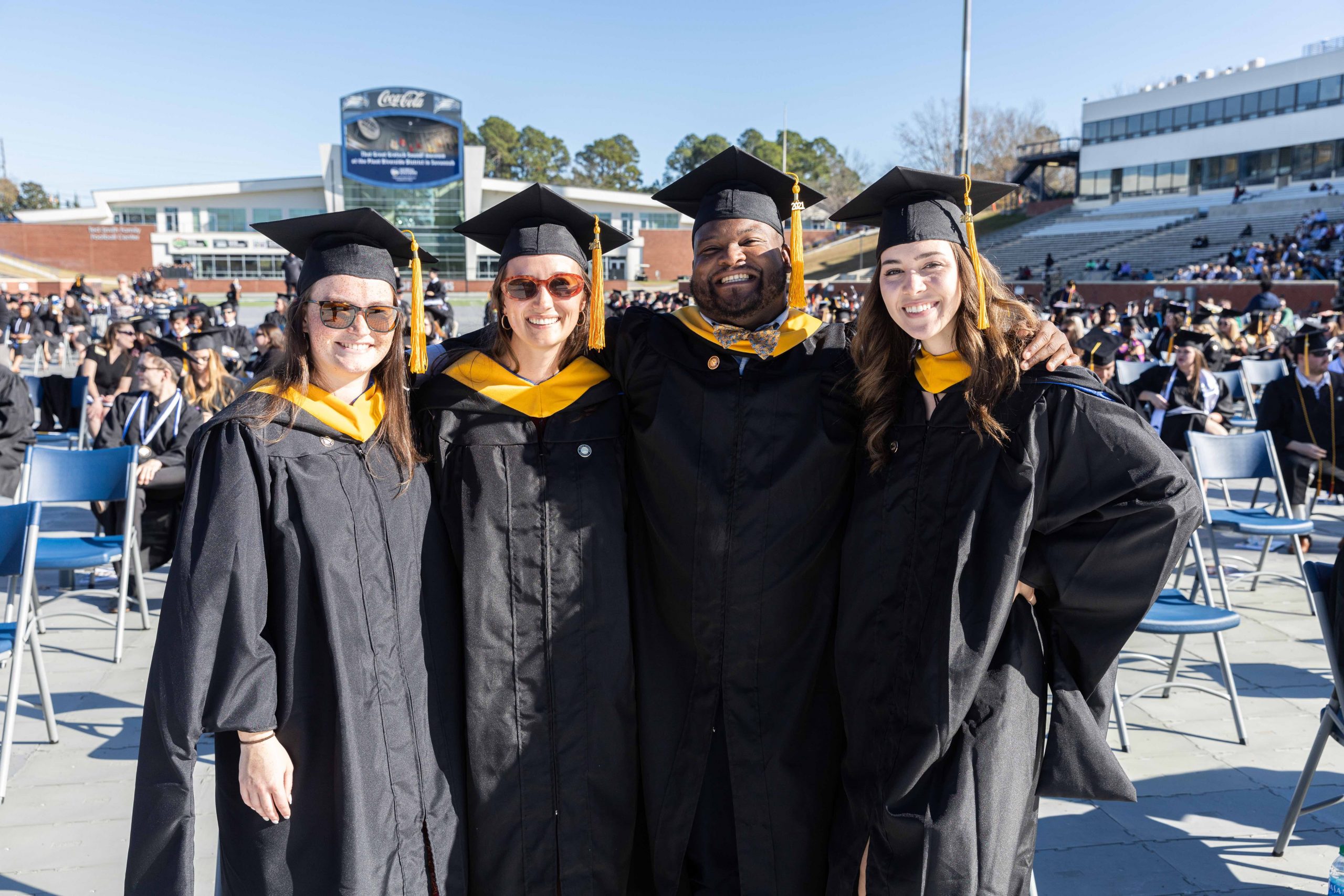
Hats off to the 2,100 graduates at Georgia Southern
Last week, approximately 2,100 undergraduate and graduate students from Georgia Southern University’s Statesboro, Armstrong and Liberty campuses received associate, baccalaureate, master’s, specialist and doctoral degrees in three Fall 2021 Commencement ceremonies. Georgia Southern President Kyle Marrero welcomed the graduates and their families to the University’s Fall Commencement ceremonies, held at the Savannah Convention Center in Savannah on Dec. 11, and the Allen E. Paulson Stadium in Statesboro on Dec. 13 and 14. He commended the graduates on their achievements and tenacity. “Graduates, I don’t need to tell you about your unique college journey, which has been challenging for all of us,” said Marrero. “I am very proud of how, together, we have persevered allowing us to have a successful semester and today, our commencement ceremony. You, our graduates, deserve great recognition.” During the Savannah ceremony, Georgia’s 2022 Teacher of the Year Cherie Dennis (Armstrong ‘10), who teaches English to Speakers of Other Languages at Hesse K-8 School in Savannah-Chatham County Public Schools, addressed the packed house with a call for kindness. “My hope for you is that you go out into the world with your eyes and your hearts wide open,” she said. “That you go out into the world and make something beautiful out of its cracks and imperfections. A world that is bound together by the irrefutable strength and integrity of kindness. Be the repairers of the world; the menders of the world; the bridge builders; the constructive, contributive citizens who nurture communities large and small. And that may sound daunting, but really it all starts with something so very simple, something so very possible and within your reach. Something you knew how to do even as a child. Just being kind.” Sachin Shailendra, chair of the University System of Georgia Board of Regents and president of SG Contracting, Inc. in Atlanta, spoke at the first ceremony in Statesboro. “Georgia Southern – which in a few minutes will be your alma mater – is one of the shining stars among our 26 institutions,” he said. “It ranks as one of Georgia’s best comprehensive universities, with a growing reputation for research that impacts not only vital industries but the environment and our communities. The degree you earned lets everyone know you learned from outstanding faculty, top staff and talented fellow students. “The opportunities ahead of you are many. I know this because of my own experience. I was born in Georgia, but my father was not. I am only a generation away from the farmers my family were in India. Education has been a game changer for both me and my family, and I know it’s a major accomplishment for many of you. I hope your degree will inspire you to take the next steps in building your future. So go out into the world and create a worthy future, not only for yourselves, but one that will represent Georgia Southern, our entire university system, and this state as well…Your education has already changed you. It also has the power to change your community, and move our state forward in exciting ways.” To read the full release please see the attachment below. This is a great moment for Georgia Southern University and if you are looking to learn more about this year's graduating class or the school - then let us help. Simply reach out to Georgia Southern Director of Communications Jennifer Wise at jwise@georgiasouthern.edu with your questions or to arrange an interview today.
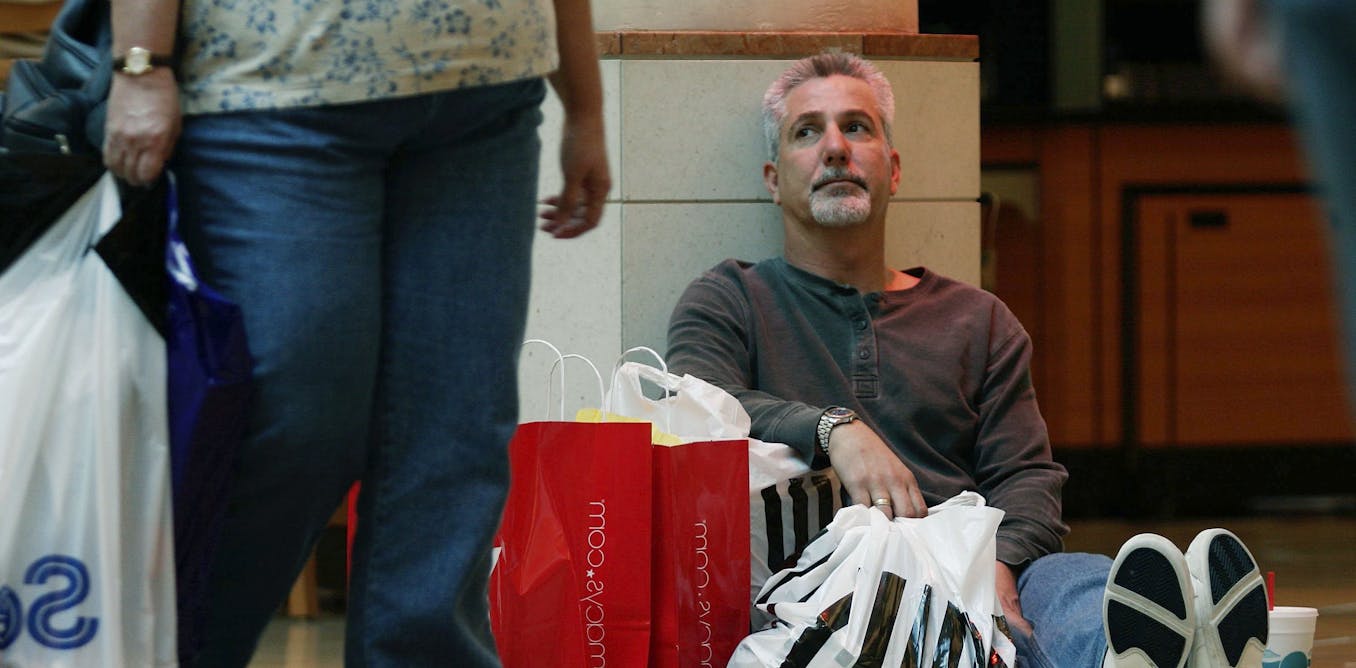
Is it better to give than receive? Our expert explains the science behind holiday gift giving
It's the holiday season -- full of merriment and cheer and gift giving. But why do we give gifts? And why is it a ritual that cuts across cultures on just about every continent on Earth? UConn professor Dimitris Xygalatas, an expert in human rituals, details the social science behind the centuries old tradition of exchanging gifts in a new essay for The Conversation: From the shells exchanged by Pacific islanders to the toys and sweaters placed under Christmas trees, sharing has always been at the center of many ritual traditions. This is fundamentally different from other forms of material exchange, like trade or barter. For the Massim, exchanging a shell necklace for a shell armband is not the same as trading yam for fish, just as giving a birthday present is not the same as handing a cashier money to purchase groceries. This speaks to a more general rule of ceremonial actions: they are not what they appear to be. Unlike ordinary behaviors, ritual actions are nonutilitarian. It is this very lack of obvious utility that makes them special. Professor Xygalatas is an anthropologist and cognitive scientist at the University of Connecticut who specializes in some of the things that make us human, including ritual, sports, music, cooperation, and the interaction between cognition and culture. He is available to speak with media, answering all your holiday ritual questions. Click on his icon to arrange an interview today.


New £1.5 million healthcare simulation facilities to open at Aston University
New clinical simulation facilities for medical, pharmacy and optometry students are set to open in 2022 Including an ocular simulation unit facility which will be the only one in Europe, as part of further investment in clinical facilities in the College of Health and Life Sciences at Aston University. The facilities are part funded by the Office for Students which awarded the University £806,226 to set up a ‘high fidelity’ simulation A&E room with further expenditure by Aston University on an ocular simulation unit. Aston Medical and Pharmacy School students will be able to practise in emergency settings using high quality manikins where they will simulate treating patients for acute conditions such as a heart attack or learning how to intubate a patient onto a ventilator. The high-fidelity acute care simulation room will be equipped with recording facilities, a debrief room and control room. The funding will allow for the purchase of other training equipment such as a hospital grade bed and single task trainer simulation equipment. For example, male and female catheterisation models, pelvic and rectal trainers, venepuncture arms, breast trainers and abdominal trainers. Professor Liz Moores, deputy dean of the College of Health and Life Sciences, said: “We are really excited to have the support from both the Office for Students and Aston University in building these state-of-the-art facilities for our students and can’t wait to start using them. “The acute care simulation room will allow us to simulate a variety of emergency resuscitation scenarios that are very difficult to teach in real life situations, such as heart attacks, acute breathlessness and severe allergic reaction and will be of great value in training students of medicine and pharmacy.” Students in the School of Optometry will also be equipped with simulation facilities to carry out treatment on patients. Professor James Wolffsohn, head of the School of Optometry said: “The ocular simulation facility at Aston University will be unique in Europe, allowing students to refine their skills in examining the health of the front and back of the eyes and to experience a wide range of eye disease. “One of the simulators even allows them to utilise their smartphone to practice at home. They can gain direct feedback and be assessed by the simulators, allowing more flexible, diverse and intensive learning than can be achieved with clinical practice placements.” It is hoped these facilities will help plug some of the gaps in clinical placements that are currently affecting students since the COVID-19 pandemic. As a result of the pandemic, alternative ways are being explored to gain high quality authentic ‘clinical’ experiences, whilst not exposing patients, staff, or students, to risk. The health crisis has also increased pressure on the NHS creating a need for alternative but appropriate training facilities, to ensure that students are fully prepared for the medical profession. The simulation facilities are due to be open in time for the September 2022 intake of students.

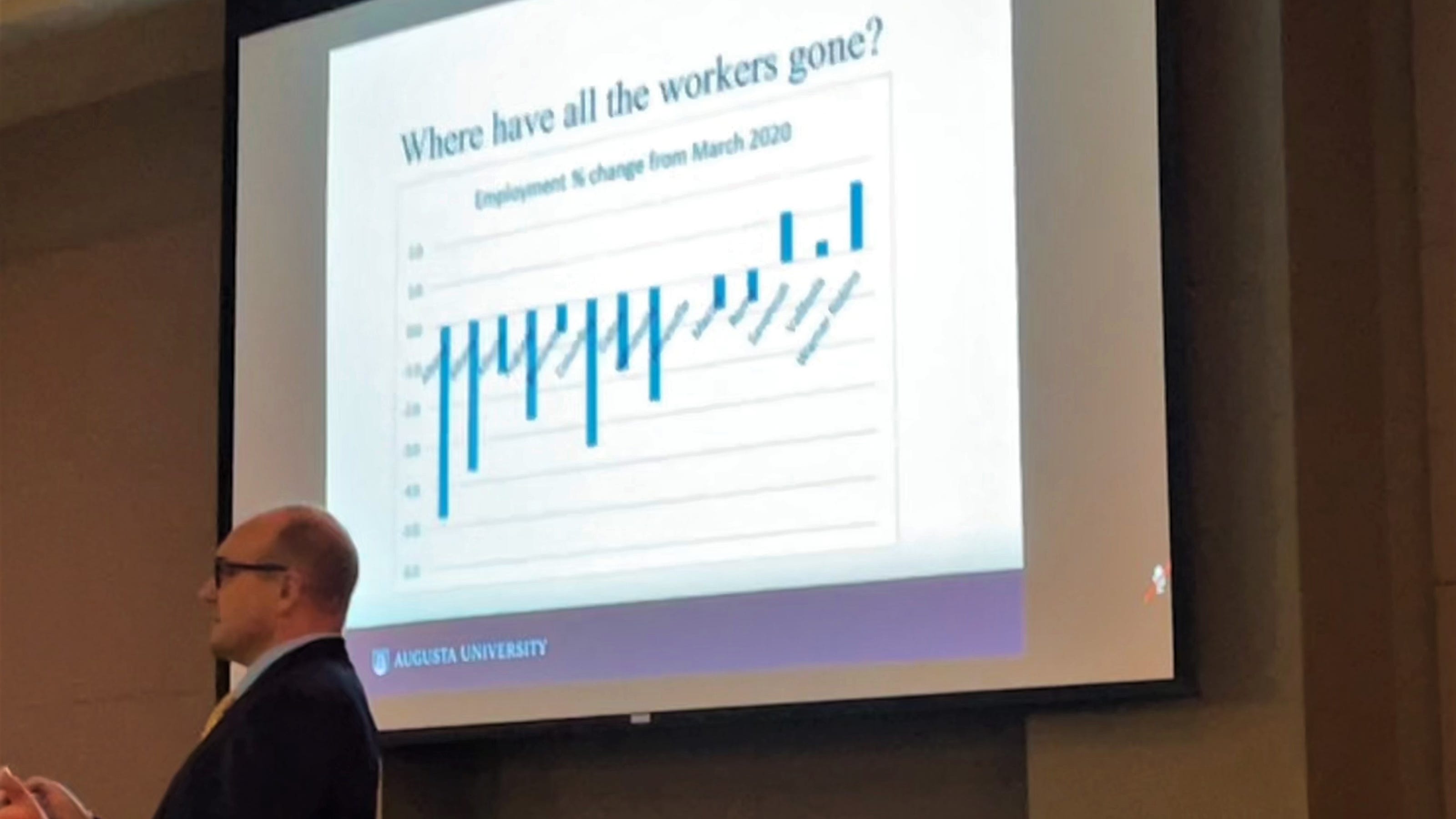
As the legendary political guru James Carville used to say, "It’s the economy, stupid." And these days with housing prices, inflation and the cost of living all pointing up in a very steep trajectory – the state of the economy is front and center for a lot of politicians, Americans and families as the year comes to a close. There’s a lot to be considered, and that’s where experts like Augusta’s Dr. Simon Medcalfe are being sought out to explain economic trends what is behind them. “U.S. retail sales are high,” explains Medcalfe “We had a lot of stimulus checks coming through the door and that’s really spurred extra spending and it’s across a whole range of retail sectors.” According to Medcalfe, household items are also seeing double-digit price increases. “What we’ve seen over the last 18 months during the pandemic, is a shift in our consumer preferences and consumer behavior.” • Furniture sales are up 29% • Used cars and cars in general are up 25-26% • Gardening and building supplies are up 14% • Electronics have seen an almost 30% increase • Clothing sales are up a whopping 50% But it’s not all good news - as the price of everything as we know is going up. “Inflation is running about 6.8% nationally,” Medcalfe explains. “It’s running about 7.2% in the south and it’s certainly a concern of policymakers and economists.” But theirs is sunshine behind those clouds as Medcalfe believes 2022 will see a return to normal. “I think next year inflation will come down. I know it won’t be at these high levels, but I still think it’ll be above the Feds target level of inflation, so look for those interest rate increases next year.” The economy and what to expect locally and nationally are hot topics – and if you are a reporter covering this topic – that’s where we can help. Dr. Simon Medcalfe is a highly regarded economics expert and the Cree Walker Chair in the Hull College of Business at Augusta University. Medcalfe is available to speak with media regarding the economy and its outlook – simply click on his icon now to arrange an interview today.


Parents who struggle to encourage their children to eat vegetables can now play a more influential part at their mealtimes – concludes a study by psychologists in the College of Health and Life Sciences at Aston University. The recent study, which was published in the journal Appetite, was carried out by doctoral researcher Katie Edwards, who found that children watching adults eat a green vegetable with positive facial expressions tasted and consumed more than double the amount of that vegetable. The team recruited 111 British children between the ages of four and six years old and played each of them one of three videos. In two of the videos, the children were shown unfamiliar adults eating raw broccoli with either a positive or a neutral facial expression. The third video, used as a control, was not food related. The researchers then assessed the children’s willingness to try raw broccoli. This was measured using a seven-point scale from turning away from it to both swallowing and accepting it. Their intake of the vegetable was measured by the number of grams of raw broccoli consumed, and the number of tastes of raw broccoli was examined. The findings could help children become more accepting of less popular vegetables like raw broccoli and generally facilitate healthier eating in children. The research mainly focused on young children who had never tried broccoli before. The team found that children who were exposed to video clips of adults enjoying eating broccoli had more tastes of, and ate, on average, more than twice as much of the food in comparison with the kids in the control group — specifically, 11 g (0.4 oz) rather than 5 g (0.2 oz). Katie Edwards, PhD researcher at Aston University, said: “One explanation for the beneficial effect of positive facial expressions whilst eating could be that conveying food enjoyment gives the observer information about the safety and palatability of food. “Raw broccoli was novel for most participants. Thus, children may have eaten more broccoli after watching adults enjoy eating it, because they believed it was enjoyable to eat.” The researchers were surprised to find, however, that seeing adults enjoying raw broccoli did not impact the children's initial willingness to try the vegetable. The results showed that after watching adults enjoying eating raw broccoli, children ate more than double the amount of raw broccoli than children who had seen a non-food related video. This suggests that smiling while eating green vegetables can encourage children to taste and eat more of that vegetable. Katie added: “Further work is needed to determine whether a single exposure [to adults enjoying broccoli] is sufficient and whether these effects are sustained over time.” The full findings of the study were published in the journal Appetite.
