
Experts Matter. Find Yours.
Connect for media, speaking, professional opportunities & more.

Expert Perspective: Unpacking the Innovation Process
Have you ever looked at a table or chair, stool, or other household item and thought, “I can use this another way”? If you have, you might be an innovative hacker, someone who operates from a product-first search process, which is the opposite of the “classic” problem-solving method. Tian Chan, assistant professor of information systems and operation management, worked with long-time friend and fellow researcher, Shi-Ying Lim, assistant professor of information systems and analytics at the National University of Singapore, to see if starting with a product generates more novelty (or uniqueness). And they used IKEA furniture as the basis for their research. “Problem-first searching is the ‘classic’ way we think about problem solving. It starts with a problem, such as needing a swing, before identifying possible solutions, like a person turning an IKEA stool into a swing,” explains Chan. Whereas product-first searching “starts with a product in mind,” such as this IKEA hacker having a stool and wanting to make it into something different, then “searching through alternative needs” to identify the most viable option for the stool’s new life. This same method of problem-solving created the jogging stroller, says Chan. It just took one parent, frustrated with pushing a standard four-wheel stroller, to invent a more effective stroller for runners. Ultimately, the research, which involved hours upon hours of searching for examples of IKEA hacking, revealed that traditional, problem-first thinking remains the most effective way to both solve a problem and create a novel, new use for an item. However, product-first searching presents many opportunities for creative uses of everyday things. IKEA hacking is popular for a few reasons: The furniture is popular, inexpensive, and usually requires self-assembly. - Tian Chan It’s particularly the self-assembly aspect that invites novel uses for common items. During his research, Chan uncovered examples of people taking an IKEA coffee table, flipping it upside down, and attaching it to the ceiling for pets to perch from. “Users are endowed with such a large variety of interesting problems,” says Chan. “Companies should look toward users if they wish to more effectively identify novel uses for their existing products.” Interested in knowing more? Tian Chan is an Assistant Professor of Information Systems & Operations Management at the Goizueta Business School at Emory University. Simply click on his icon now to connect with him today.



Expert Podcasts: Ready for Career Growth? Advocates are Key!
Career advocates are critical to career growth. In fact, employees with advocates are 23% more likely to advance at work. Emory University Goizueta Business School's Professor Renée Dye joins to discuss the key role and critical attributes of advocates, how you can cultivate and attract influential players to meet your goals, and the impact of remote work on relationship management and organizational culture. For more insight and if you're interested in knowing more, then check out Renée's discussion right here on the Goizueta Effect podcast. Dye also has an intriguing blog as well - it's worth the visit : If you're looking to connect or arrange an interview – simply click on Dye’s icon now to book a time today.


The COVID-19 pandemic took a toll on America's children -- parents lost jobs, kids weren't able to go to school, and they were told it was dangerous to see their friends. From a child's point of view, they seemed to have a lot, if not nearly everything, taken away, and many are still struggling today. Recently, NPR took a deeper look at the challenges kids are facing and found one creative solution that's helping elementary school children to change negative thinking patterns, better understand others' motivations, and face fears that may fuel unhealthy avoidance behaviors. UConn expert Sandra Chafouleas, a professor and school psychologist, is a co-creator of the new program -- called Feel Your Best Self -- which uses puppets to help children develop their social-emotional skills and well-being. During the pandemic, Wicks sent emails to researchers at the University of Connecticut's Neag School of Education, fishing for collaborators. She'd been wanting to put more of their work online. Her pitch: You want to help kids right now, and we have puppets. One of those emails went to Sandy Chafouleas, a UConn professor and trained school psychologist. Chafouleas was worried about all that extra stress on kids returning from the pandemic and that schools wouldn't be able to help them. "Teachers were stressed. Systems were stressed. Nobody had time to do professional learning to do something complex. That's just ridiculous to think that they could've," Chafouleas says. Denoya, the first-grade teacher at Natchaug Elementary, has seen it firsthand: Kids returned from the pandemic with missing or rusty social and emotional skills. They had trouble sharing, learning how to take turns and dealing with disappointment. "There's just things that they missed out on with not having that socialization, and so we need to find a place to teach it at school too," Denoya says. Anticipating this need, Chafouleas and Wicks cooked up Feel Your Best Self. The idea was, these scripted puppet videos would be easy — and free — for schools to use, even if they don't have a trained mental health specialist on-hand. Which many don't. Or they have one, spread across hundreds and hundreds of kids. That includes Natchaug, where Principal Eben Jones has been unable to fill a vacant school psychologist position for the past two years. Jones says that hasn't stopped him and his staff from prioritizing this kind of emotional and social skill-building. "It is embedded daily," Jones says. "Every teacher has time in the morning to have a morning meeting. And in that morning meeting they build community, share a morning message, you know, play a team-building game and make sure kids are connected to each other." This school year, Denoya and her students are doing one FYBS lesson each week. The FYBS program has exploded over the past year, thanks in part to a flood of grant funding. What began last year at Natchaug with a small team performing virtually – and live, not recorded – in one classroom at a time, became a Herculean effort to script, cast and shoot not one but 12 unique videos, with multiple puppets and performers, that teachers and caregivers can access anytime online, at no cost – in both English and Spanish. "Emily and I often feel like we're hanging on to the end of the caboose right now. This has scaled in ways that are unimaginable," says Chafouleas. Sandra Chafouleas is a UConn Board of Trustees Distinguished Professor of Educational Psychology and an expert on social-emotional well-being. She's available to speak with the media today -- just click her icon to arrange an interview.


Aston University photonics expert elected as Fellow of Optica
• Professor Edik Rafailov is head of the Optoelectronics and Biomedical Photonics Research Group • He is a member of Aston Institute of Photonic Technologies, a world-leading photonics research centre • Optica is the leading organisation for researchers and others interested in the science of light. A photonics expert at Aston University has been elected as a Fellow of Optica (formerly OSA), Advancing Optics and Photonics Worldwide. Professor Edik Rafailov is head of the Optoelectronics and Biomedical Photonics Research Group in the College of Engineering and Physical Sciences at Aston University and a member of Aston Institute of Photonic Technologies (AIPT), one of the world’s leading photonics research centres. He was elected for his ‘contributions to novel gain media for semiconductor lasers at wavelengths from 750nanometres to1300nanometres’. Optica is the society dedicated to promoting the generation, application, archiving and dissemination of knowledge in the field of photonics. Founded in 1916, it is the leading organisation for scientists, engineers, business professionals, students and others interested in the science of light. Fellows are selected based on several factors, including outstanding contributions to business, education, research, engineering and service to Optica and its community. Satoshi Kawata, 2022 Optica president, said: “I am pleased to welcome the new Optica Fellows. These members join a distinguished group of leaders who are helping to advance the field optics and photonics. Congratulations to the 2023 Class.” Director of AIPT, Professor Sergei Turitsyn said: “I am delighted that Edik has received this prestigious fellowship. “AIPT has one more Optica Fellow, that is a high honour in the field of photonics. “Edik joined Aston University in 2014 and since then his research has contributed to the Institute’s world-leading position in the fields of fibre and semiconductor lasers and bio-medical photonics, making impact on industry, scientific communities and society.” Fellows are Optica members who have served with distinction in the advancement of optics and photonics. As they can account for no more than 10 percent of the total membership, the election process is highly competitive. Candidates are recommended by the Fellow Members Committee and approved by the Awards Council and Board of Directors. The new Optica Fellows will be honoured at the Society’s conferences and events throughout 2023.


Researchers awarded £2 million to develop drugs to prevent epileptic seizures in children
• Three-year research project to develop new drug treatments for childhood epilepsy • Scientists will test new treatment on pieces of living brain tissue • The research is a collaboration between Aston University, Bristol University and Jazz Pharmaceuticals. Scientists at Aston University have started work on a project that will look for new drug treatments to prevent the onset of childhood epilepsy. The three-year Medical Research Council (MRC) funded project is a collaboration led by researchers in the College of Health and Life Sciences at Aston University, partnered with Bristol University and Jazz Pharmaceuticals. They have been awarded £2 million to explore how epilepsy becomes established in the brain and how this process might be prevented. The researchers will test new drugs in the human brain, using samples of living tissue taken from children with difficult to treat epilepsies who have had to have brain surgery. Epilepsy is a brain disease which is characterised by seizures. As Professor Gavin Woodhall, lead researcher and co-director of Aston Institute of Health and Neurodevelopment, explains: “Seizures are periods of time when networks of brain cells are too active and are uncontrollably excited and spiking. If uncontrolled excitation spreads to brain regions that control movement, then too many brain cells are ‘talking at the same time’ and we can see seizures as changes in movement such as jerks and twitches.” Upon receiving the grant, Professor Woodhall said: “We will be able to study epilepsy in such detail that we hope to be able to treat the problems that underly epilepsy and not just the seizures themselves. And this could help pave the way to prevent epilepsy from developing in children at all. “Essentially we want to find a treatment that stops the brain from being able to establish epilepsy after the first seizure - via a new drug treatment. We will be testing a known drug and a new drug to see if the drug can do this.” As part of the research for this project the scientists will look at how different amounts of epileptic activity in the brain can alter the brain’s excitability. The researchers predict that if there are a lot of seizures, the synapses in the brain will decrease their activity and brain cells will become more likely to spike. Professor Woodhall added: “This is why we will test antiepileptic drugs, and new drugs designed to interfere with homeostatic scaling - which is a form of plasticity, in which the brain responds to chronically elevated activity in a neural circuit with negative feedback, allowing individual neurons to reduce their overall action potential firing rate. “By interfering with homeostatic scaling we will be able to see if they can prevent seizures from developing or reducing their intensity.” The research will allow Professor Woodhall and his team to be able to record the life history of the disease. This is something which has not been done before in this level of detail and it is predicted it will help to shed light on how epilepsy initially develops in the brain. Following on from the three-year project the team will move into drug development and then clinical trial. For more information about research being undertaken at AIHN please go to our website. If you are interested in the courses we have available in this area please go to our course pages.
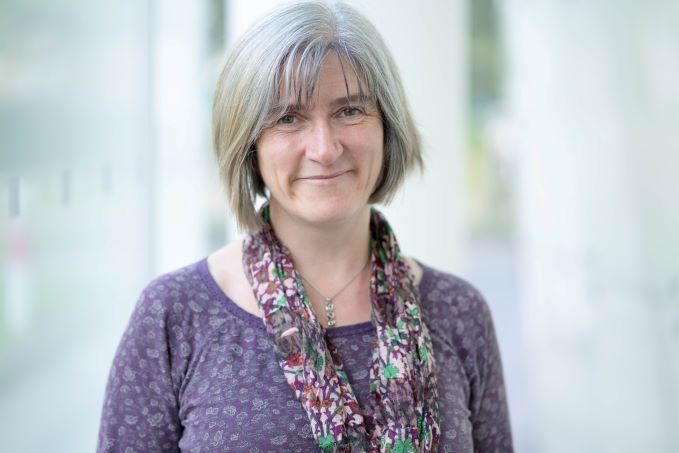
COP27 should be turning point to switch from heating homes with fossil fuels Professor Patricia Thornley, was a presenter at COP26 in Glasgow She believes one year on there’s not enough progress to cut emissions from homes. One of the UK’s leading bioenergy experts has said COP27 should be a turning point to help UK consumers switch from heating their homes with fossil fuels. Professor Patricia Thornley, director of Aston University’s Energy and Bioproducts Institute (EBRI), was a presenter at COP26 in Glasgow last year. She leads the UK’s national bioenergy research programme, SUPERGEN Bioenergy hub. Her research focuses on assessing the sustainability of bioenergy and low carbon fuels. Professor Thornley believes that one year on, not enough has been done to encourage the public to cut down on the emissions their homes produce. The UK has the oldest housing stock among developed countries, with 8.5 million homes being at least 60 years old. That is despite COP26’s reaffirmation of the Paris Agreement goal of moving away from fossil fuels, and the call for stronger national action plans to reduce carbon dioxide emissions. She has welcomed initiatives to help some UK industries move towards net zero, but believes householders are not getting the same support, for example with help to insulate their homes more effectively. She said: “Responses to the energy crisis in which we find ourselves have been mixed. “Government initiatives such as funding feasibility studies for hydrogen from bioenergy (turning biomass into hydrogen whilst separating and capturing the carbon portion of the biomass) and other technologies are promising.” Professor Thornley adds: “The recent price hikes in petrol and natural gas highlight the extent to which the UK relies on fossil fuels. “Unlike some areas of industry, domestic consumers have been treated differently, and recent help with energy costs is arguably subsidising us to keep emitting carbon dioxide. “A more forward-thinking approach would have been to invest in tackling the root cause of the problem by addressing home insulation.” Professor Thornley is a fellow of the Royal Academy of Engineering, and recently gave evidence to the Environmental Audit Committee about the use of sustainable timber in the UK as an alternative fossil fuel.


New research highlights the economic importance of live music to Birmingham and the West Midlands
It found local authorities need to more explicitly recognise the economic, social and cultural value of live music and live music venues The report calls for dialogue between music stakeholders and government The research is published by Aston University and supported by the AHRC-funded Creative Industries Policy and Evidence Centre. New research by the Birmingham Live Music Project (BLMP) highlights the huge economic value of Birmingham’s live music scene, the vital contribution small independent venues make, the ongoing impact of the pandemic and what is needed to support the recovery of the sector in the city. The research is published by Aston University, with colleagues from Newcastle University and Birmingham City University, and supported by the Arts and Humanities Research Council (AHRC)-funded Creative Industries Policy and Evidence Centre. In 2019, the UK’s live music sector was valued at over £1.3 billion. After almost a decade of strong growth the sector helped push the UK music’s overall GVA from £3.5 billion in 2012 to £5.8 billion in 2019, the outbreak of the global pandemic brought it to a near standstill. This paper explores, through a local lens and a focus on Birmingham, the challenges stakeholders across the live music sector have faced in recent years. The research finds that small live music venues are the lifeblood of this financial, cultural and community asset for the city. In 2019 Birmingham helped bring 877,000 music tourists to the West Midlands, with a total cultural spend in the region of £252,000,000 (UK Music). But during summer 2020, the research published today found, Birmingham’s live music capacity of approx. 98,000 dropped by around 75%. This impacted ticket prices, the availability of events across the city, and the economic viability of shows – while some venues could stay open, they couldn’t make a profit. The report makes clear independent venues need protection and support particularly in the wake of the pandemic. It calls for dialogue between music stakeholders and government in advance of the 2025 review of the EU-UK Trade and Co-Operation Agreement to identify the best means of reducing friction and support for the efforts to improve the Agreement, for example work on border force training, expanding the number of checkpoints where carnets and Music Instrument Certificates can be checked, reducing bureaucracy for live event transport and haulage, examination of further measures to develop the ’dual registration’ system for specialist hauliers to ease pressure on touring. Dr Patrycja Rozbicka, a senior lecturer in politics and international relations at Aston University and one of the report authors, said: “Local authorities need to more explicitly recognise the economic, social and cultural value of live music and live music venues, including grassroots venues, to their region(s). “Environmental, health, culture and city regeneration strategies have to take account of the existing and huge potential contribution of live music to the city and region. “What is needed is a cross-policy approach, implementation of a Night-time Industry Impact Assessment and dialogue between local authorities and the music sector, where the recently launched West Midlands Music Board could play a role. “We would like to see the creation of information hubs to support local venues and audiences with initiatives such those undertaken by the Liverpool City Region including a Music Fund which supports activities of the Liverpool City Region Music Board as well as helping with funding applications and advice. You can read the full report here.


• University expert helps clothes designer measure and tackle their carbon emissions • Upcycler, ‘Missfit Creations’, has saved CO2 equivalent of three tonnes • Call to COP27 to issue a protocol to measure all garments’ environmental impact. 8 November 2022 | Birmingham UK As policymakers at COP27 are to discuss the effects of the fashion industry on the environment, an Aston University scientist has been helping a clothes designer measure and tackle their carbon emissions. Debbie Murphy runs Missfit Creations which provides an alternative to fast fashion. She saves clothes from clogging up landfill by restoring and reworking second-hand and vintage clothing, from de-mob suits and 1970s psychedelia, to the present day. Dr Maria Pimenta da Costa Ocampo, a researcher from the Energy & Bioproducts Research Institute (EBRI) at Aston University, has been identifying the impact the business is having on reducing carbon emissions. By analysing the recirculation of second-hand clothes alone, she found Debbie’s current fashion collection has the potential to save the CO2 equivalent of three tonnes – equal in size to at least three semi-detached houses. The support provided to Tamworth-based Missfit Creations was through EBRI's European Regional Development Fund (ERDF) programme that helps West Midlands companies develop low carbon goods and services. Debbie said: “It was eye-opening to work with Aston University. “I collect and restore a huge amount of old, unwanted clothes that would otherwise have ended up in landfill, so I decided to find out what impact my business has on the environment. “I knew my business would help tackle the effects of fast fashion, but I didn’t realise I’ve been able to prevent the production of so much CO2. “Raising awareness of second-hand clothes over fast fashion, and the increased awareness of clothing care efficiency will help reduce the carbon footprint of the textile industry.” The Aston University report also suggests ways the business can further decrease emissions. As a result, it will be introducing a ‘take-back’ scheme, offering vouchers or exchanges in return for previous purchases. Debbie will also be changing production methods by ensuring all packaging is biodegradable, ironing fabrics less and switching to a more sustainable energy provider. The COP27 fashion charter event (11 November 2022) will explore whether the sector’s planned transformation to net zero is underway, practical solutions that are being applied and what is needed to achieve the goal. However, Dr Pimenta-Ocampo said: “Every single action taken towards the production and recirculation of clothing has an environmental impact. “For example, we calculated that by recirculating vintage clothing, Missfit Creations was reducing CO2 equivalent by almost two tonnes just by diverting clothes from landfill. “And by outsourcing their vintage clothes for cleaning services that don’t use tumble driers, not taking into account transport emissions, Missfit Creations is reducing CO2 equivalent by another one tonne. “There is a great need for the textile industry to monitor and provide accurate data and to become more transparent, specially when global supply chains are involved. “However, the creation of a protocol and standardisation of the Life Cycle Assessment, which measures a product’s environmental impact from raw material to final disposal, is also required. Without it, it will be impossible to produce results that can be representative.”

Aston University and Birmingham Women’s and Children’s NHS Foundation Trust (BWCH) have pledged to work together to address health provision in the city by signing a Memorandum of Understanding to co-develop paediatric health initiatives and the health services workforce of the future to deliver them. The strategic partnership between the University and BWCH aims to develop the health services workforce of the future together (particularly focusing on course development and delivery, including placements). It will also invest in shared posts that support closer links between academic, education and healthcare provision and support honorary appointments and initiate collaborative projects including joint research, to develop world-leading research and provision in the field of paediatric health and wellbeing. The partnership will make the most efficient use of resources and reduce duplication by providing a range of shared services, as well as continuously developing new ways to work together, with a view to supporting innovation in the field of healthcare. These activities will build on the existing joined up work taking place between Aston University and Birmingham Women’s and Children’s NHS Foundation Trust, such as shared use of the MRI scanning services in the Aston Institute for Health and Neurodevelopment and joint research projects examining topics including epilepsy in children, eating behaviours and neurodevelopment. Both organisations are also members of Birmingham Health Partners, the city’s clinical-academic research alliance, which includes maternal health as one as its key strategic focus areas. Professor Anthony Hilton, pro-vice-chancellor and executive dean of the College of Health and Life Sciences at Aston University, said: “The signing of this Memorandum of Understanding formalises the existing relationship between our two organisations and represents a strong joint commitment to improving healthcare provision in our city. “Working collaboratively enables us to bring together world-leading research with outstanding clinical provision, for the benefit of our students, patients accessing BWCH services and our city and region. I look forward to developing the many ways in which our organisations can work together to improve healthcare provision in Birmingham.” Matthew Boazman, deputy chief executive officer of Birmingham Women’s and Children’s Hospital NHS Foundation Trust, said: “The partnership between BWCH and Aston University represents a wonderful opportunity for us to ensure that Birmingham has access to world-class healthcare provision and that those entering the workforce are as ready as they can be.”


Everyone is keeping a close eye on the economy. Whether on a global scale or at the kitchen table - it's a topic that is at the top of everybody's mind these day. Simon Medcalfe, PhD is the Cree Walker Chair in the Hull College of Business at Augusta University and resident expert on the economy, and he shared his thoughts on where the economy stands as the final months of the year approach. Q: The Gross Domestic Product report was up, what should we take out of that? “The GDP was interesting because it was actually up. The first two quarters were negative growth, so the economy had shrank. This time, the growth figure came in at 2.6%, but closer reading suggested it was actually a worse reading then the negative readings we had because consumer spending by firms was essentially flat. The growth was seen in net exports or government spending or things like. Consumers were kind of pulling back a little, which is why earnings were a little lower as well.” Q: The economy needs to slow down a little, doesn’t it? “I mean, yes, if you’re thinking about the Fed, that’s what they are worried about right now, inflation, because the economy is so incredibly hot, particularly with regards to prices. They’re raising interest rates with the aim at slowing down the economy. Unemployment is historically very, very low, if not at record levels in different places, so we could probably sustain a little slowing of the economy without impacting the labor market too much and try to get this general inflation under control.” Q: The economy could use a little unemployment, it’s that kind of counter intuitive? “Some unemployment is not bad. Economist use to suggest in the long run, the natural rate of unemployment is about 5-6%. Now we have unemployment in the 2-3% range in places. We have a little bit of wiggle room to see that increase.” Q: What's the difference between frictional and structural unemployment? "Economist talk about frictional unemployment and structural unemployment. Frictional unemployment is more of a job match or job search problem. So it’s a lack of information. Structural unemployment is because of the changing nature of industry within an economy. An example being people working in textile manufacturing and it’s hard for them to go straight into computer science coding because they don’t have the skills. This is more long term than frictional and in some cases can be quite detrimental to regions and people.” Q: The Fed is likely to raise interest rate by .75%, are there signs of this slowing down? “I think they’ll start slowing that down over time, but I think their projection is about 4.6% and we’re like 3.25% now. They’re looking at all the economic indicators. Not looking at any one or two, but everything. They’re looking at inflation, and have different measure of that. They’re look at the breakdown of inflation like how much of it is due to the war in Ukraine, and what areas of the economy it may be impacting. They’re looking at the labor market, definitely looking at manufacturing output, etc. The one thing they don’t generally look at is financial markets. They would look at the housing market though and different sectors of the real economy, not the financial economy.” Dr. Simon Medcalfe is a highly regarded economics expert in the Hull College of Business at Augusta University. Medcalfe is available to speak with media regarding the economy and its outlook – simply click on his icon now to arrange an interview today.

