
Experts Matter. Find Yours.
Connect for media, speaking, professional opportunities & more.

Aston University encourages SMEs to sign up to Innovation Workshops to support business growth
SMEs with a registered or trading address in Birmingham, Solihull, Redditch, Bromsgrove or the Wyre Forest are invited to attend The full series consists of three workshops hosted by academics from Aston Business School and Birmingham City Business School The workshops are part of the Innovation Vouchers scheme to help drive innovation and business growth SMEs with a registered or trading address in Birmingham, Solihull, Redditch, Bromsgrove, or the Wyre Forest have been invited to attend Aston Business School’s Innovation Workshops. The free1 workshops are part of the Innovation Vouchers project, which is part funded by the European Regional Development Fund. The full series consists of three workshops hosted by academics from Aston Business School and Birmingham City Business School on 2, 9 and 23 February 2022 running from 9.30 am to 5.00 pm at The Eastside Rooms in central Birmingham. The academics include Innovation Vouchers project director Professor Nick Theodorakopoulos and head of Aston Business School Professor Pawan Budhwar. The workshops are on three key areas: 2 February 2022: Envisioning Growth through Innovation 9 February 2022: Leadership & Strategy for Innovation 23 February 2022: Marketing for Innovation Attendees who attend all workshop sessions will receive a ‘Managing Innovation in Business’ certificate from Aston Business School. Nick Theodorakopoulos, professor of entrepreneurship development and Innovation Vouchers project director at Aston Business School, said: “The Innovation Workshops support small-and-medium sized businesses to build their capacity to innovate and grow. “Independent evaluations from the previous project phases have showed that workshops have a positive impact on attendees, resulting in substantial increases in gross value added and new job creation. “The staff who deliver the workshops are experts in their field with excellent industry experience. I would encourage businesses owners to attend the Innovation Workshops and grow their business.” Tickets for the Innovation Workshops are available HERE. Notes to Editors 1The workshops are free for eligible businesses. However, de minimis rules apply. The support we plan to provide through the workshops will comply with the State Aid rules using the de minimis exemption (in accordance with Commission Regulation (EU) No 1407/2013, OJ L 352/1). Under this exemption a single undertaking may receive up to the limit of €200,000 of De Minimis aid from the Member State within which it does business and which provides the aid over any period of three fiscal years. To attend the workshops, you will be asked to complete a Statement of Previous Aid received under the De Minimis exemption and arrange for a director of your business to sign it. Using this information we will assess your eligibility to receive assistance. About Innovation Vouchers European Regional Development Fund The project is receiving up to £803,273 of funding from the England European Regional Development Fund as part of the European Structural and Investment Funds Growth Programme 2014-2020. The Ministry of Housing, Communities and Local Government (and in London the intermediate body Greater London Authority) is the Managing Authority for European Regional Development Fund. Established by the European Union, the European Regional Development Fund helps local areas stimulate their economic development by investing in projects which will support innovation, businesses, create jobs and local community regenerations. For more information visit https://www.gov.uk/european-growth-funding Workshop Times and Dates All Innovation Workshops start at 9.30am and end at 5pm.


Aston University to host livestream event with Holocaust survivor ahead of Holocaust Memorial Day
Aston University’s Department of Politics, History and International Relations will host the livestream on 20 January It is a collaboration with the Holocaust Educational Trust Holocaust survivor, Dorit Oliver-Wolff, will share her experiences as part of the panel discussion. Aston University will host a livestreamed event with a holocaust survivor ahead of Holocaust Memorial Day. The event will see 86 year old holocaust survivor Dorit Oliver-Wolff talk about her traumatic experiences as a child under the Nazi regime. The University’s history experts and students have organised the panel discussion which will take place on 20 January, one week before Holocaust Memorial Day (27 January). Holocaust Memorial Day is an annual reminder of one of the biggest crimes against humanity in the twentieth century. Between 1941 and 1945, Nazi Germany and its collaborators systematically murdered some six million Jews across German-occupied Europe, around two-thirds of Europe's Jewish population. Dorit Oliver-Wolff was given a British Empire Medal for services to Holocaust education and awareness in 2020. She has been giving talks to schools, community groups and businesses about her experiences for more than a decade. Ms Oliver-Wolff was born in Novi Sad in Serbia - formerly Yugoslavia. In 1941, she and her mother fled and travelled from place to place within Hungary, creating new identities before hiding in a cellar, from where her mother would sneak out at night to look for food in bombed-out shops. Her talk will be followed by questions from British and German students, as well as the general public, who can submit questions by 17 January. Dr Brian Sudlow, lecturer in history at Aston University, said: “We like to think of the perpetrators of the Holocaust as completely different from ourselves. Yet this is not true. “Today, in commemorating these events, we are not only listening to history. We are trying to ensure humanity never sinks so low again.” You can sign up to the free event and submit a question for consideration HERE. Subscribe to the Aston Originals YouTube Channel and follow on Twitter.

Aston University opens applications for Midlands’ Pitch Up investment competition
The Minerva Birmingham Pitch Up Competition is aimed at small business leaders looking for support with gaining investment Ambitious business leaders can improve their ability to win investment while boosting their profile The final will take place at Venturefest on 24 March 2022 at Eastside Rooms. Applications to Minerva Birmingham’s Pitch Up 2022 competition have opened. Formerly known as ‘Pitchfest WM’ and now in its 7th year, participating businesses have the chance to pitch head-to-head to a variety of investors to win a cash prize, and the ultimate accolade of Pitch Up Champion. Pitch Up is a collaboration, co-delivered by the Aston Centre for Growth, University of Birmingham Enterprise, and Minerva Business Angels, part of the University of Warwick Science Park Ltd. The competition provides the opportunity for ambitious business leaders to improve their ability to win investment while simultaneously boosting their business profile. Interested business leaders can apply here, applications close on 28th February. Shortlisted applicants will be supported through a workshop to refine their pitch deck, sharpen their pitching skills and receive valuable feedback in order to improve. The first workshop will take place on 20 January 2022. A select number of successful applicants will then advance to the next stage of the competition and have the opportunity pitch to an investor-led panel to gain more practice and receive more feedback. The best performing businesses will then be selected to pitch at the prestigious Pitch Up Final. This will take place as part of Venturefest WM on 24 March 2022 at Eastside Rooms, Birmingham. Venturefest attracts some 300 delegates including investors, entrepreneurs and innovators. The overall winner will be decided by audience vote and crowned Pitch Up Champion 2022, they will receive a cash prize and the option of additional support from Minerva Birmingham. Last year’s winner, Mark Platt Founder and CTO of Figura Analytics, said: “I was really amazed to win last year’s competition and delighted at the new connections and networks I made as part of the process. “The support received through the competition was fantastic; each workshop I attended allowed me to meet new people, learn new skills and left me energised and eager for more. Our winning pitch was definitely the result of some really insightful advice and feedback from the team and panel members.” The event has put more than 125 entrepreneurs directly in front of investors and helped bring in excess of £40,000,000 of investment to the region's small businesses to date. Paula Whitehouse, director of Aston Centre for Growth, said: “We are delighted to continue this collaboration, Minerva Birmingham Pitch Up exists to boost access to finance for the region’s most exciting and innovative young businesses. “The competition continues to play a crucial role in unlocking opportunities and investment for the future of high growth companies within the region.” Alex Toft, head of Minerva Business Angels, part of the University of Warwick Science Park Ltd. said: “It’s great to be part of such a collaborative relationship building not only support for our entrepreneurs but helping to build that support structure of finance and experience provided by investors. “This is a great opportunity for those earlier in their development cycle who would otherwise struggle to get noticed. We also continue to call on those who have never considered angel investing to join to reach out to us to find out more.” David Coleman, CEO of University of Birmingham Enterprise said: “Within the Midlands, there is a clear disparity between the large proportion of the UK's high-growth companies that are based here, and the investment secured. “That's why collaborative programmes like Pitch Up, which engage a diverse range of investors, are so important to increasing the likelihood of companies securing the funding they need.” Find out more about Pitch Up, by contacting centreforgrowth@aston.ac.uk, visiting Minerva Birmingham Pitch Up or apply now here.

Ask an Expert: Should Gaming Companies Release Their Latest, Greatest Platform Updates Early?
Late last year, Emory Business published an excellent article featuring research by Emory’s Ramnath K. Chellappa. An excerpt is included below and an attachment to the full article is attached as well. In June 2016, Xbox executive Phil Spencer told technology blog The Verge that it might be “crazy to announce something this early” as he unveiled the release of Xbox One X. It was a full year before the gaming console was set to hit the market. But Spencer, executive vice president of gaming at Microsoft, did so to arm customers with “as much information as possible.” He also wanted to communicate to developers what tools they’d have at their disposal. However, new research by Ramnath K. Chellappa, professor of Information Systems & Operations Management; associate dean and academic director for the MS in Business Analytics at Goizueta Business School, and Rajiv Mukherjee, assistant professor of information and operations management, Texas A&M University Mays Business School, shows that these types of preannouncements, no matter how informative, may not always be in a company’s best interests. According to Chellappa and Mukherjee, the value of preannouncing the latest and greatest features of a gaming console isn’t nearly as straightforward as the value gained by alerting customers to a new version of a Ford F150. While it may sound counterintuitive, as Chellappa and Mukherjee explain in their recent paper, “Platform Preannouncement Strategies: The Strategic Role of Information in Two-Sided Markets Competition,” sometimes the best way to announce new features in a platform-based world is by saying nothing at all. “We’re dealing with an ecosystem when we buy platforms,” Chellappa explains. “There’s a big difference between how products provide utility to an end-user versus how platforms provide utility to two sides of a market, one of which might be end-users.” When a company unveils a new version of a bicycle or television, there isn’t an ecosystem associated with those products. “But when you buy a gaming console, the value of you owning that console goes up as more of your friends play the same console,” Chellappa says. In their paper, the authors refer to this type of value as “same-side network effects.” In the platform world, Chellappa adds, there are also “cross-side network effects” in play—that the value of the gaming console goes up as more games are developed for that console. While many studies in marketing have focused on product preannouncements, the pair’s paper, published in Management Science earlier this year, is the first to study the use of preannouncements as a strategic lever for platforms rather than products. To conduct their research, the authors used game theoretic analysis to study three specific preannouncement strategies: formal (advertising, participating in tradeshows, developer training programs); informal (releasing information on a user or developer forum); and no announcement at all. The authors use Microsoft’s Xbox and Sony’s PlayStation gaming consoles as the primary setup in their paper (although their findings are generalizable to similar platforms). What Chellappa and Mukherjee found was that there were scenarios where it made sense to preannounce, but other scenarios where companies would be better off making either a lackluster preannouncement or none at all. “You would think that if I’m going to put out a new platform that has a lot of new features, I should inform the market about all those things,” explains Chellappa. “But what we find is that sometimes the competitive effects can force you not to announce much about the products you’re releasing because it might create a kind of a price competition.” For instance, a headline in an August 2020 blog in tomsguide.com comparing Xbox One X to Sony’s PlayStation 4 Pro, stated: “The Xbox One has more power than the PlayStation 4 Pro, but Sony fights back with an incredible game lineup and a lower price.” The article also includes insight including: Agents and Developers Create Business Model for Two-Sided Markets and Strategic Preannouncements Push Prices and Licensing Fees Higher The article is attached here – it’s well worth reading the entire piece. Gaming is a billion-dollar business – and if you are looking to know more about this subject – then let our experts help. Dr. Ramnath K. Chellappa is Associate Dean and Academic Director of the Master of Science in Business Analytics program. He is also the Goizueta Foundation Term Professor of Information Systems & Operations Management at the Goizueta Business School, Emory University. Ramnath is available to speak with media regarding this topic – simply click on his icon now to arrange an interview today.


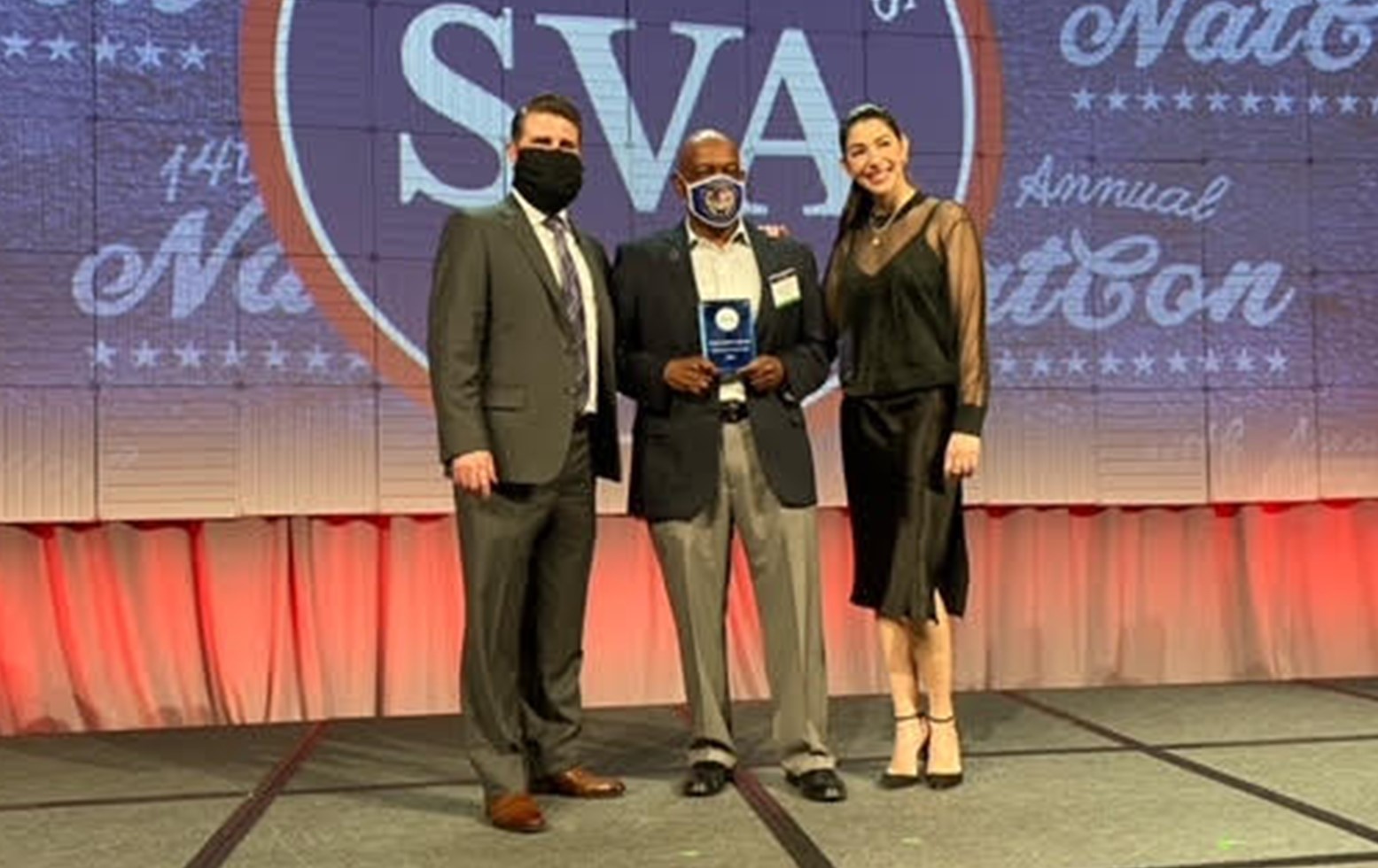
Georgia Southern University was selected as a finalist for the Chapter of the Year awarded by Student Veterans of America (SVA), an organization focused on advocating for and advancing resources for veterans in higher education. The University has SVA chapters on the Statesboro Campus and Armstrong Campus in Savannah, both of which were recognized with the award. “I am so proud of both of our SVA Chapters,” said Col. George Fredrick, Ed.D., director of Military and Veteran Services. “They offer truly outstanding support to our military-connected student population at Eagle Nation.” While this is the first time Georgia Southern has been a contender for this acknowledgement, the University has a tradition of being recognized for its investment in the military community. The Army ROTC program was established in 1980, and has won the MacArthur Award four times since 2009 for being one of the nation’s top ROTC programs. The Military Times publication named Georgia Southern as a Top 15 Best for Vets 4-year school for five consecutive years, including in 2019 when the University was ranked No. 1. Because the University operates near Hunter Army Airfield in Savannah and Fort Stewart in Hinesville, a number of students, faculty and staff are enlisted, retired or spouses of military members. Richelle Keilholz, Ed.D., is the staff advisor for SVA-Armstrong, and she believes this makes the campus community and military community deeply intertwined. “They become part of the campus culture, and I think that’s where you start to see that excellence comes when you have that kind of devotion,” said Keilholz. “You want to see our military service members, our family members and our spouses succeed in the military community and in higher education.” Georgia Southern’s relationship with veterans isn’t common among other universities, said military veteran project coordinator Rudy Duero. Many veterans feel overlooked and are an “untapped resource,” but not at Georgia Southern. “It’s awesome to have a group of individuals at the executive level who care and respect the opinions of the veteran students,” Duero said. “Veterans are being heard and they know that they’re being heard when they have good leadership representing them. The communication is always open.” Georgia Southern is one of five schools to be named a finalist for the award. The University sent a delegation to Orlando to attend the awards ceremony on Jan. 7. Academic and financial resources for veterans looking to pursue a degree can be found here. And if you’re a journalist looking to cover how Georgia Southern is working to support our veterans and the university’s military veteran project – then let us help. Rudy Duero is available to answer your questions - simply reach out to Georgia Southern Director of Communications Jennifer Wise at jwise@georgiasouthern.edu to arrange an interview today.


Research offers larger implications for health care environments Some of the most dangerous contaminants aren’t visible to the naked eye, but Georgia Southern University researchers are working to protect construction workers from this invisible danger. In the construction world, chronic exposure to crystalline silica, which is present in dust particles created from drilling, grinding and sawing on job sites, can lead to serious medical issues and preventable fatalities. Atin Adhikari, Ph.D, associate professor in Georgia Southern’s Jiann-Ping Hsu College of Public Health, has been awarded a $28,400 grant from Poma 22, LLC, to test new air curtain technology that could protect construction workers from hazardous fine dust particles. As the principal investigator (PI), Adhikari will work with co-PIs Aniruddha Mitra, Ph.D, professor of mechanical engineering, and Saman Hedjazi, Ph.D, assistant professor of civil engineering and construction management, from Georgia Southern’s Allen E. Paulson College of Engineering and Computing. “This research is important and innovative because we will test a revolutionary technology against fine dust exposure in construction sites that integrates a filtered air duct system into a hard hat, creating an air curtain or armor,” said Adhikari. “If we get a promising result, then this technology can be applied against other types of particles including bioparticles present in healthcare work environments.” Graduate research assistant Victoria Clower, who is earning a Master of Public Health in environmental health sciences, values her involvement in life-changing research. “This study of new technology on dust exposure control in construction sites will be very valuable with the quantifiable results showing the effectiveness of the air curtain technology,” she said. “As someone who is interested in occupational health, I am excited to work on a study that may provide an opportunity for other innovations for workplace safety to improve.” The U.S. Department of Labor’s Occupational and Safety Health Administration estimates roughly 2.3 million people in the U.S. are exposed to silica at work. Workers at risk can develop lung cancer, chronic obstructive pulmonary disease (COPD) and kidney disease. In addition, approximately 500 preventable silica-related deaths occur each year. As an environmental public health researcher, Adhikari has published numerous peer-reviewed studies on air quality and filtration. This project will focus on testing a newly developed respiratory protection technology, the Z Flow Pro helmet, which provides a downward draft through the front of the helmet, creating an air curtain in front of the worker’s face. Previous research has found that the air curtain is strong enough to deflect larger, visible particles. Adhikari and his team will conduct comprehensive field testing of this new technology to determine if it is also effective protection against fine particles, providing valuable information and justification on the readiness level of this product to protect construction workers. If you’re a journalist looking to cover this new testing that Georgia Southern is a major part of – then let us help. Atin Adhikari is available to answer your questions - simply reach out to Georgia Southern Director of Communications Jennifer Wise at jwise@georgiasouthern.edu to arrange an interview today.

Function – not fashion. What masks are the best to get behind when facing the risk of Omicron?
Omicron is here and it is spreading like wildfire across America and most of the globe. It’s highly transmissible and easily caught. For more than a year, most Americans have been taking on the simple approach of ‘masking up’ to contain any possible spread. People were using anything from surgical masks, N95s, cloth masks and even gators. Whatever could be used to provide a barrier around one’s nose and mouth. Cloth masks caught on, some even became fashion pieces – but as this most recent wave of COVID has shown, the type of mask is now just as important as the idea of simply covering up and looking good. “Cloth masks and things like that are very comfortable and they have good coverage on the face,” says Rodger D. MacArthur from the Medical College of Georgia. “But they don’t fit so tight and so air and any virus that’s in the air and come through the sides.” MacArthur who brings 20 years experience in the Division of Infectious Diseases at Augusta University says medical surgical masks are best for getting the most protection. "It’s not simply being so close to somebody that you sneeze on them, you splatter them with droplets. It’s in the air we’re breathing.” He just keeps a disposable one folded up in his pocket, but encourages the highest forms of protection you can find. Masks have been a popular and contentious topic during this pandemic and there’s a lot to know about this important topic – and if you are a reporter looking to cover this story – then let our experts help. Dr. Rodger MacArthur is a widely recognized expert in COVID-19, HIV antiretroviral therapy, resistance to antiretroviral drugs, and sepsis. He is available to speak with media – simply click on his icon now to arrange an interview today.


Good COP or bad COP? | The Aston Angle
Four Aston University experts reflect on COP26 and what it means for transport, community and global action on decarbonisation, support for small businesses and China’s coal consumption. COP26 was the 26th United Nations Climate Change conference held in Glasgow from 31 October to 13 November 2021. The participating 197 countries agreed a new deal, known as the Glasgow Climate Pact, aimed at staving off dangerous climate change. But will it be enough? Dr Lucy Rackcliff explains why replacing petrol and diesel vehicles with electric ones alone is not radical enough. The overwhelming message coming from COP26 transport day seemed to be that moving to zero emission-vehicles would solve the well-documented issues created by petrol and diesel fuelled vehicles. As noted at the conference itself, transport is responsible for 10% of global emissions, and emissions from transport continue to increase. The WHO estimates that transport-related air pollution affects the health of tens of thousands of people every year in the WHO European Region alone. However, on-street pollution is not the only effect we should seek to address. Transport is responsible (directly or indirectly) for a wider range of environmental issues, and a wider range of health impacts. Moving to electric vehicles will not address impacts such as loss of land for other activities, use of finite resources in the manufacturing process, the need to dispose of obsolete materials such as used tyres, and the health effects of sedentary lifestyles, facilitated by car-use. In urban areas in particular, re-thinking policy to focus on walking, cycling and public transport-use could free up land for other activities. Car parks could become actual parks, in turn encouraging more active lifestyles, creating space for people and plants, and leading to a range of wider societal benefits. Assuming that replacing petrol and diesel vehicles with electric ones will solve all our problems is a strategy which lacks ambition, and thus denies us the benefits that more radical thinking could deliver. Dr Lucy Rackcliff, Senior Teaching Fellow, Engineering Systems & Supply Chain Management, Aston Logistics and Systems Institute, College of Engineering and Physical Sciences. "Assuming that replacing petrol and diesel vehicles with electric ones will solve all our problems is a strategy which lacks ambition." Professor Patricia Thornley reflects on the role that Aston University and EBRI can play in empowering community action and informing global action with research. COP26 energy day was a fabulous experience. I have never before seen so many people in one place with one ambition: to support and accelerate decarbonisation of the UK’s energy systems. We ran a “fishbowl”, which allows people with different perspectives on a topic (experts and non-experts) to participate in dialogue around a common interest. Our researchers, local government representatives, industrialists and students shared their thoughts on what our future energy mix should look like, how it should be delivered and who needs to act. Without doubt the consensus was that many different technologies have a role to play and there is an urgent need to accelerate implementation. There were reflections on the importance of governance at different levels and an interesting discussion around the relative merits of centralized solutions and devolved actions. The reality is that of course we need both and that made me think about what Aston University and EBRI can do. Of course we should implement centrally with initiatives like the impressively low carbon Students’ Union building, but we also need to raise awareness among our students. Our film showing with the Students’ Union a week later helped with that I hope, and many more of our courses are incorporating sustainability elements which is fantastic. But what we haven’t quite achieved yet is an empowered, proactive voice that would lead to wider community action. There are pockets of excellence but a lot still to be done. My second week at COP26 was very different with police presence outside a building where I had three meetings with industrialists on the controversial topics of forestry and land-use. It was sad to be working with key players to improve sustainability and increase carbon reductions through UK bioenergy while listening to drumbeats outside from objecting protestors. There is a real lack of understanding around forest management and global land use and we need to work harder to improve that. It is a huge challenge, but one that EBRI will work hard to address. Professor Patricia Thornley, Director of EBRI, Energy and Bioproducts Research Institute (EBRI), College of Engineering and Physical Sciences. "There is a real lack of understanding around forest management and global land use and we need to work harder to improve that." Professor Presanta Dey explores whether Government pledges on climate change will translate to practical support for small businesses Following the COP26 climate change summit, the UK Government led the way in making a series of pledges and policy commitments to combat climate change. The question is: how will this translate to practical support for SMEs? Large corporations often take centre stage at COP, which is welcomed, but if we are to see real change, everyone needs to be involved. COP26 provided a refreshing voice for UK small businesses which featured panel discussions on the ‘SME Climate Hub’, highlighting net zero opportunities and challenges for SMEs. The momentum of COP26 has already inspired over 2,000 UK small businesses to sign up to the UN's Race to Zero campaign, which is designed to accelerate the adoption of credible net-zero targets. A long journey ahead still awaits us, however campaigns like these will hopefully start a ripple effect inspiring the remaining six million UK SMEs to take climate action. Small businesses have been crying out for more assistance from the government in the form of ‘green’ grants and financial support to enable them to make the necessary long-term changes. The timely announcement of HSBC’s £500m Green SME Fund at COP26 marks a promising first step towards making it easier for SMEs to fund their green ambitions. In summary, COP26 provided some comfort to UK SMEs seeking a higher level of commitment from government, financial services and businesses. This moment must act as a catalyst for policy makers to continue removing the barriers that are holding small businesses back. Professor Presanta Dey, Professor of Operations & Information Management, College of Business and Social Sciences. Professor Jun Du explains what China’s deal means for the rest of the world following its own energy crisis earlier this year… Despite the many disappointments expressed around the COP26 outcomes, important progess has been made for the world economy moving towards carbon neutrality. Among the noticeable achievements China and the US, which together emit 43% of the total CO2 in the air, have agreed to boost climate co-operation despite many disagreements. This includes China’s pledge to more actively control and cut methane emissions during the next decade - even when the country did not sign up to the global methane pledge made in Glasgow. Reaching net zero will be an unprecedented challenge for all countries. China will need to do the heaviest lifting among all. The country’s energy crisis earlier this year has shown just how hard it will be to reach net zero. The exceptionally early and cold winter this year will demand even more coal, so China’s willingness and resolve for climate commitments are good news to all. While lots of attention was turned to the absence of China’s president, Xi Jinping, from the COP26 climate summit, what is less appreciated is the fact that China is serious about decarbonisation. Few countries invest as much as China in that area, nor grow as fast in finding alternative energy to coal and in green industries like electric cars. China has set specific plans in its 14th national five-year plan for economic and social development to reach peak carbon emissions by 2030 and carbon neutrality by 2060. COP26 could be an additional driver for “an era of accountability” for China. Professor Jun Du, Professor of Economics, Finance and Entrepreneurship, Centre Director, Centre for Business Prosperity, Aston Business School levy.



Expert available to discuss Holmes trial verdict
Elizabeth Holmes, founder of the failed blood testing start-up Theranos, was found guilty Monday of four of 11 charges of fraud, after a closely watched trial that lasted nearly four months. A jury determined that she deliberately misled investors. Todd Haugh, associate professor of business law and ethics and the Arthur M. Weimer Faculty Fellow in Business Law at the Indiana University Kelley School of Business, is available to comment on the verdict and future sentencing. Haugh’s research focuses white collar and corporate crime, business and behavioral ethics, and federal sentencing policy, exploring the decision-making processes of the players most central to the commission and adjudication of economic crime and unethical business conduct. He can discuss: • The size of the potential sentencing and the calculation the judge will make in determining it (the statutory maximum is high -- 20 years; the sentencing guideline will be very high -- maybe life imprisonment; but the actual sentence will be much, much lower); • The impact the acquitted conduct will have on the sentence (none -- the law allows the judge to consider all conduct, even counts she was acquitted of) • The impact of Holmes going to trial versus pleading guilty (significant because she loses cooperation credit, for example); • The larger business ethics and compliance implications of the case, which Haugh believes are significant, given the high profile nature of Theranos and Holmes, the culture of Silicon Valley, and the rarity of a criminal trial in a case like this); Haugh can be reached at thaugh@indiana.edu and 812-855-6539


When students collectively save $748,925 in one semester and have easy access to textbooks on the first day of classes, coupled with Georgia Southern’s University Store’s ability to provide lower costs to students and avoid inventory delays, it’s a win-win for the campus community. The University-hosted Day1Access (D1A) program, a digital textbook model in collaboration with top publishers to reduce the cost of required course materials, ensures that all D1A materials are delivered at the lowest possible cost to the student – even lower than buying the material directly from the publisher. “The program itself grew out of the need to lower required materials cost and allow students to acquire that material on the first day of school,” said Derick Robertson, interim director for retail services at Georgia Southern. “Instructors no longer worry if the students have what they need and are ready to teach day one. We have allowed Day1Access to grow organically with instructors who see the benefits in the delivery method. Parents appreciate not having to search for their students’ material elsewhere for the cheapest option. The University Store appreciates the ease of delivery and not waiting on inventory to show up and running out of materials. In the end parents win, instructors win, students win and the University wins.” Through a partnership with Willo Labs, a leading digital resource provider, the program allows students to purchase their course material and have all the resources they need to begin their studies without having to visit the store. Access for all students begins the first day of class, with the option to opt-out of purchasing through the drop/add period. Each course utilizing D1A materials has received approval to digitally deliver required course materials to students from the instructor of that course. “The University Store is always looking to lower costs to students and provide the best service to the students of Georgia Southern University,” said Robertson. “Through Day1Access students have the required material they need at the cheapest price possible. As more departments adopt D1A the savings will continue to grow.” If you’re a journalist looking to learn more about Georgia Southern's digital textbook program– then let us help. The researchers behind this study are available, simply reach out to Georgia Southern Director of Communications Jennifer Wise at jwise@georgiasouthern.edu to arrange an interview today.