
Experts Matter. Find Yours.
Connect for media, speaking, professional opportunities & more.

Ask an Expert: What is COVID-19’s impact on the homelessness crisis?
The COVID-19 pandemic continues to impact the homeless community and homelessness crisis, including posing unique health risks to the homeless population and spurring a likely increase in homelessness due to job losses. “People experiencing homelessness are at enormous risk of exposure to the coronavirus, due to inability to self-isolate, as evidenced by outbreaks in congregate shelters,” says Marybeth Shinn, Cornelius Vanderbilt Chair and professor of human, organizational and community development at Vanderbilt Peabody College of education and human development. “With the cold weather coming, service providers are scrambling to provide food, shelter and outreach services safely, and to use rental assistance to get people into housing.” Shinn also explains that while eviction moratoriums imposed during the pandemic work to delay evictions, they do not prevent them. Arrears for rent, utilities and fees continue to accumulate when the moratorium ends, and landlords can continue to charge late fees for late payments. On the one hand, moratoriums will help keep many renters in their homes at a time when the alternatives, such as crowding in with friends and relatives or even becoming homeless, puts people’s health at risk. At the same time, landlords, especially small landlords, are also suffering. Landlords often have mortgages as well as other expenses to pay, relying on rental income to do so. In her new book with Abt Associates researcher Jill Khadduri, In the Midst of Plenty: Homelessness and What to Do About It, Shinn argues that homelessness is not a result of personal failure, but rather societal failure, as we have the knowledge and resources to end homelessness but lack the political will. As an immediate step during the pandemic, Shinn advises that Congress needs to enact relief for tenants and landlords, as well as reinstate weekly supplements to unemployment benefits to help people stay current on rent.



Why are U.S. corporate boards under-diversified?
Research tells us that firms with diverse workforces generally outperform those that do not. And in recent years, corporate America has taken significant strides towards greater heterogeneity in the employee base. But a problem remains at the top. U.S. boardrooms remain overwhelmingly Anglo Saxon and male. No less than 81 percent of the Standard & Poor (S&P) 1500 Index directors in America today are white men. White women account for 11 percent, while ethnic minority men make up 6 percent. Meanwhile, female minority board members account for just 2 percent of the total. For businesses, this is becoming problematic, not least because institutional investors and regulators like the Securities and Exchange Commission have started asking firms to open up about their processes in selecting board members. Where diversity is a criterion, firms are required to be transparent about specifications and frameworks. Shedding light on this issue is new research from Grace Pownall, professor of accounting, and Justin Short, assistant professor of accounting, at Emory University’s Goizueta Business School. Together with Zawadi Lemayian of Washington University, they parsed 12 years of data on gender, ethnicity, and salaries from the S&P 1500 to build a composite picture of who’s who and who’s paid what in U.S. boardrooms. What they found points to a systemic shortage of female and minority executives making it onto shortlists for board appointments. But that’s not all. Once women and minority men do make it onto the board, there’s another roadblock waiting for them: they are not getting promoted at the same rate as their white, male counterparts. There seem to be two complex dynamics at play, said Short: a glass ceiling effect hampering the upward trajectory of Black, female, and other minority executives, and what he and his co-authors call “myopic” bias on the part of corporate America. “We developed two hypotheses that might explain what’s behind the lack of diversity on boards,” explained Short. “The glass ceiling hypothesis comes from what we see as a shortfall of women and ethnic minorities in the workforce relative to white men—so the theory here is that these groups just aren’t getting promoted to the point where they would be considered for board positions.” “The alternative hypothesis we worked on was that there might actually be a plentiful supply, but that companies just don’t see directors from different backgrounds as being as valuable in the same way,” he said. “And we would put this down to some kind of institutional myopia or bias at the very highest echelons of business.” To put these hypotheses to the test, Short and his colleagues first collected demographical data on American board members from a database compiled by Institutional Shareholders Services. Here they were able to determine the gender and ethnicity of individuals. They also ran a simple statistical regression on salaries using data from S&P. Then they compared the two. “Economic theory tells us that if there’s a high demand for diverse directors—women and ethnic minorities—and there’s a low supply of them, then these directors will be able to command higher salaries than others,” said Short. “It’s a simple case of supply and demand, and minorities will come at a greater premium.” Looking at the S&P 1500 data, they found that female and minority directors were indeed getting paid more on average than white male counterparts in other companies. And when they analyzed this more closely, Short and his co-authors found that these salaries were in general being paid by larger, more successful firms. “We can see that women and minorities are commanding higher compensation than the average white male director across the S&P universe of 1500 companies, and it’s the bigger, better paying firms that are hiring them,” Short said. “So that tells us that the top companies are proactively trying to build diversity in their boardrooms. At the same time, it shows there is a deficit of supply in this talent pool—the so-called glass ceiling dynamic.” To understand whether bias or institutional myopia might also be limiting the prospects of Black, female, and ethnic directors, Short et al. also looked at differences in compensation within the same company, and here they found something striking. While they made more on average than the typical white male director in U.S. firms, minority directors were being paid around 3 percent less than their direct counterparts – the white male directors on the same board. All this scrutiny begs the questions: What is going on in the American boardroom? And why is there still such a stark lack of diversity in the upper echelons of business in the U.S. today? “This tells us something important,” said Short. “Once these directors make it to the board, for most of them that’s it. They don’t advance or achieve promotion at the same rate.” This could be due to bias or what Short calls a Rolodex effect: “Maybe it’s because they didn’t go to the same school as the chairman of the board, or weren’t connected socially in the same way, so they don’t appear in the Rolodex of candidates with right or familiar credentials to get promoted within the board,” he said. “We know it’s not about hard skills or aptitudes because the data shows us that women and minority directors typically hold more qualifications than their counterparts. But for whatever reason, once they are on the board, they fail to advance in the same way as white men.” Interestingly, Short and his colleagues found that there was a very small number of women and minority directors sitting on the boards of multiple companies in the U.S. “Pulling it all together, we see that there’s a generalized shortage of women and ethnic group candidates in the U.S.,” Short said. “Successful companies are proactively on the lookout for them and offer higher compensation to attract them. “But there seems to be a glass ceiling effect acting as a bottle neck for talent. We also see that minority directors become a bit stuck once they’re on a board. The upward momentum tails off relative to their white, male colleagues. This could be due to bias or myopic thinking.” All of this should provide rich food for thought for the most senior decision-makers in U.S. enterprises, according to Short and his co-authors. With the pressure on to drive board-level diversity in corporate American, leaders need to be cognizant of the roadblocks or cut-off points to tie to ethnicity and gender. “Diversity is something we urgently need to enable and nurture in the United States. Without diversity, creativity and innovation can stall, and in business you run the risk of deferring to group think—sourcing ideas and perspectives from the same small pool of shared experience or expertise,” said Short. “It’s encouraging to see that diversity has increased over time and the largest companies are proactive. But there are still vast gaps of representation on the board compared to the workforce. There’s still work to be done because diversity in American business should be commonplace.” If you are a journalist looking to cover this research or to learn more about the diversification of corporate boards in America, then let our experts help. Grace Pownall, professor of accounting, and Justin Short, assistant professor of accounting, at Emory University’s Goizueta Business School are both available for interviews; simply click on either expert's icon to arrange a time today.



COVID-9 is changing. With variants from places like Britain, Brazil, and South Africa surfacing and presenting in patients around the globe, the virus that scientists are trying to trap seems to be finding ways to wiggle free. The topic has many in the scientific and health care communities concerned, and recently, the New York Times featured leading experts to help explain what is happening and what American’s need to know to stay safe and healthy. Now, Dr. Denison and Sandra Weller, a virologist at the University of Connecticut School of Medicine, are investigating whether this insight could treat people with Covid. Certain antiviral drugs such as remdesivir fight infections by serving as RNA decoys that gum up the viral replication process. But these medications don’t work as well as some had hoped for coronaviruses. One theory is that the nsp14-ExoN enzyme chucks out the errors caused by these drugs, thereby rescuing the virus. Dr. Denison and Dr. Weller, among others, are looking for drugs that would block the activity of nsp14-ExoN, allowing remdesivir and other antivirals to work more effectively. Dr. Weller likens this approach to the cocktail therapies for H.I.V., which combine molecules that act on different aspects of the virus’s replication. “We need combination therapy for coronaviruses,” she said. Dr. Weller notes that nsp14-ExoN is shared across coronaviruses, so a drug that successfully suppresses it could act against more than just SARS-CoV-2. She and Dr. Denison are still at the early stages of drug discovery, testing different molecules in cells. February 05 – New York Times The ongoing COVID-19 pandemic is seeing many different twists in turns as scientists are learning more about the virus and how we can contain its spread – and if you are a journalist looking to speak with an expert on the topic, then let us help. Sandra K. Weller is Professor and Chair in the Department of Molecular Biology and Biophysics at the University of Connecticut and is a world-renowned expert in the spread of viruses. Dr. Weller is available to speak with media – simply click on her icon now to arrange an interview today.


Villanova Professor Discusses the Presidency and Future Use of Social Media
During his presidency, Donald Trump heavily utilized Twitter and other social media platforms as a key communication mechanism. But President Joe Biden’s use of social media will likely look very different according to Villanova University political science professor Matt Kerbel, PhD. “I think we’re going to see a return to something resembling normalcy in the way President Biden communicates with the public and runs his office,” says Dr. Kerbel. “President Trump was singular in his ability to use Twitter as a mouthpiece for his unfiltered thoughts because that was his brand and the basis for his campaign and presidency. Social media was an extension of his personality and a forum to amplify his message.” But President Biden’s campaign did not follow the same strategy. Dr. Kerbel predicts his social media use will vastly differ: “I expect President Biden to use social media to communicate his message of unity and publicize his plans and accomplishments. Expect a return to routine press conferences and planned media events along with social media outreach resembling what we’ve seen from the transition team.” Dr. Kerbel is an expert on political communication, including how politicians or political parties utilize traditional and new media. Due to his experience as a television and radio writer, researcher and author, he is frequently interviewed regarding politics and the media. He also writes political analyses for his blog, Wolves and Sheep.


Japan Society Presents When Practice Becomes Form: Carpentry Tools from Japan
Installation view at the Takenaka Carpentry Tools Museum, Kobe, Japan. On the occasion of the 50th anniversary of Japan Society’s landmark building, the institution is pleased to present the new exhibition, When Practice Becomes Form: Carpentry Tools from Japan. The exhibition celebrates the spirit of architecture and craftsmanship through Japanese woodworking tools as well as architectural patterns and various models. The site-specific installation, conceived by the esteemed contemporary architect Sou Fujimoto in collaboration with Brooklyn-based Popular Architecture, reinterprets major themes from the exhibition and is in dialogue with the gallery’s spaces, highlighting an enduring connection between traditional Japanese wooden construction and modern architecture. Featuring hand tools and joinery techniques that have been used for hundreds of years to build Japan’s wooden architectural masterpieces (from temples and shrines to teahouses and bridges), the exhibition unpacks how the intangible qualities of craftsmanship, such as consummate experience, knowledge, and the honed skills of master carpenters, have been transformed into significant forms of architecture. A diverse array of tools—planes, chisels, saws—have played an important role in the development of architecture in Japan’s history, and this philosophy extends to Japan’s cultural heritage today. Integral to the process of making by master carpenters (tōryo) is their extensive knowledge of the local environment and of wood as a material. Using natural resources and learning from their predecessors’ practices, they construct buildings using a refined methodology. Their philosophy of sustainability—for example, joinery can be restored or repaired as needed by future craftspeople—has been handed down over generations. Themes emerging from the exhibition have been interpreted by the internationally acclaimed architect Sou Fujimoto. His firm, Sou Fujimoto Architects, is based in Paris and Tokyo, and has been selected as site design producer for the 2025 World Exposition in Osaka, Japan. Fujimoto has designed the Serpentine Gallery pavilion in London (2013) among other internationally recognized projects. For this exhibition, Fujimoto has worked with Popular Architecture to explore the coexistence of nature and architecture. “Japan Society has been a home of cultural exchange, and a meeting place of past and present. In this exhibition, traditional Japanese craftsmanship is revealed in a new light by the design of contemporary architect Sou Fujimoto, and it becomes a precious educational opportunity to learn from this history,” says Yukie Kamiya, Japan Society Gallery Director. The building of Japan Society’s headquarters, designed by the architect Junzo Yoshimura (1908–1997), a major figure in 20th century Japanese architecture, opened to the public in 1971, becoming New York City’s first permanent structure designed by a Japanese citizen. It will commemorate its 50th anniversary in 2021. The building resides on land donated by John D. Rockefeller 3rd (1906–1978), former President and Chairman of Japan Society, who sought to revitalize the organization’s activities after World War II. Rockefeller 3rd and Yoshimura first met in Japan in 1951, and their friendship for over two decades resulted in Japan Society’s current building in Manhattan. Since its opening, the building has continued to serve as the central platform for the interexchange of ideas, knowledge, and innovation between the U.S. and Japan within a global context. In 2011, the building was designated landmark status by the New York City Landmarks Preservation Commission. When Practice Becomes Form: Carpentry Tools from Japan explores the connections between techniques, tools, and forms from traditional practices in Japanese carpentry and contemporary design perspectives. Paying homage to Japan Society’s building, where the arts and cultures of Japan and the United States intersect, this exhibition delves into the artistry and craftsmanship of architectural practice. Complementing the exhibition is a series of related public programs, including lectures, a hands-on workshop, and gallery tours. A digital publication illustrated and designed by Nathan Antolik further expands upon the exhibition. This exhibition is organized by Japan Society in collaboration with Takenaka Carpentry Tools Museum, Japan. The exhibition design is by Sou Fujimoto, in collaboration with Popular Architecture as local architect. About Sou Fujimoto Born in Hokkaido in 1971, Sou Fujimoto graduated from the Department of Architecture, Faculty of Engineering at Tokyo University and established Sou Fujimoto Architects in 2000. He has won several international competitions, including his recent 1st prize for the 2014 International Competition for the Second Folly of Montpellier, France ("L'Arbre Blanc"). In 2019, he was selected as the master architect for the Tsuda University Kodaira Campus Master Plan development. Among his notable projects are the annual summer pavilion for the Serpentine Gallery in London (2013)—the youngest architect to receive the commission; House NA in Tokyo (2012); Musashino Art University Museum & Library (2010); and House N (2008). In 2012, he was part of the Japanese team that won a Golden Lion award for Best National Participation at the Venice Architecture Biennale for their design of alternative housing concepts for homes destroyed by the 2011 tsunami. Most recently, he was selected as site producer for the 2025 World Exposition in Osaka, Japan. About Popular Architecture Brooklyn-based Popular Architecture combines simplicity with innovation across multiple scales ranging from master plans to buildings, interiors, and products. The firm is directed by Casey Mack, RA, LEED AP. After completing his M.Arch at Columbia, Mack worked with the Office for Metropolitan Architecture in Hong Kong and New York. He has taught urban design at the New York Institute of Technology and Passivhaus housing at Parsons School of Constructed Environments. Currently, with the support of the Graham Foundation for Advanced Studies in the Fine Arts, he is writing the book Digesting Metabolism: Artificial Land in Japan 1954-2202 (Hatje Cantz Verlag, 2021).


Examining the Popularity of the Bernie Sanders Meme
The image is a familiar one to millions across the country: Senator Bernie Sanders sitting with his legs crossed and arms across his chest—wearing a face mask, warm coat and knitted mittens—and watching as Joe Biden was sworn in as the 46th president of the United States on January 20, 2021. Two weeks later, however, the photo looks different. That's because very quickly that inauguration snapshot became an internet sensation, with people photoshopping it to create social media memes—placing Senator Sanders in famous paintings or scenes in movies ranging from the Breakfast Club to Star Trek. But what it is that draws people to these scenes and motivates them to create memes? Charles L. Folk, PhD, a professor of psychological and brain sciences at Villanova University, discusses the psychology behind it all. “Scenes and people activate ‘schemas’ in our memory,” says Dr. Folk. “Schemas are organized structures of knowledge, stored in memory, that are built up through experience. For example, we all have a ‘restaurant’ schema that stores information about the things that are typically in restaurants and the kinds of interactions we can expect in a restaurant.” Research suggests that our attention is drawn to objects that are incongruous with the “context” of a scene, Dr. Folk notes. “Thus, if we see a bedroom scene, our bedroom schema is activated, and our attention would be drawn to an object that is incongruent with that schema—like a toaster in a bedroom scene.” Dr. Folk shares that we have schemas for people as well. “Seeing Bernie Sanders activates our Bernie schema,” he says. “Bernie, in particular, has a very unique schema—so just seeing the picture of Bernie with his Vermont mittens is interesting/humorous because it is quite consistent with our schema of him.” “However, activating our Bernie schema in the context of an incongruent scene schema—like Bernie sitting on the bridge of the Starship Enterprise or a well-known movie set/scene—is particularly alluring precisely because of that incongruity,” continues Dr. Folk. Dr. Folk notes that the development of the app that can place the Bernie meme anywhere in Google Maps motivates people further to create their own versions of outrageous incongruity. “This contributes to the viral nature of the meme,” Dr. Folk says.

A lasting legacy - A gift that will touch the lives of generations
$1.48 million estate gift to Georgia Southern University Foundation funds College of Education student scholarships An extraordinary estate gift from a daughter and her husband to honor her parents will touch the lives of generations of students to come through scholarships for Georgia Southern University students working to become public school educators. The $1.48 million gift from the late Janice Sapp Castles and her late husband Charles, named for her late parents, Margaret Elizabeth and Cullen Bernice Sapp, is the second largest estate gift received to date by the Georgia Southern University Foundation. “It is inspiring when alumni, whose lives were transformed through education, give back so generously so that future students can realize the same opportunities,” said Georgia Southern President Kyle Marrero. “The Castles’ gift honors the Sapps’ legacy and their desire to help others succeed.” An alumna of then-Armstrong Junior College, Janice Castles earned an Associate of Arts degree with the financial assistance of a scholarship. That scholarship, coupled with her parents’ determination to live sacrificially to provide for educational opportunities for their children that they themselves had not experienced, allowed Sapp to begin her post-secondary academic ambitions and inspired her to give to others. Sapp continued her education at the University of Georgia earning a master’s and specialist degree in counseling as well as a doctorate in school psychology. Her longstanding education career included serving as a middle and high school teacher, guidance counselor, school counselor and adjunct professor. She also formed her own psychology practice that provided therapy and psychological assessment and diagnosis in the Atlanta area. “The generous support by the Castles family will assist in removing financial barriers for many students pursuing initial teacher preparation degrees at both the undergraduate and graduate levels at Georgia Southern for many years to come,” said College of Education Interim Dean Amy Heaston, Ed.D.. “Initial teacher preparation degrees provide students with the first step to becoming certified to teach. For many students, the Margaret Elizabeth and Cullen Bernice Sapp Memorial Scholarship will provide a needed opportunity to achieve their aspirations of teaching in their own classrooms.” If you are a journalist looking to know more about the Georgia Southern University Foundation or the College of Education -- simply reach out to Georgia Southern Director of Communications Jennifer Wise at jwise@georgiasouthern.edu to set and time and date.


Hitting all the right notes - Georgia Southern music industry degree ready to launch
Georgia Southern University’s Department of Music earned national accreditation for a new music industry degree, the final step for an innovative program that combines music, technology and entrepreneurship. Launching in the fall of 2021, the new music industry program will prepare musicians for evolving careers in music. The program curriculum combines a traditional degree with 21st-century technology and performance opportunities. Accreditation from the National Association of Schools of Music (NASM) allows the new program, Bachelor of Arts in Music with a concentration in music industry, to be offered at the Armstrong Campus in Savannah. Students will have the option of declaring an emphasis area in music technology or music business. “We could not be more excited about this program,” said Steven A. Harper, Ph.D., chair of the Department of Music. “For many years, the music program has been itching to expand its reach and regional impact. Savannah is perfectly suited for a degree of this type and we couldn’t be more pleased to have this degree come to fruition.” The music industry program includes courses in music management, live sound, recording studio techniques, digital audio workstations and music entrepreneurship. “The numerous music industries in Savannah include music manufacturers, performing organizations/venues and major music festivals. These industries can provide ample internship possibilities for hands-on experience in a chosen area,” Harper said. “We are able to reach a student body we’ve never been able to serve before. We can prepare students for a whole different set of in-demand careers and we can create ties with the music industry in Savannah in a way that’s never been possible for us until now. It’s going to be a huge boon for the department, the college, the university and the Armstrong Campus.” One professor key to the program will be Stephen Primatic, DMA, who teaches percussion, theory, jazz and music technology. His versatility is evidenced by the books he has written: two on percussion pedagogy and another on instrument maintenance and repair. “This program will be beneficial to our students, the University and the community of Savannah, offering education and training for music careers in the 21st century,” said Primatic. If you are a journalist looking to know more about the Bachelor of Arts in Music with a concentration in music industry or would like to interview Steven A. Harper, Ph.D., chair of the Department of Music or Professor Stephen Primatic -- simply reach out to Georgia Southern Director of Communications Jennifer Wise at jwise@georgiasouthern.edu to set and time and date.
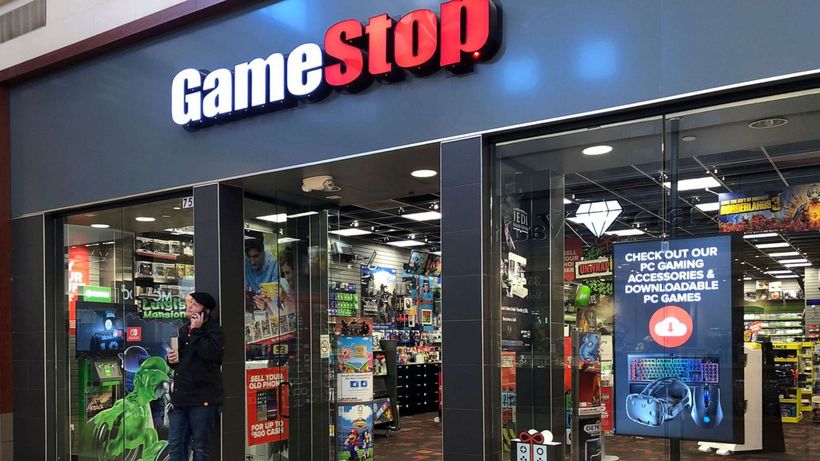
IU Kelley School finance expert available to discuss GameStop, Robinhood
Charles Trzcinka, the James and Virginia Cozad Chair of Finance at the Indiana University Kelley School of Business and an expert on financial markets and investments, is closely following developments involving individual investors and Game Stop and available to talk with reporters. He can discuss the impact of retail investors using the popular Robinhood brokerage and Reddit’s “Wall Street Bets” page on the stock of low priced companies like Gamestop, AMC and stocks such as BlackBerry, Bed Bath and Beyond and Nokia. Several brokerages halt buying of those and other stocks on Thursday. Trzcinka teaches behavioral finance and is familiar with Robinhood's model is to use game technology to trade stock and how it makes money by selling the right to trade against the orders to hedge funds and high frequency traders. In order to schedule an interview, contact George Vlahakis, associate director of communications and media relations at the Kelley School, at vlahakis@iu.edu or 812-855-0846.


How the Biden Administration Can Help Save the Planet
With the inauguration of Joseph R. Biden as the 46th president of the United States came a slew of executive orders—and perhaps most notably America's reentry into the Paris Climate Accord. After the Obama administration joined the largest global cooperative agreement to limit the emission of dangerously climate-altering greenhouse gasses in 2015, the U.S. withdrew in 2017 under former president Donald Trump. Villanova University biology professor Samantha Chapman, PhD, studies how "blue carbon" solutions, like the restoration of wetlands, can contribute to slowing the harmful impact of climate change on the planet. Recently, Dr. Chapman broke down the top three things the Biden administration must do to save the planet, since we are, as she puts it, "close to some scary tipping points." #1: Pressure Brazil’s President Bolsonaro to stop the devastation of the Amazon. "The Amazon Rainforest regulates our global climate. It is imperative that through diplomacy and aid, we incentivize developing countries to preserve their intact lands and biodiversity. We can't do this without helping local communities incentivize the people living in these places to save these lands. Road building in forests is a huge cause of our planet's downward slope." #2: Invest in restoration of natural ecosystems. "We must invest resources into coastal wetlands and forests, here and abroad. USAID could be partially retooled in partnership with the United Stated Geological Survey (USGS), which already does this. These natural ecosystems will serve as natural climate solutions and be harbors for threatened species and nice places for humans to recreate. We must restore the opportunity for nature to re-invoke the necessary feedbacks that make the ecosystems work. Sometimes this involves complicated engineering, sometimes it is simpler and means giving nature space to restore. We're trying both." #3: Find ways to make people feel connected to land and nature—and value it. "This is a vague one and not one that I'm sure any administration can do. The pandemic has given me hope on this—I see so many more people out hiking, fishing, walking, and hanging out in parks. When time comes for voting on taxes, people have to remember that these state parks and preserves and even neighborhood parks cost money to staff and preserve. The U.S. has incredible land and nature and yet, in my experience, Americans value and understand it less than other countries. Some of that has to do with our frontier history. We can learn from Native Americans. Appointing Representative Deb Haaland as the secretary of the interior is one good step the Biden administration has taken in this direction." Dr. Chapman emphasizes that despite the uphill battle ahead, she remains hopeful. "Left to heal and helped to heal, the ecosystem processes that sustain our lives and those of the other amazing organisms on our planet can be restored," she notes. "Good things are happening. They just need to happen at a much larger scale."
