
Experts Matter. Find Yours.
Connect for media, speaking, professional opportunities & more.

Recognizable companies including Google, Twitter and Eli Lilly all are encouraging their employees to work at home to prevent spread of the coronavirus. Research on the benefits and drawbacks of “working from home is still in its infancy, but researchers have generally found that telecommuting can function as a double-edged sword, said Erik Gonzalez-Mulé, assistant professor of organizational behavior and human resources at the Indiana University Kelley School of Business. “On the one hand, telecommuting can increase productivity because it enhances employees’ feelings of control and autonomy. With the freedom to choose when and how to do their work, employees generally experience greater motivation and satisfaction,” Gonzalez-Mulé. “Of course, there is a caveat here, in that managers should take care to maintain the same performance management systems they use for ‘in-residence’ employees, such as setting specific goals, ‘checking in’ on goal progress, using regular performance evaluations, and the like. “The idea is to communicate to employees that, as long as the work gets done -- which managers can assess with performance management systems -- they can choose when and how to do it,” he added. “On the other hand, recent studies show that telecommuting can increase feelings of isolation. This is because telecommuting workers have significantly less face-to-face contact with their manager and colleagues, which can lead telecommuters to feel alone and socially disconnected. One way to ameliorate these effects is to use technologies that involve virtual face-to-face contact, like Zoom or Skype, or to have at least some ‘real’ face-to-face contact, such as some meetings that are conducted in-person.”


FAU Experts Available to Speak on Coronavirus and its Impact Worldwide
Coronavirus has now earned global attention and Florida Atlantic University experts are available to speak with media about the impact of coronavirus on areas related to this worldwide epidemic, including hospitality, tourism, employment sick leave, and politics. If you are a journalist covering the progress of this virus and how it is impacting various sectors and segments of society – then let us help with your stories, questions and ongoing coverage. LeaAnne DeRigne, Ph.D., MSW, associate professor in FAU’s Phyllis and Harvey Sandler School of Social Work LeaAnne DeRigne is an expert on paid sick leave and its impact on the health and financial security of individuals, families and public health in general. Her recent research on the importance of paid sick leave benefits has received wide press coverage,and has been cited around the country by policy makers, lobbyists, and advocates pushing cities and states to mandate sick leave coverage. Key findings from the study, which are representative of the nation, showed that regardless of income, age, race, occupation, full-time or part-time work status, health status or health insurance coverage, workers without paid sick leave were three times more likely to delay medical care than were workers with paid sick leave. She also conducts research on other workplace benefits such as flexible work, vacation time and pensions. Peter Ricci, clinical associate professor and director of the Department of Marketing and Hospitality Management in FAU’s College of Business Peter Ricci is a hospitality industry veteran with more than 20 years of managerial experience in segments including food service, lodging, incentive travel, and destination marketing. While filling the role of hotel general manager for almost a decade, Ricci served as a part-time educator before entering academia full time as both a clinical associate professor and administrator. Kevin Wagner, Ph.D., professor and chair of FAU’s Department of Political Science in the Dorothy F. Schmidt College of Arts and Letters Kevin Wagner’s research and teaching interests include presidential and judicial politics, political behavior and legislative behavior. He is also a research fellow of the FAU Business and Economics Polling Initiative (BEPI). Wagner has lectured extensively on American politics and has served as an expert in many leading newspapers including the New York Times, Boston Globe, New York Newsday, the Dallas Morning News, and the Miami Herald. He has been featured as the political analyst for CBS 12 in West Palm Beach and on national television including NBC’s “Today.” All of the experts listed above are ready and available to speak with media. To arrange an interview simply click on an expert’s profile or email Lisa Metcalf at lmetcalf@fau.edu.





What started in China with the world watching, now has the globe’s full attention as some countries are locking down borders and advising residents to prepare for the worst. In America, leaders are urging caution and hoping to ease anxiety among the population. The number of coronavirus cases across the nation surged to more than 100 on Tuesday with six deaths blamed on the outbreak. That doesn't mean it's time to panic, said Surgeon General Jerome Adams. “Caution, preparedness, but not panic,” he said. That message was echoed at the White House, where Vice President Mike Pence confirmed "four additional fatalities" in Washington state Monday but stressed again that the risk "remains low" according to experts who are working with the Trump administration's newly formed coronavirus task force. There are more than 40 "domestic cases," mostly in California and Washington state, Pence said, and even more cases of people who came from other countries. However, as Covid-19 creeps closer to pandemic levels, there’s a lot of information out there, and not all of it is accurate. So, if you’re a journalist covering the progressing story – let Manhattanville College help ensure you get the right information and facts for your stories. Manhattanville College Professor Anna Yeung-Cheung is a biologist, virologist and infectious disease expert and has a lot of insight and experience with infectious diseases and Covid-19. When asked recently by Slate.com how Coronavirus can kill a young doctor if the risks are primarily to older people and small children, Professor Yeung Cheung said it was due to the repeated exposure because of his profession. “It’s a dosage thing,” explained Anna Yeung-Cheung to Slate.com. “Health care workers are exposed to far more people, often pretty sick people, than the average person, and therefore stand to come in contact with higher levels of the virus. A lot of virus can still overwhelm a healthy immune system.” Originally from Hong Kong, Professor Anna Yeung-Cheung received her B.S. from National Taiwan University and her M.S. and Ph.D. degrees from the University of Georgia. Dr. Yeung-Cheung is available to comment on global pandemics and where we are now with Covid-19. Simply click on her icon to arrange an interview today.


It’s here and it’s time America got serious about Covid-19, known as coronavirus. The CDC is working overtime, and leading government health officials are scrambling to ensure hospitals are equipped, front-line health providers are ready and the public is informed. But with any emergency, there comes the risk of misinformation and unnecessary worry. As the new coronavirus outbreak becomes an ever-looming threat in the United States, state infectious disease specialists say the first step to staying safe is this: Remain calm. Also, don’t worry about buying a mask. “You really have to make sure you get the accurate information and not … ‘Lock your doors, close the windows, buy a generator and hope for the best,’” said Dr. Peter Gulick, an infectious disease expert at the Michigan State University's College of Osteopathic Medicine and director of the MSU Internal Medicine Osteopathic Residency program. That’s not only alarmist and bad advice, he said, it’s a waste of energy. The best advice — like these tips from the U.S. Centers for Disease Control and Prevention — is tried-and-true, Gulick said: Wash hands often with soap and water for at least 20 seconds. It’s especially important after using the bathroom, before eating, and after blowing your nose, coughing or sneezing. No soap and water? Use an alcohol-based hand sanitizer with at least 60 percent alcohol. Avoid touching your eyes, nose and mouth with unwashed hands. Avoid close contact with people who are sick. If you’re sick, stay home. Cover your cough or sneeze with a tissue, then throw the tissue in the trash. Clean and disinfect frequently touched objects and surfaces using a regular household cleaning spray or wipe. If you think you’ve come in contact with someone with the virus (there have been no confirmed cases yet in Michigan) contact your health provider immediately. February 26 – The Bridge Regrettably, that too can often lead to financial reactions that can ripple across the economy. Lately, the surging stock market has plunged with worries from investors and Wall Street about how America’s workforce will be impacted if the virus spreads. Friday ended the worst week the stock market has had since 2008. NBC News 6 sat down with the Dean of the Broad College of Business at Michigan State University, Sanjay Gupta, to talk more about the stocks and what to expect after this week. “The stock market is clearly spooked, and it has become nervous with whatever is going on in the business world,” said Gupta. What has ‘spooked’ the business world, is COVID-19. “The coronavirus is quarantined lots of factories, in fact the whole country,” said Gutpa. Gutpa says the halt in Chinese manufacturing also limits businesses and goods here in the United States. “In our day to day lives, either there will be some things that we count on that may not be available. It might be that the priciest of those things that we count on change, or go up dramatically because we are so dependent on a foreign source,” said Gutpa. February 29 – WLNS TV Covering an outbreak like Covid-19 isn’t easy, there are multiple angles to explore and it is vital that only the correct facts are shared by media to the millions of viewers, readers and listeners that are waiting for the latest information – and that’s where our experts can help. Sanjay Gupta is the Eli and Edythe L. Broad Dean of the Eli Broad College of Business. He is an expert in the areas of corporate and individual tax policy issues and finance. Peter Gulick is currently an associate professor of medicine at Michigan State University, College of Osteopathic Medicine, and serves as adjunct faculty in the College of Human Medicine and the College of Nursing. Both experts have already been sought out by the media for their expert insight on this issue – if you are interested in arranging an interview, simply click on either expert’s profile to arrange a time today.

Truce with the Taliban - will it hold and is it possible?
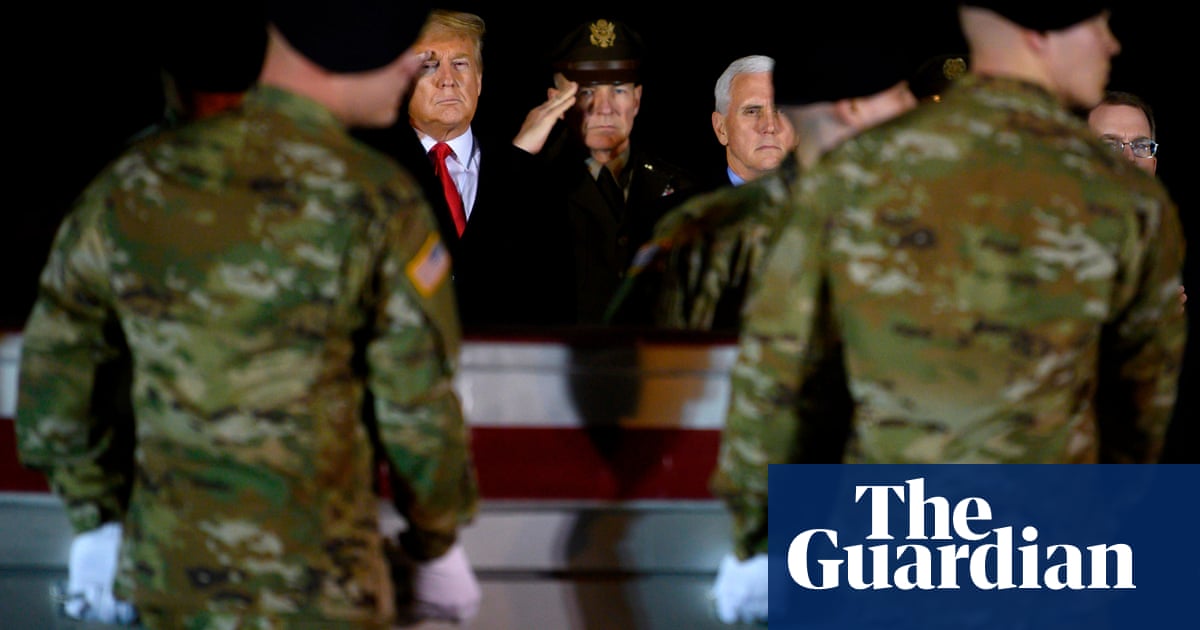
It’s been nearly two decades of war that has taken thousands of lives and cost American taxpayers trillions of dollars. And late last week, a temporary truce with the Taliban was finally reached after 18 years of fighting and if that holds, a more permanent resolution is expected to be signed on February 29. If successfully implemented, the weeklong “reduction in violence” agreement, which came into force at midnight Friday local time (1930 GMT, 2:30 p.m. EST), will be followed by the signing of the peace accord on Feb. 29, wrapping up America's longest-running conflict and fulfilling one of President Donald Trump's main campaign promises. Friday's announcement of an agreement on terms for a peace deal follows months of negotiations between the two sides that have broken down before. Yet both parties have signaled a desire to halt the fighting that began with the U.S. invasion after the September 11, 2001, attacks by Osama bin Laden's Afghanistan-based al-Qaida network. Should the truce stand, the U.S.-Taliban deal would be followed within 10 days by the start of all-Afghan peace talks that could result in the formation of a new government in Kabul, a pledge from the Taliban not to allow terrorist groups to operate in the country, and the phased withdrawal of U.S. and other foreign troops over 18 months. February 21 – US News and World Report It’s a historic moment for all involved, but there’s a lot of questions to be asked. Does an agreement like this have a chance of succeeding? What will happen to the area once all U.S. and other troops finally withdraw? Is this potentially the first sign of peace in the region? What protection does Afghanistan’s fragile government have if left to stand on its own? There are a lot of scenarios to consider, and if you are a journalist covering this vent, that’s where our experts can help with your questions, stories and ongoing coverage. Dr. Craig Albert is a leading expert on war, terrorism and American politics and has testified to the U.S. Congress on Islamic Extremism. He is also the Director of the Master of Arts in Intelligence and Security Studies at Augusta University. He has experience with all forms of local and national news organizations and is available to speak to media regarding this latest development between America and the Talban. Simply click on Dr. Albert’s icon to arrange an interview or to learn more about his expertise.


Entrepreneurship expert: New Americans vital to U.S. economy
In the United States, there is a long history of marginalized communities being extremely entrepreneurial. These communities were driven, in large part, by the desire to meet their own ethnic, religious, and cultural needs, according to Christine Beech, D.M., the Dr. Jon and Betty Kabara Endowed Chair in Entrepreneurship and Innovation at Saint Mary’s University of Minnesota. In the mid-19th century, more than 100 hospitals were founded by the Jewish community to fight anti-Semitism in medical school appointments and meet patient needs of having kosher options during the hospital stay.These opportunities were not available in the existing network of mainstream hospitals. Similarly, in the beginning of the 20th century, Irish Catholic immigrants began establishing a network of parochial elementary schools as a way to preserve their faith and culture and allow children to learn about their faith in school, Dr. Beech said. These two initiatives, led by immigrant groups, helped establish networks of schools and healthcare institutions that served a social good in their communities while generating jobs and stimulating the economy. In addition, there is a long line of entrepreneurs in the African-American community who combatted racial discrimination through new businesses because they were marginalized from the mainstream economy, Dr. Beech said. Examples of these entrepreneurs include Madam C.J. Walker, who invented a line of hair care products to serve the needs of her community, and Charles Clinton Spaulding, who developed the largest African-American business in the early 20th century specifically serving the insurance needs of the African-American community. In modern times, one of the largest marginalized communities in the U.S. is comprised of new Americans, many of whom are immigrants and have developed culturally responsive businesses. Although current policies are set in place to curtail U.S. immigrants, it is important to remember that the country could potentially lose an entire segment of the population that has been vital to the economy, Dr. Beech said. Beech pointed to a 2015 study from the Kauffman Foundation which mentioned that 40% of the Fortune 500 in 2010 were companies founded by an immigrant or the child of an immigrant. Nearly 30% of all new businesses started in 2014 were started by immigrants, Dr. Beech said, according to a related study from the same foundation. “We've been able to see constant growth and diversity within our economy that's been very healthy for us,” said Dr. Beech, who also serves as the executive director of the Kabara Institute for Entrepreneurial Studies at Saint Mary’s. “There's a narrative that says that the immigrant community is coming here to find work. But in fact, when we look at the data, a significant portion of them are actually creating jobs and starting businesses.” Dr. Beech added three primary reasons for these continued statistics indicating significant immigrant entrepreneurship: The drive to be independent A desire to meet their communities culturally specific needs A response to societal biases that hinder success within the mainstream workforce “Those migrant communities often develop their own businesses, almost like a subset of the economy, where they can't be marginalized, where they're actually taking charge of their own economic well-being,” said Dr. Beech. When it comes to knowing the overall impact of the immigration policies on the economy, there will be a natural lag in the data — possibly as long as five years — given how much time it typically takes for immigrants to establish businesses after arriving in a new country, Dr. Beech said. Are you a journalist covering this topic and interested in an interview? That’s where we can help. Christine Beech, D.M., has had a career that encompasses academics, entrepreneurship, military service, and consulting. She has been a faculty member in the business department at Saint Mary’s University since 2017 and is the executive director of the Kabara Institute for Entrepreneurial Studies. Before joining Saint Mary’s University, Dr. Beech owned her own consulting business in the Washington, D.C., area for many years. Before that, she worked as a corporate entrepreneur where she led the development of a multimillion-dollar business line for a global consulting firm. Dr. Beech is an expert in entrepreneurship, social entrepreneurship, and women entrepreneurs. She is available to speak with the media. To arrange an interview with her, simply click on her photo below to access her contact information.


Unprecedented levels of partisanship vitriol threatens the health of democracy in U.S., globally
Voter-based political parties have played an integral role in American politics since their formation in the 1790s, yet it is difficult to remember any other time in history — other than perhaps the 1850s — when the level of divisiveness was this high and the polarity this profound between Republicans and Democrats. To add more fuel to the fire, the anti-democratic actions against the rule of law by President Donald Trump have become a primary threat to democracy in the U.S., said David Lynch, Ph.D., a professor of History and Social Sciences and Political Science program coordinator at Saint Mary’s University of Minnesota. The same action are also threatening how the government works and delegitimizing and undermining institutions that make and enforce laws,Lynch added. Those institutions include formal ones such as Congress and the political parties themselves, as well as less formal entities, such as the traditional news media. “You have to have free, fair, open media in order to have a democracy. If you do not have a free press, you do not have a democracy,” Dr. Lynch said. “And similarly, you need to have the rule of law where laws are carried out not for political ends, but based on the laws.” The recent impeachment proceedings were an attempt to curtail these actions, but the partisan response to the Senate’s impeachment trial allowed the violation of democratic norms to be rewarded, said Dr. Lynch. Furthermore, politicians who react strongly to anti-democratic actions threaten to further delegitimize the government, such as Trump’s refusal to shake the hand of House Speaker Nancy Pelosi, a Democrat, at his most recent State of the Union address and her subsequent action of tearing up his speech. “That helps both sides reinforce their own position that the other side is less legitimate and that we shouldn't cooperate with somebody like that,” Dr. Lynch said. Dr. Lynch pointed to how the indices that measure the health of democracy both in the U.S. and abroad have all gone down since Trump won the 2016 election. In addition, the most recent Economist Intelligence Unit’s Democracy Index reflected the worst registered global democracy score since its inception in 2006. In that report, the U.S. received a score of “flawed democracy.” Traditionally, the U.S. democratic system has been able to regulate such extreme partisanship before election day by not nominating candidates that violate democratic norms or are far from the ideological center. On election day, overly partisan candidates are vulnerable in swing districts and swing states. That ability for the public to express its collective voice, though, has eroded over the years as the number of swing districts has dwindled. "When people view through a partisan lens, it changes the incentives that elected officials have because they may be rewarded for partisan but anti-democratic actions,” Dr. Lynch said. “It also changes how average people view this whole debate.” To demonstrate the current political scene in the U.S., Dr. Lynch alluded to a 2017 study conducted by a group of political scientists at Yale University in which experimental surveys were sent to Venezuelans to see to what degree they would be willing to accept a less democratic candidate if he or she was a member of the political party they affiliated themselves with. The answer was quite a large degree. “The big message here is you can't necessarily rely on the public just to vote out an anti-democratic candidate because they might get a partisan advantage from that anti-democrat,” Dr. Lynch said. Are you a journalist covering this topic and interested in an interview? That’s where we can help. David Lynch, Ph.D., professor of History and Social Sciences and Political Science program coordinator, has taught political science at Saint Mary’s University of Minnesota since 1996. Dr. Lynch has also written over a dozen chapters on international relations, international political economy, and American foreign policy, including the chapter on trade in the United Nations Association of the USA’s “A Global Agenda” from 1996 to 2005. Dr. Lynch is an expert in political science, political economies, and international relations. He is available to speak with the media. To arrange an interview with him, simply click on his photo below to access his contact information.

Well it’s obvious now – the gloves are off. The Nevada debate on NBC was the closest thing to a prize fight the network has aired in decades. No punches were pulled, it got personal quick for newcomer Michael Bloomberg. In fact, if anyone thought that the contest to lead the Democrats against Donald Trump in November was going to be a polite conversation abut ideas and policy, was proven dead wrong. Here are just a few of the memorable moments captured by media: Warren labeled Bloomberg “a billionaire who calls people fat broads and horse-faced lesbians.” Sanders lashed out at Bloomberg’s policing policies as New York City mayor that he said targeted “African-American and Latinos in an outrageous way.” And former Vice President Joe Biden charged that Bloomberg’s “stop-and-frisk” policy ended up “throwing 5 million black men up against the wall.” Watching from afar, Trump joined the Bloomberg pile on. “I hear he’s getting pounded tonight, you know he’s in a debate,” Trump said at a rally in Phoenix. “I don’t think there’s any chance of the senator beating Donald Trump,” Bloomberg declared before noting Sanders’ rising wealth. “The best-known socialist in the country happens to be a millionaire with three houses!” And ongoing animosity flared between Buttigieg and Klobuchar when the former Indiana mayor slammed the three-term Minnesota senator for failing to answer questions in a recent interview about Mexican policy and forgetting the name of the Mexican president. Buttigieg noted that she’s on a committee that oversees trade issues in Mexico and she “was not able to speak to literally the first thing about the politics of the country.” She shot back: “Are you trying to say I’m dumb? Are you mocking me here?”Later in the night she lashed out at Buttigieg again: “I wish everyone else was as perfect as you, Pete.” February 19 – Associated Press There’s a long way to go, but the next couple of weeks could be crucial as Super Tuesday approaches. And if you are a journalist looking for a media-ready expert who can provide insight, perspective and objective opinions about who will win, who needs to drop out and who is the best possible challenger for the Whitehouse – let us help. Mark Caleb Smith is the Director of the Center for Political Studies at Cedarville University. Mark is available to speak with media regarding the DNC Primary and the upcoming election. Simply click on his icon to arrange an interview.


Does the height of a person really matter? In America, if you are running for office, it might. Augusta’s Dr. Gregg Murray was on CNN this weekend discussing how height can play an advantage in American politics. Murray does confirm how a candidate’s height (or perception of) does make a difference in the minds of voters. "Yes, there does seem to be some sort of relationship between an elected leader's height and how her or she is perceived, "says Murray. Here’s the segment: As the long road to November winds and weaves along the campaign trail, there are going to be many, many different factors that candidates look to capitalize on to gobble up every available vote. And if you are a journalist covering the election – that’s where our media-ready experts can help. Dr. Gregg R. Murray, professor of political science at Augusta University, is available to talk about the upcoming election and all aspects surrounding each campaign. Murray’s research focuses on political behavior and psychology with specific interests in voter mobilization and turnout. He is also executive director of the Association for Politics and the Life Sciences.


After New Hampshire - What’s next for Bernie and is it time for Biden to bail?
As we all know, you can’t win a presidential primary with only two states, but you sure can lose one. And after a long summer and fall of campaigning, the results from Iowa and New Hampshire are revealing the frontrunners of who will most likely lead the Democrats in the quest to unseat President Donald Trump. Coming into the New Hampshire primary, Augusta’s Dr. Gregg Murray offered this insight, “It looks like Sanders is comfortably in the lead, which is not surprising given he comes from a neighboring state. Mayor Pete is surprisingly staying strong and Klobuchar is hanging in there. Other than Sanders, this is not the leader board that most people would have expected before the start of the primary season. Biden and Warren, who many people not too long ago would have thought would be making strong showings, are surprisingly a good distance back in the pack.” But now that the first crucial two states have been heard and the primaries shift focus toward South Carolina and Nevada – what’s next? Joe Biden is ‘all in’ on South Carolina, but after two abysmal showings, is it enough? Amy Klobuchar seems to be surging – can she capitalize on that momentum? And, Pete Buttigieg and Bernie Sanders are neck and neck – what will it take for one to emerge as the frontrunner? As the next phase of primaries approach – there’s a lot to cover, and that’s where our experts can help. Dr. Gregg R. Murray, professor of political science at Augusta University, is available to talk about the current race to lead the DNC. Murray’s research focuses on political behavior and psychology with specific interests in voter mobilization and turnout. He is also executive director of the Association for Politics and the Life Sciences.