Experts Matter. Find Yours.
Connect for media, speaking, professional opportunities & more.

How Diverse Crop Mixes Can Help Solve the Water Scarcity Crisis
How exactly can alternative crop mixes come to our rescue in this water scarcity crisis? Different crops have different water needs in order to grow without stress. And it is often the case that the thirstiest crops are grown in places where little water is available. Shifting crop mixes to crops that require less water but still ensure farmer profits is a promising way to reduce the amount of water needed to irrigate crops and to avoid conditions of water scarcity. Kyle Davis, assistant professor in Geography and Spatial Sciences at the University of Delaware, can offer commentary on this. He is an expert in food systems, sustainability, global environmental change and geospatial data science among other things. Diverse crop mixes can save water, maintain economic output, and provide for the needs of aquatic ecosystems. Davis and others recently released a study that looks at issue. "These findings demonstrate strong opportunities for economic, food security and environmental co-benefits in irrigated agriculture and provide both hope and direction to regions struggling with water scarcity around the world," the study notes. Davis has been featured in publications such as Earth.com and Phys.org and was recently awarded an Early Career Award for pioneering global research in sustainable agricultural food systems. He can be contacted by clicking the "View Profile" button.


Georgia Southern’s public health center receives $4 million to assist rural hospitals nationwide
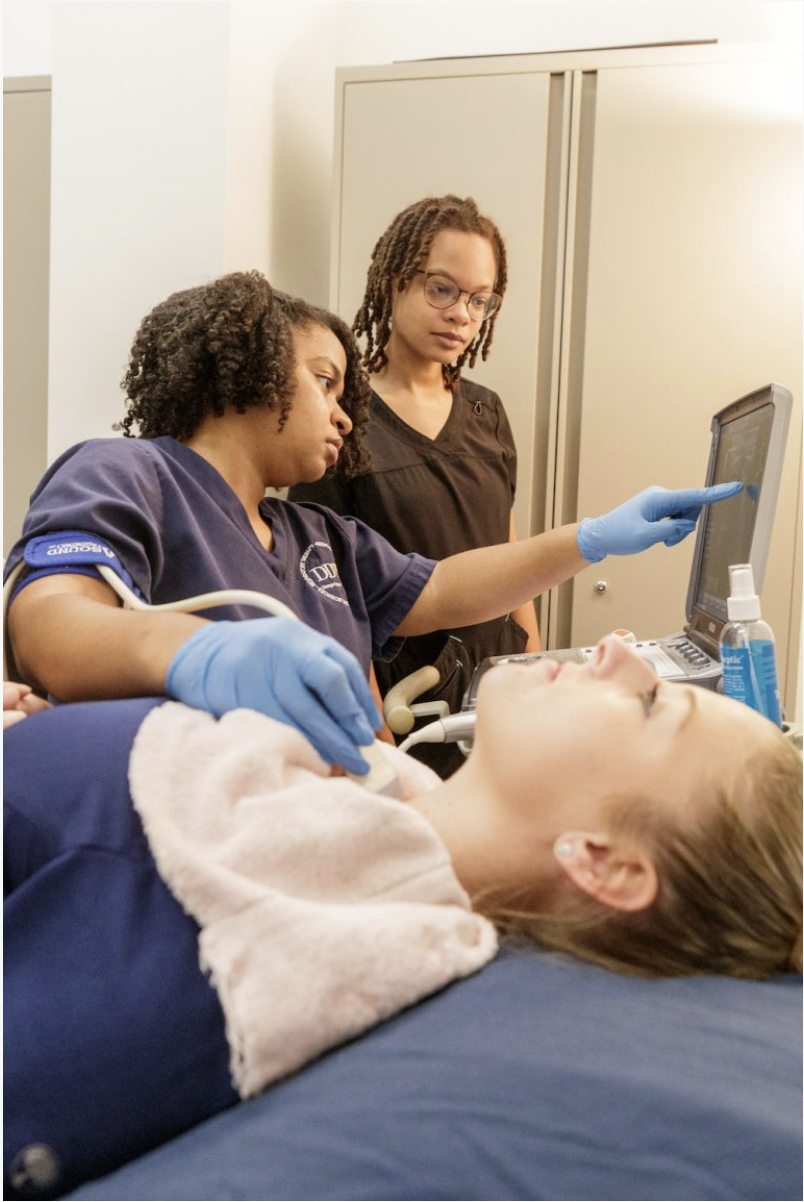
Georgia Southern University’s Center for Public Health Practice and Research at the Jiann-Ping Hsu College of Public Health (JPHCOPH) received a $4 million grant from the Health Resources and Services Administration (HRSA) to provide targeted technical assistance to rural hospitals nationwide. The funding will support the team’s implementation of the Targeted Technical Assistance for Rural Hospitals Program over a five-year period (2023-2028). “Many rural hospitals are struggling financially across the U.S.,” said JPHCOPH Dean Stuart Tedders, Ph.D. “Long-term, the primary program goal of this grant is to ensure that all rural hospitals are financially viable and positioned to serve their communities with the essential health care services that we all need and expect. A viable health care system is essential for assuring that all communities and their residents thrive. I am very proud of the Center for Public Health Practice and Research at the JPHCOPH and the commitment they have made to improving the quality of life of rural and underserved populations across the country.” Bettye Apenteng, Ph.D., and Charles Owens, both professors of health policy and management, serve as the co-principal investigators for the grant. “We are proud to be selected to work cooperatively with rural hospitals across the U.S. to strengthen their viability so they can continue to provide essential health care locally so the residents, the local hospital and the community may thrive,” said Owens. As part of this cooperative agreement, the team will work in partnership with HRSA and rural health stakeholders to provide in-depth and tailored technical assistance to rural hospitals at risk of financial distress nationwide. Technical assistance delivered as part of this program will help rural hospital communities implement a prioritized strategy for maintaining essential services locally through capacity building in evidence-based decision-making, operational and financial improvement, strategic management, community partnership, project implementation and evaluation. “We are excited to extend the work we have done in Georgia with rural hospitals, for close to a decade, to the rest of the nation,” said Apenteng. “We look forward to building strong collaborative relationships with rural hospital communities nationwide.” The grant activities will be executed by a multidisciplinary team that includes additional JPHCOPH faculty Angie Peden; Andrew Hansen, DrPH; Linda Kimsey, Ph.D.; William Mase, DrPH; Tilicia Mayo-Gamble, Ph.D., and Samuel Opoku, Ph.D.; and Parker College of Business’ Kwabena Boakye, Ph.D.; and the College of Arts and Humanities’ Jason Murdock. Interested in learning more or looking to talk with Bettye Apenteng, Ph.D., and Charles Owens about this grant? Simply click on an expert's icon or contact Georgia Southern's Director of Communications Jennifer Wise at jwise@georgiasouthern.edu to arrange an interview today.


Ask Our Expert: Why it’s important to get a flu vaccination
As cold and flu season approaches, it’s time to take proactive steps to ensure the health and well-being of everyone. Getting a flu vaccination is be the best defense in staying healthy this time of year. Klaus Ley, MD, founding co-director of the Immunology Center of Georgia, part of the Medical College of Georgia at Augusta University, emphasizes the significance of getting vaccinated against the flu. “The flu can have serious consequences and by getting vaccinated, you protect yourself and those around you,” Ley said. “It’s a simple yet effective way to prevent the spread of this contagious virus.” Flu vaccination is not only a responsible choice but also a crucial step in maintaining public health. The World Health Organization records about 1 billion cases of influenza each year. Severe cases often result in hospitalizations, contributing to up to 650,000 respiratory-related deaths globally. Worried about potential side effects from the vaccine? Ley said that’s a minor concern compared to the effects of the full-blown flu. According to the Centers for Disease Control and Prevention, life-threatening allergic reactions to flu shots are very rare. While severe reactions are uncommon, it’s important to let your health care provider know if you have a history of allergy or severe reaction to vaccines before getting a flu shot. “Common side effects from a flu shot could include soreness or swelling at the site of the injection, headache, low-grade fever, nausea, muscle aches or fatigue. Those minor side effects are an indication your immune system is responding as it should to the vaccination. You will experience much more severe fever, aches and other symptoms if you catch the flu without being vaccinated against it,” said Ley. Klaus Ley, MD, is the Georgia Research Alliance Bradley Turner Eminent Scholar in Immunology, founding co-director of the Immunology Center of Georgia, and a professor in the Department of Physiology at the Medical College of Georgia at Augusta University. He's available to speak with media regarding flu season and vaccinations - simply click on his icon now to arrange an interview today.


Bird flu resurfaces in chicken, turkey flocks, in midst of fall migration
Across the U.S., cases of highly pathogenic avian influenza are ramping up again in commercial chicken and turkey flocks as well as backyard flocks. HPAI, commonly known as bird flu, is a highly contagious viral disease that is fatal to chickens and turkeys. According to the U.S. Department of Agriculture, more than 60 million commercial and backyard birds in the U.S. have died from the disease or been killed to contain its spread, since the current, ongoing outbreak first hit U.S. commercial flocks in early 2022. Wild bird migrations are an especially important signal to the Delmarva Peninsula, a major broiler chicken producing region, that HPAI could be near. “In the Atlantic Flyway, extending from the northern Delmarva down to the Carolinas, that’s where the bulk of the Atlantic Flyway birds overwinter,” said Jeffrey Buler, a professor of wildlife ecology in the University of Delaware College of Agriculture and Natural Resources. “We get tens of thousands of snow geese that are here in the winter, and they’re just starting to arrive.” Wild birds, particularly waterfowl, can shed the virus through their saliva or feces. Around this time of year, waterfowl are migrating south, to their wintering grounds. Buler is part of a team of scientists from the University of Delaware, the University of California, Davis, and the U.S. Geological Survey that has been researching using weather radar to track migrating wild birds that could be carrying avian influenza viruses. “It gives us an idea of where and when these migrations are happening,” Buler said. “So ultimately, the poultry industry can ramp up their biosecurity.” Buler can talk about wild bird migrations, what types of migratory birds we tend to see in Delaware this time of year, trends in fall migration and climate, and ongoing weather radar research. To arrange an interview with Jeffrey Buler on this topic, click the “Contact” button in his ExpertFile profile.


In a new study funded by the Institute of Education Sciences, University of Delaware Associate Research Professor Leigh McLean and her co-authors found a strong connection between teachers’ math and science anxiety and the respective math and science anxiety of their low socioeconomic status (SES) students. When a teacher was more anxious in these content areas, their low-SES students were also more anxious; and, when teachers were less anxious, so were their low-SES students. Teachers play a significant role in shaping students' experiences and attitudes towards learning. When teachers themselves exhibit anxiety or stress about specific subjects, it can inadvertently send signals to students that these subjects are difficult or intimidating. McLean can speak more broadly about this phenomenon and discuss the interesting pattern of associations that emerged from their analysis. She has been featured in multiple publications including The Associated Press and Education Week. Click the "View Profile" to connect with her.

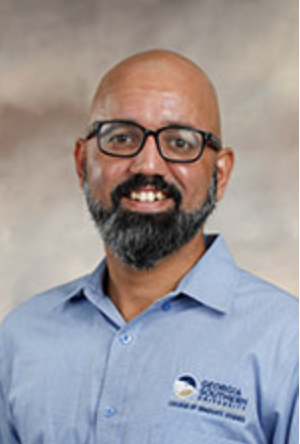
The National Science Foundation awarded nearly $3 million to Georgia Southern University to launch the Research and Mentoring for Postbaccalaureates (RaMP) program. At each university, RaMP supports approximately 10 students per year in gaining full-time research experience, mentoring for potential career paths and building a network of professional contacts. Georgia Southern’s project, “Mentoring and Research Opportunities for Careers in Coastal Science (MROC2S),” aims to aid those with little to no exposure to research or the resources to do so. Checo Colón-Gaud, Ph.D., associate dean of the Jack N. Averitt College of Graduate Studies and principal investigator for a National Science Foundation grant, totaling almost $3M, that will be used for a research and mentoring program. “The target is to benefit underrepresented minority students to increase diversity in the STEM (science, technology, engineering and mathematics) fields,” said Checo Colón-Gaud, Ph.D., associate dean of the Jack N. Averitt College of Graduate Studies and the project’s principal investigator (PI). Beginning in August 2024, participating students will be given an annual stipend. The postbaccalaureate fellows will have the opportunity to learn regional-specific natural resource science and participate in meaningful training with their peers before entering the field. “It would benefit those who are not yet sure if they want to pursue careers in natural resource science or graduate studies after earning their undergraduate degree,” Colón-Gaud added. Georgia Southern’s awarded fund will extend through 2027, and with 10 participants at a time, Colón-Gaud anticipates that this “significant and transformative” experience should strengthen the workforce. Interested in learning more about the Research and Mentoring for Postbaccalaureates (RaMP) program or looking to talk with Checo Colón-Gaud? Contact Georgia Southern's Director of Communications Jennifer Wise at jwise@georgiasouthern.edu to arrange an interview today.

Research explores recreational shark fishing's impact on protected species
In Delaware, recreational shark fishing is popular, with anglers taking part in half- and full-day shark fishing trips. However, they are prohibited from keeping protected species of sharks. A University of Delaware research team led by Aaron Carlisle, assistant professor in UD's School of Marine Science and Policy (SMSP), is studying the impact of releasing these sharks, aiming to understand their post-release survival and how fishing operations handle them. Carlisle, graduate student Bethany Brodbeck and Ed Hale, assistant professor and aquaculture specialist for Delaware Sea Grant, are conducting the field research for the study, riding along with recreational fishing vessels to better understand what happens to sharks when they are caught and released. Another component to the research is being led by George Parsons, E.I. du Pont Professor at UD’s College of Earth, Ocean and Environment, who is looking at the economic aspect, using survey-based research to value the shark fishery and study anglers’ perceptions and attitudes toward sharks and their management. Carlisle said the two concurrent studies will help gauge the biological and economic impacts of the shark fishery in Delaware. “We want to find out how much money the fishery is actually drawing to the economy,” Carlisle said. “We also want to find out how the fishery is actually impacting the populations of sharks in Delaware, especially the protected ones.” The research was funded by Delaware Sea Grant, which helps communities wisely use, manage and conserve coastal resources. To arrange an interview with Carlisle, simply click on the link to his profile. Pressing the contact button and using the form will send your request directly to him and a member of UD's media relations team.

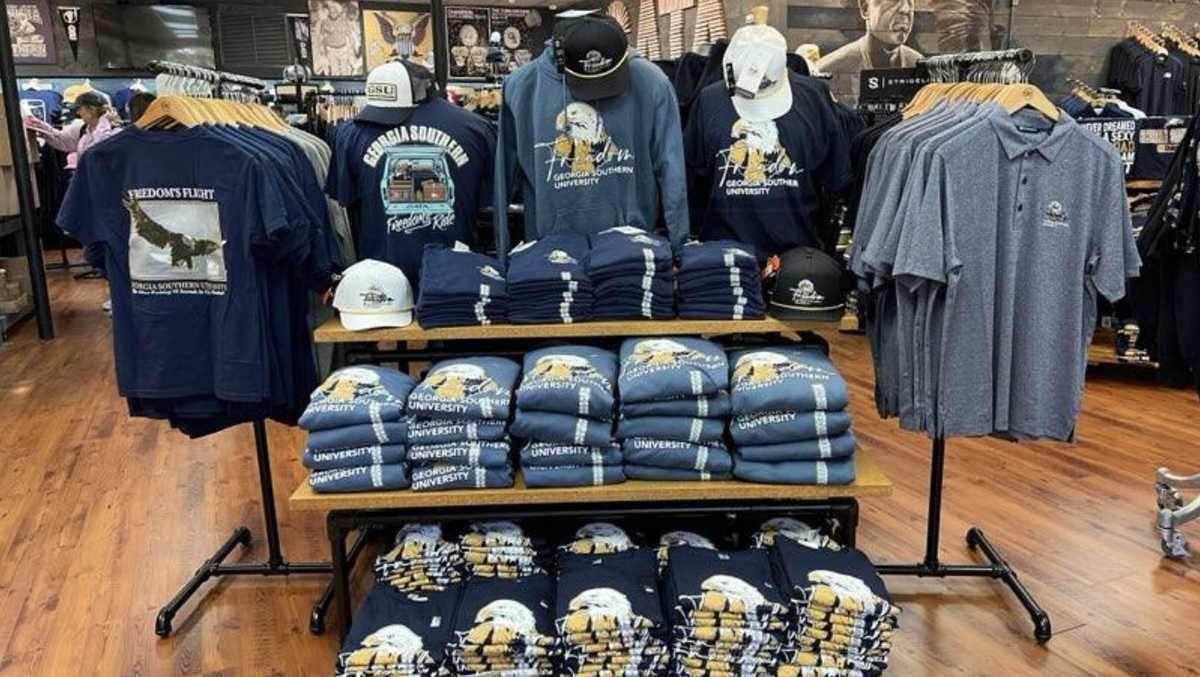
It's been called the most exciting 30 seconds in college football - and recently Freedom, Georgia Southern University’s live bald eagle mascot that flies before each home game was flying high with some serious media attention on TV, radio and print. Unable to survive on his own because of an injury to his beak as a newborn, Freedom came to Georgia Southern in 2004 and now lives at the University’s Center for Wildlife Education in Statesboro alongside other eagles, raptors, reptiles and waterfowl. He will celebrate his 20th birthday this December. The school recently launched a new line of merchandise - and the news soon went viral putting Freedom and his handler, Wildlife Center Executive Director Steve Hein in the spotlight. The coverage was tremendous and if you're looking to know more about Freedom - let us help. Simply click on Wildlife Center Executive Director Steve Hein's icon now or Contact Georgia Southern's Director of Communications Jennifer Wise at jwise@georgiasouthern.edu to arrange an interview today.


An interdisciplinary team from Georgia Southern University was awarded more than $465,000 from the National Academies of Sciences, Engineering, and Medicine to foster the development of scientific and environmental skills that are critical to solving complex issues in the Gulf of Mexico region now and into the future. The award is part of an initiative with the Gulf Research Program (GRP) that awarded $2 million to eight projects that engage children and youth in place-based educational activities. The funded project, “Suwannee Watershed: Assessment and Monitoring of Place to Gain Understanding of Local Flow (SWAMP to GULF),” is led by principal investigator (PI) Lacey Huffling, Ph.D., associate professor of science education, and co-PIs Heather Scott, Ed.D., and Regina McCurdy, Ph.D., both assistant professors of science education. (l-r) College of Education’s Lacey Huffling, Ph.D., Regina McCurdy, Ph.D., and Heather Scott, Ed.D., are part of an interdisciplinary team awarded $465k to train science teachers in the Gulf of Mexico. “I am honored that we were selected to receive funding from the Gulf Research Board,” said Huffling. “Over the past four years, we have developed a strong network of Georgia middle and high school teachers who are dedicated to developing the science and environmental literacy of their students through watershed citizen science, specifically focused on areas of Georgia that flow into the Gulf of Mexico. We are excited to continue to grow this network of teachers in Florida further to foster scientific and environmental literacy of future generations to monitor and advance scientific and community understanding of the Lower Suwannee Watershed.” The group will train and support teachers in Florida to implement place-based learning through citizen science using communities as classrooms to deepen teachers’ and students’ sense of place and connection to local watersheds; research how teachers and students address local issues and solve problems by using and developing their critical environmental agency; and increase participation of rural populations in science, which have historically been underrepresented. This initiative, along with the seven other GRP projects, will help connect young learners across the Gulf of Mexico region with local environmental issues and work toward the betterment of the region at large. “The goal of these grants is to empower young learners through place-based education, an interdisciplinary, student-centered, inquiry-driven teaching and learning practice situated in the local community and environment,” said Karena Mary Mothershed, senior program manager for the GRP’s Board on Gulf Education and Engagement. “These eight projects have a high potential to create long-lasting impacts on underserved students in grades K-8 across the Gulf of Mexico region, enabling them to consider and address environmental challenges impacting their own communities.” Additional SWAMP to GULF project members include Georgia Southern staff and faculty: Mary Thaler, senior administrative assistant for the Center for STEM Education; J. Checo Colón-Gaud, Ph.D., professor of biology and associate dean of the Jack N. Averitt College of Graduate Studies; Shainaz Landge, Ph.D., assistant professor of chemistry, Luke Roberson, coordinator of Community Engagement and Outreach for the Institute of Water and Health; and Asli Aslan, Ph.D., director of the Institute of Water and Health. Interested in learning more? Contact Georgia Southern's Director of Communications Jennifer Wise at jwise@georgiasouthern.edu to arrange an interview today.

Highlighting the Impacts of Insufficient WIC Funding on Low-Income Families
Since the beginning of the COVID-19 pandemic, the cost of food has risen 25%, and many are struggling to provide enough nutritious food to their families. Federal safety net programs – like the Special Supplemental Nutrition Program for Women, Infants, and Children (WIC) for example – are intended to provide needed support for healthy foods during hard times, serving millions each year. The WIC program, however, is not guaranteed to all that might need it. Instead it relies on budget appropriations, which for the first time in the history of the program may not be enough to cover those in need. There is a chance that as many as 600,000 young children, pregnant and new mothers who qualify for WIC will not be able to receive benefits in the upcoming year. Allison Karpyn is Co-Director of the Center for Research in Education and Social Policy (CRESP) and Professor in the Department of the Human Development and Family Sciences at the University of Delaware. She is able to speak holistically about WIC and other federal food programs and what this funding can accomplish. "Federal Nutrition and related programs also need to address issues of stigma," Karpyn says. Recent frameworks developed by Dr. Karpyn and colleague suggest that more needs to be done to adequately understand and support families to use the benefits intended for them. Research is clear that food and nutrition security are closely tied to our health, she notes. Karpyn is able to speak about this and more. If you would like to speak to her, click her "View Profile" link.