
Experts Matter. Find Yours.
Connect for media, speaking, professional opportunities & more.

Expert Insight: The Voice of Alexa: How Speech Characteristics Impact Consumer Decisions
In the 2020 film “Superintelligence,” an all-powerful artificial intelligence attempts to take over the world, and it studies an average person, played by Melissa McCarthy, to decide if humanity is worth saving. The AI is voiced by James Corden—a voice it chooses because it knows it’s one McCarthy’s character will engage with. Rajiv Garg, associate professor of Information Systems & Operations Management at Emory’s Goizueta Business School, shows the “Superintelligence” trailer before his research presentations to set the tone. Garg conducts research that explores the impact of artificial intelligence voices on consumer behavior and purchase intent, along with Haris Krijestorac, a professor at HEC Paris, and Vijay Mahajan, a professor from The University of Texas at Austin. Garg’s research began when Amazon launched celebrity voices for its Alexa device in 2019. From Samuel L. Jackson to Shaquille O’Neal, users can now get their news and entertainment, while interacting with their favorite superstars. “I questioned if certain voices could get more engagement or more purchases from consumers,” Garg says. If Alexa starts talking to you in Samuel L. Jackson’s voice, will you continue the conversation? What could Samuel L. Jackson’s voice sell you that you would buy? Garg and his team began their research by collecting more than 300 celebrity voice samples, which they analyzed based on their sound characteristics, such as amplitude, frequency, and entropy. They looked at 20 sound characteristics and identified that all the voices could be segmented into six clusters: ostentatious, colloquial, friendly, authoritative, seductive, and suave. The team then created advertisements for select products using computer generated voices for each of the six clusters, opting for artificial intelligence-created speech instead of celebrity deep fakes due to permission legalities. They chose a shoe and an office chair as their products, and created two different advertisements for each product. One ad was simple, denoting the shoe as comfortable for all-day wear and the office chair as comfortable for sitting in for extended time periods. The other ad was hedonic, denoting the shoe as crafted with Italian leather and the office chair equipped with several massage features. They recorded the four advertisements using both a female and male voice for all six voice clusters. Study participants listened to each of the four advertisements in one of the 12 voices, which was randomly selected. After the advertisement was played, participants were asked if they wanted more information, and later, if they wanted to buy the product (omitting the price as to not add another factor to their decision making). Influencing Consumer Behavior For simple, utilitarian products, they found no significant effect of voice on information seeking behavior. Garg says once participants hear this type of advertisement, they simply decide to purchase or move on. Participants do, however, engage more in information seeking behavior for hedonic products when the voice is ostentatious, seductive, or authoritative. The team also found men were more likely than women to engage with ostentatious or seductive voices, and women were more likely to engage with friendly or colloquial voices. Overall, they found participants did not seek information with male voices. For information seeking, men and women only engage if the voices are female, which is somewhat intuitive. The industry is doing this—Alexa, Google, and Siri all have a female voice. In terms of purchase intention, they found ostentatious voices have higher yields for utilitarian products. Men, especially, were more likely than women to purchase a utilitarian product advertised in an ostentatious voice. Think about advertising a stapler. It’s a stapler—it staples paper—but you advertise it in a French accent to make it sound interesting. Conversely, for hedonic products, an ostentatious voice has a negative effect on purchase intent because Garg says it can make the product sound gimmicky. Their research shows colloquial voices do the best here because people focus more on the advertisement’s content. Across the board, they found seductive voices have a negative effect on purchase intent, but more so on utilitarian products compared to hedonic ones. Men were more likely than women to respond positively to seductive and suave voices. Applying the results Voices are another way smart device companies can personalize their customers’ experiences. Garg says these companies should be aware that there may be a certain voice that will garner the best engagement. Their findings are not isolated to business, but may apply to other industries, such as the media. Garg says, for example, if publications intend to increase reader curiosity and engagement, they should use a female colloquial voice on “click to listen” features. Although not yet tested, Garg says he wouldn’t be surprised if their results extend to real-world settings with real human voices as well. During their research, Garg’s team asked participants if they had heard the advertisement voices before, and about 15 percent of respondents says they had. "These were voices we’d created for the first time,” Garg says. “If they say they’ve heard the voice before, that means they were thinking of them as human voices. Although we didn’t study it that way, I do believe what we’re seeing will be relevant for actual human being’s voices and interactions.” Having researched this for years, Garg says every time he listens to a voice, whether a customer service representative or podcast host, he questions whether or not it is impacting his behavior. A lot of times when I’m making a decision, I know that I’m making that decision passively because of the voice. “I’m acting 50 percent based on the rational information in the voice, but the other 50 percent I just want to listen more. There is an inherent desire for a certain voice.” Garg says his favorite part of the research are those “aha moments,” whether they be the influence of voice in his own life or in the industry—such as large companies using female voices in their products to draw engagement. He says he hopes to continue doing this kind of research to help startups and other companies perform better, as AI-powered voices continue to change the way people interact with technology and consume information. “We’re finding these interesting phenomena that can help create new products that are more effective,” Garg says. “I am trying to increase the economic surplus, in some ways to improve society, and this technology presents numerous opportunities.” Looking to know more? Rajiv Garg from Emory’s Goizueta Business School is available to speak with media – simply click on his icon now to arrange an interview today.



Aston University biofuel experts advise on how Ukraine can build back greener
• Aston University biofuel experts provide advice on Ukraine’s recovery • Professor Patricia Thornley and Dr Vesna Najdanovic were invited to Royal Society conference • Outcomes will be presented to policymakers at Ukraine Recovery Conference in June. Two Aston University scientists have provided expert advice on how the UK’s wealth of research can support Ukraine’s reconstruction. A two-day conference was organised by the Royal Society and its outcomes will be presented to policymakers ahead of the UK government-hosted Ukraine Recovery Conference in June. As Ukraine is one of the largest agricultural producers and exporters it also generates large amounts of agricultural waste which could be used to produce biofuels and valuable chemicals. This could decrease the country’s fuel import dependency and increase the revenues for the sector. Researchers at the conference explored how to tackle some of the many challenges facing Ukraine, from rebuilding its economy, health and wellbeing, regional security and planning for a green recovery. Professor Patricia Thornley who is director of Aston University’s Energy and Bioproducts Research Institute (EBRI), was one of the just three academics invited to contribute to an infrastructure roundtable session. Professor Thornley said: “I was honoured to be asked to attend the infrastructure roundtable and share my expertise on renewable energy and sustainable products. “Ukraine has significant sustainable agricultural and forestry residues, which can be valuable to plug potential gaps in oil and gas supply for heating in the short term. But in the long term these can provide opportunities to produce sustainable bio chemicals and materials which could provide a basis to grow green chemical, material and construction industries. “UK researchers, such as those at EBRI at Aston University and the Supergen Bioenergy Hub, have the experience needed to work on developing these solutions to build back greener. Research evidence and expertise have a vital role to play in supporting policy makers to tackle the complex and urgent challenges related to the reconstruction and recovery of a resilient, sustainable Ukraine.” Meanwhile, Dr Vesna Najdanovic presented opportunities to develop bioenergy and bioproducts in Ukraine at the event and participated as a panel member. Ukraine’s recovery: rebuilding with research, which brought together Ukrainian and UK researchers and policy makers, was held on 15 and 16 May in London. It was funded by Universities UK International, Research England and the British Council and supported by the Academy of Medical Sciences, British Academy and the Royal Academy of Engineering.



Aston Medical School given full approval by the General Medical Council
Aston Medical School has been given full approval by the General Medical Council (GMC), meaning they can award degrees to graduating students for the first time this year. The Medical School at Aston University completed the GMC’s rigorous quality assurance process, which began in 2016. The decision, ratified by the GMC’s Council, means Aston Medical School can be added to the list of UK bodies able to award a primary medical qualification. The approval means that from this summer, medical graduates from Aston University will be added to the medical register and will be able to join the UK’s healthcare workforce as doctors. Aston Medical School welcomed its first students in 2018 and will be graduating its first cohort of students at its graduation ceremonies taking place in July 2023. The school was built on the ethos of educating medical professionals of the future, those who come from a wide cross section of society, and in particular those from disadvantaged communities where they have traditionally faced more barriers to accessing and completing medical education. Professor Helen Cameron, Dean of Medical Education at Aston Medical School, said: "This is a really exciting moment for Aston Medical School, and we are delighted for our students, especially our pioneer cohort who will graduate in July with an Aston University medical degree and contribute to the UK's healthcare workforce. Our focus on providing excellent education and support to a diverse range of students, including those from disadvantaged communities, has been at the heart of our mission since the school's inception. “We are proud that through commitment, team-work, and partnership with our students, we have met the GMC's rigorous quality assurance standards and we look forward to continuing to educate the healthcare leaders of the future.” Professor Aleks Subic, Vice-Chancellor and Chief Executive of Aston University, said: "Receiving full approval from the General Medical Council is a significant milestone for Aston Medical School and Aston University in general, and a testament to the hard work and dedication of our faculty, staff and students. “This achievement enables us to continue our mission of developing the next generation of medical professionals, with a particular focus on promoting diversity and inclusion in healthcare education and improving healthcare in the community. “We are proud to be adding new exceptional talent to the UK’s healthcare workforce and look forward to the contributions our graduates will make to the field." Professor Colin Melville, the GMC’s Medical Director and Director of Education and Standards, said: “The GMC maintains high standards and has a very rigorous process before a new medical school can award primary medical qualifications to its students. Aston University has worked hard, over a number of years, to meet our quality assurance standards. I’m delighted that, thanks to that hard work, they now have GMC approval to award medical degrees.” The GMC oversees both undergraduate and postgraduate medical education and training in the UK. Any institution looking to establish a new medical school or training programme must demonstrate it meets the GMC’s standards by being subject to an extensive period of quality assurance.

New research sheds light on how human vision perceives scale
Researchers from Aston University and the University of York have discovered new insights into how the human brain makes perceptual judgements of the external world. The study, published on 8 May in the journal PLOS One, explored the computational mechanisms used by the human brain to perceive the size of objects in the world around us. The research, led by Professor Tim Meese, in the School of Optometry at Aston University and Dr Daniel Baker in the Department of Psychology at University of York, tells us more about how our visual system can exploit ‘defocus blur’ to infer perceptual scale, but that it does so crudely. It is well known that to derive object size from retinal image size, our visual system needs to estimate the distance to the object. The retinal image contains many pictorial cues, such as linear perspective, which help the system derive the relative size of objects. However, to derive absolute size, the system needs to know about spatial scale. By taking account of defocus blur, like the blurry parts of an image outside the depth of focus of a camera, the visual system can achieve this. The maths behind this has been well worked out by others, but the study asked the question: does human vision exploit this maths? The research team presented participants with photographic pairs of full-scale railway scenes subject to various artificial blur treatments and small-scale models of railway scenes taken with a long exposure and small aperture to diminish defocus blur. The task was to detect which photograph in each pair was the real full-scale scene. When the artificial blur was appropriately oriented with the ground plane (the horizontal plane representing the ground on which the viewer is standing) in the full-scale scenes, participants were fooled and believed the small models to be the full-scale scenes. Remarkably, this did not require the application of realistic gradients of blur. Simple uniform bands of blur at the top and bottom of the photographs achieved almost equivalent miniaturisation effects. Tim Meese, professor of vision science at Aston University, said: "Our results indicate that human vision can exploit defocus blur to infer perceptual scale but that it does this crudely – more a heuristic than a metrical analysis. Overall, our findings provide new insights into the computational mechanisms used by the human brain in perceptual judgments about the relation between ourselves and the external world." Daniel Baker, senior lecturer in psychology at the University of York, said: "These findings demonstrate that our perception of size is not perfect and can be influenced by other properties of a scene. It also highlights the remarkable adaptability of the visual system. This might have relevance for understanding the computational principles underlying our perception of the world. For example, when judging the size and distance of hazards when driving.”

Aston University hosts campus reunion for Malaysian alumni
A group of Malaysian alumni visited Aston University for a special reunion with the University alumni team on 4 May. During the visit, the Malaysian alumni group enjoyed a variety of activities, including meeting with the alumni relations and development team. The group was also taken on a campus tour, which included visits to the library and the Students' Union building which opened in May 2019. Whilst touring the campus the alumni group had the opportunity to meet with faculty members and learn about the latest research being conducted at Aston University. They also had the chance to catch up with old friends, reminisce about their time at the University and share stories about their current work and lives. Professor Aleks Subic, Vice-Chancellor and Chief Executive of Aston University, said: "We were delighted to welcome our Malaysian alumni back to campus and hear about their experiences since graduation. “Our alumni are an important part of our University community, and we are proud of their achievements and contributions to economies and societies worldwide. We are committed to building strong relationships with our alumni networks around the world." The group of Malaysian alumni included graduates of the University who have gone on to hold executive positions in different industries: Tan Sri Al Amin, chairman of SME Corporation Malaysia, a government agency for the development and enhancement of SMEs Datuk Mustaza, a retired former CEO of Senai Desaru Expressway Berhad Datuk Adnan, chairman of the board of directors of RPM Engineers Sdn Bhd Ir Abdul Rashid Haron, technical director of Transafe Consult Sdn Bhd Dr Wan Maimun, president of Wanita Industri Binaan Malaysia, a company that aims to facilitate the participation and success of women in the Malaysian construction industry. Kerrie Holland, executive director of alumni relations and development at Aston University, said: "It was fantastic to see so many alumni returning to campus, catching up with old friends, and sharing their stories. We look forward to seeing them again soon, either on campus or at one of our alumni events."

A new book, A Student’s Guide to Open Science: Using the Replication Crisis to Reform Psychology, has been published, providing students and researchers with a comprehensive guide to open science practices and how their implementation can enhance research transparency and rigour. In the book, Dr Charlotte Pennington who is a lecturer in psychology at Aston University, explores the "replication crisis" in psychology, which refers to the difficulties in reproducing research results to test the robustness of findings. Through the book, students will gain an understanding of the origins and drivers of the crisis and learn how open science practices can transform research practice, enhance research transparency, and improve replication and reproducibility. The book contains various features, including an overview of landmark events that will mark the history of the replication crisis in the years to come, case studies of classic psychological studies undergoing replication, ‘test yourself’ activities to reinforce learning of key concepts, and top tips for adopting open science practices. It also includes useful illustrations to aid understanding and facilitate revision. Dr Pennington said: "The replication crisis has highlighted significant issues in the field of psychology and beyond and has led to a lack of trust in some research findings. However, it also provides a platform for reform – to improve research practices and the wider culture, with the discipline of psychology paving the way. I am proud that there is now a textbox that provides students and researchers with a handy guide on how to improve transparency and rigor in research through open science practices. “It is essential for all students to have a fundamental understanding of the challenges posed by the replication crisis and how open science can address them." The book has received high praise from experts in the field. Professor Chris Chambers from Cardiff University said: "This book should be on the reading list for all university science degrees and on all library bookshelves. It is concise, accessible, and remarkably interactive, with brilliant use of examples and learning activities.” Dr Madeleine Pownall from the University of Leeds said: "It is essential reading for anyone who wants to make sense of open science, by covering complex content in an accessible and hands-on way. My hope is that every psychology student will finish their degree with a heavily annotated, well-thumbed copy of this important and timely book.” Professor Brian Nosek, executive director of the Centre for Open Science at the University of Virginia said: “The last 10 years have been a whirlwind in psychology: identification of faulty research practices, frequent failures to replicate findings, research on how the field could improve, and adoption of new solutions to make research more transparent and credible. It is a lot to take in and it is hard to know where to start. “I am frequently asked to recommend a reading that provides an overview of what has been learned during the last 10 years and a gateway for getting started with open science. With this book, now I have an answer.” A Student’s Guide to Open Science: Using the Replication Crisis to Reform Psychology is now available in print and online formats.

Aston University celebrates becoming a University of Sanctuary with official event
Aston University officially celebrated becoming a University of Sanctuary with an event held on 16 May for all those who contributed to achieving this status. The University was awarded University of Sanctuary status in December 2022, joining a network of higher education institutions across the UK working to develop support for those displaced by humanitarian crises. The celebration was hosted by Aston University Vice-Chancellor and Chief Executive, Professor Aleks Subic. Guests included Councillor John Cotton, Birmingham City Council Cabinet member for Social Justice, Community Safety and Equalities, who made a special award presentation. The event programme also included a performance by poet Loraine Masiya Mponela, who herself was an asylum seeker and conversations with recipients of Ernest Edward Scholarships, a sanctuary scholarship scheme for students who have sought refuge in the UK. The scheme was set up by Aston University in 2022 due to a generous donation by prominent businessperson Matthew Crummack. Universities of Sanctuary is an initiative to recognise and celebrate the good practice of institutions welcoming people seeking sanctuary through facilitated access to higher education, supporting local refugee communities and taking an active role in learning about the issues and obstacles faced by this group in pursuing university-level education. Professor Aleks Subic, Vice-Chancellor and Chief Executive of Aston University, said: “I am delighted to have had this opportunity to host a celebration event to thank everyone who has helped us achieve the University of Sanctuary status. “Aston University is committed to supporting people seeking sanctuary through its efforts to deepen our understanding of the issues surrounding asylum seekers and refugees, providing a welcoming environment for sanctuary students, and working with individuals and communities beyond the campus to promote the values and principles of sanctuary. “Being a University of Sanctuary is key to our Civic Agreement: our commitment to make Birmingham a better place for everyone who lives, works, and studies here. Birmingham." Councillor John Cotton, Birmingham City Council Cabinet member for Social Justice, Community Safety and Equalities, said: “Birmingham is proud to be a City of Sanctuary, with its long history of offering refuge to those fleeing war, persecution and tyranny around the globe. In these troubled times, standing up for the principles of sanctuary and refuge is more important than ever. “I’m delighted that Aston University has joined the family of Universities of Sanctuary and is one of the many important institutions in our city that actively extends the hand of friendship to those seeking refuge and the chance to rebuild their lives here in Birmingham.”

Vanderbilt historian and Henry Kissinger biographer on Kissinger legacy ahead of 100th birthday
Thomas Schwartz, Distinguished Professor of History, is available for commentary surrounding the legacy of Henry Kissinger, former U.S. Secretary of State and National Security Advisor, ahead of his 100th birthday (May 27, 2023). A historian of U.S. foreign relations, American politics, international relations and Modern European history, Thomas is the author of “Henry Kissinger and American Power: A Political Biography.” Thomas can discuss Kissinger’s: Mixed bag legacy, receiving both praise for his guidance throughout the decades and criticism for his more controversial decisions Approach to foreign policy and leadership style, including: ability to recognize failures, penchant for backbiting and reliance on flattery and praise of the president as a source of power Invention of himself as a celebrity diplomat and his domination of TV news Sensitivity to domestic and partisan politics


Aston University predicted as one of the UK’s leading centres for lab-made meat
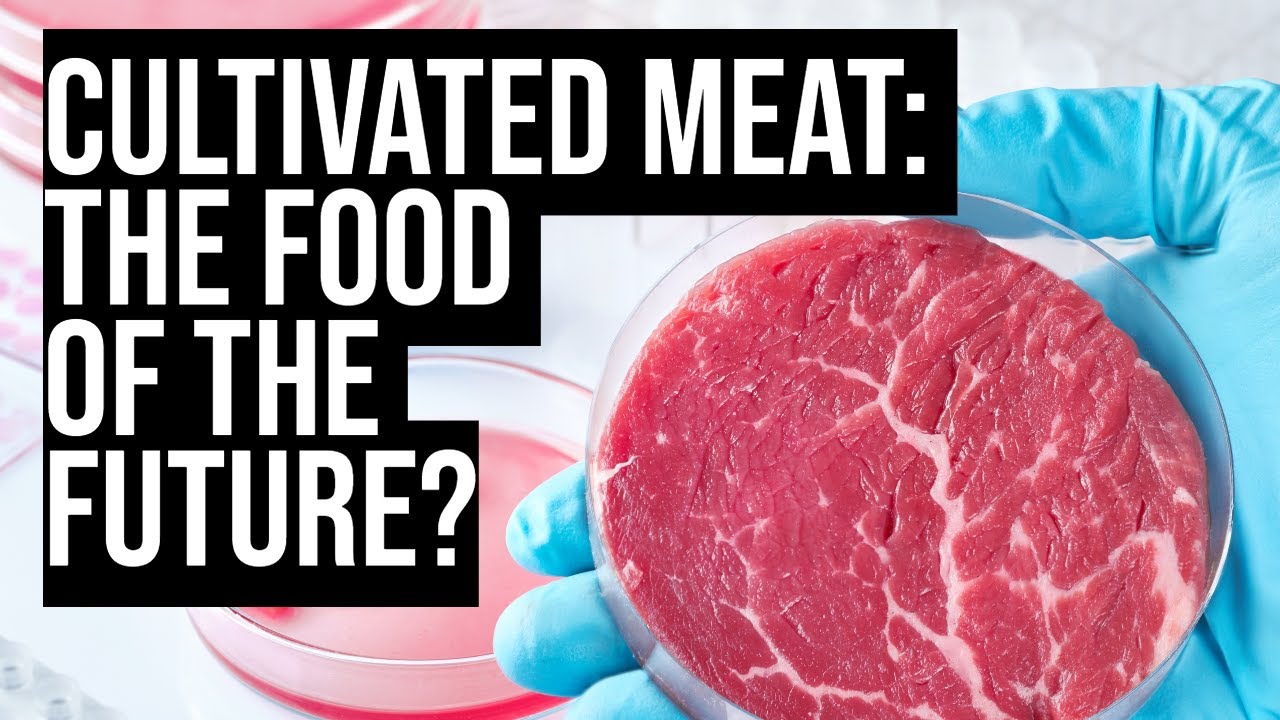
• Aston University named as one of the UK’s leaders in the potential future of food • Highlighted for research, teaching, public outreach, industry links and location • Process uses cells taken from animals via biopsy, so doesn’t involve slaughter. Aston University has been named as one of the UK’s leading lights in what is predicted to be the future of food - lab-made meat. The University is one of 17 higher education institutions that are expected to play a major role in the development of cultivated meat. Cultivated or lab-grown meat is made from cells taken from animals via biopsy. The cells are used to create meat which doesn’t involve the slaughter of animals. The process promises fewer greenhouse gases and a decrease in land required for its production compared to traditional livestock. The list of universities has been compiled by Cellular Agriculture UK, a non-profit organisation which promotes the UK’s so-called ‘cell-ag’ sector. Aston University is one of five institutions they chose to highlight in their report Mapping the potential for UK universities to become research and teaching hubs for cellular agriculture. Aston University is described in the report as having potential to be an anchor institution for cellular agriculture, and was highlighted for its research and teaching, public outreach work, links with emerging industry and its central location. Dr Eirini Theodosiou, senior lecturer in the School of lnfrastructure and Sustainable Engineering, focuses on ways to produce enough cell mass to create the meat. She said: “This is still a relatively new food technology. Unlike many others we work on biomaterials for microcarriers/scaffolds for cultivated meat, which puts us in a very strong position, in the UK at least.” Meanwhile Dr Jason Thomas’ work explores the psychology behind supporting people to accept lab-made food. Although many people are willing to try it, there are still many who are reluctant to do so. A recent study of the US and UK found that 35% of meat eaters and 55% of vegetarians claimed they were too disgusted by the idea of cultured meat to even try it. A key goal of his research is how to support people to not just try it but to integrate it into their diet. Dr Thomas said: “We are interested in finding out what factors can influence consumer purchase of and consumption of lab-made meat.” “The engineering/psychology link is one of our USPs and is something Aston University can capitalise on; learning what the consumer wants from cultivated meat, and what would encourage them to consume it, using psychological science, and then incorporating this directly into the production process via engineering. “It is a relatively new food technology, and much work still needs to be done to make it affordable, acceptable and on a massive scale, but it could easily end up being one of the most transformative new foods of the 21st century.”

Ana Palacios’ interview on “Eagle Eye View,” the official podcast of Georgia Southern University. Palacios discusses her research and how being a mom motivated her. Several esteemed nutrition researchers collaborated on “Effectiveness of Lactation Cookies on Human Milk Production Rates: A Randomized Controlled Trial,” which was recently published in The American Journal of Clinical Nutrition. David B. Allison, Ph.D., dean of the Indiana University School of Public Health-Bloomington (SPH-B), is among the researchers who conducted a one-month, randomized controlled trial of lactating parents of healthy babies in the same age range. Their findings revealed no evidence for an effect of consuming lactation cookies on human milk production. “Too often in the field of nutrition and food, strong beliefs—sometimes even well-reasoned conjectures based upon some scientific knowledge—are mistaken for demonstrated facts,” Allison said. “Conjecture is good, but knowing is better. We come to know about the effects of nutrition and dietary supplements through rigorous, randomized, controlled trials. Having conducted such a study on lactation cookies, we found no evidence for their effectiveness. “This does not mean that it is impossible for any lactation cookie to affect human milk production,” he continued. “This study does suggest that the cookies we studied—under the conditions we studied them—have no discernible effect. The burden of proof seems to now be on those who claim there is an effect.” The study followed 176 U.S. parents who were exclusively breastfeeding healthy two-month-old babies. One group of parents was provided a serving of commercially available lactation cookies to consume daily for a month; the other group of parents ate a serving of conventional cookies not designed to increase lactation, each day for a month. Through a weekly survey, parents reported the quantity of milk they produced after following a validated milk expression protocol using a hospital-grade breast pump, providing data that were analyzed by both the study authors and an independent statistician. These data demonstrated that the impact of consuming lactation cookies did not have a significant effect on how much milk was actually produced or perceived to be produced by the lactating parents. The authors assert that consumers should be cautious when considering the potential effect of this product, or any food and/or supplement that promotes health-promoting benefits without published, peer-reviewed scientific evidence to support its claims. As the researchers noted, these lactation cookies can contain substantial calories and sugars, which could affect postpartum weight loss efforts and related health issues. “Despite being a physician and nutrition scientist focused on early-life nutrition, I still remember how difficult breastfeeding was for me with both of my children,” said study lead author Ana M. Palacios, MD, Ph.D., assistant professor, Department of Health Policy and Community Health, Jiann-Ping Hsu College of Public Health at Georgia Southern University. “Our research highlights that lactation cookies, which include added sugars and saturated fat, may not have the said purported benefits of increasing milk production. Purchasing lactation cookies to increase milk production may pose an unnecessary cost and may have additional implications for parents, such as limiting post-pregnancy weight loss and reducing consumption of healthier foods. More research is needed to better understand what foods and nutrients can best help increase milk supply in diverse populations.” The full article, along with the list of contributing authors, is available by simply clicking the article below: Interested in learning more? For more information about this research or to speak with Ana M. Palacios — simply reach out to Georgia Southern's Director of Communications Jennifer Wise at jwise@georgiasouthern.edu to arrange an interview today.
