
Experts Matter. Find Yours.
Connect for media, speaking, professional opportunities & more.
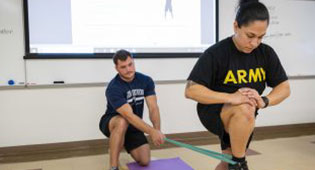
What began in 2016 as a partnership between Georgia Southern University and the Third Infantry Division at Fort Stewart has become a nationally recognized educational and research program with $5.68 million in federal funding to improve soldier health and performance to ensure force readiness. Now called the Soldier Performance and Readiness (SPAR) program, this Georgia Southern project aligns with the U.S. Army’s Holistic Health and Fitness (H2F) initiative and represents a multifaceted partnership with the Army to provide onsite training that decreases musculoskeletal injuries; deliver an online certificate program in tactical fitness for college credit; collaborate with the Army’s Research Institute for Environmental Medicine (USARIEM); and develop programs to enhance and assess cognitive performance in tactical situations. The initial partnership program to prevent musculoskeletal injuries was delivered at first to small cohorts to implement new practices in the physical training of their squads and platoons in a train-the-trainer model. Results were so encouraging, the program expanded at Fort Stewart and to training brigades at Fort Benning last year with the assistance of $1.5 million in Department of Defense funding. Studies show significant preparedness and financial benefits from reducing musculoskeletal injuries to soldiers during drilling and training exercises. In April 2020, officials determined that 58,000 soldiers (the equivalent of 13 Brigade Combat Teams) had injuries that classified them as non-deployable. In 2019, more than half of soldiers experienced a new injury, resulting in 10 million limited-duty days. Musculoskeletal injuries account for nearly 25% of all military injuries and approximately $557 million in acute patient care. Most of these injuries were associated with fitness training-related activities Georgia Southern’s online Tactical Athlete Certificate program was first offered in 2020 and is available exclusively to soldiers on active duty, in the National Guard or reserve. Through a series of three courses, the program teaches foundational exercise and biomechanical concepts, strength and conditioning principles, and rehabilitation. The coursework parallels the Army’s Master Fitness Trainer curriculum, with additional rehabilitation principles, and teaches soldiers how to develop evidence-based and well-rounded physical training programs while minimizing risk of musculoskeletal injury. Certificate completion provides soldiers with nine college credits with Georgia Southern, potential promotion opportunities in the Army, and preparation for the National Strength and Conditioning Association’s TSAC-F exam. “By sharing knowledge, expertise and experience between our faculty and doctoral students with soldiers, drill instructors, and brigade combat fitness teams to create aligned programs that improve tactical performance and force readiness, the SPAR program has become a national model of public-impact research,” said Christopher Curtis, Ph.D., Georgia Southern’s vice provost for research. “We are excited about the future of this partnership. We relish the significant support and encouragement we receive from the Army commands at Fort Stewart, Fort Benning, USARIEM, and the Training and Doctrine command (TRADOC), and we are grateful to Congressman Carter and his fellow members of the Georgia Congressional delegation who have advocated for the value of the partnership on our behalf.” The progress and continued success of this program would not have been possible without several years of support from the Georgia Congressional Delegation and especially the leadership and support of Congressman Buddy Carter, who represents Fort Stewart and the Armstrong Campus of Georgia Southern in Savannah. “Providing for our nation’s defense is the number one responsibility of the federal government. Innovation and research, which is what these dollars will fund at Georgia Southern, will improve working conditions for our brave servicemen and women by providing them with top-of-the-line training and resources,” said Rep. Buddy Carter (R-GA). “I am a proud supporter of Georgia’s military community and am happy that the federal government is investing in these necessary programs.” SPAR programming allocated in the FY23 federal budget will enable Georgia Southern to: Develop protocols and expand delivery of the onsite musculoskeletal injury prevention training and the Tactical Athlete Certificate to commands at Fort Gordon in Augusta and to the Georgia National Guard. Develop and deploy similar online certificate programs for soldiers in Cognitive Performance and Nutrition to further support the Army’s H2F program. Host a national conference on “Charting Future Readiness Needs” in partnership with the U.S. Army Training and Doctrine Command and U.S. Army Forces Command that will bring together other research universities who also work in partnership with the Army. Work with the Army commands to develop specific academic degree programs to meet the specific H2F professional workforce needs at the brigade level. Army officials estimate approximately 3,000 personnel will need graduate degrees or advanced certifications in the next six years. Develop a Tactical Performance Research Lab in Savannah to support the fundamental research and innovation activities of Georgia Southern’s Tactical Performance Group that supports the Army’s H2F program as well as translational research to apply the knowledge and practices broadly to law enforcement and other first responders. Looking to know more - then let us help. Christopher Curtis is available to speak to media - for more information simply click on his icon here or reach out to Georgia Southern Director of Communications Jennifer Wise at jwise@georgiasouthern.edu to arrange an interview today.


Researchers use computer models and simulations to predict satellite resilience
Computational physics is a field of nuance and detail. Using mathematics, researchers build computer models and simulations to test hypotheses within a digital environment. These numerical experiments are often used when practical testing is not feasible like when, for example, you must ascertain the durability of materials in a nuclear explosion. Gennady Miloshevsky, Ph.D., is an associate professor of mechanical and nuclear engineering who specializes in computational physics with an emphasis on plasma, lasers and particle beams. He works to predict the behavior and state of materials when under extreme pressure, temperature and radiation. With funding from the Defense Threat Reduction Agency (DTRA), an agency of the U.S. Department of Defense (DoD), Miloshevsky is studying the effect weapons of mass destruction have on satellites within Earth’s orbit. His work requires a distinct familiarity with our physical world and how different forms of energy interact with and within matter. “Any satellite close to the detonation point would be destroyed,” says Miloshevsky, “However, beyond that initial area, surviving satellites could be subject to X-ray induced blow-off, thermo-mechanical shock and warm dense plasma formation take place on material surfaces. This causes damage to exposed optics, sensors and solar cells on satellites. Particularly dense surface plasmas can couple the solar cells to each other in gaps between unshielded active elements and to dielectric structures causing them to be destroyed. It would all depend on the distance from the detonation point and the orientation of the satellite.” Part of Miloshevsky’s research involves developing methods to computationally simulate temperature, pressure and radiation in order to study the state known as “warm dense plasma,” which occurs between the solid and classical plasma states and exhibits the characteristics of both. A better understanding of this state of matter is a stepping stone to building more resilient materials. “Warm dense plasma is highly transient and short lived,” says Miloshevsky. “The state occurs in several nanoseconds, so isolating it in a laboratory setting in order to characterize it is very complicated. A nuclear burst irradiates materials with high-intensity X-rays, resulting in the transition to warm dense plasma. Our DTRA research seeks to understand the fundamental physics of warm dense plasma, including its physical and electrical properties. It’s currently unclear how this may affect the choice of future materials for satellite components.” A ban on nuclear testing means research into the effects of nuclear weapons is only possible through the use of computer codes to either model or simulate the many physics phenomena generated by a nuclear detonation. Miloshevsky’s first research area includes quantifying and reducing the uncertainty of computer model material properties, such as diamond, under the conditions of a nuclear blast using REODP (Radiative Emissivity and Opacity of Dense Plasmas) computer code he developed. This code is used to investigate the ionization state and ion abundances for equilibrium and transient-dense plasmas. It helps predict the equations of state, transport and optical properties of materials in the category of warm dense plasma. In a second research area, Miloshevsky works to understand and predict the interaction between X-rays and satellite surface materials (like silicon, germanium and other materials used to make solar panels) during a nuclear detonation in space. This uses MIRDIC (Modeling Ionizing Radiation Deep Insulator Charging) code developed in collaboration with NASA’s Marshall Space Flight Center for its Europa Lander project. This code helps anticipate charge production by blackbody X-rays in dielectrics and insulators of DoD space systems. It can also predict electrostatic material breakdown. Also part of the second research area is work to understand X-ray-induced shock generation, material ablation and blow-off (when material is literally “blown off” the satellite in reaction to another force) within the vacuum of space. This is studied using MSM-LAMMPS (Momentum Scaling Model implemented within the Large-scale Atomic/Molecular Massively Parallel Simulator software package) code. It predicts material behavior at an atomic level within extreme environments, the nature and behavior of materials in highly non-equilibrium states, microscopic mechanisms of disintegration, blow-off, melting, ionization and warm dense plasma states. Practical experiments in a lab use lasers to replicate the heat and pressure generated by X-ray radiation, shock and other physical effects of a nuclear detonation. Miloshevsky’s colleagues at the John Hopkins Extreme Materials Institute heat carbide diamond and silica materials typically found in solar panels to temperatures between 11,600 and 1,160,000 Kelvin using lasers at the University of Rochester and Pacific Northwest National Laboratory to observe this momentary transformation into warm dense plasma. Researchers use shadowgraphy, spectroscopy and other visual analytical methods to quantify the result. They can also investigate the depth, size and shape of the crater created by the laser within the material surface. “Experimental and computational research are closely interconnected and complement each other,” says Miloshevsky. “The laser-material interaction is a complicated process that occurs on multiple space (nanometers to millimeters) and time (femtoseconds to milliseconds) scales with evolving and changing physics. Data measured in these experiments usually need physics insights from a computer model to be correctly interpreted and understood. Models can provide fine details of physics processes that cannot be revealed in the practical experiments due to the incredibly minute space and time scales. Conversely, data from physical experimentation can feed into a computer model so it can be further developed and refined to enhance the understanding of the experiment’s measured data.” Miloshevsky’s recent topical review paper, Ultrafast laser matter interactions: modeling approaches, challenges, and prospects, details some of these advances in computational modeling and simulation development for laser-pulse interactions with solids and plasma.


• Researchers in the School of Biosciences partner with preclinical-stage biotechnology start-up company to develop drugs for fibrotic diseases • Professor Martin Griffin and team develop TG2 inhibitors to help treat a serious chronic lung disease called idiopathic pulmonary fibrosis. • Isterian Biotech is part of Cambrian BioPharma who have been working with Aston University since 2019. Aston University scientists are working with start-up company, Isterian Biotech, part of Cambrian BioPharma, to develop novel drugs to treat fibrotic diseases such as lung disease. The focus of preclinical-stage biotechnology company Isterian Biotech is on developing novel drugs to stop or reverse the pathological accumulation of crosslinked proteins commonly observed in all major organs with age. As we age a chronic increase of crosslinked proteins occurs in the extracellular matrix (ECM), that surround, support, and give structure to the cells and tissues in the body. These crosslinked proteins are difficult for the body to degrade and over time can make organs stiff and dysfunctional, ultimately resulting in fibrosis. Reversing the accumulation of these pathological crosslinks will greatly contribute to reducing fibrosis. The start-up is working to develop small molecule inhibitors of transglutaminase 2 also known as TG2, which is one of the major crosslinking enzymes in the human body, that becomes more active during ageing - thus resulting in fibrotic diseases such as a type of lung disease known as idiopathic pulmonary fibrosis (IPF). Isterian President and Chairman of the Board, Georg C Terstappen, PhD said: "Isterian's strategy of combining rational drug design with efficient multiparametric profiling of synthesized small molecules has been both impressive and highly productive. Notably, for one of our highly potent and selective TG2 inhibitors, we have recently demonstrated efficacy in a mouse model of lung fibrosis for the first time. "Using this state-of-the-art approach to drug discovery combined with an impressive team gives us great confidence in the future of this novel company." IPF is a progressive, irreversible disease that is characterized by pathological crosslinking of extracellular matrix (ECM) proteins (a large network of proteins and other molecules that surround, support, and give structure to the cells and tissues in the body) leading to excessive deposition of collagen. This means that in IPF scar tissue or fibrosis builds up around the air sacs (alveoli) in the lungs and reduces the ability to transfer oxygen that is breathed into the blood, resulting in severe restriction of lung capacity and function. IPF is the most common form of pulmonary fibrosis. The disease affects between 200,000 and 300,000 people globally. Statistics from the charity Action for Pulmonary Fibrosis suggest there are about 30,000 people living with IPF in the UK with an estimated 6,000 new cases of the condition each year. The disease usually develops in people aged 70 and older and is more common in men. But it can occur in younger individuals, particularly if there is a family history of idiopathic pulmonary fibrosis. The company was founded by capitalizing on over 35 years of scientific research from the laboratory of Professor Martin Griffin and his team Dr Dan Rathbone and Dr Vivian Wang at Aston University. Their work with small molecule inhibitors selective for TG2 has demonstrated reduction of fibrosis in multiple organs in a number of animal models. In 2019, Aston University partnered with Cambrian to form Isterian Biotech with a mission to develop safe and effective TG2 inhibitors to treat Idiopathic pulmonary fibrosis (IPF), a devastating fibrotic disease of the lung. Professor Martin Griffin, Biosciences Research Group, Aston University said: “We are delighted to continue our work with Isterian researching how we can further develop TG2 inhibitors to help tackle this awful disease.” CEO of Cambrian BioPharma, James Peyer, commented: "As Cambrian continues on its mission to build medicines that will redefine healthcare in the 21st century, we are very thankful to find brilliant scientists such as Martin and his team that are willing to break the mold. Isterian and its work to reduce fibrosis are a perfect fit alongside the other pipeline companies our team has announced in 2022." The company's current pipeline includes an advanced preclinical-stage TG2 inhibitor for inhaled administration and several structurally unrelated back-up compounds for the treatment of IPF. For more information about the School of Biosciences at Aston University, please visit our website.


A.I. and Higher Education: The Rise of ChatGPT
ChatGPT. Maybe you’ve heard of it. Colleges and universities certainly have. It’s the chatbot that uses artificial intelligence (A.I.) technology to generate sentences based only on a brief prompt, writing anything from college-level papers to fanfiction. And as one might expect, the popular chatbot is taking the academic world by storm, raising questions about trust, academic integrity and even the future of college admissions. We turned to Seth Matthew Fishman, PhD, Assistant Dean of Curriculum and Assessment and associate teaching professor in the Department of Education and Counseling at Villanova University, to get his thoughts. Q: What makes ChatGPT different and why is it causing such a stir? Dr. Fishman: The use of chatbots is not a new debate in higher education. But ChatGPT and other similar free software certainly add a complex layer that we are only just now starting to have conversations about. There will be an ongoing debate about trust—Who wrote the material we are reading? To what extent if any, will it impact faculty members? There are also A.I. digital images, graphics, and design—To what extent do these programs impact our creative arts and design programs? I think these fields will mostly embrace A.I., though I can see issues of copyright infringement and artist control/attribution. Q: How are other chatbots being used in academic settings? DF: A.I. use already impacts higher education. If you ask any faculty member teaching a foreign language that requires a translation, they will have tales of work submitted by students who use online translation software. But benefits do exist for students and faculty regardless—we’re able to interact a bit more with others, reducing some language barriers. I expect we will see hundreds of articles about ChatGPT’s impact on education; there are likely several dissertations underway, and I expect to see ChatGPT and similar software cited in papers and likely even in authorship groups. Q: What will the impact of ChatGPT be on the college application and admissions process? DF: I think we’ll see conversations from college admissions professionals on the impact of ChatGPT on higher education admissions. For example, key components of college applications such as essays and writing samples may be impacted. And ChatGPT may also be used to write some rather good letters of recommendation. Q: What does the future hold? Will ChatGPT and similar A.I. programs maintain popularity? DF: I’m curious if A.I. will be used to generate employment cover letters. Additionally, many corporations already use A.I. to sift through candidate applications to narrow down their applicant pools. It may continue to transcend academia. I also expect to hear more from our philosophy and ethics experts to help us better understand the societal and educational implications of using A.I. in these ways. And these kinds of conversations will be had with our students to engage them as partners in the learning experience. We will probably generate new ideas and different perspectives from doing just that.

The effects of social media on domestic terrorism - Our experts have the answers
There is no question social media has an impact on today’s society. Worldwide there isn’t much research available with empirical evidence showing its effect. Lance Hunter, PhD, associate professor in Pamplin College of Arts, Humanities, and Social Sciences and the Masters of Arts in Intelligence and Security Studies program at Augusta University recently was part of two studies that show evidence linking social media to political violence including domestic terrorism and civil conflict. The studies included over 150 countries and covered the time frame 2000 to 2019. “One of the things we found very interesting is the amount of time that people spend on social media on average within each country per year. It really does matter in affecting the amount of domestic terrorism within countries,” said Hunter. While many are focused on what happens domestically, Hunter found that some countries have more social media usage as compared to the United States and have varying amounts of political violence within their countries. “When social media is dangerous is when it increases polarization. When it’s used to spread disinformation that disinformation can have a polarizing effect on citizens around the world, and that polarization is associated with political violence.” Even socio-economic factors can play a role in social media and its effect on people in a country. “Looking at our research and data and looking across democracies and non-democracies, different income levels of countries most developed, less developed, we see there is a noticeable effect that social media can really influence political violence, especially if it’s used for disinformation purposes.” He went on to add since their data ended in 2019, and there have been instances of violence in the U.S. since then, researchers may continue to speculate on the relationship between social media posts and the acts of domestic terrorism. Here's an excerpt from the journal's abstract in Behavioral Sciences of Terrorism and Political Aggression: Much qualitative research has drawn an association between social media and domestic terrorism, with the studies reaching different conclusions. However, few empirical studies have evaluated whether the surge in social media participation affects domestic terrorist events. Controlling for common explanations in the literature, we conduct a cross-national, time-series analysis of up to 151 countries from 2000 to 2019 to assess the impact of social media penetration on domestic terrorism. We find that greater social media penetration increases the likelihood of domestic terrorism in countries as it supports extremists’ ability to recruit, mobilize, and train terrorists. Using mediation analysis, we also find that greater social media penetration amplifies online and political polarization, increasing the likelihood of domestic terrorism events. Our work indicates the possible mechanisms linking social media and domestic terrorism and the need to develop and apply appropriate counterterrorism strategies to mitigate terrorist operations. “There is a noticeable effect that social media can really influence political violence, especially if it’s used for disinformation purposes. I think maybe it’s just something to think about going forward for governments and citizens regarding how we should approach social media because I think with any type of technology, it can be used for good or for evil.” While there are countries that try to limit certain social media platforms depending on what information is being transmitted, there will likely be ways around any restrictions put in place. “When you’re thinking overall regarding social media, and we’re thinking about communication over social media, is that individuals at times do have certain technologies that they can circumvent those controls at times. So it can be a cat and mouse game between the government and the citizens.” Dr. Lance Hunter is an assistant professor of political science with a background in international relations. His research focuses on how terrorist attacks influence politics in democratic countries and how political decisions within countries affect conflicts worldwide. Hunter is available to speak with media about this important topic - simply click on his icon to arrange an interview today.


Aston University computer scientist joins first UK-wide Young Academy
The new UK Young Academy is a network of early career researchers and professionals It has been established to tackle local and global issues Dr Alina Patelli is a senior lecturer in computer science at Aston University. Aston University is delighted to announce that Dr Alina Patelli, a senior lecturer in computer science in the College of Engineering and Physical Sciences, is among the first members of the new UK Young Academy – a network of early career researchers and professionals established to help tackle local and global issues and promote meaningful change. Dr Patelli specialises in evolutionary computation, specifically, genetic programming and its applications in smart cities, with a focus on traffic modelling and prediction. Her interests also include autonomic, knowledge-based systems, as well as self-adaptation and self-organisation in computing. As part of the first cohort of 67 members, announced on 10 January by UK and Ireland National Academies, Dr Patelli will have the opportunity to help shape the strategy and focus of this new organisation, based on areas that matter to them. Along with their fellow members from across academia, charity organisations and the private sector, they will have the chance to inform local and global policy discussions, galvanising their skills, knowledge, and experience to find innovative solutions to the challenges facing societies now and in the future. The UK Young Academy has been established as an interdisciplinary collaboration with prestigious national academies: the Academy of Medical Sciences, British Academy, Learned Society of Wales, Royal Academy of Engineering, Royal Irish Academy, Royal Society of Edinburgh, and the Royal Society. It joins the global initiative of Young Academies, with the UK Young Academy becoming the 50th to join the Young Academy movement. Dr Alina Patelli said: “I am anticipating the start of my service as a member of the UK Young Academy with great enthusiasm. I highly value the opportunity to collaborate with colleagues from across the spectrum of science and governance in order to make a significant impact on the UK’s approach to tackling national and international challenges. “The UK Young Academy is perfectly placed to substantively improve the life of human communities everywhere and I am honoured to contribute towards the achievement of that goal.” Professor Stephen Garrett, executive dean of the College of Engineering and Physical Sciences at Aston University, said: “I would like to congratulate Alina on being selected as one of the first members of the UK Young Academy. It is a fantastic achievement to have been selected to join this talented and diverse cohort. “I wish her every success and look forward to seeing the fruits of her work with the Young Academy.” The successful applicants officially took up their posts on 1 January 2023, and membership runs for five years. It is expected that the next call for applications will open in 2023.

Aston University appoints new pro-vice-chancellor and executive dean of business and social sciences
Professor Zoe Radnor has been appointed as Pro-Vice-Chancellor and Executive Dean of the College of Business and Social Sciences She has had a successful career in higher education for over 25 years Professor Radnor will be joining Aston University in Spring 2023. Aston University has appointed Professor Zoe Radnor as the new Pro-Vice-Chancellor and Executive Dean of the College of Business and Social Sciences. Professor Radnor will succeed Professor George Feiger, who will be standing down after 10 years of leadership of Aston Business School and the College of Business and Social Sciences. With a successful career in higher education spanning over 25 years, Professor Radnor will be joining Aston University from The University of Law (ULaw), where she is currently Provost and Deputy Vice-Chancellor, specifically focused on leading the diversification of the academic portfolio, including building an academic model for the provision of high quality, innovative teaching and thought leadership. In addition, she is leading the TEF submission at the institution Prior to her executive role at ULaw, she was Vice-President for Strategy and Planning; Equality, Diversity and Inclusion and Professor of Service Operations Management at City, University of London, leading the development of the University EDI strategy. In this role she also led the creation of the new enabling Civic Strategy and established the new institution-wide Change Support Unit. Before City, Professor Radnor was the founding Dean of the School of Business at the University of Leicester, and prior to that, as Associate Dean Teaching and Learning, she led the development of new curriculum offerings for the Loughborough University campus in London. Professor Zoe Radnor is a Fellow of the Academy of Social Sciences (FAcSS) and the British Academy of Management (FBAM). She is also a member of the Athena Swan Governance Committee for Advance HE. Her main research interests are in performance, process improvement and service value within public sector organisations. She has led research projects for a number of Government and healthcare organisations, evaluating the use of ‘lean’ and associated techniques and continues to maintain a strong ongoing research profile. Professor Aleks Subic, Vice-Chancellor and Chief Executive of Aston University, said: “I am looking forward to welcoming Professor Radnor to the Executive Team at what is a hugely exciting period of development for the University and to working with her as we shape our Aston University 2030 Strategy. Zoe brings significant leadership experience to the team and ambition in line with our bold vision. “I would also like to take this opportunity to acknowledge the significant contribution made by Professor George Feiger during his leadership of Aston Business School and the College of Business and Social Sciences over the last 10 years.” Professor Radnor said: “I am delighted to be joining such a prestigious and forward-thinking University and College. “The reputations of the College of Business and Social Sciences and of Aston University generally and the strategic vision of the new Vice-Chancellor and University leadership are what attracted me to this exciting role. I can’t wait to get started working with so many talented and innovative new colleagues.” Professor Radnor will be taking up her post in Spring 2023.

Aston University students take home two prizes from annual European Union simulation event
EuroSim is an annual international intercollegiate simulation of the European Union More than 150 students, from universities in North America and Europe, participate every year The Aston EuroSim Team was awarded best debater in two categories. Aston University’s EuroSim team has returned from this year’s event with two awards. The Aston EuroSim Team was awarded best debater in the European Parliament Committee on Employment and Social Affairs (EMPL) and best in special roles (media/journalist). EuroSim is an annual international intercollegiate simulation of the European Union (EU). The purpose of it is to provide a framework for a simulation of the EU decision-making on major current issues. More than 150 students, from 16 universities in North America and Europe, participate in the simulation. All students are assigned roles, including members of the European Parliament (MEPs), members of the European Commission, heads of government and national ministers. The purpose of this module is to educate students about the inner workings of the European Union in order to enhance the learning experience for students. This year it was hosted by the University of South Wales in Newport, the first time the event has been held in the UK. Dr Patrycja Rozbicka, a senior lecturer in politics and international relations who is the lead for Aston EuroSim and was European associate director for EuroSim experience (2019-2023), said: “Here at Aston University, the EuroSim module is one of the most innovative modules of the Aston Politics and International Relations Department’s undergraduate and MA programmes. Amin Hassan, a final year international relations and English language student at Aston University, who took part in EuroSim, said: “I would like to extend my gratitude to my team from Aston University, and special mentions to my lecturer Dr Patrycja Rozbicka and student director Chris Burden for organising and inviting us to this memorable trip. “Representing Max Orville (my alter ego), MEP and Renew Europe Group, I worked together with my party and committee members with shared interests and values to ensure that no one is left behind by the proposed Social Climate Fund, which has recently been approved in real life. “After three days packed with negotiations and meetings, we are pleased that the Social Climate Fund has been approved and we strongly believe that it will support vulnerable people, households, micro-enterprises and transport users at risk of facing higher costs as the bloc introduces new climate measures.” Chris Burden, European students director at EuroSim and PhD researcher at Aston University, said: “I had the greatest honour attending the EuroSim2023 meeting at the ICC Wales as the European student director and part of Team Aston. “The work that goes into this conference is unbelievable, and the students had a fantastic time debating and simulating questions surrounding social and climate action within Europe. “This Transatlantic conference is the highlight of any year. “Thank you to our fantastic team from Aston University who brought home the two awards for their efforts.” The next EuroSim will be held next year in Brockport, northern New York State, USA. If you want to read more about the Aston EuroSim, click here.

Aston University research to support SMEs and mid-sized companies to be ‘future ready’
‘Future readiness’ is defined as a set of capabilities and orientations that enable companies to thrive in the future Researchers say SMEs and mid-sized companies’ leadership should focus on bridging their resilience gap and exploiting their high level of agility The report found circular economy can combat environment and social impact without sacrificing economic performance. A new report from Aston University has highlighted opportunities for small and medium sized enterprises (SMEs) and mid-sized companies to develop strategies and pathways to increase their future readiness. The report defines future readiness as “a set of capabilities and orientations that enable companies to thrive in the future”. For SMEs and mid-sized businesses to be future-ready, they must be successful on the three pillars of long-term growth, societal impact and adaptive capacity. Experts say they must be able to generate lasting financial strength driven by innovative business models, products and/or services, to affect society positively in line with environmental, social and governance (ESG) goals and to develop high levels of resilience and agility, which enables them to bounce back in difficult times and to identify and seize opportunities as they emerge, creating disruption in business models for the future. The report aims to support leadership teams and the wider ecosystem in understanding how they can help increase the capacity for smaller companies to thrive and positively impact the economy and environment, as well as aid the recovery from the pandemic. Experts also say that circular economy adoption, where the ‘make, use and throw away’ supply chain is converted to ‘take, make, distribute, use and recycle’, in SMEs and mid-sized companies creates a win-win situation for every supply chain stakeholder through sustainability measures to achieve economic, environment and social performance. The World Economic Forum will use the insights generated in this report to further support SMEs and mid-sized companies in their future readiness journey. This will be done through the creation of additional resources, including the continuous development of the Forum’s self-assessment and benchmarking tool on future readiness, the creation of a platform for informal peer-to-peer learning between companies and meet ups with key experts. Prasanta Kumar Dey, professor in operations and information management at Aston Business School and lead author of the report, said: “The post-COVID-19 era is significantly more challenging than most people had initially hoped. Heightened geopolitical tensions, the energy crisis, supply chain disruptions, hyperinflation and extreme weather events are just a few of the difficulties that will make the next decade a demanding one. “SMEs and mid-sized companies’ leadership should try to focus on bridging their resilience gap and exploiting their high level of agility, afforded by their smaller size, as a competitive advantage. “Future readiness capability building should not be developed as ad-hoc initiatives but should be embedded into key corporate strategies and decision-making processes, ideally from the beginning, so that it becomes part of the fundamental building blocks of the company. “While smaller companies can go a long way in building their future readiness, it is important to recognise the direct and important impact that their wider policy environment has on their ability to thrive. It is therefore crucial for policymakers, investors and other stakeholders to do what is in their capabilities to contribute to building the future readiness of this segment of the economy. “One of the high-impact areas of intervention at the system levels revolves around digital trade and includes implementing targeted measures to harmonize and drive trade data interoperability across borders and supply chains. This would greatly contribute to making it easier for smaller companies to trade internationally.” You can find out more about the report findings here.

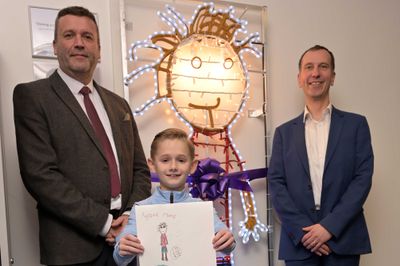
‘Shining a light on Colour Blindness’ competition winner unveils light sculpture at Aston University Winner 10-year-old Leo Evans helped unveil the feature of footballer Tyrone Mings The competition helped highlight the challenges of colour blindness - particularly in sport. A light sculpture named after the Aston Villa footballer Tyrone Mings has been unveiled at Aston University as part of a campaign to help raise awareness of colour blindness. In the UK there are approximately 3 million colour blind people (about 4.5% of the entire population), most of whom are male. Worldwide, there are estimated to be about 300 million people with colour blindness. The competition, ‘Shining a Light on Colour Blindness’, was launched by non-profit organisation Colour Blind Awareness and supported by various football club charities - including the Aston Villa Foundation. Young supporters were asked to take part by drawing a colourful picture of their favourite footballer. The winning entry was then made into a light feature. The winning artwork, which came from the Aston Villa Foundation, was transformed into a light feature and was selected to go on display inside the Aston University Vision Sciences building in the paediatrics bay, as part of the ongoing partnership between the Aston Villa Foundation and Aston University. Colour Blind Awareness is a non-profit organisation designed to highlight the relevance and impact of colour vision deficiency amongst those that live with it - including the challenges in sport. The organisation is part of an EU-funded project, Tackling Colour Blindness in Sport. Competition winner, 10-year-old Leo Evans from Erdington, helped unveil the light sculpture alongside Professor Anthony Hilton, pro-vice-chancellor & executive dean of the College of Health and Life Sciences. Professor Hilton said: “We are delighted for Leo, his winning drawing of Tyrone Mings looks fantastic as a light sculpture and we are proud to host it in our Vision Sciences building for our students, staff and visitors to enjoy, whilst raising awareness about colour blindness.” Commenting on his winning drawing, Leo said: “I am very proud that my picture won the competition and that Tyrone Mings liked it. I now better understand what being colour blind means and I hope my picture has helped someone else.” Cheryl Evans, Leo's Mum, said: “I couldn't be prouder of Leo and the fact that his drawing is of his favourite player Tyrone Mings makes it even more special. This competition has meant that as a family we have had many conversations about colour blindness and it has educated us all more on this topic. Well done Leo!” Kathryn Albany-Ward, CEO at Colour Blind Awareness CIC, said: “Aston Villa Foundation’s entry from Leo charmed the judges and who were delighted to award it first prize. We’re very grateful to Aston University for hosting the light feature and can’t wait to see it displayed. We hope its location in the Vision Sciences Department will help raise more awareness of a condition which affects 8% of boys and 0.5% of girls worldwide, impacting on their education and ability to perform to their best in sport if left unsupported.” Leo was met and congratulated by the head of the Aston Villa Foundation, Guy Rippon, and foundation manager, Ross Alexander. Ross said: “The Aston Villa Foundation would like to say a big congratulations to Leo for his amazing achievement! This is a really proud moment for Leo and we are thrilled that he was inspired by his favourite Aston Villa player. “It has also been a pleasure to have supported Colour Blind Awareness, who have done some great work in highlighting such an important and relevant topic during our coaching team’s workforce development. The support has culminated in a competition that was won by Leo, a participant in one of our Football in the Community holiday sessions. “The stunning light feature of Tyrone Mings will now be housed at Aston University for all to see and we are grateful for the University’s ongoing support with the Club.”
