
Experts Matter. Find Yours.
Connect for media, speaking, professional opportunities & more.

What the First U.S. Chikungunya Virus Case Means: LSU Expert Breaks It Down
"The main vector in the US, Aedes albopictus, is known to have been there so it isn’t terribly surprising that we’d eventually have a case. The fact that is was a local transmission case – meaning that a mosquito transmitted it to someone who had not traveled outside the area – is a bit concerning and points to a couple of things: We need more surveillance for these types of viruses; the fact that it got here means likely someone who had traveled brought it back from their vacation The surveillance infrastructure via the CDC and federal funding has been gutted – which of course is problematic when we have these sorts of introductions occurring. These types of mosquitoes go a little quiet in the fall/winter because it gets too cool for them to be as active as say the summertime. They’re lucky it’s in the fall and not at the start of summer, where the weather would be more conducive to MORE transmission. HOWEVER, as weather patterns change from a combination of climate change and urban development (which creates more heated areas), we’re going to see the times that these mosquitoes are more active becoming longer – which will again mean more opportunities for transmission. Of course, in Louisiana, these mosquitoes are active for a lot of the year. We have good mosquito control, but anyone who sits outside will tell you that doesn’t eliminate biting (though imagine if we didn’t have it) we need to stay vigilant and support the systems that protect us: mosquito abatement, federal and state surveillance, and the science and research that supports our ability to recognize and respond to outbreaks." Dr. Christofferson's recent research publications in this area:



Milwaukee-Based Experts Available During 2024 Republican National Convention
Journalists attending the Republican National Convention (RNC) are invited to engage with leading Milwaukee School of Engineering (MSOE) experts in a range of fields, including artificial intelligence (AI), machine learning, cybersecurity, urban studies, biotechnology, population health, water resources, and higher education. MSOE media relations are available to identify key experts and assist in setting up interviews (See contact details below). As the RNC brings national attention to Milwaukee, discussions are expected to cover pivotal topics such as national security, technological innovation, urban development, and higher education. MSOE's experts are well-positioned to provide research and insights, as well as local context for your coverage. Artificial Intelligence, Machine Learning, Cybersecurity Dr. Jeremy Kedziora Associate Professor, PieperPower Endowed Chair in Artificial Intelligence Expertise: AI, machine learning, ChatGPT, ethics of AI, global technology revolution, using these tools to solve business problems or advance business objectives, political science. View Profile Dr. Derek Riley Professor, B.S. in Computer Science Program Director Expertise: AI, machine learning, facial recognition, deep learning, high performance computing, mobile computing, artificial intelligence View Profile Dr. Walter Schilling Professor Expertise: Cybersecurity and the latest technological advancements in automobiles and home automation systems; how individuals can protect their business operations and personal networks. View Profile Milwaukee and Wisconsin: Culture, Architecture & Urban Planning, Design Dr. Michael Carriere Professor, Honors Program Director Expertise: an urban historian, with expertise in American history, urban studies and sustainability; growth of Milwaukee's neighborhoods, the challenges many of them are facing, and some of the solutions that are being implemented. Dr. Carriere is an expert in Milwaukee and Wisconsin history and politics, urban agriculture, creative placemaking, and the Milwaukee music scene. View Profile Kurt Zimmerman Assistant Professor Expertise: Architectural history of Milwaukee, architecture, urban planning and sustainable design. View Profile Biotechnology Dr. Wujie Zhang Professor, Chemical and Biomolecular Engineering Expertise: Biomaterials; Regenerative Medicine and Tissue Engineering; Micro/Nano-technology; Drug Delivery; Stem Cell Research; Cancer Treatment; Cryobiology; Food Science and Engineering (Fluent in Chinese and English) View Profile Dr. Jung Lee Professor, Chemical and Biomolecular Engineering Expertise: Bioinformatics, drug design and molecular modeling. View Profile Population Health Robin Gates Assistant Professor, Nursing Expertise: Population health expert: understanding and addressing the diverse factors that influence health outcomes across different populations. View Profile Water Resources Dr. William Gonwa Professor, Civil Engineering Expertise: Water Resources, Sewers, Storm Water, Civil Engineering education View Profile Higher Education Dr. Eric Baumgartner Executive Vice President of Academics Expertise: Thought leadership on higher education, relevancy and value of higher ed, role of A.I. in future degrees and workforce development. View Profile Dr. Candela Marini Assistant Professor Expertise: Latin American Studies and Visual Culture View Profile Dr. John Walz President Expertise: Thought leadership on higher education, relevancy and value of higher ed View Profile Media Relations Contact To schedule an interview or for more information, please contact: JoEllen Burdue Senior Director of Communications and Media Relations Phone: (414) 839-0906 Email: burdue@msoe.edu About Milwaukee School of Engineering (MSOE) Milwaukee School of Engineering is the university of choice for those seeking an inclusive community of experiential learners driven to solve the complex challenges of today and tomorrow. The independent, non-profit university has about 2,800 students and was founded in 1903. MSOE offers bachelor's and master's degrees in engineering, business and nursing. Faculty are student-focused experts who bring real-world experience into the classroom. This approach to learning makes students ready now as well as prepared for the future. Longstanding partnerships with business and industry leaders enable students to learn alongside professional mentors, and challenge them to go beyond what's possible. MSOE graduates are leaders of character, responsible professionals, passionate learners and value creators.


A monumental anniversary approaches as we commemorate the 1931 opening of the Empire State Building, an architectural marvel that has stood as an emblem of innovation and human achievement for nearly a century. Beyond its towering presence on the New York City skyline, this anniversary is a poignant moment to reflect on the enduring legacy of this iconic structure and its resonance with the public, encapsulating themes of perseverance, ingenuity, and urban development. Here are several compelling story angles that journalists may find ripe for exploration: Historical significance and architectural marvel: Delve into the fascinating backstory of the Empire State Building, exploring the engineering feats and human endeavor that brought this skyscraper to life. Evolving skyline and urban identity: Examine how the Empire State Building has shaped the cultural and visual landscape of New York City, and its enduring significance in an ever-changing metropolis. Sustainable initiatives and environmental impact: Explore the building's initiatives toward sustainability and energy efficiency, offering insights into its role as a model for sustainable urban development. Economic impact and tourism: Investigate the economic impact of the Empire State Building on local communities, tourism, and its enduring appeal as a global tourist destination. Cultural resonance and popular culture: Uncover the building's rich cultural legacy, from its appearances in film, literature, and art, to its symbolic significance in popular imagination. Preservation efforts and historical conservation: Shed light on ongoing efforts to preserve and maintain the architectural integrity and historical significance of this iconic landmark for future generations. Connect with an Expert about Architecture and the Empire State Building: Dana Cupkova Associate Professor · Carnegie Mellon University Richard Campanella Associate Dean for Research, Senior Professor of Practice - Architecture and Geography · Tulane University Eric Corey Freed Founding Principal · OrganicARCHITECT Peter Christensen Arthur Satz Professor of the Humanities and Professor of Art History · University of Rochester Dennis Shelden Director, Center for Architecture Science and Ecology (CASE) · Rensselaer Polytechnic Institute To search our full list of experts visit www.expertfile.com Photo Credit: Ben Dumond


It Works on TV - Do Property Rehabs Drive Up Prices in Surrounding Neighborhoods?
When a house is distressed, the negative impact tends to ricochet around its surrounding neighborhood. Distressed homes (e.g. foreclosures) can significantly bring down the value of other homes in the area, as these properties are often poorly maintained and then typically sold at discounted prices In the past, and particularly in the wake of the 2008 subprime crisis, federal and local governments sought to mitigate this negative effect by incentivizing the rehabilitation of distressed properties through programs like the Neighborhood Stabilization Program (NSP). Until now, there has been some skepticism as to whether or not these kinds of initiatives actually work. New research by Goizueta Foundation Term Associate Professor of Finance Gonzalo Maturana and Goizueta’s Assistant Professor of Finance Rohan Ganduri might change the narrative definitively. They have analyzed new data that shows that rehabilitation projects not only help to stabilize housing prices in affected neighborhoods but can also actually increase the value of neighboring properties by as much as four percentage points. Using highly robust, non-parametric statistical analysis methods, Maturana and Ganduri parsed more than 10 years of information on rehabilitated property transactions and real estate prices across the United States. The effect of renovating dilapidated or derelict houses in these areas pushes prices up between 2.3 and four percentage points in their surrounding blocks, they find. And that’s not all. While the average amount spent by authorities on these renovations comes in at roughly $36,000, their study estimates a societal welfare gain of $134,000 per rehabilitated property—almost four times the cost of the rehabilitation. These insights should provide interesting food for thought for the U.S. Congress and local governments, Maturana notes. After the housing crash in 2008, Congress allocated $6.9 billion in funding to the NSP to help stabilize communities affected by high vacancy and foreclosure rates, but the Department of Housing and Urban Development didn’t find any positive impact on local housing markets at the time. “Our findings suggest that rehabilitation projects do drive a positive uptick in prices that can help revitalize distressed neighborhoods,” says Maturana. “And they provide very timely support for policy interventions, such as President Biden’s infrastructure spending program which proposes an allocation of $20 billion to rehabilitate 500,000 single-family homes in low-income neighborhoods in the United States.” With the current economy facing some uncertain times - this is a topic that is important for everyone. And if you're a reporter looking to know more then let us help. Gonzalo Maturana is an associate professor of finance at the Goizueta Business School. He is an expert in the areas of corporate, household and real estate finance. Rohan Ganduri's research interests include banking, credit risk, real estate, household finance, and corporate finance. Both Gonzalo and Rohan are available to speak to media regarding this topic – simply click on either icon now to arrange an interview today.


American Rescue Plan Act can do more to address racial wealth inequality
While the American Rescue Plan Act provided a major infusion of economic aid to low-income and middle-class Americans, more should be done to tackle racial wealth inequality and the structural issues in the tax code that allow those at the top of the income distribution to benefit disproportionately from tax subsidies, an Indiana University professor wrote. Goldburn P. Maynard Jr., assistant professor of business law and ethics at the IU Kelley School of Business, analyzed the American Rescue Plan Act's major provisions to determine their potential impact on racial equity, presenting his findings in Yale Law Journal. The article, "Biden's Gambit: Advancing Racial Equity While Relying on a Race-Neutral Tax Code," was published Jan. 9 and is part of a series that examines the novel tax implications of the American Rescue Plan Act through the lens of fiscal impoverishment, race, unemployment insurance, and state and local responses to economic crises. "While analysis reveals that the Biden Administration made some progress on (racial equity) through ARPA, in the months since its passage, federal courts have undermined some of this progress by halting race-conscious equity programs in ARPA," wrote Maynard, who worked as an estate tax attorney for the Internal Revenue Service before entering academia. His essay argues that "race consciousness is central to achieving" racial equity and "requires more than traditional policies that target financial need." The bulk of the stimulus measure focused on redistribution through the tax system, which does not incorporate racism and other dimensions of social inequity into its notions of fairness, Maynard wrote. To this day, the IRS does not collect racial data on taxpayers. He also noted that several policies targeted people or groups based on need. For example, the Department of Housing and Urban Development in November provided $14 million in American Rescue Plan funds to support fair housing organizations. But few new policies under the plan have addressed systemic discrimination, and most were designed to be temporary, such as the child tax credit. "Where these policies fall short is their lack of focus on historic systemic discrimination," Maynard wrote. "ARPA does not tackle the central issues that lead to racial inequity in the first place. Because RE requires the consideration social hierarchy and historical injustices, these provisions of ARPA are not as impactful as others." Several core policies in the American Rescue Plan Act target individuals or groups based on need, particularly racial minorities, he said. But several courts with conservative judges have treated race-based policies designed to counteract racial inequities as discriminatory in their interpretations of the Constitution. "Today, many courts equate efforts to promote RE with efforts to promote racial segregation. The odds of having all three branches in perfect alignment are slim," Maynard wrote. "ARPA also illustrates weaknesses in our current understanding of the Constitution as limiting the government's ability to redress historic wrongs. The status quo limitations are so strong that it is hard to imagine any large pro-equality advancements in the foreseeable future. "At our current pace, achieving RE will be a centuries-long project. This is discouraging, but highlights the importance of continuing the fight for wealth taxation and other levies on capital. It also underscores the smallness of the tax system when tackling a problem as embedded as RE. There are many decisions, regulations and laws that have embedded racism structurally and systematically. The tax system serves as an efficient compensator of harm, but this is not always what the victims of harm want. Instead of after-the-fact compensation for discrimination, victims of inequities often prefer to have the discrimination eliminated. That is the purpose of RE. The tax system can play an important role in promoting RE, even if it is not the leading one."

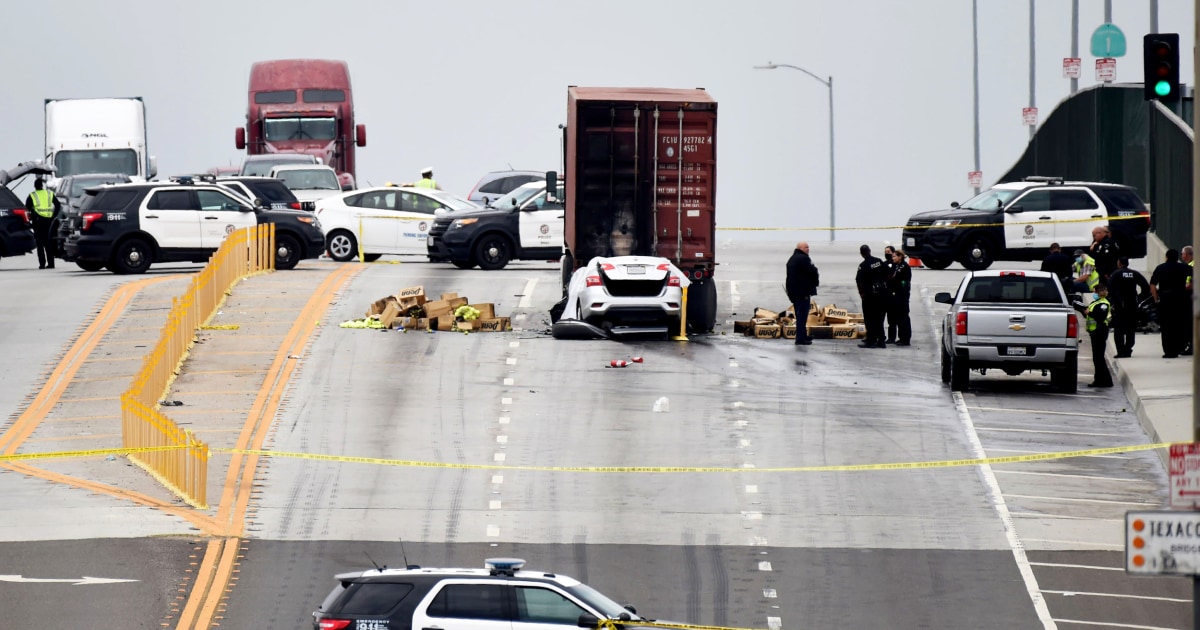
Even with a drastic reduction in driving due to the COVID-19 pandemic, Black Americans saw the largest increase in traffic-related deaths in 2020 when compared to other racial groups. An estimated 38,680 people died in motor vehicle traffic crashes in 2020 — the largest projected number of deaths since 2007 — and the number of Black people who died in such crashes was up 23 percent from 2019, according to the U.S. Department of Transportation’s National Highway Traffic Safety Administration. UConn’s Dr. Norman Garrick spoke with NBC News about the new report: Norman Garrick, a civil and environmental engineering professor at the University of Connecticut, said the numbers are saddening, but not surprising. “Black people tend to be overrepresented as walkers in this country,” Garrick said. “This is not by choice. In many cases, Black folks cannot afford motor vehicles. And people that walk in this country tend to experience a much, much higher rate of traffic fatality. We’re talking eight to 10 times more. It’s a perfect storm of a lot of horrible forces.” This most likely represents yet another way the health crisis has had an outsize effect on Black people. Even in the early days of the pandemic, the National Safety Council found that the emptier roads were proving to be more deadly, with a 14 percent jump in roadway deaths per miles driven in March. And Black people are more likely to face traffic injuries in general; from 2010-2019, Black pedestrians were 82 percent more likely to be hit by drivers, according to a 2021 report from Smart Growth America, a Washington, D.C.-based advocacy group focused on urban development. June 22 - NBC News Dr. Garrick is a professor in the UConn School of Engineering's Department of Civil Engineering and is co-director of the Sustainable Cities Research Group. He is an expert in the areas of transportation behaviors, parking, public transit, and bicycle lanes. Dr. Garrick is available to speak with media – simply click on his icon now to arrange an interview today.


With a long road ahead, it's already a crowded field for DNC hopefuls
On Monday California Senator Kamala Harris told the nation she’s running for president against Donald Trump in 2020. Harris is now one of four females who have all but thrown in their hat including fellow Senators Elizabeth Warren and Kirsten Gillibrand along with Congresswoman Tulsi Gabbard. Also kicking the tires are Former Housing and Urban Development Secretary Julian Castro and New Jersey Congressman John Delaney. That’s five candidates, each with impressive resumes. And it is still very early. Some are expecting heavy hitters like Joe Biden, Beto O’Rourke, Cory Brooker and potentially a third try by Hillary Clinton to all take their shot against a potentially vulnerable President Trump. There’s still along way to go between now and July 2020 when the party picks its candidate, and odds are this will seem a lot more like a marathon than a sprint. However, with a strong field already, there are a lot of angles to consider: Is declaring this early an advantage or disadvantage for candidates? Just how much money will be needed to secure the nomination this time? Does a candidate like Harris risk peaking too early if declared the frontrunner this far out? Who else is lurking in the weeds that few might consider? Lastly, there’s public support and there are super-delegates. Does the candidate still need to be the party favorite to have a chance at winning? That’s where the experts from the University of Mary Washington can help. Rosalyn Cooperman, is an associate professor of political science at the University of Mary Washington and member of Gender Watch 2018, is an expert on women in politics. Dr. Stephen Farnsworth is professor of political science and international affairs at the University of Mary Washington. Author of six books on the presidential elections, the media and the presidency, he is available to speak with media regarding this issue. Simply click on either expert’s icon to arrange an interview today.


