Experts Matter. Find Yours.
Connect for media, speaking, professional opportunities & more.

Baylor Consumerism Expert Shares Five Tips to Make the Most of Your Stimulus Check
With President Joe Biden’s $1.9 trillion American Rescue Plan Act, citizens nationwide received a second round of stimulus checks in the form of $1,400 per person and an additional $1,400 per dependent. The Rescue Plan also brought increased child tax credits and unemployment benefits. James Roberts, Ph.D., The Ben H. Williams Professor of Marketing in the Hankamer School of Business, is an internationally recognized expert on consumerism and the author of “Shiny Objects: Why We Spend Money We Don’t Have in Search of Happiness We Can't Buy.” He said the latest round of stimulus funds offer consumers bright opportunities, but he also cautioned against pitfalls in uncertain times. Roberts said that people should first consider building up their emergency savings funds – a step, he said, more Americans seem to be taking during this time of pandemic and economic fluctuation . “Over the last 20 years or so, Americans have not saved much. However, in the first nine months of the pandemic, the U.S. savings rate increased by a whopping 100 percent. By some estimates we are at a national savings rate that hovers around 20 percent – which is incredible,” Roberts said. Roberts shared a few tips on how to get the best value for your stimulus check and prepare for times ahead: 1. Enhance your savings. Save a portion of your stimulus check for the inevitable rainy days ahead. Start with $1,000 to your short-term emergency fund. If possible, every family should have a $2,500 emergency fund. This provides peace of mind and avoids having to borrow from friends or family, or even worse, max out your credit cards or take out a “payday” loan, which I strongly advised against. 2. Invest in experiences. Given that a lot of Americans have significantly increased their savings and lowered their credit card debt, I say people should splurge a little on something for themselves or their families with the remaining $400. Remember, experiences bring more lasting happiness than buying stuff. Good mental health is critical to our well-being. 3. Start early. Don’t forget that the $1,400 stimulus check is only a small part of the money that may come your way. The child tax credits are a great opportunity to save for your children’s college. The earlier you start saving, the better. This is the beauty of compounding interest. 4. Save while unemployed I suggest any extra boost you might get in your unemployment check be saved for the days ahead. Don’t let money burn a hole in your pocket. 5. Plan ahead. Every family’s goal should be to set aside six months in living expenses so if you do lose your job, it doesn’t put you and your family into an immediate financial death spiral. ABOUT DR. JAMES ROBERTS James Roberts, Ph.D., is The Ben H. Williams Professor of Marketing in Baylor University’s Hankamer School of Business. He is a nationally recognized expert on consumer behavior and has been quoted extensively in the media and has appeared on the CBS Early Show, ABC World News Tonight, ABC Good Morning America, NBC The Today Show, Yahoo.com’s “The Daily Ticker,” and has been quoted and/or featured in The New York Times, The Wall Street Journal, National Public Radio, USA TODAY, TIME, FOX News, The Doctors on CBS, US News & World Report, Cosmopolitan, Glamour, and many other media. His books include “Shiny Objects: Why We Spend Money We Don’t Have in Search of Happiness We Can't Buy” and “Too Much of a Good Thing: Are You Addicted to your Smartphone?” ABOUT BAYLOR UNIVERSITY Baylor University is a private Christian University and a nationally ranked research institution. The University provides a vibrant campus community for more than 19,000 students by blending interdisciplinary research with an international reputation for educational excellence and a faculty commitment to teaching and scholarship. Chartered in 1845 by the Republic of Texas through the efforts of Baptist pioneers, Baylor is the oldest continually operating University in Texas. Located in Waco, Baylor welcomes students from all 50 states and more than 90 countries to study a broad range of degrees among its 12 nationally recognized academic divisions. ABOUT HANKAMER SCHOOL OF BUSINESS AT BAYLOR UNIVERSITY At Baylor University’s Hankamer School of Business, top-ranked programs combine rigorous classroom learning, hands-on experience in the real world, a solid foundation in Christian values and a global outlook. Making up approximately 25 percent of the University’s total enrollment, undergraduate students choose from 16 major areas of study. Graduate students choose from full-time, executive or online MBA or other specialized master’s programs, and Ph.D. programs in Information Systems, Entrepreneurship or Health Services Research. The Business School also has campuses located in Austin and Dallas, Texas. Visit baylor.edu/business.


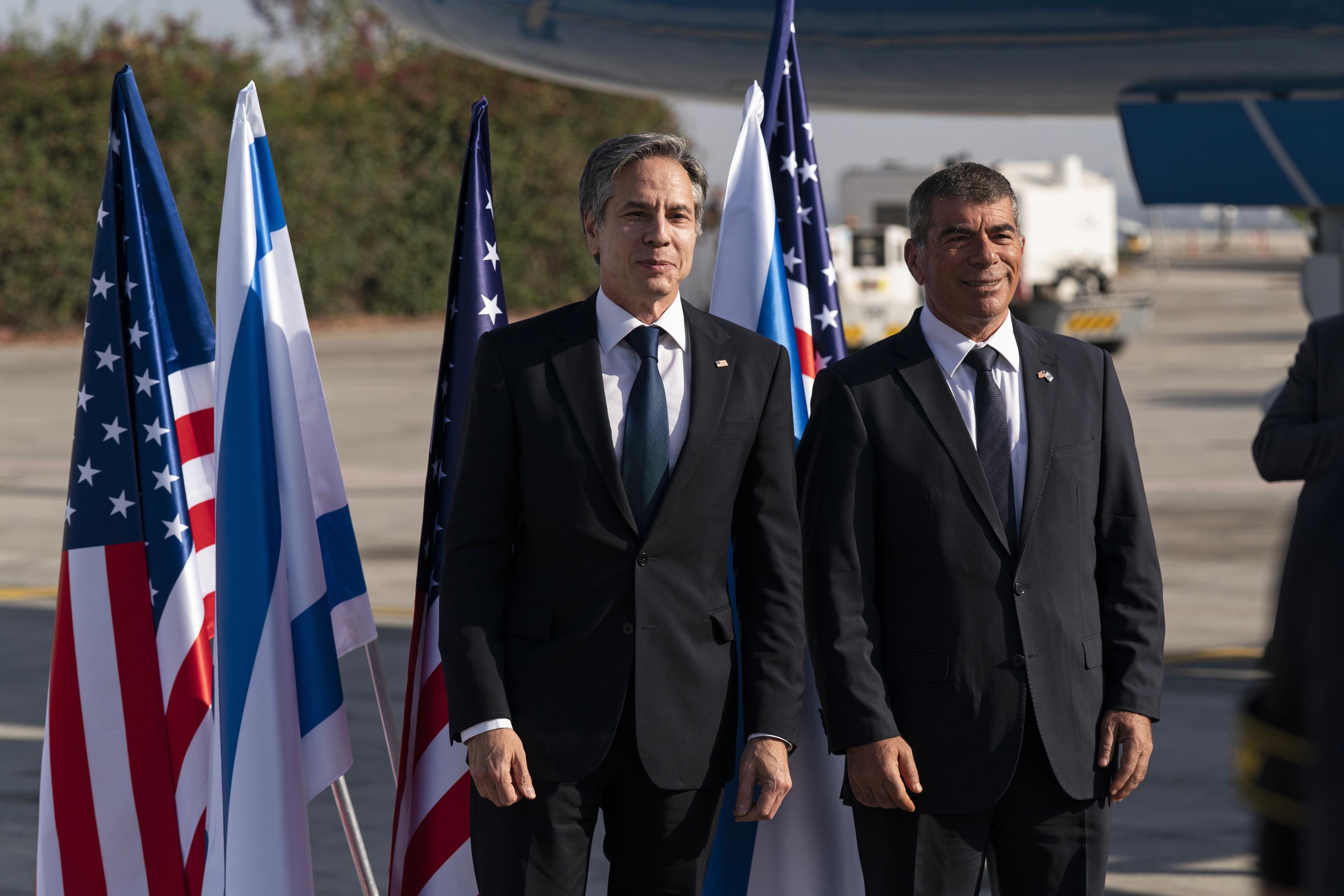
As the eleven-day war between Palestine and Israel sits on a razor-thin ceasefire, it is hoped that American intervention and influence can deliver support, aid and even a lasting truce between two warring factions. For diplomats, it will be like walking a tight rope in an effort to calm both the Israelis and Palestinians while also ensuring Hamas remains on the sidelines. U.S. Secretary of State Antony Blinken is in the region now, leading the cause. The truce that came into effect Friday has so far held, but it did not address any of the underlying issues in the Israeli-Palestinian conflict, something Blinken acknowledged after meeting with Israeli Prime Minister Benjamin Netanyahu. “We know that to prevent a return to violence, we have to use the space created to address a larger set of underlying issues and challenges. And that begins with tackling the grave humanitarian situation in Gaza and starting to rebuild,” he said. “The United States will work to rally international support around that effort while also making our own significant contributions.” He added that the U.S. would work with its partners “to ensure that Hamas does not benefit from the reconstruction assistance.” Blinken will not be meeting with Hamas, which does not recognize Israel’s right to exist and which Israel and the U.S. consider a terrorist organization. May 25 - Associated Press This will be a long and delicate process and there are a lot of questions to consider: Is it possible to negotiate in Gaza and not include Hamas? With Palestinian President Mahmoud Abbas and Israeli Prime Minister Benjamin Netanyahu both facing a political ousting - can a solution even be found? And what are the issues and is there any negotiating the long-sought after two-state solution? If you’re a journalist looking to cover the ongoing tensions between Israel and Palestine – then let us help with your stories and questions. Professor Ralph Carter is an expert in the areas of international politics, U.S. foreign policy, and Mideast conflicts. Dr. Carter is available to speak with media regarding the ongoing developments between Israel and Palestine – simply click on his icon now to arrange an interview today.


Baylor Expert Shares Four Keys to Leadership from Ulysses S. Grant’s Reflections on Civil War
Near the end of his life, as he battled spiraling health and an empty bank account, former United States President – and iconic Civil War General – Ulysses S. Grant penned his memoirs and gave the world a glimpse into the mind of one of the nation’s most celebrated figures. The book, “Personal Memoirs of U.S. Grant,” was published in 1885 and has been pored over for more than 135 years. Peter Campbell, Ph.D., author, associate professor of political science at Baylor University and a nationally recognized scholar on military strategy and international security, recently wrote an essay about Grant and his memoirs for Classics of Strategy and Diplomacy. He said Grant’s personal reflections provide valuable insights into his view and practice of leadership, specifically as he led Union forces in the Civil War. Below, Campbell offers four keys to leadership that he found in Grant’s writings. 1. Know Yourself. Grant was a careful observer of himself. He was able to reflect on his experience, see where he had made errors and learn from them. In July 1861, moments before what Grant thought would be his first engagement as a commander in the Civil War, he was terrified. His heart was in his throat. When he and his forces crested a rise that they thought would reveal the enemy force, they saw that the enemy had fled. “My heart resumed its place,” Grant wrote. “It occurred to me at once that [the enemy] had been as much afraid of me as I had been of him. This was a view of the question I had never taken before; but it was one I never forgot afterwards.” Grant absorbed this lesson and it transformed him as a leader and planner. 2. Know Your Enemy. The great Chinese strategists counseled that commanders must know their enemies. Grant shows us what this looks like in practice. Rather than dwelling on his fears, those things that his opponent might do that would spell disaster, Grant put himself in the shoes of his adversary and asked himself: What would my gravest fears be, were I in his position? He then designed his plan of campaign to raise the specter of his enemy’s fears, knowing that this would compel the enemy to be blinded by fear and compel them to react. To be fair, this was easier for Grant because in the Civil War he was fighting against fellow graduates of West Point and veterans of the Mexican War, including Robert E. Lee. Grant was not in awe of Lee. “I had known [Lee] personally,” Grant wrote, “and knew that he was mortal; and it was just as well that I felt this.” This does not diminish, but rather reinforces, the importance on studying one’s adversary carefully in any kind of competition. 3. Know Your People. As Grant rose in the ranks of the Union Army, he was pulled away from the sound of the guns and the command of troops in battle. This is true in any organization – the higher one rises the further one gets from the ground truth, whether in an army or a Fortune 500 company. Grant recognized that to influence the battles he could no longer superintend, he had to select the right subordinates for the job and then give them the authority to exercise the initiative in their area of responsibility. This meant that Grant also had to be a careful observer of the strengths and weaknesses of his subordinates. Even a hero of the Battle of Gettysburg like Major General Gouverneur Warren was not spared Grant’s penetrating character assessments. Warren’s weakness, Grant wrote, was that he could not trust his subordinates to carry out his orders, which meant that he could not be give a large command. “[Warren’s] difficulty was constitutional and beyond his control,” Grant wrote. “He was an officer of superior ability, quick perception, and personal courage to accomplish anything that could be done with a small command.” When you know your people, you know where to place them where their strengths will reinforce success and their weaknesses will be least disastrous. 4. Unleash the Power of Humility. The most decisive virtue that Grant practiced was humility. As a leader he did not allow pride in his own designs to blind him to the wisdom of his subordinates. Late in the war, Grant wrote up a campaign plan for attacking the Shenandoah Valley, the key source of supply to the Confederacy. He brought the plan to General Philip Sheridan for execution. However, when he met with Sheridan, the cavalry officer presented Grant with his own plan. Grant wrote that Sheridan “was so clear and so positive in his views and so confident of success, I said nothing about [my campaign plan] and did not take it out of my pocket.” When you lead, don’t let pride get in the way of the best ideas bubbling up from your subordinates. ABOUT PETER CAMPBELL, PH.D. Peter Campbell, Ph.D., is an associate professor of political science in Baylor University’s College of Arts & Sciences. He is the author of two books: “Military Realism: The Logic and Limits of Force and Innovation in the U.S. Army” and “Farewell to the Marshal Statesman: The Decline of Military Experience Among Politicians and its Consequences.” Campbell studies international security, civil-military relations, strategy and national security decision-making, international relations scholarship and policy relevance, insurgency and counterinsurgency, the just war tradition, unconventional warfare and advanced military technology, military culture, and the effects of cyber capabilities on conflict escalation. ABOUT BAYLOR UNIVERSITY Baylor University is a private Christian University and a nationally ranked research institution. The University provides a vibrant campus community for more than 19,000 students by blending interdisciplinary research with an international reputation for educational excellence and a faculty commitment to teaching and scholarship. Chartered in 1845 by the Republic of Texas through the efforts of Baptist pioneers, Baylor is the oldest continually operating University in Texas. Located in Waco, Baylor welcomes students from all 50 states and more than 90 countries to study a broad range of degrees among its 12 nationally recognized academic divisions. ABOUT THE COLLEGE OF ARTS & SCIENCES AT BAYLOR UNIVERSITY The College of Arts & Sciences is Baylor University’s largest academic division, consisting of 25 academic departments and eight academic centers and institutes. The more than 5,000 courses taught in the College span topics from art and theatre to religion, philosophy, sociology and the natural sciences. Faculty conduct research around the world, and research on the undergraduate and graduate level is prevalent throughout all disciplines. Visit baylor.edu/artsandsciences.


New York and Tokyo: Global Cities as Essential Hubs for Our Collective Future
Throughout, cities have faced repeated pronouncements of their demise. Yet, as centers of soft power, cities adapt, persevere, and ultimately, reinvent themselves to thrive. Photo: Orbon Alija / Getty Images On August 24, 2020, in the dog days of the New York summer and at the peak of the COVID-19 pandemic, comedian Jerry Seinfeld wrote an op-ed for The New York Times titled "So You Think New York Is 'Dead' (It's not.)" The king is dead, long live the king! "Real, live, inspiring human energy exists when we coagulate together in crazy places like New York City," wrote Seinfeld. Cities change, "They mutate. They re-form. Because greatness is rare. And the true greatness that is New York City is beyond rare." In fact, megacities around the world have been experiencing similar trends related not just to the novel coronavirus--climate change, natural disasters, population shifts, and transformations in business, infrastructure, and transportation will all shape the contours of the 21st century. New York City's own history--when and why it has been pronounced "dead" during the last century--is instructive in and of itself. Other megacities of consequence should take note and take heart, especially Tokyo, which will be under the microscope in a new way as it prepares to host the Olympic Games in today's unprecedented environment. History repeats itself In the tensions of living in the present time, it's easy to forget New York City's long history of disaster, recovery, growth, and innovation--the 1918-19 influenza epidemic, the seasonal threat of polio, the scourge of HIV-AIDS, and the current pandemic, all define the city's history. In October 1975, New York City, America's largest and wealthiest city, narrowly averted bankruptcy. Refused rescue by the federal government and President Gerald Ford, the city was saved only through the beneficence of the city's own Teacher's Retirement System pension fund, which made up a $150 million shortfall. The next day, the Daily News headline shouted "Ford to City: Drop Dead." We survived, and we thrived! Then there was 9/11, 20 years ago this September, when the U.S. rallied around the city. New Yorkers cheered as heavy equipment driven from across America arrived to help clear the devastation, and were joined by the entire nation in mourning those who were lost. Along came the 2008 financial crisis, sounding another death knell for New York. Today, we know from past history that what has closed will reopen, or be reborn in a different form. And we'll be here to celebrate. Global cities generate soft power Like Tokyo, London, or Paris, New York is a global center for arts and culture, a place where diverse creative arts flourish and inspire people in close proximity, where there is always space for tradition and innovation, and a place, too, for those who come for entertainment. But whether in Japan, Europe, or America, whether in the arts, innovation, or civil society, the soft power of a global city is so much more than the sum of its parts. It is a treasure trove of history, a platform for the future, a home for diversity, and an incubator for social change. What is soft power and why do we need it? The term "soft power" was crafted by Harvard political scientist Joseph Nye in the 1980s, and is now widely used in a foreign policy context. As a 2004 Foreign Affairs review of Nye's book, Soft Power; The Means to Success in World Politics noted: "Nye argues that successful states need both hard and soft power--the ability to coerce others as well as the ability to shape their long-term attitudes and preferences... But overall, Nye's message is that U.S. security hinges as much on winning hearts and minds as it does on winning wars." Almost two decades later, soft power--the cultural, intellectual, and social bonds that bring diverse countries and societies together for mutual understanding--has become a critical component of American foreign policy. This is especially important for the U.S.-Japan alliance, as most recently evidenced by Hideki Matsuyama's thrilling Masters Tournament win and President Biden hosting Prime Minister Yoshihide Suga as the first head of state to visit the White House during his tenure. As I've written before, based on my experience from the State Department, "innovative and entrepreneurial partnerships based on shared objectives--economic growth, stability, and more--will be the engine for increased security and prosperity." In other words, the future of diplomacy will not only be national, but subnational, where megacities like Tokyo and New York will shape their own destinies based on the partnerships that their leaders--political, business, and civil--can forge together in the best interests of their constituents. Japan Society and New York As the President and CEO of Japan Society, my work is to take the Society's mission into its second century, to be the deep connection, or kizuna, that brings the United States and Japan together through its peoples, cultures, businesses, and societies. From our New York headquarters, which opened to the public 50 years ago, we are looking toward the next half century knowing that we will be defined not so much by our now-landmarked building but by our digital and ideational impact. Our future can only be enhanced by continuing to exchange with our friends in Tokyo and beyond. Long before soft power was defined, in the radical days of 1960s New York, Japan Society supported international exchange in the arts between Japan and the U.S. through fellowships and grants to Japanese artists and students, among them Yayoi Kusama, Yutaka Matsuzawa (Radicalism in the Wilderness: Japanese Artists in the Global 1960s), Shiko Munakata (Improvisation in Wood: Kawamata x Munakata, fall/winter 2021), and many others who made history in the arts in both the U.S. and Japan. Now, performing arts commissions and gallery exhibitions at Japan Society build on and evolve U.S.-Japan cultural exchange even as Japanese traditional and contemporary artists have been mainstreamed into New York's major cultural institutions. Our work continues--in arts and culture, education, business, and civil society. Even as the COVID pandemic recedes through continued social distancing practices and increasing vaccinations, the changes it has wrought on the ways we work and communicate are here to stay. Remote work, flexible schedules, and collaboration and connectivity across time zones all predate the pandemic but were scaled up at a rate that was previously unimaginable. While physical borders closed to travelers, virtual ones opened --and technology has allowed us to engage and convene with those near and far like never before. We at Japan Society are committed to finding new connections and building new bridges outside of New York City, starting with Tokyo and then the rest of the world. Our 37 other Japan-America sister societies across the United States have much to offer even as New York remains an essential global stage and financial platform. Partnerships will ultimately define the future of which global hubs thrive and where populations gravitate post-COVID. As we continue our mission for the future of the world, and for the U.S.-Japan alliance, I'm incredibly optimistic for Japan Society and for New York City's long-term evolution. This article was originally published in the Tokyo Metropolitan Government.


US call to boycott Beijing Olympics: expert available
US House speaker Nancy Pelosi has called for a international boycott of the Beijing Winter Olympics in 2022, in response to reports of human rights abuses by the Chinese government. Professor Shaun Breslin, an expert on China from the University of Warwick (UK), is AVAILBLE FOR INTERVIEW and media-friendly. He comments: "While the messenger can control what message they send, they cannot control the way that it will be understood and parsed by the recipient. This is intended to show to the Chinese leadership the level of global revulsion at what is going on in Xinjiang – and perhaps with the restrictions on individual freedoms more generally in China; including in Hong Kong – this is likely to be perceived differently in Beijing. Or at least, the message will be explained as having a different meaning to the Chinese people. This will be used as further evidence that the US (and its allies) do not want to accommodate China’s rise into the existing international order, and are trying to find ways of checking China’s rise. The Chinese government repeatedly argues that China is being 'smeared' or 'slandered' by the west and this is likely to be the response this time too. "This is, of course, not the first time that the Olympics has become an international relations issue for China. There was a feeling that the country had been slighted in 1993 when the millennial Olympic Games was awarded to Sydney despite a widespread expectation (and not just in China) that Beijing would win, and this would be a validation of China’s re-acceptance into the international community. And when they did win and host the games (in 2008), this was used to showcase a new self confident and increasingly powerful China to the world; a sort of coming out party for China as a putative great power." For interviews, contact: Luke Walton, International Press Manager L.Walton.1@warwick.ac.uk +44 (0) 7823 362 150


As America tries to come to grips with and find lasting solutions to issues of systemic racism, new research shows staggering hiring trends that negatively impact Black Americans when they enter the workplace and as they near retirement age. Sociologist and UConn expert Dr. Matthew Hughey discussed the findings with the Washington Post: "A new experiment at Texas A&M University helps illustrate the surprising pattern, which has not been widely studied but tends to line up with Labor Department data reviewed by The Washington Post: Black workers are typically less likely to be hired than White workers with the same experience, but the gap closes in middle age. When he saw the chart above, University of Connecticut sociologist Matthew Hughey was struck by the steadiness of the trend for Whites, compared to the volatile swoop of the line representing Black workers. It shows hiring managers tend to accept White applicants at face value while subconsciously scrutinizing Black ones, he said. “Black people have always been more objectified, scrutinized and surveilled than White people,” Hughey said. “Every little thing is nitpicked on a résumé or explained as a possible red flag.” The larger pattern is common in government data, but the chart comes from a new analysis in the Journal of Policy and Management from Texas A&M economist Joanna Lahey, a widely cited authority on discrimination in the labor market. Lahey noticed the counterintuitive pattern of age discrimination against Black workers when she and her collaborator, Douglas Oxley, asked about 150 business and MBA students to evaluate about 40 résumés each. About a quarter of the students had previously screened résumés in the real world, and 11 percent had experience in human resources." May 14, 2021 - Washington Post If you are a journalist looking to cover this subject, let us help. Professor Matthew Hughey is a scholar of racism and racial inequality in identity formation, organizations, media, politics, science, religion, and public advocacy. If you are looking to book an interview, simply click on Dr. Hughey’s icon today.


A Neuroscientist’s Guide to Managing Post-COVID-19 Anxiety When Returning to Work
With the Centers for Disease Control and Prevention relaxing mask-wearing restrictions and many companies like Google and Goldman Sachs asking employees to return to the office after working remotely since the start of the COVID-19 pandemic, some people are nervous to re-enter society. According to Alicia Walf, a neuroscientist and senior lecturer at Rensselaer Polytechnic Institute, the most effective way to overcome fears about re-engaging with the world may simply be to get back out into it. “Positive human connections are the most powerful tool for reducing stress,” she said in a recent Reader’s Digest article. To control anxiety and improve the health of our brains, Walf also suggests some basic steps like getting sufficient sleep, eating a good diet, and removing distractions to improve focus. Ultimately, a return to normalcy after such a long period of constant stress will be an important step toward restoring brain health. “There can be lasting effects of intense stress on the brain,” Walf said. “Social isolation is an incredibly stressful event associated with increased stress hormone levels and many other long-term negative health consequences. Clinicians are rightfully concerned about the long-term effects of this pandemic on mental health, which may involve these changes in the stress response and brain circuits.” And while feeling anxious may be unpleasant, stressful experiences can be learning experiences. According to Walf, adaptability is an important part of resiliency to stress, and a useful trait to work on us we adjust to our changing world. “Although not wearing masks and returning to work are now major changes in many of our routines, producing feelings of anxiety,” Walf said, “the benefits of social interaction will likely help us return to our routines yet again and reduce the potential for long-lasting negative consequences of stress.” Walf studies the brain mechanisms of stress and reproductive hormones as they relate to behavior and cognition, brain plasticity, and brain health over the lifespan. Specific areas of her expertise are memory, emotions, and social interactions and how these functions not only arise from the brain but change the brain itself.


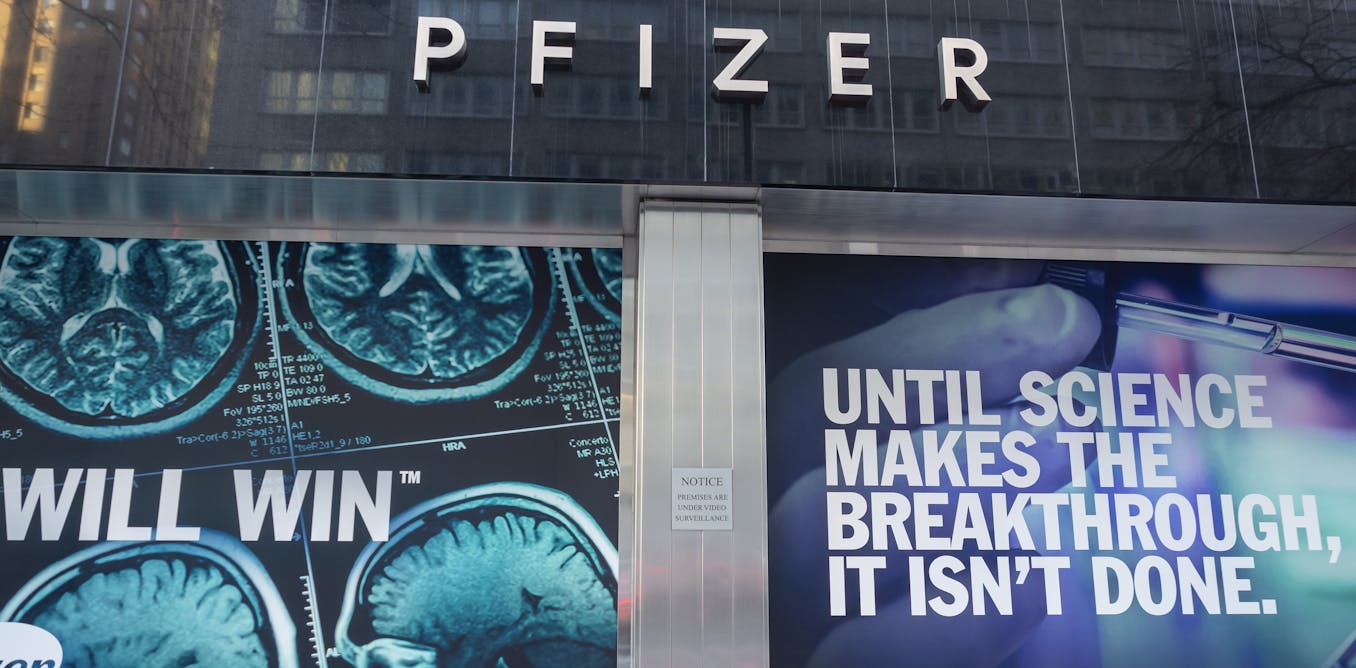
Why is the FDA funded in part by the companies it regulates?
In a recent piece published in The Conversation, C. Michael White, Distinguished Professor and head of the Department of Pharmacy Practice at the University of Connecticut shares his perspective on the Food and Drug Administration and its past and current role and influence in America. “The Food and Drug Administration has moved from an entirely taxpayer-funded entity to one increasingly funded by user fees paid by manufacturers that are being regulated. Today, close to 45% of its budget comes from these user fees that companies pay when they apply for approval of a medical device or drug. As a pharmacist and medication and dietary supplement safety researcher, I understand the vital role that the FDA plays in ensuring the safety of medications and medical devices. But I, along with many others, now wonder: Was this move a clever win-win for the manufacturers and the public, or did it place patient safety second to corporate profitability? It is critical that the U.S. public understand the positive and negative ramifications so the nation can strike the right balance.” May 13 - The Conversation The entire piece is a captivating read and a remarkably interesting topic with regards to accountability, transparency, and the influence big pharma holds across many levels of the United States government. And if you are a journalist looking to cover this topic, then let us help. Dr. White is available to speak with media -- click on his icon now, to arrange an interview today.

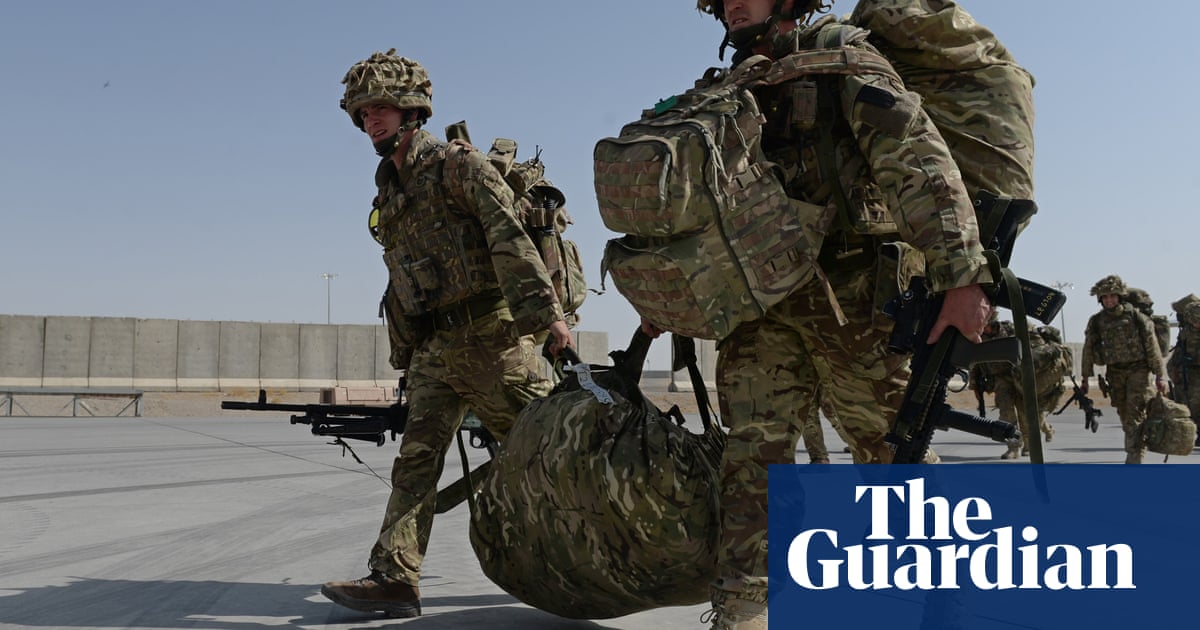
UMW Professor Jason Davidson speaks to The Guardian about ‘Costs of War’ in Afghanistan
As America readies to end its military presence in Afghanistan, there’s been much reflection and examining of the role America and its NATO allies played in the war-torn country. A report released just this week shed some light and much-needed perspective on the topic. University of Mary Washington Professor of Political Science and International Affairs Jason Davidson, the study's author, was contacted by The Guardian to lend his expert opinion. “British and Canadian troops were more than twice as likely to get killed in Afghanistan as their US counterparts, according to a study that looks at the scale of the sacrifice made by Nato allies over the course of the 20-year war. The UK also gave more to Afghanistan than the US in the form of economic and humanitarian assistance as a percentage of GDP, the study published on Wednesday by the Costs of War project at Brown University in the US found. Although the US suffered by far the greatest number of fatalities in absolute terms compared with other members of the International Security Assistance Force (ISAF) – 2,316 American troops were killed between 2001 and 2017, the period of the study – Canadians and British soldiers sent to Afghanistan were more likely to die. The Costs of War report looks at fatalities as a percentage of national troop levels at peak deployment in Afghanistan. The US losses were 2.3% of its vast military presence. The UK lost 455 lives, which was 4.7% of its peak deployment level, while the 158 Canadians killed represented 5.4% of their total. The study refers to a grim joke told by American soldiers in Afghanistan that ISAF stood for “I Saw Americans Fight”, but points out in the case of the UK and Canada at least it was grossly unfair. “Americans do not fully understand, do not acknowledge, the sacrifices that allies made in Afghanistan,” said Jason Davidson, the author of the report, and professor of political science and international affairs at the University of Mary Washington. “It’s something that not only doesn’t get attention from those who are critics of the allies. It doesn’t even get the attention that it deserves from those who are generally cheerleaders for allies, like the current administration. I would like to see more American policymaker acknowledgment and discussion with the public of the costs that America’s allies have incurred in these wars.” May 12 - The Guardian There will be a lot of coverage in the lead up to America’s exit from Afghanistan, and if you are a reporter looking to cover that topic or the ‘Costs of War’ project, then let us help. Dr. Jason Davidson is a professor of Political Science and International Affairs and is also an expert in American Foreign and Security Policy, and International Security. If you’re looking to arrange an interview with Dr. Davidson, simply click on his icon now to arrange an interview today.



Taking on Super Polluters to Reduce Greenhouse Gases
If just the top five percent of carbon-emitting plants in the U.S. reduced emissions to the average intensity of all plants, overall emissions from the electricity sector would fall 22 percent. A new book co-authored by Wesley Longhofer, associate professor of organization and management at Goizueta Business School, offers new insights into a persistent problem—how to curb carbon emissions from top-polluting power plants around the world. In Super Polluters: Tackling the World’s Largest Sites of Climate-Disrupting Emissions (Columbia University Press), Longhofer and co-authors Don Grant and Andrew Jorgenson argue that reducing pollution from fossil-fueled power plants should start with the dirtiest producers. From data they gathered over eight years on the carbon emissions of every power plant in the world, they found that a small number of plants contribute the lion’s share of pollution. For instance, if just the top five percent of carbon-emitting plants in the U.S. reduced emissions to the average intensity of all plants, overall emissions from the electricity sector would fall 22 percent. The book also questions claims that improvements in technical efficiency will always reduce greenhouse gases. “It’s the paradox of efficiency,” Longhofer says. “Just because a plant produces power more efficiently doesn’t mean they’ll pollute less. It just becomes cheaper to produce.” As sociologists, the authors are the first to put the problem into context, investigating global, organizational, and political conditions that explain super-polluter behavior. They demonstrate energy and climate policies most effective at curbing power-plant pollution and show how mobilized citizen activism shapes those outcomes. “Climate change is fundamentally an organizational problem. Even if you think about the Paris Accords, it’s the power plants and the cars within those states that produce the emissions, not the states themselves,” Longhofer says. “What do we do with what we already know? How do we develop policies to help us achieve our climate goals?” If you’re a journalist looking to speak with Wesley Longhofer about his book or discuss big pollution and how to cut carb emissions - then let us help. Simply click on his icon now to arrange an interview today.