
Experts Matter. Find Yours.
Connect for media, speaking, professional opportunities & more.

Wilmington Campus Receives $1 Million Donation From the Rocco A. and Mary Abessinio Foundation
ChristianaCare has received a $1 million gift from The Rocco A. and Mary Abessinio Foundation Inc. in support of ChristianaCare’s Wilmington Campus. “All families and communities deserve the excellent care that Wilmington Hospital and ChristianaCare provide,” said Rocco and Mary Abessinio. “It is an honor for our family to support the health and wellbeing of the Wilmington community.” The funds will support areas of greatest need, including the expansion of patient care initiatives aimed at reducing disparities in screening and treatment for cancer and cardiovascular disease in the city of Wilmington. “We are tremendously grateful to the Rocco A. and Mary Abessinio Foundation for their continued, generous support of the Wilmington Campus – a vital resource serving the greater Wilmington community,” said Janice Nevin, M.D., MPH, ChristianaCare president and CEO. “With their help, we are closing gaps in health disparities and improving health for everyone, including some of Delaware’s most vulnerable populations.” The Rocco A. and Mary Abessinio Foundation provided a $1 million gift in 2014 for the redesign and renovation of the health center, which was then named the Rocco A. Abessinio Family Health Center at Wilmington Hospital. The health center is home to three primary care practices and other programs and services that offer high-quality health care, wellness and preventive health visits for people of all ages, regardless of their income or ability to pay. “As a result of the Abessinio family’s longstanding partnership and investment in our mission of service, we are making significant progress in addressing disparities and building strong and healthy communities,” said LeRoi S. Hicks, M.D., MPH, FACP, campus executive director of ChristianaCare’s Wilmington Hospital. A Wilmington landmark in the heart of the city, the ChristianaCare Wilmington Hospital has been serving the diverse medical needs of the city and surrounding region for over 125 years. “Philanthropy is essential to ChristianaCare’s mission of service to our community, and we extend our heartfelt thanks and appreciation to Rocco and Mary Abessinio for their inspiring and visionary philanthropic leadership in support of the Wilmington Campus,” said Dia Williams Adams, MPA, vice president of philanthropy at ChristianaCare. “Their gift is a legacy that not only allows us to increase our ability to make a positive impact on patients and community, but honors the incredible work that our caregivers do every day.” For more information about ways to support ChristianaCare’s mission of service to the community, visit: https://christianacare.org/us/en/make-a-gift.


The 2024 Cision State of the Media Report is jam-packed with all sorts of detailed PR info which can be somewhat overwhelming. But there's an important theme to be found in the data. Kudos to the team at Cision for running this survey that polled over 3,000 staff journalists and freelancers, which is now in its 15th year. The big takeaway for me? Give journalists what they want. Sounds simple enough. Yet, with so many organizations competing for media attention amidst a sea of new AI-enabled platform hacks, many need to focus on the fundamentals of media relations, which this report nicely captures. The media is inundated with pitches. So, the secret to success lies in understanding what jobs journalists have to do and giving them what they need to file their stories…fast. According to the Cision 2024 survey, at the top of the journalists' wish list are: Topical Relevance (68%): Understanding the target audience and what they find relevant. Access to Experts (52%): Connecting journalists with experts and setting up interviews. Credible Data and Research (48%): Providing data and key research. Speed of Response (47%): Responding quickly to inquiries and respecting journalists’ deadlines. In short, journalists want relevant pitches, expert connections, and credible data, and they want it ASAP so they can meet their deadlines. While the Cision report outlines many other best practices that will undoubtedly improve your coverage rate (such as helping journalists quickly source multimedia assets like images), I want to focus on the importance of nailing these first four rules. Rule #1: Pitch Relevant Topics to Journalists Irrelevant pitches not only waste a journalist's time but also damage your credibility. In fact, 77% of journalists in the Cision study cited being spammed with irrelevant pitches as a reason to block a PR professional or put them on the "do not call" list. The study also reported that journalists are "fed up" with follow-ups to unsolicited pitches. Now, only 8% of journalists think it's okay to follow up more than once to check on a story they have pitched. Rule #2: Get Your Experts in Front of Journalists Connecting with credible expert sources is time-consuming. Joint research conducted by ExpertFile and the Associated Press revealed it takes on average, over 2 hours for journalists to secure an expert source for an interview. We can do better than that. As a PR/Media Relations pro, one of your "superpowers" needs to be the ability to spot a story opportunity and get your subject matter experts lined up for the media interview. This is an area where journalists see comms and media pros playing a vital role inside the organization. But if your pitch "sounds like a marketing brochure" the Cision survey shows that 55% of journalists would add you to their naughty list. One of the best ways to avoid this trap and enrich your story is to bring experts and their unique, specialized knowledge to the interview. That means ensuring you are attributing the source of your blog posts to experts in your organization and including links to their expert profile in your pitch. Enclosing a link to an outdated, boring biography on your website or a LinkedIn profile that hasn't been updated since the Yankees last won the World Series (2009), won't score points with journalists. Rule 3: Provide Journalists with Credible Data and Key Research Providing this information not only supports your story but also builds trust. Ensure that your pitches include the latest research findings, statistics, and data from reputable sources within your institution. This evidence-based approach enhances the credibility of your pitches and increases the likelihood of them being picked up by the media. While primary data is best, if you are curating data from other sources, it's critical to cite sources and, ideally, create derivative insights that help the journalist look at the information in a fresh way. For example we have many economists on our ExpertFile network that provide insights regularly on data they didn't gather. But their ability to critically analyze economic data from trusted sources such as the US Census Bureau or the European Union and generate unique, often counterintuitive or provocative insights is what sets them apart from other experts. Rule #4: Help Meet the Journalist's Deadline Journalists often work under tight deadlines and timely responses from PR professionals. Our software has helped organizations handle thousands of media requests every year and if there is one thing we've learned, media is all about speed. If you are a "serious player" you need protocols and processes to quickly respond to media inquiries and get your expert sources lined up to provide the necessary information and insights to meet same-day deadlines. This shows journalists you respect their time and are a reliable source and you will be on speed dial for future stories. Are You Pitching Effectively? Here’s a few tough questions. Answer truthfully. Are You Personally Wasting Time Pitching? How much time do you spend pitching the media vs. responding to inbound media opportunities? Data from Propel Media shows 97% of media pitches fail. While journalists open approximately half of the pitches they receive they only respond to an average of 2.99% of the pitches. Yet the Cision data shows that it's not always your fault. Why? Well, unless you're a gifted psychic, you simply can't know for sure how a journalist is going to react to your pitch. That's why more media departments and their PR agencies are cutting back on spammy pitch activities and moving to more strategic activities that get more traction. With the extra time they save, they can focus on promoting their experts online where journalists are actively searching for credible sources. The result is more qualified inbound inquiries from journalists genuinely interested in interviewing your experts. And that means a lot less anxiety about meeting your media coverage targets. Are You Wasting Journalists' Time? Is your newsroom or media relations page set up to allow journalists to quickly serve themselves 24x7? Can they easily search by specific topics to find an expert within seconds to help meet their deadlines? Or are you expecting them to email or call you for help. (hint: journalists don't have time for that kind of friction). Here's a nice example of how US-based health system, ChristianaCare makes their medical experts available to journalists round the clock while saving hundreds of hours a year for their Comms and Digital team. I'd love to hear more about how you are helping journalists and how that's paying off with increased media coverage. Let me know in the comments below or connect/follow me on LinkedIn or on ExpertFile.



Together We Soar Campaign surpasses $100 million milestone
The Georgia Southern University Foundation, Inc. and the Georgia Southern University Athletic Foundation, Inc. are pleased to announce a significant milestone in its ambitious fundraising campaign, “Together We Soar.” The generous support of the community has enabled the campaign to soar past the $100 million mark, a remarkable achievement in the University’s path toward its $125 million goal. Launched October 2023, the “Together We Soar” public phase of the campaign set out with a bold vision to elevate Georgia Southern’s mission and impact: “People. Purpose. Action. Growing ourselves to grow others.” Through this initiative, the University aimed to strengthen its commitment to prioritize student success and support its communities. The overwhelming response and unwavering support from our donors and alumni have propelled us toward this momentous achievement. “This milestone is a testament to the incredible generosity and belief in our mission,” said Georgia Southern University President Kyle Marrero. “We are deeply humbled and grateful for the outpouring of support that has brought us to this point. Together, we are making a tangible difference in the lives of our students and shaping a brighter future for generations to come.” Throughout the campaign so far, 106 new endowments have been created covering all areas of academic study. The Goel Scholars was established and provides a full ride scholarship opportunity for the Honors College, and the first class has begun their studies. The School of Music was named the Fred and Dinah Gretsch School of Music. Buildings such as the Jack and Ruth Ann Hill Convocation Center, the Anthony P. Tippins Family Training Center, renovations made to the J.I. Clements Baseball stadium, and the renamed Evans Family Field at Allen E. Paulson Stadium contributes significantly to the landscape of the Statesboro Campus. Significant gifts made by the Crider family will propel the Manufacturing Engineering program, while a commitment by Centene Corporation will put healthcare at the forefront for years to come. The success of the “Together We Soar” campaign underscores the power of collective action and the impact that philanthropy can have on communities. Every contribution, no matter the size, has played a vital role in reaching this milestone and advancing the shared vision. “As we celebrate this achievement, we also recognize that our work is far from over, said Trip Addison, vice president for University Advancement. “With $25 million left to reach our goal, we remain committed to forging ahead, united in our dedication to Georgia Southern’s mission and the individuals and communities we serve. We extend our deepest gratitude to all who have contributed to the “Together We Soar” campaign. Your support is not only transforming lives but also inspiring hope and creating lasting change.” For more information on how to join the mission or contribute to the campaign, please visit GeorgiaSouthern.edu/TogetherWeSoar. For more information, contact Georgia Southern's Director of Communications Jennifer Wise at jwise@georgiasouthern.edu to arrange an interview today.


From Boring to Brilliant: Writing that Transforms Your Thought Leadership into Must-Read Content
Insights from our Webinar with Author, Rhea Wessel Ask anyone who develops Thought Leadership programs, and they will tell you that experts are essential to a successful program. But experts are busy people. That makes expert engagement strategies a very popular topic with our Comms and Media Relations pros. That’s why we invited Rhea Wessel, Founder of The Institute for Thought Leadership, to join us last week for our ExpertFile webinar. Rhea, a former tech and financial journalist and author of “Write Like a Thought Leader,” has worked with organizations such as Harvard, CFA Institute, Accenture and the Max Planck Institute to help their experts focus on developing unique story angles while getting high-quality work produced. Having seen her in action at last year's IABC Global Conference, speaking to a standing-room-only crowd, I was really impressed by Rhea’s approach. Rhea uses a system that experts and comms teams can use to brainstorm topics and craft story angles that frame expertise and research to make them more compelling. In the session, she showed us how she helps brainstorm and select the best angles for thought-leadership stories using ideas such as “origin” stories, “what if” scenarios, personal-impact stories, and opinion pieces. Experts often have issues with the "dreaded first draft.” The frameworks Rhrea showed us from her book were clever and designed to pragmatically move experts from brainstorming into a writing mode that doesn’t feel forced. Here are some key points I took away from Rhea’s session: Defining Thought Leadership An essential attribute of Thought Leaders is that they share their knowledge for free, using journalistic skills to engage their audience by articulating emerging ideas, steering conversations and influencing others. Finding the Niche Finding and framing thought leadership is not about covering a broad topic. The best topics are often very narrow. And they are best found at the intersection of the expert’s passion, purpose, and big ideas. Think Like a Journalist Write in a conversational tone and include data, quotes & statistics, but not too much. Use short sentences and paragraphs while keeping the story fast-moving. And don’t forget your sense of humor. Spend Time on the Headlines By “thinking like a journalist” and focusing on headlines, one can narrow the focus when examining research and insights to create more clarity. Quoting Author Sean Coyne, Rhea referred to headlines as having the benefit of being an “enabling constraint." "One of the curses of subject matter expertise is that your experts know a lot. They tend to pack a lot [of their knowledge] in, and for a good story, you've got to slice out a narrow bit. That’s the constraint.” Rhea Wessel Time & Place Matters Stories are best anchored in time and place. When you are working with an expert and you want to enrich a story, don’t just think about how they developed their research and insights. Also, think about “where they were” and “when did it happen?” A good origin story explains why an insight is significant for the expert, creating a more emotional, relatable connection for the audience. Frame Your Story Keep it focused on a single yet relevant problem the audience has. Then explain why this matters to your audience and why now. Based on the feedback we received from this session, we'll have Rhea Wessel join us for more conversations on topics related to storytelling. We'd love to know what you think. Details about this session are below: Full Webinar Recording bit.ly/4e9YuWb Presentation Slides To get a copy of the presentation & Templates, just hit the connect button on my profile and let me know. Enjoy!
Experts in the Media: Not a gym rat? Here’s how to get started on an outdoor exercise routine
Summer is here and there's no better time to get out and get active. And for some, the idea of going to the gym just isn't an option or a place they want to be. So recently, the Associated Press was looking for alternatives and connected with TCU's Deborah J. Rhea, Director of the LiiNK Center for Healthy Play. Rhea is also an expert in the areas of physical activity and education and the importance of unstructured play. The health benefits of spending time in nature have long been established, and exercise in general, of course, improves physical and mental well-being. Combine the two and you double down on what adults need to stay healthy, said Debbie Rhea, professor in kinesiology at Texas Christian University. “We’ve got to get outside. We’ve got to be active,” Rhea said. “If we’re going to live long lives, this is what it’s about.” May 29 - Associated Press If you're interested in learning more about the importance of being active and the different ways to do it - then let us help. Deborah J. Rhea is available to speak with media about this topic - simply click on her icon now to arrange an interview today.


Approximately 4,200 degrees conferred during Georgia Southern’s 2024 Spring Commencement ceremonies
In May, approximately 4,200 graduates from Georgia Southern University’s Statesboro, Armstrong and Liberty campuses received associate, baccalaureate, masters, specialist and doctoral degrees in five Spring 2024 Commencement ceremonies. Georgia Southern President Kyle Marrero welcomed the graduates and their guests to the ceremonies, held at the Allen E. Paulson Stadium in Statesboro on May 7, 8 and 9, and at the EnMarket Arena in Savannah on May 11. “Graduates, I don’t need to tell you about your unique college journey, which has been challenging,” said Marrero to the crowds. “I am very proud of how, together, we have persevered allowing us to have a successful semester and today, our commencement ceremony. This graduation is a momentous occasion for Georgia Southern University, as well as for all of you. Today, you are part of history at Georgia Southern.” Speakers included: Mackenzie Anderson (’07), global director of Corporate Communications at Nike Alton M. Standifer, Ph.D. (’12, ’14), vice provost for Inclusive Excellence and chief of staff to the provost at the University of Georgia (UGA) Kim Greene, chairman, president and chief executive officer of Georgia Power Chris Ahearn (’09), director of research and trade development for the World Trade Center Savannah Candicee Childs, M.D., (’19) an emerging beacon of inspiration in the fields of medicine and literature. At present, she is a resident physician at Massachusetts General Hospital, the largest teaching hospital of Harvard Medical School, with a focus on child and adolescent psychiatry Anderson opened the graduation ceremonies in Statesboro, following a warm introduction from Marrero, who described her leadership role at Nike. “I’m sure you probably expected me to get up here and say something like, ‘Class of 2024, go out into the world and ‘Just Do It,’” Anderson mused. “But here’s the deal. I don’t have to tell you to just do it because you just did it. You did the impossible by making it through the pandemic. “Today you aren’t just graduating with a degree in whatever is written on your diploma. You’re also graduating with a degree in doing hard things. And today we celebrate you.” She continued, saying that earning a degree in “doing hard things” has no doubt been a challenge, but the graduates will soon find out that this is also their superpower. They produced their own playbook, as unique and rare as they are. How they use the playbook moving forward is up to them — to wit, be curious, be wrong while giving yourself permission to make mistakes, be humble and be persistent. “Launch into the world,” Anderson concluded. “And whether you land just across the street, across the country like me or somewhere around the world, remember where you came from. Today you are etching your name alongside a proud Eagle alumni network of more than 147,000 strong. “It is my honor to be the first to say, ‘Georgia Southern University graduating Class of 2024, welcome to the alumni family.'” Standifer shared his own story as a young man, undecided about going to college while he worked as a cashier. A regular customer, Mr. Paul, continuously asked Standifer about whether he’d attend college, until one day Standifer told him he was going to attend Georgia Southern University. With a wide grin, Mr. Paul congratulated him and handed him a $100 bill. Incredulous, Standifer asked why he’d given him such a large tip. Mr. Paul told him it wasn’t a tip. It was an investment, and he’d continue to mentor Standifer in the following years, and remain a profound influence in his life. “I want to encourage you all to think of the Mr. Paul’s in your life,” Standifer said. “Think of the people who have helped you get to today. And then when you leave here, make the conscious effort that you will be Mr. Paul for someone else.” In Savannah, Ahearn shared his journey of discovery in Georgia Southern’s classrooms where he explored Irish film, an introduction to the United Nations, abnormal psychology, Celtic identity and conflict, psychology and law, and gangs, drugs and criminal justice. “There’s a whole menu of choices for you and experiences for you to choose from to really help you discover who you are, where you fit, what drives you, what gets your creative juices flowing, and what options are out there when you graduate from these key interactions,” Ahearn said. Following, he pursued a master’s in international relations in Ireland that gave him a deeper perspective on how the world operates and how interconnected we all are. Ensuing professional roles in higher education, international networking and fundraising, culminated in his current role at World Trade Center, Savannah. From the stage, Ahearn stressed his key takeaways: network, stay in touch with your classmates, be authentic and perhaps, most importantly, travel. “Go outside your comfort zone,” he encouraged. “Try things you’d never try. Expand your horizons. This is your opportunity to learn about different cultures, to embrace the differences and similarities we share with our fellow global citizens and find common ground.” In closing: “Many of you may stay in the region to leave your impact as this community continues to expand,” Ahearn said. “There are plenty of great employment opportunities at your fingertips. Many of you will leave to follow your careers wherever they take you. But please know that you’re part of this institution’s history. You’ll always be an Eagle, and Georgia Southern will always welcome you home." Interested in learning more about Georgia Southern University? Contact Georgia Southern's Director of Communications Jennifer Wise at jwise@georgiasouthern.edu to arrange an interview today.

#Expert Perspective: Where did all the medical appointments go?
Dr. Martine Hackett, associate professor and chair of Hofstra’s Department of Population Health, spoke to Newsday about why patients are finding it more difficult to make medical appointments and what options they have. Dr. Hackett noted over the past decade, more people have enrolled in insurance plans and sought a wider array of treatments because of the Affordable Care Act and policies that expanded the reach of Medicaid. The Medicaid and Medicare acceptance rates are plunging raising concerns as doctors tend to drop these insurance plans first because they pay lower rates. Setup is becoming illusive in an industry that has undergone immense changes in recent years, Dr. Hackett added. New Yorkers with Medicaid may want to find federally-qualified health centers, which are designed for Medicaid patients, Dr. Hackett said. People may also be able to get appointments more quickly if they see non-physician providers like nurse practitioners or midwives instead of OB-GYNs, she added. Healthcare is an important topic - and if you're covering, let us help. Dr. Martine Hackett's research focuses on public health and health inequities, particularly in the American suburbs and minority communities. She's available to speak with media - simply click on her icon now to arrange an interview today.


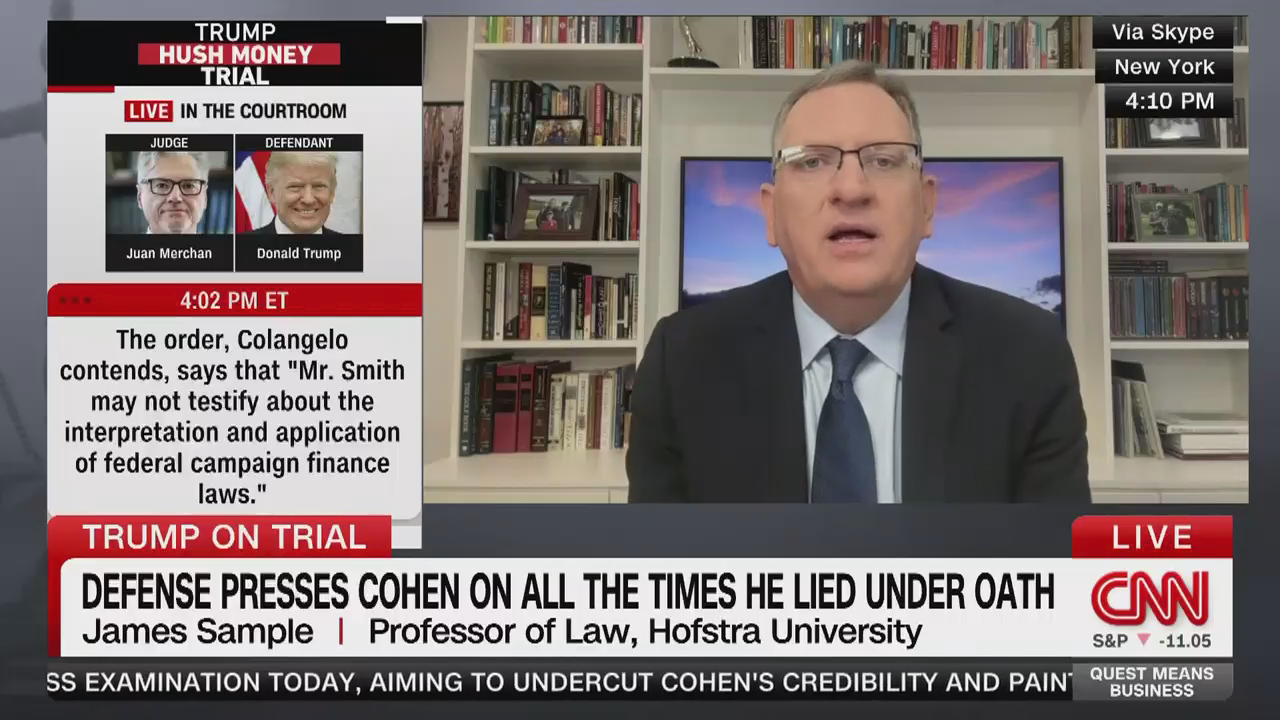
#Experts in the Media: Cohen Testifies in “Hush Money” Trial
The trials of Donald Trump are making headlines across the country and media are looking for key experts to offer opinion, perspective and insight to just about every angle and witness that's playing a part of this legal and political narrative day after day. Professor of Law James Sample was interviewed on CNN International’s Quest Means Business and in The Atlantic about the Michael Cohen’s testimony in former President Trump’s criminal trial in New York. These trials are daily news and if you're a journalist working this story - then let us help. James Sample is a Professor of Law at Hofstra University and previously served as an attorney in the Democracy Program at the Brennan Center for Justice at New York University School of Law. James is available to speak with media - simply click on his icon now to arrange an interview today.


Changes in college football continue to be driven by dollars (and sense?)
The landscape of college sports, and particularly that of college football, has changed significantly in recent years. First, we have seen an almost constant realignment of collegiate athletic conferences, resulting in a few major mega-conferences, such as the SEC and ACC, Big Ten and Big 12, and the disintegration of a former major conference, the Pac 12. Most of the other changes related to the athletes, such as the ease with which student-athletes could transfer from one school to another and the ability for them to be paid for their name, image and likeness. All of these issues were potentially pointing to new business models in college sports, but within the last week, that landscape was shaken even further. Last week, the NCAA and its five major conferences settled multiple lawsuits to pay past and present student-athletes a total of $2.8 billion. The settlement also laid the foundation for the payments of college athletes starting in fall 2025. “The major unresolved questions are who will get paid and how much,” said Rick Franza, PhD, professor in the Hull College of Business at Augusta University. “If we ‘follow the money,’ we see that football and basketball (particularly men’s basketball) generate almost all of the revenues, and most of the revenues comes from major conferences. Therefore, most of the player payments are going to go to football and basketball, and given the size of the relative rosters, football teams will be much more costly.” Franza added that the settlement will further exasperate the revenue and cost differences between major conferences and their smaller conferences as well as between football and the so-called Olympic sports which generate little, if any revenue. It was always clear that from both a revenue and cost perspective, college football is very different from other sports. Revenues are much higher for the major conferences in football, and there is not the same extent of revenue sharing as there is in basketball due to the NCAA Tournament. On the cost side, with the new realignment of the mega conferences and expanded geographic footprints, there is a significant increase in travel costs for the Olympic sports. “While those expanded conferences were mainly driven by football revenues, they are also making all other sports more costly. Therefore, the time has come to separate football from other sports,” said Franza. One solution was first proposed by Chip Kelly, former Oregon and UCLA head football coach and now Ohio State offensive coordinator. He proposed a 64-school football conference in which the members would share all revenues, including television, which would more easily cover the NIL, and player pay costs. In recent months, similar proposals have been made for a college football “Super League,” which would include up to 80 schools. “This makes too much sense not to happen,” Franza said. “It allows the bigger football schools to share the plentiful available revenues while being able to pay the players what they will demand. At the same time, the other college sports would be able to revert to their traditional, geographical conferences and reduce travel costs driven up by the realigned mega- conferences.” He added that two conferences, the SEC and Big Ten, the most successful under the current alignment, could delay the implementation. Franza also predicts that an agreement taking the first steps toward such a structure will be reached sometime in 2024. “While it makes a lot of sense to go in this direction prior to the player settlement, it makes even more dollars and ‘sense’ now given the settlement,” said Franza. “While the SEC and BigTen currently make more money than any other conference, I think they will see the light for what is best for the future of college football.” Covering the business of sports and looking to know more? Then let us help. Richard Franza, PhD, is available to speak with media about trending issues like inflation, small business and the economy – simply click on his icon now to arrange an interview today.

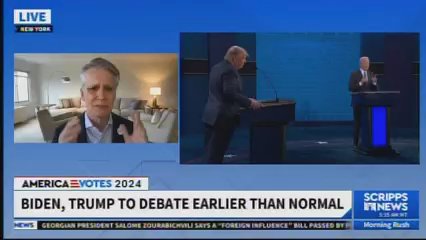
#Expert Insight: Biden and Trump Agree to Early Debates
Dean of the Lawrence Herbert School of Communication Mark Lukasiewicz was interviewed by Scripps Morning News about President Biden and former President Trump agreeing to debates on June 27 (CNN) and September 10 (ABC), to connect with voters ahead of traditional timelines. Dean Lukasiewicz shed light on how early voting influenced this development. This strategic move offers a unique advantage to both candidates and provides voters with unprecedented early access to the electoral discourse. The first debate is less than a month away - and if you're covering what might be the most watched political event this century - then let us help. Mark Lukasiewicz is a veteran producer, journalist, and media executive who has spent his professional career telling important stories to worldwide audiences and helping media organizations deal with transformational change. He's also the Dean at the The Lawrence Herbert School of Communication at Hofstra University and is available to speak with media regarding this important debate. Simply click on his icon now to arrange an interview today.
