
Experts Matter. Find Yours.
Connect for media, speaking, professional opportunities & more.

Georgia Southern University has been awarded a $1.6 million grant to help provide childcare subsidies for eligible student-parents over the next four years through the Child Care Access Means Parents In School (CCAMPIS) program. Written on behalf of the Office of Inclusive Excellence by Corine Ackerson-Jones, director of TRIO Student Support Services (SSS) on the Armstrong Campus in Savannah, the CCAMPIS grant will serve no less than 30 student-parents per year on the Armstrong Campus and the Liberty Campus in Hinesville by providing a maximum amount of $150 per week for childcare services to be paid directly to the childcare provider. Corine Ackerson-Jones The grant, a first of its kind at Georgia Southern, is fully funded by the Department of Education and will work with centers licensed and accredited through the Georgia Department of Early Care and Learning. To apply for CCAMPIS assistance student-parents must be PELL eligible. “According to recent data, the annual price of childcare can exceed the annual cost of in-state tuition at a public four-year university,” said Ackerson-Jones. “Without financial assistance, it is next to impossible for economically challenged student-parents to attend school and pay for quality, affordable childcare.” Amanda Brandmire, a student-parent studying natural resource and wildlife conservation on the Armstrong Campus, said balancing her role as a parent and a student can be challenging emotionally and financially, especially when it comes to childcare. “There have been several times where my husband and I had to get very creative with our funds to make it because of our childcare costs,” she said. “My husband and I may skip meals or go a week at a time without food because childcare is a necessity for us to work and go to school. In addition, I have to give up study time or time with my kids to go pickup a shift delivering for DoorDash just to get by. Right now we don’t have an income and we are a week behind on childcare expenses, but thankfully our daycare is working with us.” A subsidy for childcare would change the trajectory of Brandmire’s education. “For me this would be an amazing opportunity,” Brandmire said. “I am so close to finishing my undergraduate degree and plan on applying to grad school in March. Being a first-generation college student, my education is extremely important and this would help me make graduation a reality.” Brandmire feels this resource would appeal greatly to other student-parents in the greater Savannah area. “This is also a huge selling point for potential students and moms like me who want something better but can’t get over the childcare hurdle,” Brandmire said. “I appreciate Georgia Southern for taking the time to reach out and serve their non-traditional students.” Ackerson-Jones has worked on the Armstrong Campus for 17 years and assists low-income, first-generation students, and students with disabilities through the TRIO SSS program which is also funded 100% by the Department of Education. Through her role, she saw a need for student-parents like Brandmire and sought ways to make a difference in their educational journeys. “It has been evidenced in the data that the four-year graduation rate for Armstrong and Liberty campus PELL recipients falls below that of non-PELL recipients,” Ackerson-Jones said. “It has been my experience that a great number of these students are not graduating sooner due to financial hardship. They must work more hours, so oftentimes they cannot maintain a full course load. Taking less classes prolongs graduation. It was my goal to find some financial relief for these students because the threat of unaffordable childcare was a threat to them remaining in school. “There has never been a child care facility on either of these campuses nor has there been any access to financial support for student-parents to help pay for child care,” she continued. “The time seemed right to try to rectify this.” The objective of the program is that student-parents will persist from one academic year to the beginning of the next, or that they will earn a bachelor’s degree from Georgia Southern, Ackerson-Jones added. “I am excited about the addition of the CCAMPIS grant to the array of programs that serve underrepresented students, this one serving Pell-eligible students who are also parents, which complements our work in the Inclusive Excellence cluster,” said Dominique A. Quarles, Ph.D., associate vice president for Inclusive Excellence and chief diversity officer at Georgia Southern. “Mrs. Jones went beyond what’s required of her to respond to a need she saw on campus, which resulted in securing $1.6 million in grant funds to serve students in a way that will have a real and immediate impact on their ability to enroll and complete their degree at Georgia Southern.” The grant will be disbursed at $401,128.00 a year for four years for a total of $1,604,512. More information on student eligibility and the application process will be available soon. To learn more, contact the Office of Inclusive Excellence by emailing oie@georgiasouthern.edu. Interested in learning more or looking to talk with Corine Ackerson-Jones about this program? Contact Georgia Southern's Director of Communications Jennifer Wise at jwise@georgiasouthern.edu to arrange an interview today.

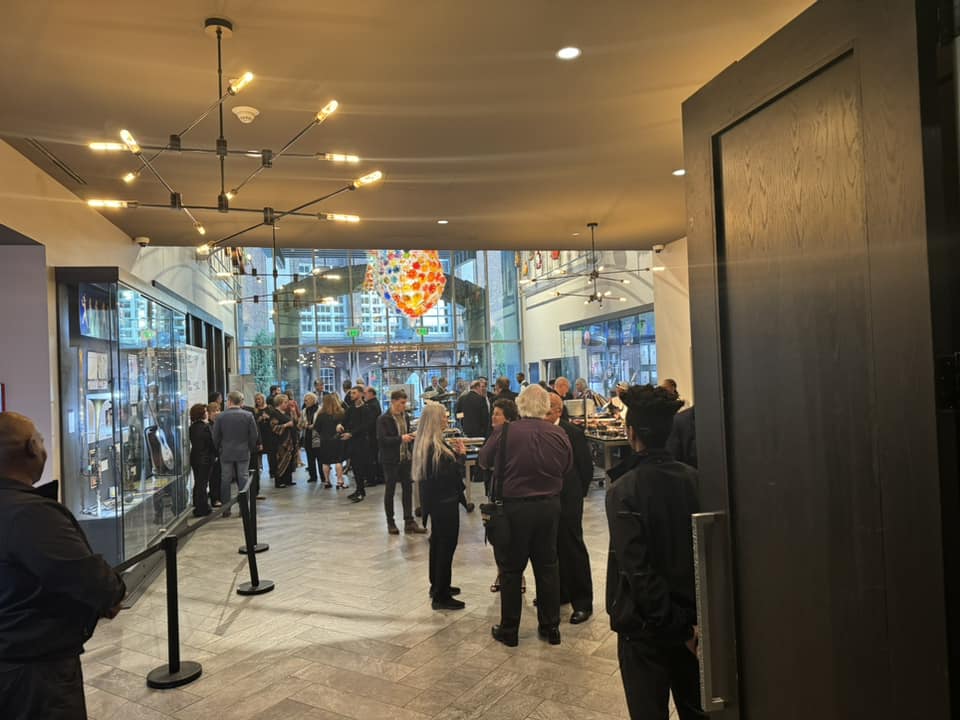
Celebrating 140 years of the Gretsch Company
Georgia Southern University helped Fred and Dinah Gretsch – and a roomful of other supporters and musical friends – celebrate 140 years of the Gretsch musical instruments company and “that great Gretsch sound” at a recent anniversary celebration at Savannah’s Plant Riverside district. Benefitting the Georgia Music Foundation, the event was held in a space that is a living testament to the partnership between Georgia Southern and the Gretsches, whose name are on the University’s school of music. “That Great Gretsch Sound!” Museum is a spotlight destination in the heart of downtown Savannah that tells the rich history of the Gretsch family and company. The space celebrates Gretsch’s ever-growing worldwide musical community, honors the Gretsch family commitment to music education, and showcases hundreds of Gretsch’s most storied instruments. In addition to the instruments and artifacts on display in Savannah, Georgia Southern is working to build one of the most comprehensive digital document collections of music industry history, thanks to decades of resources collected by Fred and Dinah and donated to our University Libraries. Together, through innovative pathways, Gretsch and Georgia Southern are creating renewed interest in performance and music education amongst K-12 students throughout our region. And, this fall at Georgia Southern, the Fred and Dinah Gretsch School of Music saw a 25% increase in enrollment – with nearly 20% of the school’s students focused on our Music Industry program. “Fred and Dinah, we thank you for your tireless efforts to make Georgia Southern a more musical place,” Georgia Southern University President Kyle Marrero said. “Your guidance, resources, and imagination have helped us soar to new heights, and we look forward to our future together. “ The evening included performances by Georgia Southern Gretsch School of Music students, and Tony Arata, a member of the Nashville Songwriters Hall of Fame who grew up on Tybee Island and studied at Georgia Southern University. Interested in learning more about the Gretsch's involvement with Georgia Southern or the Gretsch School of Music? Contact Georgia Southern's Director of Communications Jennifer Wise at jwise@georgiasouthern.edu to arrange an interview today.
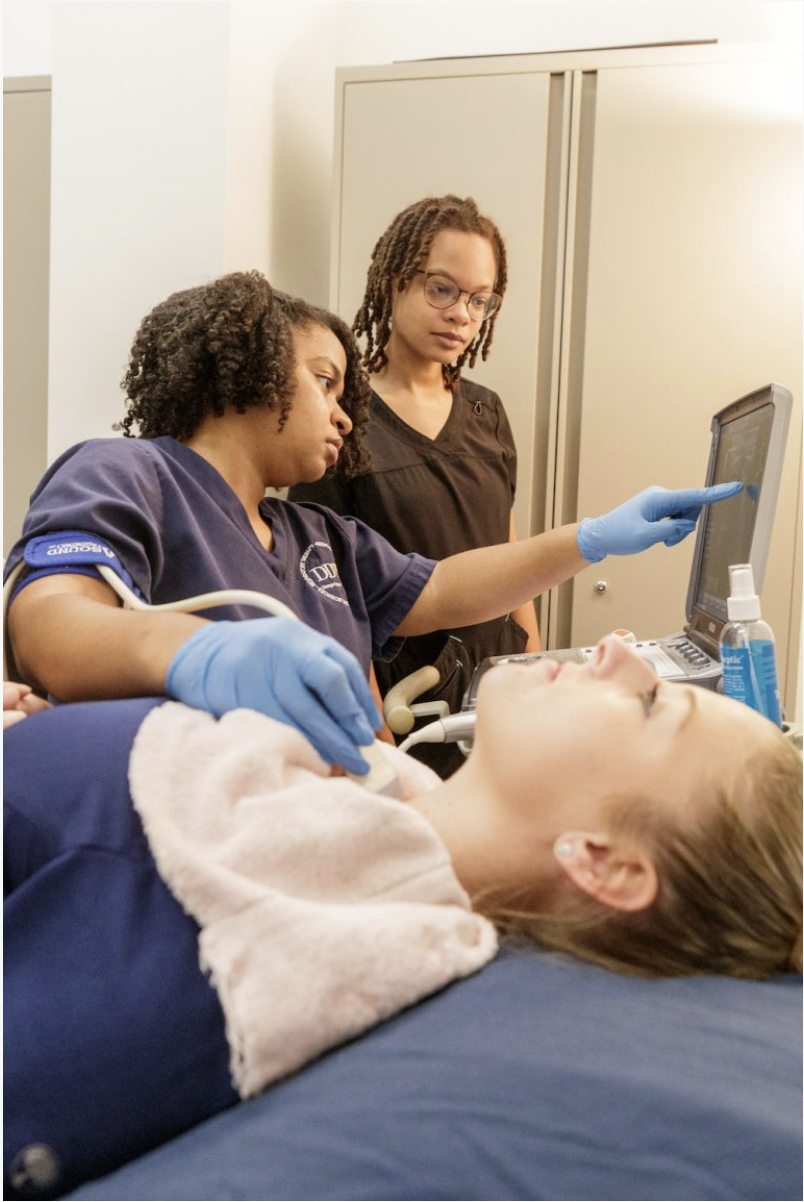
Georgia Southern’s public health center receives $4 million to assist rural hospitals nationwide
Georgia Southern University’s Center for Public Health Practice and Research at the Jiann-Ping Hsu College of Public Health (JPHCOPH) received a $4 million grant from the Health Resources and Services Administration (HRSA) to provide targeted technical assistance to rural hospitals nationwide. The funding will support the team’s implementation of the Targeted Technical Assistance for Rural Hospitals Program over a five-year period (2023-2028). “Many rural hospitals are struggling financially across the U.S.,” said JPHCOPH Dean Stuart Tedders, Ph.D. “Long-term, the primary program goal of this grant is to ensure that all rural hospitals are financially viable and positioned to serve their communities with the essential health care services that we all need and expect. A viable health care system is essential for assuring that all communities and their residents thrive. I am very proud of the Center for Public Health Practice and Research at the JPHCOPH and the commitment they have made to improving the quality of life of rural and underserved populations across the country.” Bettye Apenteng, Ph.D., and Charles Owens, both professors of health policy and management, serve as the co-principal investigators for the grant. “We are proud to be selected to work cooperatively with rural hospitals across the U.S. to strengthen their viability so they can continue to provide essential health care locally so the residents, the local hospital and the community may thrive,” said Owens. As part of this cooperative agreement, the team will work in partnership with HRSA and rural health stakeholders to provide in-depth and tailored technical assistance to rural hospitals at risk of financial distress nationwide. Technical assistance delivered as part of this program will help rural hospital communities implement a prioritized strategy for maintaining essential services locally through capacity building in evidence-based decision-making, operational and financial improvement, strategic management, community partnership, project implementation and evaluation. “We are excited to extend the work we have done in Georgia with rural hospitals, for close to a decade, to the rest of the nation,” said Apenteng. “We look forward to building strong collaborative relationships with rural hospital communities nationwide.” The grant activities will be executed by a multidisciplinary team that includes additional JPHCOPH faculty Angie Peden; Andrew Hansen, DrPH; Linda Kimsey, Ph.D.; William Mase, DrPH; Tilicia Mayo-Gamble, Ph.D., and Samuel Opoku, Ph.D.; and Parker College of Business’ Kwabena Boakye, Ph.D.; and the College of Arts and Humanities’ Jason Murdock. Interested in learning more or looking to talk with Bettye Apenteng, Ph.D., and Charles Owens about this grant? Simply click on an expert's icon or contact Georgia Southern's Director of Communications Jennifer Wise at jwise@georgiasouthern.edu to arrange an interview today.


Bird flu resurfaces in chicken, turkey flocks, in midst of fall migration
Across the U.S., cases of highly pathogenic avian influenza are ramping up again in commercial chicken and turkey flocks as well as backyard flocks. HPAI, commonly known as bird flu, is a highly contagious viral disease that is fatal to chickens and turkeys. According to the U.S. Department of Agriculture, more than 60 million commercial and backyard birds in the U.S. have died from the disease or been killed to contain its spread, since the current, ongoing outbreak first hit U.S. commercial flocks in early 2022. Wild bird migrations are an especially important signal to the Delmarva Peninsula, a major broiler chicken producing region, that HPAI could be near. “In the Atlantic Flyway, extending from the northern Delmarva down to the Carolinas, that’s where the bulk of the Atlantic Flyway birds overwinter,” said Jeffrey Buler, a professor of wildlife ecology in the University of Delaware College of Agriculture and Natural Resources. “We get tens of thousands of snow geese that are here in the winter, and they’re just starting to arrive.” Wild birds, particularly waterfowl, can shed the virus through their saliva or feces. Around this time of year, waterfowl are migrating south, to their wintering grounds. Buler is part of a team of scientists from the University of Delaware, the University of California, Davis, and the U.S. Geological Survey that has been researching using weather radar to track migrating wild birds that could be carrying avian influenza viruses. “It gives us an idea of where and when these migrations are happening,” Buler said. “So ultimately, the poultry industry can ramp up their biosecurity.” Buler can talk about wild bird migrations, what types of migratory birds we tend to see in Delaware this time of year, trends in fall migration and climate, and ongoing weather radar research. To arrange an interview with Jeffrey Buler on this topic, click the “Contact” button in his ExpertFile profile.


Where Will Millennials Take Us?
They’ve been described as entitled, self-centered and shallow. “Selfie-stick wielding, ‘KeepingUp with the Kardashians’-watching, soft-in-the-middle whiners” – Psychology Today. Worldwide, though, millennials (to whom also are attributed awesome characteristics like adaptability and creativity) are 1.8 billion strong, the most populated age group in modern history. And they’re soon to be our political, economic and social leaders. Where will they take us? How will their views shape our world? Jared McDonald’s new book, Citizens of the World, Political Engagement and Policy Attitudes of Millennials Across the Globe, uses data to examine this generation, born into technology, the “war on terror,” global interconnectedness and high unemployment. Published by Barnes & Noble in October 2022, the text looks at millennials’ attitudes about lifestyle, family life, gender roles, politics, religion and the future to better understand how governance might change under their leadership … and the influence they already wield. Millennials are a hot topic ... and for better or worse always in the news it seems as journalists, employers, parents and even professors work to figure this generation out. And if you'd like to know more - that where we can help. Published author and Assistant Professor of Political Science and International Affairs, Jared McDonald is available to speak with media - simply click on his icon now to arrange an interview today.


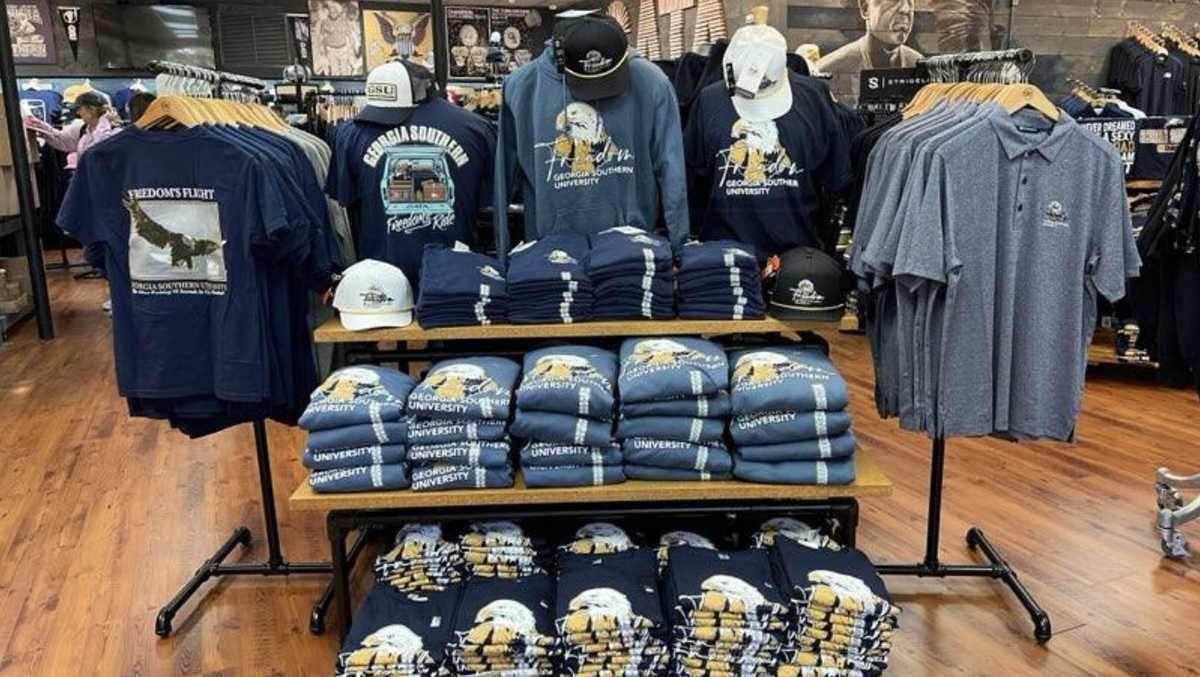
It's been called the most exciting 30 seconds in college football - and recently Freedom, Georgia Southern University’s live bald eagle mascot that flies before each home game was flying high with some serious media attention on TV, radio and print. Unable to survive on his own because of an injury to his beak as a newborn, Freedom came to Georgia Southern in 2004 and now lives at the University’s Center for Wildlife Education in Statesboro alongside other eagles, raptors, reptiles and waterfowl. He will celebrate his 20th birthday this December. The school recently launched a new line of merchandise - and the news soon went viral putting Freedom and his handler, Wildlife Center Executive Director Steve Hein in the spotlight. The coverage was tremendous and if you're looking to know more about Freedom - let us help. Simply click on Wildlife Center Executive Director Steve Hein's icon now or Contact Georgia Southern's Director of Communications Jennifer Wise at jwise@georgiasouthern.edu to arrange an interview today.


Expert reaction to the UK AI Safety Summit
Today the UK government announced a "world first agreement" on how to manage the riskiest forms of AI. It focuses on so-called "frontier AI" - what ministers consider highly advanced forms of the tech - with as-yet unknown capabilities. The agreement, signed by countries including the US, the EU and China, was announced at the UK's AI Safety Summit. Dr Alina Patelli, Senior Lecturer in Computer Science, Aston University, comments: “A summit on AI safety is long overdue. As is the case with all groundbreaking technologies, AI’s transformative potential for public good is only matched by its risks, which are unlikely to be successfully avoided, if AI tech design and deployment are left unregulated and therefore open to misuse, either intentionally or accidentally. The scope of the summit is appropriate, reflective of Government’s cautious approach to managing interactions with AI safety experts from multiple nations and disciplines: the summit focus is kept narrow, to five objectives only, and the number of participants is wisely limited to 100, to keep the conversation productive.” What is likely to come out of this summit? “The summit’s main output will most likely be a bare-bones regulatory document comprising (1) a shared understanding of AI (i.e., a generally accepted definition of the term reflective of all summit participants’ views, not just those of tech experts), (2) a list of major risks associated to AI misuse, both in terms of potential damage as well as likelihood of becoming a reality, and (3) a policy draft outlining the core elements that a yet-to-be-developed governance framework should include.” What AI safety could/should look like? “Although it would be premature to venture a definition of AI safety ahead of the summit, one thing that is certain is that a comprehensive, therefore effective, AI regulatory framework would encompass more than just laws. Non-legally binding codes of conduct, tech design and development processes that are bound by moral and ethical values, both in the commercial ecosystem, as well as when it comes to individual entrepreneurs, revised open-access licenses under which AI should be used in the public domain, etc. are equally important pieces. The best way to integrate all these in a cohesive, overarching governance plan is perhaps a topic to explore in one of the post-summit events.” What are the potential practicalities for a route forward towards safe AI? “The practical way to systematically regulate AI is incremental. Initially, the development and application of those AI tools deemed to be high-risk will most likely be restricted to controlled environments, where the potential benefits justify the risks and where sound mitigation procedures can be quickly and effectively enforced to mitigate those risks. As regulations become better prescribed, AI’s (safe and legal) application space will gradually expand, making its benefits available to larger groups of people without any of the downsides.” To interview Dr Alina Patelli or request further details contact Nicola Jones, Press and Communications Manager, on (+44) 7825 342091 or email: n.jones6@aston.ac.uk


• Rice straw could be a fuel of the future in rural Philippines • Across Asia 300 million tonnes of rice straw go up in smoke every year • New proposals includes scaling up harvesting system with straw removal, biogas-powered rice drying and storage and efficient milling. An Aston University bioenergy researcher has been explaining how rice straw could be a fuel of the future in rural Philippines. Dr Mirjam Roeder who is based at the University’s Energy & Bioproducts Research Institute (EBRI) is collaborating with the UK company Straw Innovations Ltd, Southeast Asian Regional Center for Graduate Study and Research in Agriculture (SEARCA) and Koolmill Systems Ltd to showcase their research. The Food and Agriculture Organisation (FAO) states that rice is the number one food crop globally and 91% of it is produced and consumed in Asia. As a crop it is responsible for 48% of global crop emissions and for every kilogram of rice, a kilo of straw is produced. Across Asia 300 million tonnes of rice straw go up in smoke every year when burnt after harvest, releasing emissions and air pollutants that triple risks of increased respiratory diseases and accelerate climate change. To raise awareness of sustainable uses for rice straw Dr Roeder has travelled to the sixth International Rice Congress in Manila, Philippines to explain the potential of the emerging technology. Rice straw is an underdeveloped feedstock and can be collected and digested to produce biogas, unlocking sustainable straw management options and renewable energy for farmers using anaerobic digestion (AD) from rice straw. Dr Roeder has been working with Straw Innovations on their UK Innovate project demonstration facility in the Philippines, the Rice Straw Biogas Hub, which is scaling up a complete harvesting system with straw removal, biogas-powered rice drying and storage, together with efficient milling. Craig Jamieson, Straw Innovations said: “The International Rice Congress is only held every four years and is a key event for coordinating and tracking progress in rice research. “Our partnership with Aston University and SEARCA adds independent, scientific rigour to the work we do and amplifies our message to government policy makers. We are grateful to Innovate UK for their ongoing support through the Energy Catalyst Programme, which is accelerating our development.” At the conference Dr Roeder has been explaining how independent environmental and social research can increase farmer incomes, equality of opportunity, food security and decarbonisation benefits. She said: “Engaging with stakeholders and working in partnership across organisations is vital to the successful adoption of new technologies. I am delighted to have had the opportunity to host an event with our project partners at this prestigious conference, bringing the cutting-edge research of using rice straw for clean energy to the forefront of the rice research community and supporting the pathway to net zero.” Dr Glenn B Gregorio, Center Director of SEARCA, added: "We are gaining insights into the environmental impact of rice straw utilisation and implementing policies to unleash its potential to empower us to make informed decisions that are instrumental to climate change mitigation and decarbonisation," Professor Rex Demafelis, University of the Philippines, is also working with SEARCA and is leading the project on life cycle analyses and measurements of rice straw greenhouse gas emissions. He said: “Rice straw is a valuable resource, and we are grateful to be part of this team which seeks to harness its full potential and promote circularity, which would ultimately contribute to our goal of reducing our greenhouse gas emissions.” ENDS The Supergen Bioenergy Hub works with academia, industry, government and societal stakeholders to develop sustainable bioenergy systems that support the UK’s transition to an affordable, resilient, low-carbon energy future. The Hub is funded jointly by the Engineering and Physical Sciences Research Council (EPSRC) and the Biotechnology and Biological Sciences Research Council (BBSRC) and is part of the wider Supergen Programme. For further information contact Rebecca Fothergill and Catriona Heaton supergen-bioenergy@aston.ac.uk Follow us on Twitter @SuperBioHub Visit our website at supergen-bioenergy.net Visit our YouTube Channel to watch the video on Carbon Balance FAO: RICE PRODUCTION IN THE ASIA-PACIFIC REGION: ISSUES AND PERSPECTIVES - M.K. Papademetriou* (fao.org) https://www.fao.org/3/x6905e/x6905e04.htm About Aston University For over a century, Aston University’s enduring purpose has been to make our world a better place through education, research and innovation, by enabling our students to succeed in work and life, and by supporting our communities to thrive economically, socially and culturally. Aston University’s history has been intertwined with the history of Birmingham, a remarkable city that once was the heartland of the Industrial Revolution and the manufacturing powerhouse of the world. Born out of the First Industrial Revolution, Aston University has a proud and distinct heritage dating back to our formation as the School of Metallurgy in 1875, the first UK College of Technology in 1951, gaining university status by Royal Charter in 1966, and becoming The Guardian University of the Year in 2020. Building on our outstanding past, we are now defining our place and role in the Fourth Industrial Revolution (and beyond) within a rapidly changing world. For media inquiries in relation to this release, contact Nicola Jones, Press and Communications Manager, on (+44) 7825 342091 or email: n.jones6@aston.ac.uk


Think your city is ready for a cyber-attack? Think again according to our experts
There is no way around it; every day there are new cybersecurity threats to not only individuals, but governments at all levels as well. There have been some high-profile breeches that involve major cities like Atlanta and Baltimore. But those attacks are going to all levels, and recent research has shown most municipalities and cities are ill-prepared for cyberattacks. Research conducted by Donald Norris, PhD, and Laura Mateczun, JD, of the University of Maryland, Baltimore County along with William Hatcher, PhD, Wesley Meares, PhD, and John Heslen, PhD, of Augusta University, found various reasons why local governments struggle with cybersecurity. The research shows local governments recognize the need for cybersecurity but are not taking crucial next steps to ensure cybersecurity by integrating policies into daily management practices. Not just that, some local governments were unaware how often they were under cyberattack. Throw in budgetary constraints, and it leads local governments to be in a tough situation. That, unto itself, is a major sticking point, but the burden could be lessened. “Effective cybersecurity is expensive and too much of a strain on the budgets of many cities and counties,” said Hatcher, chair of the Department of Social Sciences in Pamplin College of Arts, Humanities, and Social Sciences at Augusta University. “This is why we suggest regional solutions to the program, so multiple governments carry the cost.” Meares, associate professor and MPA director in Pamplin College, added it’s not just the financial aspect, but said there’s a shortage of cybersecurity talent nationwide, which compounded with limited budgets, makes it tough to compete. In the quest for talent between private and public sector, usually the private sector can offer more to entice a cybersecurity expert to come work for them. There’s also an issue of many local governments using dated technologies, which may be easier for cyber criminals to attack. “Local government is increasingly being more digitally connected, with vital infrastructure, data and services connected which creates more opportunities for cyber-attacks. Additionally, local governments tend to lag in updating critical technology due to limited resources (both human and financial resources),” added Meares. None of this comes as a surprise in the lack of cybersecurity training. “It’s an expensive service for local governments to provide. This is why we suggest more budgetary support for the training,” said Heslen, assistant professor in Pamplin College. “We’re also unsurprised because local governments often struggle to fund professional training in other areas.” But researchers say there are ways to improve upon safety of critical data most notably adopting dedicated cybersecurity budgets funded at an appropriate level in all local governments. Those resources can help address many limitations in local government cybersecurity programs, from staffing and hardware and software deficiencies to awareness training for all parties in local governments. They also recommend the adoption and implementation of cybersecurity policies to manage and regulate actions taken by all that affect the organization’s cybersecurity. By taking the recommended actions, local governments will have a better chance to provide high levels of cybersecurity and protect their information assets more effectively. This is an important topic and if you are a journalist looking to know more about the importance of being ready and able to react if and when a municipality comes under threat from a cyber-attack - then let us help/. William Hatcher and John Heslen are both available to speak with media - simply contact them now to arrange an interview today.


Is too much of a good thing actually a bad thing? That’s what researchers in Georgia Southern’s Biodynamics and Human Performance Center aim to find out through a recent study of 75 ultramarathon runners during the 50th anniversary of the Western States 100-mile Endurance Run (WSER) in California. The study focuses on the benefits of physical activity beyond the typical recommended amount by examining the cardiovascular effects of extreme exercise in the WSER, a 100-mile trail race through the Sierra Nevada mountains that climbs more than 18,000 feet and descends nearly 23,000 feet before runners reach the finish. Drs. Grosicki and Babcock (University of Colorado, Anschutz Medical Campus) work through the night to collect cardiovascular measures on race finishers. “We know that exercise is beneficial for health, and national and international public health agencies, such as The American Heart Association, advise that adults get at least 150 minutes of moderate or 75 minutes of vigorous physical activity per week,” said Gregory Grosicki, Ph.D., associate professor in the Waters College of Health Professions Department of Health Sciences and Kinesiology. “Moreover, there is a dose-response relation between exercise and health, whereby an individual can gain even more health benefits by being active for up to 300 minutes per week,” he continued. “However, it is uncertain whether exercising for greater than 300 minutes will confer any additional health benefits, and importantly, excess exercise may actually detract from cardiovascular health.” It is important to note, Grosiciki said, that this apparent “partial loss of health benefits” from excess exercise is theoretical for the time being. “Studies such as ours will help to determine whether this hypothesis is valid, and if so, what can be done about it,” he said. This is the third year Grosicki and colleagues attended WSER to collect data on some of the world’s most extreme athletes. Previous studies focused on changes in gut health during exercise, which, believe it or not, may actually be linked to changes in cardiovascular health. Associate Professor Gregory Grosicki, Ph.D., and research colleagues stand at the start line of the Western States Endurance Run. Grosicki recruited 10 research faculty and students from Auburn University, Florida State University, San Francisco State University and the University of Colorado Anschutz to assist in the data collection. “We measured blood pressure, arterial stiffness, heart size and function and kidney blood flow, and we collected blood and urine from 75 athletes pre-race, 55 of which completed the race and returned for post-race measures,” stated Grosicki. “This is, without question, the largest and most comprehensive dataset ever to be collected at a single event like this.” WSER begins in Olympic Valley, California, and ends in Auburn, California, and is considered one of the oldest and most competitive ultramarathons in the United States. Participation is highly selective, and if chosen, athletes have only 30 hours to cover the distance. The Western States Endurance Run Research Foundation funded this project. This is exciting research and you are a reporter looking to contact Gregory Grosicki, Ph.D. from the Waters College of Health Professions Department of Health Sciences and Kinesiology - then let us help. Simply contact Georgia Southern's Director of Communications Jennifer Wise at jwise@georgiasouthern.edu to arrange an interview today.