
Experts Matter. Find Yours.
Connect for media, speaking, professional opportunities & more.

Artificial intelligence has been hogging headlines around the world in recent months. In late March 2023, an unprecedented coalition of tech CEOs signed an open letter calling for a moratorium on AI training. The race to empower powerful artificial minds should be paused, argued signatories (including Elon Musk) to give humanity time to review and reassess the potential risks of developing “human-competitive intelligence”–intelligence that “no one–not even their creators–can understand, predict, or reliably control.” Concerns about the unchecked rise of AI are not new, and global media is increasingly sounding the alarm, citing concerns that range from invasion of privacy to an existential threat to human existence. Weighing in on this with compelling new evidence around the “unintended consequences” of AI is research by Goizueta’s Ramnath Chellappa and Information Systems PhD candidate, Jonathan Gomez Martinez. Uncovering the Threat Their paper, Content Moderation and AI: Impact on Minority Communities, takes a hard look at how the use of AI in social media could disadvantage LGBTQ+ users. And what they find is worrying. Chellappa, who is Goizueta Foundation Term Professor of Information Systems & Operations Management, explains that he and Gomez Martinez homed in on Twitter to explore how unchecked artificial language moderation might (mistakenly) censor the use of “otherwise toxic” language by failing to understand the context or nuanced use of the LGBTQ+ lexicon. Examples of this include “reclaimed language”—verbiage that would be a slur in other contexts—but is reclaimed and prosocial if used by the originally targeted community. Their paper, Content Moderation and AI: Impact on Minority Communities, takes a hard look at how the use of AI in social media could disadvantage LGBTQ+ users. And what they find is worrying. Chellappa, who is Goizueta Foundation Term Professor of Information Systems & Operations Management, explains that he and Gomez Martinez homed in on Twitter to explore how unchecked artificial language moderation might (mistakenly) censor the use of “otherwise toxic” language by failing to understand the context or nuanced use of the LGBTQ+ lexicon. Examples of this include “reclaimed language”—verbiage that would be a slur in other contexts—but is reclaimed and prosocial if used by the originally targeted community. “This is a community that has ‘reclaimed’ certain words and expressions that might be considered offensive in other contexts. Terms like ‘queer’ are used within the community both in jest and as a marker of identity and belonging. But if used by those outside the community, this kind of language could be deemed inflammatory or offensive.” Gomez Martinez adds: “We wanted to measure the extent to which AI’s lack of a nuanced understanding of what is ‘acceptable’ affects minority users’ online interactions. As humans, we understand that marginalized communities have long used ‘reclaimed words’ both in jest and as a kind of rallying cry. Our intuition was that the machine simply wouldn’t understand this without context—context that is more immediately apparent to people.” Determining the Impact of AI-Based Moderation To test this, he and Chellappa looked at data from social media behemoth, Twitter. During the pandemic in 2020, the platform made a significant shift to AI-based content moderation to accommodate stay-at-home measures. Data from Twitter’s proprietary Academic Research API afforded Gomez Martinez and Chellappa access to a complete listing of historical tweets and replies before, during and after this period. Together they analyzed a total of 3.8 million interactions (1.8 million tweets and 2.0 million replies) from a panel of 2,751 users, of which 1,224 self-identified as LGBTQ+ in their Twitter bios. Their study ran over four months, from January to May 2020, before, during and after the switch to machine-based moderation. Using the same tools that Twitter moderators deploy to moderate interactions, Gomez Martinez and Chellappa were able to measure any increase or decrease in pro-social, in-group teasing and toxic language among LGBTQ+ users: terms such as “bitch” or “queer,” which research shows to be a form of ritualized insults—dubbed “reading” by the community—which can appear inappropriate or incoherent to outsiders, says Chellappa. “Analyzing the language, we find a notable reduction in the use of terms that could be considered toxic. When the AI moderation is in effect, you see these users’ language become more vanilla,” he adds. Quantifiably so, in fact. Chellappa and Martinez find a 27 percent reduction in the use of reclaimed language among LGBTQ+ users. And while that doesn’t sound like much, it’s significant for the community, says Gomez Martinez. Using in-language and reading each other is one way for this marginalized group to create a sense of community and social status. Not just that, we know from research that LGBTQ+ people use slurs and insults as a way of preparing themselves emotionally and psychologically for hostile interaction with heterosexual individuals. This kind of teasing and playing helps build resilience, so any reduction in it is significant.” Jonathan Gomez Martinez Good Intentions May Breed Unexpected Consequences So what does this mean for social media, for the LGBTQ+ community or any marginalized group for that matter, that might be prone to automated censorship? And how does any of this play out in the context of broader concerns around AI? For Chellappa and Gomez Martinez, there is a major hazard in granting technology any degree of control over how human beings interact. And it’s rooted in the mismatch between good intentions and unexpected consequences. Their paper, one of the first to dig into the impact of AI on actual business and society, lays bare some of the real-world impact AI has already had on marginalized people. While this study looks at the LGBTQ+ community, it could equally apply to any group that is prone to bias or exclusion—racial minorities or any other underrepresented demographic. “Wherever you have user-generated content, you are likely to find communities with their own, unique way of interacting. We looked at LGBTQ+ Twitter users, but you could also look at the African American community, for instance.” Ramnath K. Chellapa At a time when social media platforms have become almost newslike in their influence, this is a concern. On the one hand, censoring certain demographics might earn Twitter et al an unwanted reputation for being anti-LGBTQ+ or racist, he adds. But there are even bigger stakes here than bad publicity. “Twitter has long aspired to be a kind of global town square,” says Gomez Martinez. “But you end up pretty far from that scenario if only some voices are truly heard, or if you start reinforcing biases because you are using a time-saving technology that is not equipped yet to understand the complexity and nuance of human interaction.” AI isn’t there yet, say Chellappa and Gomez Martinez. And they caution against using AI indiscriminately to expedite or streamline processes that impact human communication and interchange. If we don’t keep track of it, their research shows that AI has the potential to start dictating and moving people into normative behavior—effectively homogenizing us. And that’s a problem. Looking to know more? Ramnath Chellappa is available to speak with media. Simply click on his icon now to arrange an interview today.



#Expert Insight: US Firms 20 Years Out of Date on Customer Diversity
Diversity, equity, and inclusion have steadfastly risen to the top of corporate agendas in the U.S. and elsewhere over the course of the last few years. From 2022, all 100 of the Fortune 100 companies had clearly-defined diversity, equity, and inclusion (DEI) initiatives outlined on their websites—good news for their workforce, suppliers, and distributors. But what about their customers? A landmark new study by Goizueta Business School’s Omar Rodriguez-Vila finds that while intra-organizational DEI efforts are robust, many U.S. firms are lagging behind societal reality when it comes to fully representing diversity in their marketplace actions. Rodriguez-Vila finds that in terms of skin type, body type, and physical (dis)ability, actions by the top 50 American brands are a good 20 years behind the current demographic makeup of the country. Rodriguez-Vila, who is a professor in the practice of marketing at Goizueta, has teamed with Dionne Nickerson of the University of Indiana’s Kelley School of Business, and Sundar Bharadwaj of The University of Georgia’s Terry College of Business, to measure brand inclusivity; a term that he and his colleagues have coined to describe how well brands serve underrepresented consumer communities. Inclusive brands, he says, are those that “enhance consumers’ perceptions of acceptance, belonging, equity, and respect through their actions and market offerings.” To assess how well some of the biggest firms are doing in terms of this kind of marketplace inclusivity, Rodriguez-Vila worked with a team of full-time MBA and undergraduate students[1] to assess the 50 most valuable brands across 10 consumer-facing industries. Using machine learning and human coders they analyzed these brands’ social media posts on Facebook, Instagram, and TikTok, looking for patterns of representational diversity across four measures: skin type; body type; hair type; and physical ability. Altogether, they processed just short of 11,000 social media posts made between June 2021 and July 2022. What they find is stunning. “We used our data to apply the Simpson’s Diversity Index (SDI) to the population of social media posts by the largest brands in the United States. The SDI is a commonly used equation to measure the diversity of a population,” says Rodriguez-Vila. According to the 2020 U.S. Census, the racial diversity index of the country is 61 percent, and has been consistently increasing over the past 20 years. Applying the SDI calculation to measure the diversity in social media messages is a novel idea and one that provides clarity on the state of inclusion in brand communications, he adds. We found that the racial diversity index of social media messages by the top U.S. brands was just 41%. The last time the racial diversity index was in that range was in the year 2000. Omar Rodriguez-Vila In other words, the racial diversity these brands are collectively representing in their messages is 20 years behind the reality of the country. Interestingly, this lag between representation and demographic reality is common to brands in virtually all of the industries studied—from airlines to fashion, consumer packaged goods to financial services, hospitality to retail. The only sector that bucks the trend in any substantive way, he says, is beauty; even then this is likely only because beauty firms have come under fire for underrepresenting Black and non-white customers in the recent past. “Brands’ social media is typically more nuanced and comprehensive than advertising, so it’s more telling as a measure of what they prioritize. And by this measure, we’re seeing systemic bias across a majority of industries,” says Rodriguez-Vila. “Some, like beauty, fare better than others, but then beauty arguably has the strongest business case for diversity.” That being said, there is a robust business case for organizations across all industries to do better in marketplace inclusion. Not only does representational diversity have the potential to open up new markets, new customer bases, and areas for expansion, but “Feeling represented and included matters to everyone,” says Rodriguez-Vila. “To understand the importance of inclusion to customers we used a discrete choice model where people made trade-offs between price and a collection of product features in order to understand the factors that motivated them to make a purchase,” he explains. “We tested a sample of consumers looking to buy sportswear, and we added representation of diversity and inclusion as a characteristic, to see if it had any impact on their choices.” Again, the results are stunning. On average, 51 percent of customers took inclusion into account as a primary driver of athletic apparel choices. Inclusion was a priority driver of choice among 38 percent of consumers in historically well-represented communities—slim, white, able-bodied people. When Rodriguez-Vila and his colleagues expanded the analysis to other historically under-represented groups they found a significantly greater impact. Here, inclusion was a primary driver among 61 percent of plus-size, Black consumers and for 87 percent of consumers that identified as non-binary. In other words, inclusion can be a critically important factor to a majority of customers who are making decisions about whether to purchase products and services, or not. The marketplace is changing, says Rodriguez-Vila, and brands need new ways of understanding their customer base if they are to avoid missing out on opportunities. To this end, he, Nickerson and Bharadwaj are working with three of the firms in their study, piloting a range of interventions designed to accelerate marketplace inclusion. They have partnered with Sephora, Conde Nast, and Campbells to roll out specific practices both in the workplace and the marketplace—from advocacy to communication and commercial practices to things like greater diversity in marketing operations, and in talent recruitment practices. Early indicators are promising, says Rodriquez-Vila. “Our work is set to deliver tools that will help firms normalize and institutionalize marketplace inclusion as a function of their day-to-day operations. And it’s exciting to see a shift in thinking about DEI—from an exclusive focus on the workplace and how you eliminate bias within the organization, to practices that are geared also to eliminating bias in the way you serve markets.” Looking to know more? Connect with Omar Rodriguez-Vila today. Comply click on his icon now to arrange a time to talk.


CorpusCast with Dr Robbie Love: Dr Clyde Ancarno & Professor Insa Nolte on Anthropology
Hello, hello, hello, everyone! Welcome back to Corpuscast, the podcast that brings you the fascinating world of Corpus Linguistics. Can you believe it? We're already on episode 19! Since our launch in January 2022, we've been exploring the incredible impact of Corpus Linguistics on society. And trust me, today's episode is going to blow your mind! As always, I'm your host Robbie Love, a linguist from Aston University. Today, we dive deep into the realm of anthropology, the study of human societies and cultures. Get ready for an engaging discussion on the origins of humanity, the evolution of civilizations, and the incredible diversity that exists across our world. Our special guests for today's episode are none other than Professor Insa Nolte, a leading anthropologist from the University of Birmingham, and Dr. Clyde Ancarno, a brilliant corpus linguist and senior lecturer in Applied Linguistics and Education at King's College London. Together, Insa and Clyde collaborated on a groundbreaking research project in Southwest Nigeria, exploring how members of different religious groups coexist peacefully. Their findings shed light on the intricate social structures that maintain harmony within diverse communities. Join us as we delve into the thought-provoking questions that shape our understanding of humanity. Who are we and where do we come from? How have civilizations transformed throughout history? What factors contribute to the functioning of our societies? This captivating conversation will unveil the incredible insights brought forth by Corpus Linguistics and its intersection with anthropology. Discover how language and culture intertwine to shape our identities and communities. Don't miss out on this enriching episode! Tune in to Corpuscast below, and let's embark on this captivating journey together. Subscribe to Corpuscast on YouTube, Apple Podcasts, Spotify or wherever you get your podcasts, for more thought-provoking episodes exploring the boundless possibilities of Corpus Linguistics in education, health, technology, and beyond. Stay curious, stay inspired! ? #Corpuscast #Anthropology #CorpusLinguistics #Humanity #Culture #Diversity #Podcast #LanguageResearch


#Expert Research: Biodegradable ultrasound implant could improve brain tumour treatments
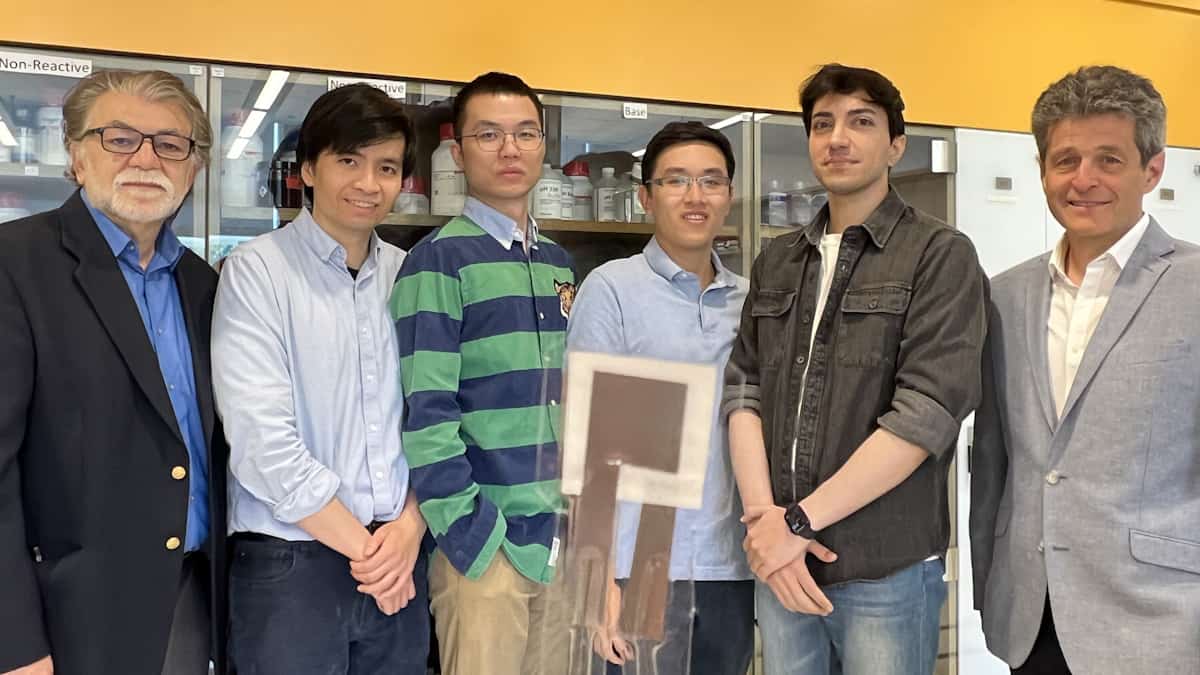
One of the challenges in treating certain types of brain cancer is the way that the blood-brain barrier prevents chemotherapy drugs from reaching the tumors they're meant to target. UConn's Thanh Nguyen, a biomedical and mechanical engineer, is developing new technology that could improve how we are able to treat brain tumors. He recently spoke with Physics World about this groundbreaking research: A new type of biodegradable ultrasound implant based on piezoelectric nanofibres could improve outcomes for patients with brain cancer. Researchers led by Thanh Nguyen from the the University of Connecticut’s department of mechanical engineering fabricated the devices from crystals of glycine, an amino acid found in the human body. Glycine is not only non-toxic and biodegradable, it is also highly piezoelectric, enabling the creation of a powerful ultrasound transducer that could help treat brain tumours. Brain tumours are particularly difficult to treat because the chemotherapy drugs that would be effective in tackling them are blocked from entering the brain by the blood–brain barrier (BBB). This barrier is a very tight junction of cells lining the blood vessel walls that prevents particles and large molecules from making their way through and damaging the brain. However, ultrasound can be safely used to temporarily alter the shape of the barrier cells such that chemotherapy drugs circulating in the bloodstream can pass through to the brain tissues. Currently, to achieve such BBB opening requires the use of multiple ultrasound transducers located outside the body, together with very high intensity ultrasound to enable penetration through the thick human skull bone. “That strong ultrasound can easily damage brain tissues and is not practical for multiple-time applications which are required to repeatedly deliver chemotherapeutics,” Nguyen tells Physics World. By contrast, the team’s new device would be implanted during the tumour removal surgery, and “can generate a powerful acoustic wave deep inside the brain tissues under a small supplied voltage to open the BBB”. The ultrasound would be triggered repeatedly as required to deliver the chemotherapy that kills off the residual cancer cells at tumour sites. After a set period of time following treatment the implant biodegrades, thereby eliminating the need for surgery to remove it. The research, reported in Science Advances, demonstrated that the team’s device used in conjunction with the chemotherapy drug paclitaxel significantly extended the lifetime of mice with glioblastomas (the most aggressive form of brain tumour) compared with mice receiving the drugs but no ultrasound treatment. This is fascinating research and if you are interesting in covering this topic, then let us help. Professor Nguyen focuses on biointegrated materials and devices at nano- and micro-scales for applications in biomedicine, and he's available to speak to media about his research. Simply click on his icon now to arrange an interview today.



Electric vehicles are hitting the streets, but there are potholes to avoid
No doubt about it, electric vehicles are coming and coming fast. Production of EVs has ramped up in the last couple of years but there are many issues that need to be addressed before they become the everyday choice for consumers. Richard Franza, PhD, professor of management at the Hull College of Business at Augusta University said the timing of EVs is contingent on a few things. “It’s not a question of if they’re coming, but how fast will they be here,” said Franza. “One is the speed at which there is infrastructure built for them. There are still not a lot of places to charge a car. We need more charging stations. Eventually, EVs will be predominant.” Franza added a second hurdle is how fast the federal government moves on emissions requirements that will cause consumers to phase out fossil fuel vehicles. Georgia has become one of the leaders in luring EV manufacturers to call the state home. Not just that, but the state is also drawing in companies that supply batteries and other components. “Any time you build a manufacturing or assembly facility, you automatically get the suppliers around them. Even before Georgia got the vehicle manufacturers, we already had a battery manufacturer, so Georgia already has a good network for the automobile industry,” said Franza. Amazon has already made a major investment in EVs and Franza expects other companies like FedEx and UPS, companies that have a fleet of vehicles, to make the switch to EVs as well, since they have more ability to set up charging networks. The biggest question remains: how long it will take before EVs become more prevalent on the streets? Franza said the answer could depend on who you listen to, but other factors come into play. “Right now, electric vehicles account for less than 1% of the vehicles on the road. So I see two leading indicators – the number of gas stations vs. the number of charging stations, and the production of combustion engines vs. electric vehicles. Look for when the ratios of those really start to change, but it’s not black and white. There are several factors that will go into that and it could take longer than people are saying,” Franza said. Covering EVs and the auto industry? Then let us help. Richard Franza, PhD, is available to speak with media about trending issues like inflation, small business and the economy – simply click on his icon now to arrange an interview today.



Georgia Southern University biology professor and researcher Christine Bedore, Ph.D., is helping National Geographic explore the mysteries of shark attacks by sharing her expertise and years of fieldwork as part of the six-part series, “When Sharks Attack 360,” this month. The series, which kicked off July 3, is part of National Geographic’s SharkFest, which will run all month on National Geographic TV, Disney+ and Nat Geo WILD, with new episodes each night through July 11. All episodes are currently available for streaming on Hulu. In episodes 3 and 6, Bedore, an assistant professor in the College of Science and Mathematics who conducts research on sensory systems in sharks, discusses how shark senses may lead to bites by sharks on humans. While filming, she marveled at the channel’s cutting-edge VFX lab and their approach to educating viewers. “Working with National Geographic and the production team on this series was exciting because of the level of experience and creativity of the production team,” said Bedore. “It’s one of the most unique experiences I’ve had filming a documentary so far since it was done in a studio with a green screen, rather than in the field like we typically do. Using the virtual graphics in this series allows us to see these animals from a completely different angle. Although it was challenging to point at a shark that I couldn’t see at the time, we wouldn’t be able to see the detail of the animal at this level filming in the field.” Sharks have long captured the attention of both scientists and the public, and are fascinating animals for many reasons, according to Bedore, who has offered her expertise for previous episodes on Nat Geo WILD, The History Channel and BBC. They’re a species of immense size and diversity, and offer unique behaviors and interactions with other creatures, she noted. Understanding the behavior and physiology of sharks is critical to their survival, as they experience population declines due to overfishing and habitat changes. “In order to combat these changes and ensure the persistence of sharks in our oceans across the world, we first need to understand why they behave the way that they do,” Bedore said. “This series helps us do exactly that. For example, in episode 3 we discuss whether or not sharks can see in color. As a scientist that studies shark color vision, I’m often approached with the question, ‘who cares if sharks can see color?’ As you’ll see, the ability to see color could help sharks identify prey, predators or other objects.” In episode 6, Bedore helps viewers understand that visual acuity, or how clear an image is, may be more important than color when we think about why sharks sometimes have negative interactions with humans. “Being able to discuss my work in these areas through National Geographic’s shark month has been a rewarding experience in helping people understand why these events sometimes happen,” she said. “It’s exciting to study such charismatic animals and have the chance to share your enthusiasm for your research and the sharks with people across the world.” For more information on National Geographic’s “When Sharks Attack 360” visit here. The series can be seen on Hulu, Disney+ and Nat Geo WILD throughout July. To connect with Georgia Southern University biology professor and researcher Christine Bedore to learn more about this fascinating topic - simply contact Georgia Southern's Director of Communications Jennifer Wise at jwise@georgiasouthern.edu to arrange an interview today.


Florida Tech Shark Biologist Stars in National Geographic Program on Shark Attacks
Toby Daly-Engel, the distinguished shark biologist and director of Florida Tech’s Shark Conservation Lab, is a featured expert on “When Sharks Attack…and Why,” an eight-episode program debuting this week as part of National Geographic’s SharkFest 2023. The series debuts July 6 at 9 p.m. Eastern on National Geographic with new episodes airing nightly through July 12. It is also now streaming on Disney+, Hulu and the National Geographic website. The series will air on Nat Geo Wild starting July 26 at 8 p.m. Eastern. As its name suggests, “When Sharks Attack…and Why” investigates shark encounters in America and around the world. “Many attacks are appearing in new and surprising places,” the network notes. Episodes explore incidents in New York, California, Hawaii, Indonesia, Australia and elsewhere. At Florida Tech, Daly-Engel conducts research using a combination of genomics, field ecology and modeling to study shark mating systems and habitat use, and the impacts of climate change on shark populations. On the program, she is our expert guide to anatomical and physiological aspects of sharks, many of which are unique to this species. We first meet Daly-Engel in Episode 1, New York Nightmare. Filmed in her lab, she talks viewers through key parts of a shark’s body using a small dogfish shark. She tells viewers that while a shark’s sense of smell is often touted, these apex predators also have powerful hearing, far better than humans. (In a later episode, she notes a shark’s vision in murky waters is about 10 times stronger than human vision in those conditions.) “I really enjoyed delving into the science behind shark-human interactions,” Daly-Engel said, “and busting the myths that make people afraid of the water.” Daly-Engel is no stranger to SharkFest. Last year she was featured in another SharkFest series, “Shark Attack File,” and she has been on SharkFest and Discovery’s Shark Week programing multiple times, including 2021 when she appeared on three programs across both networks. Looking to know more about shark encounters and attacks? Then let us help with your coverage and questions. Toby Daly-Engel is an assistant professor in the Department of Ocean Engineering and Marine Sciences department at Florida Tech. He's available to speak with media about this topic - simply click on his icon now to arrange an interview today.


In this day and age, people of all ages are often on social media. While most of the platforms can be engaging for the good, there are always bad actors out there passing along misinformation. That’s the type of content younger students need to be aware of, according to an Augusta University faculty expert. Stacie Pettit, PhD, program director of the Master of Education in Instruction in the College of Education and Human Development, suggests there needs to be more media literacy and awareness of social media taught to students. With so many videos and posts claiming to be informative, how is one supposed to discern what is factual and what is not? Pettit feels people need to be more aware of how to tell when something is legit as opposed to something that is inaccurate. “Knowing what legitimate research is and what’s not, especially in this political climate, it can be tough to tell,” said Pettit. “More can be done in them understanding how deep it goes and what you search for, you’re going to get things that are skewing your mind to what you already want to believe. I feel like that component can be deeper.” Pettit realizes younger students know how to use social media, but using it in a responsible way can be just as important. People may post videos claiming one thing, but without fact checking, it may be inaccurate and can be a dangerous tool to mold a younger person’s mind. “If you already have your mind made up about something, you’re going to find things. It’s like the old phrase, ‘If you’re looking for a yellow cab, you’re going to find a yellow cab.’ This may be your context, your culture that you’re coming from, but put yourself in this place, how might they feel? Knowing there isn’t just one way to think about something, it’s not just a black and white answer to all these critical issues is important,” Pettit added. She knows it’s of the utmost importance for students to realize that every talking head they see in a video on social media isn’t always speaking the truth. Fact checking, finding another source to support a view and paying attention to the source in the first place can be key pieces of the puzzle students can use to find out the legitimacy of a post from the start. Amid all the misinformation, there are still plenty of legitimate uses for social media platforms. “There’s definitely educational and helpful things on YouTube. I encourage my kids a lot to go there because I’m trying to teach them to be more independent. She’s often like, ‘I don’t know how to do that’ but I tell her to find a video; this is what you’re going to have to do in college,” she said. If you're a journalist covering education and the impacts social media has on students, then let us help. Stacie Pettit, PhD, is a respected leader in middle level teacher education and meeting the needs of marginalized young adolescents. She's available to speak with media; simply click on her icon now to arrange an interview today.

Post-pandemic, can America's kids catch up on lackluster literacy rates?
When COVID-19 hit, the education system nearly came to a halt. It went from in-person education in classrooms to virtual learning. Everyone knew there would be learning losses across the board. The question was how severe would they be and could those losses be mitigated? Literacy rates took a big hit, especially in younger students. Without in-classroom instruction, children started to fall further behind. According to the New York Times, about a third of children in the youngest grades are missing reading benchmarks, which is up significantly from before the pandemic. While every demographic has been affected, Black and Hispanic children and those from low-income families have fallen the furthest behind. Can anything be done to help students catch up? Betsy VanDeusen, PhD, director of the Augusta University Literacy Center, said a lot of research is coming out now and what’s being called “high dosage tutoring” is the way kids can catch up. “That just means you have to be able to see students more and more intensive,” said VanDeusen. “So we request for the kids that are at the lowest that we see them three times a week; one time a week won’t do it.” While that works on an individual basis, VanDeusen said there’s no magic bullet. While some schools here and there, and even a few states, may have found a way to help with literacy rates, the field continues to search for ways to implement needed changes across the entire educational system to support all students. She also added the decline in literacy actually started before the pandemic. “We’ve lost a tremendous amount. We lost 20 years of growth on the one national test that’s given. The achievement gap has been documented for decades and it has just been made worse.” This is an important topic and if you're a journalist covering education or how the impacts of COVID-19 are still being felt across the country, then let us help with your coverage. Betsy VanDeusen, PhD, director of Augusta University’s Literacy Center, is available to speak with reporters, simply click on her icon now to arrange an interview today.


Georgia Southern University opens doors to Gullah Geechee Cultural Heritage Center
Georgia Southern University’s Gullah Geechee Cultural Heritage Center officially opened its doors with a grand opening and ribbon cutting on June 19. Coinciding with the Center’s Juneteenth celebration, the public was invited to attend the afternoon festivities at 13040 Abercorn Street in Savannah. The ribbon cutting saw many local dignitaries in attendence, including Savannah Mayor Van R. Johnson, Georgia Rep. Carl Gilliard, Georgia Sen. Derek Mallow and Chatham County Chairman Chester Ellis, as well as Gullah Geechee Cultural Heritage Corridor Executive Director Victoria Smalls, Gullah Geechee historian and preservationist Queen Quet and Georgia Southern Provost and Vice President for Academic Affairs Carl Reiber, Ph.D., offered opening remarks. “This is a monumental occasion,” said Maxine Bryant, Ph.D., director of the Gullah Geechee Center. “To celebrate our grand opening on the nationally recognized Juneteenth is extremely meaningful. We will simultaneously honor the freedom of enslaved Black Americans and the Gullah Geechee culture that has preserved more African traditions than any other group.” The Gullah Geechee people of Coastal Georgia are descendants of enslaved Africans from plantations along the lower Atlantic coast. Many came from the rice-growing region of West Africa and were brought to the Americas for their agricultural and architectural knowledge and skills. The enslaved Africans were isolated on the Sea Islands. This isolation enabled them to create and maintain a unique culture steeped in remnants of Africa. This culture became known as Gullah Geechee and is visible in the people’s distinctive arts, crafts, foodways, use of waterways, music, dance and language. Much of the Gullah Geechee community today, which is estimated to be a population of 1 million, can speak the African Creole language or tell the stories of their ancestors who are credited with influencing southern and American culture. Local Gullah Geechee artists and the McIntosh County Shouters showcased their talent at the event. The Gullah Geechee Cultural Heritage Center, established in 2019, honors myriad contributions made by Gullah Geechee people, provides educational resources for the public, promotes scholarship and research, and serves as a model for national reconciliation and reparations. It is part of the Gullah Geechee Corridor, which stretches across 27 counties in Georgia, South Carolina, North Carolina and Florida. If you're interested in learning more about Georgia Southern University’s Gullah Geechee Cultural Heritage Center - then let us help. Simply reach out to Georgia Southern's Director of Communications Jennifer Wise at jwise@georgiasouthern.edu to arrange an interview today.