
Experts Matter. Find Yours.
Connect for media, speaking, professional opportunities & more.
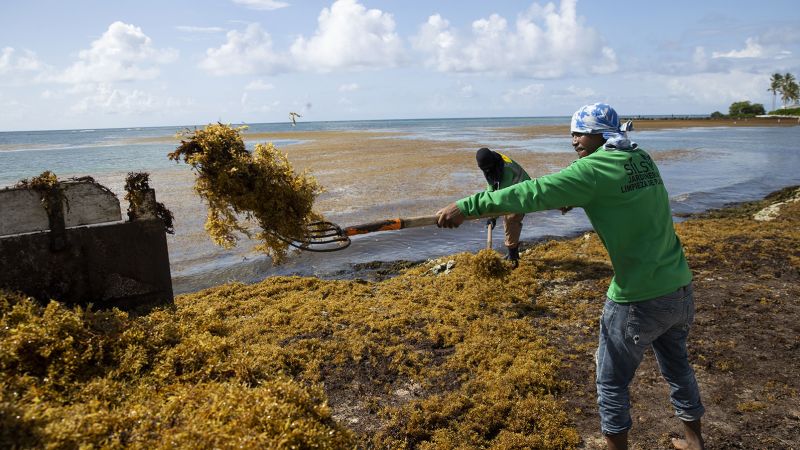
Solving sargassum: Florida Tech researchers exploring ways to make seaweed useful
Sargassum, a type of large brown seaweed, has been in the news lately, with a massive blob that’s visible from space and threatening ocean life. University research funded by the U.S. Environmental Protection Agency could address the issue, while also helping solve another problem in our water. Toufiq Reza, an assistant professor of chemical engineering in the Department of Biomedical and Chemical Engineering and Sciences, along with research students Cadianne Chambers, Swarna Saha, Savannah Grimes and Josh Calhoun, were part of the research paper, “Physical and morphological alteration of Sargassum‐derived ultraporous superactivated hydrochar with remarkable cationic dye adsorption.” The paper was published in the May edition of Springer Nature’s Biomass Conversion and Biorefinery journal. The paper is part of a three-year, nearly $400,000 EPA grant to examine different uses of sargassum. It explains that the team can produce biochar from sargassum that can filter water. Though the team has tested model dye in this paper, they plan to extend their research for other applications including harmful algal bloom remediation and nutrient recovery in the future. While sargassum has been around for centuries (Christopher Columbus is credited with the first written account after he encountered it in 1492), and you’ve probably seen bits of brownish seaweed on the beach – it sometimes smells like rotten eggs – the quantities in the ocean and washing up on shores are a more recent phenomenon. There are multiple reasons behind the increased amount of sargassum, including global warming that intensifies sargassum production and nutrient runoff making its way to ocean water and overfertilizing the seaweed growth. More sargassum is expected to show up on Florida shores in the future, inspiring the team to explore more positive uses of the abundant seaweed. “In the next couple of years, we’ll be seeing much more sargassum coming into our way. It’s not a common practice to utilize sargassum,” Reza said. “We go to a beach and then we see a little bit of sargassum just dried out. That doesn’t bother us that much, but when it started to come as a foot-tall sargassum wave, that’s where it gets more alarming.” Sargassum in the lab is labor intensive. Because it contains salt from the ocean, it is washed with tap water first, then put in a freezer for preservation. Next, it goes through hydrothermal carbonization, a thermochemical process that uses heat and pressure to convert biomass and organic waste (such as the sargassum being used) into solid hydrochar. Lastly, the solid char goes through pyrolysis, where it is heated in a high-temperature, oxygen-free chamber into a biochar that is used to filter water. For Swarna Saha, a first-year doctoral student, her goal as a researcher is to identify an environmental problem and come up with a sustainable solution. Having grown up in Bangladesh around textile factories that generate dyes that pollute the surface water, she was inspired to work on solutions that improved water quality with biochar. “I came in the project when we were experimenting on dye adsorption and saw how a tiny amount of biochar changes the color of the water,” she said. “For me, seeing the results made me the happiest. When we saw that our biochar is effective, that is the biggest achievement for me. That made me happy.” Cadianne Chambers, a second-year doctoral researcher, was motivated by her home country of Jamaica and its massive issues with sargassum. Chambers has heard accounts of fishermen unable to go out to sea because of the sargassum buildup. A popular destination for summer vacation, Jamaica is facing serious environmental and economic problems with waves of sargassum. “A team in Jamaica saw that article and they reached out to us, and they’re trying to cultivate sargassum. They want us to teach them how to make export-quality hydrochar and biochar, which could help solve their environmental problem and generate revenues,” Chambers said. “So, everything is just connecting nicely and I’m hoping to continue our collaboration with them. If it’s something that I can go home and put my PhD research to work and help the community, that would be really satisfying.” Looking to know more about sargassum and the ground-breaking research taking place at Florida Tech? Then let us help with your coverage and questions. Toufiq Reza is an assistant professor in the biomedical and chemical engineering and sciences department at Florida Tech. He's available to speak with media about this topic - simply click on his icon now to arrange an interview today.


We've all been there. A relationship ends and the rebound begins. Now since the beginning of time it seems everyone from friends, family and advice columnists have had different opinions and perspectives on how each of us should approach 'the rebound.' And earlier this month, The Atlantic decided to connect with Georgia Southern's Amy Hackney, Ph.D., a psychology professor, to weigh in with her expert opinion. “Rebound relationships” have a terrible reputation. A romance ignited shortly after another ends seems chaotic—like an opportunistic ricochet rather than an intentional search for compatibility. After a breakup, people are commonly told to take their time grieving before they start dating again. And people dating someone who’s fresh off a breakup are told to be wary—of being used as a distraction, or being treated carelessly by someone fumbling through their own heartache. But research doesn’t seem to support the idea that rebound relationships are inherently toxic or doomed to fail. When someone fresh from a split starts dating, it’s true that they might not be totally over their ex. But new relationships can help people move on from old ones. In one study of participants recovering from breakups, those who’d found a new partner were more confident in their own desirability, more trusting of other people, and less likely to say that they still had feelings for their old partner. Another examined rebounders who’d been in their new relationships for a year and a half on average. The quicker those subjects had jumped into that rebound, the higher they rated on measures of well-being and self-esteem. Amy Hackney, a psychology professor at Georgia Southern University, found something similar when she investigated what helped college students get over breakups. “The sooner they began dating someone new, the faster that they felt that they had recovered from that prior relationship,” she told me. Although that might conflict with conventional wisdom, she thinks it fits with basic social psychology: A partner provides validation, care, and companionship, and when they go away, there’s no reason someone else can’t take their place. Perhaps that sounds unromantic, but according to Hackney, it’s healthy to be reminded—promptly—“how many people we really can have fulfilling relationships with.” As Neil Sedaka would sing 'Breaking up is hard to do' and so too is getting back into the dating game. If you're a journalist looking to know more about this topic - then let our experts help. To connect with Amy Hackney — simply reach out to Georgia Southern's Director of Communications Jennifer Wise at jwise@georgiasouthern.edu to arrange an interview today.


Pioneering UConn Researcher Regrows Human Bone Using a Biodegradable Implant
A pioneer in the field of regenerative engineering, UConn's Dr. Cato T. Laurencin is charging toward his goal of regenerating a human limb by the year 2030. In a step toward reaching that goal, Dr. Laurencin and his team have detailed their success in regrowing bone using a plant-derived molecule in a recent study published by PNAS, marking a major step toward affordable, safe bone regeneration and growing replacement limbs. Dr. Laurencin discussed this impressive breakthrough this week with Hearst Connecticut Media: Most bone fractures heal reasonably well with care. But in severe breaks, where sections of bones are missing, or in crush injuries bones don’t always heal very well. In those cases, self-grafts or donated grafts of healthy bone from other, non-broken bones can be used to help close the gaps. But bone grafts don’t always take. Since about 2001, recombinant bone morphogenic proteins have been used to help stimulate bone growth in injuries where bone wouldn’t otherwise heal but their use has limits. While they work on long bone fractures, like those in your limbs, they’re not used on more complex bones. In some experimental treatments with fractured pelvises, recombinant bone protein caused bone tissue to form outside the skeleton. Forming bone tissue outside the skeleton is one of the more troubling side effects of this treatment. Bone tissue engineering seeks to get around this by developing implants that use adult stem cells to direct the growth of new bone across breaks that bones could not heal on their own. Some of this work involves building custom implants designed to mimic the missing bone to guide bone healing. Others attempt to deliver the bone protein in an implant, stopping it from leaving the injury area, to prevent side effects. These bone treatments are also expensive. In a meta-analysis from 2006, researchers found that they cost more than standard care for severe fractures. But UConn team took a different approach, using the drug forskolin, a molecule derived from a plant in the mint family. Forskolin triggers cells to make something called “cyclic AMP” a messenger molecule that is normally made in response to hormones. This messenger molecule turns on a wide variety of cell functions depending on what cells in which locations it stimulates. “We were intrigued by being able to find some natural material that people were already consuming in quantity,” said Dr. Laurencin, “But obviously there’s a difference between ingesting it and putting it on one location, like a bone site.” Dr. Laurencin’s team created a biodegradable plastic implant impregnated with forskolin, testing this on rabbits. The implants guided the creation of new bone tissue after 12 weeks. If you're a journalist looking to know more about this groundbreaking research taking place at UConn, let us help with your questions and coverage. Dr. Cato Laurencin, CEO of the Cato T. Laurencin Institute for Regenerative Engineering at UConn, is available to for interviews. Simply click on his icon now to arrange a time to talk today.



• Professor Patricia Thornley has led a Department for Transport advisory paper • Advises decarbonisation will need low-carbon fuels alongside electrification • Calls for continued investment in this area. A leading energy expert at Aston University has advised government to invest in low carbon fuels - as well as electric - if it wants to reach its 2050 net zero ambition. Professor Patricia Thornley has led a Department for Transport (DfT) advisory paper on low carbon transport fuels. The paper advises that decarbonisation of the UK’s transport systems will need the government to support the use of low-carbon fuels alongside widespread battery electrification where possible. Professor Thornley and the other members who sat on the Scientific Advisory Council examined the challenges and opportunities of developing and using different fuels and their potential impact on the wider energy system. The authors highlight that low carbon fuels such as those made from agricultural waste can deliver reductions in carbon emissions, helping to meet the government’s 2050 net zero ambition. As a result, they state that continued investment in this area is crucial. The paper also states that at this point it’s not yet clear if low carbon fuels will support just the transition to full electrification of the UK’s transport systems or will be a long-term solution. Professor Thornley who is director of Aston University’s Energy and Bioproducts Research Institute (EBRI) and the Supergen Bioenergy Hub said: “Successful decarbonisation of transport systems in the UK will require flexible and adaptive government strategies that support the use of low-carbon fuels alongside widespread battery electrification, where that is possible. “The optimal mix of low carbon fuels vs battery electrification in transport will depend on many different factors, some technological, some supply related, and others linked to the capacity of the UK to generate low carbon electricity. “We urgently need to better understand and manage the airborne emissions that can still be present with low carbon fuels (including hydrogen). That might result in us prioritising different fuels or propulsion systems in different applications or even different parts of the UK. “Agreeing that prioritisation would allow us to prioritise appropriate next generation of infrastructure to support the UK’s net zero ambitions.” Back in March 2022 the Council was asked to provide guidance to the DfT which is currently developing a low carbon fuels strategy. The report, Low carbon transport fuels: DfT Science Advisory Council position paper was published on 5 June and provides an independent advice on the role of low carbon fuels in reducing transport systems’ greenhouse gas emissions.


Georgia Southern professor earns Fulbright US Scholar Award for 2023-2024
A noted Georgia Southern University public health professor has earned a Fulbright U.S. Scholar Program award in All Disciplines to Latvia for the 2023-2024 academic year from the U.S. Department of State and the Fulbright Foreign Scholarship Board. Yelena N. Tarasenko, DrPH, is a professor in the Department of Biostatistics, Epidemiology and Environmental Health Sciences at Georgia Southern’s Jiann-Ping Hsu College of Public Health. Her Fulbright project is titled “Strengthening research and teaching capacity in cancer prevention globally.” She will collaborate with personnel and students at the Faculty of Medicine and Institute of Clinical and Preventive Medicine at the University of Latvia, as well as colleagues at the International Agency for Research on Cancer to help improve cancer care coordination and screening in Latvia and 14 European countries participating in the “Towards gastric cancer screening implementation in the European Union” project. Given Tarasenko’s expertise in legal and cancer epidemiology, she will engage in (i) implementation research focused on cancer screening and patient navigation, and (ii) teaching activities focused on fostering research productivity (e.g., guest lecturing, curriculum development, advising, and mentoring). Tarasenko is among more than 800 U.S. citizens who will teach or conduct research abroad for the 2023-2024 academic year through the Fulbright U.S. Scholar Program. Fulbright scholars engage in cutting-edge research and expand their professional networks, often continuing research collaborations started abroad and laying the groundwork for forging future partnerships between institutions. Upon returning to their home countries, institutions, labs and classrooms, they share their stories and often become active supporters of international exchange, inviting foreign scholars to campus and encouraging colleagues and students to go abroad. As Fulbright Scholar alumni, their careers are enriched by joining a network of thousands of esteemed scholars, many of whom are leaders in their fields. Notable Fulbright alumni include 62 Nobel Prize laureates, 89 Pulitzer Prize recipients, 78 MacArthur Fellows and 41 who have served as a head of state or government. Since 1946, the Fulbright Program has provided more than 400,000 participants from over 160 countries – chosen for their academic merit and leadership potential – with the opportunity to exchange ideas and contribute to finding solutions to challenges facing our communities and our world. “This is a wonderful validation of Dr. Tarasenko’s scholarship and expertise, and another example of Georgia’s Southern’s expanding reputation for public-impact research,” said Carl Reiber, Ph.D., Georgia Southern University provost and vice president for academic affairs. “Fulbright scholars are among the world’s most talented academicians, and we congratulate Dr. Tarasenko for this achievement.” More than 800 U.S. scholars — faculty members, artists, and professionals from all backgrounds — teach or conduct research overseas through the Fulbright U.S. Scholar Program annually. In addition, over 2,000 U.S. students, artists, and early career professionals from all backgrounds in more than 100 different fields of study receive Fulbright U.S. Student Program awards annually to study, teach English, and conduct research overseas. “I’m excited to help expand our expertise on global health and develop a relationship with the only classical university in Latvia,” Tarasenko said. “This proposed project meets the university’s strategic pillars, as its leadership looks for ways to create and encourages opportunities for the exchange of teaching, research, scholarship, and professional development. It also meets the Jiann-Ping Hsu College of Public Health’s values and goals in terms of thinking globally and acting locally.” The Fulbright Program is the U.S. government’s flagship international educational exchange program and is supported by the people of the United States and partner countries around the world. The Fulbright Program is funded through an annual appropriation made by the U.S. Congress to the U.S. Department of State’s Bureau of Educational and Cultural Affairs. Participating governments and host institutions, corporations, and foundations around the world also provide direct and indirect support to the Program. In the United States, the Institute of International Education supports the implementation of the Fulbright U.S. Student and Scholar Programs on behalf of the U.S. Department of State, including conducting an annual competition for the scholarships. For more information about the Fulbright Program, visit https://fulbrightprogram.org. To connect with Yelena N. Tarasenko — simply reach out to Georgia Southern's Director of Communications Jennifer Wise at jwise@georgiasouthern.edu to arrange an interview today.

The Loneliness Epidemic: Fathoming Feelings and Emotions
Last month, United States surgeon general Vivek Murthy released an advisory to address a budding "public health crisis." The culprit is not immediately visible, like the shutdown-spurring COVID-19 pandemic, but it is currently affecting nearly half of all adults in the U.S. It's our widespread senses of loneliness and isolation, and Murthy says addressing these feelings is "critical" to addressing issues of mental health in America. Assistant professor Guy Weissinger, PhD, MPhil, RN, is a nurse, scientist and educator focusing on mental health and health systems at Villanova University's M. Louise Fitzpatrick College of Nursing. Dr. Weissinger believes, despite the difficult nature of navigating unseen nemeses, there are ways to quell this epidemic and save lives. Q: Why is the feeling of loneliness now seen as a crisis? Dr. Weissinger: It's important to understand that loneliness is not just a person not having friends or not having good relationships. Loneliness is a feeling, the sense that one is distant from others while yearning to feel connected. These two sides make loneliness hard to understand sometimes because there are people who are happy with low amounts of social engagement and there are people who feel lonely even when they are surrounded by friends. Like hunger saying it's time to eat, loneliness is a message that we are not fulfilling a social and psychological need—and it's a big problem because so many parts of our mental and physical health are tied to having active social engagement. Q: In an increasingly connected world, why are these feelings of isolation also increasing? DW: Interacting with other people doesn't actually make us less lonely, especially through things like social media. A sense of being emotionally close to others—reciprocity of attention and care—is what makes people less lonely. It's clear that people are spending less time focused on social relationships than in the past. The "connection" that we have through social media is not the connection that addresses our deeper psychological needs. Upvotes and clicks feel good, but they do not make us feel understood and appreciated for our whole selves. In-depth conversations, shared projects and laughing about inside jokes—the kind of things that happen over extended interactions—are what actually make us feel less lonely. This isn't to say that people don't connect and get less lonely when they engage digitally. It's about the quality and depth of interactions, not the modality. Q: What are some ways loneliness and isolation can be addressed? DW: If you are lonely, reach out to someone. Often, we wait for others to initiate because we don't want to be a bother or fear rejection. If they say no, move on to another person. It's hard not to take it personally, but if you are feeling lonely, the worst thing to do is to dwell on why it's hard to schedule with "Friend A" and instead focus on finding another person to connect with. And when you are with people, try to focus your attention on them. Put away your phone or other distractions and ask open-ended questions like, "What's the best thing that happened this week?" or "How has [thing you know they enjoy] been recently?" Even if it's not a person that you are super close to, both listening to them and opening up yourself helps you feel more connected. If you are worried that someone else is lonely, ask them to do something, especially if it's something you know they like. Asking a person who loves movies to go see a movie with you will make them feel like you care more than asking them to a yarn festival, even if you'd prefer the yarn festival. Dr. Weissinger says people who report that they have a regular social connection with others, especially in person, are more physically active, less likely to be depressed and are better able to better navigate difficult circumstances. "While we often talk about resilience as being an individual trait, having good social support is one of the most powerful kinds of resilience," mentions Dr. Weissinger. "When times are hard, we can rely on our friends, family and larger social network to help with problem solving, resources, emotional support and even just simple distraction." Dr. Weissinger says that a crisis as large as loneliness and isolation can't be solved through the recommendations of one person, but says connection and unity are key to fighting back against this epidemic. "People with more and more varied connections don't have simpler lives or less bad things happen to them, but they get through them easier because they can rely on others to help them manage in the ways they need."


It has been a tense and stressful couple of weeks in Washington as the negotiations about raising America's debt went from the usual political arm-wrestling to facing the reality that the United States may actually default on its debt. The very concept left reporters and experts scrambling to explain what this could mean for the country's economy, civil service and global financial reputation. And when answers, explanations and expert perspective was needed, Georgia Southern University's Michael Toma, Ph.D., was sought out to talk about the effect of a looming U.S. debt default. Georgia Public Broadcasting spoke to Toma, who explained the situation and the impact of not reaching a deal could have locally and on a broader spectrum. If you're a reporter looking to know more about important topics like this - then let us help. Michael Toma, Ph.D., researches regional economics and public choice at Georgia Southern. He's available to speak with reporters simply click on his icon now to arrange an interview today.
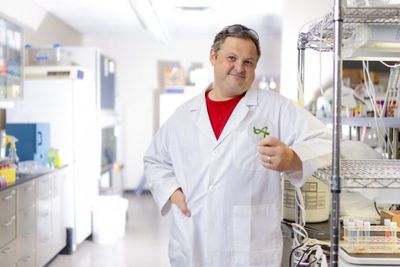
Florida Tech Scientist to Study Deep-Space Agriculture After Planetary Society Grant Award
No matter where humans travel, sustenance remains a necessity. Finding a bite to eat during a visit to New York, for example, is no problem. When the destination is a bit farther away, such as Mars, the options are not as plentiful there or on the long journey to get there. That’s where Florida Tech’s Andrew Palmer comes in. He and other scientists are exploring ways to feed our explorers, and a new competitive grant from the Planetary Society will fund work that examines the two most likely ways to produce food during travel to these far-flung spots: in soil or something like soil, or in water. Palmer and his team were awarded a $50,000 Science and Technology Empowered by the Public (STEP) grant, the Planetary Society recently announced. Their project: “Evaluation of food production systems for lunar and Martian agriculture.” For the next year, they will grow radish microgreens, lettuce and tomatoes in identical environmental conditions with one major exception: one batch will be grown hydroponically, and another will be grown in regolith – like lunar or Martian soil. The aim of the experiment is to characterize and compare the two methods, both of which have merits and shortcomings. “It may be that a combination of these approaches, tailored to the diverse needs of different crops, is the best way to provide sustainable and productive agriculture,” Palmer said. “Until now, there have been no direct comparison studies between hydroponic and regolith-based systems for any crop targeted for space applications. We are excited to address this knowledge gap.” The team, which includes experts in plant physiology and biochemistry as well as space agriculture and systems efficiency analysis, will test their hypothesis that faster growing crops like microgreens will be better suited for hydroponic systems even in the long term, while slower-growing crops like tomatoes may favor a regolith-based production system. Palmer and his co-investigator, Rafael Loureiro from Winston-Salem University, are joined by collaborators J. Travis Hunsucker and Thiara Bento from Florida Tech, Laura E. Fackrell at the Jet Propulsion Laboratory and Jéssica Carneiro Oliveira at Universidade Federal do Estado do Rio de Janeiro, Brazil. Care to delve a little deeper? Palmer and a second STEP grant recipient, Dartmouth College professor Jacob Buffo, spoke to the Planetary Society senior communications advisor Mat Kaplan about their respective projects. The segment with Palmer begins at the 23:57 mark and the piece is linked above. Looking to know more about what it will take to feed our deep-space explorers? Then let us help with your questions and coverage. Dr. Andrew Palmer is an associate professor of biological sciences at Florida Tech and a go-to expert in the field of Martian farming. He is available to speak with media regarding this and related topics. Simply click on his icon now to arrange an interview.


Aston University staff to take on zip wire challenge in aid of the Midland Met Appeal
Four University staff will take on the 160ft high zip wire challenge on 1 July 2023 The event is set to take place at the Midland Metropolitan University Hospital in Smethwick The event aims to raise awareness and funds for the Midland Met Appeal. Four Aston University staff members are set to take on a 160ft high zip wire challenge on Saturday 1 July to raise money for the Midland Met Appeal. The event is run by Your Trust Charity, the Sandwell and West Birmingham NHS Trust's registered charity will take place at the Midland Metropolitan University Hospital in Smethwick. The zip wire challenge will take place from the top of a crane positioned on-site, with a length of 220 metres and speeds of up to 35mph. The challenge will see colleagues Rosa Amato, Sarah Collins, Matilda Blackwell and Adam Basdogan taking the plunge. The event aims to raise awareness and funds for the Midland Met Appeal, a campaign to raise £2 million to fund healthcare and facilities in the new hospital. All money raised from the challenge will go directly to the appeal. Rosa said: “We are thrilled to be taking on this exciting challenge in support of the Midland Met Appeal. “It's a great opportunity for us to raise funds for a cause we are passionate about while having a lot of fun in the process. “Members of the public can show their support for the Aston University team and the Midland Met Appeal by making a donation to the Your Trust Charity's JustGiving page. “Every donation counts, and together, we can make a real difference in improving healthcare for patients in the Midlands.” For more information and to make a donation, click here.

Experts from the Centre for Personal Financial Wellbeing will examine the daily financial struggles of low to moderate income UK households The Real Accounts project will capture day-to-day financial fluctuations, understanding household money management strategies It is hoped the results will help inform policy and market innovation and debate. New research by the Centre for Personal Financial Wellbeing at Aston University will shine a light on the real day-to-day experience of financial uncertainty among UK households and help inform policy and market innovation and debate. The Real Accounts project will build an in-depth understanding of the lived experience of financial uncertainty among low to moderate income households across the country. Believed to be the first of its kind in the UK and in contrast with the snapshot data achieved by annual surveys, this long-term study will provide a fully joined-up view of household finances, capturing the day-to-day, week-to-week ups and downs, working with households to understand the situations they face and the strategies they use to manage their money. The project will be a collaboration with Nest Insight and the Yunus Centre for Social Business and Health at Glasgow Caledonian University. Experts will use a research data collection app that has been custom designed by Moneyhub to capture real-time income and expenditure transaction data over six months for a sample of around 50 low to moderate income households, combined with monthly interviewing. Professor Andy Lymer, director of the Centre for Personal Financial Wellbeing at Aston University, said: “We are really pleased to be part of this innovative project, directly focusing on real experiences of managing financial volatility and the impact that has on broader aspects of wellbeing. Too little is currently known about the scope and scale of income and expense volatility experienced by UK households. This research is really timely given people are currently facing the very significant impact of the cost-of-living crisis and often enormous uncertainty about both their incomes and their expenditures. The outcomes of this work will generate deeper understanding of what it means to experience financial challenges in reality and over sustained periods of time. It will contribute to finding better ways to help people in their everyday lives and is a perfect fit for the focus of our Centre that seeks to deepen our understanding of what matters in creating personal financial wellbeing.” Sope Otulana, head of research at Nest Insight, said: “As the rising cost of living continues to impact households across the country, and levels of household debt climb, this research is more crucial than ever. The project aims to shine a light on exactly what it is like for households today managing volatile income and expenditure, sharing their first-hand stories. While large income and expenditure datasets track individuals and their behaviour out in the world, this research puts individuals back into the contexts where their financial lives play out, focussing on the overall household – partners, parents, siblings, friends and other social connections. It will look beyond the balance sheet to also analyse social, environmental, and health factors, as well as other dynamics that can come into play and affect household finances. The research will identify trends but also capture the variation within households, recognising that there is no ‘average’ household circumstance or experience.” Alex Christopoulos, Aviva Foundation lead and senior strategic adviser and consultant, said: “Millions in the UK are struggling and worried about money. The Real Accounts research provides us with an opportunity to understand how these households are managing to get by day-to-day; the choices they make, the strategies they take and the knock-on effects this has on other areas of their life. In uncertain times, we need to better understand how people deal with fluctuations in their incomings and outgoings – and what kinds of financial support and services might enable them to build a buffer, and a plan, to deal with today’s pressures, as well as what tomorrow may bring. The Aviva Foundation is proud to be supporting Nest Insight and its partners to deliver to the Real Accounts research.” Samantha Seaton, CEO of Moneyhub, said: “It is only when we have in-depth and holistic data on a person's or household’s finances that we can truly know and begin to understand the impact of the rising cost of living. This can only be successfully achieved by bringing all of an individual's or household’s financial data together in one place, from every-day spending to long-term projects such as buying a property and saving for retirement. At Moneyhub, we’re absolutely delighted to be providing our cutting-edge technology to enable Nest Insight and its partners to collect and analyse this crucial data. We know from our own users the pressure that the current economic situation is placing on them, with many unable to save resorting to borrowing to get by each month. Having thorough data and insight will enable any solution to be highly personalised in its approach and have a much more positive impact on those that require it most. Ultimately the more real-time financial data points, the more informed the decisions can be. It has always been our purpose at Moneyhub to improve financial wellness, and this project is just one example of how we’re using Open Finance to do exactly that.” You can find out more about the project here.
