
Experts Matter. Find Yours.
Connect for media, speaking, professional opportunities & more.

The CRISPR Dilemma: A Road To Saving Lives Riddled with Roadblocks
The New York Times recently published an Op-Ed by Dr. Fyodor Urnov unpacking the incredible advancement and possibilities of CRISPR gene editing technology on human lives. It also addressed some of the roadblocks and challenges preventing this "not so new" technology from getting to the finish line of promise. Dr. Eric Kmiec, the director of ChristianaCare's Gene Editing Institute, whose unparalleled research has led to over 18 patents that have advanced medical research, also shared his concern in a follow-up letter published by the New York Times about the many roadblocks standing in the way of life-saving opportunities with gene editing and CRISPR technology. Dr. Kmiec (above) in the lab "If we were able to safely and effectively approve a COVID vaccine in a year, we must do the same by pooling public and private funds and seek ways to speed science. Why can’t we support the most promising solutions to some of the longest running and most intractable of cancers or rare diseases?" The advancement of gene editing has not only been stalled by the outdated processes of medical reviews and policies, but many have introduced political and religious barriers. The idea of "playing God" or even Dr. Frankenstein when people hear the term "gene editing" raises ethical questions based on a lack of understanding. Some of these concerns are shared in this recent article in Futurism. Ask one of the 100 people afflicted with a gene defect that could cost them their lives at age 7 and the perspective may be a little different. Nature makes mistakes, often imperfect, and impacted by the ever-changing landscape, impacted by external factors that are either known or unknown. Gene editing, simply put, can fix typos in genes that have experienced a glitch. As Dr. Kmiec puts it, "It allows us to correct mutations that are inbred in the genome, it's correcting nature's mistakes — and nature does make a bunch of mistakes." Whether gene editing fits into a belief system or is too otherworldly for some to grapple with, Dr. Kmiec asserts that speeding up the delays put onto science by process, politics or fear will result in saving lives, saving pain and advancing possibility. Dr. Urnov agrees, "Scientists owe them and their families honesty about the chasm between a test tube in a lab and an IV line in a hospital. The greatest obstacles are not technical but legal, financial and organizational." Gene editing is a pioneering technology that can help humans, plants and animals alike. When it comes to putting it into action, at the very least, if science is there to help, everyone should have the choice to use it.



Aston University students take home two prizes from annual European Union simulation event
EuroSim is an annual international intercollegiate simulation of the European Union More than 150 students, from universities in North America and Europe, participate every year The Aston EuroSim Team was awarded best debater in two categories. Aston University’s EuroSim team has returned from this year’s event with two awards. The Aston EuroSim Team was awarded best debater in the European Parliament Committee on Employment and Social Affairs (EMPL) and best in special roles (media/journalist). EuroSim is an annual international intercollegiate simulation of the European Union (EU). The purpose of it is to provide a framework for a simulation of the EU decision-making on major current issues. More than 150 students, from 16 universities in North America and Europe, participate in the simulation. All students are assigned roles, including members of the European Parliament (MEPs), members of the European Commission, heads of government and national ministers. The purpose of this module is to educate students about the inner workings of the European Union in order to enhance the learning experience for students. This year it was hosted by the University of South Wales in Newport, the first time the event has been held in the UK. Dr Patrycja Rozbicka, a senior lecturer in politics and international relations who is the lead for Aston EuroSim and was European associate director for EuroSim experience (2019-2023), said: “Here at Aston University, the EuroSim module is one of the most innovative modules of the Aston Politics and International Relations Department’s undergraduate and MA programmes. Amin Hassan, a final year international relations and English language student at Aston University, who took part in EuroSim, said: “I would like to extend my gratitude to my team from Aston University, and special mentions to my lecturer Dr Patrycja Rozbicka and student director Chris Burden for organising and inviting us to this memorable trip. “Representing Max Orville (my alter ego), MEP and Renew Europe Group, I worked together with my party and committee members with shared interests and values to ensure that no one is left behind by the proposed Social Climate Fund, which has recently been approved in real life. “After three days packed with negotiations and meetings, we are pleased that the Social Climate Fund has been approved and we strongly believe that it will support vulnerable people, households, micro-enterprises and transport users at risk of facing higher costs as the bloc introduces new climate measures.” Chris Burden, European students director at EuroSim and PhD researcher at Aston University, said: “I had the greatest honour attending the EuroSim2023 meeting at the ICC Wales as the European student director and part of Team Aston. “The work that goes into this conference is unbelievable, and the students had a fantastic time debating and simulating questions surrounding social and climate action within Europe. “This Transatlantic conference is the highlight of any year. “Thank you to our fantastic team from Aston University who brought home the two awards for their efforts.” The next EuroSim will be held next year in Brockport, northern New York State, USA. If you want to read more about the Aston EuroSim, click here.

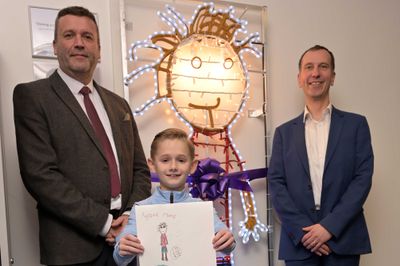
‘Shining a light on Colour Blindness’ competition winner unveils light sculpture at Aston University Winner 10-year-old Leo Evans helped unveil the feature of footballer Tyrone Mings The competition helped highlight the challenges of colour blindness - particularly in sport. A light sculpture named after the Aston Villa footballer Tyrone Mings has been unveiled at Aston University as part of a campaign to help raise awareness of colour blindness. In the UK there are approximately 3 million colour blind people (about 4.5% of the entire population), most of whom are male. Worldwide, there are estimated to be about 300 million people with colour blindness. The competition, ‘Shining a Light on Colour Blindness’, was launched by non-profit organisation Colour Blind Awareness and supported by various football club charities - including the Aston Villa Foundation. Young supporters were asked to take part by drawing a colourful picture of their favourite footballer. The winning entry was then made into a light feature. The winning artwork, which came from the Aston Villa Foundation, was transformed into a light feature and was selected to go on display inside the Aston University Vision Sciences building in the paediatrics bay, as part of the ongoing partnership between the Aston Villa Foundation and Aston University. Colour Blind Awareness is a non-profit organisation designed to highlight the relevance and impact of colour vision deficiency amongst those that live with it - including the challenges in sport. The organisation is part of an EU-funded project, Tackling Colour Blindness in Sport. Competition winner, 10-year-old Leo Evans from Erdington, helped unveil the light sculpture alongside Professor Anthony Hilton, pro-vice-chancellor & executive dean of the College of Health and Life Sciences. Professor Hilton said: “We are delighted for Leo, his winning drawing of Tyrone Mings looks fantastic as a light sculpture and we are proud to host it in our Vision Sciences building for our students, staff and visitors to enjoy, whilst raising awareness about colour blindness.” Commenting on his winning drawing, Leo said: “I am very proud that my picture won the competition and that Tyrone Mings liked it. I now better understand what being colour blind means and I hope my picture has helped someone else.” Cheryl Evans, Leo's Mum, said: “I couldn't be prouder of Leo and the fact that his drawing is of his favourite player Tyrone Mings makes it even more special. This competition has meant that as a family we have had many conversations about colour blindness and it has educated us all more on this topic. Well done Leo!” Kathryn Albany-Ward, CEO at Colour Blind Awareness CIC, said: “Aston Villa Foundation’s entry from Leo charmed the judges and who were delighted to award it first prize. We’re very grateful to Aston University for hosting the light feature and can’t wait to see it displayed. We hope its location in the Vision Sciences Department will help raise more awareness of a condition which affects 8% of boys and 0.5% of girls worldwide, impacting on their education and ability to perform to their best in sport if left unsupported.” Leo was met and congratulated by the head of the Aston Villa Foundation, Guy Rippon, and foundation manager, Ross Alexander. Ross said: “The Aston Villa Foundation would like to say a big congratulations to Leo for his amazing achievement! This is a really proud moment for Leo and we are thrilled that he was inspired by his favourite Aston Villa player. “It has also been a pleasure to have supported Colour Blind Awareness, who have done some great work in highlighting such an important and relevant topic during our coaching team’s workforce development. The support has culminated in a competition that was won by Leo, a participant in one of our Football in the Community holiday sessions. “The stunning light feature of Tyrone Mings will now be housed at Aston University for all to see and we are grateful for the University’s ongoing support with the Club.”


Birmingham MP officially opens £1.5 million healthcare simulation facilities at Aston University
Paulette Hamilton MP officially opens healthcare simulation facilities at Aston Medical School and School of Optometry State-of-the-art facilities including medical simulation room with high fidelity manikins for students to practise real life scenarios opens The first in Europe ocular simulation suite allows students to refine skills in examining the health of the eyes and experience a wide range of eye disease. New £1.5 million healthcare simulation facilities have officially opened at Aston Medical School and in the School of Optometry at Aston University. The state-of-the-art facilities were formally opened by Paulette Hamilton, member of parliament for Birmingham Erdington, on Friday 2 December at a ribbon cutting ceremony that was attended by Aston University Vice-Chancellor Professor Aleks Subic as well as other members of the University executive and staff from the College of Health and Life Sciences. Commenting on the new facilities Paulette Hamilton MP said: “It’s been brilliant to visit and officially open the new healthcare simulation facilities at Aston University. “I know from my time as a nurse how important it is to have access to good training and the latest equipment. These fantastic facilities will give students the best possible learning experience as they prepare to enter their profession, providing healthcare in Birmingham and beyond.” Hosted by Professor Anthony Hilton, Pro-Vice-Chancellor and Executive Dean of the College of Health and Life Sciences, guests were invited to take a tour of the new facilities including a clinical skills simulation room which allows students to practise in emergency settings and an ocular simulation unit facility, the only one in Europe. Professor Hilton said: "We are delighted these new facilities have opened in time for the start of the new term and that students can benefit from practising their clinical skills in a variety of scenarios. “The acute care simulation room will allow for simulated emergency resuscitation scenarios that are very difficult to teach in real life situations, such as heart attacks, acute breathlessness and severe allergic reaction and will be of great value in training students of medicine, pharmacy and optometry.” The healthcare simulation facilities will be used by students studying medicine, pharmacy and optometry, where they will be able to practise in emergency settings using high quality manikins where they will simulate treating patients for acute conditions such as a heart attack or learning how to intubate a patient onto a ventilator. Professor Aleks Subic, Vice-Chancellor, Aston University said: “The launch of the Aston University healthcare simulation facilities marks an important milestone in the development of our digital health precinct within the Birmingham Knowledge Quarter. By establishing world-class medical imaging, advanced visualisation, and digital diagnostics capabilities we are in fact bringing Industry 4.0 to healthcare. “Our students from the Aston Medical School and School of Optometry in particular, will benefit immensely from this development as they will be able to detect a wide range of clinical conditions and diseases and explore different interventions and scenarios, safely within a simulated environment.” The high-fidelity acute care simulation room will also be equipped with recording facilities, a debrief room and control room. The funding has allowed for the purchase of other training equipment such as a hospital grade bed and single task trainer simulation equipment. For example, male and female catheterisation models, pelvic and rectal trainers, venepuncture arms, breast trainers and abdominal trainers. The facilities were part funded by the Office for Students which awarded the University £806,226 to set up the ‘high fidelity’ simulation A&E room with further expenditure by Aston University on the ocular simulation unit. The ocular simulation facility is unique in Europe. It allows students to refine their skills in examining the health of the front and back of the eyes and to experience a wide range of eye disease. One of the simulators allows students to utilise their smartphones to practise at home. They can gain direct feedback and be assessed by the simulators, allowing more flexible, diverse and intensive learning than can be achieve with clinical practice placements. Professor Liz Moores, deputy dean of the College of Health and Life Sciences, said: “The College of Health and Life Sciences is thrilled with this investment. The enhanced facilities will help to support many of our healthcare students, including those now applying for our new nursing degree. It will also support us with the introduction of the new pharmacy and optometry education standards, providing a step change in our ability to simulate a wide range of clinical scenarios.” For more information about studying in the College of Health and Life Sciences please visit our website.
UConn Expert, 10 Years after Sandy Hook, on the Lies that 'Plague the U.S.'
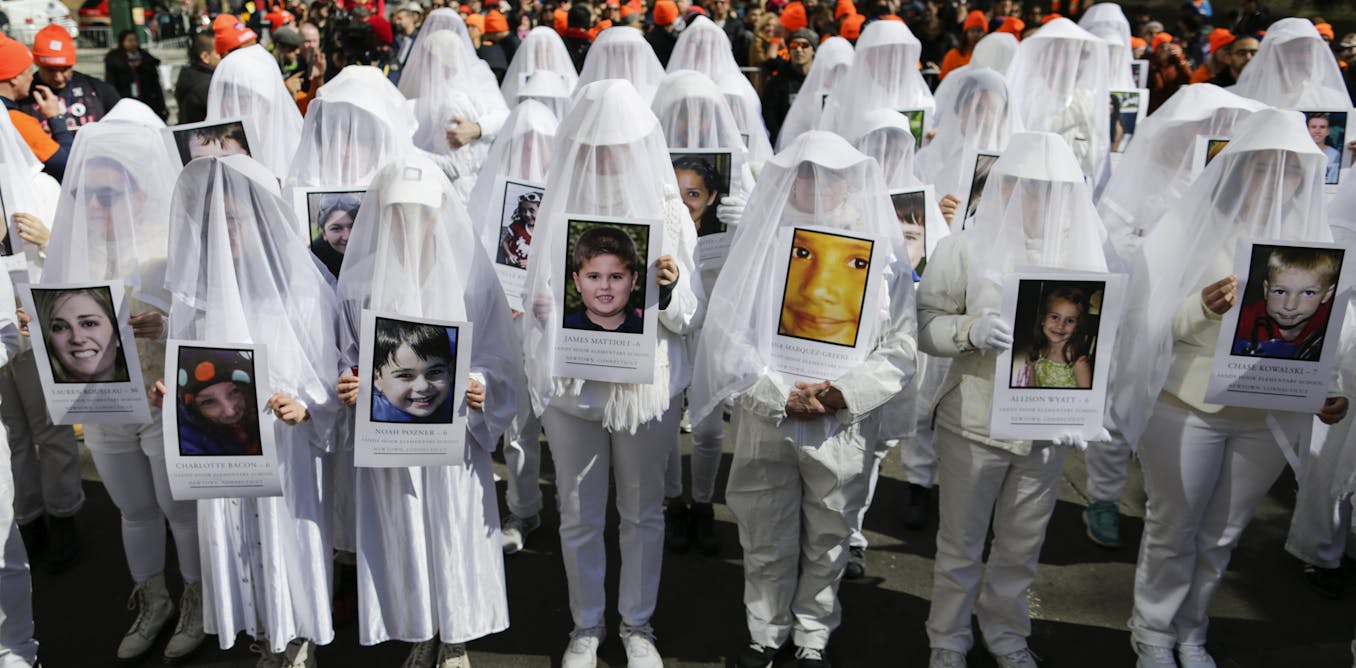
UConn professor and journalist Amanda J. Crawford considers the misinformation that spread like wildfire after tragic school shooting at Sandy Hook Elementary School to be "the first major conspiracy theory of the modern social media age." Ten years after 26 young students and school staff were killed in the massacre, the impact of that day in 2012 continues to reverberate in America today. On this solemn anniversary, Crawford writes about the aftermath of Sandy Hook misinformation in a new essay for The Conversation: Conspiracy theories are powerful forces in the U.S. They have damaged public health amid a global pandemic, shaken faith in the democratic process and helped spark a violent assault on the U.S. Capitol in January 2021. These conspiracy theories are part of a dangerous misinformation crisis that has been building for years in the U.S. While American politics has long had a paranoid streak, and belief in conspiracy theories is nothing new, outlandish conspiracy theories born on social media now regularly achieve mainstream acceptance and are echoed by people in power. Recently, one of the most popular American conspiracy theorists faced consequences in court for his part in spreading viral lies. Right-wing radio host Alex Jones and his company, Infowars, were ordered by juries in Connecticut and Texas to pay nearly $1.5 billion in damages to relatives of victims killed in a mass shooting at Sandy Hook Elementary School a decade ago. Jones had falsely claimed that the shooting was a hoax. As a journalism professor at the University of Connecticut, I have studied the misinformation that surrounded the mass shooting in Newtown, Connecticut, on Dec. 14, 2012 – including Jones’ role in spreading it to his audience of millions. I consider it the first major conspiracy theory of the modern social media age, and I believe we can trace our current predicament to the tragedy’s aftermath. Ten years ago, the Sandy Hook shooting demonstrated how fringe ideas could quickly become mainstream on social media and win support from various establishment figures – even when the conspiracy theory targeted grieving families of young students and school staff killed during the massacre. Those who claimed the tragedy was a hoax showed up in Newtown and harassed people connected to the shooting. This provided an early example of how misinformation spread on social media could cause real-world harm. Amanda J. Crawford is a veteran political reporter, literary journalist, and expert in journalism ethics, misinformation, conspiracy theories, and the First Amendment. Click on her icon now to arrange an interview with her today.


Students studying medicine, pharmacy, nursing, optometry and audiology to benefit from the investment in a new simulation facility over the next three years The Office for Students has granted Aston University £4.8 million to develop future healthcare professionals The investment in digital clinical equipment and health simulation facility will better prepare students for the future of work. Students in the College of Health and Life Sciences at Aston University are to benefit from a major £4.8 million investment in new facilities funded by the Office for Students to further expand and develop the University’s suite of state-of-the-art healthcare simulation and laboratory facilities. Students studying medicine, pharmacy, nursing, optometry and audiology will benefit from capital funding to support new equipment and facilities over the next three years. This latest funding follows on from an initial £1.5 million investment into healthcare simulation facilities on the University campus which were officially opened in December 2022 by Paulette Hamilton MP. The funds will be used to create and equip a simulated hospital ward facility and a simulated patient home environment for healthcare students. Nursing Studies is now recruiting for its first intake of students in September 2023. Pharmacy students will also gain a new wet lab and asepsis suite. The optometry simulation suite, unique in Europe, will be further enhanced with augmented reality simulation, allowing students to learn and refine their skills in a realistic instrument environment, with simulated patients with a wide range of eye conditions. Investment in other additional optometry equipment, including an additional optomap retinal screening device, will also allow the eye clinic to triage patients for the eye hospital, reducing patient waiting times, particularly in assessing conditions such as macular degeneration. Aston Medical School will be equipped with the creation of an immersive room and an anatomy and physiology teaching facility. Professor Liz Moores, Deputy Dean of the College of Health and Life Sciences, said: “The College of Health and Life Sciences is thrilled with this investment. The enhanced facilities will help to support many of our healthcare students, including those now applying for our new nursing degree. It will also support us with the introduction of the new pharmacy and optometry education standards, providing a step change in our ability to simulate a wide range of clinical scenarios.” Professor Aleks Subic, Vice-Chancellor at Aston University, said: “This strategic investment will ensure that our students are learning in the very best facilities with access to state-of-the-art digital technologies. The new facilities will enable us to prepare students fully for future careers that are strategically important to the healthcare sector and society. This is about bringing Industry 4.0 to healthcare.” Professor James Wolffsohn, Head of the School of Optometry and Audiology at Aston University, said: “With the huge hospital waiting lists, particularly post-COVID, with those in ophthalmology being the highest, it is essential that primary care can take more of the patient load to allow hospitals to focus on surgery and complex cases. This investment will allow us to better train our optometry and audiology students to be able to triage patients and to manage more conditions within community practice.” Jiteen Ahmed, Head of Technical Services in the College of Health and Life Sciences at Aston University, said: “It is fantastic to see such a large investment in our facilities to support many of our healthcare programmes. Technical staff at Aston University will be playing a key role in the design of the facilities, ensuring that we provide the most up to date and innovative technologies to meet the needs of the programmes. “I am very excited to see the involvement of technical staff as they will play a significant role in ensuring our students meet key learning outcomes in our facilities at the University.” For more information about studying in the College of Health and Life Sciences please visit our website.
:quality(70)/d1hfln2sfez66z.cloudfront.net/11-12-2020/t_153988229cf34ae380f9746b321a82db_name_WDW_RESERVATIONS_OPEN_430pm_frame_3082.jpg)
Is the sun set to shine again on a rebounding Florida tourism economy?
It was a tough couple of years for the Florida tourism industry. With flights restricted, travel discouraged and theme parks closed or limiting the number of guests, Florida felt the full economic brunt of the pandemic when the tourists stopped coming. To put it in perspective: In 2020, Walt Disney World took a $7 billion loss. But with COVID all but a memory, the rebound already is in full swing with visitors and their disposable income returning to the Sunshine State. Florida tourism exploded to record numbers as the state has welcomed 104.5 million visitors so far this year, a 15.3 percent increase over the same time period in 2021, according to the offices of Gov. Ron DeSantis and Visit Florida. In the third quarter alone, Florida welcomed 35.1 million tourists – a 6.9 increase from the same period in 2021 and the fifth quarter in a row that saw overall visitation surpassing pre-pandemic levels. About 32.6 million domestic visitors traveled to Florida in the third quarter period of 2022. Islander News - December 2022 But still after such a slowdown, should we be cautious? What can tourism operators, hoteliers and the rest of the hospitality industry expect for 2023? With COVID no longer a deterrent, will a shaky economy be the next shoe to drop? Or, after being stuck at home for so long, will visitors help places such as Disney, Universal and LEGOLAND become recession-proof? These are great questions, and if you are a journalist covering the 2023 tourism season in Florida, let us help. Peter Ricci, Ph.D., is a clinical associate professor and director of the Hospitality and Tourism Management program in Florida Atlantic University’s College of Business. He is a hospitality industry veteran with more than 20 years of managerial experience in segments including food service, lodging, incentive travel and destination marketing. Peter is available to speak with the media about space-travel tourism as well as other topics, including the labor shortage in hospitality and tourism. Simply click on his icon to arrange an interview.



ExpertFile-powered “Our Experts” site makes health experts findable and accessible to media at a click of a button ChristianaCare and its collaborative partner ExpertFile have been recognized with a 2022 Silver Quill Award from the International Association of Business Communicators (IABC) for its "Our Experts" media database. Designed to easily and quickly connect journalists to subject-matter experts, this online resource has been recognized with the top prize – an “Award of Excellence” in the Communications Management, Media Relations category. The IABC Silver Quill Awards showcase business communication excellence and are acknowledged as among the most prestigious awards programs in the communications industry. “I’m proud to accept the Silver Quill Award on behalf of our organization and our incredible Communications team, including our ExpertFile partners,” said Shane Hoffman, communications director at ChristianaCare. “The ‘Our Experts’ platform has given us next-level ways to engage our experts and share our knowledge as a trusted source of health care information. It has also helped us re-imagine the traditional online news room experience and turn it into a truly new and innovative way to serve the needs of both journalists and our community.” IABC’s Silver Quill awards honor the dedication, innovation and passion of communicators on a global scale. Each entry is scored independently by evaluators who judge the award submission on factors that include: stakeholder analysis, strategic and tactical planning, quality of execution and measurable results. Since launching in March 2021, the "Our Experts" media database has received more than 20,000 online visits and has resulted in more than 200 news stories. “We are honored to earn this Silver Quill Award with our client, ChristianaCare,” said Peter Evans, CEO of ExpertFile. “Despite the pressures of the pandemic, their team collaborated closely with us to create a world-class program that continues to help a variety of audiences discover and connect every day with credible medical experts and groundbreaking research.” Powered by the ExpertFile software platform, the ChristianaCare “Our Experts” site provides a digital media toolkit with advanced search/digital content features to help journalists discover experts and access resources that make it easier for them to complete stories and meet their deadlines. Awarding top honors “with distinction,” the IABC judging panel provided a number of detailed comments on the “ChristianaCare Experts Program”: “Very well-done website. Nice content that is well organized and searchable. From planning and implementation to measurement afterward the program shows great work.” “Great work in the time of COVID. Your knowledge of journalists and their challenges. during COVID was spot-on.” “I liked the media advisories. Having been on both sides of the reporter/media relations thing, I like clear and simple. You achieved this!” “If I were a reporter, the advisory would be invaluable when I needed an expert.” “Very specific and focused on business-results. Great work here.” “Very comprehensive! You thought of everything without getting bogged down in unnecessary details.” Nearly 100 ChristianaCare experts are featured in the database today, and that number continues to grow. “As communicators in health care, it has always been important for us to provide timely, accurate, easy-to-understand information to the communities we serve so that people can make informed decisions about their health,” said Karen Browne, vice president of marketing and communications at ChristianaCare. “The COVID-19 pandemic added an entirely new level of urgency to our role as communicators, and it made it even more important for us to build strong relationships with our partners in the news media so that they can deliver compelling, actionable health information to the community—from experts they can trust.” The pandemic also highlighted the need to do more with less. ChristianaCare’s innovation was driven out of a desire to improve the reach, impact and efficiency of its media relations efforts—amid rapidly increasing demand—without the need to add additional resources. “With our partners at ExpertFile, we leveraged ExpertFile’s outstanding technology platform to create a database of our experts that helps reporters and news producers find the sources they need quickly, and it enables our team to nimbly manage their requests and facilitate interviews in a way that makes the absolute best use of our resources,” Hoffman said. “The ExpertFile team worked as our strategic thought partners throughout this process, and they’ve really embraced our desire for innovation that drives results. They’ve helped us to work smarter and do more without adding a lot of additional resources. Together, we’ve built a system and process that is helping us to communicate in new and better ways—and we’re just getting started.” About ChristianaCare Headquartered in Wilmington, Delaware, ChristianaCare is one of the country’s most dynamic health care organizations, centered on improving health outcomes, making high-quality care more accessible and lowering health care costs. ChristianaCare includes an extensive network of primary care and outpatient services, home health care, urgent care centers, three hospitals (1,299 beds), a freestanding emergency department, a Level I trauma center and a Level III neonatal intensive care unit, a comprehensive stroke center and regional centers of excellence in heart and vascular care, cancer care and women’s health. It also includes the pioneering Gene Editing Institute. ChristianaCare is nationally recognized as a great place to work, rated by Forbes as the 2nd best health system for diversity and inclusion, and the 29th best health system to work for in the United States, and by IDG Computerworld as one of the nation’s Best Places to Work in IT. ChristianaCare is rated by Healthgrades as one of America’s 50 Best Hospitals and continually ranked among the nation’s best by U.S. News & World Report, Newsweek and other national quality ratings. ChristianaCare is a nonprofit teaching health system with more than 260 residents and fellows. With its groundbreaking Center for Virtual Health and a focus on population health and value-based care, ChristianaCare is shaping the future of health care.

ChristianaCare Rated a High Performing Hospital for Maternity by U.S. News & World Report
ChristianaCare is the only health system in Delaware to earn the High Performing designation from U.S. News ChristianaCare has earned the highest award for maternity care that a hospital can achieve from U.S. News & World Report in its 2022-23 ratings for Best Hospitals for Maternity Care. Rated as a High Performing Hospital, ChristianaCare was the only health system in Delaware to earn this esteemed honor. Christiana Hospital at ChristianaCare’s Newark Campus is the only high-risk delivering hospital in the First State offering Level III neonatal intensive care. More than 6,100 babies are born at Christiana Hospital each year. The U.S. News Best Hospitals for Maternity Care methodology is based entirely on objective measures of quality, such as C-section rates in lower-risk pregnancies, newborn complication rates, exclusive breast milk feeding rates, early elective delivery rates and vaginal birth after cesarean (VBAC) rates, among other measures. “When we announced plans seven years ago to build the ChristianaCare Center for Women’s & Children’s Health, we affirmed our commitment to provide superior-quality care for women and infants in our region,” said Matthew Hoffman, M.D., MPH, FACOG, Marie E. Pinizzotto, M.D., Endowed Chair of Obstetrics and Gynecology at ChristianaCare. “This prestigious recognition is an affirmation that patients who choose to give birth at ChristianaCare will have access to the very best services and expertise to ensure a safe delivery and a healthy baby.” Just two years ago ChristianaCare opened the Center for Women’s & Children’s Health, an eight-story, approximately 400,000-square-foot tower at Christiana Hospital. The center uses the most up-to-date, evidence-based models of care, with improved integration of services and the space to offer innovative patient-centered care for mothers, babies and families. One of the most significant features of the new center is a state-of-the-art neonatal intensive care unit (NICU), featuring private rooms with sleep-in space for families. Christiana Hospital is one of the only hospitals in the United States to provide “couplet care” in the NICU, keeping the mother and baby together even if they both require medical care. This is based on a European model demonstrating that moms are more likely to breastfeed in this environment, which is particularly important in the early development of children. “We best achieve optimal health and flourish when we are able to begin our lives as healthy newborns,” said David Paul, M.D., chair of ChristianaCare’s Department of Pediatrics. “Building this transformative women’s and children’s hospital was a way to invest in the future of our community’s children. In addition to our outstanding caregivers and the care we provide within the walls of the hospital, this facility is a monumental step forward in enabling us to care for moms and babies, and we are delighted that U.S. News has recognized what a special place it is.” Other innovative features at the center include: Expanded labor and delivery suites. Private rooms for mothers and families after delivery. A spacious, multi-level Ronald McDonald Family Room to support families with infants who are in intensive care. Expanded OB/GYN emergency services area and new labor lounge. Separate admitting and discharge areas for the convenience of our patients. A tranquil family rooftop garden that provides spaces for play and relaxation. Vibrant sibling play spaces with interactive displays and artwork, and open community spaces for health education and programs. U.S. News’ annual evaluation is designed to assist expectant parents and their doctors in making informed decisions about where to receive maternity care. U.S. News evaluated nearly 650 hospitals that provide high-quality labor and delivery services for uncomplicated pregnancies for its 2022-2023 Best Hospitals for Maternity Care. Fewer than half of all hospitals that offer maternity care and participated in the survey received a High Performing designation. “When expectant parents are considering their options for welcoming a baby to the world, the Best Hospitals for Maternity Care are designed to help them identify hospitals that excel in delivering babies for uncomplicated pregnancies,” said Ben Harder, chief of health analysis and managing editor at U.S. News & World Report. “A hospital that has earned a High Performing designation may be a good option for parents, in consultation with their medical provider, to consider.” Excellence in Maternity Care Built on Experience and Research ChristianaCare’s Center for Women’s & Children’s Health includes Delaware’s most experienced maternity team, and it is also a significant research institution. Since opening, the Center for Women’s & Children’s Health participated in a significant study that found that treating mild chronic hypertension with medications is beneficial and safe for mother and baby. Published in The New England Journal of Medicine, the world’s foremost medical journal, the study has the potential to change the standard of care for some pregnant women, as it represented the first time that comprehensive, evidence-based data showed the benefits of treating mild forms of chronic hypertension during pregnancy. “Our commitment to research is a path to better caring for our community,” said Dr. Hoffman, a co-author in the study. About ChristianaCare Headquartered in Wilmington, Delaware, ChristianaCare is one of the country’s most dynamic health care organizations, centered on improving health outcomes, making high-quality care more accessible and lowering health care costs. ChristianaCare includes an extensive network of primary care and outpatient services, home health care, urgent care centers, three hospitals (1,299 beds), a freestanding emergency department, a Level I trauma center and a Level III neonatal intensive care unit, a comprehensive stroke center and regional centers of excellence in heart and vascular care, cancer care and women’s health. It also includes the pioneering Gene Editing Institute. ChristianaCare is nationally recognized as a great place to work, rated by Forbes as the 2nd best health system for diversity and inclusion, and the 29th best health system to work for in the United States, and by IDG Computerworld as one of the nation’s Best Places to Work in IT. ChristianaCare is rated by Healthgrades as one of America’s 50 Best Hospitals and continually ranked among the nation’s best by U.S. News & World Report, Newsweek and other national quality ratings. ChristianaCare is a nonprofit teaching health system with more than 260 residents and fellows. With its groundbreaking Center for Virtual Health and a focus on population health and value-based care, ChristianaCare is shaping the future of health care.

Aston Institute for Forensic Linguistics (AIFL) is part of the project to infer authorship of uncredited documents based on writing style AIFL’s Professor Tim Grant and Dr Krzysztof Kredens are experts in authorship analysis Applications may include identifying counterintelligence risks, combating misinformation online, fighting human trafficking and even deciphering authorship of ancient religious texts. Aston University’s Institute for Forensic Linguistics (AIFL) is part of the AUTHOR research consortium which has won an $11.3 million contract to infer authorship of uncredited documents based on the writing style. The acronym stands for ‘Attribution, and Undermining the Attribution, of Text while providing Human-Oriented Rationales’. Worth $1.3 million, the Aston University part of the project is being led by Professor Tim Grant and Dr Krzysztof Kredens, who both are recognised internationally as experts in authorship analysis and who both engage in forensic linguistic casework as expert witnesses. In addition to their recognised general expertise and experience in this area, Professor Grant has specific expertise in using linguistic analysis to enhance online undercover policing and Dr Kredens has led projects to develop authorship identification techniques involving very large numbers of potential authors. The AUTHOR team is led by Charles River Analytics and is one of six teams of researchers that won The Human Interpretable Attribution of Text Using Underlying Structure (HIATUS) programme sponsored by the Intelligence Advanced Research Projects Activity (IARPA). The programme uses natural language processing techniques and machine learning to create stylistic fingerprints that capture the writing style of specific authors. On the flip side is authorship privacy - mechanisms that can anonymize identities of authors, especially when their lives are in danger. Pitting the attribution and privacy teams against each other will hopefully motivate each, says Dr Terry Patten, principal scientist at Charles River Analytics and principal investigator of the AUTHOR consortium. “One of the big challenges for the programme and for authorship attribution in general is that the document you’re looking at may not be in the same genre or on the same topic as the sample documents you have for a particular author,” Patten says. The same applies to languages: We might have example articles for an author in English but need to match the style even if the document at hand is in French. Authorship privacy too has its challenges: users must obfuscate the style without changing the meaning, which can be difficult to execute.” In the area of authorship attribution, the research and casework experience from Aston University will assist the team in identifying and using a broad spectrum of authorship markers. Authorship attribution research has more typically looked for words and their frequencies as identifying characteristics. However, Professor Grant’s previous work on online undercover policing has shown that higher-level discourse features - how authors structure their interactions - can be important ‘tells’ in authorship analysis. The growth of natural language processing (NLP) and one of its underlying techniques, machine learning, is motivating researchers to harness these new technologies in solving the classic problem of authorship attribution. The challenge, Patten says, is that while machine learning is very effective at authorship attribution, “deep learning systems that use neural networks can’t explain why they arrived at the answers they did.” Evidence in criminal trials can’t afford to hinge on such black-box systems. It’s why the core condition of AUTHOR is that it be “human-interpretable.” Dr Kredens has developed research and insights where explanations can be drawn out of black box authorship attribution systems, so that the findings of such systems can be integrated into linguistic theory as to who we are as linguistic individuals. Initially, the project is expected to focus on feature discovery: beyond words, what features can we discover to increase the accuracy of authorship attribution? The project has a range of promising applications – identifying counterintelligence risks, combating misinformation online, fighting human trafficking, and even figuring out the authorship of ancient religious texts. Professor Grant said: “We were really excited to be part of this project both as an opportunity to develop new findings and techniques in one of our core research areas, and also because it provides further recognition of AIFL’s international reputation in the field. Dr Kredens added: “This is a great opportunity to take our cutting-edge research in this area to a new level”. Professor Simon Green, Pro-Vice-Chancellor for Research, commented: “I am delighted that the international consortium bid involving AIFL has been successful. As one of Aston University’s four research institutes, AIFL is a genuine world-leader in its field, and this award demonstrates its reputation globally. This project is a prime example of our capacities and expertise in the area of technology, and we are proud to be a partner.” Patten is excited about the promise of AUTHOR as it is poised to make fundamental contributions to the field of NLP. “It’s really forcing us to address an issue that’s been central to natural language processing,” Patten says. “In NLP and artificial intelligence in general, we need to find a way to build hybrid systems that can incorporate both deep learning and human-interpretable representations. The field needs to find ways to make neural networks and linguistic representations work together.” “We need to get the best of both worlds,” Patten says. The team includes some of the world’s foremost researchers in authorship analysis, computational linguistics, and machine learning from Illinois Institute of Technology, Aston Institute for Forensic Linguistics, Rensselaer Polytechnic Institute, and Howard Brain Sciences Foundation.