
Experts Matter. Find Yours.
Connect for media, speaking, professional opportunities & more.

Podcast: UK’s first non-white prime minister is ‘big moment’ – but can Rishi Sunak survive?
Academic focuses on importance of UK having its first prime minister of Indian descent Rishi Sunak’s personal family history could be seen as a testament to the ‘British dream’, as he is also ‘richest man’ ever to sit in the House of Commons But his ability at restoring economic stability and tackling cost-of-living crisis will decide his fate at the polls Having the first non-white leader of the UK is undoubtedly a “big moment” in the history of British politics, according to an academic at Aston University. But, although he may be able to count on the British Asian vote at the next general election, Rishi Sunak faces a major challenge to remain in No 10 due, in part, to the growing number of Conservative MPs intending to stand down. Mr Sunak’s rise to become Britain’s first Asian and first Hindu leader has been discussed by Dr Parveen Akhtar, a senior lecturer and deputy head of politics, history and international relations at Aston University. Dr Akhtar, who has studied across Europe and authored a book on British Muslim politics, was speaking as part of the latest episode in the 'Society matters' podcast series, presented by journalist Steve Dyson. She said Rishi Sunak benefitted from a “privileged upbringing”, but also married into wealth in the form of the daughter of Indian billionaire N R Narayana Murthy, co-founder of information technology company Infosys. With the couple having a combined wealth of £730 million, Parveen said Rishi Sunak can “allegedly lay claim to another title – the richest man to ever sit in the House of Commons”. A “scandal” over his wife’s non-domiciled tax status had even threatened to end Sunak’s career less than a year ago. But she added: “Whatever the mixed feelings are around his personal fortune, this is nevertheless a big moment. Becoming the first non-white leader of the UK is important. It’s important for the country and it’s important for the UK’s ethic minority communities too.” Dr Akhtar, who is currently writing a new book on the politics of Pakistan and Pakistanis abroad, said Rishi Sunak’s paternal grandparents were from Gujranwala, which is in present-day Pakistan. Sunak, himself, was born in Southampton, but his father Yashvir, a family doctor, and mother, Usha, a pharmacist who studied at Aston University, were born and brought up in present-day Kenya and Tanzania respectively.However, they joined an exodus of Asians from East Africa in the second half of the last century, fuelled by Idi Amin’s wholesale expulsion of Asians from Uganda in 1972. Sunak’s “cultural affinity” lies with his Indian roots, Dr Akhtar said, including being a practising Hindu, and he himself had said that ‘British Indian’ is what he ticks on the census. She added: “The Sunaks’ personal family history could be read as a testament to the British dream: the idea that the UK is a land of opportunity where, no matter who you are, if you work hard, you can make it right to the top. The formula for success is simple: head down, hard work perseverance.” While Sunak was privately educated at Winchester, and went on to study at both Oxford University in England and Stanford University in the US, he has spoken about various jobs, including being a waiter in an Indian restaurant. Dr Akhtar said that, in some ways, the Conservative Party has a “lot to be proud of” when it comes to promoting ethnic minority colleagues, as reflected by three key posts in Liz Truss’s short-lived administration, and Suella Braverman as the current Home Secretary. Sunak’s own heritage could prove to be an asset in strengthening ties and negotiating trade deals with other countries, with India’s Prime Minister referring to him as the ‘living bridge’ of UK Indians, and US President Joe Biden describing his success as a ‘ground-breaking milestone’. But can an unelected Sunak win the next election amidst soaring inflation and the cost-of-living crisis? Dr Akhtar replied: “These are challenging times to be at the helm of the ship, a ship which many in his party appear to be jumping off, given the number of Conservative MPs who have announced their intention not to stand at the next general election. “If, in the coming months, people feel further fiscal pain, if there are prolonged strikes by teachers and nurses, firefighters and railway workers, if the NHS is overwhelmed this winter, then no matter how slick Sunak’s PR messaging, he will not be elected come election time.”


ChristianaCare Names Its Breast Center: The Tatiana Copeland Breast Center
ChristianaCare has named its Breast Center The Tatiana Copeland Breast Center at the Helen F. Graham Cancer Center & Research Institute in recognition of Gerret and Tatiana Copeland’s generous financial support. The Copelands, local philanthropists and business entrepreneurs, provided a $1.2 million gift to the Graham Cancer Center in 2019 for breast cancer prevention and research for underrepresented women. Tatiana Copeland previously provided $800,000 to fund the purchase of two 3D mammography units. As a result of their philanthropic leadership, the Graham Cancer Center was one of the first facilities in the nation to offer 3D mammography. “ChristianaCare is deeply grateful to the Copelands for their generous support of the Helen F. Graham Cancer Center & Research Institute,” said Janice Nevin, M.D., MPH, ChristianaCare president and CEO. “They have made a tremendous difference in the lives of so many women in and around Delaware. We are deeply honored to name the Breast Center after Tatiana.” In a private event celebrating the naming, Dr. Nevin read a personal letter from President Joe Biden and First Lady Jill Biden that was sent to Tatiana about her support of the Breast Center. “Tatiana is a woman with extraordinary vision and a compassionate heart,” wrote President Biden. “As a breast cancer survivor, she has taken her pain and turned it into purpose, ensuring that all those who come in for testing at the Breast Center will receive extraordinary care. She has put lifesaving and life-altering care within the reach of those who need it most. And through it all, she has pushed for progress, fought for patients and kept hope alive.” “The Copelands share our commitment to providing our patients with the very best breast care, diagnosis and treatment,” said Nicholas J. Petrelli, M.D., Bank of America endowed medical director of the Helen F. Graham Cancer Center & Research Institute. “Their generous gifts have enabled women from Delaware and surrounding communities to receive expert, compassionate care right here at the Breast Center without ever having to leave the state. The Copelands have a way of discovering a need and then making the impossible possible.” “As longtime Graham Cancer Center supporters and as a breast cancer survivor myself who received wonderful treatment here, we are confident our investment in the Breast Center will continue to enable women to receive the same care that I did,” Tatiana Copeland said. “The atmosphere of the Breast Center is very comforting — like a nurturing hospital,” she said. “Everybody is very caring and attentive. Dr. Petrelli has created a team effort that is truly admirable. We hope our support inspires others to join us in the fight against cancer.” At The Tatiana Copeland Breast Center, patients are supported by an exceptional care team that includes radiologists, surgeons, radiation oncologists, genetic counselors and support staff. On-site capabilities include: 3D mammography. Digital mammography. Dedicated breast MRI. Breast ultrasound. Minimally invasive breast biopsies. Financial resources. Delaware’s first Center for Breast Reconstruction. According to the Delaware Division of Public Health, breast cancer is the most common cancer diagnosed among women in Delaware and the second leading cause of cancer death among women in the state after lung cancer. The Graham Cancer Center conducts community outreach to educate women about the importance of breast cancer detection and early prevention, including specially designed programs for underrepresented communities, including Black, Latinx and Asian women. “The Copelands’ ongoing generosity and support have helped us elevate the level of care at the Breast Center,” said Dia Williams, vice president of Philanthropy at ChristianaCare. “This gift will have an impact for generations to come.” To learn more about ChristianaCare’s philanthropy opportunities, visit https://christianacare.org/donors.



Expert Q & A: Florida Tech faculty experts discuss the Artemis mission and why it matters
Artemis 1 Launch Starts New Lunar Exploration and Research The Artemis 1 mission has hit its halfway point. The uncrewed capsule Orion is orbiting the moon in the first spaceflight of NASA’s Artemis program. Over the entire Artemis program, NASA plans to establish the first long-term lunar presence via a base camp on the moon, then will use what was learned from the moon development for a mission to send the first astronauts to Mars. Founded as a school providing classes for the pioneering space technicians at what would become NASA, Florida Tech has been closely associated with the space program since its inception. The Artemis mission is no different, as over 25 Florida Tech alumni are working on the mission as part of the Exploration Ground Systems crew. We spoke with Florida Tech aerospace, physics and space sciences assistant professor Paula do Vale Pereira, Ph.D., and Don Platt, Ph.D., associate professor of space systems, about the Artemis mission, what it could mean for future missions and more. Q: What makes the Artemis rocket and mission significant? Pereira: The Space Launch System (or SLS for short) is the rocket that is central to the Artemis mission. The SLS will be the third rocket in history to be capable of launching humans to the Moon. Previously, the American Saturn V and Soviet N1 had that capability – none of the four N1 launch attempts were successful, though. Thus, the SLS could become the second rocket to ever fly humans to the Moon. The SLS has been under development for over a decade and one of its key technological differences from Saturn V is the focus on long-term, sustained access to the lunar surface. The SLS will power the Orion capsule to lunar orbit, where it will dock to the Lunar Gateway (currently under development). The Gateway will be a small space station orbiting the Moon and will have docking ports for the Orion capsule and different lander modules, such as SpaceX’s Starship. This coordinated infrastructure means that the SLS needs to carry only the Orion capsule and the crew, instead of having the carry the lander, command and service modules, as the Saturn V did. Because they don’t need to bring all these other modules with them, a larger quantity of useful equipment and extra crew members can be brought along, opening doors for a longer and even more productive human presence on the Moon. The SLS rocket also has other architectures which, instead of carrying humans, can carry large amounts of cargo to the Gateway, which can then be transferred to the lunar surface. This cargo capacity will be fundamental in building the infrastructure necessary for humans to strive on the Moon. Platt: Indeed, the SLS will be the largest launch vehicle ever flown and will put on a spectacular show on the Space Coast. This Artemis I mission will also test out the Orion capsule in deep space for an extended mission. The capability for the capsule to support human life in deep space will be demonstrated. As well, there are mannequins onboard Orion with radiation sensors in them. They will measure the radiation exposure in deep space and around the Moon to help verify how much radiation human astronauts may be exposed to. And I would add, much like the shuttle opened up Low Earth Orbit for all of humanity, Artemis will do the same for lunar exploration. Q: What is the significance of Artemis to NASA-sponsored space exploration? Platt: Artemis is the next major NASA human space program. It is also NASA’s first program to go back to the Moon since Apollo. It is designed to be the first in multiple efforts to expand human presence in space beyond Low Earth Orbit. It is also significant in that it has a goal to land the first woman and first person of color on the Moon. So, this is an inclusive program to hopefully involve all of humanity in future human space exploration and one day settlement. Q: How can moon-orbiting mission of Artemis help future space exploration? Platt: We need to demonstrate modern capabilities to get large spacecraft that can support human exploration to the Moon. The first step is to place them in orbit to test them out and soon to get astronauts experience in that environment as well. Much like Apollo 8 first orbited the Moon before humans landed on the Moon in Apollo 11 we are now testing and demonstrating new technology and capabilities first in lunar orbit. Pereira: I personally think the most important development in the Artemis mission is the coordination between different providers, especially the commercial partnership with companies such as SpaceX, Blue Origin and Lockheed Martin. The commercial partners will provide the lander systems which will take the astronauts from the Lunar Gateway to the lunar surface, a level of dependable trust that has only recently started to be common in NASA’s history. If you're a reporter looking to know more about this topic, let us help. Dr. Platt is available to speak with media regarding this and related topics. Simply click on his icon now to arrange an interview today. Contact Director of Media Communications Adam Lowenstein at adam@fit.edu to schedule an interview with Dr. do Vale Pereira.


Interested in the true pursuit of greatness? Take a look at what Florida Tech has to offer
If you are up for the challenge and want to begin your own relentless pursuit of greatness, let us help. The Florida Tech campus is located in the heart of Florida’s Space Coast. That means proximity to key agencies and operations, such as NASA-Kennedy Space Center, SpaceX, Embraer, L3Harris Corporation, Northrop Grumman and more. Oh, and did we mention there are miles and miles of Atlantic Ocean beaches just moments away? Learn more about all Florida Tech has to offer. Get in touch today! Simply contact: Adam Lowenstein Director of Media Communications (321) 674-8964 adam@fit.edu

Expert Opinion: Real Fur? It’s Just Not in Vogue Anymore!
Back in 1994, animal rights organization PETA launched what would become one of the most iconic campaigns of the decade – and beyond. “I’d rather go naked than wear fur,” sparked a slew of headlines internationally and won support from celebrities such as Naomi Campbell, Gillian Anderson, Pamela Anderson, and others; many of whom agreed to pose nude or semi-naked in support of the anti-fur movement. Three decades on, in February 2020, PETA announced it was retiring the campaign, saying it was “no longer necessary” and citing the “demise of the trade.” Evidence suggests they are right. Since the early noughties, the use of fur among the world’s foremost luxury fashion houses has steadily declined. The production of mink and other pelts–an industry valued at $1.8 billion in the late 80s–has declined in America by around 45 percent in the last 20 years, according to the Department of Agriculture. Meanwhile, high-end fashion brands like Gucci, Vivienne Westwood, and Stella McCartney have pledged to go fur-free, with Fendi, Saint Laurent, and others set to follow suit in 2022. Fur has never been less fashionable. But can activism alone claim victory in the fight for more ethical fashion practices? Emory’s Giacomo Negro, professor of Organization & Management and professor of sociology (by courtesy), has released new research that suggests another major factor played a key role in the process that led to the abandonment of fur; and it’s none other than perennial style bible, Vogue. When Vogue Speaks, People Listen We know that the use of fur has been dropping off steadily on the supply side, on the part of producers and manufacturers themselves, in the last two decades. What we didn’t know was how much of this was down to pressure from PETA and other highly-visible activism. Or whether there might be other forces at play–industry intermediaries that have a gatekeeping function, such as the fashion press, exerting a more subtle but just as powerful influence on the producers of fur. - Giacomo Negro, professor of Organization & Management Hypothesizing this to be the case, Negro teamed up with INSEAD’s Frederic Godart and Greta Hsu of the University of California. First off, they had to determine the most important and global of fashion’s gatekeepers. “There are other publications, but Vogue is undoubtedly a significant force in fashion. The magazine has long occupied a unique position that is neither an insider nor an outsider in the sense that its editors are intimately connected to the top designers and decision-makers in the industry; simultaneously, it’s an external, independent publication with global reach and singularly powerful influence on fashion’s views and tastes.” If Vogue were to take a certain view of the use of fur in clothing over time, would fashion houses take note and follow suit, the researchers wondered? To test this, Negro et al put together a largescale dataset integrating data from more than 18 years of Vogue’s runway reports: features covering fashion shows in Paris, Milan, London, and New York between Spring 2000 and Fall 2018. The set included 670 fashion houses hosting at least two runway shows in this period, focusing on women’s prêt-à-porter designs. Next, the researchers ran an analysis across the texts published by Vogue after each show. They coded words relating to the moral and ethical dimensions of fur use. “When Vogue publishes a report, you don’t just get a review of the collections,” says Negro. “You also get the magazine’s opinion and appraisal of the clothing.” Fur Ethics and the Decline of a Centuries-Old Industry Parsing the attention to fur ethics expressed in these reports and looking at the frequency of the appearance of fur on runways over time, he and his colleagues found something striking: a clear, quantitative correlation between the magazine’s coverage of fur ethics and a drop off in its use by fashion houses, starting in 2011. “From around 2009, Vogue starts referencing the ethical and social concerns around fur and this continues through to 2014. In 2011, you begin to see a steady decline that follows in the use and appearance of fur on catwalks in the major fashion capitals of the world.” But could this simply be credited to an increase in activism at the same time? Unlikely, says Negro. He and his colleagues also looked at data on media coverage of anti-fur events in France, Italy, the United Kingdom, and the U.S. and failed to establish any meaningful correlation with Vogue’s editorial position over the same period. “What seems most plausible is that as an influential industry gatekeeper, Vogue was driving a change in views on fur ethics and fur use, alongside its own changing position on the ethics of fur,” says Negro. And it’s interesting to remember that fashion, like other creative industries, tends to operate in accordance with its own set of rules and its ‘artistic freedom.’ When activists targeted Jean Paul Gaultier’s Fall Show of 2009, he simply announced that he loved fur and would continue using it. However, when Vogue starts weighing in with an opinion, that’s when designers start following suit. - Giacomo Negro, professor of Organization & Management Which isn’t to say that activism did not have a critical role, he adds. In leading and reshaping the conversation around fur over the last three decades, PETA and others have brought the key issues to the attention of the world’s media like no other, says Godart: “Our findings also suggest that specific forms of anti-fur activism such as advertising campaigns, and legal maneuvers, became effective in influencing fashion houses’ decisions to move away from fur when amplified by Vogue’s references to moral concerns around fur use.” For any business or industry looking to navigate changing perceptions, tastes, or sentiments, gatekeeper entities–intermediaries like experts, media publications, and others–can provide useful signals that can help strategic decision-making, say Negro, Godart, and Hsu. Though in the age of social media, it may become that much more difficult to distinguish signals from noise. Proactive organizations might do well to identify and engage with social movements and gatekeepers ahead of change, they say, rather than bide their time until pressure forces their hand. Interested in learning more? Then let us help with your questions or coverage. Giacomo Negro is a professor of Organization & Management and Professor of Sociology at the Goizueta Business School at Emory University. Simply click on his icon now to connect and arrange an interview.



Deprivation in childhood linked to impulsive behaviour in adulthood – research
Researchers found a link between childhood deprivation, impulsive behaviour and addictions later in life Behaviours include overeating, taking drugs, smoking cigarettes and gambling A second study found adults living in deprived areas displayed similar impulsive traits Children who have experienced deprivation are more likely to make more impulsive choices than those who don’t and can lead to addictions in later life - research has shown. ‘Trait impulsivity’, the preference for immediate gratification, has been linked to spending more on food, especially unhealthy, highly calorific food. Studies have shown that children who experience poverty and food insecurity tend to have a higher body-mass index as adults than those who do not. Researchers from the School of Psychology at Aston University found a link between deprivation in childhood and impulsive behaviour – leading to addictions later in life. The findings, which are a culmination of six years of research, also found a further link between impulsivity, obesity and the cost of living crisis. Professor Richard Tunney, head of the School of Psychology at Aston University, published a study in Scientific Reports earlier this year where he showed that children who experience deprivation make more impulsive choices than children who don’t. The research team studied 146 children, with an average age of eight, living in some of the most deprived areas of England and compared them with children living in some of the most affluent neighbourhoods. Children were given a choice between taking home a small amount of money (for example, £1) or getting £10 a week, or even more a year later. How long a person is willing to wait for the larger amount of money can be used to calculate a ‘discount rate’ that shows how much the waiting time reduces the value of the money. An impulsive person might prefer £1 now because the value of £10 in six months is ‘discounted’ to less than £1 right now. This means that, for them, the £10, is discounted by £9 over the six-month wait. A less impulsive person might be willing to wait six months for £10, but not wait for a whole year for £15. This means that, for them, the value of the £15 is discounted by £5 over the additional six-month wait. This discount rate is a measure of how impulsive someone is. Commenting on the findings, Professor Tunney said: “The results showed that children living in the most deprived areas had significantly higher discount rates than children living in the least deprived areas, regardless of age or intelligence, indicating that deprivation was the causal factor in the children’s choice. “This preference for immediate outcomes is a stable personality trait that remains constant throughout a person’s life.” However, in the research team’s most recent study published by the Royal Society, they investigated impulsivity in over 1,000 older adults aged between 50 and 90. The study found that older adults living in the most deprived areas showed the same preference for smaller-sooner financial outcomes as the children in the first study. It also found that a person’s job predicted the choices they made. Adults working in technical or routine occupations, such as mechanics or cleaners, chose to receive smaller amounts of money than wait for larger amounts compared with people in professional occupations, such as engineers or scientists. Professor Tunney added: “These findings are concerning because impulsivity doesn’t just predict obesity. These findings tell us a lot about why people living in poorer areas tend to be unhealthier than people living in wealthy areas. “People who experience deprivation as children are more likely to choose to do things that, although they might be pleasurable in the short term, are unhealthy in the long run. This includes overeating, taking drugs, smoking cigarettes and gambling. “We know too, that impulsivity can help to explain why some people go on to become addicts, while other people can avoid some of the more harmful effects of drugs and alcohol. “Deprivation is one of many factors that can lead to impulsive behaviour throughout a person’s lifetime. Genetics also plays a role in impulsivity. Policymakers can’t do anything about a person’s genes but they can influence the nation’s long-term mental and physical health by minimising child poverty. Failing to do so will have long-term implications for the children living through today’s cost of living crisis.” For more information about the School of Psychology at Aston University, please visit our website.

Feeding astronauts and growing food on Mars - Take a look at what Florida Tech has to offer
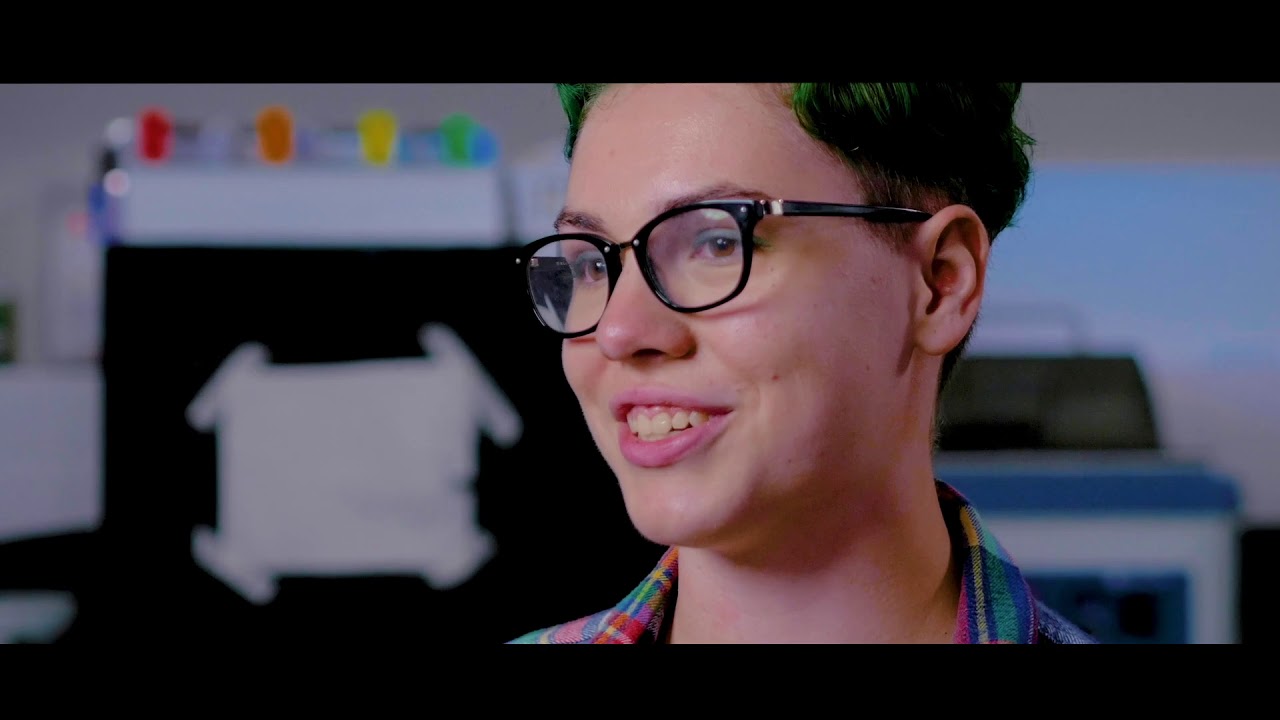
Astrobiology student Hannah Blackburn is relentless about building a better future—not just for the next generation, but for all humankind. As we look to Mars in hopes of supporting human life, Hannah is developing ways to grow nutritious food on the Red Planet. As an astrobiology student, Hannah is able to take an interdisciplinary approach to her research, which is providing the building blocks for what gardening on Mars could eventually look like. Looking to know more about Florida Tech and the amazing programs like astrobiology? Let us help. Simply contact: Adam Lowenstein Director of Media Communications (321) 674-8964 adam@fit.edu

#Expert Research: New National Science Foundation and NASA-Funded Research Investigates Martian Soil
Studies have shown crops can grow in simulated Martian regolith. But that faux material, which is similar to soil, lacks the toxic perchlorates that makes plant growth in real Red Planet regolith virtually impossible. New research involving Florida Tech is examining how to make the soil on Mars useful for farming. Andrew Palmer, co-investigator and ocean engineering and marine sciences associate professor, along with Anca Delgado, principal investigator and faculty member at Arizona State University’s Biodesign Swette Center for Environmental Biotechnology, and researchers from the University of Arizona and Arizona State University, are participating in the study, “EFRI ELiS: Bioweathering Dynamics and Ecophysiology of Microbially Catalyzed Soil Genesis of Martian Regolith.” This National Science Foundation and NASA-funded project will use microorganisms from bacteria to remove perchlorates from Martian soil simulants and produce soil organic matter containing organic carbon and inorganic nutrients. Martian regolith contains high concentrations of toxic perchlorate salts that will impede plant cultivation in soil, jeopardizing food security and potentially causing health problems for humans, including cancer. Researchers will look at different bacterial populations and how well they are able to process and break down the perchlorates, as well as what kind of materials they produce when they do. They’ll also look at different temperatures and moisture conditions, as well as in the presence or absence of oxygen. Students in the Palmer Lab will receive the simulants after this process, try to replicate it, and then test how well the perchlorate-free regolith is able to grow plants. A challenge the researchers face is how they remove the toxic salts, as well as if they can remove all of them. Palmer cautioned that the possibility that removing the perchlorates does not necessarily mean the regolith is ready for farming. “You can’t make the cure worse than the disease, so we have to be ending up with regolith on the other side that’s better than when we started,” Palmer said. “We can’t trade perchlorates for some other toxic accumulating compound. Just because we’re removing the perchlorates doesn’t necessarily mean that we’re going to make the regolith better for plants. We might just make it not toxic anymore. How much does it improve is really what we’re trying to figure out.” Even without perchlorates, there are significant challenges to growing crops in Martian soil. While researchers have grown plants in simulated regolith, the regolith is not good for plant growth, as in addition to a lot of salts, it has a high pH and is very fine, which means it can ‘cement’ when wet, suffocating plant roots. Being able to grow in the soil instead of using hydroponics could also provide a more efficient, cost-effective solution. “There is always the option of hydroponic growth of food crops, but with a significant distance to Mars and the lack of readily available water, we need a different kind of plan,” said ASU’s Delgado. “If there is a possibility to grow plants directly in the soil, there are benefits in terms of water utilization and resources to get supplies to Mars.” Some of the microbial solutions the team is proposing could also help with studies of soils on Earth. “The best soils for agriculture on earth, they were taken up decades ago, and so now we’re trying to farm on new land that’s not really meant for agriculture, if you think about it,” Palmer said. “So, as we think about ways to convert it into better soil, I think this research helps teach us how to do that, but it also inspires.” The research will also allow Florida Tech students to get hands-on space agriculture experience. “We’re going to be training the grad students and the undergraduates who are going to be the researchers who take on those new challenges, so I think one of our most important products are going to be the students we train,” Palmer said. “We’ll deliver Mars soil, but we also deliver, I think, a future group of researchers.” If you're a reporter looking to know more about this topic - then let us help with your coverage. Dr. Andrew Palmer is an associate professor of biological sciences at Florida Tech and a go-to expert in the field of Martian farming. Andrew is available to speak with media regarding this and related topics. Simply click on his icon now to arrange an interview today.

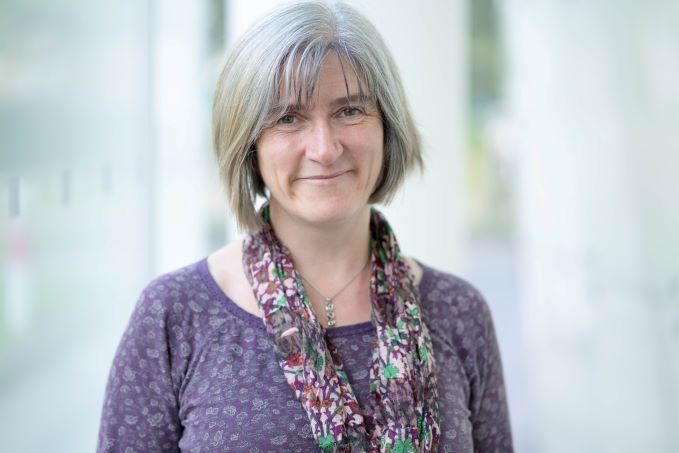
COP27 should be turning point to switch from heating homes with fossil fuels Professor Patricia Thornley, was a presenter at COP26 in Glasgow She believes one year on there’s not enough progress to cut emissions from homes. One of the UK’s leading bioenergy experts has said COP27 should be a turning point to help UK consumers switch from heating their homes with fossil fuels. Professor Patricia Thornley, director of Aston University’s Energy and Bioproducts Institute (EBRI), was a presenter at COP26 in Glasgow last year. She leads the UK’s national bioenergy research programme, SUPERGEN Bioenergy hub. Her research focuses on assessing the sustainability of bioenergy and low carbon fuels. Professor Thornley believes that one year on, not enough has been done to encourage the public to cut down on the emissions their homes produce. The UK has the oldest housing stock among developed countries, with 8.5 million homes being at least 60 years old. That is despite COP26’s reaffirmation of the Paris Agreement goal of moving away from fossil fuels, and the call for stronger national action plans to reduce carbon dioxide emissions. She has welcomed initiatives to help some UK industries move towards net zero, but believes householders are not getting the same support, for example with help to insulate their homes more effectively. She said: “Responses to the energy crisis in which we find ourselves have been mixed. “Government initiatives such as funding feasibility studies for hydrogen from bioenergy (turning biomass into hydrogen whilst separating and capturing the carbon portion of the biomass) and other technologies are promising.” Professor Thornley adds: “The recent price hikes in petrol and natural gas highlight the extent to which the UK relies on fossil fuels. “Unlike some areas of industry, domestic consumers have been treated differently, and recent help with energy costs is arguably subsidising us to keep emitting carbon dioxide. “A more forward-thinking approach would have been to invest in tackling the root cause of the problem by addressing home insulation.” Professor Thornley is a fellow of the Royal Academy of Engineering, and recently gave evidence to the Environmental Audit Committee about the use of sustainable timber in the UK as an alternative fossil fuel.


Gene Editing Institute Travels to Salem for ‘Innovation Days’ Workshop
Education sessions bring CRISPR gene editing to high school students from diverse backgrounds Scientist-educators from ChristianaCare’s Gene Editing Institute held a workshop using CRISPR in a BoxTM at Salem Academy during Innovation Days in October at the school, located in Winston-Salem, North Carolina. These sessions followed a previous gene editing education workshop with Salem Academy students in January 2022. CRISPR in a BoxTM is a revolutionary toolkit that allows students to carry out a hands-on gene editing experiment while learning and analyzing the steps involved in a typical gene editing reaction. Scientists from the Gene Editing Institute also taught a condensed lesson about CRISPR gene editing’s utility in medicine and fielded questions from students about jobs in biotechnology, bioethics and sustainability in the lab. “It’s a really special opportunity that I know I wouldn’t get anywhere else,” said Mathilda Willenborg, a sophomore boarding student from Germany. “And I do feel like I’m learning a lot about gene editing that I definitely didn’t know before. The team makes it really easy and walks us through all the steps.” Last winter, Salem Academy became the first school in North Carolina to offer CRISPR in a Box as it pivoted its academic focus to STEAM (Science, Technology, Engineering, Art and Math). That first innovative workshop originated as a result of an idea from a ChristianaCare board member who attended Salem Academy. Gene Editing Institute Founder and Lead Scientist Eric Kmiec, Ph.D., made a virtual appearance as part of the latest sessions to encourage the students to pursue careers and pathways in biotechnology. “We’re so appreciative of our partnership with Salem Academy,” said Kmiec. “We want to take every chance we get to encourage more women to pursue careers in STEM. Women around the nation, and around the world, should have access to this groundbreaking technology, which will ultimately drastically change the way we treat and cure diseases. If we don’t have young women in that discussion, we’re missing out on valuable experiences and perspectives.” Salem Academy is the only all-female boarding and day high school on a college campus in the U.S. with a STEM focus. Women are achieving significant progress in STEM fields, representing 45% of students majoring in STEM, according to the Integrated Postsecondary Education Data System. However, women only represent 27% of STEM workers, with wide disparities in income in post-graduation employment. As of 2019, less than 30% of the world’s researchers were women, according to the UNESCO Institute for Statistics. The Gene Editing Institute commits to a mission of diversity and equity in its approach. This workshop reached 10 women, two of whom are international students. “Our ongoing partnership with the ChristianaCare Gene Editing Institute will help position our aspiring women scientists for future careers in biotechnology, science and medicine,” said Summer McGee, Ph.D., president of Salem Academy and College. “This is the type of experience that sets Salem Academy apart as a national leader in building the next generation of women leaders in STEAM.” The Gene Editing Institute itself is a national leader in female researchers. Women make up over 80% of scientists within the Institute and fill 75% of the principal investigator roles. The Institute pushes to address the gender gap and promote inclusivity through local outreach and state-spanning programs, like CRISPR in a Box. “We’re not here to do lip service,” said Brett Sansbury, Ph.D., principal investigator of the Discovery Branch of the Gene Editing Institute. “Too many companies make a plan or promise without any actionable steps. We’re taking those steps and bringing in opportunities for students who otherwise wouldn’t have had them.” To learn more about how to bring CRISPR in a Box to your school, visit https://geneeditinginstitute.com/products/education. About CRISPR in a BoxTM CRISPR in a BoxTM is the leading educational toolkit to teach gene editing. The exercise features a hands-on gene editing experiment, including a live readout within non-infectious E. coli bacteria. These experiments follow a gene editing reaction from beginning to end while teaching students the techniques scientists use to perform these reactions in real laboratory environments. CRISPR in a Box is distributed by Carolina Biological. To learn more, visit https://geneeditinginstitute.com/products/education.
