
Experts Matter. Find Yours.
Connect for media, speaking, professional opportunities & more.

Expert Insights: Want More Engagement? Eliminate the Barriers.
Anyone born in the 70’s or earlier will probably remember it well. Time was when playing any kind of video game meant physically disporting yourself to the local arcade—a twilight zone of flashing neon, electronic beeps and bops, and the clink of quarters hitting the slot. As technology advanced, the videogame came to you. Home consoles and TV stations rigged with joysticks duly became the mainstay of gaming. The Atari 2600 brought the arcade experience into dens all over the US; Pac-Man, Space Invaders, and Asteroids now at the fingertips of a generation of games who no longer needed to leave home to play. Fast forward to the era of smart phones and hi-tech, and gaming has evolved again. Today, Fortnite, Minecraft, and The Legend of Zelda can accompany you pretty much anywhere—onto a train or a bus, into the canteen at work or school, or under the covers at 2am. In our always-on, on-demand world, video gaming increasingly meets players where they are; a play-anywhere, digital user experience that empowers individuals to engage with their game of choice wherever they are, whenever it suits, and via whatever platform they prefer, desktop or mobile. For users, the benefits seem clear. But what about game producers? As availability expands to new channels and platforms, how does it change user behavior? Does it deepen engagement or does cross-platform continuity simply end up redistributing play—the addition of each new platform shifting players away from, and effectively cannibalizing, existing channels? It’s a conundrum, and not just for video game producers. Retailers, bankers, insurance firms, media, and hospitality providers—anyone with an online-first approach looking to meet their customers wherever they are—should also be cognizant of the potential downsides of channel expansion in the digital space. Weighing in here is research by Professor of Marketing and expert in the intersection of sports and cultural analytics and marketing Michael Lewis. Together with Wooyong Jo of Purdue, Lewis looks at the impact of omni-channel strategy on videogames—a proxy, he says, for other sectors and industries. What they find is critical for marketers and decision-makers in any context or business setting. Increasing the digital touchpoints between your product and customers does impact behavior—but the net results are overwhelmingly positive. Video game players play more, they spend more frequently, and they integrate gameplay more deeply into their everyday lives. In other words, the investment pays off. And the dividends in customer engagement are serious. Switching to the Switch To unpack all of this, Lewis and Jo partnered with a large US video game publisher to analyze player-level behavioral data for one its major titles in the Multiplayer Online Battle Arena, or MOBA genre. Players form teams and compete to destroy opposing team’s bases, selecting a character from a set of 100+ options. Revenue for the publisher comes from a “freemium” business model—users can make voluntary purchases to unlock new characters or buy cosmetic enhancements. These purchases are geared toward enhancing the gaming experience but don’t affect competitive outcomes, making them a critical measure of engagement. In 2019, the game was released for the Nintendo Switch, which can be docked in home consoles but is most commonly used as a mobile, hand-held device. PC players were given the option to download this new version and continue gameplay seamlessly using their existing accounts. Analyzing player behavior before and after the adoption of the new Switch platform, Lewis and Jo were able to zoom in on some critical measures of user engagement including game usage or the total number of matches played, in-game spending—what, when and how much players spent—and player inactivity or churn. “We were able to really get into player behavior over time, and what happens when you introduce the Switch option and remove the constraints of having to play in one place—the home or gaming PC,” says Lewis. “What happens when you make it possible for players to access the game they love while they’re commuting or on their lunchbreak?” Plenty, it turns out. Mobile access: gameplay, spending and churn Crunching the data, Lewis and Jo find that mobile access dramatically increases gameplay. Players who adopted the Switch version played approximately 31% more games than before—a dramatic uptick that underscores how flexibility gains translate into new opportunities to play and engage. And that’s not all. Lewis and Jo also find that gameplay becomes less concentrated within narrow windows—after school or work, say—and is now more spread out across the day, the result of the “ubiquity effect,” says Lewis. “Take away the constraints of having to be in a fixed location and you see players adding additional play sessions. Interestingly though, we don’t find any adverse effect on PC gaming. Players are simply playing more, and playing longer, rather than replacing PC time.” Then there’s in-game purchasing. MOBA-type games typically give players the option to voluntarily buy modifications for characters, known as “skins.” These skins are cosmetic enhancements: new armor, costumes, skill animations or effects. Crucially, these kinds of purchases don’t advance players to new levels of success in the game. Instead, they are used for personalization—to demonstrate status or to celebrate an in-game event. Lewis and Jo find that mobile adopters make more frequent in-game purchases. While the overall total doesn’t increase materially, these players are spending small amounts, more often—almost 7% more frequently than before. This makes intuitive sense, says Lewis. If players are logging in more often, they have more opportunities to feel inspired to want to spend on skins. But there’s another factor that may be at work. “With this kind of in-game purchasing, it’s likely that a lot of it is about credibility. When you buy a skin or a character pack, it’s like you have more aura within the game; you want to signal something to other players and let yourself be known. And this is more than just monetary, it’s about a deeper kind of engagement,” says Lewis. “It’s possible that as mobile access makes the game more of a frequent companion, as the rate of play increases, there’s this effect that players fall deeper into the community—their engagement deepens even more.” Interestingly, the shift to mobile access had the most significant impact precisely on those players whose pre-Switch in-game purchasing was lowest. These users, who were arguably most likely to disengage and drift away from the game, became significantly more active once the hand-held option became available. “If you have players spending less and less inside the game, the intuition is that these are the customers you are most at risk of losing,” says Lewis. “Bringing in the Switch has seen these customers—those more prone to churn—actively reengage with the game, maybe because they have greater propensity for the mobile version.” Either way, this should be a particularly interesting finding for marketers, he adds; retaining existing users is typically cheaper than attracting new ones. “The evidence suggests that mobile access can serve not only as a growth strategy, but also a defensive one if it helps keep marginal users engaged; those who might otherwise have detached from the product altogether.” Help Them Switch So far, so encouraging. There is one potential downside to porting a game or online product to a new channel, however, and that is usability. Lewis and Jo find that players who switched between platforms experience a slight, initial decline in in-game performance—likely because of differences in the control systems between devices. Players who’ve been using keyboard and mouse controls may need time to adapt to hand-held controllers. To mitigate this, he and Jo suggest that producers could offer tutorials or introductory gameplay modes that accelerate the learning curve as users adjust to the new interface. In most cases, usability should be factored in as an additional, hidden cost, when developers and organizations are contemplating investing in more online customer touchpoints. “Expanding your online channels will always have some cost. Taking a game from one platform and porting it to another one isn’t free, so you will want to anticipate the hurdles, even as you weigh up the clear benefits,” says Lewis. “The key is to make sure you protect your users. With things like video games, you want to think about how to guide or upskill your players, maybe have them play bots at first to ramp up their capabilities. Whenever you create a new channel that has a different operating system from the user’s perspective, you’re probably going to want to provide some aid to your fan community.” The benefits of omni-channel access should always be weighted against the costs involved, counsels Lewis. Even so, today’s competitive pressures—the seemingly inexorable march of technological innovation and evolving user expectations—are likely to make platform expansion unavoidable for most online businesses. In the world of video gaming, as major franchises release new products across multiple platforms, and player preferences become more sophisticated, companies may simply have to adopt similar strategies to remain competitive. “As everyone else invests in the same new technologies, you almost have to do the same—just as a matter of doing business,” says Lewis. “If you are launching a video game, you’ve got to compete with whatever Call of Duty or Grand Theft Auto are doing. You can’t just tell your players they can only engage on one platform. The competition is continuously raising the stakes just in terms of the bare minimum.” Building Fandom: the Connective Cultural Tissue More broadly, Lewis and Jo’s findings speak to how human beings form communities of shared passion around business entities and, perhaps more compellingly, around cultural phenomena: video games, for sure, but also sports teams, music, films, comic books, fashion, and more. Understanding the mechanisms that drive and deepen engagement sheds more light on what Lewis calls the “connective cultural tissue of fandom: ”the powerful social bonds, camaraderie, and shared identity that connect people to cultural entities and to each other. Fandom, he argues, is the “key to our world.” Understanding fan behavior is critical to understanding how it is that games, brands, sporting teams, or politics forge communities built on shared passion. “Whatever your organization or business is, you are going to be interested in driving passion. You want people to engage and love what you do. What we’re looking at in this study is a building block towards understanding how cultural entities fit into consumers’ lives, and how eliminating barriers helps to expand communities and drive relationships—extending reach and engagement by weaving cultural experiences more deeply into everyday life.” The real challenge in front of organizations, be they video game producers or online retailers, says Lewis, is to give their product the kind of “cultural meaning” that creates fans—and not just users. “When you think about the behavior of fans, the level of passion and engagement that exists around cultural phenomena—whatever they are from video games to FIFA, the English Football League to the Super Bowl, Taylor Swift to the Republican Party—that’s where you see the passion that really drives the world. And that to me, is critical in understanding how business works, how societies function, and how our world evolves.”



How the Class of 2026 can keep resumes out of the digital black hole
Students set to graduate this May are entering a job market where the rules of engagement are being rewritten in real-time. AI is both friend and foe, and ghosting has become the norm. University of Delaware career expert Jill Panté shares how college students can navigate these challenges in a rapidly shifting economy. Panté, director of the Lerner Career Services Center at UD, can apply her expertise to the following: The AI recruitment gap • How to prevent resumes from falling into the "digital black hole" of automated tracking systems. • Current recruitment in 2026 is heavily filtered by AI. If resumes don't mirror the language of the job description, a human might never even see it. • In 2026, AI is the gatekeeper. Students who aren’t using AI for assistance are working twice as hard for half the results. However, the goal is to use it as a co-pilot, not an autopilot. Beat the bots (tailor your content) • Use tools like Resume Worded or Generative AI like Microsoft Co-Pilot or Gemini to see how resumes stack up against specific job postings. • It is better to send five highly tailored, thoughtful applications than 50 generic ones that get auto-rejected by an algorithm. • Use AI to run a mock interview based on the job description and company. The "hidden” job market • If a "job search" consists solely of clicking "Easy Apply" on LinkedIn for six hours a day, it’s not searching; it’s just doom-scrolling with a resume. Roughly 80% of your time should be spent talking to humans. The other 20% should be spent on applications and research. • Find the recruiter or a department head on LinkedIn. Send a brief (2-3 sentence) note reiterating your interest. • Leverage alumni networks through LinkedIn. Narrative branding • Especially for Gen Z: Hiring managers don't just want to know what you did; they want to know the impact you made. • Instead of saying "Responsible for social media,” say "Increased engagement by 40% over 3 months by implementing a new video strategy." • Always lead with results (LinkedIn, resume, Interviews) to showcase the value you bring. Workforce anxiety • Managing the mental toll of the modern, high-speed job search and the professional "ghosting" epidemic. • Establish a personal "Board of Directors" to provide a balance of support, accountability and feedback. • Maintain momentum by volunteering, attending local networking events and learning new skills on platforms like LinkedIn Learning and Coursera. To reach Jill Panté directly and arrange an interview, visit her profile and click on the “contact” button.



During his historic trip to Africa in April 2026, Pope Leo XIV toured the archaeological ruins of Annaba, Algeria, capping what he referred to as a “special” journey to the country. Annaba, where the ancient city of Hippo Regius once stood, is not far from where St. Augustine—patron of the Augustinian order to which the Pope belongs—was ordained, made bishop and crafted his most influential theological works. Walking in his footsteps, Pope Leo—who referred to himself as a “Son of Augustine” upon his election to the papacy—toured the ruins with other members of the Order and his traveling party. It was a personal and symbolic moment, but for those paying close attention to his early pontificate, it represented only the most recent of many tributes he has paid to Augustine and his teachings. “In reading through Pope Leo’s addresses and his homilies, his messages and his video recordings, there is barely one that goes by without him referencing Augustine in some way,” said Paul A. Camacho, PhD, associate director of The Augustinian Institute at Villanova University, and scholar of Augustine’s teachings. When the Pontiff accepted the St. Augustine Medal from the Augustinian Province of St. Thomas of Villanova in August 2025, he made it clear why. “As Augustinians, we strive every day to live up to the spiritual example of our spiritual father, St. Augustine,” he said to the Province. “To be recognized as an Augustinian, it’s an honor held dearly. So much of who I am, I owe to the spirit and teachings of St. Augustine and I am grateful to all of you for all the many ways your lives exhibit a deep commitment to the values of Veritas, Unitas and Caritas.” Veritas Examples abound related to all three values and how Pope Leo has invoked Augustine in speaking about them. Dr. Camacho cites a handful he found particularly noteworthy. For example, Veritas first appeared in an especially prominent way during an early address for the June Solemnity of the Holy Trinity and Jubilee of Sport. Then, Pope Leo said, “This combination of Trinity and Sport is somewhat unusual, yet the juxtaposition is not inappropriate. Every good worthwhile human activity is in some way a reflection of God’s infinite beauty, and sport is certainly one of these.” “For St. Augustine, the Trinity and wisdom are intimately connected,” Dr. Camacho said, also mentioning that Augustine authored an entire book on the subject titled “On the Trinity.” “Divine wisdom is revealed in the Most Holy Trinity and wisdom always leads us to Veritas—the truth,” he said. “What Pope Leo goes on to do is say that the life of God, the Trinity, is a life of play…It’s a dance, and dance is a sport, and our own way of participating in that kind of activity is a participation in life of God.” When Pope Leo later spoke to the International Foundation of Catholic Universities—an occasion for which the motto was “Choreographers of Knowledge”—he referenced that dance again. “Pope Leo invites us to think of our relationship to Veritas not as something to master,” Dr. Camacho said. “But rather as a light that draws us out of ourselves towards it, in a dance of relationship with it and one another.” Unitas During a September Mass for the General Chapter of the Order of St. Augustine, Pope Leo prayed that those in attendance be given “the gift to listen, the gift to be humble and the gift to promote unity within the Augustinian Order, and throughout the Order, throughout the Church and the world.” Earlier in the summer, he touched on unity during the Jubilee of Families, Children, Grandparents and the Elderly, commenting on the Gospel of John, in which “Christ prays that we may all be one.” “This being one is the greatest good we can desire, for this universal union brings about among his creatures the eternal communion of love that is God himself: the Father who gives life, the Son who received it and the Spirit who shares it… the Lord does not want us in this unity to be a nameless and faceless crowd,” Pope Leo said. “What Pope Leo expresses here is that unity is not conformity, but rather community—the kind of community in which each one of us becomes more of who it is that we are the more we love and work for what is good in common,” explained Dr. Camacho. “This is a deeply Augustinian insight.” In one general audience with members of various religious groups, Pope Leo relayed “Unity has always been a constant concern of mine, as witnessed by the motto I chose for my episcopal ministry.” He was referencing, Dr. Camacho says, the Latin phrase In illo uno unum, displayed on his coat of arms. “That phrase—‘in the one [Christ] we are one’—comes from St. Augustine’s commentary on the Psalms. Pope Leo comes back again to this idea that when we love and follow the truth that is Christ, we simultaneously become more uniquely individual, and our unity becomes genuine community, and not mass conformity.” Caritas In his Opening Homily for the Beginning of the Pontificate, Pope Leo followed his salutations with these words: “I greet you all with a heart full of gratitude at the beginning of the ministry that has been entrusted to me. St. Augustine wrote: ‘Lord, you have made us for yourself, and our heart is restless until it rests in you.” According to Dr. Camacho, Augustine taught that the solution to the restless heart is Caritas, or rightly ordered love that finds its rest in God. Augustine’s thinking about love is developed in a social dimension when he distinguishes between two different kinds of political communities, which he calls the “Earthly City” (in which pride and self-love dominate), and the “City of God” (in which love of God and neighbor form the community). Augustine’s enduring and influential work “De Civitas Dei,” or “City of God,” articulates this distinction between false and true loves. At the 16th Annual Meeting of the International Catholic Legislators Network, Pope Leo suggested that we look to Augustine, citing his own witness of social upheavals in his time, and that we consider Augustine’s reminder that we must attend to these “two orientations of the human heart.” “Ordo amoris—order of love,” explained Dr. Camacho. “This is Augustine’s notion that following Christ is not a matter of private devotion, but rather demands a dilation of our hearts: our loves must move out to embrace the poor, the marginalized, the downtrodden, the forgotten. In Catholic Social Thought, this is the principle of solidarity: while the things that we love begin with what is most intimate to us, we are called to expand our love outward. One of the things Pope Leo is trying to say is that Augustine’s thought remains a living inspiration for how we might organize our societies.” Speaking to the International Interparliamentary Union in late June, Pope Leo intimated that St. Augustine speaks of “your responsibility to promote and protect, independent of any special interest, the good of the community, the common good, particularly by defending the vulnerable and the marginalized.” “Augustine’s idea was that what makes a community is what its members love in common,” Dr. Camacho said. “In other words, Caritas—love—is fundamental to how we think about how we relate to one another. Not just on a one-to-one, personal level or in terms of a private relationship to my own good, but rather how we relate to our communities, and what we build together for the common good.” “Bringing Augustine Back to the World” One of the great gifts of the Augustinian Order, says Dr. Camacho, is that “because of its charism of community, it draws individuals to become religious from all walks of life, and not just those who have extensively read or studied the work of Augustine.” It is especially noteworthy, he says, just how entrenched Pope Leo’s words and actions are in his long-time study of Augustine. “It is quite clear that Pope Leo loves Augustine, not just as an exemplar, as a patron saint of the Order, or as a doctor of the Church—though he is all of these. Leo loves Augustine as a companion: a man whose life reminds us that discipleship is about fidelity and not about perfection; a thinker who is rich in philosophical and theological insight; and a priest and bishop who cared deeply for his community. “In his pontificate, it is already clear that Pope Leo, this great “Son of Augustine,” is bringing Augustine back to the Church and to the world as a vital source of wisdom and inspiration.”



Covering the Economy? FAU has the ideal expert to help with your questions and stories
The economy isn’t just a headline, it’s the story behind nearly every headline. From grocery bills and mortgage rates to job growth, small business confidence, and federal policy decisions, economic forces shape daily life for Americans in ways that are immediate and deeply personal. For journalists, that makes the economy a constant, high-stakes beat. Audiences want clear answers: Why are prices rising? Are we headed for a slowdown? What does the Fed’s next move mean for my community? The challenge is cutting through jargon and partisan spin to deliver insight that’s accurate, grounded, and understandable. That’s where William Luther, Ph.D., stands out. A respected economist and Associate Professor at Florida Atlantic University, Luther brings serious academic credibility, but explains economic trends in plain language that resonates beyond the classroom. His expertise in monetary policy, inflation, unemployment, cryptocurrency, and economic growth makes him a valuable resource for breaking news, enterprise stories, and long-form analysis alike. Whether reporters are covering Florida’s housing market, national interest rate decisions, or the future of digital currency, Luther offers thoughtful, balanced analysis that helps audiences understand not just what’s happening, but why it matters. William Luther, Ph.D., is an expert in monetary economics and macroeconomics. He is an associate professor of economics at Florida Atlantic University, director of the American Institute for Economic Research’s Sound Money Project, and an adjunct scholar with the Cato Institute’s Center for Monetary and Financial Alternatives. The Social Science Research Network currently ranks him in the top five percent of business authors. View his profile Recent media coverage: ABC News Others downplayed the likelihood of a meaningful loss of Fed independence, since news of the DOJ investigation of Powell drew a rare degree of Republican opposition. Powell holds only a single vote on the 12-member board responsible for setting interest rates, they said. “Anytime we’re changing institutions, we should have some concern,” William Luther, a professor of economics at Florida Atlantic University, told ABC News. “At the same time, we should recognize the institutional safeguards we have are pretty strong.” Newsweek William Luther, associate professor of economics at Florida Atlantic University, said that the immediate net financial loss to those in Florida, and all Americans, appears to be "very, very large." Luther added Florida should expect a short-term "sharp contraction" in real estate and tourism, both vital sectors for the state's economy. NPR At the moment, the economy is performing very well. It wasn't performing very well not too long ago, both because of the pandemic, which reduced our ability to produce goods and services quite significantly, and then, as a result of some of the policy responses to that pandemic, we had very high inflation. NBC Will Luther, an economics associate professor at Florida Atlantic University, acknowledged the concerns among students. "Absolutely, there are students very much concerned with whether or not they will be able to get a job when they finish here. The good news is that they will. The bad news is it's a little harder right now than it was, say, two years ago," Luther said. Fox Nation FAU's William Luther joins Fox Nation's Deep Dive, hosted by the Wall Street Journal's Mary Anastasia O'Grady, to discuss the economic impact of cryptocurrencies. Video courtesy of Fox Nation's Deep Dive.



The Double-Edged Scroll: Why Passive Screen Time Drains You More Than Active Use
Most conversations about “screen time” focus on hours. But newer research and what clinicians see in practice suggest how you use your phone may matter as much as how much you use it. A 2024 meta-analysis of 141 studies on active vs passive social media use found that, overall, effects are small, but there is a pattern: passive use (just scrolling and watching) is more consistently associated with worse emotional outcomes, while some forms of active use (commenting, messaging, posting) show small links to greater wellbeing and online social support. (OUP Academic) Other work from Frontiers in Psychology suggests that the emotional impact of passive use depends heavily on how you feel about the content: when it triggers envy, comparison or negativity, mental ill-being goes up; when it’s genuinely positive, the effect can be neutral or even slightly protective for some users. (Frontiers) Reviews also point to upward social comparison, FOMO and rumination as key pathways linking passive browsing to lower wellbeing. (ScienceDirect) Psychotherapist Harshi Sritharan, MSW, RSW works with teens and adults who feel “wiped out” by their feeds and draws a sharp line between passive and active tech use: “Don’t do passive tech use — that doom scrolling, or content just being thrown at you,” she says. “I want people to engage in active tech use. Go and search something up, choose the long-form video you actually want, talk to your friends. Don’t let the app decide everything you see — especially for kids, who are getting content they’re not ready for and didn’t sign up for.” She notes that many of her clients describe feeling “numb, anxious or wired” after long passive sessions, a sign that their nervous system is being pulled around by unpredictable, emotionally loaded content rather than chosen experiences. She also discussed the short term recall related to scrolling: "Some of my clients can't even remember what content they consumed right after scrolling. However, we know that what we pay attention to and what we show our brains has an impact on our thoughts, mindset, feelings and overall internal world." Offline.now founder Eli Singer frames this as a design problem, not a moral failing. The platform’s research shows people already spend about 10 of their 16 waking hours on screens; the realistic goal is to upgrade some of that time, not pretend we can all go offline. His advice: instead of vowing to “get off your phone,” start by swapping just 20 minutes a day from passive to active use; for example, messaging a friend to meet up, learning something specific, or planning an offline activity. “When people tell us they feel overwhelmed by their screen habits, it’s not laziness, it’s a crisis of confidence,” Singer says. “We don’t need perfect digital detoxes. We need small, winnable shifts, like taking one block of passive scrolling and turning it into something you actually chose.” For journalists, the story isn’t simply “screens are bad.” It’s that passive, algorithm-driven scrolling is where comparison, FOMO and emotional overload tend to pile up and that helping people change how they use their devices may be more realistic, and more effective, than focusing on raw minutes alone. Featured Experts Harshi Sritharan, MSW, RSW – Psychotherapist specializing in ADHD, anxiety, insomnia and digital dependency. She helps teens and adults understand how doomscrolling and passive feeds hijack dopamine and mood, and teaches practical shifts toward more intentional, “active” tech use. Eli Singer – Founder of Offline.now and author of Offline.now: A Practical Guide to Healthy Digital Balance. He brings proprietary data on digital overwhelm and the “confidence gap,” and shows how 20-minute “micro-wins” like upgrading one chunk of passive screen time can change people’s relationship with their phones without extreme detoxes. Expert interviews can be arranged through the Offline.now media team.



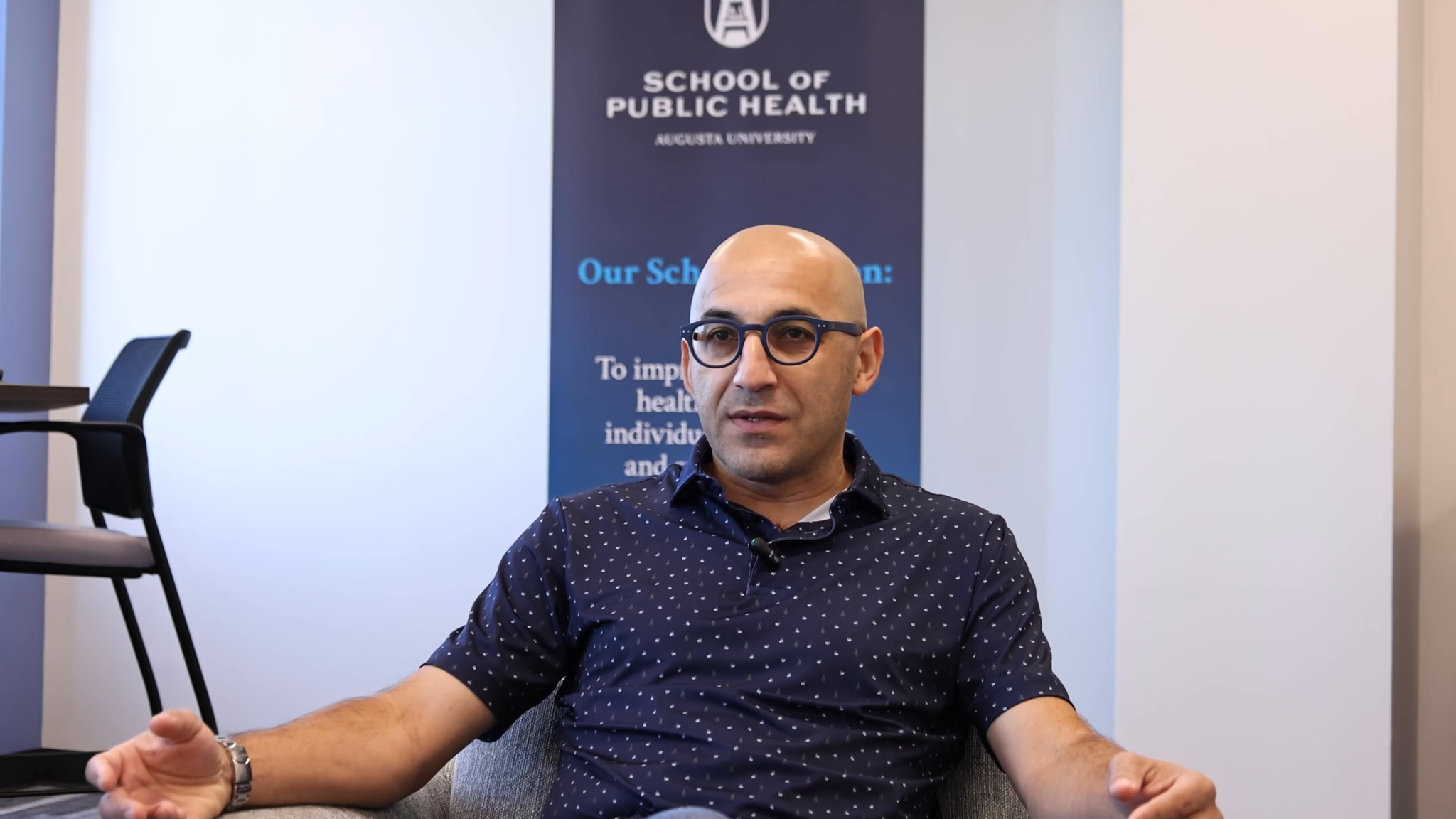
Augusta University public health experts discuss building recovery through economic stability
In this candid conversation, Vahé Heboyan, PhD, and Marlo Vernon, PhD, talk about their work at the intersection of public health, economic stability and substance use disorder recovery. The interviews are centered on Augusta University's public health-driven small business training initiative and explore how recovery is strengthened when communities invest in people and provide practical paths to long-term stability. Heboyan, a professor in AU's School of Public Health and a public health expert with a background as an economist, explains that economic vulnerability often hinders recovery, especially in rural areas with limited resources where risk-taking can be costly. He translates economic research into public health practice, emphasizing that small businesses and microenterprises are about providing a sustainable income for individuals and families, not creating large corporations. This stability, he notes, can have a ripple effect, supporting local economies, job opportunities and community resilience. Vernon, whose research focuses on maternal and infant health, as well as substance use disorder recovery, highlights the human side of recovery and the importance of financial security for families. She notes that economic instability can increase the risk of relapse, especially for mothers in recovery who are supporting children. Her insights show that entrepreneurship can be a public health tool, addressing income, dignity, confidence and long-term wellbeing. Both interviews emphasize the key role of community in recovery. Heboyan points out the power of peer support and shared experience, noting how participants use their past challenges as strengths. Vernon agrees, emphasizing that effective public health work requires building relationships and engaging with communities over time, rather than just conducting short-term research. Together, the interviews show that recovery is part of a larger ecosystem that includes economic opportunity, mentorship and community trust. The video illustrates how combining economics, public health and lived experience can create lasting, meaningful impact for individuals in recovery and their communities. Looking to know more? Click on Dr. Vernon's profile below. To connect with Dr. Heboyan, simply contact AU's Communications team via email (mediarelations@augusta.edu) to arrange an interview today.



Machiavellianism boosts CEO pay, study finds
In an extensive study examining the relationship between personality traits and executive pay, CEOs who exhibit more Machiavellianism, characterized by motivation to achieve personal goals and 'win' social interactions, are more likely to have higher total pay and severance pay and to secure higher pay for those on their top management team. Aaron Hill, Ph.D., an associate professor at the University of Florida Warrington College of Business, and his co-authors determined that CEO's who scored higher on Machiavellianism were more motivated and successful in their negotiations. The team used a longitudinal sample of S&P 500 firms to compare compensation data with the executives' personality traits collected by expert clinical psychologists’ analyses of public video recordings. “Broadly, we find that CEO Machiavellianism positively relates to their own pay, their severance pay and the pay of their C-Suite or top management team,” Hill said. “The latter effect – on top management team pay – we find then predicts CEO pay raises. Our findings suggest that in this way, CEOs higher in Machiavellianism may pay their top management team members more to set up their own pay raises.” The team’s research highlights an underlying bias in how this trait can affect pay decisions. In response, those who set pay, such as boards of directors, should work on policies that reinforce the behaviors they want in their executives. They should also place leaders in a position to succeed and accentuate the positive aspects of their innate tendencies. “We all have tendencies that present tradeoffs in terms of having some positive aspects and some negative aspects,” Hill said. “Hopefully, as managers, we can acknowledge those and work to accentuate the positives and limit the potential downsides – in effect, take advantage of the positives and work to mitigate the negatives.” This research is published in the Journal of Applied Psychology.



Baby, It's Cold Outside… And That's No Joke for Seniors
How cold is it? • It's so cold I saw a dog stuck to a fire hydrant. • It's so cold my words froze mid-air and my neighbour had to thaw them out to hear what I said. • It's so cold, I just saw a politician with his hands in his own pockets. Okay, I'm joking—but just a bit. Because while I enjoy a good cold-weather quip, hypothermia isn't funny. Currently, this severe Arctic blast is gripping Canada and large parts of the United States, dropping temperatures 20–40°F (11–22°C) below seasonal norms across a 2,000-mile stretch of North America. Nearly 80 million people are under winter storm warnings. Power outages are anticipated. Roads could be impassable. Travel is about as appealing as a root canal in a snowstorm. For many seniors on both sides of the border, this isn't just an inconvenience—it's a real safety risk. The Cold, Hard Stats (Brace Yourself) Looking at the research I couldn't believe what I found: Older adults are more than 5x as likely to die from hypothermia as younger adults (Kosatsky et al., 2015). In the U.S., approximately half of all hypothermia deaths are people over 65 according to data from the CDC. In Canada, adults over 75 are more than 5 times more likely to die from hypothermia than younger adults—and 87% of those deaths happen right in their own homes. (StatsCan Health Infobase ) Read that again. Slowly. Not on frozen lakes. Not stranded on highways. Instead, in familiar living rooms. Sitting on well-worn couches. Beneath afghans crocheted by someone who loved them. Why Your Body Becomes a Cold -Weather Traitor Our bodies change as we age, and not in the fun "I've earned every wrinkle" way. The insulating fat layer under the skin thins. Circulation slows. Metabolism drops like your interest in small talk. Certain medications—prescription and over-the-counter cold remedies—can interfere with temperature regulation and awareness. Your body's thermostat? It's on the fritz. Here's the math: Hypothermia doesn't require a blizzard. It can begin indoors when temperatures fall below 65°F / 18°C. And here's the truly dangerous part: hypothermia affects the brain first. Judgment declines before shivering becomes severe. You don't realize you're in trouble. You just feel "a bit chilly" while your core temperature quietly drops. Stop Acting Your Age! (But Also... Dress as if you know your age) I'm all for embracing life at every stage—hiking to Everest Base Camp at 60-something, teaching Zumba, and that MBA thing at 70, refusing to "act your age." But embracing life in this weather requires wisdom, not bravado. Cold weather brings real risks: • Slips and falls on icy surfaces (and no, we don't bounce like we used to) • Increased risk of heart attack and stroke because cold thickens the blood • Respiratory infections that linger far too long • Frostbite on fingers and toes • Hypothermia that clouds thinking before any alarms sound. The Indoor Survival Guide—Keep Up (Yes, You Can Get Hypothermia at Home) Set the thermostat to at least 68–70°F (20–21°C). This is not a time to be a miser. Heating bills can be expensive, but hospital stays are even more costly. And they don't even give you warm blankets anymore. Layer like a pro. This is not the time for fashion minimalism. Think: • Long underwear or thermal leggings • Pyjamas under clothes • Stockings or tights under pants • Two pairs of socks • Warm boots with good tread (essential for any outdoor ventures) • Shirts layered under sweaters When it's this cold, if you still own leg warmers—congratulations. Wear them. The warmth is worth the call from the '80s asking for them back. Hats indoors are permitted. This isn't a fashion show; it's survival style. You lose a lot of body heat through your head. Emulate your inner Elmer Fudd if you need to. Carbon monoxide alarms are essential & in many areas legally required. When temperatures drop, people get creative—and desperate. Space heaters, fireplaces, generators, kerosene heaters, or (please, dear God, don't) using gas ovens for heat. That last one is about as safe as texting while skydiving. And here's an important PSA: Starting January 1, 2026, Ontario's updated fire code mandates a functioning carbon monoxide alarm on every level of homes that have fuel-burning appliances. Remember to test alarms when you change your clocks for daylight saving time—it's easy to do, and not easy to forget. Block drafts like you're defending a castle. Roll towels under doors, seal windows, close unused rooms, open curtains during sunny days, and close them tightly at night. Check your medications. Ask your pharmacist or doctor if any prescriptions or over-the-counter remedies influence temperature regulation or alertness. Knowledge is power—and warmth. Check Food & Other Supplies. If venturing out feels risky, order groceries for delivery. Services like Voilà by Sobeys, Instacart, PC Express, and many local grocers deliver directly to your door. This isn't laziness—it's smart risk management. Most delivery services are free or inexpensive, especially when compared to the alternative: icy sidewalks, falls, broken hips, or getting stranded in extreme cold while wearing inadequate footwear because "it's just a quick trip." Clear Your Snow. Snow and ice hinder movement. Limited movement results in isolation. Isolation worsens depression and cognitive decline. Clear snow isn't just about safety—it's about dignity. Pro Tip: Protect Your Pipes (and Your Wallet). Winter power outages can mean burst pipes and serious water damage. If you expect a prolonged outage: • Know where your main water shut-off is • Turn it off • Open faucets to drain the lines It feels extreme—until it doesn't. Until you're standing in three inches of water at 2 a.m., wearing your emergency leg warmers. Know or Live Near an Older Adult? Here's Your Cold Weather Action Plan Don't ask if they need help—just do it. Clear the porch. Shovel a path. Salt the steps. Think of it as the winter cousin of snow angels: shovel angels. Be one! When people Are Shut In—Go check in with them. For those stuck indoors, reach out by video, not just text or voice. Seeing someone tells you far more than hearing "I'm fine." Use FaceTime, Zoom, WhatsApp, or Google Meet. Do this with older people you know. Because pride prevents people from asking for help. Shame prevents people from being honest—about empty fridges, sleeping in mittens, or wearing coats to bed. Look for these signs: • Confusion or slurred speech • Shivering—or lack of it (paradoxically dangerous) • Pale or bluish skin • Slow movements or lack of coordination • Extreme fatigue Know When to Call for Help If something feels off, err on the side of safety. In Canada: • Telehealth Ontario: 1-866-797-0000 • Quebec: 811 • Other provinces: Know your local health line If you notice any signs of distress—confusion, chest pain, shortness of breath, severe cold exposure—or if you're unsure, call 911. Cold-related emergencies escalate rapidly. The Culture Shift We Need—Right Now Cold snaps reveal faults in our systems and communities. This is the time to foster a check-in culture: a call, a knock, a cleared walkway, groceries dropped at the door. Preparation matters. Connection matters more. Winter is temporary. The habits we build to take care of one another are not. Be cool—and stay warm out there, friends. Sue Don’t Retire… Rewire! What are your best winter safety tips? Share them—because staying warm is better when we do it together. Want more of this? Subscribe for weekly doses of retirement reality—no golf-cart clichés, no sunset stock photos, just straight talk about staying Hip, Fit & Financially Free.



Tales of Christmas Past: Preserving Your Family History During the Holidays
During past family Christmas gatherings, many of us remember when older relatives regaled everyone with tales about their fascinating life stories, firsthand experiences as an eyewitness to history or simply sharing how favorite family traditions started. So how do you preserve those precious family memories during the holidays? Baylor University oral historians Stephen Sloan and Adrienne Cain Darough have recorded and preserved the oral history memoirs of thousands of individuals through their work with Baylor’s renowned Institute for Oral History, home of the national Oral History Association. Together, the historians share seven simple best practices to help family members begin oral history conversations that enrich recollections of the past and capture your family memories. “The holiday season brings about the opportunity to spend time with family members, especially those you may not be able to see on a frequent basis,” Cain Darough said. “This presents the perfect opportunity to conduct oral histories to capture the stories and experiences of your family and loved ones, to learn more about them, the history of your family, traditions that have been passed down from generation to generation and more.” Seven best practices for preserving your family’s oral history 1. Ask first! Make sure your family member wants their story to be documented or recorded. That is the first – and most important – question to ask, said Adrienne Cain Darough, M.L.S., assistant director and senior lecturer with the Institute for Oral History. Ask first. “Many oral historians have run into the spot where someone says, ‘Oh, my grandpa would be great for that topic,’ and you get there and it's, ‘Grandpa does not want to talk to you.’ So first, make sure they want their story recorded,” she said. 2. Determine the type of recording equipment you want to use. Decide if you want to record your interview with an audio recorder or use a video recording device. It all depends on your needs and comfort level with the technology. For family members who are unable to travel this holiday season, you can include them by capturing their stories using a remote recording platform like Zoom, which became a vital tool for oral historians when COVID struck in 2020. Helpful resources from Baylor’s Institute for Oral History include: How to choose the right digital recorder Oral History at a Distance webinar on the dynamics of conducting remote oral history interviews Remote Interviewing Resources guide (Oral History Association) 3. Research your family member’s life and their timeline to help you formulate your questions. Recording a family member’s oral history is more than just putting down a recorder in front of them and saying, “Talk.” If you’re recording an oral history over Christmas with a family member, are there specific things that you want to know that are related to the holiday? For example, what was Christmas morning like for them as a child? How did your favorite family traditions start? What is their favorite holiday dish? (Maybe they could even share the recipe. “You can finally learn why Nana’s banana pudding doesn’t even have bananas in it,” Cain Darough said.) “Doing your research to try to form those questions will help you get around the reluctance to talk sometimes,” Cain Darough added. “The favorite thing that I love to hear is, ‘Oh, I don't have much to say,’ or ‘I'm not that important.’ And then you sit down with them, and you listen to their stories, and your mind is just blown by the things that they've seen and experienced.” 4. Start with the basics: “Where are you from?” When Baylor oral historians conduct an interview, they generally begin with some life history of the subject, providing important context for historians. “Ask questions early on that are easy for them to answer: a little bit of the backstory, a little bit of where they're from, where they grew up,” said Stephen Sloan, Ph.D., director of the Institute for Oral History, executive director of Oral History Association and professor of history at Baylor. “I want to understand the lens through which they experienced events, and the only way I can do that is, who was this? What was formative in their life growing up? Who spoke into who they were? What did they learn? Where did they go? What did they do? Those are the sorts of things that I would be exploring early in the interview.” One of the questions Cain Darough enjoys asking is, “What did you want to be when you grew up?” “You want to give them something that's very easy and comfortable to talk about,” Cain Darough said. “What was your favorite subject in school, just to see if that was something that continued on in their life. If there's a certain hobby or something that you know that they're affiliated with, when did you learn about that? Tell me more. What's your interest with this? And then they'll get to talking.” 5. Ask open-ended questions – without making any assumptions. With oral history, it is important that you don’t go into the interview with a specific agenda or try to lead anyone to a certain conclusion. “We can do this very subtly by assuming information, but you can't assume anything about their experience with the topic,’” Sloan said. “If we assume information, it could be very far from how they encountered whatever event that may have been. Allow them to relate the ways in which they lived these experiences.” 6. Listen closely. Listening is an important facet of gathering oral history. But historians say you are not only listening for what they're saying, you're also listening for what they're not saying. “Are there things that are being skipped around?” Cain Darough said. “For example, sometimes when you're talking to veterans about their combat experience, it may be the first time that they're reliving or retelling these stories. They need time, and you just have to be prepared for that.” 7. Be patient. It might take your subject some time to warm up to the conversation. “If you're talking to someone who is 80, 90 or even 100, that's a lot of memories that they have to go through, so patience is important,” Cain Darough said. Looking to know more or arrange an interview? Simply click on Stephen's icon or contact: Shelby Cefaratti-Bertin today to connect with Adrienne Cain Darough.


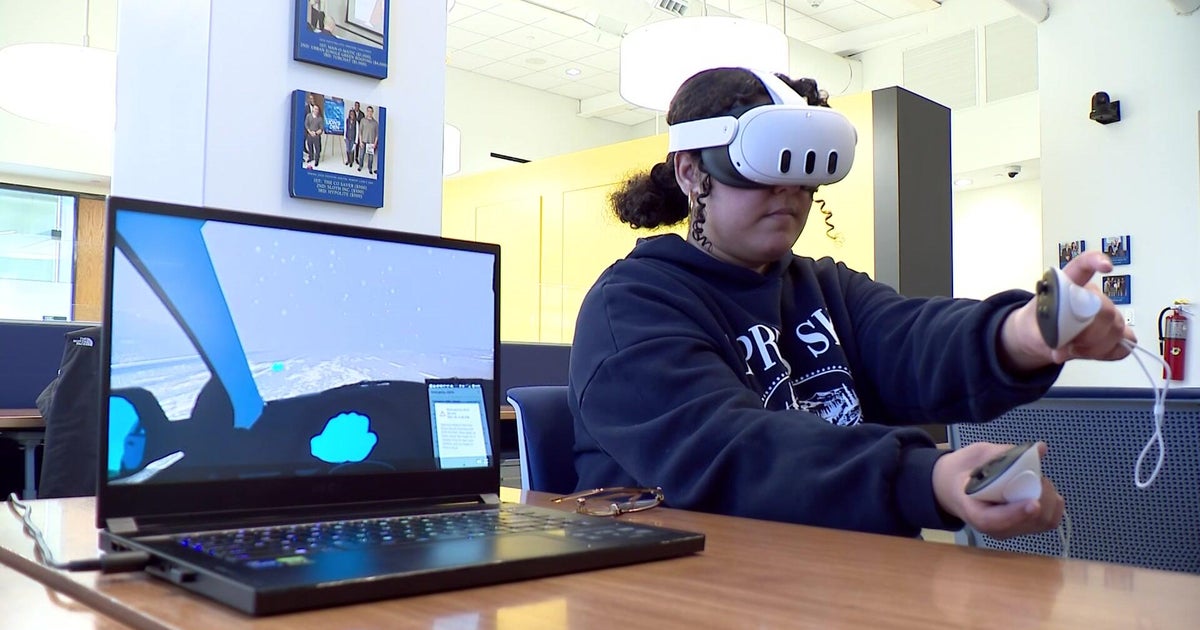
VR Technology Offers Lessons in Navigating a Snow Squall
WCBS-TV, WPIX 11, and WNYW Fox 5 interviewed Dr. Jase Bernhardt, Hofstra associate professor of geology, environment, and sustainability, about his virtual reality program designed to teach the public about the danger of driving in a snow squall. Funded by a $100,000 Road to Zero Community Traffic Safety Grant from the National Safety Council, Dr. Bernhardt’s project emphasizes the importance of heeding emergency weather advisories and what drivers should do if they are on the road when a snow squall occurs. Users wear a headset and hold a device – like a video game controller – in each hand to replicate the movements of a steering wheel. Bernhardt’s collaborators include Assistant Professor of Sustainability Sasha Pesci; software developer Frank Martin ’22, ’23, who earned both a BS and an MS in Computer Science from Hofstra University; and John Banghoff and other meteorologists at the U.S. National Weather Service (NSW) Office, State College, PA.

