
Experts Matter. Find Yours.
Connect for media, speaking, professional opportunities & more.
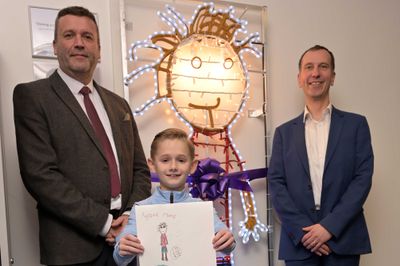
‘Shining a light on Colour Blindness’ competition winner unveils light sculpture at Aston University Winner 10-year-old Leo Evans helped unveil the feature of footballer Tyrone Mings The competition helped highlight the challenges of colour blindness - particularly in sport. A light sculpture named after the Aston Villa footballer Tyrone Mings has been unveiled at Aston University as part of a campaign to help raise awareness of colour blindness. In the UK there are approximately 3 million colour blind people (about 4.5% of the entire population), most of whom are male. Worldwide, there are estimated to be about 300 million people with colour blindness. The competition, ‘Shining a Light on Colour Blindness’, was launched by non-profit organisation Colour Blind Awareness and supported by various football club charities - including the Aston Villa Foundation. Young supporters were asked to take part by drawing a colourful picture of their favourite footballer. The winning entry was then made into a light feature. The winning artwork, which came from the Aston Villa Foundation, was transformed into a light feature and was selected to go on display inside the Aston University Vision Sciences building in the paediatrics bay, as part of the ongoing partnership between the Aston Villa Foundation and Aston University. Colour Blind Awareness is a non-profit organisation designed to highlight the relevance and impact of colour vision deficiency amongst those that live with it - including the challenges in sport. The organisation is part of an EU-funded project, Tackling Colour Blindness in Sport. Competition winner, 10-year-old Leo Evans from Erdington, helped unveil the light sculpture alongside Professor Anthony Hilton, pro-vice-chancellor & executive dean of the College of Health and Life Sciences. Professor Hilton said: “We are delighted for Leo, his winning drawing of Tyrone Mings looks fantastic as a light sculpture and we are proud to host it in our Vision Sciences building for our students, staff and visitors to enjoy, whilst raising awareness about colour blindness.” Commenting on his winning drawing, Leo said: “I am very proud that my picture won the competition and that Tyrone Mings liked it. I now better understand what being colour blind means and I hope my picture has helped someone else.” Cheryl Evans, Leo's Mum, said: “I couldn't be prouder of Leo and the fact that his drawing is of his favourite player Tyrone Mings makes it even more special. This competition has meant that as a family we have had many conversations about colour blindness and it has educated us all more on this topic. Well done Leo!” Kathryn Albany-Ward, CEO at Colour Blind Awareness CIC, said: “Aston Villa Foundation’s entry from Leo charmed the judges and who were delighted to award it first prize. We’re very grateful to Aston University for hosting the light feature and can’t wait to see it displayed. We hope its location in the Vision Sciences Department will help raise more awareness of a condition which affects 8% of boys and 0.5% of girls worldwide, impacting on their education and ability to perform to their best in sport if left unsupported.” Leo was met and congratulated by the head of the Aston Villa Foundation, Guy Rippon, and foundation manager, Ross Alexander. Ross said: “The Aston Villa Foundation would like to say a big congratulations to Leo for his amazing achievement! This is a really proud moment for Leo and we are thrilled that he was inspired by his favourite Aston Villa player. “It has also been a pleasure to have supported Colour Blind Awareness, who have done some great work in highlighting such an important and relevant topic during our coaching team’s workforce development. The support has culminated in a competition that was won by Leo, a participant in one of our Football in the Community holiday sessions. “The stunning light feature of Tyrone Mings will now be housed at Aston University for all to see and we are grateful for the University’s ongoing support with the Club.”


Award jointly given to President and CEO Dr. Janice Nevin and Chief Digital and Information Officer Randy Gaboriault ChristianaCare has earned the Transformational Leadership Award for excelling in its development and deployment of transformational information technology that improves the delivery of care and streamlines administrative services. Presented by the College of Healthcare Information Management Executives (CHIME) and the American Hospital Association, the award is jointly bestowed to Janice Nevin, M.D., MPH, ChristianaCare’s president and CEO, and Randy Gaboriault, MS, MBA, ChristianaCare’s chief digital and information officer and senior vice president. “Their trailblazing commitment to rapid transformation has set an example for the entire industry in how to pursue a leadership vision with determination, brilliant planning and courage to overcome all challenges,” said CHIME President and CEO Russell P. Branzell. Under the leadership of Nevin and Gaboriault, ChristianaCare has created and deployed new organizational, digital capabilities for both patient and caregiver. Using voice-enabled technology, ChristianaCare HomeHealth patients can interact with an internally developed Alexa capability to guide them through their personalized daily therapy regimens. Similarly, ChristianaCare recently launched the ability for in-house postpartum patients to use an Amazon Echo device to ask questions, request help or communicate with their care team. Taking voice and digital capabilities further, in February 2022, ChristianaCare deployed an innovative tool called Moxi, a collaborative robot – or “cobot” – that can assist in the hospital by making deliveries and performing other non-clinical tasks so that nurses and other clinical caregivers can spend more time focused on what they do best: caring for patients. “Randy is a phenomenal leader, with a relentless focus on creating a culture of innovation for impact, solving for the most complex problems and delivering significantly improved outcomes,” Nevin said. “His work has made ChristianaCare a model for how transformative technology can help to create health so that every person can flourish.” ChristianaCare continues to be recognized for leading innovation in the health care industry. The organization was recently recognized by CHIME’s Most Wired program with Performance Excellence Awards in its acute and ambulatory categories. That level is reserved only for organizations that are considered leaders in health care technology who “actively push the industry forward” and are “realizing meaningful outcomes, including improved quality of care, improved patient experience, reduced costs and broader patient access to healthcare services.” “Under Dr. Nevin’s extraordinary leadership, we have made an intentional commitment to placing technology at the center of all our initiatives to enable our caregivers to best serve our patients,” Gaboriault said. “That commitment, reinforced by our organization’s core behavior to continuously look for new ways to innovate, means that we are able to introduce and leverage robotic nursing assistants in a way that drives meaningful value for both patients and providers. And because our caregivers embrace change, we are confident that we will be using our cobots to assume more tasks in the future, and enable our nurses to devote even more of their precious time to direct patient care.”



ChristianaCare Names Its Breast Center: The Tatiana Copeland Breast Center
ChristianaCare has named its Breast Center The Tatiana Copeland Breast Center at the Helen F. Graham Cancer Center & Research Institute in recognition of Gerret and Tatiana Copeland’s generous financial support. The Copelands, local philanthropists and business entrepreneurs, provided a $1.2 million gift to the Graham Cancer Center in 2019 for breast cancer prevention and research for underrepresented women. Tatiana Copeland previously provided $800,000 to fund the purchase of two 3D mammography units. As a result of their philanthropic leadership, the Graham Cancer Center was one of the first facilities in the nation to offer 3D mammography. “ChristianaCare is deeply grateful to the Copelands for their generous support of the Helen F. Graham Cancer Center & Research Institute,” said Janice Nevin, M.D., MPH, ChristianaCare president and CEO. “They have made a tremendous difference in the lives of so many women in and around Delaware. We are deeply honored to name the Breast Center after Tatiana.” In a private event celebrating the naming, Dr. Nevin read a personal letter from President Joe Biden and First Lady Jill Biden that was sent to Tatiana about her support of the Breast Center. “Tatiana is a woman with extraordinary vision and a compassionate heart,” wrote President Biden. “As a breast cancer survivor, she has taken her pain and turned it into purpose, ensuring that all those who come in for testing at the Breast Center will receive extraordinary care. She has put lifesaving and life-altering care within the reach of those who need it most. And through it all, she has pushed for progress, fought for patients and kept hope alive.” “The Copelands share our commitment to providing our patients with the very best breast care, diagnosis and treatment,” said Nicholas J. Petrelli, M.D., Bank of America endowed medical director of the Helen F. Graham Cancer Center & Research Institute. “Their generous gifts have enabled women from Delaware and surrounding communities to receive expert, compassionate care right here at the Breast Center without ever having to leave the state. The Copelands have a way of discovering a need and then making the impossible possible.” “As longtime Graham Cancer Center supporters and as a breast cancer survivor myself who received wonderful treatment here, we are confident our investment in the Breast Center will continue to enable women to receive the same care that I did,” Tatiana Copeland said. “The atmosphere of the Breast Center is very comforting — like a nurturing hospital,” she said. “Everybody is very caring and attentive. Dr. Petrelli has created a team effort that is truly admirable. We hope our support inspires others to join us in the fight against cancer.” At The Tatiana Copeland Breast Center, patients are supported by an exceptional care team that includes radiologists, surgeons, radiation oncologists, genetic counselors and support staff. On-site capabilities include: 3D mammography. Digital mammography. Dedicated breast MRI. Breast ultrasound. Minimally invasive breast biopsies. Financial resources. Delaware’s first Center for Breast Reconstruction. According to the Delaware Division of Public Health, breast cancer is the most common cancer diagnosed among women in Delaware and the second leading cause of cancer death among women in the state after lung cancer. The Graham Cancer Center conducts community outreach to educate women about the importance of breast cancer detection and early prevention, including specially designed programs for underrepresented communities, including Black, Latinx and Asian women. “The Copelands’ ongoing generosity and support have helped us elevate the level of care at the Breast Center,” said Dia Williams, vice president of Philanthropy at ChristianaCare. “This gift will have an impact for generations to come.” To learn more about ChristianaCare’s philanthropy opportunities, visit https://christianacare.org/donors.


#Expert Perspective: The Journey of an Idea
Creativity is the lifeblood of innovation and cutting-edge business. During a Goizueta Effect Podcast, Jill Perry-Smith, senior associate dean of strategic initiatives and professor of Organization & Management, spoke about her decades of work at the intersection of creativity, innovation, and business. Creativity may come naturally for some, but everyone has the capacity to develop a creative skillset. When we think of creativity, we think of artistic expression. In the workplace, we think of breakthroughs in technology, but some of the most important creativity has to do with problem solving. In today’s flexible workspace, creativity is rewarded and encouraged. Each new idea takes a bumpy journey as it evolves, often cycling back and forth as novelty wears, obstacles arise, and risks become clear. Though circumstances may be different, each idea journey shares distinct phases. In the generation phase, innovators need inspiration. Sharing ideas with strangers rather than friends can be beneficial and can facilitate open-mindedness. During the elaboration phase, creators need support and encouragement to develop their ideas. Deeply analyzing the idea with one or two other people as opposed to sharing it with a larger collective is most valuable. While in the promotion phase, influence and reach are critical due to the risk associated with the idea and its lack of precedent. This is the time for resource gathering and professional networking. For the implementation phase, shared vision and trust are needed. At this point, a cohesive team with a shared north star can drive success. So how can a business facilitate workplace creativity? Perry-Smith recommends the following: Encourage creativity and innovation in your workplace. Make simple changes to the way your organization and teams operate, and always ask for more problem-solving alternatives. More alternatives lead to variety and creative solutions. Be collaboratively flexible and reduce conformity. Think of teams as a tool that is helpful when necessary. Always consider novel approaches. Don’t overlook the “creative nuggets” that arise from the idea journey. Listen to “The Journey of an Idea” podcast on Goizueta Effect. Looking to know more or connect with Jill Perry-Smith? Simply click on her icon now to arrange an interview and a time.



MEDIA RELEASE: Motorists are urged to slow down and stay alert for trick-or-treaters this Halloween
As Halloween approaches, motorists can expect even the quietest streets becoming busy with trick-or-treaters. To ensure everyone has a safe and fang-tastic night, CAA South Central Ontario (CAA SCO) is reminding motorists to be extra vigilant while driving in areas with higher volumes of pedestrians. “In the excitement of dressing up in costume and going trick-or-treating, children may not always be looking out for oncoming traffic,” says Michael Stewart, community relations consultant, Government and Community Relations, CAA SCO. “With this in mind, it’s important for motorists to slow down, obey all traffic signs and continually scan not only the road ahead, but also driveways, front yards and the spaces between parked cars.” With the majority of trick-or-treating happening after dark, visibility is key for both motorists and pedestrians. Motorists are advised to turn their headlights on 30 minutes before sunset and keep them on when it’s dark while pedestrians should opt for makeup instead of masks to not obstruct their vision. “Trick-or-treaters can also help make themselves more visible to motorists by choosing brightly coloured costumes instead of all-black ones as well as using reflective items and accessories while trick-or-treating,” adds Stewart. CAA is offering free reflector tags at CAA Stores in south-central Ontario that can be attached to backpacks and jackets. Find your nearest CAA Store here and stop by to get up to four free tags per family. CAA is also reminding all road users to take extra caution as daylight saving time ends at 2 a.m. on Sunday, November 6. The return to standard time means fewer daylight hours and reduced visibility for both motorists and pedestrians. What motorists can do to stay safe: Always look for pedestrians crossing the road. Be alert and attentive while driving and yield to pedestrians at crosswalks, school crossings and crossovers. Mind your blind spots. Be aware of blind spots when making turns at intersections. Stay focused and vigilant behind the wheel. Put the phone away, reduce your speed and obey speed limits in residential neighbourhoods. Be cautious and considerate. Be alert around stopped transit vehicles and be courteous to pedestrians with different mobility needs that may require more time to cross. Use your lights. Motorists should use their full lighting system when it gets dark and in low visibility situations. What pedestrians can do to stay safe: Remain on the sidewalk. Sidewalks give pedestrians a designated space to keep them safe. If no sidewalk is present, you should walk on the far-left side of the road. Always be aware of your surroundings. Avoid distractions and be alert while crossing the street. Follow the flow. Follow signals and only cross at designated locations or crosswalks. Stop, look, and listen. Ensure all traffic has come to a complete stop before crossing the road. Always remember to look both ways before crossing. Be visible. Make eye contact with motorists before crossing—never assume that drivers can see you or know your intentions. Pedestrians should also wear bright or reflective clothing or accessories at night to help with visibility.


Simple 20-20-20 screen rule really does help with eye strain, research shows
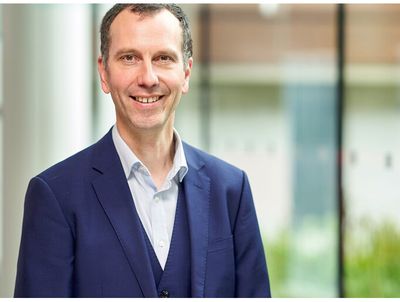
Scientists find that a short break to look away from screen every 20 minutes improves symptoms of eye strain for computer users Aston University researchers used special software to monitor participants’ gaze for two weeks, measuring symptoms before and after First time that guidance has been scientifically validated. It’s long been recommended as a way of easing eye strain while working at a computer screen. Now the 20-20-20 rule – taking a break of at least 20 seconds, every 20 minutes, to look at least 20 feet away - has been confirmed by scientists at Aston University to help ease some of the symptoms of prolonged computer use. It’s estimated that at least half of people using computers in their regular work have some form of digital eye strain, resulting in eye surface problems including irritation and dryness, or vision issues such as headaches or blurred vision. Humans normally blink around 15 times each minute. When staring at screens, this number decreases generally to half that rate or less. That can lead to dry, irritated, and tired eyes, but twenty seconds focusing elsewhere is long enough for the eyes to relax enough to reduce the strain. This is the first time that the 20-20-20 guidance rule has been properly validated. Researchers at Aston University’s College of Health and Life Sciences set up their study with the help of 29 participants who suffer from symptoms of eye strain. Special software downloaded onto the participants’ own laptop computers used the built-in laptop camera both to check if a user was sitting at the screen and to monitor their gaze direction every few seconds. After 20 minutes of continuous screen viewing, the programme flashed up a message, asking users to rest for 20 seconds while looking at any distant target around 20 feet away, such as out of the window or across a room. The message couldn’t be removed until the task was performed correctly, as measured by the app. Participants’ digital eye strain symptoms were measured before and after two weeks of using the reminders, and one week after completing the study. Results showed a marked decrease in symptoms including dryness, sensitivity and discomfort. Professor James Wolffsohn, Professor of Optometry at Aston University, who led the research in collaboration with the University of Valencia, Spain, said: “The one previous study merely asked people to carry out the suggestions; but here the access control on the software meant we could be sure that participants really had looked away every 20 minutes. We saw a consequent improvement in the symptoms of the group as a whole.” Researchers noted that after the study, the participants’ eye symptoms returned to what they had been before the intervention. Professor Wolffsohn says: “We are planning to conduct longer term studies to see whether we can teach eyelid muscle memory impulses to blink more often during digital viewing, to help mitigate this chronic issue without long term use of reminders.” The findings confirm that people should try and take breaks from their screens. He added: “Although we used sophisticated software, it’s easy for others to replicate the effect by setting a timer on their phone, or downloading a reminder app. It’s a simple way of reminding yourself to take regular breaks for the good of your eyes.” The effects of breaks on digital eye strain, dry eye and binocular vision: Testing the 20-20-20 rule was published in Contact Lens and Anterior Eye journal.

Aston Institute of Health and Neurodevelopment hosts showcase event to highlight research expertise
Research showcase held to highlight research underway at the Aston Institute for Health and Neurodevelopment Researchers met with local clinicians and funding bodies to talk through their latest developments The event will take place each year with a plan to invite guests back to update them on how the institute has progressed. Aston Institute of Health and Neurodevelopment (IHN) held its inaugural research showcase event on Thursday 7 July at Conference Aston. The yearly event is an opportunity to highlight its research projects and meet with the Institute’s external partners, funding bodies and professional colleagues. Guests were invited to join IHN’s research and teaching team to learn more about its vision and hear about individual research projects currently underway. The centre’s co-directors Professor Jackie Blissett and Professor Gavin Woodhall talked about IHN’s vision which includes: • unlocking the potential of research to support child health and development • answering the questions that matter to children and young people, their families and the services that support them • developing the next generation of research leaders in child health and development. Researchers working on projects including treatments for drug resistant epilepsy, childhood eating behaviour, improving support for people with rare neurogenetic conditions and diagnosis of paediatric brain cancer using magnetic resonance imaging and artificial intelligence met with external partners and clinicians to talk them through their latest projects and developments. The event was also attended by Aston University Interim Vice-Chancellor, Saskia Loer Hansen, Executive Dean of the College of Health and Life Sciences, Anthony Hilton and other members of the University executive team, together with academic researchers in the University’s College of Health and Life Sciences. There was also an opportunity to meet all the Institute’s researchers, ask questions and network. Professor Jackie Blissett, co-director of Aston Institute of Health and Neurodevelopment, said: “After a successful launch of our new £2.8 million MRI scanner earlier this year, it is great that we were able to come together again and showcase all of our research that goes on in IHN, particularly to our external partners, including local clinicians and funding bodies. “This is our inaugural research showcase and we plan to invite guests back to Aston University each year to update them on how the institute has progressed with its research. “As a research institute that puts children and young people at the heart of what we do, it is important to be in touch with all of our partners from a cross section of the community to update them on all of our latest developments and find ways to collaborate further – particularly in clinical settings.” For more information about research being undertaken at AIHN please go to our website. If you are interested in the courses we have available in this area please go here.



The shocking assassination of Shinzo Abe, the former Prime Minister of Japan, has been met with disbelief and condolences from within his country and around the globe. Alexis Dudden, a professor of history at the University of Connecticut who specializes in modern Japan and Korea, spoke with NEWS AKMI in the wake of Abe's death about his legacy, his Second World War revisionism, his complicated feelings about America, and why his push to reform the Japanese constitution ultimately failed: How do you see Abe’s legacy? He was a Prime Minister who reconfigured Japan’s place in East Asia, or at least tried to. He tried to create a more assertive Japan through a very proactive—as he liked to describe it—attempt at diplomacy. And he travelled widely. He met with Vladimir Putin more than with any other world leader: more than twenty times. He did meet Xi Jinping, and he was the first foreign leader to meet Donald Trump after [Trump] became President. Abe, however, created a deep rift between Japan and its Asian neighbors over his extremely hawkish outlook, his extremist positions on the legacy of the Japanese empire, and its responsibilities for atrocities committed throughout Asia and the Pacific. While many are extolling him as a great leader, his personal vision for rewriting Japanese history, of a glorious past, created a real problem in East Asia which will linger, because it divided not just the different countries’ approach to diplomacy with Japan; it also divided Japanese society even further over how to approach its own responsibility for wartime actions carried out in the name of the emperor. You used the phrase “rewriting history.” Do you mean rewriting the truth, or do you mean rewriting the way people in Japan understood their history? To what degree was Abe, when he came into office for the first time, in 2006, a departure from the way that Japan understood its own history? And to what degree was this more of the status quo, but just in a more aggressive fashion? The helpful thing about studying Abe is that he himself published several articles and books, and he gave numerous speeches about history and about his vision of Japan’s history, in particular. When he first became a parliamentarian, in the early nineteen-nineties, inheriting his father’s seat, he was part of a study group inside Parliament that is believed to have written a document denying the Nanjing Massacre. This article used to be available in Japan’s Diet archives. It is no longer traceable, but it was there. Abe began in the mid-nineties, when there was an effort to really socially readdress Japan’s wartime role in Asia, after the death of Emperor Hirohito, in the wake of the first “comfort women” coming forward. That’s when Japanese political leaders really became more public about the positioning of their own parties’ views of Japan’s role in Asia, in a new, more strident way that sought to rewrite how Japan and the Japanese should see it. Fast forward to his first term as Prime Minister, in 2006. By that time, these issues had been much better studied academically and socially within Japan and throughout the world. Abe made a big effort, in 2006 and 2007, to deny that Japan bore any state responsibility for the comfort women, in particular. And he failed at that attempt. This is when he and his supporters took out a full-page ad in the Washington Post. And it was a real moment of shock for him when the U.S. Congress passed a nonbinding House resolution asking Japan to atone for its role in creating the comfort-women system. That was also when he resigned for the first time because of his ulcerative colitis. But, between 1994 and 2006, his chief lobbying group, called the Nippon Kaigi, was created—this political-lobbying group didn’t have much of a public face, but it emerged as an extremely powerful ideologically based group. And this is why comparing him to Trump and [India’s Prime Minister Narendra] Modi and other extremists—or people with extreme views or people who give voice to extreme views—is apt, because these groups seem to come out of nowhere for a lot of us. Like, who was Steve Bannon until there was Steve Bannon? Abe, in that interim between being a junior parliamentarian and becoming Prime Minister, had become this group’s head of history and territory. And, in that moment, he also published a work about making Japan great again, which he called “Towards a Beautiful Country.” Dr. Dudden offers expert insight into Abe's historical perspective on his country, and if you're a reporter looking to cover this trending topic, let us help with your coverage. Click on her icon to arrange an interview today.


Aston University academic named President of the College of Optometrists
Professor Leon Davies named incoming President of the College of Optometrists Professor Davies will serve a two-year term as President Seven new Council members have also been elected onto the board Professor Leon Davies of the School of Optometry at Aston University has been named as the College of Optometrist’s incoming President. The College of Optometrists also welcomed seven new Council members at its AGM, held during its clinical conference, Optometry Tomorrow 2022, on 20 June. Incoming President, Professor Leon Davies FCOptom, is currently a board member and previous Vice President. Leon is professor of optometry and physiological optics at Aston University and former editor-in-chief of the College’s peer reviewed CPD journal, Optometry in Practice. Academically, Leon has over 60 publications and has been awarded over £2.5m of funding for his research from UKRI, the EU, charities and a number of multinational organisations. His research is focused on presbyopia and the restoration of ocular accommodation to the ageing eye. He is also a recipient of the College of Optometrists Research Fellowship Award, and was awarded the inaugural Neil Charman Medal for research excellence in optometry, optics and vision science. Professor Leon Davies said: “I am extremely proud to be elected President of the College and honoured to represent the profession at such a crucial time, with transformational changes underway including the General Optical Council (GOC) Opticians Act review and the College’s newly published Workforce vision. “I am determined to continue the profession’s advances to ensure optometrists across the UK are at the centre of new models of eye care, and that their competences and skills are recognised and used to their full potential. “I would like to pay tribute to our outgoing President, Colin Davidson FCOptom, for his unstinting work and dedication over the last two years and offer thanks to all our departing Board and Council members for their dedicated service." The School of Optometry’s portfolio of courses range from undergraduate, to masters taught and doctoral level research, as well as a wide range of optometry continuing professional development options. All programmes are informed by professional practice and are led by an inter-disciplinary teaching team of optometrists, dispensing opticians, ophthalmologists, and vision scientists. Reflecting this highly practical ethos, students on the School’s undergraduate programmes benefit from substantial hands-on experience in the onsite Aston Eye Clinic, one of the largest at any UK university, with over 6,000 patient episodes completed every year. For more information about the School of Optometry at Aston University please visit our webpages.


There's a lot more to bats than their spooky reputation
By Emma Richards More than 50,000 students call the University of Florida home, and while that is a lot of Gators, the campus is home to even more bats. Hundreds of thousands of the misunderstood mammals live across from Lake Alice, where they dwell in the world’s largest occupied bat houses. The colony of bats was initially discovered at the UF track and tennis stadiums in 1991. In the spots where fans were cheering, bats were roosting – causing a mess and a notable stench. That same year, the UF Athletics Association built a house to rehome the bats from the stadiums. But the night after they were transported to their new home, all the bats left, and did not return for three years. Now, the houses are primarily occupied by around 400,000 to 500,000 Brazilian free-tailed bats that remain at UF year-round and do not hibernate or migrate. “They do all these great things for us and then we turn around and we're scared of them,” Mathis said. Verity Mathis, the mammal collections manager at the Florida Museum of Natural History says bats are the only mammals that can fly, and the Brazilian free-tailed species found at UF are tremendous at it. “They’ve actually been documented to go as fast as 100 miles an hour in like short bursts, which is just amazing to think about,” she said in an episode of the From Florida podcast. “This one species is just capable of so much.” Along with their fast flight, Brazilian free-tailed bats can go as high as 9,000 to 10,000 feet in the air and venture over 30 miles a night forging for insects like mosquitos, moths, beetles and flies. Despite being associated with blood-sucking vampires in popular culture, only three out of 1,400 bat species drink blood and they aren’t located in North America. Bats do not want to attack humans; in fact, they avoid people using their vision and echolocation skills. Bats can live for many decades and are more closely related to humans than they are to rodents. They also provide critical environmental services such as pest control, fertilization and pollination. Mathis says bats are misunderstood. “They do all these great things for us and then we turn around and we're scared of them,” she said. “We want to be respectful of them and of their lifestyle and we don't want to encroach upon them and bother them.” Mathis says if people do encounter an injured bat, they should not touch it with their bare hands because bats can carry rabies. It is best to put on thick gloves, place the bat into a container and call a local wildlife rehabilitation center. There are 13 bat species in Florida, and two of them are endangered. The Florida Wildlife Commission is actively monitoring those populations. In Alachua County, people and businesses, including Swamp House Brewery and Lubee Bat Conservancy, have bat houses on their properties. Mathis advises those interested in putting a bat house in their yard to do research to ensure that the right kind of house is purchased and that it is placed in the proper location to align with Florida’s specific requirements, which can be found here on the UF/IFAS website. For Mathis, these are all steps toward accepting a widely misunderstood mammal. “I think as long as we continue these conversations about telling people how cool bats are then maybe eventually pop culture will catch up to that,” she said. To hear more about bats, listen to the episode on From Florida at this link. Listen to other episodes in the From Florida podcast here. Watch a recent video featuring Verity Mathis here: https://youtu.be/vbFZfVwGwYE

