
Experts Matter. Find Yours.
Connect for media, speaking, professional opportunities & more.

Hacking billionaires and the link between Bezos, Iran and what’s next for America
It’s becoming the ultimate he said/she said between the ultra-rich and world elite. Amazon CEO Jeff Bezos is claiming Saudi Crown Prince Mohammed bin Salman hacked his phone via WhatsApp. The motive seems routed to the murdering of the Washington Post’s journalist Jamal Khashoggi. However, as the billionaires debate and deflect what actually happened, the event should be a warning sign of what could be on the horizon. America is still on guard and expecting retaliation in one form or another from the assassination of General Qasem Soleimani, and online attacks and targeting cellphones could be the preferred method from America’s enemies abroad. “We should expect attacks from Iranian hackers or those sympathetic to their cause who appear to be civilians without nation state sponsorship will hit low level targets on the basis of ideological/national pride,” says Michigan State University’s Thomas J. Holt. “There will likely be nation-state sponsored attacks though it is unclear how quickly they will launch or how effective they may be.” This is an area that is familiar with American military and intelligence circles, Holt further explains. “Historically the U.S. has been involved in cyber-attacks that are able to severely affect Iranian capabilities, such as Stuxnet. Their counterattacks have been less public and seemingly less effective. However, they’ve already begun as with that web defacement against a US government website reported last week that appears to have Iranian ties or origination.” And as America waits and watches... What are the obvious and perhaps not so obvious approaches to breaching American cyber-security that we can expect? Will it be app based? Will the general public be a target or is it in the best interests to hit higher- and more visible properties? And if Jeff Bezos and all of his resources are vulnerable – is there any true way to ensure anyone is safe online? There is a lot to be explored as this story progresses and if you are a journalist covering this topic – then let our experts help. Thomas J. Holt is a professor in the School of Criminal Justice at Michigan State University whose research focuses on computer hacking, malware, and the role of the Internet in facilitating all manner of crime and deviance. Professor Holt is available to speak with media about these issues – simply click on his icon to arrange an interview today.


Social Media Spaces Can Be Instruments of God’s Unconditional Love, Theologian Says
Being 'always on' can be a source of anxiety or sorrow, but it also can be a way to strengthen faith, Baylor author says Many of us are “always on” — scrolling through social media, checking email or searching the web, says author Angela Gorrell, Ph.D., assistant professor of practical theology at Baylor University’s George W. Truett Theological Seminary. In her book “Always On,” she writes about how social media spaces can be instruments of God’s unconditional love — but also sources of anxiety, jealousy and depression. With the arrival of 2020 — and its potential for change for the better — she discusses in this Q&A some tools for understanding social media and enabling Christian communities to address its use in constructive ways. Q: From your perspective as a practical theologian, are the social media strategies you recommend aimed solely at people of faith? Dr. Gorrell: Practical theology takes different forms. Ultimately, I aim to write about issues — like social media — that matter to people and shine the light of the Gospel on them. I also research and write about theology and faith in practice, how people express and perform their values, hopes and beliefs through practices, rituals, disciplines, activities, relationships, work—through their way of life. While I write about social media from a Christian perspective, much of what I have written about using social media mindfully and having “interested conversation” about media is applicable to people from a variety of religious and philosophical perspectives. Q: There is much talk about how people spend too much time on social media, to the point of ignoring family and friends when in their presence. How much is too much? And what problems can this create for people? Dr. Gorrell: The most important thing for people to realize is that how you spend time online is more important than how much time you spend online. There are a variety of issues that “passive,” unintentional, unregulated, time online can extend and nurture. I say extend because all of these issues can also be in-person issues. For example, empathy burnout, depression, anxiety and jealousy. We often encounter an enormous amount of suffering online. The amount of suffering and the velocity of these encounters — and rapidly seeing multiple examples back to back in articles or our newsfeeds — can nurture empathy burnout. We can become numb to the suffering we see online and take in but do nothing about it or think very little of it. Likewise, being on social media and passively scrolling through people’s status updates, tweets and stories for unbounded sets of time and looking at copious amounts of content but never replying, messaging, posting or sharing has been linked to depression and anxiety. Similarly, passive following, which is following people closely that we do not know (e.g., celebrities) or people we do not see regularly in person (e.g., high school friends) has been linked to jealousy, which can negatively impact how we perceive ourselves and our lives . . . When we see someone a lot in person or talk to them regularly by phone, we know that their lives have a lot more going on than what they are sharing online. Q: What strategies do you suggest help people use social media wisely? Dr. Gorrell: The goal is meaningful participation. I encourage people to limit passive scrolling and following as much as possible. Create something and share it online. Join conversations. Reply to people’s statuses rather than just clicking emojis. When you see that someone is celebrating, share their joy in a significant way. Share it as your status with a note of congratulations or text them or call them. When you notice someone is mourning, message them. When you encounter suffering online, stop scrolling and do something in response. Get offline, take a walk and pray about this suffering. Give money to an organization that is relieving this suffering. Find other articles and educate yourself on the issue. Learn more about how to help or how to invite other people to care. Q: Any suggestions as to how and where people might create a space to ask and answer questions about social media use? Dr. Gorrell: Asking powerful questions about people’s online experiences that encourage storytelling and helping each other think about new media can happen around the dinner table, in a church small group or on a road trip in the car. When family and friends ask each other about one another’s lives, we can include asking questions about and discussing social media experiences. We can ask curious, open-ended questions without simple yes or no answers like: 1. How do you make decisions about what to respond to online? 2. Have you ever been frustrated or sad about new forms of technology? What causes frustration or sadness for you? 3. When have you had a joyful experience online? Could you describe a time when you felt heard, affirmed or understood online? 4. How does social media help you love God and others and/or prevent you from loving God and others? 5. When have you had a painful experience online? Could you describe a time when you felt unheard, bullied, left out or misunderstood online? 6. What are the top two feelings you experience when using social media, and why do you think this is so? Q: How can we do a better job of using social media? Dr. Gorrell: Develop a rhythm for life with your friends or family that specifically addresses technology — when you will use it and for what purposes, when you will not use it, what boundaries you will have. Using social media constructively requires intentionality. I encourage people to find times in their week or month or year to not use devices and social media and to write down their plan on a calendar. A college student told me that he and his friends put all their phones in the center of the table at restaurants and say that the first person to pick up their phone during dinner pays the entire bill. Since they started this ritual, no one has picked up a phone during dinner. Practices like these help people to be present to people they are with in person. It is a great idea to put all devices away at night one to two hours before bed so minds and bodies can get prepared for sleep. I know families that have a basket for this purpose in their homes. I especially encourage parents to make sure children under 18 do not have a device in their room during sleeping hours so they can get adequate rest. I invite people to consider turning off notifications from all social media platforms and email and only check apps and email at a certain time each day. It is also important to have a plan for difficult moments and conversations online. What will you do when you get angry, disagree with someone else or feel depressed about your life or feel left out? What will you do next? It is equally important to think about what you will use social media for. How can you use social media to love people well, truly stay connected to people, expand your thinking on certain subjects, remain humble and open to being corrected, and nurture your creativity and increase your compassion? How might meaningful participation online support goals like these? ABOUT ANGELA GORRELL Angela Gorrell, Ph.D., assistant professor of practical theology at Baylor’s Truett Seminary, is the author of “Always On: Practicing Faith in a New Media Landscape,” which addresses the perils and possibilities of Christian faith in an era of massive technological change. She also is writing a book that addresses America’s crisis of despair, illuminated by its suicide rates and opioid addiction, and describes joy as the counteragent to despair. Gorrell earned a bachelor’s degree in youth ministry from Azusa Pacific University and an M.Div. and Ph.D. from Fuller Theological Seminary. She came to Baylor from the Yale Center for Faith and Culture at Yale Divinity School, where she developed relationships with more than 250 scholars from roughly 150 institutions on four continents while managing metrics and evaluation for the project. She has more than 14 years of experience in congregational and parachurch ministry, including serving as a chaplain at a women’s maximum-security prison. ABOUT BAYLOR UNIVERSITY Baylor University is a private Christian University and a nationally ranked research institution. The University provides a vibrant campus community for more than 17,000 students by blending interdisciplinary research with an international reputation for educational excellence and a faculty commitment to teaching and scholarship. Chartered in 1845 by the Republic of Texas through the efforts of Baptist pioneers, Baylor is the oldest continually operating University in Texas. Located in Waco, Baylor welcomes students from all 50 states and more than 90 countries to study a broad range of degrees among its 12 nationally recognized academic divisions. ABOUT GEORGE W. TRUETT THEOLOGICAL SEMINARY AT BAYLOR UNIVERSITY Baylor University’s George W. Truett Theological Seminary is an orthodox, evangelical school in the historic Baptist tradition that equips God-called people for gospel ministry in and alongside Christ’s Church by the power of the Holy Spirit. Accredited by the Association of Theological Schools, Truett Seminary provides theological education leading to the Master of Divinity, Master of Arts in Christian Ministry, Master of Theological Studies, Doctor of Ministry and Ph.D. in Preaching. The MACM and MTS degrees also can be completed at the seminary’s Houston campus. In addition, Truett Seminary offers joint degrees: M.Div./M.S.W. and M.T.S./M.S.W. with the Diana R. Garland School of Social Work, M.Div./M.B.A. with the Hankamer School of Business, M.Div./J.D. with Baylor Law School, M.Div./M.M. with the School of Music and M.Div./M.S.Ed. or M.Div./M.A. with the School of Education. Visit www.baylor.edu/truett to learn more.


EXPERT PITCHING 101: The Power of Spotlights
Of all the angles and perspectives, when pitching your experts, you need to figure out how yours stands out amongst the rest. How are you getting the perspectives of your subject matter experts out there? Have you figured out your 'bench strength' to know who can comment on what and how? Do you have a good way to get your people out there to the public? Sadly, when asked these questions, most PR and Marketing professionals struggle to give you a straight answer with confidence on how they get their people to comment on certain storylines. With a defeated tone, I often hear, “Well – we have our resident rock star, Professor Jones, who does most of our media interviews” often followed by, “but he’s not always the best person for the story.” Although, most organizations have a list of subject matter experts, they are often over-reliant on the same ‘go-to’ people. Here’s why: First, these people are tried and true. For media, it’s a big deal when contacting an expert for comment - especially if the interview will be conducted on camera. So, why risk the chance of speaking with someone new? The second thing, it’s time consuming. It’s easy to find a previous expert pitch in an email and forward it on to someone new. However, gathering this content for each new person every time an individual is being pitched is very time consuming and difficult to manage. Especially, when this content is strewn across the web and you need to add links for videos on YouTube, books on Amazon, articles on ResearchGate, presentations on SlideShare etc. Once you’ve found the right person for the story, and you’ve aggregated the necessary background content to send, you must tie the loose ends and make the person contextual and relevant. Why is this person the best individual to comment on the story? What angle is this person going to provide? What sort of background qualifies this person to being the subject matter expert on the topic? Don’t worry, help is on the way At ExpertFile, we’ve heard the stories about organizations missing out on opportunities to get national or international media coverage because of their small team. These understaffed teams don’t have enough bandwidth to continuously pitch their people and comment on storylines. Their websites don’t paint a full picture of their experts’ abilities and knowledge. So, we got together with these PR, Marketing and Comms people, and looked to develop a solution. Then we created “Spotlight” - putting all of the necessary tools into the hands of PR, Marketing and Communications teams. Spotlight allows you to contextualize the relevance of your expert with a the story. Write your expert pitch to explain why that person is the best to comment on that topic, and the angle they’d be able to provide. Combine that with rich media profiles created by the ExpertFile team, you now have a central home for all of your experts’ content, and it provides a more engaging representation. So, when the media are vetting, they can now watch a video of that individual speaking in front of a camera, see their latest Media Appearances to know they have experience talking to reporters, and a Contact button for the quickest way to reach that individual, while simultaneously routing to any other internal stakeholders. This last part is important to consider as every story has many angles. Take the recent United Airlines debacle, where a passenger was viciously pulled out of his seat due to the plane being overbooked. Aside from the traumatic events from the video that surfaced of the incident, after the dust settled media are left scrambling to find out more on the protocol for overbooked flights, the global impact (there was a big uproar in China due to initial reporting that he was of Chinese descent), and the economic impact on the company. Which means, you don’t need to limit yourself to an aviation expert in order to comment on an aviation story. Every story has multiple angles - this lets you offer up a unique perspective, pitch a concept others are not covering and insert your expert into an already crowded narrative. Spotlight helps you grow those invisible experts into great sources, and it helps you efficiently pitch when you have resource constraints. Spotlights in Action Since the launch of the ExpertFile News Digest service, we’ve seen some significant results for our customers. We've only been with ExpertFile a short time. We've been using Spotlights from the News Digest and have noticed a lot more attention from media. They're easy to request - and the turnaround is fast. We recently were asked to comment on the Supreme Court nominee and booked a radio show thanks to a Spotlight. It’s been a great way to get additional exposure for Augusta University. We've only been with ExpertFile a short time. We've been using Spotlights from the News Digest and have noticed a lot more attention from media. They're easy to request - and the turnaround is fast. We recently were asked to comment on the Supreme Court nominee and booked a radio show thanks to a Spotlight. It’s been a great way to get additional exposure for Augusta University. -Kelly Jasper Senior Digital Media Coordinator - Augusta University With Spotlights we are seeing immediate pick-up of the stories we want to be part of. It’s letting us tell the Cambrian College story to a wide audience. As well, we’re noticing one Spotlight generates multiple media contacts. Once one outlet sees or reads our expert weighing in on a trending topic - the others follow. It’s an earned media coup. -Shawn Poland Associate Vice President, College Advancement - Cambrian College Once I integrated my Spotlights onto the Emory University business school website, it was so simple for me to have the ExpertFile Newsroom team whip up a pitch and publish it. Especially with limited resource on my team, it’s been a huge help to get my people out there in a more efficient manner. -J. Michael Moore Senior Communications Manager, Emory University - Goizueta School of Business Want to see an example of how to pitch your expert? Send your storyline to success@expertifle.com and we will have our Newsroom team send you a draft Spotlight ASAP. Is there anything that I missed? I’d love to hear what’s worked for you to get your people speaking with the media.



Top 5 Lessons on how Wake Forest Won a Bulldog Award for Best Online Newsroom
“The primary goal of redesigning our online newsroom has been to help journalists covering Wake Forest do their jobs quicker, easier and better.” – Katie Neal, Executive Director, News and Communications In late 2015, the Communications & External Relations group at Wake Forest University embarked on an ambitious goal: “Tell Wake Forest stories and create a positive experience for news media by providing them as much content, access and support as possible.” Being in the midst of a $1 billion capital campaign, Wake Forest realized that the newsroom was a pivotal tool for helping shape the perception of the university to key audiences. Facing the challenge of dealing with an old newsroom, packaged in a way which made it frustrating for journalists to access the information they needed, the news team was tasked with creating a new and improved visually-compelling, mobile responsive and easy-to-navigate online newsroom. The news team was guided by two goals to address their primary audience of journalists: Give journalists what they want. Help them find the information they need to do their jobs easily and quickly. Make it easy for anyone to share Wake Forest news. And, to achieve these goals, they implemented their strategy which focused on four areas of emphasis: Offer a useful combination of newsworthy content, facts and resources. Showcase visual storytelling capabilities with multimedia options and a flexible web design. Establish a best-in-class expert guide. Prominently feature experts on trending topics and breaking news. Provide easy ways to share news stories, expert pitches, photos and videos to increase visibility on social media while reinforcing the brand. Since the launch of the Wake Forest newsroom in the spring of 2016, they have achieved notable success. They have seen a significant increase in media coverage stemming from their expert pitch efforts, they’ve had a positive social impact in their local community, and they’ve noticed an increase in content consumption. Just last month, Wake Forest was recognized for these efforts by winning the bronze Bulldog Award from the Bulldog Reporterfor “Best Online Newsroom of the Year.” The panel of judges was comprised of working and award-winning journalists, including a Pulitzer Prize winner, and represented a number of different media outlets including The Washington Post, USA Today, Forbes and The Oregonian. So what can we learn from Wake Forest? Here are the Top 5 lessons on how they made their newsroom stand out above the rest. 1. They Wrote Stories for Journalists Instead of taking a reactive approach to getting their experts in the media, the team at Wake Forest opted to be more proactive in getting their experts noticed. This meant presenting relevant news items, story ideas and expert pitches in a central and very visible location. They called it “Headlines”. Realizing that some stories needed a longer shelf life, the news team created the Headlines section to help journalists by providing storyline options. Here, journalists have a picklist of potential stories, a recommended angle and relevant Wake Forest experts who can comment. It’s a one-stop-shop for journalists. Even more, with Headlines, Wake Forest is getting the added advantage of telling their stories. How are you helping with getting your stories out there? 2. They Brought their Experts Forward With leading researchers ready to comment on a range of newsworthy topics – including the unprecedented U.S. election cycle – the news team brought their experts to the forefront by putting them on display in multiple locations of the newsroom. Using ExpertFile’s REST API, Wake Forest was able to extend its expert content on multiple pages, while still having the ability to manage that content from one central dashboard location. This has allowed the news team to be more proactive in updating expert content, capture key engagement metrics and respond to potential opportunities in a timely manner. For instance, the team created a special portal in their newsroom to direct journalists to the best experts that could speak on the election. From The New York Times to NPR’s “All Things Considered,” more than three dozen Wake Forest faculty shared their election-related expertise with top-tier news outlets around the world. Wake Forest professors had more than 1,300 media mentions for expert commentary alone, with the potential to reach more than 2 billion people. What is your organization doing to bring your people forward? 3. They Provided a Clear Path of Communication You’d be hard-pressed to find a page that didn’t provide some sort of contact method in the Wake Forest newsroom. Between having the news team’s contact email and phone number available on every page, and multiple contact buttons on the expert profiles, a journalist would have no problem finding the best method of reaching out. It’s important to present a clear path of communication between the journalist and the institution. Safe to say, journalists tend to be very busy and often time constrained. So, if they don’t find what they’re looking for right away, to put it in the words of Jay-Z, on to the next one. How are you making it easier for journalists to reach you and your communications group? 4. They Made it Easy to Find the Best Person Katie Neal once said it best, “We’re not under the delusion that media wake up and think they should go to Wake Forest first when they are looking for experts.” For the Wake Forest team, providing multiple avenues for experts to be discovered was a major objective. And, where do media look first for experts? Google. “We’re not under the delusion that media wake up and think they should go to Wake Forest first when they are looking for experts.” Google likes good content. Enhancing the discoverability of Wake Forest’s expert content on the world’s most commonly used search engine, is one of the best ways to attract media. However, the Wake Forest News and Communications team didn’t stop there. They added easy search functions to their pages. How are you ensuring your experts’ discoverability? 5. They Didn’t Limit Themselves to the Newsroom It’s important to think outside the box. Wake Forest exemplified this by extending their reach beyond the newsroom. Through syndicating expert content on different networks (ExpertFile.com) and promoting with various social platforms (Twitter), Wake Forest was able to access a much wider audience. Remember, distribution can take you from good to great. How are you thinking outside of your website? So, there you have it. By following these lessons learned from Wake Forest University, you too can begin to engage with media more proactively. To summarize, the key questions to ask yourself when creating a newsroom to engage with media are: How am I putting my stories in front of media? How am I currently presenting my media experts on my website? How am I making it easier for media to contact me and my team? How am I enhancing my experts’ discoverability? How am I extending beyond the reach of my website?

The Many Faces of Expertise: Theres more than one way to define an expert!
As the lead researcher at ExpertFile I spend a lot of my time thinking about the nature of expertise. I often get asked about the criteria that we use to identify experts, and it’s actually a very difficult concept to pin down. One of my favourite services that we provide to our clients is sitting down with them and helping them articulate what exactly “expertise” means to them. Sometimes this is an easy question, sometimes it is very, very difficult. The fact remains that there is no definition of expertise that perfectly encapsulates every organization’s requirements. How do you begin to select your experts to showcase? Well, there are many different ways of exhibiting expertise. A lot of our clients are higher education institutions who are seeking to promote their academics. The evidence demonstrating their unique experience in their respective fields are easily encapsulated in their academic credentials, awards, grants, publications and professional affiliations. Academics are often at the cutting edge of their fields, and are very experienced telling meaningful stories about them. If a reporter is writing a story about the mountains of Pluto, then an astronomer who has dedicated their lives to the study of extra-Neptunian objects is a perfect choice. By contrast, expertise in the corporate realm is more based on personal experience than academic credentials. This significantly differentiates corporate expert marketing programs from higher education. Although education and credentials remain important, it is generally more graded with a personal experience with the topic at hand. For example, a senior engineer at Google (with extensive media experience) would obviously be a tier A source for explaining the science behind contemporary web search engines, despite potentially having no university education in computer science! (Note: Some fields in computer science, such as machine learning, have a much more academic basis). Both the astronomer and computer scientist are clearly experts, but the means that we used to evaluate their expertise are very different. I’m sure that you can see that both academics and practitioners have meaningful comments to add to news reporters. At ExpertFile, we think that the most important skill an expert can have is the ability to distill their domain-specific knowledge into a compelling, relevant and meaningful story. This ability to tell stories transcends experience, or credentials. A Harvard professor may be a nobel prize winner, but unless he can effectively communicate his research to the media and the public, he will not be perceived as an expert. In contrast, a professor at a local community college may have less august credentials, but if they can tell a good story, then they will engage with the public and media much more effectively. In fact, in some cases “lowly” adjuncts bring vibrant life-experiences and direct understanding of the real world applications of academic theory, and may therefore eclipse the atrophied viewpoints of some tenured faculty isolated for decades in the academy. So at ExpertFile, we feel that a balanced representation of both academics and practitioners at every level is crucial for creating a balanced marketplace of experts that is a valuable resource for all our users. Although our platform contains thousands of academics, some from top flight institutions, we also list thousands of incredibly credible, engaging experts with real world, contemporary experience that can often eclipse that of tenured faculty. We are very proud of our network, and curate an active and vibrant community with a diversity of different voices and perspectives on topics of breaking news interest. We don’t open our network to anyone, the ability to distill meaningful and engaging content for others is crucial, so those who are only shilling a product or self-promoting are not welcome. Some people think that only academics belong on an expert network, but at ExpertFile we believe that would exclude many people with extensive expertise. Similarly, it would be the height of elitism for us to restrict our database to tenured academics from top-tier universities. This would do our users a great disservice by removing those voices with a perspectives gained from practical experience.

Part 2: Collaborating with Faculty Experts: A How-To Guide for Marketing Departments & Deans
In my last blog post, I shared some strategies that marketing departments can use to collaborate with their faculty experts (Read Part I). This post will reveal the final five principles that will help you collaborate with your faculty and get better results. 6. Show Quick Wins to Get Momentum As the old saying goes, “nothing succeeds like success.” We all like to back winners. So while you won’t immediately see massive changes across the board on day one, it’s important to show progress. Expert marketing programs deliver significant results over the long run but you must communicate the early wins you achieve in the first few months to create internal momentum. Remember it’s not just about the numbers. It’s just as important to provide qualitative information on the market interactions you are generating for your experts. For instance look at these early indicators: Contribution – Who’s participating in contributing content to your expert center? Look at key types of files such as publications, videos and presentations. Engagement – Also consider sending stats out to your experts showing which profiles get the most amount of web traffic. Other Results – Speak to activities where you used your expert content to do outbound story pitches to media. Also mention coverage you are getting, or speaking engagements that resulted from inquires received from your expert profiles. For instance, one of our ExpertFile clients, very soon after launching their expert center received an inquiry from a major engineering publication for one of their professors, a direct result of their participation in the Expert Center. Communicating this to other faculty drives engagement. Tip: Send out a quick “Leaderboard” email showing the top five or ten experts who rank highest in completed profiles. This public recognition will get noticed. 7. Opt-In your Experts For Various Research, Writing & Speaking Contributions The famous “help me, help you” quote from Jerry Maguire sums up the importance of collaborating effectively with your experts. They are very busy people; meeting them halfway will ensure mutual success. Get some face time: Emails with requests to send information often will go ignored. Instead invest the time to set up a quick meeting at their office to review and update their expert profile to make sure it’s up to date. Locate new projects that are in progress such as publications or speaking engagements and set a date to check-in with them. Identify Opportunities: Identify their key research interests and passions to see where they can help in contributing to the overall content mix. Organize Your Content Contributions: Build out a list of key areas for each expert where they can “opt-in” to contribute to your expert marketing programs. Think about various areas they can help as a researcher, writer, or speaker for both internal and external events. Remember, there are many jobs to be done across campus that go way beyond media interviews. Identify who can write blog posts, contribute to content in a research capacity, or even review story pitches. Track these commitments and follow up with your experts and you will see the payoff. Many experts want to help, but it’s important to approach them and organize your interactions with them in an efficient manner for success. Content planning frameworks are a great way to track this information. 8. Put Your Experts in the Spotlight Want to see better results from your media relations efforts? Organize your experts based on areas of interest. Once you’ve curated that list, you can align your experts with breaking news events and other opportunities on your editorial calendar. Here’s how it looks: Set up a “Topic Cloud”: List all the areas of interest that your faculty experts want to speak on. Make sure the terms you use are relevant to what journalists are searching for on Google. Start at a high level and then drill down for a structured taxonomy of terms. For instance if you have a medical expert who speaks about ebola you also should index them under the term “infectious disease” as journalists also use this search term when looking for sources. Align Your Experts with an Editorial Calendar: An editorial calendar allows you to plan content well ahead of time so you can promote upcoming research, publications and other announcements. Mapping experts to these events in advance will deliver better quality output and engagement. For example, there are always stories that recur every year, things like tornadoes, taxation, gas prices and the like. Preparing for these stories allows you to have your angle ready, along with creative assets such as images and videos that will engage targeted audiences. With this work already done, you will have time to attend to other pressing matters. Get Ready to Pounce on Breaking News: The benefits of real-time marketing and helping journalists write the next paragraph of a breaking story are immense, but this is a game of speed. Matching the right expert to the right media opportunity requires this type of pre-planning to identify who the go-to people are within your organization. 9. Develop a Scorecard: Identify Some The Expert Metrics You want to Measure Here are the categories you need to pay attention to as you evaluate your progress as an organization: Contribution – Show stats on how you are seeing growth in published content assets. Track the growth in areas such as the number of published expert profiles, % completion of profiles and growth of published content in categories such as videos, PowerPoint presentations, and whitepapers. Engagement – Ask your digital team to provide stats on the number of profile views each expert is receiving monthly. Try ranking some of your top experts and send out a note congratulating them. Also try to spot trends such as traffic spikes related to topics that may be of interest to the media. These metrics can help you decide what topics you focus on when producing content or promoting your experts to journalists. Inquiries – Requests to contact your experts can come from a variety of audiences, and all can be valuable for internal departments ranging from media relations and advancement to recruiting. It’s important to evaluate what types of requests you are receiving. You can sort and route these requests more efficiently with an online form. Some suggested categories you can track include: Media Inquiries Speaking Inquiries Expert Witness Inquiries Student or Parent Inquiries (classify by type i.e. Graduate Students, Foreign Students) Donor Inquiries Partner Inquiries Research Collaboration Inquiries Results – While it can be difficult to close the loop on all requests that you generate from your expert marketing efforts, try linking the source of your inquiries back to results. For instance, if you are doing clip reports, highlight specific media coverage that resulted from your efforts. You should also look at other important data such as student inquiries and donor connections that are made through your expert marketing programs. This will help you justify the return on investment and perhaps allow you to secure additional budget and resources from various groups in the organization who benefit. 10. Make Your Experts Feel Special: Don’t Forget Rewards and Incentives Anyone running a successful expert marketing program will tell you that it’s important to embrace some of the “softer” people skills to get results. It is essential to provide feedback and recognition to contributors to keep them motivated to help you. Remember that your experts are in constant demand, so you are competing for their most limited resource – their time. Here are some key things you should consider when working with your experts: Be Visible: Walk the campus and take an active interest in the work your experts are doing. Face-to-face meetings are an important part of enlisting support. Educate Them on Their Value as Experts: Help your experts understand how their contributions can impact areas related to media coverage, student enrolment, donor and alumni relations, and government and corporate sponsorships. Offer Assistance: Help them manage their online presence in your expert center. Make it as simple as possible to update content such as presentations, videos and speaking engagements. Recognize Key Contributions: Send personal notes to experts to thank them for their help. You can also do a shout out via email to a list of key contributors.


Experts in the media - Will Facebook, Google take over blockchain?
Banking and big tech are going ‘all-in’ on blockchain initiatives – and it is getting a lot of attention from investors, regulators and the industry. In an announcement this week, Facebook stated it was moving full speed ahead with its cryptocurrency ‘Libra”. With this announcement, Facebook isn’t just moving into the cryptocurrency space—it’s also setting itself up as a financial services company. Unlike many other cryptocurrencies, Libra will be specifically designed for use as a payment medium, rather than a speculative asset. Bitcoin, Ethereum, and other digital currencies are generally difficult to transfer back and forth for everyday payments, partly because the price of the tokens is based primarily on market demand. The value thus fluctuates dramatically. If it works, Libra should be much less volatile since it will be pegged to traditional financial assets, including a raft of government-issued currencies. Slate, June 18, 2019 Recently, Dr. Eric Overby, associate professor of information technology at Georgia Tech's Scheller College of Business was interviewed by Blockchain Tech News to get his perspective on what to expect now that Google and Facebook are adopting blockchain as part of their platforms. The interview is attached below. Eric Overby's research focuses on the transition from physical to electronic modes of interaction and its effect on market efficiency. Eric is available to speak to media regarding blockchain or any other technology related topics – simply click on his icon to arrange an interview.


Need an expert to chat about movies and tv? We’ve got just the person for your coverage!
UMW’s experts are in the news and just recently Antonio Barrenechea, associate professor of English, was interviewed for two articles in the web magazine MEAWW. The first was on the relationship between summer and romantic comedies and why that season in particular seems to hold the ideal climate for on-screen love. "The Canadian literary theorist, Northrop Fry, provides insight into its origins. As with the seasons of the year, genres deploy archetypes of birth, maturation, decay, death, and rebirth, all within natural cycles," said Antonio Barrenechea, Professor of English at the University of Mary Washington. Professor Barrenechea opines that for Fry, comedy belongs to spring, and romance to summer. "Nature as background thus directs the foreground of social ordering and human affairs. Greenery and florals are to the romantic comedy as deserts are to the Western, and dark places and climates are to horror," Barrenechea added. This is translated beautifully on screen in movies like 'Call Me By Your Name', 'My Best Friend's Wedding', and the 'Before Sunrise' movies. The second probed the link between intelligence and dark humor. In this piece, our expert explained our passion for dark humor and death. Antonio Barrenechea, Professor of English at the University of Mary Washington has a different opinion of 21st Century's vicarious morbidity fans. "Dark humor responds to our absurd condition with the armor of world-weariness. Except that, of course, we also know we can't really laugh such troubles away — which is why dark humor has a fatalistic dimension built into it," he said. Between Netflix, streaming services, TV, cable and the big screen – we are always talking about movies. If you are covering, don’t hesitate to let one of our experts help with your stories. Antonio Barrenechea, associate professor of English, specializes in literature of the Americas and the cinema. He’s available to speak with media, simply click on his icon to arrange an interview.



Goizueta information systems and operations management professor Benn Konsynski on the 30th birthday of WWW: "... Many of us were on the internet before WWW -- researchers, academic, military, libraries, etc. The operating protocols on top of the basic Internet protocols were useful, but often specialized. The world of commerce and social interchange needed a simple standard to offer creative outlet beyond specific applications and closed systems. "Sir Tim Berners-Lee brought that with common protocols for describing content (HTML), moving/referencing content (HTTP) and browser technologies for viewing and manipulating content. Over the next few years, commerce and social exchange exploded after these protocols took root. By 1995 the internet world opened to business and the general market with expectations and promise."


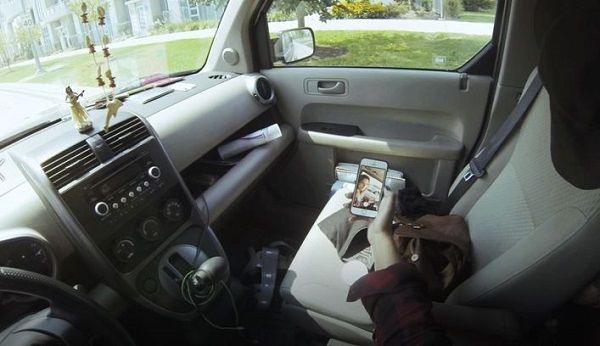
Starting January 2019, the stakes will be even higher when it comes to distracted driving in Ontario. CAA South Central Ontario (CAA SCO) is reminding Ontario drivers that strengthened distracted driving laws will take effect January 1, 2019. New additions include licence suspensions, increased demerit points and an increase to the minimum financial penalty that can be charged to those guilty of distracted driving. "CAA fully supports the increased fines and penalties that will be in place for distracted driving starting tomorrow,” said Elliott Silverstein, manager, government relations, CAA SCO. “Hopefully these new rules will encourage motorists to remain focused on the road and keep devices far from reach when operating their vehicle." Distracted driving continues to be a challenge on Ontario's roads, nearly a decade after the initial legislation banning handheld devices was passed. This new legislation is the first increase since September 2015 when demerit points were added to distracted driving convictions. Recent CAA research shows that one in three Ontario drivers claim to engage in distracted driving as a result of using a mobile device. According to the Ontario Ministry of Transportation, one person is injured in a distracted driving collision every half an hour. “The new fines and penalties are some of the strongest in the country, and they will further aid law enforcement in their continued effort to make road conditions safer for everyone,” continued Silverstein. Starting January 1, 2019, Ontario drivers can expect the following fines and penalties if caught driving distracted: The minimum financial penalty will increase from $490 to $615. A first conviction for distracted driving will now result in a three-day licence suspension, three demerit points and a minimum financial penalty of $615. A second conviction will result in a financial penalty of up to $2000 (previously up to $1000), six demerit points and a seven-day licence suspension. For third (or more) convictions, drivers will face a financial penalty of up to $3000 (previously up to $1000), six demerit points and a 30-day licence suspension. CAA recommends the following tips to reduce distractions behind the wheel: Turn off mobile devices Stow and secure loose objects Avoid eating, drinking or smoking Prepare children with everything they need Pre-set the climate control and radio Pre-program your route on GPS Allow phone calls to go to voicemail Don't text, surf the web or read emails CAA is dedicated to helping change certain rules and regulations for Ontario’s roads that will improve safety for everyone who uses them. Through its road safety efforts, CAA has been helping to educate and bring awareness about distracted driving, Slow Down, Move Over rules and cycling safety laws.

