
Experts Matter. Find Yours.
Connect for media, speaking, professional opportunities & more.

Aston University – inspiring more women into engineering careers
• Aston University is celebrating International Women in Engineering Day • College of Engineering and Physical Sciences photography campaign of females as #EngineeringHeroes • Campaign aims to encourage girls into engineering careers A team of female engineering heroes from Aston University’s College of Engineering and Physical Sciences has banded together to encourage girls into STEM careers. As part of International Women in Engineering Day (INWED), the world’s largest initiative to celebrate the achievements of women in engineering, Aston University’s very own team of engineers have shown themselves to be the very best STEM superheroes. Aston University Mechanical Engineering Student and STEM Ambassador Olamide Olabode Dressed in capes and taking selfies for the event on Wednesday 23 June, female ambassadors from the College, in collaboration with the Greater Birmingham and Solihull Institute of Technology, have also put together video content to show off their engineering skills and become ‘heroes’ for girls wanting to do the same. Also launching on the day will be a competition for participating schools linked to Aston University. Girls are being challenged to come up with their own superhero gadget / gizmo idea. Professor Sarah Hainsworth OBE FREng, Pro-Vice Chancellor and Executive Dean of the College of Engineering and Physical Sciences at Aston University, said they were proud to be a part of INWED2021. “It is so important to us to encourage more girls into STEM subjects. Our hope is that through our teaching, and our partnership with the Greater Birmingham and Solihull Institute of Technology with its focus on technical skills for advanced manufacturing and giving students a clear route to technical employment, many will follow in the footsteps of our incredible team and be the STEM leaders of the future. “At Aston University, we work on sustainability for the environment, bioengineering, robotics, machine learning, sensors, communications, artificial intelligence, technologies for future vehicles and the issues that shape our future. On International Women in Engineering Day (INWED 2021), our College of Engineering and Physical Sciences celebrates the amazing contribution of our women colleagues who represent the cutting edge of engineering who are making vital contributions to our health and wellbeing, our society and our planet,” she added. Katy Lewis, marketing manager, said schools invited to take part were from the Aspire to Aston progressive programme, which works with 10 schools in and around Birmingham from areas of high deprivation. “At each of these schools there are up to 40 pupils per year group who have the academic ability to aim for university but lack the knowledge and confidence to do so and are selected for the programme. Our aim is to raise aspirations and normalise the idea of going into higher education, which is why us doing challenges like this one is so vitally important, so we can’t wait to help find the STEM female stars of the future,” she said. Currently the College of Engineering and Physical Sciences has 25% female academic staff (the UK STEM staff benchmark being 17 – 19%). The amount of female students studying the engineering subjects at Aston University has also grown over the past five years from 22% - 27%, above the UK STEM benchmark of 17% – 19%. To find out more about engineering at Aston University, visit ww.aston.ac.uk/eps For more details about the Greater Birmingham and Solihull Institute of Technology, visit this link: http://gbsiot.ac.uk/


A new model of health care is coming to Wilmington’s Riverside neighborhood and the Kingswood Community Center. ChristianaCare Virtual Health is now available at The Coker Family Resource Center, inside Kingswood Community Center. It offers convenient, personalized, always-accessible care that makes it easier for people to connect with the care they need and stay well. “This is an entirely new model of health care powered by data and technology to make it easier for people to access care when they need it, and one that fosters strong relationships between patients and their care team,” said Janice E. Nevin, M.D., MPH, president and CEO of ChristianaCare. “In our commitment to make a positive impact on health for everyone in the communities we serve, we’re excited to bring this leading-edge model of care to our neighbors at Riverside. We’re grateful for the partnership of The WRK Group and Kingswood Community Center in this collaborative effort that will support the health and wellbeing of the people in this community.” At The Coker Family Resource Center, patients can connect to ChristianaCare Virtual Health for a virtual appointment with a primary care provider or a member of their care team and also receive access to medical services such as vaccines, blood pressure checks and in-person exams. But care doesn’t have to happen at Kingswood Community Center. Patients can have a virtual visit with their care team anytime and from anywhere they have access to the internet with a smartphone, tablet or laptop with a camera. “Throughout the pandemic, many people have learned the convenience of having a video visit with their doctor instead of coming in for an in-person appointment. At ChristianaCare, we’ve actually been developing this kind of care since the launch of our Virtual Primary Care practice for ChristianaCare caregivers in 2018, in addition to our CareVio data-powered care management platform,” said Sharon Anderson, RN, MS, FACHE, chief virtual health officer at ChristianaCare. “What we’re able to provide today is not just video visits, but an entirely new kind of care that’s always on—it enables patients to interact with their care team when they need support through video visits, secure text messages and other ways that provide care in ways that fit into each person’s lifestyle.” Sharon Anderson, RN, MS, FACHE, chief virtual health officer at ChristianaCare In addition to the on-site medical services provided at the Kingswood location, patients can also receive in-person help with the technology so that they can become comfortable with this new model of care, and ask questions or get help when they need it. Kingswood Community Center, a member of The WRK Group (The Warehouse, REACH Riverside, and Kingswood Community Center), has been a pillar of the Riverside community for 75 years and is located at 2300 Bowers St, Wilmington, DE 19802. In-person appointments are available every Tuesday and Thursday from 12:30 – 2:30 (times may vary). Information and appointments are available by calling 302-428-2400. Establishing easily accessible health care within the Riverside neighborhood marks a long-time goal of The WRK Group. “We are incredibly thankful for this partnership with ChristianaCare Virtual Health as they become the first primary care service provider that exists within Riverside,” said Logan S. Herring, Sr., CEO of The WRK Group. “ChristianaCare has created a nimble solution for our neighbors that includes valuable in-person services and care as well as virtual appointments. Creating this physical and virtual space is an achievement for our community and one in a series of initiatives The WRK Group plans to bring to the local area.” The WRK’s Group managing partner, REACH Riverside, is currently overseeing a $250M holistic revitalization project which includes building a new and improved community center, developing a mixed income housing community, and investing in physical capital to create a thriving and vibrant neighborhood. Introducing the Coker Family Resource Center The Coker Family Resource Center is a new addition to the Kingswood Community Center, made possible by the generous donation of the Coker family, a pillar in the Riverside and Wilmington community. From matriarch and civil rights leader Beatrice “Bebe” Coker and her activism efforts to daughters Dr. Joan Coker, Laurie Coker Reid, and Julie Coker's collective philanthropic and community work, the Coker family embodies the values of Kingswood Community Center and The WRK Group’s collective mission to empower the community to reach its full potential. “Thank you to the entire Coker family, who have dedicated themselves to bettering our community for decades, as well as for providing the needed funding to create the physical space that ChristianaCare Virtual Health inhabits,” Herring continued. “The Coker family has once again demonstrated the value of believing and investing in their community. As we look to the future and continue to dream big about the new Kingswood Community Center, I am excited by the prospect of what this space will evolve into and what additional services we can offer our community.” For more information about ChristianaCare Virtual Care at Kingswood Community Center, click here. About ChristianaCare Headquartered in Wilmington, Delaware, ChristianaCare is one of the country’s most dynamic health care organizations, centered on improving health outcomes, making high-quality care more accessible and lowering health care costs. ChristianaCare includes an extensive network of primary care and outpatient services, home health care, urgent care centers, three hospitals (1,299 beds), a freestanding emergency department, a Level I trauma center and a Level III neonatal intensive care unit, a comprehensive stroke center and regional centers of excellence in heart and vascular care, cancer care and women’s health. It also includes the pioneering Gene Editing Institute. ChristianaCare is nationally recognized as a great place to work, rated by Forbes as the 5th best health system to work for in the United States and by IDG Computerworld as one of the nation’s Best Places to Work in IT. ChristianaCare is rated by HealthGrades as one of America’s 50 Best Hospitals and continually ranked among the nation’s best by U.S. News & World Report, Newsweek and other national quality ratings. ChristianaCare is a nonprofit teaching health system with more than 260 residents and fellows. With its groundbreaking Center for Virtual Health and a focus on population health and value-based care, ChristianaCare is shaping the future of health care. About The WRK Group The WRK Group, which is comprised of three organizations and over 130 employees, shares a collective mission to empower the community to reach its full potential by eliminating the barriers of structural racism and revolutionizing teen engagement. REACH Riverside, overseeing a $250M holistic revitalization, also serves as the managing partner for Kingswood Community Center, a pillar of the Northeast Wilmington neighborhood for 75 years, and The Warehouse, an educational and recreational oasis for teens. The Warehouse: Developed "For Teens, By Teens" - Innovative, one-stop center serving ages 13 to 19 Teen-driven programming focused on recreation, education, arts, career, and health Collaborating with over 140 youth-serving organizations Three goals: safety, educational support, and workforce readiness REACH Riverside: Developed "With the Community, For the Community" Member of the national Purpose Built Communities Redevelopment: Up to 600 units of high quality, mixed-income housing Education: cradle-to-college and career readiness pipeline Community Health: health, wellness, safety services, and programming Kingswood Community Center Empowering the Community of Riverside and Northeast Wilmington since 1946 Early Learning Academy: high quality, evidence-based programming (ages one through five) School-age services (ages six through twelve): before, after-school, and summer programming Jimmy Jenkins Senior Center: activities to remain healthy and self-sufficient Kingswood Academy: alternative school, located at The Warehouse (seventh through twelfth grade) Preparing for the development of a new, state-of-the-art facility that will replace and enhance the current community center ####


Laughing through lockdown: why comedy is important in times of crisis
Author: Lucy Rayfield Most of us have needed a good laugh over the last 12 months. Searches on Netflix for horror dipped at the peak of the first lockdown, while stand-up comedy saw a huge jump in viewers. In the world of social media, accounts poking fun at responses to the virus have also gained enormous followings, with accounts like Quentin Quarantino and the Reddit thread CoronavirusMemes surging in popularity in the past year. We’ve spent a significant amount of time joking about Zoom meetings, hand-washing songs, and home haircuts. But what makes us switch so quickly between panicking at death tolls and chuckling at a video sent by a friend? As a scholar who’s spent much of my career studying laughter and comedy, I often come across surprising functions of humour. I’ve studied Italian comedy and its reception in 16th-century France, the political consequences of laughter in the Wars of Religion, and the historical antecedents to today’s main theories of humour. We can help you make informed decisions with our independent journalism. Much of my research has revealed fascinating things about how humour appeals to us in times of hardship. But the pandemic has really amplified the roles that comedy can play and brought home our reliance on humour. Humour in ancient Rome Our need to laugh in the face of disaster is by no means new. In ancient Rome, gladiators would leave humorous graffiti on barrack walls before going to their deaths. The ancient Greeks also sought new ways to laugh at deadly disease. And during the Black Death pandemic in 1348, the Italian Giovanni Boccaccio wrote the Decameron, a collection of often funny tales told by storytellers isolating from the plague. Comedy scene in a Roman mosaic on display in the National Archaeological Museum in Naples, Italy. Azoor Photo/Alamy The need to avoid offence with humour is just as ancient. In 335 BCE, Aristotle advised against laughing at anything painful or destructive. The Roman educator Quintilian also outlined in 95 CE the very fine line between ridere (laughter) and deridere (derision). It’s still generally accepted a common position that humour shouldn’t hurt, and this is particularly true when the object of laughter is already vulnerable. When the boundary between laughter and derision is respected, comedy can play a key role in helping us to recover from disaster, providing benefits which explain our tendency to seek humour in serious situations, especially in terms of enhancing our sense of physical and mental wellbeing. How humour helps during crises Laughter serves as a great workout (laughing 100 times burns as many calories as 15 minutes on an exercise bike), helping to relax our muscles and promote circulation. Combinations of exercise and laughter — such as the increasingly popular “laughter yoga” — can also provide significant benefits to patients with depression. Laughter also decreases stress hormones and increases endorphins. In tough times, when we have thousands of thoughts a day, a bout of giggling provides our brains with respite we desperately need. Home haircuts were the source of a number of jokes during the first lockdown. Rosanne Tackaberr/Alamy In the same way, we seek humour in a crisis because it is difficult to feel scared and amused at the same time, and most often, the combination of these emotions result in feeling thrill and not terror. Sigmund Freud explored this in 1905 when revising the so-called “relief theory”, suggesting that laughter feels good because it purges our system of pent-up energy. Even in the 1400s, clerics argued that mirth was vital for keeping up spirits, explaining that people are like old barrels which explode if they aren’t uncorked from time to time. As levels of loneliness reached a record high during the winter lockdown (in November, one in four UK adults reported feeling lonely), laughter has also been crucial in bringing people together. Not only is it typically a communal activity – some scientists believe that our human ancestors laughed in groups before they could speak – it’s even more contagious than yawning. Given that we’re far more likely to laugh at topics we find personally relatable, humour has helped people to identify with one another during lockdowns. This in turn creates a sense of unity and solidarity, alleviating our sense of disconnectedness. Literature scholar and author Gina Barreca maintains that “laughing together is as close as you can get without touching”. Laughter can also be a means of easing our worries. Joking around a fear, especially during a pandemic, can make it more manageable, a phenomenon known by comedians as “finding the funny”. This is linked to “superiority theory”, the idea that we laugh because we feel superior to something or someone else (for example, it’s funny when someone slips on a banana because we ourselves haven’t). We laugh because we are superior, unthreatened, and in control. In this way, joking about a virus heightens our sense of power over it and relieves anxiety. Joking can also be useful because it enables us to talk about our problems and to express fears we may otherwise find hard to put into words. Though many of us have felt guilty for seeking humour in the pandemic, let’s not add this to our list of worries. Certainly, our situation may not always be a laughing matter. But laughing itself matters, and when used appropriately, it can be one of our most effective coping mechanisms during a crisis, allowing us to find a healthier balance with others, with ourselves, and even with events beyond our control.


COVID-19 Pandemic Increasing Substance Use Among Veterans with PTSD
Nine months into the pandemic, everyone has been affected by COVID-19 in some way. However, one group that needs special attention and support is U.S. veterans who were already struggling with symptoms of posttraumatic stress disorder (PTSD). A recently conducted survey by Jordan Davis, assistant professor at the USC Suzanne Dworak-Peck School of Social Work, and Eric Pedersen, associate professor at Keck School of Medicine of USC, found evidence that veterans with PTSD prior to the pandemic were now managing their symptoms with more frequent alcohol and cannabis use. “The pandemic has not been easy on folks, especially for those that have PTSD or an alcohol use disorder (AUD),” said Davis, who also is associate director of the USC Center for Artificial Intelligence in Society (CAIS). “Some of the stories I’ve heard [from study participants] have been heart-wrenching.” An extraordinary resource of veterans not affiliated with VA services Davis and Pedersen lead several efforts examining substance use among veterans. They have assembled a survey group of about 1,200 military veterans, a percentage of whom struggle with PTSD symptoms but have not yet sought professional help via the Department of Veterans Affairs (VA) to improve their wellbeing. “We’ve decided to focus on the population of veterans who, for one reason or another, say they don’t need mental health care,” Davis said. Attitudes about care, transportation barriers or perceived stigma from others may deter them from seeking care for PTSD symptoms, and some self-medicate with alcohol, cannabis, cigarettes, or more rarely, methamphetamine or cocaine. Davis cited larger studies 1,2 that found only about half of the veterans who need some sort of mental health care receive it. Many studies of veterans recruit subjects from the VA who are likely already receiving care. The unique sample group that Davis and Pedersen have created may offer fresh insights into how to motivate these veterans outside the VA system to seek care and how best to deliver it. Tracking pandemic effects on mental health It all began with a one-time survey of young adult veterans to measure drinking habits and willingness to seek help. Pedersen and others had developed a brief intervention that had yielded some success reducing drinking in the short-term, but he knew that sustaining those reductions would be difficult unless the veterans agreed to more formal care. The one-off survey, conducted in February 2020, would set a baseline that could be used to inform the brief intervention content. Then COVID-19 cases began multiplying. Affected cities and states began to impose restrictions on public gatherings and more. Pedersen and Davis soon obtained additional funding from the Keck School of Medicine of USC COVID-19 Funding Program and the National Institute of Alcohol and Abuse to follow up with their sample group and see how these veterans were coping with the unprecedented health crisis. “The result is that we can follow up with these veterans from a pre-COVID-19 time period for the next several years, tracking their depression, anxiety and PTSD symptoms and substance use,” Pedersen said. The researchers aim to understand how the veterans are sleeping, what their stress levels are like, and how things have changed as the pandemic wears on. They hope to gain new insights about what motivates some to seek care and how that can be replicated. So far, the results point to some unfortunate, but not unexpected, news. “We’re finding that those veterans who were struggling with PTSD prior to the pandemic are actually doing worse in terms of their substance use behaviors, drinking and cannabis use, as well as their stressful reactions to the pandemic,” Pedersen said. Pedersen and Davis will continue to follow up with these veterans through at least February 2022, surveying them every three months to see how they are progressing. In addition to the survey, they also conduct in-depth qualitative interviews with a subset of the group to enrich their understanding of what their lives are like now and how things have changed for them. The interviews last about an hour, sometimes more. “We talk about the positive and negative things that have happened and what their expectations are for the future,” Davis said. The details are confidential, of course, but it is clear that the pandemic has upended people’s lives and livelihoods across the United States. The toll on those who were already experiencing mental health issues and addiction has been heavy, but Davis and Pedersen are hopeful that their insights and findings will lead to better treatment and outreach in the future. Reducing barriers to care One bright spot over the past nine months has been the quick embrace of telehealth. The VA was already leading the way to telehealth as a way to improve access to its services, and following the stay-at-home orders of the pandemic, telehealth has grown in acceptance and use. Now, online counseling sessions, Alcoholics Anonymous meetings, and medical visits are commonplace. Pedersen and Davis don’t see that changing even when face-to-face gatherings become the norm once again. It has been a promising start to the research, and Pedersen and Davis are even more excited about what the future may hold. They plan on submitting for more grants to continue to track the mental health and substance use of this group of hundreds of veterans with the goal of understanding what factors lead individuals to seek care. Down the road, they hope to use this longitudinal data to help identify profiles of people more or less likely to seek care. “Then we can tailor interventions to increase their willingness to seek care for a problem like a substance use disorder or PTSD,” Davis said. Recognizing patterns in substance use and when to seek care is very important in helping that part of the veteran population that is trying to deal with symptoms of depression, anxiety, PTSD, or substance abuse on their own. “We know that things are bad now and we can expect that there will be lingering effects for years to come,” said Pedersen. “What we hope is that these findings and our future work will help the VA and others create more effective programs and outreach to address the unique needs of veterans.” 1 Veterans Health Administration Office of Patient Care Services, Analysis of VA Health Care Utilization Among Operation Enduring Freedom, Operation Iraqi Freedom, and Operation New Dawn Veterans. Washington, DC: U.S. Department of Veterans Affairs, 2017. www.publichealth.va.gov/epidemiology/reports/oefoifond/health-care-utilization/. 2 Tanielian, Terri and Lisa H. Jaycox, eds., Invisible Wounds of War: Psychological and Cognitive Injuries, Their Consequences, and Services to Assist Recovery. Santa Monica, CA: RAND Corporation, 2008. www.rand.org/pubs/monographs/MG720.html.

A Highly Skilled Healthcare Workforce Could Be in Jeopardy From COVID-19
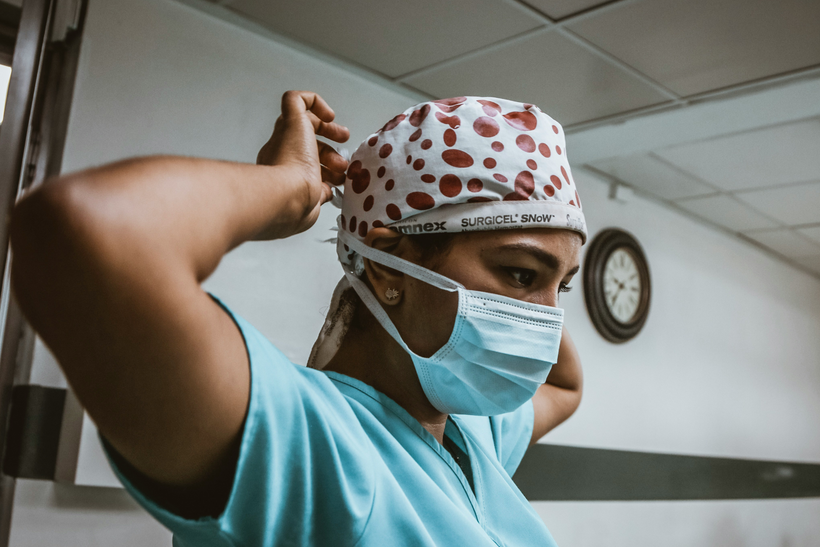
While all healthcare professionals have stepped up during the COVID-19 pandemic and are essential to providing quality care, registered nurses are with patients 24/7 and provide essential, consistent surveillance, often being the first to take immediate action and alert colleagues in order to save patients. “I cannot stress enough that it is not about beds and space, it is about having a high-quality and properly educated workforce to care for the patients in those beds and spaces,” says Donna Havens, PhD, RN, FAAN, Connelly Endowed Dean and Professor of the M. Louise Fitzpatrick College of Nursing, who adds that the process depends on a highly skilled workforce. Though in some cases, because of the growing shortage across the nation during the pandemic, members of the workforce may not have the skills or experience to care for patients in the settings in which they may have been placed during the pandemic. Nurses who typically work in one particular clinical setting, e.g., pediatrics, may now be asked to provide care to adult intensive care unit (ICU) patients with very little education, if any, regarding the particulars of caring for this population. This may impact the quality of care—as well as increase distress and burnout among the workforce. The number of hospitalized patients is growing exponentially each day, and the healthcare workforce is expressing growing concern, distress, disappointment and anger about the numerous issues and challenges within the healthcare settings—as well as in regard to the general population disregarding healthcare experts’ and scientists’ guidance to adhere to practices that will mitigate the spread of the virus. Media coverage is articulating the workforce’s dismay and their calls for help—because they are tired, burned out and facing a struggle to go to work. While some traveling healthcare professionals, who practice by accepting assignments as temporary reinforcements across the country, were being sent to hot spots earlier in the pandemic, there are so many hot spots across the country today that this may no longer be a solution to ameliorate the shortage of quality care providers. Havens and colleagues at Villanova’s M. Louise Fitzpatrick College of Nursing launched a national 20-year study in May—the CHAMPS study—to explore the emotional and physical wellbeing of the healthcare workforce and those who support care. Their early findings document high levels of depression, stress and sleep issues. “Not only is the healthcare workforce growing tired, distressed and burned out, but many are also becoming ill themselves—many dying of COVID-19. This is demoralizing and severely impacts the number available to provide care. Some of the respondents from the CHAMPS study describe caring for healthcare colleagues who died from COVID while they were caring for them.” The World Health Organization designated 2020 as the Year of the Nurse and Midwife, and 2020 is also the 200th birthday of Florence Nightingale, who founded the nursing profession. “How ironic that during this time, nurses find themselves working in surge hospitals in tents, basketball arenas, parking garages and so forth, just as Nightingale’s early career was spent implementing processes to improve sanitation and hygiene,” says Havens.


Baylor Expert on Remote Work Shares 5 Key Tips to Make the Most of Working from Home
The international response to the COVID-19 public health crisis has led millions of workers to make home their new office as communities and organizations promote social distancing to slow the spread of the virus. For many individuals, this spring marks the first time they will have worked from home for a substantial amount of time. Sara Perry, Ph.D., assistant professor of management in Baylor University’s Hankamer School of Business, an internationally-recognized remote work researcher and author of a 2018 study published in the European Journal of Work and Organizational Psychology, offers tips in five key areas for employees to consider as they make the most of working from home. “Research has given us some good empirical evidence of key areas that will help remote work be more successful,” Perry said. Create a physical work space. Perry: If it’s possible, we have to have a separate working space, especially if you can close the door to focus. This would be ideal, but if you can't do that, try setting up different workspaces around your home that are well-defined and that you can “close” at the end of the day to help maintain a balance in terms of your family and your work. Now, if you have kids in the mix as well, then I think we need to set up a workstation for them as well. It can be the kitchen table or the bar. Younger kids can have stations of their own, too – like the stations they would have in preschool. Some people even talk about making a standing desk with books, to be able to move your position throughout the day. Everyone in the family might even like to rotate around throughout the day, sharing the different work spaces. Think about how you can work outside, too, weather permitting. Adhere to a work schedule – and take breaks. Perry: We aren't going to have clear boundaries of time. We're going to have to make them. The best thing to do is to start with a schedule similar to what you would already be doing if you went to work. If you can try to stick close to the same schedule, you're going to find the transition easier. Don't start sleeping in and doing things completely differently — that will make the adjustment a lot harder. Take breaks. Research by my colleagues Emily Hunter and Cindy Wu found that optimal breaks come mid-morning, and it can set you up for the rest of the day. It’s important to get up and move away from the screen periodically. A short break can help preserve your focus and attention resources for the rest of the day. For your further well-being, you will need to turn work off at the end of the day, because no one is going to shut it off for you. Pick a way that you're going to do that, whether it's to put your stuff away, or by planning some sort of transition time that would replace what your commute would have done. Some people will call someone or listen to a podcast. For others, or a walk around the neighborhood provides something to transition and decompress. Think about what you would normally do (or want to do) and see if you can work that in for your own transition from work to family time. Connect with others. Perry: The change in physical environment is going to be a big change even for people who are used to working remotely. At work, you may feel a sense of connection to people even if you don’t even talk to them. You at least have their presence, and we’re going to miss that in the coming weeks. One of the biggest concerns in the remote work literature is isolation, and while individuals who have families at home might not feel isolated from people in general, we might feel isolated from our professional lives and identity. We’ll have to be more proactive about using technology in a way to stay connected while still remaining productive. We don’t want to have virtual meetings for the sake of meetings, but we might want to have some for the sake of connection. For leaders, check in and make sure people have resources and that they are doing okay as we all adapt to a virtual workspace. Try to be proactive about it. Maybe we have a video call simply to check in for 30 minutes at the end of the day or whenever, just try to stay connected. Help children and family adjust. Perry: With my children, I’m thinking about how to create some type of structure, taking lessons from our homeschool friends about how they set up their day. I’ve found that my children and my friends’ children get excited about reconstructing their own schedule from school at home. So, let them have some input about what their day should look like, and try to work your schedule in tandem or in parallel with that. Scheduling loose blocks of time for tasks throughout the day can help with this, too. Blocking off time can help you communicate, “for the next 30 minutes or the next hour, we’re all going to work on this activity at our separate stations, then meet and redirect. We know it's possible because a lot of schools have a model where students are self-directed. You give them direction and then they go do it. However, we also don’t want to over-schedule, or over-do anything. We need to enjoy the time that we have with them, and be grateful for that, and practice gratitude daily as we try to manage all of this.” Manage expectations. Perry: In light of everything that we're facing, it’s important to stay flexible. That’s true for leaders—really try to have flexibility and allow your employees to figure out how remote work best works for them. We can't micromanage from afar. We can check in, make sure everyone has resources, make sure people are doing OK. Some people need a little more of that than others, but we really need to just adapt and be flexible. It’s important that everyone should try to be realistic, be clear with expectations, but also try to be realistic about what's actually going to happen over the next several weeks. All of us are under a lot of stress, more stress than normal. So, we just have to have realistic expectations and recognize that all of us, and our leaders, are experiencing a learning curve. We need to think about the big picture as we roll this out, and really keep employee wellbeing as the number one consideration. Note: This interview is adapted from Dr. Perry’s interview on the Baylor Connections podcast. Visit the Baylor Connections website to listen to the full interview. ABOUT BAYLOR UNIVERSITY Baylor University is a private Christian University and a nationally ranked research institution. The University provides a vibrant campus community for more than 18,000 students by blending interdisciplinary research with an international reputation for educational excellence and a faculty commitment to teaching and scholarship. Chartered in 1845 by the Republic of Texas through the efforts of Baptist pioneers, Baylor is the oldest continually operating University in Texas. Located in Waco, Baylor welcomes students from all 50 states and more than 90 countries to study a broad range of degrees among its 12 nationally recognized academic divisions. ABOUT HANKAMER SCHOOL OF BUSINESS AT BAYLOR UNIVERSITY At Baylor University’s Hankamer School of Business, integrity stands shoulder-to-shoulder with analytic and strategic strengths. The School’s top-ranked programs combine rigorous classroom learning, hands-on experience in the real world, a solid foundation in Christian values and a global outlook. Making up approximately 25 percent of the University’s total enrollment, undergraduate students choose from 16 major areas of study. Graduate students choose from full-time, executive or online MBA or other specialized master’s programs, and Ph.D. programs in Information Systems, Entrepreneurship or Health Services Research. The Business School also has campuses located in Austin and Dallas, Texas. Visit www.baylor.edu/business and follow on Twitter at twitter.com/Baylor_Business.



Baylor Study: What Does It Take to Be an ‘Ideal Daughter?’
Researchers say new study gives voice to daughters and value to their role in the family WACO, Texas (Nov. 11, 2019) – The roles of daughters in the family structure and in society are difficult to define and they’re rarely understood – even by daughters themselves – said Allison Alford, Ph.D., clinical assistant professor of business communication in Baylor University’s Hankamer School of Business. Alford, who served as an editor on the book “Constructing Motherhood and Daughterhood Across the Lifespan,” is the lead author on a new study, “Role Expectations and Role Evaluations in Daughtering: Constructing the Good Daughter,” published in the latest edition of the Journal of Family Communication. “Our research has found that ‘daughtering’ is invisible work that is not often credited, and it’s as unique as the individual women who are doing the work,” Alford said. “This study and subsequent conversations hopefully will bring to light the idea of daughtering. And as more people hear about it and learn about it, then we’ll start to give credit to it and notice it in our own lives.” The study centers on mother-daughter relationships, specifically, and looks at how daughters perceive and define their roles in that relationship. Researchers interviewed 33 women, ages 25-45, who have living mothers under the age of 70. Those age ranges were chosen in order to capture a time period for mothers and daughters with the greatest likelihood that neither individual was the caregiver of the other and both were in relatively good health, the researchers wrote. Expectations of the “Ideal Daughter” Alford said analysis of the interviews with the daughters revealed four themes or role expectations for an “ideal daughter” in relation to her mother: Showing respect Providing protection Eliciting mothering Making time for connection Each of those efforts requires work, and that work often goes unnoticed or is undervalued – even by daughters themselves, Alford said. The study noted that many of the women who were interviewed initially – almost naturally – anticipated talking about their mothers instead of themselves. “When asked to think about themselves as daughters and their communication in the relationship, many found themselves doing so for the very first time,” the researchers wrote. “These women noted that putting the emphasis on themselves and describing their role as adult daughters felt strange or awkward in its newness.” Showing Respect Respect, the study showed, was the most common topic addressed by the daughters. Based on the interviews, a daughter’s respect for her mother could be demonstrated by avoiding conflict, silencing one’s disagreement with her mother, reacting positively to her mother’s messages and supporting her mother’s power position. “Daughters demonstrated respect by adapting their communication to affirm their mothers’ competence or otherwise avoid offending and disregarding them,” the researchers wrote. One woman, identified as Kelsey in the study, said she listens to her mother talk about things she dislikes and sometimes apologizes to her mother even when she doesn’t feel apologetic. “I would never say, ‘Mom, I don’t want to hear it,’ because I would never say that to my mom. Ever. I would listen to her … I would listen to her tell me things I don’t wanna hear all day long, and never tell her,” Kelsey said. Providing Protection A number of the adult daughters interviewed felt there was an expectation that they would actively protect their mothers. This could be a daughter protecting her mother’s wellbeing, protecting her mother from being taken advantage of, or protecting her from the disrespectful actions of others, including siblings. One woman, Sabine, described a time when she had to stand up to her brother because she felt he was taking advantage of their mother’s goodwill. In addition, she said she had to “get after” her mother for not employing boundaries with the brother. The examples in the study illustrated that many daughters were happy to be champions for their mothers, but some noted that it was difficult to be protectors. Eliciting Mothering A number of the daughters who were interviewed said they struggle a bit with their roles as adults – or even as mothers themselves – who still need to engage with their mothers and ask for assistance. Many said they still seek interaction and approval from their mothers as a sense of pride. “When a daughter calls upon her mother for guidance or activates a need for an emotional evaluation such as pride, she is fulfilling her role expectations,” the researchers wrote. One woman, Lottie, said of her mother: “She compliments me as a mother. I think I feel like a good daughter when I feel like I am making her proud and she lets me know that she is proud of me … and I guess that makes me feel like a good daughter.” Connection In their descriptions of “good daughters,” a number of the daughters interviewed said it was important to set aside time to connect with their mothers. This, the study showed, could be anything from talking on the phone, meeting face to face, taking grandchildren to visit or even moving to a home nearby. Sometimes the expectations are stated outright by the mothers, but that’s not always the case, the researchers explained. Changing the Language Alford said her research has shown that the “language” of daughtering is almost nonexistent in social discourse as well as in scholarly or popular works. For example, she said, a daughter who is caring or supportive is often described as being “motherly.” “That’s an example of giving credit to mothers as being the only people who care for others, versus saying that the daughter is a caring person or that she’s supportive,” Alford said. “We want to think of daughtering as its own form of work and responsibility and put a value on that, so we can see the value that we’re putting into our family relationships and family systems.” One desired outcome of research into this area, Alford said, is that daughters will be given a voice and their valuable work within the family will be acknowledged. “The work that daughters do is important and valuable and the more that we talk about it and bring it to light, the more that we will understand what daughters can bring to the relationship and improve the mother-daughter relationship,” she said. ABOUT THE STUDY The study, “Role Expectations and Role Evaluations in Daughtering: Constructing the Good Daughter,” is published in the Journal of Family Communication. Authors are Allison Alford, Ph.D., clinical assistant professor of business communication in Baylor University’s Hankamer School of Business; and Meredith Marko Harrigan, Ph.D., professor of communication at SUNY Geneseo. ABOUT BAYLOR UNIVERSITY Baylor University is a private Christian University and a nationally ranked research institution. The University provides a vibrant campus community for more than 17,000 students by blending interdisciplinary research with an international reputation for educational excellence and a faculty commitment to teaching and scholarship. Chartered in 1845 by the Republic of Texas through the efforts of Baptist pioneers, Baylor is the oldest continually operating University in Texas. Located in Waco, Baylor welcomes students from all 50 states and more than 90 countries to study a broad range of degrees among its 12 nationally recognized academic divisions. ABOUT HANKAMER SCHOOL OF BUSINESS AT BAYLOR UNIVERSITY At Baylor University’s Hankamer School of Business, integrity stands shoulder-to-shoulder with analytic and strategic strengths. The School’s top-ranked programs combine rigorous classroom learning, hands-on experience in the real world, a solid foundation in Christian values and a global outlook. Making up approximately 25 percent of the University’s total enrollment, undergraduate students choose from 16 major areas of study. Graduate students choose from full-time, executive or online MBA or other specialized master’s programs, and Ph.D. programs in Information Systems, Entrepreneurship or Health Services Research. The Business School also has campuses located in Austin and Dallas, Texas. Visit www.baylor.edu/business and follow on Twitter at twitter.com/Baylor_Business.


Education is a staple in our modern society. The path to success, security and stability often lies in one form or another of post-secondary training, education and higher learning. And though education may be an investment in one’s future – it’s an expensive investment and that has led to some scrutiny. Student debt is in the trillions. Completion rates hover at about 60 percent. Tuition is increasing at twice the rate of inflation. Now there are literally thousands of institutions in America offering higher education. Some are household names and others offer unmatched prestige, learning and success after graduation. But how can they deliver on those promises? At Western Governors University – that answer was one of its first priorities upon opening. “Since Western Governors University enrolled its first student 20 years ago, the university has been data-driven and student-obsessed. We track student progress, retention, completion and satisfaction, and we even poll employers of our graduates to get feedback on graduate preparedness and performance. These metrics help us identify needed innovations and improvements and inform new efforts -- and, while these data have proven useful, we wanted to know more. Gallup has established measures designed to gauge workforce and life outcomes, including employee engagement, wellbeing and emotional attachment to one's university. In addition, Gallup has identified five elements of wellbeing -- career, social, financial, community and physical -- and, based on a series of questions, can determine whether individuals are thriving, struggling or suffering in each element.” May 13 - Gallup Are you a reporter covering higher-ed who might be interested in how schools are delivering for their students after they graduate? If you have questions – let our experts help with your stories. Scott Pulsipher serves as the President of Western Governors University. He is an expert in the areas of higher learning, higher education access and innovation. Scott is available to speak with reporters about this topic – simply click on his icon to arrange an interview.


#NeverAgain - Students Taking Matters Into Their Own Hands
On April 20, 2018, the 19th anniversary of the Columbine High School shooting, students across the nation will walk out of their classrooms in protest of their leaders’ failure to pass laws protecting them from gun violence. Just last month, hundreds of thousands of students, teachers, and supporters rallied in Washington DC, for March for Our Lives, led by a group of students from Marjory Stoneman Douglas High School. These students, some of the latest to be affected by gun violence in schools, are using their voices to inspire change. John Meisner, Assistant Professor of Education at Southern Utah University and advocate for students on and off campus, recently voiced his concerns and support. “As a voting adult, I’m horrified that this problem has only been getting worse since the Columbine High School tragedy, and our elected leaders pretend that there is nothing that can be done. We have countless laws that have been enacted regarding public safety, and yet for this one, we do nothing.” Meisner recommends that as parents, mentors, and peers, we should support the efforts of these students. “I’m hugely proud of these students for refusing to accept this inaction and taking matters into their own hands. I don’t know that we’ve ever seen such organization and movement by high school and junior high school students. They’re often disrespected as ‘entitled’ and ‘lazy,’ but this latest tragedy has mobilized this population into action. We’re seeing youthfulness and enthusiasm combined with a social media savvy that is a powerful force. I think that as adults we should be proud of these efforts and support them fully.” Students crave relevance in their school work and lives. According to Meisner, the walkout is a perfect example of this. “I’m hopeful that they will not relent on the pressure until something is done. Maybe with this new movement, the Parkland tragedy will be the last.” “As educators, we should not only be concerned about the physical well-being of our students but should also see that their academic wellbeing is important too. They will be fully invested in topics that matter to them.” John Meisner has a deep love of education and a passion for teaching. Meisner also serves on the Allies on Campus committee working to support LBGTQ+ students and faculty through social events and educational outreach. He is familiar with the media and available for an interview. Simply visit his profile. Source:
