
Experts Matter. Find Yours.
Connect for media, speaking, professional opportunities & more.

ChristianaCare and The Wistar Institute advance partnership with new cancer research strategies
ChristianaCare’s Helen F. Graham Cancer Center & Research Institute is advancing its historic partnership with the Ellen and Ronald Caplan Cancer Center of The Wistar Institute in Philadelphia with three new research projects under way. The new research projects consist of a population health study targeting triple negative breast cancer. Other projects focus on a new therapeutic target for epithelial ovarian cancer, the most lethal gynecologic cancer in the developed world, and the development of “mini organs” derived from stem cells. Targeting triple negative breast cancer Delaware has one of the highest incidence rates of triple-negative breast cancer in the United States. This highly aggressive cancer has few treatment options, because the cells test negative for three known treatment targets – estrogen, progesterone and HER2 protein receptors. Working with patient data from the Graham Cancer Center, researchers are investigating potential contributing factors such as diet, alcohol use and genetic variants among women, and the effects of these on cancer metabolism. The team will also examine spatial relationships between cancer “hot spots”—geographic areas with a higher-than-expected prevalence—and modifiable risk factors. Key resources for the study are blood and tissue samples from the Graham Cancer Center’s Tissue Procurement Center and its statewide High-Risk Family Cancer Registry. The research team will be led by Director of Population Health Research at ChristianaCare Scott Siegel, Ph.D., and Lead Research Scientist Jennifer Sims Mourtada, Ph.D., at the Graham Cancer Center’s Cawley Center for Translational Cancer Research (CTCR). They will join Zachary Schug, Ph.D., at Wistar’s Molecular and Cellular Oncogenesis Program. Researching novel therapy for ovarian cancer The latest study supported by the Graham Cancer Center’s Tissue Procurement Program targets KAT6A expression as a novel therapy for ovarian cancer caused by a specific genetic mutation, called PP2R1A. Epithelial ovarian cancer is the most common form of ovarian cancer and the leading cause of gynecologic cancer deaths in the United States. Chemoresistance to currently available platinum-based drugs like cisplatin represents a major treatment challenge, as more than 50 percent of affected women ultimately relapse and die from this disease. Wistar’s Rugang Zhang, Ph.D., leader of the Immunology, Microenvironment and Metastases Program, is focused on developing novel therapeutics for subtypes of ovarian cancer that currently have no effective therapies and on improving the current standard of care. Dr. Zhang’s previous work suggests that KAT6A signaling plays a critical role in ovarian cancer progression. Targeting this signaling pathway could be an effective strategy for treating ovarian cancer. Working with Dr. Zhang on this project are Graham Cancer Center gynecologic oncologists Mark Cadungog, M.D., director of Robotic Surgery, and Sudeshna Chatterjee-Paer, M.D., and Cawley CTCR’s Stephanie Jean, M.D., director of Gynecologic Oncology Research. Also collaborating with the team is Wistar’s Alessandro Gardini, Ph.D., assistant professor in the Gene Expression & Regulation Program. ‘Mini organs’ offer hope for therapeutics Dr. Sims-Mourtada at the Cawley CTCR will lead a new program to culture organ-specific tissue from stem cells that could change the way diseases are studied and treated. These so called “mini organs” or “organoids” are three-dimensional tissue cultures grown in the lab that replicate the complexity and functions of a specific tissue or organ found in the body. Organoids offer scientists a better model for how drugs and other therapeutics might interact with a patient’s particular type of tumor, opening new avenues for precision medicine. “The ability to grow each patient’s tumor in a three-dimensional organoid along with our capability to create patient-derived xenograft or animal models as part of our PDX core, will allow us to fully capture the effects of genetic as well as gene altering behavioral and environmental influences that are lacking in current research models,” said Dr. Sims-Mourtada. “Our collaboration with Wistar to build these programs raises our clinical platform to the next level for studying new cancer biomarkers and treatments.” Advancing a Pioneering Partnership The Graham Cancer Center made history when it signed a first-of-its-kind agreement in 2011 with The Wistar Institute, pairing a National Cancer Institute, NCI-designated basic research institution with a community cancer center that is also an NCI Community Oncology Research Program (NCORP). “Our partnership with Wistar has attracted national recognition as a model of collaboration that leverages cutting-edge research to benefit cancer prevention and therapy statewide,” says Nicholas J. Petrelli, M.D., Bank of America endowed medical director of ChristianaCare’s Helen F. Graham Cancer Center and Research Institute. “With Wistar, our productive collaborations over the last decade continue to drive discovery research toward clinical trials to benefit patients here at the Graham Cancer Center and in communities everywhere.” “The Graham Center has been an ideal partner in our mission,” said Dario C. Altieri, M.D., Wistar president and CEO and director of the Ellen and Ronald Caplan Cancer Center. “Our scientists at Wistar have access to clinically-annotated primary patient specimens of the highest quality. As the majority of patients at the Graham Cancer Center are treatment naïve, this collaboration affords an opportunity to conduct unique, high impact mechanistic and correlative studies that will ultimately advance important scientific discoveries that hopefully will lead to better cancer therapies.”


Podcast: Women in business - why it’s a strength, not a weakness
Self-confidence is the key when it comes to overcoming barriers in the male-dominated boardroom Unlock the value of mentoring and the ‘coaching culture’ to get the best out of yourself and your business Successful female business leader launched company while doing an MBA at Aston University and caring for her baby. Budding female entrepreneurs should ignore the “voice on the shoulder” undermining their confidence and fulfil their dream of starting their own business. That is the advice given by a professor at Aston University and a successful female business leader in a podcast created to mark International Women’s Day on 8 March. Helen Higson, professor of higher education learning and management at Aston Business School, spoke about the challenges facing women in the latest episode of the ‘Aston means business' podcast series, presented by journalist Steve Dyson. Daniella Genas, who launched her consultancy company She’s The Boss International while studying for her MBA at Aston Business School, was also interviewed on the podcast. Professor Higson, who was awarded an OBE in 2011 for services to higher education, said she had three main tips for women seeking to start their own businesses. She said: “Be yourself, be authentic, don’t try to mimic anyone else, and don’t let that voice on the shoulder chipping away at your confidence win out. “Where this lack of confidence comes from, I do not know, but self-doubt can really get in the way, so have a conversation with your lack of self-confidence by saying ‘shut up you, I will show you’.” The second piece of advice was to “challenge yourself kindly, be very kind to yourself, and don’t beat yourself up”, while the third was to grasp the “power of mentoring and coaching”, with Professor Higson herself having trained as an executive coach during lockdown. She added: “Coaching culture is fashionable now but it’s actually only trying to help people to take responsibility for maximising their own performance.” Daniella Genas, who also completed the Goldman Sachs 10,000 Small Businesses programme at Aston Business School, has similar advice for women looking to emulate her success. She explained that the first issue was for women to “see your difference as a strength, not as a weakness”. She said: “If more women embraced their femininity, their knowledge and competence, and stop allowing the fact that they are women to make them second guess themselves, we’d be able to get so much further.” Ms Genas said women entrepreneurs should also focus on key systems when building businesses so they are not heavily reliant on the owner. She said: “If you do need to step away to have a child, you are [then] not put in a position where you have to sell your business”. That is particularly relevant to Ms Genas as she was forced to sell her first business, Aspire For You, which she set up in 2006, after becoming pregnant with her first child. However, that decision led her to study rather than go on maternity leave, starting with the Goldman Sachs 10,000 Small Businesses programme and then the MBA at Aston Business School, while caring for her baby. Goldman Sachs 10,000 Small Businesses programme, she recalled, “really changed my mindset”. She said: “I found there were businesses double, triple, quadruple the size that I had that were facing the exact same challenges and problems.” Daniella, who obtained a distinction with her MBA, said completing the programmes gave her the confidence to say ‘I am as good as anybody else and probably better in many areas’. She added: “The idea that I may be seen as less than because I am a woman kind of left my brain.” Her company, which helps female-run businesses grow but in a sustainable way, recently became She’s The Boss International after taking on clients in the US and St Maarten. It is a far cry, she says, from being told by teachers at her comprehensive school that she should set her sights a bit lower, even asking her ‘have you considered being a cleaner?’. Professor Higson said Daniella’s story demonstrated the value of education and energy. “You shouldn’t see anything as a barrier,” she said. “I am quite small, 5ft 2in, and one woman leader said to me: ‘You’re going to find it very difficult to be a female leader because you are so small.’ I replied ‘I may be small but I make up for it with my energy.’ It’s about your impact rather than what you look like.” Episode 7 in series 4 of ‘Aston Means Business’ podcast can be found HERE.

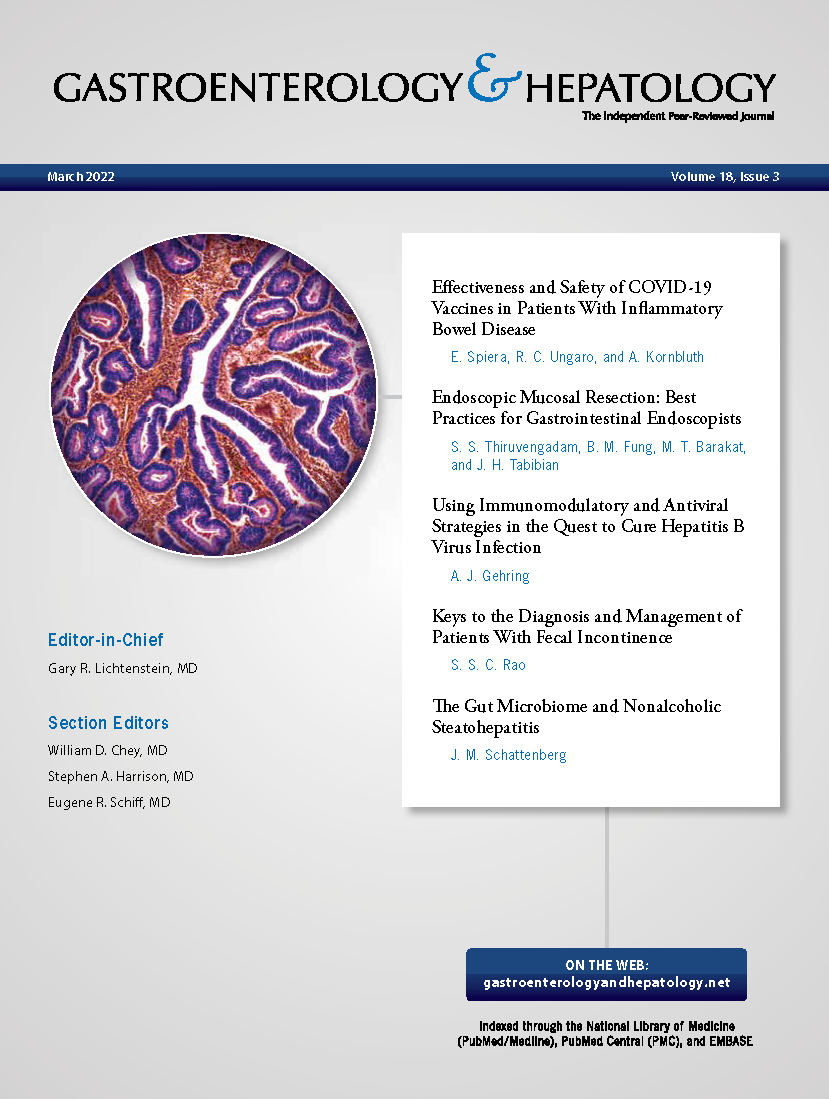
Bowel or fecal incontinence, according to the Mayo Clinic, “is the inability to control bowel movements, causing stool (feces) to leak unexpectedly from the rectum. Also called bowel incontinence, fecal incontinence ranges from an occasional leakage of stool while passing gas to a complete loss of bowel control. Common causes of fecal incontinence include diarrhea, constipation, and muscle or nerve damage. The muscle or nerve damage may be associated with aging or with giving birth.” Dr. Satish Rao is a seasoned gastroenterologist and an expert in digestive health, particularly the brain-gut connection. Rao, a professor of medicine at the Medical College of Georgia at Augusta University, recently offered a Q&A on the topic of fecal incontinence with the journal Gastroenterology & Hepatology. What is the prevalence of fecal incontinence in the adult population? Surveys have indicated a prevalence of approximately 9% to 10% in the United States. A recent study reported a 14% prevalence, although this study was Internet-based and, thus, may not have included many elderly patients, as they may not be as computer-savvy as younger patients. It is safe to say that one in seven Americans currently suffers from fecal incontinence. Prevalence appears to be equal in men and women, although women outnumber men almost three to one when it comes to gastroenterology clinic visits and health care-seeking. Men may be too embarrassed to bring the issue of fecal incontinence to the attention of a physician, but when asked about it, they will admit and discuss it. Also, extracting information from a patient about fecal incontinence depends on how the question is asked. Asking patients whether they have daily leakage vs whether they ever have had leakage or have had leakage in the past month will elicit different responses that a clinician may interpret differently. It is important to remember that leakage is not a physiologic event that a healthy adult should have at any time, even once a month or once a year. Not having the capacity to control bowel evacuation or having leakage unaware of its occurrence signals an abnormality. What are notable risk factors for fecal incontinence? In women, pregnancy can be a risk factor, particularly if giving birth involves pelvic tissue damage, such as injury inflicted by forceps use or the unfortunate occurrence of a significant tear. Neurologic or back injuries are other common risk factors. Also, chronic diarrhea can progress to fecal incontinence owing to severe irritation of the rectum or irritants in stool. Further, any condition that changes the ability of rectal capacity can result in fecal incontinence. These circumstances can include surgery or radiation to the rectal area. Hear from a patient and learn more about Rao's research using magnetic stimulation to treat fecal incontinence. What treatment modalities are currently available? Simple, conservative treatment consists of educating patients about fecal incontinence and instructing them to avoid precipitating events. For example, although many people love to have a meal followed by a cup of coffee and a walk, such a sequence of activities is ill-advised for an incontinent patient: the meal provokes a gastric-colonic response, coffee is a powerful colonic stimulant, and exercise also stimulates motility. This triad creates the perfect storm for a stool leakage or accident while the patient is out on the after-dinner walk. Antidiarrheal therapies can be very effective but only in approximately 15% to 20% of patients. Another treatment is biofeedback, which can correct muscle weakness using behavioral techniques. Biofeedback provides resolution in approximately 50% to 70% of patients. The traditional model of office-based biofeedback requires that the patient make 6 or even up to 10 visits to a specialty clinic. This may mean that some patients must drive very long distances to an appropriate care facility that is staffed with trained personnel or physical therapists. This scenario presents a significant challenge for many patients, which is increasingly being recognized by health care professionals and researchers. Good devices for home-based biofeedback have been scarce; however, such a device was recently approved by the US Food and Drug Administration. The research center at Augusta University has tested it in a clinical trial setting and found it to be quite effective as a home biofeedback treatment. Dextranomer is another treatment modality. It involves injection of small beads of dextran polymers into the anorectal region. The beads form a protective cuff or a buffer to stop stool leakage. Another treatment modality is sacral nerve stimulation using the Medtronic InterStim system. The patient is outfitted with a pacemaker-like device with wires that continuously stimulate the sacral nerves that control stool events. In the case of a torn muscle, suturing the torn ends to reduce the size of the anorectal opening is usually useful for women postpartum, although the effect may not be sustained in the long term. What emerging treatments and research should clinicians be aware of? One emerging treatment developed at Augusta University’s Clinical Research Center is called translumbosacral neuromodulation therapy (TNT). TNT is similar to TAMS and involves the fecal delivery of magnetic energy through an insulated coil to the lumbosacral nerves that regulate anorectal function. The pulses generated are of the same strength as those of magnetic resonance imaging. The team at Augusta University’s research center has shown that TNT mechanistically improves nerve function and substantively improves stool leakage. A sham-controlled study and long-term study are currently underway at Augusta University and Harvard University’s Massachusetts General Hospital. These studies are being sponsored by the National Institute of Diabetes and Digestive and Kidney Diseases. A multicenter study sponsored by the National Institutes of Health that the team at Augusta University also is involved with is the FIT (Fecal Incontinence Treatment) trial. This randomized study compares biofeedback with dextranomer injection. Also, as mentioned, tools are becoming available for home biofeedback that should allow many more affected patients to receive treatment because they can do so in the comfort of their own home. The research center at Augusta University is working on a novel home biofeedback protocol for the treatment of constipation and fecal incontinence. Thus, novel noninvasive tools are emerging for fecal incontinence. The repertoire of current and emerging tools holds the promise of improved outcomes for patients with fecal incontinence. Rao is also the founder of the Augusta University Digestive Health Center. He is available to speak to media regarding any aspect of digestive health -- simply click on his icon now to arrange an interview today.



It’s official — President Biden has selected Ketanji Brown Jackson as his nominee to the Supreme Court. If confirmed, she will the first Black woman to sit on the highest court in the nation. This is a momentous occasion for American history and reporters are clamoring to learn more. Our experts are ready with answers to help with your stories. Dr. Martha Ginn, professor of political science at Augusta University, is an expert on the judicial process, constitutional law and the U.S. Supreme Court. She discussed Jackson's credentials and the significance of her nomination. What is Ketanji Brown Jackson’s background and what credentials would bring to the Supreme Court? Why is she President Biden's top choice? President Biden made a campaign promise to nominate a Black woman to the SCOTUS if he had a vacancy to fill. While he had several strong contenders, Judge Brown Jackson is an obvious choice for many reasons. Like all current Justices, excluding Justice Barrett, Judge Brown Jackson has an Ivy League education. She has also clerked at the Supreme Court for Justice Breyer (whom she would replace). Interestingly, Justice Kavanaugh clerked for the Justice he replaced (Justice Kennedy) as well. Background and experience: Judge Brown Jackson was a federal district court judge for eight years (appointed by President Obama) and was just confirmed to the DC Court of Appeals last summer. The DC circuit court is seen as a training ground of sorts for Supreme Court Justices, as many nominees serve there first. What makes Judge Brown Jackson different is her experience as a public defender and then vice chairman of the sentencing commission. Bringing that experience to the Court will provide a much needed perspective on the rights of the accused. The Court recently heard a case regarding implementing the First Steps Act retroactively and it was apparent in the oral argument that some Justices did not appreciate the realities and complexities of sentencing in our criminal justice system. Judge Brown Jackson’s background will help fill that void. What does her appointment signify, seeing as she would be the first Black woman (but only third Black justice) in the history of the Supreme Court, as well as the first former public defender? Having four women on the Court at the same time will be important. More women than men attend law school now but the higher ranks of the profession are still male dominated, so having near parity in the nation’s highest Court is meaningful. Her race is also significant, since she will be only the third Black member of the Court and this would be the first time we have two Black members serving together. It’s likely she and Justice Thomas will be very different ideologically but regardless, demographic representation matters. More than ever the Supreme Court is deciding very controversial matters that impact everyone. Having a Court that represents all voices is significant in maintaining its legitimacy and making sure opposing viewpoints are considered in decision-making. With everything going on currently the nation and world, when do you project a vote will happen, and do you see it going through? Even with all that is going on in the world right now, this will be a top priority to the Democratic Party, particularly with President Biden’s low polling numbers and the upcoming midterm elections. With the slimmest of voting margins possible, the sooner the vote occurs, the better for the Democrats. The Republicans set the precedent with the Barrett nomination that the process can be done in weeks rather than the months taken in previous nominations. I anticipate the Democrats will follow that expedited model. It will be interesting to see if the three Republican senators who voted for her Court of Appeals appointment less than a year ago will oppose her nomination here. Justice Breyer conditioned his retirement on the successful appointment of his replacement. He intends to retire at the end of this year’s term (likely early July), so I would anticipate her confirmation vote by then at the latest. If you are a journalist covering this story, that’s where our experts on this topic can help. Dr. Martha Ginn, professor of political science at Augusta University, is an expert on the judicial process, constitutional law and the U.S. Supreme Court. Ginn is available to speak with media about this topic — simply click on her icon to arrange an interview today.

Aston University programme aimed at helping diverse businesses hailed a success
The Diverse Supply Chains ERDF programme assists diverse and minority-owned businesses to enter the supply chains of major organisations Diverse businesses are those owned and managed by women, people with limiting disabilities, people who are LGBT+, ethnic minorities and young entrepreneurs They have also had the opportunity to attend a workshop programme with access to funding. An Aston University programme aimed at helping diverse businesses has been hailed a success by the companies taking part. The Diverse Supply Chains programme supports local diverse1 businesses to enter the supply chains of major organisations through a specialised workshop programme and facilitates relationships between the businesses and large private and public sector corporate contractors. It also provides grants worth up to £2500 (match funding). The programme is being delivered in collaboration with Balfour Beatty Vinci, High Speed 2, Birmingham City Council, NatWest, The OM Group and Bournville Village Trust. To date, 98 businesses have been supported via two workshop programmes, out of which 19 have received grants of £2500. Furthermore, the programme has announced that three businesses have won a total of six bids since completing the programme. Professor Nick Theodorakopoulos, Programme Director, said: “I am delighted to see that the support we’ve been delivering to local diverse businesses has been really well received. Particularly the opportunity given to the SMEs to attend an innovative workshop programme with key industry partners; with participating businesses also having access to some funding in order to support their business tendering/supply chain activities.” Kavita Jeerh, ERDF Programme Manager at Aston Business School, said: “I am really pleased with how the programme has progressed so far. Considering we were due to launch the programme in April 2020, due to lockdown we were forced to re-assess the programme delivery and make key components of it accessible online. “This was challenging, but I am pleased to see that the two workshop programmes we have already delivered have met with remarkable success. “We are now half-way through delivering the final cohort.” Kamaljit Suman, co-founder of Art of the Heart CIC, commented: “If we hadn’t have done the Diverse Supply Chains course we would’ve gone down as a business - there’s not much doubt in my mind that that’s the case. “Since then, we have won our first contract with Birmingham City Council.”

Ask an Expert - Are American Fan-Based Businesses at Risk for Decreased Revenue?
Modern fandom, according to Mike Lewis, is about having a passion for something—a sports team, entertainer, politician, fashion brand, a university—something. Lewis, professor of marketing and faculty director, Emory Marketing and Analytics Center (EmoryMAC) and host of the podcast, Fanalytics, considers fandom important because what people are fans of defines a modern culture. We can laugh at the sports fan with the painted face and the open shirt and the spikes on the sleeves, but the reality is, the traits that drive that level of enthusiasm and commitment are the traits that change the world outside of the arena. Mike Lewis, professor of marketing and director of EmoryMAC To better understand modern fandom and its effect on culture, Lewis, along with Yanwen Wang, Associate Professor of Marketing and Behavioral Science, and Canada Research Chair in Marketing Analytics, University of British Columbia, created EmoryMAC’s “Fandom Analytics Initiative.” The Fandom Analytics Initiative’s first report, Next Generation Fandom Survey, Generation Z: The Lost Generation of Male Sports Fans, published in September 2021, examines the results of a national survey the initiative commissioned. Nearly 1,400 people across four demographic groups—Generation Z, Millennials, Generation X and Baby Boomers—participated in the survey. Is Gen Z the Lost Generation of Male Sports Fans? The results reveal a somewhat troubling trend: Generation Z males (those born between 1990 and 2010) “seem to be increasingly indifferent and negative to traditional sports,” Lewis and Wang write in their report. “Generation Z’s relative lack of passion for sports and other categories is troubling for fandom-based businesses and a curiosity for those interested in the state of American society.” While only 23 percent of Generation Z defined themselves as “avid sports fans,” 42 percent of Millennials did, along with 33 percent of Gen Xers and 31 percent of Baby Boomers. Perhaps even more revealing is the percentage of respondents who considered themselves “anti-sports fans”—a startling 27 percent of Generation Z tagged themselves as “anti-sports” compared to 7 percent of Millennials, 5 percent of Gen X, and 6 percent of Baby Boomers. “That was unexpected,” says Lewis, who thought Generation Z would line up similar to Millennials, given that both groups are digital natives. “I’m still more and more surprised at how different Generation Z is than Millennials and, frankly, everyone else.” When Lewis and Wang took a look at the differences between male and female Generation Zers, things got even more interesting. In traditional sports categories (football, basketball, hockey, baseball, soccer), more Generation Z females defined themselves as “avid sports fans” than did their male counterparts. When it came to football, 20 percent of both Generation Z males and females described themselves as avid fans (the lowest percentage of all the demographic groups). But in every other traditional sport, Generation Z “avid sports fan” females outnumbered males by a discernable margin. Only when it came to eSports did Generation Z males outnumber Generation Z females. “I think there’s a very deep issue going on,” says Lewis. “Something fundamental has shifted.” The survey included questions about fandom-related psychological traits, specifically, community belonging and self-identity. On both, Generation Z males scored lower than Millennials. “The findings related to sports are particularly germane from a cultural perspective,” states the report. “Part of the lack of Generation Z fandom is due to younger individuals having less intense feelings of group belonging in general.” Beyond the Playing Field, How Does Loyalty Shine? While the report doesn’t take a deep dive into the psychology behind Generation Z’s fandom differences, it does note that Generation Z came of age during a time of “ubiquitous social media, dramatic demographic changes, and a hyper-partisan political environment,” they write. “These dramatic changes may fundamentally alter how members of Generation Z engage with cultural industries.” Overall, Millennials were shown to have the “highest preference across all sports,” according to the report. Millennials are not only willing to watch games, but they also enthusiastically wear team gear. Baby Boomers are up for watching games but are less interested in following teams on social media. As it turns out, note the authors, Generation Z isn’t totally disconnected. Across the entertainment categories, Generation Z is similar to other generations. “Sports fandom is the outlier,” they state. In addition to sports, Lewis and Wang looked at six other fandom segments: new and now celebrities, social justice culture, athletic excellence, old school personalities, brand fanatics, and Trump Fans. Lewis points to the fact that whatever one thinks of Donald Trump, he does generate fandom. “That passion for whatever it is—sports, politics, movies, music—that’s really what drives the world,” says Lewis. Because of its importance, fandom is, notes the study, “increasingly actively managed,” whether to garner viewers, money, or votes. Recent trends such as streaming across devices, the ubiquity of social media, an increase in demographic diversity (not to mention a once-in-a-lifetime pandemic), have affected mainstream sports and entertainment. As a result, Lewis believes it’s important to study how fans are changing across generations. Leagues, teams, networks, studios, celebrities, and others need to understand why there is less engagement to formulate strategies for acquiring the next generation of fans. Authors Mike Lewis and Yanwen Wang As sports leagues and teams see more growth opportunities with women and increasingly diverse fan bases, Lewis wonders if some sports teams may alienate their current fan bases by marketing to non-traditional groups. “If you’re a league or a team, you’ve got a real dilemma at this point,” he explains. “If the NFL wants positive press, it has to market to the non-traditional fan segments. If they do that, are the traditional fan segments going to be less interested? Perhaps.” EmoryMAC’s research on fandom in the modern age is ongoing. A study into how eSports’ fandom differs from traditional sports fandom is also in process—as is research on how younger demographic groups see colleges and universities as institutions worthy of fandom. EmoryMAC will continue to make data and insights available on its fandom analytics website. “Looking at the fandom and passion of young groups now will tell you a lot about what the world will look like in 20 years,” says Lewis. I suspect that the era of sports being a mass marketing product and also a cultural unifier is probably going to end. Mike Lewis While that strikes Lewis as sad, he and EmoryMAC are merely following the data. “It may be the reality of where this is going,” he adds. If you're a reporter looking to know more - then let us help. Professor Michael Lewis is an Associate Professor of Marketing at Emory University’s Goizueta Business School. In addition to exploring trends in the overall marketing landscape, Lewis is an expert in sports analytics and marketing. He is available for interview - simply click on his icon to arrange a discussion today.



UConn expert weighs in on controversial statue debate at the Connecticut Capitol
What should be the fate of the large statue commemorating John Mason that adorns the Connecticut State Capitol Building? He’s a historic figure and founder of the Connecticut Colony. He also left a legacy of violence and murder, with more than 400 Indigenous people, including 175 women and children, killed under his command. And whether to let his statue stand or remove it has engaged a debate from leading experts, historians, relatives of Mason, and the Indigenous community across the state. UConn’s Manisha Sinha was asked to lend her expertise to the situation: Manisha Sinha, a University of Connecticut professor of 19th century U.S. history, said she is a veteran of debates about the fate of statues memorializing Confederate leaders as well as founding fathers who owned slaves. “I have advocated for the taking down of statues that commemorate Confederate leaders and generals, who I see as traitors to the American republic, fighting for the worst cause in American history, as General Grant put it, in the cause of human bondage,” Sinha said. “On the other hand, I have opposed the taking down of statues of some of our founding fathers, revolutionary figures who did not defend slavery as a positive good.” Sinha said history can be complex, and great men of history can be flawed. “The Mason massacre is not a complex story,” she said. “It was a sheer massacre of non-combatants and of women, children and elders. We cannot excuse this by pointing to internecine warfare among Native Americans.” Mason’s statue is not necessary to teach history, she said. “I think it is high time that you think of removing John Mason’s statue,” Sinha said. “It cannot be contextualized. We do not remember history by statues, especially not in the monumental 19th century forms. We actually end up commemorating people, making them heroic.” November 18 – The CT Mirror This is a sensitive and very important topic as America reconciles with its past and moves forward as a country. And, if you are a journalist covering this topic, then let our experts help with your in-depth coverage and questions. Manisha Sinha is the Draper Chair in American History at the University of Connecticut and the author of "The Slave's Cause: A History of Abolition." She is an expert in the era of America during the 19th Century and available to speak with media regarding this topic – simply click on her icon now to arrange an interview today.



The Case for Career Advocates: An Organization Is Not a Meritocracy
“This blog post is the first in a three-part series that summarizes the key messages I deliver to my students, in the hopes that it can catalyze and support the career success of a broader group of ambitious employees who aspire to make it to the C-Suite,” writes Renee Dye 94PhD, associate professor in the practice of Organization & Management. “Most of my lessons are derived from my own unlikely personal journey from literary scholar to top-tier management consultant to C-suite executive for a publicly traded company, but they are also heavily informed by leading researchers like Sylvia Anne Hewlett. In the final blog, I discuss the impact of remote work on career success.” One of the paradoxes of the Gen-Zs and Generation Alphas is their intuitive understanding of the phenomenon of social media…at the same time they maintain an almost ideological conviction that the workplace – apart from systemic biases – is otherwise a meritocracy, where talent is perfectly and objectively evaluated – and the best and most deserving rise to the top. Surely a cursory exploration of Instagram and TikTok would convince even the most skeptical of the fundamentally idiosyncratic nature of success in a networked world? The Real World is likewise characterized by outcomes in which success is imperfectly correlated with capability level. Someone whose capability level is less than yours may lap you in the race to the top of the organization. That may seem unfair, but that’s because you’re making the mistake of assuming that career success is predicated purely on capability. A survey of MBA graduates from my school a few years ago produced a startling insight: of all the skills that we provided to our students during their MBA tenures, our students felt most unprepared to navigate “organizational politics” in their careers. The reason that I found this fact so astonishing is that today’s students, who are Digital Natives and in part Social Media Natives, are the most connected and self-promoting generation the world has ever seen. Yet today I find that my students continue to exhibit little practical understanding of how career success is forged…so much so that I now devote an entire class session in my core Strategy class to demonstrating the importance of relationship management and advocacy cultivation. Capability is not unimportant; far from it. As I tell my students, though, capability is table stakes these days as the level of education and skill sets continues to advance among individuals. If you’re not smart and capable you’re not getting in the door. But once you’re in, your career path and ultimate career success will be more determined by (1) your level of aspiration and unflagging commitment to achieving your goals; (2) your performance outcomes in your individual roles; (3) your work ethic and conscientiousness; and (4) the relationships you have with other people within your organization. And the relationships that matter the most are the individuals with influence and power over your future career opportunities. Let me put it starkly: without career advocates (notice the plural), it will be much, much harder to make it to the senior management ranks. Full stop. Some facts to bear this assertion out: • People with advocates are 23% more likely to move up in the careers • Women with advocates are 22% more likely to ask for a stretch assignment to build their reputations as leaders Ultimately, having an advocate confers a career benefit of 22-30%, depending on who’s doing the asking and what they’re asking for. That’s increasing your odds of making it to the C-Suite by nearly a third! If anecdotal evidence is more your thing, here are a couple of quotations for you: • A lot of decisions are made when you are not in the room, so you need someone to advocate for you, bring up the important reasons you should advance” (Catalyst Survey, as quoted in Elizabeth McDaid, “Mentor vs. Sponsor,” September 3, 2019) • When you get to the level in your career when decisions are not just being made by an individual manager, feedback from other leaders becomes crucial. Rosalind Hudnell, Chief Diversity Officer, Intel. As quoted in Hewlett, Sylvia Ann, Melinda Marshall, and Laura Sherbin. “The Relationship You Need to Get Right,” HBR 2011) • “I was great at building businesses and had tons of cheerleaders, but I had that typical Asian keep-your-head-down-and-you’ll-get-taken-care-of mindset.” My boss had to take me aside and tell me that if I didn’t actively cultivate her as my sponsor, I would never progress beyond senior associate” (quoted in Hewlett, Sylvia Ann, Melinda Marshall, and Laura Sherbin. “The Relationship You Need to Get Right,” HBR 2011) To reiterate: an organization is not purely a meritocracy where talent and hard work speak for themselves; and it’s much, much harder to advance within an organization without effective advocates. Renee Dye is an Professor in the Practice of Organization & Management at Goizueta Business School. For more insight and to continue reading this article and series, please visit Dye’s blog. To arrange an interview – simply click on Dye’s icon now to book a time today.


History was made at Arlington – and UConn’s expert was recruited to help with national news coverage
For the first time in the 84 years that soldiers have stood watch over the Tomb of the Unknowns at Arlington National Cemetery, the duty was carried out by three women. UConn's Micki McElya, a professor in the Department of History and the author of The Politics of Mourning: Death and Honor in Arlington National Cemetery, offered her perspective and insight into the significance of the moment: The images of the three female soldiers were a “visual marker” of the often unrecognized sacrifices that women and other marginalized people in the United States have made for the military, Professor McElya said. “Women have served either officially or unofficially in every single war this country has ever waged, but they have never been drafted,” she said. “So if we want to talk about sacrifice and honor, women have done that because they wanted to.” The changing of the guard was also an important moment in military history, one that showed that women are serving in “the most revered positions,” said Kara Dixon Vuic, a professor of war, conflict and society in 20th-century America at Texas Christian University in Fort Worth. “These are the rituals that the nation holds dear,” she said. “Some might call it militaristic and some might say it represents the best of us. But to have women at the heart of it, whatever your perspective is, is important because it shows that women are at the heart of these debates now.” If you are a journalist covering the historic aspects of this occasion or other events taking place, then let our experts help with your stories. Professor McElya is an expert in the histories of women, gender, sexuality, and race in the U.S., with a focus on politics and memory. She’s available to speak with media regarding these topics – simply click on her icon now to arrange an interview today.


Covering Breast Cancer Awareness Month? Our experts are ready for your questions and coverage
October is Breast Cancer Awareness Month. Did you know that on average, every 2 minutes a woman is diagnosed with breast cancer in the United States. And according to the National Breast Cancer Foundation: In 2021, an estimated 281,550 new cases of invasive breast cancer will be diagnosed in women in the U.S. as well as 49,290 new cases of non-invasive (in situ) breast cancer. 63% of breast cancer cases are diagnosed at a localized stage (there is no sign that the cancer has spread outside of the breast), for which the 5-year survival rate is 99%. This year, an estimated 43,600 women will die from breast cancer in the U.S. Although rare, men get breast cancer too. In 2021, an estimated 2,650 men will be diagnosed with breast cancer this year in the U.S. and approximately 530 will die. 1 in 8 women in the United States will be diagnosed with breast cancer in her lifetime Breast cancer is the most common cancer in American women, except for skin cancers. It is estimated that in 2021, approximately 30% of all new women cancer diagnoses will be breast cancer. There are over 3.8 million breast cancer survivors in the United States. This year's theme is It's Time to Rise and the National Breast Cancer Foundation has a host of materials to watch and read for anyone looking to test themselves, find support or learn how they can help. If you're a journalist looking to know more about this topic or if you are covering Breast Cancer Awareness month - then let our experts help with your stories. Dr. Alicia Vinyard is a Board-Certified General Surgeon and Fellowship Trained Breast Surgical Oncologist at the Georgia Cancer Center and Medical College of Georgia at Augusta University. Dr. Vinyard is also an expert in breast cancer, cancer surgery and cancer survivorship. She is available to speak to media about Breast Cancer Awareness Month – simply click on her icon to now arrange an interview today.
