Experts Matter. Find Yours.
Connect for media, speaking, professional opportunities & more.

Pope Leo XIV Faces Both Historic and Novel Challenges as He Enters the Second Year of His Papacy
In his first appearance on the balcony of St. Peter’s Basilica, Pope Leo XIV shared with the world a message of hope, communion and reconciliation, emphasizing the need to “build bridges with dialogue and encounter so we can all be one people always in peace.” Throughout the last 12 months, the Pontiff has placed these values at the forefront of his work and ministry, pairing active collaboration with prayerful contemplation in his leadership of the world’s 1.4 billion Catholics. In the coming years, that emphasis is likely to continue, as the Pope addresses longstanding rifts and evolving challenges within the Church and beyond. Asked to consider the most striking aspects of his early papacy, and to reflect on the most pressing issues he currently faces, Villanova faculty members studying the pontificate had a wide variety of responses. Jaisy A. Joseph, PhD Assistant Professor of Theology and Religious Studies For Dr. Joseph, Pope Leo’s first year has been defined by a spiritual vision centered on unity, listening and shared responsibility. “From the beginning of his papacy, Leo emphasized that we are a synodal Church working towards peace and moving forward together. Leo’s Augustinian formation will absolutely leave its imprint on what Pope Francis started. While the two have distinct personalities and styles, there is a fundamental continuity with Francis that Leo has signaled. Leo stresses that at the core of the Church is a deeper desire for a spirituality of ‘we’—a Church rooted in deep listening and bold speaking. This is where the Augustinian charism makes itself known. “This unity does not erase differences. Instead, it asks, ‘How do we create friendships that are strong enough to bear the tensions of our differences?’ In a world shaped by ‘us versus them,’ Leo insists on recognizing Christ in the completely different ‘other.’ “Finally, his leadership style is marked by discernment. Listening is so critical to him, and any caution he displays is not out of fear but wanting to listen before speaking. In a noisy world, he insists that we just need silence—trusting that through shared listening, the Church can move forward together.” Luca Cottini, PhD Professor of Italian Studies For Dr. Cottini, Pope Leo’s first year has been marked by a clear effort to position the Church in active dialogue with the modern world—especially in response to emerging global challenges, migration and an increasingly interconnected faith community. He draws parallels to the priorities of Leo XIV’s namesake, Pope Leo XIII. “Catholic social doctrine is a doctrine that the Church established to address subjects that are not directly written about in the Gospel. This doctrine was important for Pope Leo XIII and is increasingly important for Leo XIV as well. ‘Leo’ is a name that relates back to Catholic social doctrine and the need to read the changing signs of the times. By choosing the name ‘Leo,’ the Pope signaled his desire to respond to contemporary issues. “Leo XIV has also harkened back to Leo XIII in his first year by viewing migration and immigration not as a plight, but rather as an opportunity to enter into contact with new worlds. This approach connects to Leo XIV’s own background and perspective, which includes both proximity to and distance from the United States, giving him both an outsider and insider perspective as well as a critical thinking lens on these issues. “Lastly, Leo XIV has used his first year to elevate this idea of a universal Church that is much needed, shaped by his global exposure and an ability to see the world through the lens of others. He sees that we can dialogue with the world, approaching modernity not as an enemy but as something to engage with.” Patrick McKinley Brennan, JD John F. Scarpa Chair in Catholic Legal Studies According to Professor Brennan, “One of the issues that is on the Pope’s radar and has been from before the conclave is the question of the traditional Latin Mass,” a cause championed by various cardinals, bishops, priests and lay faithful around the globe. As he shares, it is a matter of great interest to a small but growing number of Catholics who recall Pope Benedict XVI’s statement that the traditional Mass—the Mass as it was celebrated by most Catholics since 1570—was “never juridically abrogated” following the Second Vatican Council. “Pope John Paul II in the 1980s, and then Pope Benedict XVI in 2007, liberalized access around the world to the traditional Mass. But Pope Francis revoked most of those permissions, citing ‘facts’ that have subsequently been called into question by investigative journalists and others. Pope Francis issued a document called Traditionis custodes, which [went against] the permissions that Benedict XVI gave in a document called Summorum pontificum in July 2007. “Now, the leadership of the Society of St. Pius X [an anti-modernist priestly fraternity] have announced that they’re going to ordain new bishops, the exact thing that got some of their predecessors excommunicated in 1988, so that the traditional Mass can continue to be celebrated and other sacraments can continue to be provided to Catholics according to the traditional rites. Reading between the lines, I think the Society of St. Pius X is trying to force Pope Leo’s hand on the Latin Mass. He’s been biding his time, working out how to respond to this hard question, and I think they’ve just decided that it’s an all-or-nothing situation. “It’s an example of how Pope Leo inherited some big problems, and I think most of the cardinals who elected him thought that they had chosen someone who, because he can listen and is committed to unity, will try his very best to find a solution that remains faithful to Catholic doctrine while bringing in as many voices as possible. Ironically, Pope Francis reduced legitimate diversity in Catholic liturgy, and while Pope Leo has a chance to restore that diversity, he has to do so in a way that addresses the irregular situation of the Society of St. Pius X.” Ilia Delio, OSF, PhD Josephine C. Connelly Endowed Chair in Christian Theology Looking ahead, Sister Delio says one of the most significant social developments Pope Leo must face is the rise of advanced technologies—in particular, increasingly sophisticated artificial intelligence models. “Our theological anthropology needs a bit of updating, as it does not currently meet the needs of our very complex world today. There are a lot of discussions on artificial intelligence and advanced technology, but the problem is that these technologies are already here and rapidly advancing. “So, we have to face this reality, not by asking ‘What is happening to us?’ but ‘What are we becoming with our technologies?’ and ‘How best can we remain human in an AI world?’ I think Pope Leo is asking similar questions, considering what makes the human person the image of God, what makes us distinct and whether there are human values that cannot be downloaded or reproduced in a digital medium. “At the same time, we must ask: Can technology deepen the human spirit by enabling a new level of collective life? Can AI technology empower the Body of Christ?” To speak with any of these faculty experts, please contact mediaexperts@villanova.edu.





Delaware emerges as a test bed for the future of AI in health care
Delaware is positioning itself as a “living lab” where academia, health systems and government collaborate to shape the future of artificial-intelligence-enabled health care. The latest issue of the Delaware Journal of Public Health, guest edited by University of Delaware computer scientists Weisong Shi and Yixiang Deng, brings together 16 articles from researchers, clinicians, policymakers and industry leaders examining how AI and big data are reshaping health care. The issue, debuting this month, balances Delaware-specific topics with broader perspectives, highlighting three levels of impact: what Delaware can expect in the coming years, what other states can learn from Delaware’s approach and how UD research is advancing AI for health through collaborations. “At UD, we don’t work in isolation. We’re working closely with health care systems so that innovation happens together from the beginning,” says Shi, Alumni Distinguished Professor and Chair of UD’s Department of Computer and Information Sciences. Highlights from the issue include: The nation’s first nursing fellowship in robotics – ChristianaCare, Delaware’s largest health system, created an eight-month fellowship to train bedside nurses to conduct applied robotics research. Nurses who completed the program reported higher job satisfaction, improved well-being and greater professional confidence, suggesting programs like this may help retain the bedside workforce and reduce nationwide staffing shortages. Wheelchairs that navigate hospitals on their own – UD researchers developed a prototype autonomous wheelchair that combines onboard sensors and computing with software that interprets spoken directions from users, a step toward moving beyond systems that only work in controlled environments. To operate effectively in health care settings, the researchers say, wheelchairs must be able to navigate crowded hallways, interact with doors and elevators and recover safely when sensors or navigation systems fail. Smarter insulin dosing for type 1 diabetes – Researchers are developing computer models to predict blood sugar (glucose) trends and guide insulin delivery, but must address issues such as noisy data, reliable real-time prediction and the computational limits of wearable devices. A review by UD researchers and colleagues emphasizes the importance of interdisciplinary collaboration, standardized datasets, advances in computational infrastructure and clinical validation to turn these models into practical tools that improve patient care. To interview Shi about AI in health care and the new DJPH issue, click his profile or email MediaRelations@udel.edu. ABOUT WEISONG SHI Weisong Shi is an Alumni Distinguished Professor and Chair of the Department of Computer and Information Sciences at the University of Delaware. He leads the Connected and Autonomous Research Laboratory. He is an internationally renowned expert in edge computing, autonomous driving and connected health. His pioneering paper, “Edge Computing: Vision and Challenges,” has been cited over 10,000 times.


Recently named a Fellow of the Society of Automotive Engineers (SAE) International, Azim Eskandarian, D.Sc., the Alice T. and William H. Goodwin Jr. Dean of the Virginia Commonwealth University (VCU) College of Engineering, received one of the organization’s highest honors. The designation recognizes individuals who have made extraordinary and sustained impacts on the mobility industry through technical excellence, leadership, innovation and dedicated service to the profession and to SAE International. “SAE Fellows – whose leadership and technical contributions strengthen our organization embody the highest level of professional achievement,” said Carla Bailo, 2026 SAE International president and chair of the board of directors. “Election to SAE Fellow reflects an individual’s lasting influence on mobility engineering and reinforces the standards of excellence that guide SAE’s strategic direction.” Selected through a comprehensive review process led by the SAE International Fellows Committee and approved by the SAE International Board of Directors, SAE Fellows exemplify the organization’s mission to advance mobility knowledge and solutions for the benefit of humanity. “It is a great honor to receive this distinction from an organization that is so essential to the advancement of the automotive industry,” said Eskandarian. “I hope to continue collaborating with engineers, researchers and other professionals who share a vision for the great work we can do to improve the safety and efficiency of transportation.” Numerous scientific and technical contributions to automotive safety, academic programs, workforce development in crashworthiness, collision avoidance, advanced driver assistance systems, intelligent vehicles, and autonomous driving have stemmed from the more than 40 years of work Eskandarian has pioneered. His research on intelligent and autonomous vehicles includes the development of novel methods for driver safety systems. As an academic leader, Eskandarian’s enduring commitment to education, mentorship and service led him to start impactful academic programs at several universities. This includes robotics and autonomous systems programs and new master’s concentrations at the VCU College of Engineering, a graduate academic program in intelligent transportation systems and an undergraduate concentration in transportation engineering at George Washington University, and an automotive engineering concentration at Virginia Tech. Eskandarian is also a Fellow of two other technical societies, the American Society of Mechanical Engineers (ASME) and the Institute of Electrical and Electronics Engineers (IEEE).

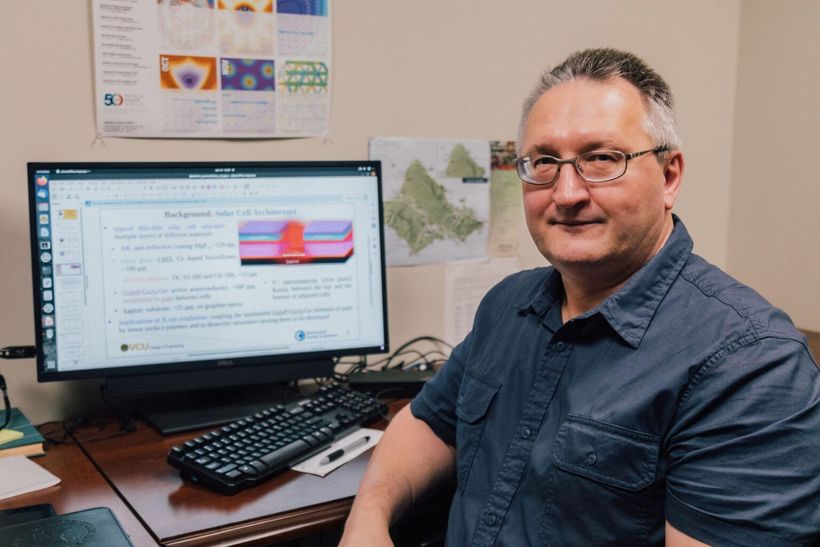
Recently named the nuclear program director at the Virginia Commonwealth University (VCU) College of Engineering, Gennady Miloshevsky, Ph.D., associate professor in the Department of Mechanical & Nuclear Engineering, answers some questions about the direction of VCU Engineering’s nuclear program and what he hopes it can accomplish. What are your top priorities for the nuclear program at the VCU College of Engineering? I want to focus on student development, innovative research and our rankings in best program lists, but that is not everything. Strategy is important. We need to align ourselves with the country’s national energy needs. There are many new developments in the energy sector, like small modular reactors or fusion energy systems, and having the right faculty to engage with these advancements is important. Providing students with a well-rounded education and good opportunities for gaining experience benefits the College of Engineering’s public and private sector partners. Nuclear subject matter is complex, so higher education is very important for workforce development. We want to build partnerships, like the one we have with Dominion Energy, that support this goal. A priority for me is continuing to establish relationships with Commonwealth Fusion Systems, which seeks to build and operate the first commercial grid-scale fusion plant in Chesterfield County, Virginia. Our workforce partners will benefit from VCU’s well-trained nuclear engineering graduates joining the workforce. So, aligning our strategy with national energy needs, hiring the right faculty to support our programs and building industry partnerships that benefit our student’s education and career opportunities are important things for VCU Engineering’s nuclear program. Where would you like to see the College of Engineering’s nuclear program 10 years from now? I would like to see growth in the nuclear program. For example, some new graduate courses on topics like nuclear materials or fusion energy. In 2024, I developed a general course for fusion energy, so building out a curriculum that goes more in-depth would be good. When you look at small modular reactors and micro reactors, current energy policy does not allow private companies to build their own. However, as energy demands increase, policy could change to where you see these compact devices installed in places like data centers, for example. A more in-depth curriculum allows VCU Engineering students to step into industry roles that lead growth of the energy industry while also ensuring students are capable of adapting to the changing field and taking advantage of new developments. What sort of cross-disciplinary opportunities are there for the College of Engineering’s nuclear program? Nuclear engineering and nuclear science are very interdisciplinary fields. You have physics that covers the nuclear reaction and the radiation it generates, for example, then chemistry is needed when talking about nuclear fuel cycles and nuclear waste. You also need materials science because good materials capable of withstanding radiation and high temperatures are needed in nuclear fission and fusion energy systems. This science then connects to engineering, building the reactors, the energy distribution systems like a power grid. It is a small sample of the overall work, but you see how mechanical and electrical engineering are key to this part. All these disciplines come together to solve the same problem. One researcher might be figuring out how to confine plasma and make it stable, then another researcher is looking at how plasma can disrupt the containment wall and how to make materials to protect the wall. Within our department, we are making connections between mechanical-focused faculty working on high-temperature ceramics or additive manufacturing techniques and those of us researching nuclear energy systems in order to make joint proposals. We are also collaborating outside VCU. As an example, I am involved with an alliance founded by the Defense Threat Reduction Agency (DTRA) comprised of 17 universities, research labs and military centers. Coordinated through DTRA, we work together on many of the same problems.Through this partnership, my Ph.D. students do summer research rotations with national labs like Lawrence Livermore National Laboratory in California and The Pacific Northwest National Laboratory. We also bring cadets and midshipman into VCU from other institutions, like the DTRA Nuclear Science and Engineering Research Center, United States Military Academy West Point and the Virginia Military Institute, whose students have been part of research experience for undergraduates programs in the summer. How is artificial intelligence impacting the field of nuclear engineering? So, the United States is sponsoring the Genesis Mission, which seeks to transform science innovation through the power of AI. One area of the Genesis Mission is nuclear fission and fusion energy. I see this playing out with the Department of Energy encouraging national labs, universities and industry to work together on applying these AI advancements to solve the research problems of nuclear energy. It is a great opportunity for students, who we can involve in this work to give them real-world experience with topics they will see after graduation. Last semester I taught a course at VCU on the practical applications of AI on nuclear engineering problems. It is not something like ChatGPT or anything like that. What we did is take Google’s TensorFlow platform that is a library of AI models and machine neural networks. Using Python scripting students learn how to apply these AI resources to about 30 problems in mechanical and nuclear engineering. They create scripts, use data sets and run analytics. We have a nuclear reactor simulator and I have some ideas to create AI-based software we can pair with the simulator, then give the software a data set and let it control the operation of the simulator in a safe way. Tell us about your background. What brought you VCU and the Department of Mechanical and Nuclear Engineering? Actually, I am not a mechanical or a nuclear engineer. My background is in physics. I graduated from the Belarusian State University in 1990 and continued to a Ph.D. in physics from the Heat and Mass Transfer Institute of the National Academy of Sciences of Belarus working on topics related to fusion plasmas and nuclear weapon effects. In space, nuclear weapons produce shockwaves and radiation. I computationally model these effects in my research to determine how something like a nuclear warhead detonation in orbit will impact the materials a satellite is made of, for example. My research also crosses over into nuclear fusion, specifically thermodynamic and optical plasma properties, fusion plasma disruptions, melt motion and splashing from plasma facing components. Accelerating Next-Generation Extreme Ultraviolet (EUV) Lithography (ANGEL) is my most recent collaborative project, supported by the Department of Energy’s (DOE) Office of Science, Fusion Energy Sciences. It involves two national laboratories, three universities and a private-sector company focusing on advancement of future micro-electronic chips, EUV photon sources, mitigation of material degradation and plasma chemistry. Prior to joining the VCU College of Engineering I worked at Purdue University at a DOE-funded center investigating nuclear fusion and the effects of plasma on materials. Around 2019 I wanted to develop my own lab, so I came to VCU with startup funds from the Nuclear Regulatory Commission and DTRA. My first priority after joining the VCU College of Engineering was continuing my fusion research, the second was collaborating with an alliance of universities focused on work for DTRA and DOE.


Why Nick Cave’s First Public Outdoor Sculpture Found Its Home at Meijer Gardens
The permanent installation of Amalgam (Origin), Nick Cave’s first public outdoor sculpture in the world, marks a major moment for contemporary art in the Midwest and a defining milestone for Frederik Meijer Gardens & Sculpture Park. As the curator who guided the project from concept to completion, Suzanne Ramljak offers essential insight into why this work matters now, how it fits within Cave’s evolving career, and what it signals about the growing role of public art in shaping cultural identity. The sculpture’s installation in October coincides with a pivotal period in Nick Cave’s career. On Feb. 13, he debuted “Nick Cave: Mammoth,” a monumental new body of work on view at the Smithsonian American Art Museum through Jan. 3, 2027. Not only is it Cave's first solo exhibition in Washington, D.C., but it is the museum’s largest ever single-artist commission. And this spring, the Obama Presidential Center in Chicago opens with a major, immersive installation by Cave, placing his work at the center of a national cultural moment. Against this timely backdrop, Meijer Gardens’ installation stands as a quiet but powerful first: the artist’s inaugural permanent outdoor public sculpture. Understanding the Significance of Nick Cave's Work The sculpture reflects the evolution of Nick Cave’s artistic practice, rooted in his groundbreaking Soundsuits series, a body of work first developed in response in the wake of Rodney King’s 1991 assault by police and designed to challenge viewers’ perceptions of identity, race, and community. Over decades, Cave’s work has moved from wearable performance art into public sculpture, allowing his socially engaged visual language to occupy shared civic space. The permanent presence of Amalgam (Origin) at Meijer Gardens highlights the institution’s commitment to showcasing art that resonates with broader cultural dialogues about resilience, protection, and collective identity. “Nick Cave’s art is deeply rooted - in his family, in community, in craft, and in nature. His work is also grounded in concerns of social justice. The power of Amalgam (Origin) stems from this fertile mix; a blend of the personal and communal, exceptional and traditional.” Suzanne Ramljak, Vice President of Collections & Curatorial Affairs, Frederik Meijer Gardens & Sculpture Park Suzanne Ramljak is Vice President of Collections & Curatorial Affairs at Frederik Meijer Gardens & Sculpture Park where she oversees the acquisition, siting and curation of engaging sculptural exhibitions. View her profile The timing also highlights Cave’s deep Midwest ties. He lives and works in Chicago and earned his master's degree at Cranbrook Academy of Art in Bloomfield Hills, Michigan. The Meijer Gardens installation connects those regional roots to a global artistic trajectory, reinforcing the Midwest’s influence on contemporary art at the highest level. Media Attention, Coverage and Cultural Momentum Since the installation was announced and unveiled, the sculpture has drawn significant regional, national and arts-focused media attention, underscoring its cultural weight and public resonance. Coverage has highlighted the work’s monumental scale, its distinction as Nick Cave’s first permanent outdoor public sculpture, and Meijer Gardens’ role as a national destination capable of supporting ambitious and timely contemporary art. Media narratives consistently framed the installation as both a major moment for Grand Rapids’ cultural landscape and a signal of Meijer Gardens’ growing influence within the national arts conversation. The range of coverage points to interest from music, arts, lifestyle, and cultural outlets, suggesting the installation’s appeal to a variety of audiences. That level of attention reflects not only the significance of the work itself, but also the curatorial vision guiding its placement and permanence, a process led by Suzanne Ramljak. Expert Insight: As Curator of Collections and Senior Curator of Sculpture, Ramljak brings expert perspective on: Why Meijer Gardens was the right home for Cave’s first outdoor public sculpture How this work fits within Cave’s broader artistic practice, particularly his engagement with performance, movement, and public space What permanence means in contemporary art, especially for works often associated with temporality and performance How landscape, scale, and audience interaction shape the experience of outdoor sculpture Her expertise situates the installation within both Cave’s career arc and Meijer Gardens’ long-standing commitment to presenting ambitious contemporary sculpture in dialogue with nature.


Julian Ku Analyzes International Law in Recent Media
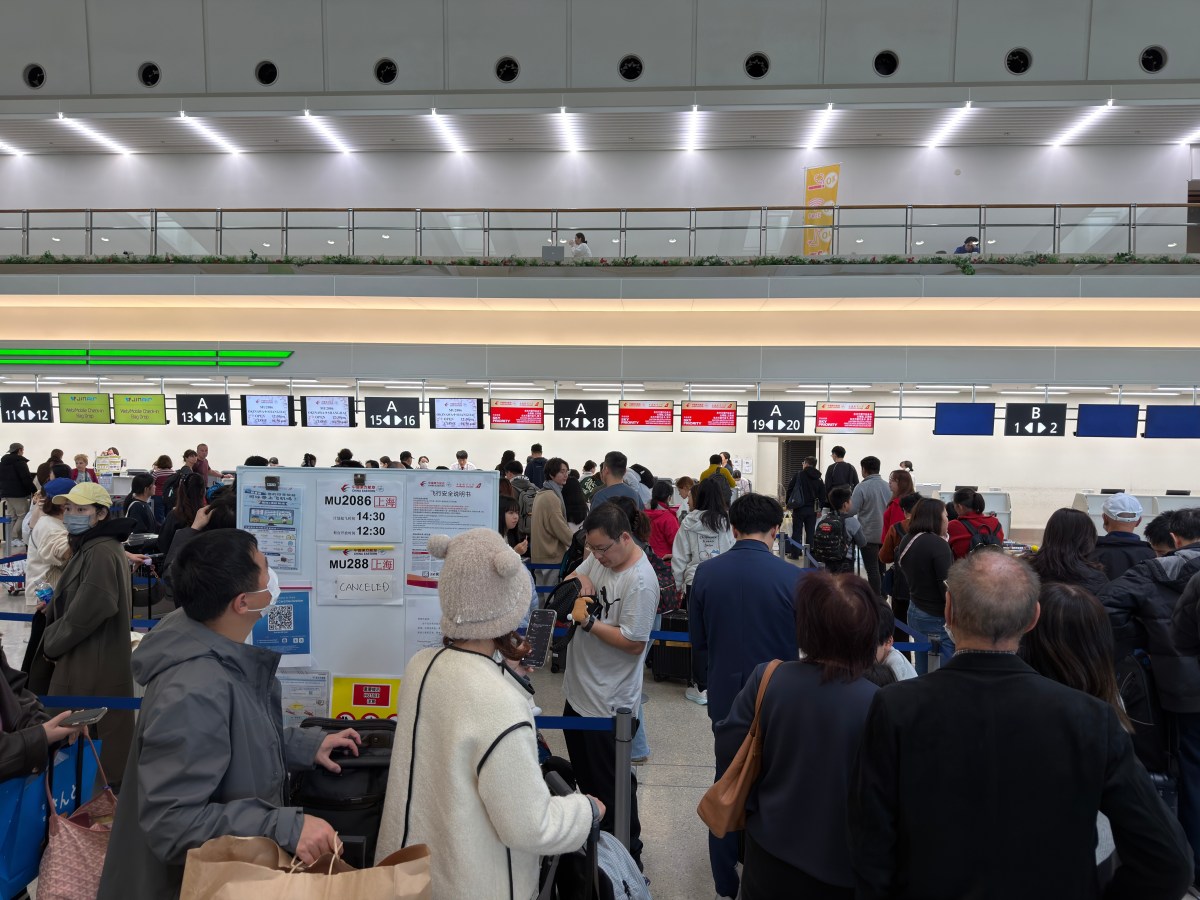
Hofstra Law Professor Julian G. Ku has been featured in multiple news outlets, providing expert legal analysis on global issues and interpretations of international law. In a Newsweek article on China’s cancellation of flights to Japan, Prof. Ku provided commentary on how political pressures could play into fractious China-Japan relations. Prof. Ku also spoke with Dutch daily newspaper Trouw about China’s evolving vision of international law, explaining how Chinese leaders emphasize state sovereignty while downplaying human rights norms — a perspective that resonates in parts of the Global South. In Trouw, he described this selective approach as part of China’s broader effort to reshape the narrative around the postwar legal order. The Maurice A. Deane Distinguished Professor of Constitutional Law at Hofstra Law and Faculty Director of International Programs, Prof. Ku teaches and writes on international and constitutional law.


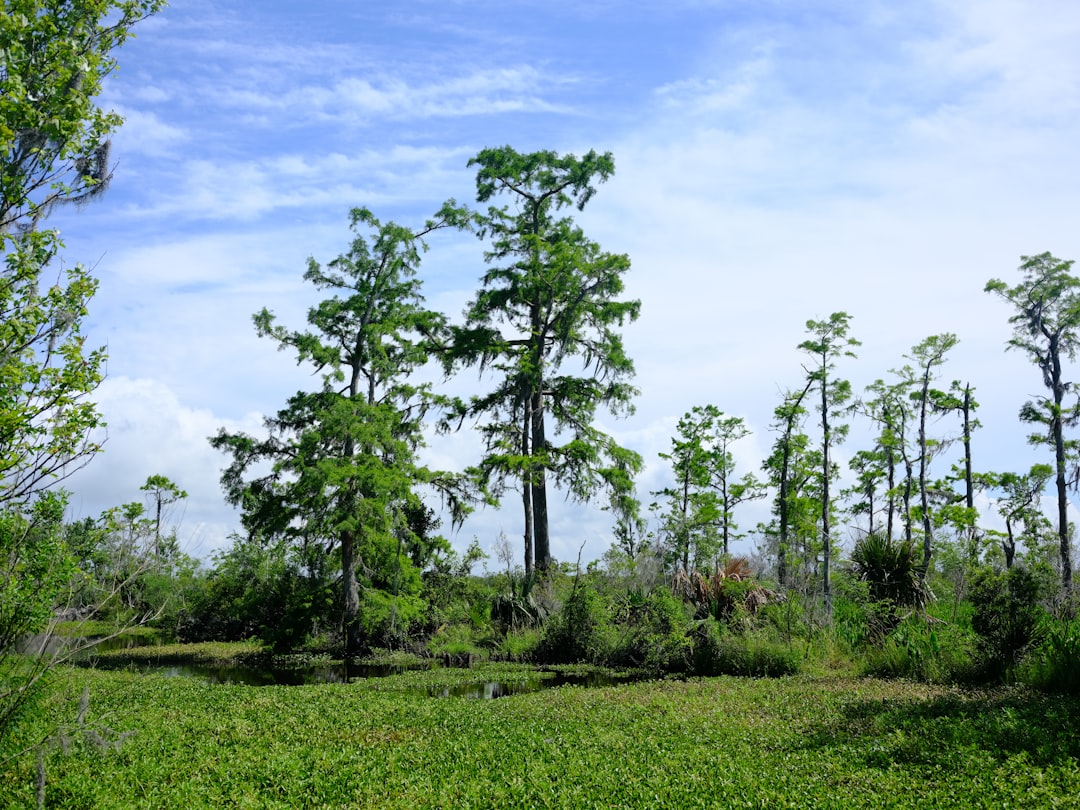
Wetlands: Nature’s First Line of Defense for Our Coast and Communities
Since the 1930s, Louisiana’s coastline has been reshaped by the relentless advance of the Gulf, with over 2,000 square miles of land disappearing beneath its waters and representing the largest loss of coastal land anywhere in the continental United States. This dramatic transformation has far-reaching consequences, threatening local economies, delicate ecosystems, and heightening the state’s exposure to hurricanes. In the face of these urgent challenges, LSU’s College of the Coast & Environment (CC&E) stands at the forefront, leading pioneering research and bold initiatives that not only protect Louisiana’s coast, but also build stronger, more resilient communities. Below are just a few examples of how CC&E is driving meaningful solutions for our coastal future. Wetlands are vital to protecting our coast, and CC&E researchers are actively investigating the role of both constructed and natural wetlands in reducing coastal flooding hazards. Through several projects funded through the US Army Corps of Engineers, Drs. Robert Twilley, Matthew Hiatt, and CC&E Dean Clint Willson, along with collaborators across campus, are conducting research on coastal ecosystem design - a framework that leverages the benefits of natural and nature-based coastal features, such as wetlands, environmental levees, and flood control gates – and how that could be integrated into engineering design and urban planning. Through the State of Louisiana’s ambitious Coastal Master Plan, administered by the Louisiana Coastal Protection and Restoration Authority, wetland construction and restoration play a huge role in managing the Louisiana coastal region. Such innovative techniques leveraging natural and nature-based features require evaluation to determine the success of such projects, and CC&E researchers are using cutting-edge science to advance this endeavor. Dr. Tracy Quirk and her students are investigating the success of marsh restoration by comparing structural and functional characteristics (e.g., vegetation, elevation, hydrology, accretion, and denitrification) between two created marshes and an adjacent natural reference marsh along the north shore of Lake Pontchartrain, Louisiana. Wetlands not only serve as a buffer from storms and sea level rise but also play a major role in regulating greenhouse gas emissions and contribute to productive vibrant ecosystems. In large collaborative project funded by the National Science Foundation, Dr. Giulio Mariotti is using computer models to forecast how coastal marshes may change in size, shape, and salinity in the future, and how these changes could affect methane emissions. As part of the same project, Drs. Haosheng Huang and Dubravko Justic are creating high-resolution hydrodynamic and biogeochemical models to predict changes in methane emissions in coastal Louisiana. In another project, with funding from Louisiana Center of Excellence, National Science Foundation, Louisiana Sea Grant, and the National Oceanic and Atmospheric Administration, Drs. Matthew Hiatt and John White have established a network of sensors to measure water levels and salinity throughout the wetlands in Barataria Bay, Louisiana, a region that has experienced significant land loss and storm impacts. The goal is to establish an understanding of the drivers of saline intrusion in marsh soils, and to ultimately determine what this means for the ecological resiliency of wetlands experiencing rapid change. CC&E’s leadership in wetlands science is recognized nationwide. It is the only college in the United States to have six faculty members—Drs. John White, John W. Day, Jr., Robert Twilley, William Patrick, James Gosselink, and R. Eugene Turner—honored with the prestigious National Wetlands Award. No other institution has had more than one recipient. Presented annually by the Environmental Law Institute, this award celebrates individuals whose work demonstrates exceptional innovation, dedication, and impact in wetlands conservation and education. CC&E’s unmatched record reflects decades of pioneering research and a deep commitment to safeguarding the nation’s most vulnerable coastal landscapes. Every day, CC&E channels this expertise into action—protecting Louisiana’s coast and, in turn, the communities, wildlife, and ecosystems that depend on it. Through bold research, collaborative partnerships, and a vision grounded in science, the college is shaping a more resilient future for coastal regions everywhere. CC&E is building teams that win in Louisiana, for the world. Article originally published here.


Researchers warn of rise in AI-created non-consensual explicit images
A team of researchers, including Kevin Butler, Ph.D., a professor in the Department of Computer and Information Science and Engineering at the University of Florida, is sounding the alarm on a disturbing trend in artificial intelligence: the rapid rise of AI-generated sexually explicit images created without the subject’s consent. With funding from the National Science Foundation, Butler and colleagues from UF, Georgetown University and the University of Washington investigated a growing class of tools that allow users to generate realistic nude images from uploaded photos — tools that require little skill, cost virtually nothing and are largely unregulated. “Anybody can do this,” said Butler, director of the Florida Institute for Cybersecurity Research. “It’s done on the web, often anonymously, and there’s no meaningful enforcement of age or consent.” The team has coined the term SNEACI, short for synthetic non-consensual explicit AI-created imagery, to define this new category of abuse. The acronym, pronounced “sneaky,” highlights the secretive and deceptive nature of the practice. “SNEACI really typifies the fact that a lot of these are made without the knowledge of the potential victim and often in very sneaky ways,” said Patrick Traynor, a professor and associate chair of research in UF's Department of Computer and Information Science and Engineering and co-author of the paper. In their study, which will be presented at the upcoming USENIX Security Symposium this summer, the researchers conducted a systematic analysis of 20 AI “nudification” websites. These platforms allow users to upload an image, manipulate clothing, body shape and pose, and generate a sexually explicit photo — usually in seconds. Unlike traditional tools like Photoshop, these AI services remove nearly all barriers to entry, Butler said. “Photoshop requires skill, time and money,” he said. “These AI application websites are fast, cheap — from free to as little as six cents per image — and don’t require any expertise.” According to the team’s review, women are disproportionately targeted, but the technology can be used on anyone, including children. While the researchers did not test tools with images of minors due to legal and ethical constraints, they found “no technical safeguards preventing someone from doing so.” Only seven of the 20 sites they examined included terms of service that require image subjects to be over 18, and even fewer enforced any kind of user age verification. “Even when sites asked users to confirm they were over 18, there was no real validation,” Butler said. “It’s an unregulated environment.” The platforms operate with little transparency, using cryptocurrency for payments and hosting on mainstream cloud providers. Seven of the sites studied used Amazon Web Services, and 12 were supported by Cloudflare — legitimate services that inadvertently support these operations. “There’s a misconception that this kind of content lives on the dark web,” Butler said. “In reality, many of these tools are hosted on reputable platforms.” Butler’s team also found little to no information about how the sites store or use the generated images. “We couldn’t find out what the generators are doing with the images once they’re created” he said. “It doesn’t appear that any of this information is deleted.” High-profile cases have already brought attention to the issue. Celebrities such as Taylor Swift and Melania Trump have reportedly been victims of AI-generated non-consensual explicit images. Earlier this year, Trump voiced support for the Take It Down Act, which targets these types of abuses and was signed into law this week by President Donald Trump. But the impact extends beyond the famous. Butler cited a case in South Florida where a city councilwoman stepped down after fake explicit images of her — created using AI — were circulated online. “These images aren’t just created for amusement,” Butler said. “They’re used to embarrass, humiliate and even extort victims. The mental health toll can be devastating.” The researchers emphasized that the technology enabling these abuses was originally developed for beneficial purposes — such as enhancing computer vision or supporting academic research — and is often shared openly in the AI community. “There’s an emerging conversation in the machine learning community about whether some of these tools should be restricted,” Butler said. “We need to rethink how open-source technologies are shared and used.” Butler said the published paper — authored by student Cassidy Gibson, who was advised by Butler and Traynor and received her doctorate degree this month — is just the first step in their deeper investigation into the world of AI-powered nudification tools and an extension of the work they are doing at the Center for Privacy and Security for Marginalized Populations, or PRISM, an NSF-funded center housed at the UF Herbert Wertheim College of Engineering. Butler and Gibson recently met with U.S. Congresswoman Kat Cammack for a roundtable discussion on the growing spread of non-consensual imagery online. In a newsletter to constituents, Cammack, who serves on the House Energy and Commerce Committee, called the issue a major priority. She emphasized the need to understand how these images are created and their impact on the mental health of children, teens and adults, calling it “paramount to putting an end to this dangerous trend.” "As lawmakers take a closer look at these technologies, we want to give them technical insights that can help shape smarter regulation and push for more accountability from those involved," said Butler. “Our goal is to use our skills as cybersecurity researchers to address real-world problems and help people.”

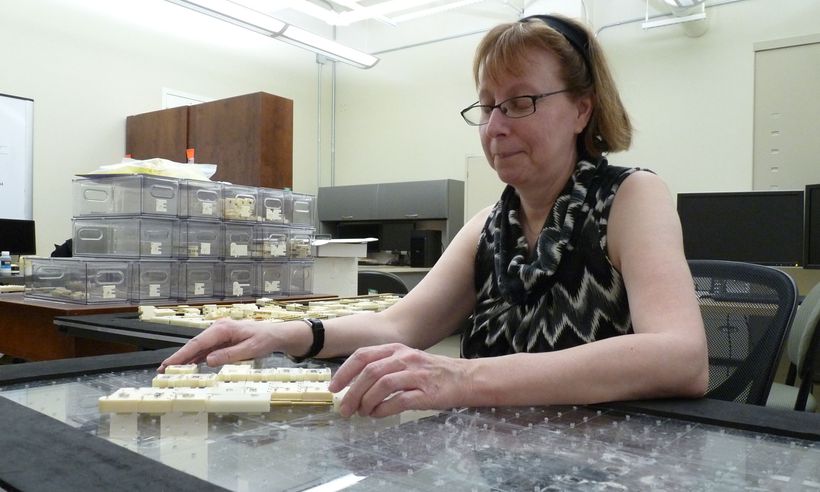
Pioneering systems to aid the visually impaired, Dianne Pawluk, Ph.D., associate professor in the Department of Biomedical Engineering, recently received two grants totaling $4.5 million in support of her research. Real-time Conversion and Display of Visual Diagrams in Accessible Forms for Blind-Visually Impaired (BVI) is a five-year project to develop real-time assistive technology for BVI individuals. It received a $3.2 million grant from the National Institutes of Health’s National Eye Institute to fund a low-cost system that will automatically convert and render visual diagrams in effective accessible formats on a multimodal display, including a refreshable tactile display and an enhanced, visual magnification program. Diagram exploration support will be provided by an automated haptic assistant. Pawluk is collaborating with Tomasz Arodz, Ph.D., associate professor in the Department of Computer Science, on the project. Including Blind and Visually Impaired Students in Computer Programming Education Through a Tangible Interface for Scratch is a four-year project to develop a nonvisual interface for the Scratch programming platform. Receiving a $1.3 million grant from the National Science Foundation, the project aims to make computer science education more accessible to BVI students. The interface will allow these students to learn programming alongside their sighted peers in classrooms, camps and clubs, supporting both BVI and other kinesthetic learners with a haptic-based tangible interface. High contrast visual information will also be provided for those with low vision and collaboration with sighted peers. This project is a collaboration with the Science Museum of Virginia, Arizona Science Center and Liberty Science Center. “Equal access to information is important for individuals who are blind or visually impaired to have autonomy and control over their decision-making processes and other tasks, which will allow them to live productive and fulfilling lives,” Pawluk said. “These projects go beyond creating an equivalent experience. They enable full collaboration between visually impaired and sighted people, ensuring equal opportunity.”


ENLIGHTENing the Holidays: How Meijer Gardens Turned Art and Nature Into a Year-Round Attraction
With the completion of its second season, ENLIGHTEN at Meijer Gardens has moved beyond the idea of a seasonal attraction to become a defining example of how cultural institutions can transform the off-season into a destination experience. The program’s exceptional year-over-year growth, combined with national recognition in only its second year, signals a turning point in how Meijer Gardens engages audiences year-round. At the center of that evolution is Carol Kendra, whose leadership perspective connects ENLIGHTEN’s creative ambition, production scale, and audience growth to a broader strategy of experiential cultural programming. As Chief Operating Officer at Frederik Meijer Gardens & Sculpture Park, Carol Kendra provides strategic oversight for daily operations, guest experience, programming and long-term planning across the organization’s 158-acre campus. It washer leadership and strategic vision helped shape ENLIGHTEN from concept to a growing cultural phenomenon. View her profile Meijer Gardens has long been active outside traditional peak seasons, regularly hosting programs such as Fall at Meijer Gardens, Spring at Meijer Gardens, and its longstanding holiday tradition University of Michigan Health-West: Christmas & Holiday Traditions. These initiatives established a foundation for shoulder-season engagement and demonstrated that audiences were willing to experience the Gardens beyond summer months. ENLIGHTEN marked a deliberate step forward, not simply another seasonal offering, but a fully immersive evening experience that invited visitors to experience Meijer Gardens in a new way during the winter months, using light, sound, and landscape to create a sense of wonder and discovery. The annual event has also garnered attention from media across the country: Taking the Experience to the Next Level What distinguishes ENLIGHTEN is its production and experiential ambition. The program was produced in collaboration with Lightswitch and Upstaging, firms recognized internationally for creating world-class immersive environments and technically sophisticated experiences. Their portfolios include large-scale botanical light installations, major theme park productions, and live and recorded projects for globally recognized, award-winning artists. That expertise elevated ENLIGHTEN into a carefully choreographed, multi-sensory journey that integrates light, sound, landscape, and movement in a way that complements — rather than overwhelms — Meijer Gardens’ art and horticulture. This approach reflects a deliberate investment in experience design, audience flow, and emotional impact. The result is an experience that: Extends engagement well beyond traditional daylight hours Encourages repeat visits across a single season Attracts audiences who may be new to Meijer Gardens ENLIGHTEN reflects how cultural institutions are responding to changing audience expectations. Visitors are increasingly seeking experiences that are immersive, emotionally resonant, and worth traveling for — even during traditionally slower seasons. By building on its history of seasonal programming and elevating it through design, technology, and collaboration, Meijer Gardens demonstrates how institutions can grow without losing authenticity. Expert Insight: As a senior leader involved in shaping Meijer Gardens’ visitor experiences and institutional strategy, Carol Kendra brings expert insight into: How ENLIGHTEN was conceived as both an artistic and operational response to seasonality Why immersive seasonal experiences resonate with broad, multigenerational audiences How art and horticulture can be activated together What measurable growth means for long-term institutional planning and cultural relevance Her perspective helps journalists and industry professionals understand ENLIGHTEN not simply as a holiday event, but as a case study in cultural innovation and audience development.