
Experts Matter. Find Yours.
Connect for media, speaking, professional opportunities & more.

The World Needs More MBAs! Let an expert from WGU explain how partnerships can make it work.
Recently, much talk has centered on the closing of business school programs, and the extreme debt that many students take on to achieve a business degree. New data from Bloomberg Businessweek reported that nearly half of students polled from 126 universities across the world finance $100,000 or more for their MBAs. “Bloomberg Businessweek surveyed more than 10,000 2018 graduates of MBA programs from 126 schools about the amount of debt they piled on earning their degrees. The survey found that almost half of students at leading business schools around the world borrowed at least $100,000 to finance their MBA. According to the survey, at minimum 40% of MBA graduates from U.S. News & World Report’s top-ranking business programs — those at Duke, Dartmouth, University of Michigan, Cornell and University of Chicago — reported incurring at least $100,000 in debt.” July 09 – CNBC MBAs have been widely accepted by employers, and the return on investment for students has historically been high. Over the years, business programs have adapted to the needs of employers, and the basic design of the MBA, combining a broad scope of valuable business skills, has remained relevant despite massive changes in the business world. But with the rise of tuition costs, rapid changes in technology, and a higher value being placed on specialization, the long-standing value proposition of the MBA is changing. Cost, flexibility of delivery and open-loop, customized micro-learning are more likely to meet the needs of students and employers going forward. At WGU, we live and breathe the mission of supporting student academic success and expanding opportunities with affordable, valuable and relevant degree programs. Collaborations with companies which are equally committed to provide their employees the opportunity to sharpen their skills, advance in their careers, and better their lives, are one step in this evolution of business education. An evolution not in the future, it’s here. Dr. Rashmi Prasad is Dean and Academic Vice President of Western Governors University's College of Business. Dr. Prasad is available to speak with media regarding the need for higher education and how partnerships will bolster MBA programs and help graduates find success after they leave school – simply click on his icon to arrange an interview.

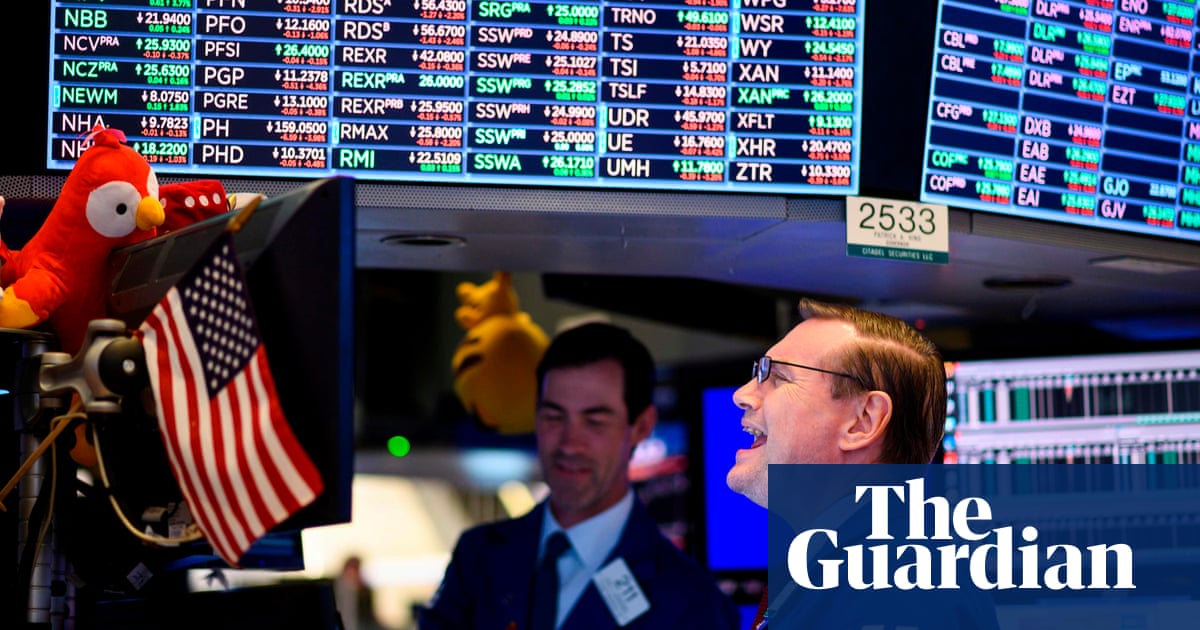
It was a train running full speed and showed no signs of stopping – but America’s economy hit a bump last week and it sent a lot of people from Wall Street and beyond into a panic. The 800-point drop in the Dow Jones seemed to be the first sign of another severe recession. But before everyone cashes out, experts from Western Governors University are hoping we take a look back through the ages before rushing to worry. “What does history teach us? Even before the Great Depression of the 1930s, Nicolai Kondratieff discovered that the capitalist economy, going back to the 18th century was characterized by waves, or business cycles,” says Dr. Rashmi Prasad, Dean and Academic Vice President of Western Governors University's College of Business. “The Federal Reserve, under leadership of Ben Bernanke, claimed that while the business cycle had not been repealed, a ‘Great Moderation’ had emerged in the world post-1982. Independent central banking and the rise of the service economy were among the reasons cited. In a great irony of history, Bernanke was front and center as Chairman of the Federal Reserve during the ‘Great Recession’ of 2008-2009. Business cycles seem to be inevitable for capitalist economies. Will we return to the Great Moderation of 1982-2007, or are we in a new period of regular Great Recessions? Central Banks stabilize and soften the down-cycles of recessions, but the price of managing the Great Recession of 2008-09 has been the dramatic expansion of central bank balance sheets–no new investment cycles–property or finance often leads to recession.” So, where do we stand and what can we expect in the short-term? Prasad adds this perspective: “Conventional economic thinking indicated inflation by now, which may have added to interest rates and constrained the amount of debt that was sustainable. Rapidly rising interest rates posed the risk of a deep and extended downturn. If interest rates can be managed and kept low, then the next down-cycle could be shallowed and prolonged as monetary policy has little scope and fiscal deficits are already very high. Risks for a major downturn exist in extremely high debt levels and central bank balance sheets, but still may be a decade or two away, awaiting triggers that we cannot yet predict.” Are you a journalist covering the economy and do you need expert perspective and opinion for your stories? That’s where Western Governor’s University can help. Dr. Rashmi Prasad is Dean and Academic Vice President of Western Governors University's College of Business. He is an expert in the fields of economic and financial data and business analytics. Dr. Prasad is available to speak with media regarding the state of America’s economy – simply click on his icon to arrange an interview.

Full speed ahead or time to pump the breaks when it comes to investing in ride-share companies?
There’s been a lot of talk and even some screaming from early investors about the state of ride-share stocks like Uber and Lyft. Since its IPO, Uber has been a rollercoaster ride for those who got in early. “When Uber stock (UBER) went public on May 10, it looked like a disaster. At minimum, underwriters look for a stock to close slightly above its offering price. Uber’s shares dropped 7.6% to $41.60 in the first day of trading and closed well below the offering price of $45. But a funny thing has happened since. After closing down as much as 18% from its IPO price, Uber stock has rallied 21% to close at $44.92 per share on Thursday. The stock eclipsed the IPO price during intraday trading for the first time on Wednesday and closed at exactly $45 that day.” June 07 – Barron’s But let’s be honest, unless you’ve got a crystal ball or a time machine – any stock is a gamble. How the market reacts, how the company performs and even how CEOs behave can dictate big gains or drastic falls. Steve Jones is a Professor of Finance at Indiana University's Kelley School of Business – he lent his perspective to the topic. “As far as which stocks to buy, there are never right or wrong answers – It’s just a question of a person being able to assess risk or potential returns. The IPO prices indicate the market has discounted Uber and Lyft stocks and sees them as riskier than originally perceived to be. Now, they do offer potential for a good return… For example, Facebook stocks dropped then rebounded… Google dropped then rebounded. Lots of stocks that have not done well at first have come back. Will that be these two? "I think there’s potential for it. On the other hand, we have this situation where analysts are critical of the business models of both these companies. It’s not clear Uber drivers are going to sign up to do this in the long run at these kind of wages, and if they can’t underpay drivers, how do they make money? There is a criticism going on of the business model here, and if this model can become profitable, I think the stocks will take off. It’s questionable though, whether that’s possible or not. That’s what the market is going back and forth on right now.” Are you covering the track Uber investors are on, other IPO’s or companies that are disrupting not just the marketplace but also the stock market? Then let our experts help with your stories. Steve L. Jones is an expert in the areas of asset valuation, corporate finance, financial markets, and investment management. He’s available to speak with media regarding these topics – simply click on his icon to arrange an interview.


What will a ban on single-use plastic mean for small businesses in Canada?
Being environmentally friendly has become a popular trend. Climate change is occurring, and news stories of wasteful plastics clogging our waterways are becoming more frequent, making the battle against plastic waste an election issue. Earlier this month, Prime Minister Trudeau announced a ban on single-use plastics by 2021 that will likely include straws, plastic cups, food wrapping and grocery bags. It's evident, being environmentally friendly is in everyone's best interest, but business owners are concerned about what costs will arise as a result. Companies use plastics cups, lids and straws for take-out, plastic wrap as a significant part in food safety and freshness, and plastic bags for clients to transport purchases home. Even though these plastics are environmentally harming, some still see them as essential. There are more than 1.1 million small businesses in Canada, and most of them will have to adapt or adjust to: How will this impact their bottom-line? How slim are the margins already for most small retailers? Are incentives for businesses required before implementing this new policy? These are some of the critical questions to ask. If your small business will be affected, contact one of our experts to help. James Brutto, Manager at Freelandt Caldwell Reilly LLP, is an expert in the areas of accounting, auditing, finance and entrepreneurship. Contact James to arrange an appointment regarding this topic by clicking the contact button below. Sources:


Up, Down or Steady – What do Interest Rates Really Mean for Our Economy?
The heat was on Federal Reserve Chairman Jerome Powell this week to lower interest rates coming out of the June meetings of the Fed. He was under scrutiny from President Trump and others who share a growing worry that America’s economy could be slowing down and potentially turning toward recession. An option that is neither appetizing for investors, the business community or politicians looking for positive messaging as an election looms in 2020. Powell held the rates steady but there is massive speculation this will be for the last time and that rates will begin to be cut as of the next meeting of the Federal Reserve. There are a lot of questions about interest rates and the economy: How do rates encourage or dissuade investment and business? How much of a rate cut will it take to impact the economy? Do interest rates and the dollar go up and down in tandem? And how independent is the Fed and who influences these decisions? If you are covering, we can help. Jeff Haymond, Ph.D. is Dean, School of Business Administration at Cedarville and is an expert in finance and trade. Bert Wheeler, Ph.D. specializes in macroeconomics, international trade, economic development, and econometrics. Jeff and Bert are both available to speak to media regarding the current trade war with China – simply click on either expert’s icon to arrange an interview.



Why it just makes ‘cents’ to know your financial ABCs early in life – let our expert explain.
Managing money, understanding interest and how to avoid debt – all these elements make up some of the very basics of financial literacy. However, despite a humming economy and record low unemployment, more and more Americans are falling deeper into debt. Just recently, CBS News reported that roughly 4 in 10 Americans can’t cover an unexpected bill of 400 dollars. Something desperately needs to be done about not just how we are handling our money – but when we are taught the how banking, money and personal finances work. It’s a topic of concern and one that is gaining traction. Showbiz moguls Will Smith and Nas invested in a financial literacy app for teens (see attached article). The issue is finally on the radar of leaders in Washington and throughout the country as well, with 19 states now requiring financial education to graduate, according to the Council for Economic Education, up from 13 in 2011. Can these efforts make a real impact and reverse the tide of financial illiteracy? How did America get to this point? Is this about our spending habits and access to credit or a lack of education? And if we don’t correct the curse – what could it mean for our economy? There are a lot of questions and that’s where our experts can help! Professor Jonathan Clarke is an award-winning teacher and researcher in the fields of investment banking, finance and analysis. Clarke created a personal finance course that is offered to all Georgia Tech students that provides the importance of budgeting, basics of credit, as well as more advanced financial topics such as investing and trading. He’s an expert in the field and is available to speak with media about economics and the importance of financial literacy – simply click on his icon to arrange an interview. He has also developed a one-week summer course for high school students – Wall Street on West Peachtree and annually assists the Boy Scouts with obtaining their finance badge.


What will the “new” NAFTA mean for business in Canada?
The "new" NAFTA - officially renamed as the Canada-United States-Mexico Agreement (CUSMA) in Canada, but is referred to as the United States-Mexico-Canada Agreement (USMCA) in the media - could be a benefit for businesses. While tariffs are being lifted and reduced trade talks thaw – it appears that the USMCA is a win/win/win for businesses on every side of the border. The new trade accord has free-trade when it comes to manufacturing, importing, exporting and resourcing. The USMCA sounds great, but will those rays reach areas like Northeastern Ontario? Will our resource and mining industries benefit? Also, what about our emerging technology sector? There is a lot to be figured out as this new trade deal goes through the approval process in Canada and America. Luckily, we have experts who can help! Marc Boivin, Manager at Freelandt Caldwell Reilly LLP, is an expert in the areas of organizational finance, assets acquisition, business valuation and transactions. Contact Marc to arrange an appointment regarding this topic by clicking the contact button below. Sources:

Trump, tariffs and the long game
He said he’d get tough on China and make sure America was getting the better end of any trade deal – and President Trump seems bound and determined, despite the critics and advice from his own cabinet, that massive tariffs and a trade war with China is a good thing for America. Last week Trump more than doubled tariffs on $200 billion in Chinese goods. China reacted with tariffs on American agricultural and other products. The response, Trump is now looking at approximately $300 billion in import levies on more Chinese goods. As far as trade wars go, this one could be epic in its scale and economic proportions. But who will blink first, who will win and ultimately – who is paying the costs and taking on the burden of all the financial collateral damage at the end of the day? Is this a matter of short-term pain for long-term gain for America’s economy? Or is this political posturing that will at the end of the day hurt the country’s bottom line? There are a lot of questions to be asked and that’s where two of the experts from Cedarville can help. Dr. Glen Deurr's research interests include nationalism and secessionism, comparative politics, and international relations theory. Jeff Haymond, Ph.D. is Dean, School of Business Administration at Cedarville ad is an expert in finance and trade. Glen and are both available to speak to media regarding the current trade war with China – simply click on either expert’s icon to arrange an interview.

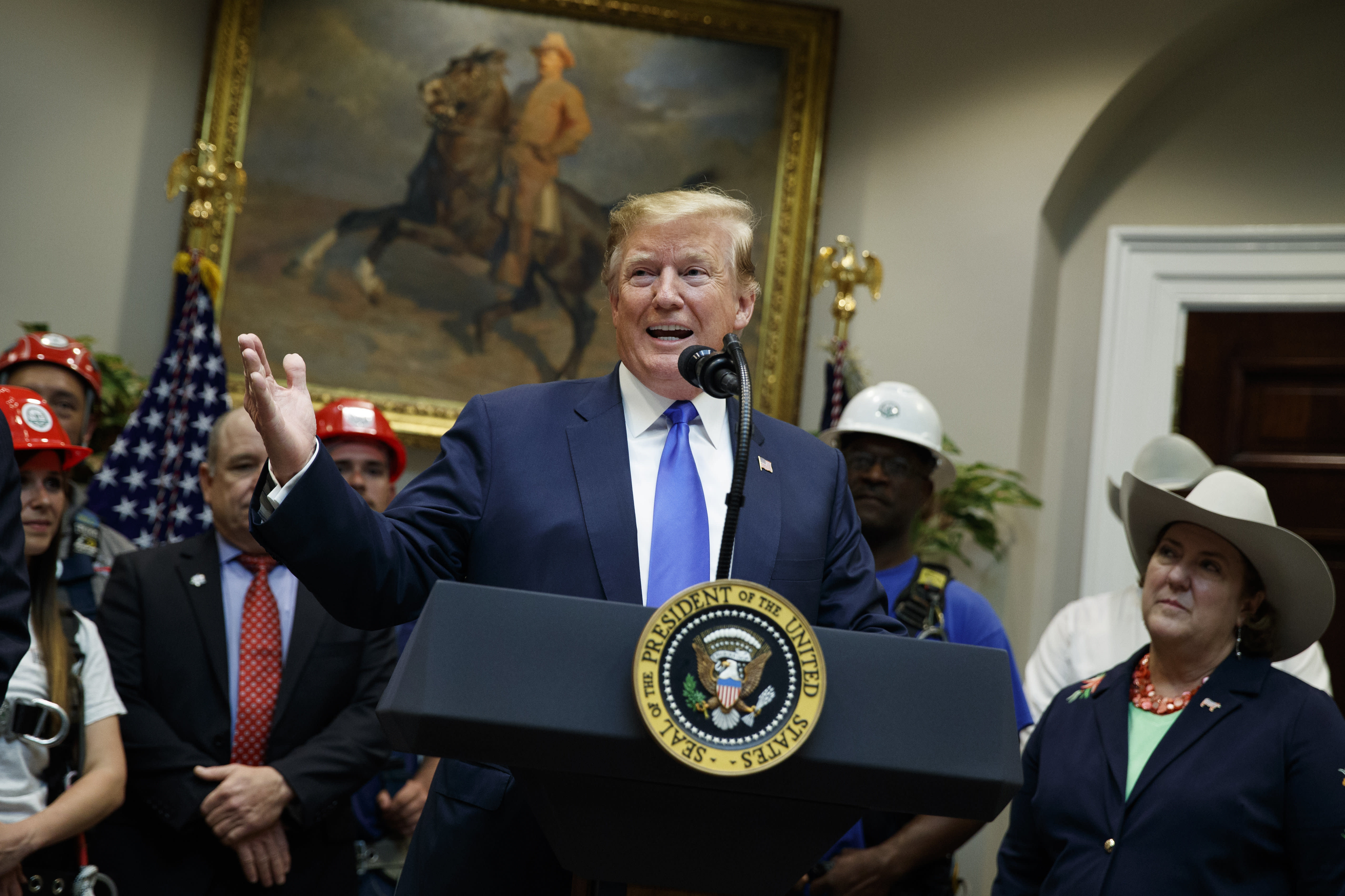
Is Wall Street hedging on a Trump win in 2020? Let our experts tell you why.
“The economy, stupid!” It’s a famous quote that Bill Clinton campaigner James Carville used in 1992. And the Ragin’ Cajun was right – odds are, when it comes to Americans casting a vote in presidential elections – the economy calls the shots on how they vote. And despite the scandals, the Tweets, the gaffes and the indictments – the economy under President Donald Trump is booming. So, while convention and traditional politics would likely write of the presidency of Donald Trump as a one term wonder - an article about a recent report commissioned by Goldman Sachs says Democrats and pundits shouldn’t be so sure to write him off. ‘In a comprehensive report released late Saturday, the investment bank gave its preliminary thoughts on a general election that’s still more than a year away. While Trump re-election is far from assured, Goldman’s economists believe the president is bolstered by “the advantage of first-term incumbency and the relatively strong economic performance,” in what is sure to be a “close call” election.’ - Yahoo! Finance Are you covering the race for 2020? Should Democrats change their focus away from the scandals and the Mueller Report and focus on economics? If not, what are the issues that will sway undecideds next year? And what will a potential run by an Independent candidate mean for the race? There are so many storylines already at play and a long way to go before November 2020 – but the election is already daily news and that’s where our experts can help. Dr. Marc Clauson is a professor of history and law at Cedarville. Marc is an expert in the fields of political and economic philosophy Dr. Clauson is available to speak with media – simply click on his icon to arrange an interview.

A new year with new changes for how small businesses are taxed.
The only thing surer than death and taxes, might be the annual changes and adjustments to the way small businesses are taxed in Canada. New restrictions, and rates can have positive and negative impact on business owners and their companies. This coming year, changes to Employment Insurance and the Canada Pension Plan could make the bottom line of some small businesses tighter. However, the overall corporate tax rate applicable to many small businesses in Ontario has fallen to 12.5%. We may see more money going back in the pocket of owners or their growing companies. “We know that the average small business owner doesn’t know a lot about these changes.” Bill Moreau, Minister of Finance There are a lot of changes to the current system this year; as small business owners prepare to file, it is in their best interest to contact an expert. The government itself has even admitted that some businesses might not be fully up to speed, that’s where our team can help! Cleo Melanson, Tax Partner at Freelandt Caldwell Reilly LLP practices in the areas of tax and owner-managed businesses. To contact Cleo, simply click here to arrange an appointment regarding this topic. Article: https://globalnews.ca/news/4804039/tax-changes-canada-cpp-ei-small-business/