Experts Matter. Find Yours.
Connect for media, speaking, professional opportunities & more.
When it comes to transforming how organisations produce, consume, and reuse resources, Dr Luciano Batista, professor of operations management at Aston University, is a global pioneer. His research sits at the crossroads of innovation, digital transformation, and sustainability, tackling one of humanity’s most pressing challenges: our overconsumption of the planet’s resources. Reimagining the economy around renewal Dr Batista’s work focuses on circular supply chains —a model he helped establish at a time when 'closed-loop' systems dominated sustainability thinking. His early research laid the foundation for how businesses could move beyond recycling and linear take-make-dispose models, instead designing systems that reuse, restore, and regenerate. View his profile here From theoretical frameworks to real-world applications, his studies—such as comparative analyses of circular systems implemented by Tetra Pak in China and Brazil—demonstrate the measurable economic and environmental benefits of circularity in action. His 2022 Emerald Literati Award-winning paper introduced a methodology for mapping sustainable alternatives in food supply chains, earning international recognition for its real-world impact. A global voice for industrial symbiosis and circular innovation The influence of Dr Batista’s work reaches far beyond academia. He has advised the European Commission’s Circular Cities and Regions Initiative (CCRI) and contributed insights to policymakers through the UK All-Party Parliamentary Manufacturing Group. His expertise continues to inform national and regional strategies for sustainable production and industrial symbiosis —where one company’s waste becomes another’s resource. Today, he extends that impact globally as a visiting professor at the Massachusetts Institute of Technology (MIT), conducting research at the MIT Center for Transportation & Logistics on circular supply chain innovations, supported by Aston University’s study-leave programme. He also mentors future leaders in sustainability as part of Cambridge University’s Institute for Sustainability Leadership (CISL). Driving the next wave of sustainable transformation Looking ahead, Dr Batista is spearheading collaborations through Aston’s Centre for Circular Economy & Advanced Sustainability (CEAS), working with the Energy & Bioproducts Research Institute (EBRI) and West Midlands Combined Authority (WMCA) on projects developing biochar-based clean energy systems for urban districts. He is also advancing the social dimension of the circular economy—ensuring that the move toward sustainable production is inclusive and equitable. His Symposium on the Socially Inclusive Circular Economy, held at the 2025 Academy of Management Conference, has sparked new international research partnerships with Monash University (Australia) and the Vienna University of Economics and Business. A vision for a regenerative future At the heart of Dr Batista’s work is a simple but urgent truth: humanity is consuming resources at a rate our planet cannot sustain. Through his research and global collaborations, he is helping organisations, policymakers, and communities move toward a future where growth and sustainability coexist. “The transition to a circular economy is not optional—it is essential,” says Dr Batista. “Our goal must be to redesign systems that allow people, businesses, and ecosystems to thrive together.”


How UF researchers are helping Floridians to build resilience
When Hurricane Idalia hit the Big Bend region of Florida in 2023, Jeff Carney and his team were watching. A coalition of architects, planners, and landscape architects led by Carney worked closely with the tiny Gulf island of Cedar Key, which is particularly vulnerable to hurricanes, to prepare for this moment. The researchers had modeled for city officials how a major storm would flood the city’s core services. “Idalia caused flooding exactly where the maps said it would, including city hall, the historic downtown, older homes, and many streets,” Carney said. After the storm, Cedar Key moved city hall to higher ground, as outlined in the plan. And just in time. Barely a year later, Cedar Key was hit even harder by Hurricane Helene. Between the storms, Carney’s group had worked with the city to refine their storm preparation. The new plan focused more on resilience-boosting projects, like improving drainage around the city. Cedar Key finalized their plans just weeks before Helene. “A lot of the projects we put forward in this plan are in the process of seeking additional funding after Helene,” Carney said. A professor of architecture at the University of Florida, Carney directs the Florida Institute for Built Environment Resilience, or FIBER. A research institute in UF’s College of Design, Construction and Planning, FIBER engages with communities to understand how the designs of buildings and cities expose Floridians to risks — not just storms, but also excessive heat, poor air quality, even a lack of health care. FIBER faculty then work with cities to mitigate these hazards. By preparing for emergencies, upgrading buildings, and providing targeted services, communities across Florida are bolstering the resilience of their residents, all with expert help from UF researchers. Preparing to weather big storms That kind of resilience is especially important for some of Florida’s most vulnerable residents. Older and poorer Floridians face higher-than-average risks from natural disasters and other environmental hazards. That vulnerability was apparent in Cedar Key as it weathered the last two hurricane seasons. Centered around aquaculture and tourism, Cedar Key seems in many ways to be thriving. Yet, with the feel of a small fishing village, roughly 13% of its nearly 1,000 full-time residents are considered to be financially disadvantaged, according to U.S. Census data. Poorer residents may also have a harder time walking away from coastal communities devastated by storms. With savings invested into damaged homes and jobs tied to the local area, less-wealthy residents often have no choice but to stay and rebuild. Carney’s team helps people see the opportunities for rebuilding with a clearer vision of a future where rising sea levels are a reality. “You capture people’s attention and excitement when you can offer them options that are not doomsday,” said Carney, who has been working in Pine Island and Matlacha in Southwest Florida’s Lee County to help residents affected by recent storms prepare for the future. “There’s a lot of opportunity for rebuilding as long as you don’t try to have it be business as usual. We help people see how redevelopment can provide a community asset for the future,” he added. “We try to paint the picture of all the possible scenarios so people can find their own comfort level. It puts them in the driver’s seat.” Aging with fewer choices While that kind of agency is empowering, it can be harder to come by as people retire and find themselves facing tough decisions on fixed incomes. That’s a common experience in Florida, which has a larger proportion of seniors than any other state, due in part to its popularity as a retirement destination. More than 10% of Americans over the age of 65 live below the federal poverty line. This population often finds themselves moving to less safe places as they age. “Older people with more social vulnerability — such as low income or poor health — have a tendency to move to worse places,” said Yan Wang, Ph.D., a professor of urban and regional planning in the UF College of Design, Construction and Planning. “They are more likely to move to places with less economic stability, with less access to health care, and with more exposure to extreme weather.” Wang and postdoctoral researcher Shangde Gao, Ph.D., recently published a study that uncovered the risks low-income seniors face when moving. Compared to their peers with higher incomes, poorer seniors were more likely to end up in neighborhoods lacking access to health care facilities. To address these kinds of disparities, UF Health has launched mobile health units that can reach people who have trouble traveling to health centers, including low-income seniors. The Mobile Outreach Clinic provides primary care and referrals for specialists. And the newly launched cancer screening vehicle, which serves all of North Central Florida, can help catch the disease in the early stages when it is easiest to treat. It’s not just finding health care that’s a struggle. Older adults from minority racial groups were also more likely to increase their exposure to poor air quality and to natural disasters like flooding and hurricanes when they moved, Wang and Gao discovered. “If we understand the trend and causes of these income disparities better, we could better prepare some places with more health care resources or better hurricane preparation for these older populations,” Wang said. Building safer, healthier homes That preparation is happening right now in Jacksonville, not just for big storms but for the everyday nuisances and hazards — even the ones people are exposed to in their own homes — that threaten people’s lives and health. The Jacksonville Restore and Repair for Resiliency research initiative was founded to address these kinds of risks while improving energy efficiency. The R3 initiative, as it’s known, is a home remodeling program organized by a slew of community partners and supported by FIBER research on the impact of housing quality on health. The project aims to keep longtime residents of the Historic Eastside in their homes while addressing the home hazards that put people at risk for medical complications like asthma attacks and emergency room visits. “The designs of buildings impact human health and well-being,” said Lisa Platt, Ph.D., the lead researcher with the Jacksonville program and an assistant professor of interior design with FIBER. “Our research is helping the team prioritize the home improvements that will benefit residents’ health the most.” Jacksonville’s Eastside faces a lot of challenges. The population is older than the city as a whole. Roughly three-quarters of residents are over the age of 60, and the poverty rate is over 40%. Yet more than a third of residents own their own homes. Often passed down from previous generations, some of the houses are now over a century old and struggle to keep the intense Florida heat and humidity out. Platt’s research has modeled how things like high heat days — only growing more common in a warming world —are associated with increased emergency room use and poor perceived physical and mental health. That science helps guide the community partners to prioritize providing air conditioning and better insulation to protect Historic Eastside residents. To date, the Jacksonville program is targeting up to 70 homes for renovation. Builders have fixed holes in roofs, replaced drafty windows, and hooked up air conditioning for the first time, keeping the heat and humidity at bay and protecting residents’ health. Now the R3 initiative is applying for federal grants to expand the program. “I think the best way to approach this kind of community action research is with humility and outreach. Community members have amazing expertise. I always say, ‘I can build models to analyze the problem, but you are the ones that are the experts,’” Platt said. “That’s where UF can be most useful, is coming in from a perspective of service.”

Expanding Comprehensive Cancer Services to Middletown, Delaware
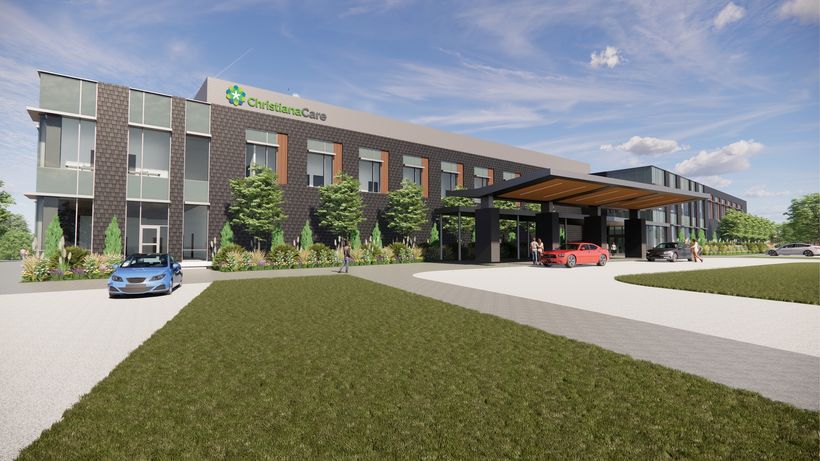
ChristianaCare’s Helen F. Graham Cancer Center & Research Institute is expanding access to high-quality, comprehensive cancer care for residents in Middletown and nearby communities. These services will be offered at the new Middletown Health Center, now under construction and expected to open in May 2027. “Our vision is to expand and grow our services throughout the region so that more patients can access high-quality cancer care close to home,” said Thomas Schwaab, M.D., Ph.D., Bank of America Endowed Medical Director of the Helen F. Graham Cancer Center & Research Institute. “By bringing our full cancer-care team and advanced technology to Middletown, we can provide highly precise, coordinated treatment while maintaining the same high standard of care our patients expect.” The cancer care services offered at the Middletown Health Center will reflect the same high-quality, comprehensive care provided at ChristianaCare’s Helen F. Graham Cancer Center & Research Institute in Newark. Patients will have access to specialists across all major cancer types, supported by the Graham Cancer Center’s participation in the National Cancer Institute Community Oncology Research Program (NCORP), which brings advanced treatments and clinical trials directly to the community. In Middletown, this means coordinated multidisciplinary treatment planning, advanced radiation therapy, infusion services, consultations with oncologists and surgeons, nurse navigation, supportive care, clinical trial participation and both in-person and virtual visit options. Advanced Technology Enhances Precision and Comfort When services open in Middletown, patients will have access to advanced radiation therapy using the Varian TrueBeam linear accelerator, one of the most sophisticated radiation therapy systems available. TrueBeam delivers highly precise, image-guided treatments for a wide range of cancers, allowing physicians to target tumors more accurately while minimizing radiation to healthy tissue. “The TrueBeam system represents a major step forward in how we deliver radiation therapy,” said Adam Raben, M.D., chair of Radiation Oncology at ChristianaCare. “Treatments that once took 30 minutes can now be completed in just a few minutes, with real-time imaging ensuring precision. This means better tumor control, fewer side effects and a more comfortable experience for patients.” A Growing Community with Expanding Health Care Needs Middletown is one of Delaware’s fastest-growing communities, with its population projected to rise 8% by 2029, nearly twice the statewide rate, according to the US Census Bureau. Since 1990, the town’s population has grown more than 550%, and the number of residents age 65 and older has increased 24% since 2020, driving demand for accessible, high-quality health care. With continued growth and an aging population, cancer service demand in Middletown is expected to increase by 11% over the next decade, according to health care forecasts from Sg2, a Vizient company, underscoring the need for expanded local care options. Expanding Access to Meet Future Cancer Care Demand By expanding services in Middletown, ChristianaCare is responding to both the region’s population growth and the increasing need for cancer care. The new site will help patients receive timely diagnosis and treatment while reducing travel time and improving coordination with the full Graham Cancer Center team. “As our community grows, so too does the need for locally accessible, state-of-the-art cancer services,” said Schwaab. “This expansion represents a pivotal investment in the health of the Middletown—Odessa—Townsend corridor and beyond.” $92 Million Investment in Middletown’s Health The $92.3 million Middletown Health Center reflects a deep investment in the health and vitality of the state. It is part of ChristianaCare’s larger plan, announced in July 2025, to invest more than $865 million in Delaware over the next three years. In addition to cancer care, the Middletown Health Center will offer a full range of services, including primary and specialty care, women’s health, behavioral health, cardiovascular care, pediatrics, neurology, imaging, diagnostics and lab testing. The center’s healing environment will also include walking trails and abundant natural light, making high-quality, convenient and coordinated care more accessible and welcoming for patients and families. The 87,000-square-foot Health Center will be located at 621 Middletown Odessa Road, next to ChristianaCare’s existing freestanding emergency department.


RPI Hosts Launch Event for New Center for Smart Convergent Manufacturing Systems
Rensselaer Polytechnic Institute (RPI) officially cut the ribbon on its new Center for Smart Convergent Manufacturing Systems (CSCMS) during an all-day launch event on October 23, 2025. A New York State Center for Advanced Technology, CSCMS will redefine the very nature of manufacturing by combining robotics, artificial intelligence, advanced processing, and human ingenuity to create systems that think, adapt, and evolve alongside human operators. “Today we mark the official opening of a center with a bold vision: a future where manufacturing systems are not simply automated, but truly intelligent,” said RPI President Martin A. Schmidt ’81 during the ribbon cutting. CSCMS will bring a wealth of opportunities not only to RPI, but across New York State. The new center will serve as a catalyst for economic growth, empowering innovators, driving new technologies, and strengthening the competitiveness of manufacturers. At RPI, students will gain hands-on experience in labs, real-world projects, and entrepreneurial pathways. Faculty and industry partners will gain the resources to translate cutting-edge research into commercial solutions. “Through simulation, prototyping, and translational research, our faculty and students will work side by side with industry and government to accelerate the development and deployment of smart manufacturing solutions,” said President Schmidt. “This is the RPI model at its very best: turning ideas into impact.” The launch event for CSCMS took place on RPI’s campus and featured keynote remarks, a ribbon cutting, industry panel, poster sessions, lab tours, and demonstrations of robotic manufacturing, human-machine collaboration, smart manufacturing testbeds, intelligent production systems, and data visualization spaces. Industry panel speakers included executives from FuzeHub, Ross Precision Manufacturing, GE Aerospace Research, and The Boeing Company. Interactive student poster sessions covered topics such as robotics, AI, advanced manufacturing, and New York’s future at the convergence of these topics. “The launch of CSCMS comes at a pivotal time for manufacturing,” said Johnson Samuel, Ph.D., director of CSCMS. “Across industries, we are seeing the convergence of AI, robotics, and data-driven design transforming how products are made. RPI’s long-standing strengths in engineering, computing, and innovation make it the perfect home for this next-generation center.” “The energy and collaboration we saw during this event are a reflection of the momentum behind the entire CSCMS initiative,” said Sandipan Mishra, Ph.D., associate director of CSCMS. “This launch is the start of a sustained effort to shape the future of intelligent manufacturing in New York and beyond.” "It's exciting that as students, we get to work with these cutting-edge technologies up close and be a part of something that’s pushing manufacturing forward,” said RPI graduate student Ammar Barbee ‘25, who recently completed his bachelor’s degree in mechanical engineering at RPI. “Perusing this kind of research and having access to such advanced equipment enables unique experiences that will really help accelerate our careers.” With the launch of CSCMS, RPI continues to advance its legacy of innovation and partnership, bringing together academia, industry, and government to drive progress in intelligent manufacturing and strengthen New York’s position as a hub for technological excellence.

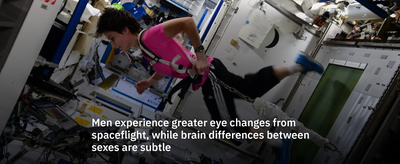
A new study into how spaceflight impacts the human brain and eyes revealed notable sex differences in brain fluid shifts, with female astronauts showing a greater reduction in fluid around the uppermost part of the brain than their male counterparts. Led by Rachael D. Seidler, Ph.D., director of the University of Florida’s Astraeus Space Institute and professor of applied physiology and kinesiology, the study analyzed data from astronauts to determine how factors such as sex, age and body metrics relate to structural brain and eye changes after space travel. The findings, published in August in npj Microgravity, provide key information for protecting astronaut health on long-duration missions to the moon and Mars. This is one of the first studies to look at sex differences in the physiological response to spaceflight. “The data on sex differences in response to spaceflight are scant, given the historically low number of female astronauts.” — Rachael D. Seidler, Ph.D., director of the University of Florida’s Astraeus Space Institute In addition to changes in fluid around the brain, the team also found that a form of eye compression, a hallmark of Spaceflight Associated Neuro-ocular Syndrome known as globe flattening, was the most consistent eye change among crew members. “By far the most prevalent sign of eye changes that we observed was globe flattening, suggesting that this should be the primary monitoring target for ocular health,” Seidler said. “Interestingly, eye changes were more prevalent in males than females.” Globe flattening, when the back of the eyeball becomes slightly indented or pushed inward, might sound minor, but it can have significant effects on vision and raise concerns for long-duration space missions. Surprisingly, there was no strong link between brain structural changes and eye changes, suggesting that the effects on the eyes and brain may arise from distinct mechanisms rather than shared physiological causes. The research underscores UF’s growing leadership in space health science. Through the Astraeus Space Institute, Seidler leads multidisciplinary collaborations that connect neuroscience, physiology and space research to advance human performance and safety in spaceflight. “We used UF's HiPerGator computing cluster for our analyses in this study, enabling us to analyze our data at high speeds,” Seidler said. Read the full study in npj Microgravity.

Do the math: We’re awake roughly 16 hours a day. We spend 10 of those hours staring at screens – phones, tablets, computers, TV, gaming devices. That’s 63% of our waking life. The first platform dedicated entirely to digital balance launching today reveals something even more startling: It's not that we lack willpower to change our behavior. It's that we lack confidence. New proprietary research from Offline.now shows that 8 in 10 people are ready to change their relationship with technology, but more than half are so overwhelmed with their digital habits, they don’t know where to start. “If you don’t learn how to manage the screens in your life, they will manage you,” says Eli Singer, Founder of Offline.now and author of Offline.now: A Practical Guide to Healthy Digital Balance. “When people tell us they feel overwhelmed, it’s not laziness. It’s a crisis of confidence. And confidence is something that can be built.” Digital Wellness Experts Address the Struggles No One Else Will These insights come from digital wellness experts in the Offline.now Digital Wellness Directory – a growing community of licensed professionals across North America specializing in ADHD, relationships, family dynamics, high-achievers, and sustainable behavior change. They’re not offering generic advice. They’re addressing specific digital struggles that define contemporary life. Psychotherapist Harshi Sritharan, who specializes in modern anxiety and ADHD, explains: “The biggest mistake people make is reaching for their phone or turning on their computer first thing in the morning. It injects your dopamine full of uncertainty. You’ve essentially told your brain the most important thing you have to do today is put out fires. I tell clients to delay that first scroll as long as possible and never hit ‘snooze’. You’re fragmenting your REM sleep and making yourself more exhausted. These aren’t willpower issues; they’re about understanding how blue light disrupts your circadian rhythm, especially for those with ADHD who already struggle with sleep regulation.” According to Sritharan, the breakthrough happens when people understand the dopamine cycles driving their dependence and “reframe how they connect with all their screens, whether it’s their phone, gaming console, or streaming TV.” High Achievers Can’t Unplug. The ‘Always-On’ Trap is Killing Productivity, Not Boosting It “A lot of high performers think they need better time management,” says Executive Function Coach, Craig Selinger. “But what they actually need are boundaries. They’ve built empires by being available 24/7, and their phones have become permission slips to say yes to everything.” The difference between old and new technology matters,” he explains. “Back in the day with TV, there was a clear demarcation of beginning and end, right? The episode ends and you move on. Now it’s like Minecraft or TikTok – there’s no ending. And mobility makes it sticky, because you’re physically carrying the drug with you, versus a TV that stayed in one room.” The breakthrough happens when they realize being unavailable on purpose isn’t a weakness. “Things like turning off notifications during deep work, or setting ‘do not disturb’ windows? Those aren’t luxuries. They’re the competitive advantages they’ve been missing.” Digital Dependency as a Third Party in a Relationship Licensed Marriage and Family Therapist Gaea Woods says digital devices are killing interpersonal relationships, not because tech is evil, but because “we use it unconsciously at the moments when connection matters most. When you’re scrolling at dinner, you’re telling your partner ‘my phone is more interesting and important than you’.” The breakthrough happens when couples set explicit agreements: response times, when devices go off-limits – and even what’s it’s OK with AI companions. “We’ve exited the era of meaningful communication without realizing it, and now we must deliberately rebuild it. Nature isn’t ‘Nice to Have’. It’s the Antidote to Screen Fatigue No One is Talking About After running a tech-free camp for 25 years, Personal Development Coach Mark Diamond says he’s seen what happens when kids get genuine face-to-face time interaction outdoors. “Their brains reset. The beauty and physical activity provide perspective that screens can never replicate. Digital dependency has eroded our ability to develop real human connections across all ages, not just teenagers. Screens should not replace the moments that define our wellbeing.” Why This Matters Now The stakes extend beyond personal frustration. Unchecked screen dependency is linked to rising rates of anxiety, deteriorating sleep quality, relationship breakdown, and what mental health experts call “continuous partial attention”, a state where we’re always connected, but never fully present. The Data Reveals When Change is Possible Beyond the confidence divide, Offline.now’s research uncovers the precise moments when users are most open to shifting their digital habits: Evenings from 6 pm-11:59 pm emerge as the “Go Time” window. 40% of self-assessment responders peak readiness to act. Sunday is “Reset Day, when 43% want to set boundaries for the week ahead. Saturdays offer natural opportunities for self-compassion and rest. Afternoons become the “Overwhelm Window”, with 57% feeling consumed by their screens. Critically, Fridays – despite having the highest overwhelm factor – are the worst time for interventions. Users are depleted and change rarely sticks. The Framework That Powers the Platform At the platform’s core is the Offline.now Matrix, a behavioral framework that maps the confidence and motivation levels of users to reveal their starting point: Overwhelmed, Ready, Stuck, or Unconcerned. Based on Singer’s book, Offline.now: A Practical Guide to Healthy Digital Balance, the approach replaces willpower-based advice with microlearning strategies – each taking 20 minutes or less – that track emotional triggers rather than just screen time totals. It offers 100 real-world alternatives to scrolling, from reorganizing a drawer to visiting a thrift shop, and reframes slip-ups as data, not disasters. “The books shows that lasting change doesn’t require deleting Instagram or TikTok tomorrow,” says Singer. “You need to win one personal victory today, and then another tomorrow. That’s how confidence rebuilds.” Propelled by University of Toronto’s Innovation Ecosystem Offline.now is a University of Toronto-affiliated startup, leveraging one of the world’s most powerful innovation networks. U of T is ranked among the top five university-managed business incubators globally and has helped create more than 1,500 venture-backed companies and secured more than CAD$14 billion in investment over the past decade. How Offline.now Works For individuals and families: Take the free self-assessment quiz using the Offline.now Matrix to map your motivation and confidence levels in under three minutes. Receive instant access to practical strategies, curated resources, and a searchable directory of digital wellness experts organized by specialty, location, and insurance coverage. For digital wellness professionals: Join a growing community of licensed mental health practitioners, certified behaviorial coaches, and registered social workers by creating your profile at Offline.now. The platform provides new client leads, professional development opportunities, and visibility in a rapidly expanding market. About Offline.now Offline.now is the first global platform dedicated entirely to achieving digital balance. Founder and author Eli Singer built one of North America’s first social media agencies before seeing technology shift from community-building to attention-harvesting. As a parent, he experienced firsthand the struggle to maintain digital balance. The platform combines proprietary behavioral research, expert guidance and counselling from licensed professionals, and science-backed strategies to help individuals and families build healthier relationships with their screens. Visit Offline.now at https://offline.now Expert Interview Availability Offline.now can arrange interviews with: Eli Singer, Founder – Vision for digital wellness; behavioral data insights Harshi Sritharan, Psychotherapist – Dopamine cycles, ADHD, anxiety and intentional tech use Craig Selinger, Executive Function Coach – Digital distraction in high achievers, family dynamics, ADHD Mark Diamond, Personal Development Coach – Outdoor wellness, sustainable behavior change, happiness, connection Gaea Woods, Licensed Marriage and Family Therapist – Communication, digital third-party relationships, phubbing Additional Resources Free self-assessment quiz - The Offline.now Matrix: https://offline.now/quiz Expert directory and booking: https://offline.now/experts/ Join the directory: https://offline.now/join/ Order Offline.now: A Practical Guide to Healthy Digital Balance: https://offline.now/book/




Aston University’s approach to a global challenge Across industries, companies face mounting pressure to cut carbon, improve resource efficiency, and contribute to the UN Sustainable Development Goals (SDGs). Yet many firms still struggle to move from vision statements to measurable action. At Aston Business School, Dr Breno Nunes, reader in sustainable operations management, is developing practical frameworks that help organisations embed sustainability at their core. His concept of 'sustainability fitness' captures how firms can build the capabilities they need to adapt, compete, and thrive in the transition to a net zero economy. “Many organisations want to be sustainable but struggle to operationalise what that means. My work is about bridging that gap — helping businesses translate strategies into practice.” — Dr Breno Nunes The sustainability fitness concept involves both meeting human needs and respecting environmental limits. While it can also be applied at the societal and individual level, Dr Nunes focuses on organisations, where capability building delivers the fastest, measurable change. Corporate sustainability fitness examines how a firm is able to survive and meet its own needs, while aligning itself to wider essential needs of society and operating within limits imposed by its surrounding natural environment. From research to real-world action Dr Nunes’ research examines how organisations design, implement, and monitor sustainability strategies across operations, supply chains, facilities, and product development. He is the main author of the book Sustainable Operations Management: Key practices and cases, which applies the issues of sustainability to all strategic decisions of operations. His work is already making a tangible difference, including international partnerships in Brazil, Canada, and the US, bringing cross-cultural insights into organisational transformation, as well as for various companies and organisations. In an Innovate UK Knowledge Transfer Partnership (KTP) with automotive supplier Metal Assemblies, Dr Nunes and Professor Alexeis Garcia Perez, professor of digital business and society at Aston University, are working to calculate and report the carbon cost of metal components used in car production, tackling one of the industry’s biggest sustainability challenges. The digitalisation of processes will allow Metal Assemblies to meet customers' requirements and position itself as a trusted and transparent supplier of low-carbon components. In another KTP with Brockhouse Group, a forging manufacturer in the West Midlands, Dr Nunes worked with Aston colleague Dr Muhammad Imran, reader in mechanical, biomedical and design engineering. Together they developed a sustainable manufacturing strategy centred on carbon reduction and process improvement. The work involved the development of an energy dashboard, allowing analysis of data on gas and electricity consumption. The project also included analysis of alternatives for energy recovery systems, and development of routines and procedures to improve the manufacturing process. As a result, Brockhouse group is more competitive to supply in non-captive markets. Dr Nunes has also been involved with a collaboration with Birmingham Botanical Gardens to integrate sustainability into policy and practice, expanding the use of business sustainability theories to nonprofit sectors. Sustainability can be embedded across different areas of organisations while seeking financial stability. As an environmental education charity, it is important to for Birmingham Botanical Gardens to 'practise what it preaches'. It was recently awarded almost £20m from various grants (including Heritage Lottery) in a capital project, thanks to having sustainability at the core of renovation plans. These projects highlight Aston University’s role in bridging academia, industry, and policy — ensuring research findings reach the boardroom as well as the factory floor. Key insights from the research Dr Nunes’ studies highlight several critical factors for turning sustainability from intention into measurable results: • Organisational capabilities are central to embedding sustainability. These include empowering sustainability “champions” (institutional entrepreneurs), supportive structures, superior technologies, and the ability to learn and balance economic, environmental, and social performance. • The tensions in implementing sustainability vary not just by function (supply chains, governance, innovation) but also by an organisation’s maturity level. • Start with the low-hanging fruit: tools like self-assessments, capability diagnostics, and learning games allow firms to act at lower cost before committing to full environmental impact assessments or formal reporting. • Collaboration between academia, industry, and policymakers accelerates real-world impact. Why this matters The stakes are high. Businesses worldwide are expected to reduce carbon emissions, demonstrate social responsibility, and remain competitive in a rapidly changing global economy. Aston University’s research shows that strengthening sustainability capabilities not only improves environmental outcomes but also boosts resilience and cost savings. In pilot projects, teams working with Dr Nunes have achieved up to 30% reductions in both cost and carbon emissions — proof that sustainability can drive operational performance as well as compliance. Looking ahead: expanding the Sustainable Growth Hub The next phase of Dr Nunes’ work centres on Aston’s Sustainable Growth Hub, which is being developed as a reference point for SMEs seeking sustainability solutions. In 2025, the Hub will: • Launch its first industry club cohort and expand its team. • Roll out new self-assessment tools to size sustainability needs and decarbonisation goals. • Introduce new learning formats and follow-up courses to Aston’s Green Advantage programme, alongside sessions to play a new corporate sustainability game. • Host events to bring together businesses, policymakers, and the wider sustainability management community. • Attract new research grants and publish results to share knowledge across both academic and practitioner circles. These initiatives aim to equip organisations not only to meet today’s challenges, but to anticipate tomorrow’s. Get involved Follow Dr Nunes via his profile below, and soon through the Sustainability Fitness website. Businesses can also attend Aston Business School events to explore workshops, tools, and courses first-hand. About Dr Breno Nunes Dr Breno Nunes is reader in sustainable operations management at Aston Business School and president of the International Association for Management of Technology (IAMOT). He serves as associate editor of the IEEE Engineering Management Review and has published widely on sustainability strategy execution and innovation. Aston University’s work in sustainable operations — shaped by researchers like Dr Nunes — is helping organisations worldwide move from ambition to action, building the 'sustainability fitness' needed for a net zero future.

ChristianaCare Breaks Ground on New Middletown Health Center
ChristianaCare today broke ground on its new Health Center at Middletown, marking a major milestone in bringing expanded, affordable and exceptional care to families in southern New Castle County and northern Kent County. The center is expected to open in spring 2027. The $92.3 million project reflects a deep investment in the health and vitality of the region and is part of ChristianaCare’s larger plan, announced in July, to invest more than $865 million in Delaware over the next three years. The 87,000-square-foot Health Center will rise at 621 Middletown Odessa Road, next to ChristianaCare’s existing freestanding emergency department. Designed as a modern, multidisciplinary hub, the facility will expand access to comprehensive services and create more than 70 new full-time jobs, boosting both community health and the local economy. “Today we take an exciting step forward for Delaware, as part of ChristianaCare’s $865 million investment to expand access and strengthen health across our state,” said Janice E. Nevin, M.D., MPH, President and CEO of ChristianaCare. “This new health center is a promise to Delawareans: that they will have access to exceptional care close to home, delivered with love and excellence. More than a building, it represents our vision for healthier communities, our deep commitment to those we serve, and a future where every neighbor can thrive.” A Holistic, Patient-Centered Experience The ChristianaCare Health Center at Middletown will bring together a wide range of services in one convenient location, including: Primary and specialty care. Women’s health, behavioral health, oncology, cardiovascular care, pediatrics, neurology, imaging, diagnostics and lab testing. Hybrid exam rooms with interactive digital tools that allow family members to join virtually. Calming waiting areas with sensory-sensitive design features, plus friendly floor ambassadors to help patients navigate the building. Healing environments that include walking trails and abundant natural light. “We are designing care around people, not around appointments or buildings,” said Pauline Corso, president of Ambulatory Network Continuity and Growth at ChristianaCare. “From easy parking to advanced care coordination, every detail of this new center is aimed at making health care more welcoming, more connected and more human.” A Community Partnership ChristianaCare has been part of the Middletown community since 2009, when it first acquired the land that is now home to the freestanding emergency department. Last year, that facility provided care for more than 32,000 patient visits. “This groundbreaking is a proud moment for our town,” said Ken Branner, mayor of Middletown. “ChristianaCare has been a trusted partner for many years, and this new facility shows a lasting commitment to our residents. It will bring top-quality care closer to home and create good jobs right here in our community.”

ChristianaCare’s Virtual Primary Care practice at the Center for Virtual Health has earned full accreditation from the National Committee for Quality Assurance (NCQA), placing it among the first health systems in the nation to achieve this distinction. ChristianaCare was one of only 18 organizations invited to participate in NCQA’s inaugural pilot program in 2023 to develop the Virtual Care Accreditation. The recognition affirms ChristianaCare’s leadership role in shaping the future of health care and its commitment to delivering accessible, equitable and patient-centered care through innovative digital platforms. “This accreditation is a powerful validation of our vision to reimagine health care,” said Sarah Schenck, M.D., FACP, executive director of ChristianaCare’s Center for Virtual Health. “We’ve built a model that meets people where they are—at home, at work or on the go—with care that is personal, proactive and powered by love and excellence.” What Accreditation Means for Patients NCQA accreditation underscores that ChristianaCare’s Center for Virtual Health meets rigorous standards for: Clinical quality and safety: clear care protocols, escalation pathways and outcome monitoring. Access and equity: technology, language and disability-inclusive design that extends care to more people. Data privacy and security: strong safeguards to protect personal health information. ChristianaCare’s participation in NCQA’s pilot helped shape the benchmarks now used nationwide. The center delivers comprehensive virtual primary care through a multidisciplinary team that includes physicians, nurses, nurse practitioners, behavioral health specialists, pharmacists and patient digital ambassadors. Virtual Care by the Numbers In 2024, ChristianaCare’s Center for Virtual Health provided more than 7,500 patient visits, reflecting both rapid growth and strong demand for its virtual-first model. Services are offered at no copay to ChristianaCare caregivers and their dependents, while availability continues to expand across Delaware and the region “At ChristianaCare, we believe virtual care isn’t just a convenience, it’s a catalyst for better health outcomes,” said Brad Sandella, D.O., MBA, medical director, Ambulatory Care for the Center for Virtual Health. “This accreditation affirms our commitment to innovation and excellence. We’re proud to be among the pioneers defining what high-quality virtual care looks like in America.” Beginning in 2026, ChristianaCare will expand its Virtual Primary Care practice, giving a broader consumer audience convenient access to primary care. At that time, the service will be covered by most insurance carriers and continue to feature dedicated providers in areas such as behavioral health and neurology. ChristianaCare will also continue working with NCQA and other partners to advance best practices nationwide.

LSU, FUEL, Syngenta Partner to Develop Low-cost Digital Twins for Chemical Processing Facilities
Derick Ostrenko and Jason Jamerson, faculty in the LSU College of Art & Design, along with engineering advisor David Ben Spry, are pioneering a new approach to industrial innovation using digital twins. The effort is supported by a $217,403 use-inspired research and development (UIRD) award from Future Use of Energy in Louisiana (FUEL). Digital twins are highly detailed, virtual replicas of physical assets. The technology is used in engineering to enhance efficiency, safety, and training; however, their creation often requires costly specialized hardware, proprietary software, and engineering-intensive workflows. “This initiative not only advances digital twin technology but also highlights the interdisciplinary power of design and engineering,” FUEL UIRD Director Ashwith Chilvery said. “By applying creative tools in an industrial setting, we’re demonstrating new ways to lower costs and expand access to advanced digital infrastructure.” The collaborative effort between LSU, FUEL, and Syngenta aims to reduce costs by applying techniques more commonly used in the entertainment industry, leveraging free and open-source software and consumer-grade hardware, such as gaming PCs and digital cameras. Most of the work will be conducted by digital art students skilled in 3D modeling and video game production, offering a cost-effective alternative to traditional engineering services. “3D artists and game developers bring both technical expertise and creative vision that can add significant value when paired with traditional engineering approaches,” Spry said. “We’re eager to demonstrate how this talent pool can help accelerate digital transformation in industry.” “Working with an innovative company like Syngenta to advance digital twins for chemical manufacturing is an outstanding opportunity for our researchers and students, and we’re proud of the techniques and talent we’ve developed at LSU. FUEL’s support of digital twin development for the energy and chemical sectors helps build this technology and unique artistry in Louisiana, for our industries, and for the rest of the nation.” - Greg Trahan, LSU Assistant Vice President of Strategic Research Partnerships In addition to producing a high-fidelity digital twin of a process unit within an active chemical manufacturing facility, the project will deliver a virtual reality application that allows immersive interaction with the 3D model. Future extensions may include augmented reality overlays of physical equipment or integration of live process data for real-time monitoring and troubleshooting. The ultimate outcome of the project is a validated workflow that reduces the cost of producing digital twins by a factor of at least five compared to conventional engineering methods. This breakthrough has the potential to redefine digital infrastructure for the chemical processing industry, making it more accessible, scalable, and adaptable to future needs. Learn more about LSU's digital twin work with Syngenta as well as NASA: About FUEL Future Use of Energy in Louisiana (FUEL) positions the state as a global energy innovation leader through high-impact technology development and innovation that supports the energy industry in lowering carbon emissions. FUEL brings together a growing team of universities, community and technical colleges, state agencies and industry and capital partners led by LSU. With the potential to receive up to $160 million in funding from the U.S. National Science Foundation through the NSF Regional Innovation Engines program and an additional $67.5 million from Louisiana Economic Development, FUEL will advance our nation’s capacity for energy innovation through use-inspired research and development, workforce development, and technology commercialization. For more information, visit fuelouisiana.org. About Syngenta Syngenta Crop Protection is a global leader in agricultural innovation. It is focused on empowering farmers to make the transformation required to feed the world’s population while protecting our planet. Its bold scientific discoveries deliver better benefits for farmers and society on a bigger scale than ever before. Syngenta CP offers a leading portfolio of crop protection technologies and solutions that support farmers to grow healthier plants with higher yields. Its 17,700 employees are helping to transform agriculture in more than 90 countries. Syngenta Crop Protection is headquartered in Basel, Switzerland, and is part of the Syngenta Group. Read our stories and follow us on LinkedIn, Instagram & X.