
Experts Matter. Find Yours.
Connect for media, speaking, professional opportunities & more.

Ethics Quandary? Women in PR More Apt to Seek Allies Before Giving Execs Advice
Women in public relations are more likely than men to seek allies and form coalitions before they give ethics counsel to senior leaders, while men are more likely to rely on presenting research, according to a Baylor University study. The study also showed that while senior public relations executives in the study overall tend to use “rational approaches,” such as research, case studies and appeals about what is right and lawful, success depends on building relationships with colleagues in other departments so that they have backup when ethical issues arise. “A PR person can be the conscience, but are they listened to? Are they respected? Are they at the table?” one woman said. “You can be doing everything right, but if nobody is listening to you, it really doesn’t matter a whole lot. Except that you can sleep at night.” The study — “The Use of Influence Tactics by Senior Public Relations Executives to Provide Ethics Counsel” — is published in the Journal of Media Ethics. The article highlights the need for younger PR practitioners to seek out senior PR executives as mentors before and during confrontation of ethics issues, said lead author Marlene Neill, Ph.D., assistant professor of journalism, public relations and new media in Baylor’s College of Arts & Sciences and author of the book “Public Relations Ethics: PR Pros Tell Us How to Speak Up and Keep Your Job.” “What inspired us to conduct this research were findings from a study I conducted in 2016 with Millennials working in public relations,” Neill said. “Survey results indicated that Millennials did not feel prepared to provide ethics counsel, were unlikely to speak up and did not even expect to face ethical dilemmas. We decided to conduct this study to instruct them how to do this effectively based on the experiences of senior executives working in our industry.” Researchers conducted through in-depth interviews with an elite selection of 55 public relations executives, many of them with Fortune 500 companies. They included members of the *Public Relations Society of America (PRSA) College of Fellows and The Arthur W. Page Society, with the combined sample averaging 33 years in PR. They represented 19 states and industries including government, healthcare, telecommunications, financial services and energy. Interviewees discussed ways to exert influence, ethics training and whether they are of value as an ethics counselor. “Some see it as being of little use; some recommend the PR practitioner take a modest role in encouraging consideration of ethics among multiple leaders,” Neill said. But others felt strongly that they should be an “organizational conscience” when they think company actions might pose an ethical dilemma with troubling consequences. One reason to do so is that without “boat-rocking” with straightforward tactics an organization, some may turn outside the company by whistleblowing or leaking information to stakeholders, media or government officials. “Our study found that building relationships was critical for practitioners to ensure that other executives would listen to and respect their counsel,” Neill said. “That doesn’t mean they always won the debate, but relationship building has to do with building respect and trust.” While the interviewees’ most common approach to influencing was rational, followed by coalition-building, “some said they relied on persistence and assertiveness if they felt an issue was so objectionable they could not stay silent,” Neill said. “A few people turn to ingratiation, such as flattery.” When it comes to differences in how genders approach the role of ethics counselor, one reason women may recruit allies is that they tend to be outnumbered by men in the boardroom, Neill said. One woman said that “Going in force can help your case. But sometimes it can backfire . . . you know, if somebody wants to kill the messenger. But if several people come to you with the same messaging, I think you take notice.” Another woman said that she was “reprimanded for being so forthright. So, I didn’t do it that way anymore.” Some women were wary of using emotional appeals. Because of stereotypes about women being emotional in the workplace, “I probably erred in the other direction,” one woman said. Men, meanwhile, were more likely to prefer informational sources of power such as research and case studies, Neill said. But both genders said they ask questions, discuss, listen, share alternatives or solutions and recommend. A few men and women used more confrontational descriptions, such as saying, “We absolutely put our foot down” and “Tell them it’s wrong.” But in the case of women, “some of these more confrontational accounts were used in connection with allies or coalitions,” Neill said. In a few cases, men and women gave examples of resigning accounts or refusing to accept new clients if they decided the client’s business was not worth the ethical cost. Many interviewees said they had received ethics training through PRSA. A few said they had received training through their employer, college courses, personal study and mentors. A few pointed to their religious upbringing. Some of the more common ethics issues centered around communication, such as open disclosure of information, inaccurate information or sending fake letters to an editor. But others were business challenges, such as abusive behavior toward subordinates, misuse of public funds, smear campaigns and conflicts of interest. Neill said that because the study was limited to 55 individuals, a larger study and surveys of senior PR executives in other nations would be valuable. She and a colleague next plan to study to women’s leadership experiences. *PRSA College of Fellows is an exclusive group of approximately 350 senior professionals, each with a minimum of 20 years of experience in PR, Accreditation in Public Relations and recognition for distinguished careers. The Arthur W. Page Society is open by invitation to chief communications officers of Fortune 500 corporations and leading nonprofit organizations, chief executive officers of PR agencies and senior professors from business and communications schools. The study was funded by The Arthur W. Page Center for Integrity in Public Communication and supported by the PRSA Board of Ethics and Professional Standards and PRSA College of Fellows. Co-author is Amy Barnes, associate professor in the School of Mass Communications at the University of Arkansas at Little Rock and co-author of “Public Relations Ethics: PR Pros Tell Us How to Speak Up and Keep Your Job.” ABOUT BAYLOR UNIVERSITY Baylor University is a private Christian University and a nationally ranked research institution. The University provides a vibrant campus community for more than 17,000 students by blending interdisciplinary research with an international reputation for educational excellence and a faculty commitment to teaching and scholarship. Chartered in 1845 by the Republic of Texas through the efforts of Baptist pioneers, Baylor is the oldest continually operating University in Texas. Located in Waco, Baylor welcomes students from all 50 states and more than 80 countries to study a broad range of degrees among its 12 nationally recognized academic divisions. ABOUT BAYLOR COLLEGE OF ARTS & SCIENCES The College of Arts & Sciences is Baylor University’s oldest and largest academic division, with 25 academic departments and seven academic centers and institutes. The more than 5,000 courses taught in the College span topics from art and theatre to religion, philosophy, sociology and the natural sciences. Faculty conduct research around the world, and research on the undergraduate and graduate level is prevalent throughout all disciplines.


Just how vulnerable are older Americans to getting hooked on opioids?
It’s a problem that most don’t commonly associate with seniors, retirees and older adults – being hooked on opioids. But it is a problem in America and it’s growing at a frightening pace. According the article attached: ‘Researchers involved with the University of Michigan’s National Poll on Healthy Aging polled a nationally representative sample of 2,000 Americans, aged 50 to 80, about what their health-care providers talked about when prescribing opioid medication to them. In the past two years, 589 said they filled an opioid prescription. This group knew how often to take the medication, but the majority didn’t recall their doctors or pharmacists talking about the risk of addiction, the risk of overdose, or what to do with leftover pills. About 40 percent said their doctors didn’t talk to them about the side effects of opioid use or guide them on when to cut back on pain medications.’ That is a staggering and scary scenario? But what can be done? Is it simply about better communication and information? Or do stronger restrictions and regulations need to be put in place to limit the opportunity for vulnerable seniors to become addicted? As America struggles to battle the opioid epidemic – are seniors another layer of addicts that could compound this situation? There are a lot of questions and that’s where the experts from can help. Dr. Marc Sweeney is the Founding Dean of the School of Pharmacy at Cedarville University and is an expert in the fields of drug abuse, prescription drug abuse and Opioid addiction. Marc is available to speak with media regarding this growing issue. Simply click on his icon to arrange an interview. Source:


CFOs & earnings misrepresentation
The quality of a company’s earnings is determined by controllable factors, such as internal controls and corporate governance, and noncontrollable factors, such as industry and economic conditions. But CFOs also have considerable influence over the communication and presentation of those earnings. In a new research study, Ilia Dichev, Goizueta Foundation Chair, professor of accounting, and coauthors John Graham (Duke U), Campbell R. Harvey (Duke U), and Shiva Rajgopal (Columbia U) note that discretion in accounting methods allows CFOs to misrepresent earnings. CFOs are motivated to misrepresent earnings in order to increase stock price and meet earnings targets, as well as boost their own compensation and career profile. The authors conducted a survey of 375 CFOs to explore their definition of earnings quality and ways to determine earnings misrepresentation. The authors concluded that “in any given period, a remarkable 20% of companies intentionally distort earnings, even while adhering to GAAP (generally accepted accounting principles).” The study found a number of red flags for earnings misrepresentation, including “a lack of correspondence between GAAP earnings and cash flows from operations, and unexplained deviations from peer and industry norms.” Source:



"Forcible separation of families inflicts severe trauma on children and parents. The bond between caregiver and child is critical for the child’s sense of safety and well-being. When that bond is interrupted through a violent or forcible separation, the child experiences severe neurobiological stress causing the child to feel intense fear, helplessness, or horror. Such stress is particularly acute for children who have experienced other traumas, such as witnessing violence, sexual abuse, or forced detention, which are common experiences for migrant children fleeing violence and persecution. Prolonged exposure to such stress has a debilitating effect on children even after the particular traumatic event is over. Children separated from their parents exhibit the behaviors detailed above typical of children experiencing the symptoms of traumatic stress. They can suffer anxiety, sleep disturbances, emotional changes such as aggression, withdrawal, and fear. They also suffer difficulties in reasoning, thinking, learning, and communication, and a decline in educational achievement." Source:


‘Internet’ Presidents and the evolving art of communicating
There’s no question the first four presidents of the internet age are different, but Bill Clinton, George W. Bush, Barack Obama and Donald Trump share one thing in common: They have emphasized their personal character to win office and to fight back against critics. In his new book Presidential Communication and Character: White House News Management from Clinton and Cable to Twitter and Trump, University of Mary Washington Political Science Professor Stephen J. Farnsworth examines how presidents sell themselves and their policies in an ever-expanding and sometimes precarious media environment. “Character conversations are ideal for a modern media system that gives rise to short-attention-span politics,” said Farnsworth, a sought-after political commentator who has spent decades researching presidential communications and the media. “They also serve the politicians’ interests, as constantly distracted news consumers may not remember when politicians said one thing yesterday and a different thing today, much less punish them for inconsistency. With the various modern media cocoons that exist today, a person may never hear a president called to account for a comment that turned out to be false.” Dr. Farnsworth is professor of political science and international affairs at the University of Mary Washington. A published author and a media ‘go-to’ on presidential politics, he is available to speak with media regarding this issue. Simply click on his icon to arrange an interview. Source:



Baylor Professor, Public Relations Ethics Expert Shares Thoughts on Resignation of ICE Spokesman
James Schwab, spokesman for the U.S. Immigration and Customs Enforcement (ICE) in San Francisco, recently resigned his position -- alleging that Trump administration officials, including U.S. Attorney General Jeff Sessions, made false public statements after the agency’s recent Northern California sweep to arrest undocumented immigrants. Marlene Neill, Ph.D, APR, an expert on public relations ethics and coauthor of the new book "Public Relations Ethics: Senior PR Pros Tell Us How to Speak Up and Keep Your Job," said it's incredibly challenging for PR professionals when they feel their integrity is at stake or when they are at odds with their supervisors. If Schwab's accusations are founded, Dr. Neill said she feels he made the best decision. "I applaud James Schwab for his moral courage and willingness to stand firm in his values despite a high personal cost. From news accounts, it appears he tried to persuade other executives to be more forthright and truthful in their communication, but was unsuccessful in his efforts. That left him no choice but to resign. In our new book, we discuss different persuasive approaches senior executives can use to advocate for ethical communication. However, when those efforts fail, it leaves communication executives with few options to maintain their integrity. That is why it is so important to have a personal crisis plan." Dr. Neill, Ph.D., APR, is an assistant professor at Baylor University. She teaches courses in public relations and advertising. She also serves as the faculty adviser for the Baylor PRSSA chapter. Her research interests include public relations management and ethics. She has published research in the following journals: Journal of Mass Media Ethics, Public Relations Review, Journal of Communication Management and Journal of Advertising Education. Neill is an accredited member of the Central Texas Chapter of the Public Relations Society of America. She served as the chair for the Southwest District of PRSA in 2011. At the national level, Neill served a three-year term on the Universal Accreditation Board, which administers the examination for Accreditation in Public Relations; the Nominating Committee, which selects national board officers in 2012; and was appointed to the Board of Ethics & Professionals Standards in January of 2013. Dr. Neill is available to comment. Source:
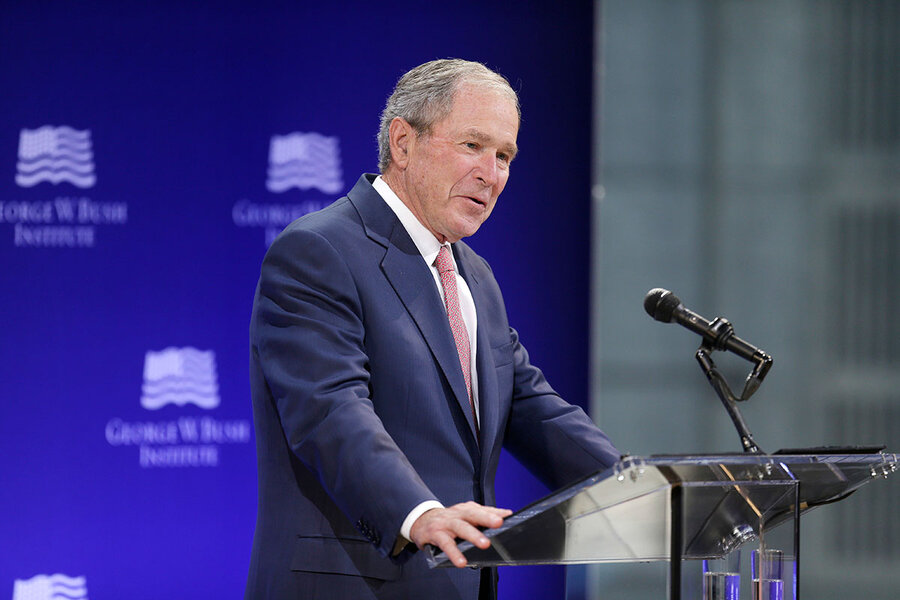
Presidential Rhetoric Expert Shares Thoughts on Bush's Speech
Presidential rhetoric expert Martin J. Medhurst, Ph.D., Distinguished Professor of Rhetoric and Communication and professor of political science in Baylor’s College of Arts & Sciences, is quoted in this article about speeches given last week by two former U.S. presidents and a former presidential candidate that warned of the dangers to the nation and the world if divisive politics continues to cleave the American electorate into thoughtlessly hostile warring camps. “They ... talk about American ideals, they ... talk about the story of America, the American creed and the need to reinvigorate democracy and continue to be the exemplar to the world of democratic values,” Medhurst said. Source:

Millennials who are pursuing careers in public relations do not feel prepared to offer advice on ethics to their companies — and in fact, they do not expect to face ethical dilemmas at work, according to a Baylor University study. Millennials or Generation Y — generally identified as people born between 1981 or 1982 through 2000 — are projected to make up one third to one half of the country’s workforce by 2025. They will shift from being “doers” to being “deciders” in businesses, and their ethical compass will set the course for subsequent generations of public relations professionals, said study author Marlene Neill, Ph.D., assistant professor of journalism, public relations and new media in Baylor’s College of Arts & Sciences. “The study findings about lack of ethical readiness are a cause for concern,” Neill said. “If Millennials don’t feel equipped, they may be misled by their superiors or used as instruments of unethical behavior.” Without mentoring or training, they must learn by trial and error. Researchers found that factors that have a positive impact on Millennials readiness to face ethics issues include ethics training in college, workplace training, training through professional associations and mentoring by someone inside or outside their organization. But while the majority (74 percent) had received ethics training in college, most had not received training in the workplace through such methods as videos, handbooks and learning modules; or through a professional organization such as PRSA. Besides lacking confidence, most appear to be overly optimistic that they will not have to confront such common dilemmas as truthfulness in communication, altering researching results, working with questionable clients or blurring of personal and professional speech online, Neill said. Source:

Baylor Presidential Rhetoric Expert Featured in USA TODAY re: Scalise, GOP shooting
Martin Medhurst, Ph.D., Distinguished Professor of Rhetoric and Communication, is featured in this USA TODAY story regarding the role of rhetoric in the shooting of House Majority Whip Steve Scalise (R-LA) and four others. Medhurst, a renowned expert on presidential rhetoric and political communication, helped put into historic context the role of violent and divisive rhetoric in American history. "You can go back to the election of 1800 between Jefferson and Adams and find a whole lot of quite outrageous statements made on both sides," he told USA TODAY. "The same is true throughout American political history. We had one guy, [Charles] Sumner, who was caned on the floor of the Senate and almost killed. We have a long history of violence in this country, both rhetorical and otherwise." "I think what has changed in the 21st century is the nature of the different media of communication and especially the rise of social media, where people apparently believe that they can pretty much say anything," he said. Source:

Kennesaw State political science professor Kerwin Swint says that while Trump may not want to use his new Twitter handle when it is handed to him on inauguration day, he believes that Trump is setting up a war on traditional media that is unusual in its intensity and apparently strategic in nature. "He is trying to de-legitimize the media, and use social media to communicate directly with the American people. Trump is using Twitter the way FDR used radio - go over the heads of the mass media and communicate your message directly to the American people. Why would he stop?" said Swint, who explores the use of social media in political communication. Swint, who wrote the book, "Mudslingers: The 25 Dirtiest Political Campaigns of All Time" is now working on his newest book which will delve deep into the political nastiness of the historic Trump - Clinton election. Source:
