Experts Matter. Find Yours.
Connect for media, speaking, professional opportunities & more.
Aston University bioenergy researchers to improve measurement of industrial carbon dioxide
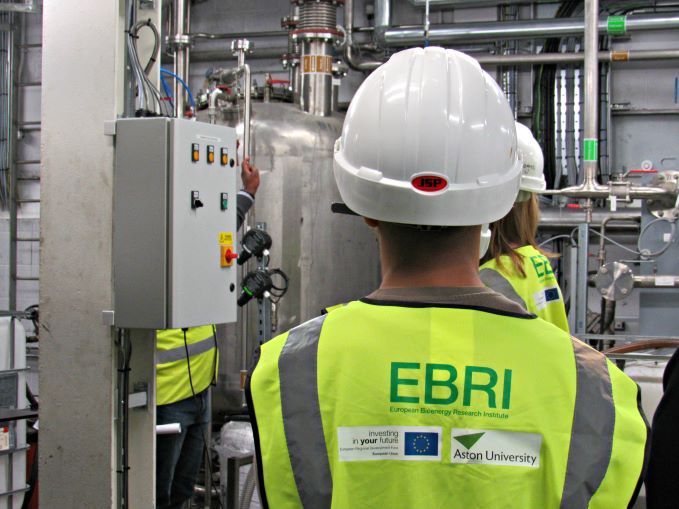
Researchers at Aston University are to take the UK a step nearer to net zero emissions by developing a better system of measuring industrial carbon dioxide. The government is giving the University £100,000 to improve measurement of CO2 streams from sites such as at power plants and factories. The Energy and Bioproducts Research Institute (EBRI) at Aston University is to develop a comprehensive guide based on industry and academic expertise. Industrial decarbonisation will play a major role in achieving the UK’s 2050 ambitious net zero emissions target, however current measurement guidelines need to be improved. The six-month project will be a collaboration between EBRI researchers and the company Progressive Energy and the Energy Institute. Progressive Energy will work alongside potential end-users and the Energy Institute will help to ensure the final guidelines are clear. The work is being led by Dr Paula Blanco Sanchez, who has more than 15 years of experience in bioenergy. She said: “This funding will help Aston University to address a major gap in the decarbonisation pathway. It will contribute to the UK’s net zero target and is another example of how the University is using its expertise to tackle real world problems. “Our experts in EBRI will provide research, industrial experience and knowledge in areas such as gas measurement, metric and analytics, life cycle and techno-economic assessments, and thermal conversion processes.” The funding has been awarded by the Industrial Decarbonisation Research and Innovation Centre (IDRIC) to achieve the net zero ambition set out in the UK Industrial Decarbonisation Strategy (2021). Bryony Livesey, challenge director, Industrial Decarbonisation Challenge, UKRI, said: “The announcement of this funding continues to build upon IDRIC’s whole system approach to decarbonising industry, enabling the UK to remain at the forefront of a global low-carbon future. These successful Wave 2 projects will build evidence on a range of areas from economics and emissions to skilled jobs and wider net zero policy, supporting UK’s green growth and net zero ambitions.” It’s hoped the Aston University project will lead to future collaborations and funding to support UK industry to decarbonise their businesses. In May, June and September the EBRI plant will be opening its doors to professionals who want to enhance their careers with a short hands-on course in Practical Process Engineering. For more information visit https://www.aston.ac.uk/study/courses/practical-process-engineering


Researchers use computer models and simulations to predict satellite resilience
Computational physics is a field of nuance and detail. Using mathematics, researchers build computer models and simulations to test hypotheses within a digital environment. These numerical experiments are often used when practical testing is not feasible like when, for example, you must ascertain the durability of materials in a nuclear explosion. Gennady Miloshevsky, Ph.D., is an associate professor of mechanical and nuclear engineering who specializes in computational physics with an emphasis on plasma, lasers and particle beams. He works to predict the behavior and state of materials when under extreme pressure, temperature and radiation. With funding from the Defense Threat Reduction Agency (DTRA), an agency of the U.S. Department of Defense (DoD), Miloshevsky is studying the effect weapons of mass destruction have on satellites within Earth’s orbit. His work requires a distinct familiarity with our physical world and how different forms of energy interact with and within matter. “Any satellite close to the detonation point would be destroyed,” says Miloshevsky, “However, beyond that initial area, surviving satellites could be subject to X-ray induced blow-off, thermo-mechanical shock and warm dense plasma formation take place on material surfaces. This causes damage to exposed optics, sensors and solar cells on satellites. Particularly dense surface plasmas can couple the solar cells to each other in gaps between unshielded active elements and to dielectric structures causing them to be destroyed. It would all depend on the distance from the detonation point and the orientation of the satellite.” Part of Miloshevsky’s research involves developing methods to computationally simulate temperature, pressure and radiation in order to study the state known as “warm dense plasma,” which occurs between the solid and classical plasma states and exhibits the characteristics of both. A better understanding of this state of matter is a stepping stone to building more resilient materials. “Warm dense plasma is highly transient and short lived,” says Miloshevsky. “The state occurs in several nanoseconds, so isolating it in a laboratory setting in order to characterize it is very complicated. A nuclear burst irradiates materials with high-intensity X-rays, resulting in the transition to warm dense plasma. Our DTRA research seeks to understand the fundamental physics of warm dense plasma, including its physical and electrical properties. It’s currently unclear how this may affect the choice of future materials for satellite components.” A ban on nuclear testing means research into the effects of nuclear weapons is only possible through the use of computer codes to either model or simulate the many physics phenomena generated by a nuclear detonation. Miloshevsky’s first research area includes quantifying and reducing the uncertainty of computer model material properties, such as diamond, under the conditions of a nuclear blast using REODP (Radiative Emissivity and Opacity of Dense Plasmas) computer code he developed. This code is used to investigate the ionization state and ion abundances for equilibrium and transient-dense plasmas. It helps predict the equations of state, transport and optical properties of materials in the category of warm dense plasma. In a second research area, Miloshevsky works to understand and predict the interaction between X-rays and satellite surface materials (like silicon, germanium and other materials used to make solar panels) during a nuclear detonation in space. This uses MIRDIC (Modeling Ionizing Radiation Deep Insulator Charging) code developed in collaboration with NASA’s Marshall Space Flight Center for its Europa Lander project. This code helps anticipate charge production by blackbody X-rays in dielectrics and insulators of DoD space systems. It can also predict electrostatic material breakdown. Also part of the second research area is work to understand X-ray-induced shock generation, material ablation and blow-off (when material is literally “blown off” the satellite in reaction to another force) within the vacuum of space. This is studied using MSM-LAMMPS (Momentum Scaling Model implemented within the Large-scale Atomic/Molecular Massively Parallel Simulator software package) code. It predicts material behavior at an atomic level within extreme environments, the nature and behavior of materials in highly non-equilibrium states, microscopic mechanisms of disintegration, blow-off, melting, ionization and warm dense plasma states. Practical experiments in a lab use lasers to replicate the heat and pressure generated by X-ray radiation, shock and other physical effects of a nuclear detonation. Miloshevsky’s colleagues at the John Hopkins Extreme Materials Institute heat carbide diamond and silica materials typically found in solar panels to temperatures between 11,600 and 1,160,000 Kelvin using lasers at the University of Rochester and Pacific Northwest National Laboratory to observe this momentary transformation into warm dense plasma. Researchers use shadowgraphy, spectroscopy and other visual analytical methods to quantify the result. They can also investigate the depth, size and shape of the crater created by the laser within the material surface. “Experimental and computational research are closely interconnected and complement each other,” says Miloshevsky. “The laser-material interaction is a complicated process that occurs on multiple space (nanometers to millimeters) and time (femtoseconds to milliseconds) scales with evolving and changing physics. Data measured in these experiments usually need physics insights from a computer model to be correctly interpreted and understood. Models can provide fine details of physics processes that cannot be revealed in the practical experiments due to the incredibly minute space and time scales. Conversely, data from physical experimentation can feed into a computer model so it can be further developed and refined to enhance the understanding of the experiment’s measured data.” Miloshevsky’s recent topical review paper, Ultrafast laser matter interactions: modeling approaches, challenges, and prospects, details some of these advances in computational modeling and simulation development for laser-pulse interactions with solids and plasma.


Aston University computer scientist joins first UK-wide Young Academy
The new UK Young Academy is a network of early career researchers and professionals It has been established to tackle local and global issues Dr Alina Patelli is a senior lecturer in computer science at Aston University. Aston University is delighted to announce that Dr Alina Patelli, a senior lecturer in computer science in the College of Engineering and Physical Sciences, is among the first members of the new UK Young Academy – a network of early career researchers and professionals established to help tackle local and global issues and promote meaningful change. Dr Patelli specialises in evolutionary computation, specifically, genetic programming and its applications in smart cities, with a focus on traffic modelling and prediction. Her interests also include autonomic, knowledge-based systems, as well as self-adaptation and self-organisation in computing. As part of the first cohort of 67 members, announced on 10 January by UK and Ireland National Academies, Dr Patelli will have the opportunity to help shape the strategy and focus of this new organisation, based on areas that matter to them. Along with their fellow members from across academia, charity organisations and the private sector, they will have the chance to inform local and global policy discussions, galvanising their skills, knowledge, and experience to find innovative solutions to the challenges facing societies now and in the future. The UK Young Academy has been established as an interdisciplinary collaboration with prestigious national academies: the Academy of Medical Sciences, British Academy, Learned Society of Wales, Royal Academy of Engineering, Royal Irish Academy, Royal Society of Edinburgh, and the Royal Society. It joins the global initiative of Young Academies, with the UK Young Academy becoming the 50th to join the Young Academy movement. Dr Alina Patelli said: “I am anticipating the start of my service as a member of the UK Young Academy with great enthusiasm. I highly value the opportunity to collaborate with colleagues from across the spectrum of science and governance in order to make a significant impact on the UK’s approach to tackling national and international challenges. “The UK Young Academy is perfectly placed to substantively improve the life of human communities everywhere and I am honoured to contribute towards the achievement of that goal.” Professor Stephen Garrett, executive dean of the College of Engineering and Physical Sciences at Aston University, said: “I would like to congratulate Alina on being selected as one of the first members of the UK Young Academy. It is a fantastic achievement to have been selected to join this talented and diverse cohort. “I wish her every success and look forward to seeing the fruits of her work with the Young Academy.” The successful applicants officially took up their posts on 1 January 2023, and membership runs for five years. It is expected that the next call for applications will open in 2023.

Fashioning Fusion: Villanova Professor Explains Clean Energy Breakthrough
On December 13, scientists at Lawrence Livermore National Laboratory announced a breakthrough that could change the future of clean energy. The long-awaited achievement of nuclear fusion was accomplished by researchers and, if harnessed on a larger scale, fusion energy could provide an energy option without the pollution of fossil fuels and without the radioactive waste of nuclear energy. A new world running on clean energy may not be imminent, but the state of ignition achieved is an important first step. Villanova University professor of mechanical engineering David Cereceda, PhD, received a U.S. Department of Energy Early Career Award from the Office of Fusion Energy Sciences for his research on fusion energy materials—and has worked at the Lawrence Livermore National Laboratory, located in California. "Ignition means that a nuclear fusion reaction becomes self-sustainable," Dr. Cereceda said. "The experiments performed at NIF [National Ignition Facility] last week reached for the first time in history a condition called scientific breakeven, meaning the scientists produced more energy from fusion than the laser energy used to drive it." The breakthrough discovery was made when 192 lasers focused on a cylinder the size of a pencil eraser. That container was filled with a small amount of hydrogen that was encased in a diamond. The resulting reaction that occurred was brief but significant, as this important step has proved allusive to researchers for decades. "Those who criticized fusion said that fusion was always five decades away. That's not true anymore," Dr. Cereceda remarked. "I'm not surprised about the announcement. It finally arrived after decades of hundreds of brilliant scientists and engineers carefully working on it." Still, the national laboratory says much work still lies ahead. Scientists will continue to push toward a higher fusion output and are looking at more efficient ways to produce ignition. Researchers also believe they may still be decades away from making fusion energy a mainstay and usable for the general public. "In my opinion, some of the most important challenges that remain on the path to commercial fusion energy are related to structural materials, tritium breeding blankets and laser technology, among others," mentioned Dr. Cereceda. "Multiple challenges remain to making it a commercial energy source, but this recent and historic breakthrough was a critical milestone."


Interested in the true pursuit of greatness? Take a look at what Florida Tech has to offer
If you are up for the challenge and want to begin your own relentless pursuit of greatness, let us help. The Florida Tech campus is located in the heart of Florida’s Space Coast. That means proximity to key agencies and operations, such as NASA-Kennedy Space Center, SpaceX, Embraer, L3Harris Corporation, Northrop Grumman and more. Oh, and did we mention there are miles and miles of Atlantic Ocean beaches just moments away? Learn more about all Florida Tech has to offer. Get in touch today! Simply contact: Adam Lowenstein Director of Media Communications (321) 674-8964 adam@fit.edu


Permanent magnets play an indispensable role in renewable energy technologies, including wind turbines, hydroelectric power generators and electric vehicles. Ironically, the magnets used in these “clean energy” technologies are made from rare earth elements such as neodymium, dysprosium and samarium that entail environmentally hazardous mining practices and energy-intensive manufacturing processes, according to Radhika Barua, Ph.D., mechanical and nuclear engineering assistant professor. Access to these rare earth magnets is also heavily reliant on China and demand for them is expected to grow as the U.S. seeks to meet net-zero carbon emissions by 2050. “That anticipated demand poses a challenge to U.S. decarbonization goals as the rare earth elements are characterized by substantial market volatility and geopolitical sensitivity,” Barua says. “This is where our project comes in.” Barua and fellow VCU professors Afroditi Filippas, Ph.D., and Everett Carpenter, Ph.D., are part of a team of VCU researchers working to create new types of magnets. By using additive manufacturing, more commonly known as 3D printing, they hope to create replacements for those permanent magnets composed of rare earth elements that are made from materials readily available in the U.S. China mines 58 percent of the global supply of rare earth elements used to make neodymium magnets that are widely used in consumer and industrial electronics, the U.S. Department of Energy (DOE) noted in a February 2022 report. That dominance grows throughout the manufacturing process with China accounting for 92 percent of global magnet production, the DOE estimates. “It would be ideal if we could manufacture the same magnets with the same characteristics without using rare earth elements,” says Filippas, who teaches electromagnetics at VCU. “It would be even better if we could make these magnets using additive manufacturing techniques.” VCU researchers are trying to do that in collaboration with the Commonwealth Center for Advanced Manufacturing (CCAM), which brings university, industry and government officials together to tackle manufacturing challenges. The professors are conducting much of their work at CCAM’s lab in Disputanta, Virginia. “We have access to equipment that we would not have access to at VCU,” Filippas says of the benefits of the CCAM partnership. “They provide that level of expertise using the equipment and understanding the process.” The project is funded by the VCU Breakthroughs Fund and CCAM. Barua is working with Carpenter, a chemistry professor, on the materials science part of the project. Filippas is focusing on data analytics and is helping develop a monitoring process to ensure the newly-crafted replacement magnets are viable. In addition to providing a more stable source of supply, Barua says the replacement magnets could also bring environmental benefits. Providing an alternative to rare earth magnets would involve less hazardous mining techniques while also reducing emissions and energy consumption. The replacement magnets are made by filtering particles of iron, cobalt, nickel and manganese through a nozzle where a laser fuses them together through a process known as direct energy deposition. That metal 3D printing approach can make complex shapes while minimizing raw material use and manufacturing costs, Barua says. “Right now, we’re printing straight lines just to see what we’re going to get and see if we can even print them,” Filippas says. “Are we getting the composition of the materials that we want? It’s a slow painstaking process towards freedom from reliance on rare earth materials.” Barua says using additive manufacturing allows researchers to create a unique microstructure layer-by-layer instead of simply making magnets from a cast. Researchers do not expect their replacements to mimic the full strength of rare earth magnets, but they hope to produce mid-tier magnets that are as close as possible to current magnets. Carpenter adds their new magnets could potentially be smaller and weigh less than rare earth magnets, which could lead to numerous benefits. “This reduction would be a big savings to the automobile manufacturing industry, for example, where every ounce matters,” Carpenter says. “In an S-Class Mercedes, there are over 130 magnets used in sensors, actuators or motors. This approach could save pounds of weight which translates into fuel efficiency.” Barua says the team is working to establish the feasibility of their new magnet-making process. They are trying to get the microstructure of the new magnets just right and are using additive manufacturing to fine-tune their magnetic properties, Barua says. “When artificial diamonds, cubic zirconia, was synthetically produced in the lab, it changed the entire diamond industry,” Barua says. “That’s exactly what we’re trying to do. We’re trying to make synthetic magnets.”



Researcher to build fuel database to improve nuclear reactor sustainability
Braden Goddard, Ph.D., assistant professor in the Department of Mechanical and Nuclear Engineering, has received a grant from the U.S. Department of Energy’s Nuclear Energy University Program (NEUP) to create a database for use in nuclear material control of pebble bed reactors (PBR). Advances in material science and technology have revitalized the nuclear energy industry, allowing for the design and construction of advanced nuclear reactors. New high-temperature materials developed by researchers allow ideas from as early as 1970, like pebble bed reactors, to be re-explored and make nuclear power more efficient and sustainable. Pebble bed reactors are one of many ideas from as early as 1970 that researchers are once again exploring to make nuclear power more efficient and sustainable now that science has developed new high-temperature materials. “Imagine a gumball machine,” said Goddard, “A pebble bed reactor functions similarly. The pebbles are the gumballs, which are fed into a reservoir. As they make their way through the reactor, heat generated from the radiation is removed by a gas which then spins an electrical turbine to generate electricity. The pebbles then exit from the bottom of the reservoir and those that can be reused are returned to the top of the reservoir.” Each pebble contains thousands of microscopic uranium particles encased in silicon-carbide cladding. As the pebble passes through the PBR, the path it follows affects how much fissioning occurs within the uranium. This means pebbles deplete at different rates based on how they travel through the reactor. Goddard’s database seeks to characterize the state of a pebble after it leaves the PBR by determining precisely how much plutonium and uranium remains in the pebble. This informs PBR operators if the pebble can be reused or if it needs to be sent off as waste. Better characterizing these pebbles improves the sustainability and security of PBRs while reducing the amount of waste generated. Measuring gamma radiation from the radioactive isotope cesium-137 created from the fission of uranium is the traditional method of determining how much nuclear fuel is still viable. However, this system does not work for PBRs because the correlation between the uranium fuel and the gamma radiation it emits is not consistent between pebbles. To remedy this, Goddard will measure both gamma and neutron radiation emitted by all radioactive isotopes in the pebble, which varies depending on the route the pebble takes through the reactor. Partners like Brookhaven National Laboratory and similar institutions within the United States will assist in the research by applying machine learning techniques to the gamma and neutron radiation signature. “Nuclear reactor operators have instruments that tell them what’s going on inside the reactor, but it’s not the same as knowing how much uranium mass you have in fuel going into or coming out of the reactor,” said Goddard. Goddard and his colleague, Zeyun Wu, Ph.D., will use computer modeling to run countless simulations and map every possible course a pebble can take through a PBR. The resulting catalog of data will allow PBR operators to characterize the state of any pebble leaving the PBR and assess if it can be reused or if it is ready to be stored at a nuclear waste facility. The catalog also serves as a material inventory, allowing nuclear facilities to better track waste material.


#Expert Research: New National Science Foundation and NASA-Funded Research Investigates Martian Soil
Studies have shown crops can grow in simulated Martian regolith. But that faux material, which is similar to soil, lacks the toxic perchlorates that makes plant growth in real Red Planet regolith virtually impossible. New research involving Florida Tech is examining how to make the soil on Mars useful for farming. Andrew Palmer, co-investigator and ocean engineering and marine sciences associate professor, along with Anca Delgado, principal investigator and faculty member at Arizona State University’s Biodesign Swette Center for Environmental Biotechnology, and researchers from the University of Arizona and Arizona State University, are participating in the study, “EFRI ELiS: Bioweathering Dynamics and Ecophysiology of Microbially Catalyzed Soil Genesis of Martian Regolith.” This National Science Foundation and NASA-funded project will use microorganisms from bacteria to remove perchlorates from Martian soil simulants and produce soil organic matter containing organic carbon and inorganic nutrients. Martian regolith contains high concentrations of toxic perchlorate salts that will impede plant cultivation in soil, jeopardizing food security and potentially causing health problems for humans, including cancer. Researchers will look at different bacterial populations and how well they are able to process and break down the perchlorates, as well as what kind of materials they produce when they do. They’ll also look at different temperatures and moisture conditions, as well as in the presence or absence of oxygen. Students in the Palmer Lab will receive the simulants after this process, try to replicate it, and then test how well the perchlorate-free regolith is able to grow plants. A challenge the researchers face is how they remove the toxic salts, as well as if they can remove all of them. Palmer cautioned that the possibility that removing the perchlorates does not necessarily mean the regolith is ready for farming. “You can’t make the cure worse than the disease, so we have to be ending up with regolith on the other side that’s better than when we started,” Palmer said. “We can’t trade perchlorates for some other toxic accumulating compound. Just because we’re removing the perchlorates doesn’t necessarily mean that we’re going to make the regolith better for plants. We might just make it not toxic anymore. How much does it improve is really what we’re trying to figure out.” Even without perchlorates, there are significant challenges to growing crops in Martian soil. While researchers have grown plants in simulated regolith, the regolith is not good for plant growth, as in addition to a lot of salts, it has a high pH and is very fine, which means it can ‘cement’ when wet, suffocating plant roots. Being able to grow in the soil instead of using hydroponics could also provide a more efficient, cost-effective solution. “There is always the option of hydroponic growth of food crops, but with a significant distance to Mars and the lack of readily available water, we need a different kind of plan,” said ASU’s Delgado. “If there is a possibility to grow plants directly in the soil, there are benefits in terms of water utilization and resources to get supplies to Mars.” Some of the microbial solutions the team is proposing could also help with studies of soils on Earth. “The best soils for agriculture on earth, they were taken up decades ago, and so now we’re trying to farm on new land that’s not really meant for agriculture, if you think about it,” Palmer said. “So, as we think about ways to convert it into better soil, I think this research helps teach us how to do that, but it also inspires.” The research will also allow Florida Tech students to get hands-on space agriculture experience. “We’re going to be training the grad students and the undergraduates who are going to be the researchers who take on those new challenges, so I think one of our most important products are going to be the students we train,” Palmer said. “We’ll deliver Mars soil, but we also deliver, I think, a future group of researchers.” If you're a reporter looking to know more about this topic - then let us help with your coverage. Dr. Andrew Palmer is an associate professor of biological sciences at Florida Tech and a go-to expert in the field of Martian farming. Andrew is available to speak with media regarding this and related topics. Simply click on his icon now to arrange an interview today.


Aston University photonics expert elected as Fellow of Optica
• Professor Edik Rafailov is head of the Optoelectronics and Biomedical Photonics Research Group • He is a member of Aston Institute of Photonic Technologies, a world-leading photonics research centre • Optica is the leading organisation for researchers and others interested in the science of light. A photonics expert at Aston University has been elected as a Fellow of Optica (formerly OSA), Advancing Optics and Photonics Worldwide. Professor Edik Rafailov is head of the Optoelectronics and Biomedical Photonics Research Group in the College of Engineering and Physical Sciences at Aston University and a member of Aston Institute of Photonic Technologies (AIPT), one of the world’s leading photonics research centres. He was elected for his ‘contributions to novel gain media for semiconductor lasers at wavelengths from 750nanometres to1300nanometres’. Optica is the society dedicated to promoting the generation, application, archiving and dissemination of knowledge in the field of photonics. Founded in 1916, it is the leading organisation for scientists, engineers, business professionals, students and others interested in the science of light. Fellows are selected based on several factors, including outstanding contributions to business, education, research, engineering and service to Optica and its community. Satoshi Kawata, 2022 Optica president, said: “I am pleased to welcome the new Optica Fellows. These members join a distinguished group of leaders who are helping to advance the field optics and photonics. Congratulations to the 2023 Class.” Director of AIPT, Professor Sergei Turitsyn said: “I am delighted that Edik has received this prestigious fellowship. “AIPT has one more Optica Fellow, that is a high honour in the field of photonics. “Edik joined Aston University in 2014 and since then his research has contributed to the Institute’s world-leading position in the fields of fibre and semiconductor lasers and bio-medical photonics, making impact on industry, scientific communities and society.” Fellows are Optica members who have served with distinction in the advancement of optics and photonics. As they can account for no more than 10 percent of the total membership, the election process is highly competitive. Candidates are recommended by the Fellow Members Committee and approved by the Awards Council and Board of Directors. The new Optica Fellows will be honoured at the Society’s conferences and events throughout 2023.


COP27 should be turning point to switch from heating homes with fossil fuels Professor Patricia Thornley, was a presenter at COP26 in Glasgow She believes one year on there’s not enough progress to cut emissions from homes. One of the UK’s leading bioenergy experts has said COP27 should be a turning point to help UK consumers switch from heating their homes with fossil fuels. Professor Patricia Thornley, director of Aston University’s Energy and Bioproducts Institute (EBRI), was a presenter at COP26 in Glasgow last year. She leads the UK’s national bioenergy research programme, SUPERGEN Bioenergy hub. Her research focuses on assessing the sustainability of bioenergy and low carbon fuels. Professor Thornley believes that one year on, not enough has been done to encourage the public to cut down on the emissions their homes produce. The UK has the oldest housing stock among developed countries, with 8.5 million homes being at least 60 years old. That is despite COP26’s reaffirmation of the Paris Agreement goal of moving away from fossil fuels, and the call for stronger national action plans to reduce carbon dioxide emissions. She has welcomed initiatives to help some UK industries move towards net zero, but believes householders are not getting the same support, for example with help to insulate their homes more effectively. She said: “Responses to the energy crisis in which we find ourselves have been mixed. “Government initiatives such as funding feasibility studies for hydrogen from bioenergy (turning biomass into hydrogen whilst separating and capturing the carbon portion of the biomass) and other technologies are promising.” Professor Thornley adds: “The recent price hikes in petrol and natural gas highlight the extent to which the UK relies on fossil fuels. “Unlike some areas of industry, domestic consumers have been treated differently, and recent help with energy costs is arguably subsidising us to keep emitting carbon dioxide. “A more forward-thinking approach would have been to invest in tackling the root cause of the problem by addressing home insulation.” Professor Thornley is a fellow of the Royal Academy of Engineering, and recently gave evidence to the Environmental Audit Committee about the use of sustainable timber in the UK as an alternative fossil fuel.