
Experts Matter. Find Yours.
Connect for media, speaking, professional opportunities & more.

Aston University AI project aims to make international health data sharing easier
Project to improve sharing data while complying with general data protection regulation (GDPR) guidelines Aston Institute of Photonic Technologies awarded almost £300k to work on European-wide project Will develop secure data sharing system to allow access to large sets of multi-source health data via tailor-made AI tools. Aston University is to explore the use of AI to improve sharing health data internationally. Dr Sergei Sokolovski of the University’s Aston Institute of Photonic Technologies has been awarded €317,500 to work on a European-wide project. Called BETTER (Better real-world health data distributed analytics research platform) the spans16 academic, medical and industrial partners. Although data-driven medicine is currently used to improve diagnosis, treatment and medical research ethical, legal and privacy issues can prevent sharing and centralising data for analysis. The research at Aston University’s involvement in the BETTER project aims to overcome these challenges so health data can be shared across national borders while fully complying with the general data protection regulation (GDPR) guidelines. Dr Sergei Sokolovski will lead the development of a secure data sharing system which will allow access to large sets of multi-source health data via tailor-made AI tools. Scientists and healthcare professionals will be able to compare, integrate and analyse data securely at a lower cost than current methods to improve people’s health. The BETTER project will focus on three health conditions; childhood learning disabilities, inherited degenerative retina diseases and autism, involving seven medical centres across the European Union and beyond. Dr Sergei Sokolovski said: “Data protection regulations prohibit data centralisation for analysis purposes because of privacy risks like the accidental disclosure of personal data to third parties. “Therefore, to enable health data sharing across national borders and to fully comply with GDPR guidelines this project proposes a robust decentralised infrastructure which will empower researchers, innovators and healthcare professionals to exploit the full potential of larger sets of multi-source health data. “As healthcare continues to evolve in an increasingly data-driven world projects like BETTER offer promising solutions to the challenges of health data sharing, research collaboration, and ultimately, improving the well-being of citizens worldwide. “The collaboration between multiple stakeholders, including medical centres, researchers, and innovators, highlights the importance of interdisciplinary efforts in addressing these complex issues.” The research will last 42 months. ENDS Better Real-World Health-Data Distributed Analytics Research Platform, Grant agreement 101136262 https://www.better-health-project.eu/ Research Universities taking part are: Aston University, Klinikum der Universitaet zu Koeln, Universiteit Maastricht, Universitat Politecnica de Valencia, Universitetet i Tromsoe, About Aston University Founded in 1895 and a university since 1966, Aston University is a long-established university led by its three main beneficiary groups – students, business and the professions, and the West Midlands region and wider society. Located in Birmingham at the heart of a vibrant city, the campus houses all the University’s academic, social and accommodation facilities for our students. Professor Aleks Subic is the Vice-Chancellor & Chief Executive. In 2022 Aston University was ranked in the top 25 of the Guardian University Guide, based on measures including entry standards, student satisfaction, research quality and graduate prospects. The Aston Business School MBA programme was ranked in the top 100 in the world in the Economist MBA 2021 ranking. For media inquiries in relation to this release, contact Nicola Jones, Press and Communications Manager, on (+44) 7825 342091 or email: n.jones6@aston.ac.uk


Image shows how tiny water channels control how water enters and exits cells through their membranes The Aston Institute for Membrane Excellence (AIME) will be set up with a £10m grant from Research England AIME will be led by Professor Roslyn Bill from Biosciences and Professor Paul Topham from Chemical Engineering and Applied Chemistry The globally unique institute will use biomimetic polymer membranes for applications such as water purification and drug development Aston University will establish the Aston Institute for Membrane Excellence (AIME), a globally unique, cross-disciplinary institute to develop novel biomimetic membranes, after receiving a major grant of £10m from Research England. AIME will be led by Professor Roslyn Bill, from the School of Biosciences, with co-lead Professor Paul Topham from the department of Chemical Engineering and Applied Chemistry (CEAC). Membranes, both biological and synthetic, are hugely important in many sectors. For example, the world’s top ten selling human medicines all target proteins in biological membranes, while synthetic polymer membranes are used in the US$100bn/year water purification industry. The team behind AIME believes that the full potential of membranes will only be realised by an interdisciplinary group spanning biology, physics and chemistry that can investigate membranes holistically. Professor Bill, a European Research Council (ERC) Advanced grantee leads Aston Membrane Proteins and Lipids (AMPL) research centre of excellence that studies the structure and function of membrane proteins and associated lipids. Professor Topham leads Aston Polymer Research Group (APRG), which investigates the nanoscale behaviour of block copolymers (a type of polymer with a structure made of more than one type of polymer molecule) and polymer technologies for membranes. AMPL and APRG have already begun collaborative research and AIME will bring together the complementary expertise of both research clusters into one institute. AIME will initially comprise the eight researchers from AMPL and APRG. Alongside the co-leads Professor Bill and Professor Topham, will be Dr Alan Goddard, Professor Andrew Devitt, Professor Corinne Spickett, Dr Alice Rothnie, Dr Matt Derry and Dr Alfred Fernandez. It plans to recruit three further academics, six tenure-track research fellows, three postdoctoral research assistants (PDRAs), six PhD students, a research technician and a business development manager. Importantly, AIME will work with many existing Aston University colleagues to build a comprehensive research community focused on all aspects of membrane science. The new AIME team will focus on the development of bioinspired, highly selective polymer structures for applications in water purification and waste remediation, nanoparticles loaded with therapeutic molecules to treat disorders ranging from chronic wounds to neurological injuries, and the purification of individual membrane proteins with polymers to study them as drug targets. The vision is for AIME to become a ‘one-stop shop’ for interdisciplinary, translational membrane research through its facilities access and expertise, ideally located in the heart of the country. Professor Bill said: “The creation of AIME is ground-breaking. Together with Aston’s investment, E3 funding will deliver a step-change in scale and the rate at which we can grow capacity. We will address intractable scientific challenges in health, disease, and biotechnology, combining our world-class expertise in polymer chemistry and membrane biology to study membranes holistically. The excellence of our science, alongside recent growth in collaborative successes means we have a unique opportunity to deliver AIME’s ambitious and inclusive vision.” Professor Topham said: “We are really excited by this fantastic opportunity to work more closely with our expert colleagues in Biosciences to create advanced technology to address real world problems. From our side, we are interested in molecular engineering, where we control the molecular structure of new materials to manipulate their properties to do the things that we want! Moreover, we are passionate about a fully sustainable future for our planet, and this investment will enable us to develop technological solutions in a sustainable or ‘green’ way.” Professor Aleks Subic, Vice-Chancellor and Chief Executive of Aston University, says: “Our new Aston Institute for Membrane Excellence (AIME) will be a regional, national, and international research leader in membrane science, driving game-changing research and innovation that will produce a pipeline of high-quality research outcomes leading to socioeconomic impact, develop future global research leaders, create advanced tech spinout companies and high value-added jobs for Birmingham and the West Midlands region. Its establishment aligns perfectly with our 2030 strategy that positions Aston University as a leading university of science, technology and enterprise.” Steven Heales, Policy Manager (Innovation) at the West Midlands Combined Authority, said: “WMCA is delighted to see Research England back the Aston Institute for Membrane Excellence. This will enable Aston University’s excellent academics and research community to work closely with businesses to make advances in membrane technology and applications. “In 2023 the West Midlands Combined Authority agreed a Deeper Devolution Trailblazer Deal with Government, which included a new strategic innovation partnership with Government. Projects like AIME are exactly the kind of impact we expect this new partnership to generate, so watch this space.” Lisa Smith, chief executive of Midlands Mindforge, the patient capital investment company formed by eight Midlands research-intensive universities including Aston University, said: “This grant is an important vote of confidence in the Midlands scientific R&D ecosystem. AIME will play an important role in the future research of pioneering breakthroughs in membrane science and enable the world-leading research team at Aston University to develop solutions to real world problems. We look forward to closely working with the Institute and nurturing best-in-field research being undertaken at Aston out of the lab and into the wider society so it can make a positive impact”. Rob Valentine, regional director of Bruntwood SciTech, the UK’s leading developer of city-wide innovation ecosystems and specialist environments and a strategic partner in Birmingham Innovation Quarter, said: "As a proud supporter of the Aston Institute for Membrane Excellence (AIME), I am thrilled at the launch of this groundbreaking initiative. AIME exemplifies Aston University's commitment to advancing cutting-edge interdisciplinary research and further raises the profile of the region’s exemplary research capabilities and sector specialisms. AIME's vision of becoming a 'one-stop shop' for translational membrane research, strategically located at the heart of the country, aligns perfectly with our strategy at Bruntwood SciTech. We are committed to working with partners, including Aston University, to develop a globally significant innovation district at the heart of the UK where the brightest minds and most inspiring spaces will foster tomorrow’s innovation.” Membrane research at Aston University has also recently received two other grants. In November 2023, Professor Bill received £196,648 from the Biotechnology and Biological Sciences Research Council’s Pioneer Awards Scheme to understand how tiny membrane water channels in brain cells keep brains healthy. In December 2023, a team led by AIME team-member Dr Derry received £165,999 from the Engineering and Physical Sciences Research Council to develop biomimetic membranes for water purification. For more information about AIME, visit the webpage.



SME innovation through the lens of ancient myths - public lecture
Professor Nicholas Theodorakopoulos will explore the transformation in the perception of SMEs since the 1970s He will explain the significance of theory-driven design and delivery of interventions for building the capacity of SMEs to innovate The lecture will take place on Thursday 18 January 2024 at Aston Business School from 1800 hrs. Aston University entrepreneurship expert, Professor Nicholas Theodorakopoulos, will be giving his inaugural lecture at Aston Business School on Thursday 18 January 2024. In his talk SME Innovation, Theory-Driven Intervention, and Ancient Myths Professor Theodorakopoulos will explore the transformation in the perception of SMEs, from being viewed as an anachronism in the 1970s to becoming the driving engine of innovation and a prominent feature of public policy worldwide. Professor Theodorakopoulos will explore the significance of theory-driven design and delivery of interventions for building the capacity of SMEs to innovate and will explain that these are not just academic pursuits, but essential tools for developing replicable and impactful intervention programmes on a national and international scale. He will also present a compelling example of a successful intervention that he has run with colleagues for almost a decade in the West Midlands region. Professor Theodorakopoulos said: “The paradigm shift in SME perception necessitates a robust approach to fostering effective SME development ecosystems, not least through Research and Innovation policies. “A critical component of this policy domain lies in strengthening collaboration and knowledge exchange between universities and SMEs, often achieved through targeted interventions. “I look forward to drawing upon an ancient myth as a metaphor for the significance of knowing not just ‘what works’, but also ‘how it works’, in university-SME interventions.” The lecture is open to the public and free to attend in person or online. The in person event will be followed by a drinks reception. To book your place, click here.

#Expert Insight: Here’s what can happen when dollar stores move in
Dollar stores - they're everywhere and on of America's fastest growing retail options. From the outside looking in, the idea of dollar stores seem like a win/win all around -- cheaper food, cheaper toys, and just about cheaper everything on offer to consumers looking to save money. However, recent research by UConn Professor Rigoberto Lopez might be pulling back the curtain on the bad deal these new outlets are selling to consumers and communities. Dollar stores have proliferated in recent years, and a study by a University of Connecticut economist has found that they contribute to less healthful food choices in the neighborhoods where they open. That’s because independent grocery stores tend to close in the same areas where the dollar stores open, according to professor Rigoberto Lopez, whose research focuses on agricultural economics. “The dollar store expanding is the fastest-growing retail format, and we also have seen a lot of family, independently owned grocery stores going out of business,” Lopez said. “So we try to link the two and to find not just a statistical correlation, but also we find that indeed when the dollar store comes to the neighborhood these stores tend to go out of business as well.” The low-priced dollar store — primarily Dollar General, Family Dollar and its subsidiary, Dollar Tree — “is the most successful type of format that is proliferating all across the United States, especially in rural areas and food deserts, which are the more underserved areas,” Lopez said. According to the study, published in Applied Economic Perspectives and Policy, there were 35,000 dollar stores in the United States in 2019 and they were “among the few food retailers” that grew in revenue after the Great Recession of 2008-10, outperforming big box discounters and retail clubs. Between 2000 and 2019, dollar stores opening in a neighborhood resulted in a 5.7% drop in independent grocery store sales, a 3.7% decrease in employment and a 2.3% increase in the likelihood of the grocery stores closing, according to the research. The effects are three times more likely in rural than urban areas, the study found. The dollar stores tend not to offer fresh produce and meats, with foodstuffs being limited to canned and boxed goods. “In general they provide an unhealthier food assortment … and less services,” Lopez said. “They don’t have bakery, butchers, they don’t have a lot of these.” The article also discusses not just the economic aspects, but public health implications as well. Lopez said the dollar stores’ business model is “low prices, low cost, low quality. … But a lot of the food that they sell is not healthy. It’s processed foods that they can store. Keeping fresh food and vegetables costs money.” Dollar stores are not necessarily a negative, if there was not a grocery store in the area before, Lopez said. “Public health advocates, they’re against dollar stores, but a lot of people that visit the dollar store, they prefer to have a dollar store than not to have anything at all in some areas. … But in general … we find if they are driving some of the local businesses out, then that is the negative trend.” Food insecurity and the changing landscape of grocery stores are important topics, and if you have questions or are looking to cover, then let us help. Rigoberto Lopez is the DelFavero Professor of Agricultural Economics at the University of Connecticut's College of Agriculture, Health and Natural Resources Department of Agricultural and Resource Economics. He is an expert in food systems, marketing, industrial organization, and public policy. Simply click on his icon now to arrange a time to talk today.


MEDIA RELEASE: Provincial oversight of the towing industry now in effect in Ontario
The Towing and Storage Safety and Enforcement Act, 2021 (TSSEA) came into effect in Ontario yesterday, giving consumers more certainty when it comes to towing services across the province. Towing services were previously licenced at the municipal level, creating a confusing patchwork of rules and fees for consumers. Provincial oversight will help to ensure that the motoring public has a reliable, growing and reputable tow industry for years to come. “CAA has been working for over a decade with stakeholders and government officials to achieve provincial regulation of the towing industry,” said Teresa Di Felice, assistant vice president, CAA South Central Ontario. “These changes will make a big difference for drivers, providing more confidence and certainty regardless of when or where they require support.” CAA Members can still receive the same services they have come to know and trust. CAA towing services operate in compliance with the new rules in Ontario. “Public awareness of the rules that are now in place is going to be a critical element of successfully protecting drivers moving forward,” continued Di Felice. “CAA will be doing our part to help educate drivers across the province.” Some of the consumer protection requirements that will now be required for all towing services include: Every tow truck operator and vehicle storage operator (company owner) must have a Certificate to offer services in the province of Ontario. Every tow truck must clearly display their name and TSSEA certificate number on the truck. You have the right to see a copy of the certificate. You have the right to decide who can tow your vehicle and to what location unless otherwise directed by police. Tow truck drivers must obtain consent BEFORE they tow your vehicle. Without signed consent (permission to tow form), the tow operator cannot charge for towing services. Towing consent is not required for membership or roadside assistance-type services. You must be provided with an invoice BEFORE requesting payment and a receipt upon payment. This is not required for membership or roadside assistance-type services. Rates cannot exceed the maximum rates published by the Ministry of Transportation. Referrals to a business, facility or person can only be given if requested. Tow truck drivers and operators MUST disclose any benefit they receive for providing referrals to a person, business or facility. Multiple payment methods must be accepted (cash, cheque, credit card, debit). Towed vehicles must be transported via the most direct route. The tow operator or tow truck driver must notify the vehicle owner if taken to a different location from the one the vehicle owner specified. Customers must be allowed to retrieve personal property from towed vehicles at no charge. Storage operators must allow authorized persons access to retrieve personal items from vehicles during business hours or prearranged times. Tow operators must ensure every driver employed complies with TSSEA regulations, the Highway Traffic Act, and its regulations. Implementation of regulations will continue to roll out in the months ahead, and it is expected that the final phase of regulations will be implemented starting in July 2024.



The internet has completely changed how we shop and now artificial intelligence (AI) is changing how we decide what to purchase. AI platforms have created tools to help people find the perfect gift for someone special. The technology helps brands to better learn about their customer and suggests products that fit to that customer. Goizueta Professor David Schweidel can walk you through the different platforms and how they can help shoppers find the perfect gift. Entering some key details about the gift recipient can uncover a whole new world of ideas for that hard to shop for person on the gift list. David A. Schweidel is Professor of Marketing at Emory University’s Goizueta Business School and an acclaimed author. He is available to speak with media regarding the latest advances in AI and how it is changing what we purchase. Simply click on his icon now to arrange an interview today.


Expert Perspective: Augusta University professor gives annual economic outlook for the region
For the 16th year, Augusta University’s Cree-Walker Chair and Professor of Economics in the Hull College of Business Simon Medcalfe, PhD, has given his analysis of the Augusta area economy. The biggest thing on the minds of many remains the possibility of a recession and the overall inflation nationwide. Medcalfe thinks it probably won’t look a lot different in 2024 as it did in 2023. If anything, there may be less of a chance of a recession. “I think the chances of recession have probably slipped a little. I think there’s less chance of a recession,” said Medcalfe. “Inflation is certainly still a concern. It’s running at 3.2%, which sounds kind of low, but because of the amount of inflation, we’ve had prices about 20% higher than two years ago, and it’s still a concern and still eating into people’s wages.” He indicated, looking at Google Trends and what people are searching, inflation is still a pretty high concern. As for the Augusta region, Medcalfe pointed out that Columbia County continues to see a population increase and will likely have the largest population in the area by the end of the decade on current trends. As you would expect, as the population grows, so too does the number of businesses. Looking at the different sectors of employment in the region, he said things haven’t really changed. The only sectors that have seen more than a 2% change in the share of total employment over the last 20 years are education and health services. Medcalfe also pointed out that the manufacturing industry has seen a sizable increase since 2014. He said it was the same time the Starbucks manufacturing facility arrived in South Augusta but didn’t say that was the exact reason for the increase, just a point of reference for the manufacturing industry increased ever since. “Manufacturing has showed a large increase over the last ten years or so, past post-COVID as well. So now manufacturing employment in the local area is at the highest it’s been since I’ve been here,” Medcafe said. Some research that Hull College is undertaking is the intersection of health care and business. He said it’s important to the economy in our region since Richmond, McDuffie and Burke counties all rank towards the bottom of county health rankings in Georgia. “One of the things we are looking at here in the business school and in the new School of Public Health is what are the factors that influence the population’s health but aren’t clinical? There’s a lot of things that impact people’s health. There’s socio-economic status, there’s the environment they live in, there’s education, there’s health behavior and all this kind of stuff. “About 25% of the research out of Hull College is now looking at health maps because it’s important. Not just the health of the population, but it then impacts the economy because we have a labor shortage and how much of that labor shortage is actually because some people can’t work,” said Medcalfe. Looking to know more? We can help. Simon Medcalfe, PhD, is a highly regarded economics expert in the Hull College of Business at Augusta University. Medcalfe is an expert that can talk on the national economy, as well as Georgia. He is available to speak with media – simply click on his icon now to arrange an interview today.


Is South Florida soon to be the next Las Vegas? Our expert can tell you if it's a good a bet or not?
There's a lot of buzz in Florida around gambling right now. Legal sports betting, live roulette and live craps might soon become a reality in the Sunshine State, adding to the economic bonanza and possible social consequences that comes with allowing these activities to expand. Expectations are high, and it's an idea getting a lot of coverage. In less than a month, in-person sports betting, craps and roulette will, presumably, begin at all South Florida casinos and elsewhere in the state, though that anticipated launch may hinge on a favorable ruling from the Florida Supreme Court. The launch is expected to drive tourists and businesses to South Florida and elsewhere in the state, create jobs, and bring in billions of dollars in revenue. Though investors and hotel owners might not want to push all their chips in just yet. There are serious legal issues that still need to be overcome as well as opposition from the Seminole Tribe and the anti-casino group No Casino. The idea though, has media contacting local experts like Florida Atlantic's Peter Ricci for perspective and insight. Peter Ricci, a Florida Atlantic University professor who specializes in hospitality and tourism industry trends, thinks that South Florida will see an uptick heading into the Super Bowl, but most of what he hears from local businesses and hospitality employees is uncertainty rather than excitement. “What I’ve heard is questions about ‘when is it starting?'” he said. ” … ‘Are they hiring for blackjack dealers? What does this mean? Will they expand the hotel?’ All these questions but nothing specifically pro or con about actual sports betting itself.” November 13 - Sun Sentinel Whether Florida can become the next Las Vegas is up to the courts, but if you are a reporter following this ongoing story - we're here to help. Peter Ricci is the Director of the Hospitality and Tourism Management program in Florida Atlantic University’s College of Business. He is a hospitality industry veteran with more than 20 years of managerial experience in segments including food service, lodging, incentive travel and destination marketing. Peter is available to speak with the media about tourism in Florida and the potential for gambling. Simply click on his icon to arrange an interview.



Peer Support Program Helps Patients With Substance Use Disorders
Recognizing that stigma may keep people from accessing treatment and recovery resources, ChristianaCare Union Hospital is partnering with the Cecil County Health Department and Voices of Hope to make peer recovery specialists available at the bedside for patients who have experienced a drug overdose or live with substance use disorder. Ten peer recovery specialists are available at Union Hospital seven days a week from 8:30 a.m. to 1 a.m. to talk with patients about behavioral health care navigation, access to treatment and referrals to harm-reduction and recovery-support resources. Patients can be connected with a certified peer recovery specialist if they are brought to the Emergency Department because of a drug overdose, or if they screen positive for substance use while they are a patient in the hospital. ChristianaCare Union Hospital is partnering with the Cecil County Health Department and the Maryland nonprofit Voices of Hope to make peer recovery specialists, pictured in blue t-shirts, available at the bedside for patients who have experienced a drug overdose or live with substance use disorder. Patients are not required to speak with a peer recovery specialist, but the specialists’ unique combination of lived experience and training to help people experiencing behavioral health issues offers an opportunity for people with substance use disorder to get help without fear of judgment or stigma. “Substance use disorder continues to be a serious health problem that affects people of all ages and walks of life,” said Lanre Akinkunmi, M.D., interim chief medical officer and medical director for population health at ChristianaCare Cecil County Campus. “The good news is that it is treatable, and when people are in the hospital or the emergency department, they are often most receptive to discussions about treatment. Through this expanded use of peer recovery specialists at Union Hospital, we are making a positive impact on the health of our patients and our community.” A voice of experience Peer recovery specialists who work on the weekdays are employed by the Cecil County Health Department, supported by a grant from the National Association of County and City Health Officials. Voices of Hope, a nonprofit focused on recovery support for people in Harford and Cecil counties in Maryland, employs the peer specialists working evenings and weekends. “This program is a great example of using resources wisely and effectively. We already know the tremendous work being done by Voices of Hope and Cecil County Health Department to help our neighbors who have been impacted by substance use disorder,” said Lisa Fields, manager of Community Engagement at the Cecil County Campus. “By partnering on this important program, we are building trust with our patients and helping them to get on the road to recovery.” Since the expanded program launched in September, there have been about 40 referrals for patients to speak with peer support specialists, and more than half of them have agreed to some kind of treatment, Fields said. Unique connection “Helping people get through what I went through really warms my heart,” said Hannah Dean, a peer recovery specialist with the Cecil County Health Department who works at Union Hospital. “I love what I do.” Cecil County’s death rate from drug overdoses is nearly twice as high as the rest of Maryland and more than three times the U.S. rate. The drug overdose death rate in Cecil County more than doubled between 2016 and 2020, according to the 2022 Cecil County Community Health Needs Assessment. Because peer support specialists have lived experience with substance use disorder and recovery, along with specialized training to support people struggling with mental health or substance use issues, they can connect with patients on a personal level and offer empathetic guidance, said Lauren Levy, health officer for the Cecil County Health Department. “Allowing peer recovery specialists to engage bedside with patients who may be struggling with substance use disorders will not only enhance access to behavioral health treatment but will also help reduce stigma surrounding substance use disorders and foster a more compassionate and supportive community,” Levy said. “We are honored to be a part of this innovative private-public collaboration and to work alongside ChristianaCare Union Hospital and Voices of Hope, Inc. This project helps to break down barriers to treatment and provide immediate support to those in need.” A history of support ChristianaCare has long been a pioneer in the use of peer recovery specialists, going back to the launch of Project Engage at ChristianaCare’s Wilmington Hospital in 2008. Union Hospital first partnered with the Cecil County Health Department 10 years ago to provide a peer recovery specialist in the Emergency Department. That program, the first of its kind in Maryland, was recognized with a best practice award from the Maryland Association of Counties in 2014. However, it operated only on weekdays during daytime business hours, and its ability to connect with hospital patients slowed during the COVID-19 pandemic. This reinvigorated peer recovery program is strengthened by the high level of collaboration among these Cecil County organizations, said Erin Wright, chief operations officer for Voices of Hope. “As community-based organizations, we are in a position to make a difference, and our perspective in the care for people with substance use disorder is really valuable,” said Wright, who has been in recovery for eight years. “As someone who has been through it, we are able to have that empathy. Even if the person does not want to go to treatment, you sit with them and maybe plant a seed.” Catharine Murray hopes her role as a certified peer recovery specialist can help someone struggling with addiction see recovery as a viable option for themselves. “This wasn’t available to me when I was trying to get better. I want to make it more accessible to others,” she said.

Georgia Southern’s public health center receives $4 million to assist rural hospitals nationwide
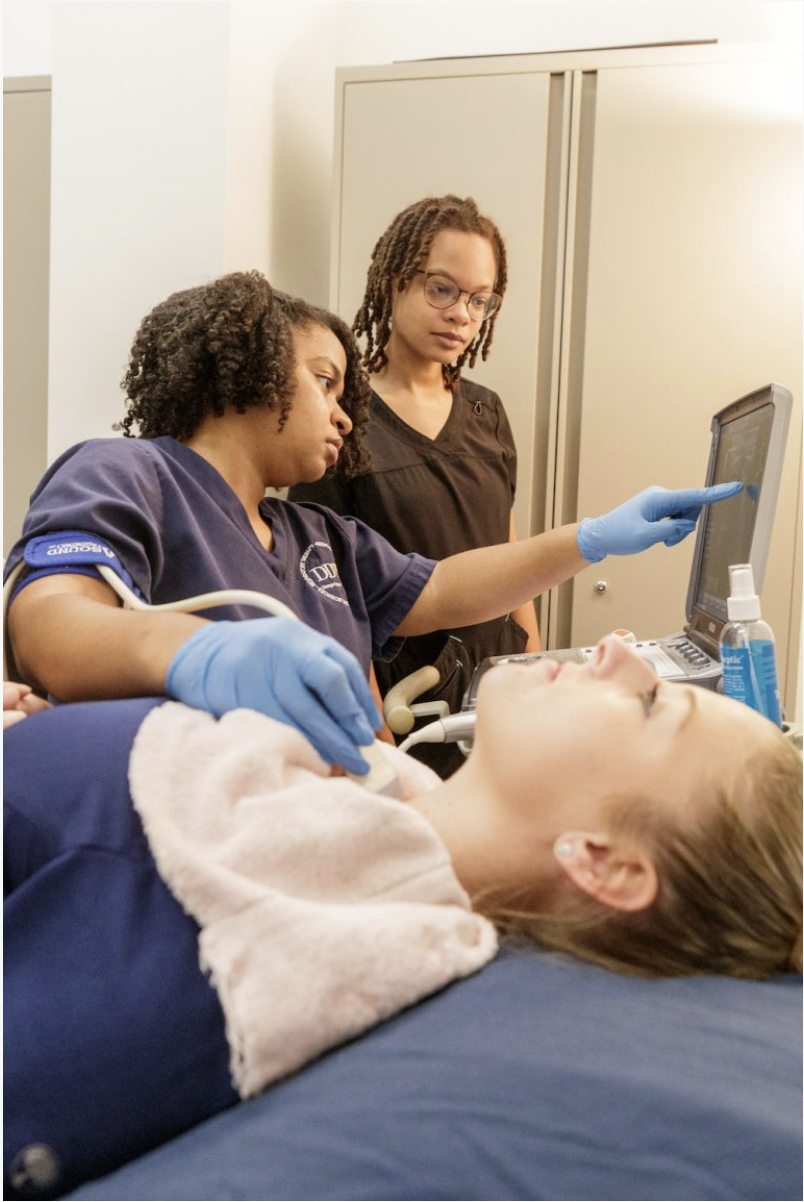
Georgia Southern University’s Center for Public Health Practice and Research at the Jiann-Ping Hsu College of Public Health (JPHCOPH) received a $4 million grant from the Health Resources and Services Administration (HRSA) to provide targeted technical assistance to rural hospitals nationwide. The funding will support the team’s implementation of the Targeted Technical Assistance for Rural Hospitals Program over a five-year period (2023-2028). “Many rural hospitals are struggling financially across the U.S.,” said JPHCOPH Dean Stuart Tedders, Ph.D. “Long-term, the primary program goal of this grant is to ensure that all rural hospitals are financially viable and positioned to serve their communities with the essential health care services that we all need and expect. A viable health care system is essential for assuring that all communities and their residents thrive. I am very proud of the Center for Public Health Practice and Research at the JPHCOPH and the commitment they have made to improving the quality of life of rural and underserved populations across the country.” Bettye Apenteng, Ph.D., and Charles Owens, both professors of health policy and management, serve as the co-principal investigators for the grant. “We are proud to be selected to work cooperatively with rural hospitals across the U.S. to strengthen their viability so they can continue to provide essential health care locally so the residents, the local hospital and the community may thrive,” said Owens. As part of this cooperative agreement, the team will work in partnership with HRSA and rural health stakeholders to provide in-depth and tailored technical assistance to rural hospitals at risk of financial distress nationwide. Technical assistance delivered as part of this program will help rural hospital communities implement a prioritized strategy for maintaining essential services locally through capacity building in evidence-based decision-making, operational and financial improvement, strategic management, community partnership, project implementation and evaluation. “We are excited to extend the work we have done in Georgia with rural hospitals, for close to a decade, to the rest of the nation,” said Apenteng. “We look forward to building strong collaborative relationships with rural hospital communities nationwide.” The grant activities will be executed by a multidisciplinary team that includes additional JPHCOPH faculty Angie Peden; Andrew Hansen, DrPH; Linda Kimsey, Ph.D.; William Mase, DrPH; Tilicia Mayo-Gamble, Ph.D., and Samuel Opoku, Ph.D.; and Parker College of Business’ Kwabena Boakye, Ph.D.; and the College of Arts and Humanities’ Jason Murdock. Interested in learning more or looking to talk with Bettye Apenteng, Ph.D., and Charles Owens about this grant? Simply click on an expert's icon or contact Georgia Southern's Director of Communications Jennifer Wise at jwise@georgiasouthern.edu to arrange an interview today.

