
Experts Matter. Find Yours.
Connect for media, speaking, professional opportunities & more.

Can Understanding the History of Drug Addiction Help Address the Opioid Epidemic?
According to the National Institute on Drug Abuse, more than 130 people die every day after overdosing on opioids. Lives have been lost, families shattered, and billions spent as experts, elected leaders, health care professionals, and law enforcement officials try to address the country's opioid epidemic. A professor at Rensselaer Polytechnic Institute can help shed light on the forces at work in this crisis and its history. Professor Nancy Campbell is an expert is in the history of science, technology, and medicine as it relates to drug policy and the social significance of drugs. She is a professor and head of the Department of Science and Technology Studies (STS) in the School of Humanities, Arts and Social Sciences at Rensselaer Polytechnic Institute. "We found her to be one of the most knowledgeable people on the history of opioids and how that history fits into the context of today’s problem," reporters for CBS 6 News in Albany wrote of Campbell. In a recent interview with the station, Campbell discussed her extensive research on the history of drug addiction, as well as her approach to educating students about it. “I actually want my students to go out of the class, knowing more about where our current opioid epidemic came from, the endemic that it built upon and also knowing more about drug markets and the social aspects,” Campbell said. August 15 – CBS 6 News Are you a reporter covering the opioid crisis and need to know what’s being done and what more needs to be done? Let our experts help with your questions. Campbell is available to speak to media regarding the opioid crisis and the history of drug addiction – simply click on her icon to arrange an interview.


Couples Who Tailgate Together Stay Together, Says New Baylor Research
Marketing researcher and husband team up to study tailgating’s impact on relationships For millions of football fans across the United States, fall is the time to break out the grills, load vehicles with coolers and food and games, and gather with friends for the time-honored tradition of tailgating. It’s a tradition that Baylor University’s Meredith David, Ph.D., assistant professor of marketing, and her husband, Luke Lorick, have been enjoying since their undergraduate years at the University of South Carolina. The couple partnered on a recent research project to better understand tailgating’s impact on relationships and well-being. David is known nationally for her studies of phone snubbing – “phubbing” – and smartphone addiction. Lorick owns and operates Tailgating Challenge, a website devoted to testing and reviewing tailgating equipment, and he launched National Tailgating Day, which is celebrated annually on the first Saturday of September. “I noticed how at tailgates people actually interact with each other and are not glued to their phones like we see in restaurants and many other settings,” David said. “This led us to combine our expertise to study the impact of tailgating together on well-being.” The researchers surveyed 143 tailgating adults (44 percent were female) who answered questions about their partners and their respect toward that person. The results show that individuals who tailgate with their significant other report higher levels of respect and relationship satisfaction, David said. The results of the study will be presented later this month at the Atlantic Marketing Association Conference. “Tailgating fosters the human-to-human, face-to-face interactions and connections that we as humans need but yet find hard to come by as a result of cellphones and ‘phubbing’ tendencies,” David said. With over 70 million people tailgating annually, spending on average $150 on each occasion, David said this research offers important guidance for marketers, particularly in terms of positioning strategies in marketing communications for tailgating-related products and events. “For example, in advertisements, marketers should focus on portraying couples, or even friends, tailgating together as this may resonate more and help build bonds with the products they sell and the markets they are reaching out to,” David said. David said she and her husband knew that tailgating strengthened their relationship, but they wanted to dig in to see if it was – or could be – helpful to others. “We have lived and experienced these effects ourselves, so we wanted to determine if this impacted others the same way,” she said. “We found that tailgating helps strengthen relationships, in part, by helping people escape the hustle and bustle of everyday life. They disconnect from their TVs, laptops and cellphones and make real connections with loved ones and friends.” ABOUT MEREDITH DAVID, PH.D. Meredith David, Ph.D., serves as assistant professor of marketing in Baylor University’s Hankamer School of Business. Her research focuses on marketing strategies with an emphasis on consumer behavior and well-being. Recently, her research has explored how new media technologies, including smartphones, impact personal and workplace relationships. She has also published research related to customized pricing tactics, interpersonal attachment styles and the pursuit of health goals. Her research appears in numerous professional and academic journals and she has been interviewed and quoted for her research in national and international news outlets, including ABC News, Fox News, Oprah.com, Redbook, Consumer Reports and Health magazine. ABOUT BAYLOR UNIVERSITY Baylor University is a private Christian University and a nationally ranked research institution. The University provides a vibrant campus community for more than 17,000 students by blending interdisciplinary research with an international reputation for educational excellence and a faculty commitment to teaching and scholarship. Chartered in 1845 by the Republic of Texas through the efforts of Baptist pioneers, Baylor is the oldest continually operating University in Texas. Located in Waco, Baylor welcomes students from all 50 states and more than 90 countries to study a broad range of degrees among its 12 nationally recognized academic divisions. ABOUT HANKAMER SCHOOL OF BUSINESS AT BAYLOR UNIVERSITY At Baylor University’s Hankamer School of Business, integrity stands shoulder-to-shoulder with analytic and strategic strengths. The School’s top-ranked programs combine rigorous classroom learning, hands-on experience in the real world, a solid foundation in Christian values and a global outlook. Making up approximately 25 percent of the University’s total enrollment, undergraduate students choose from 16 major areas of study. Graduate students choose from full-time, executive or online MBA or other specialized master’s programs, and Ph.D. programs in Information Systems, Entrepreneurship or Health Services Research. The Business School also has campuses located in Austin and Dallas, Texas. Visit www.baylor.edu/business and follow on Twitter at twitter.com/Baylor_Business.



It was a historic decision yesterday that may play a role in America’s opioid crisis. "On Monday, Cleveland County Judge Thad Balkman made his judgment in the lawsuit brought by the Oklahoma attorney general against the company for what the state alleges it did to fuel the U.S. opioid crisis. In reading out his settlement decision, Balman said that "the opioid crisis has ravaged the state of Oklahoma." The nine-figure settlement, while hefty, pales in comparison to what the attorney general's office originally asked for, as they reportedly asked for in excess of $17 billion in damages.” August 26 – ABC News But what will this decision mean for the future of big-pharma? What will the money go to? Can or should companies be held accountable for addictions? There are a lot of questions and logistics still to be figured out and if you are a reporter covering this lawsuit – let our experts help. Dr. Marc Sweeney is the Founding Dean of the School of Pharmacy at Cedarville University and is an expert in the fields of drug abuse, prescription drug abuse and Opioid addiction. Justin Cole is an expert in clinical pharmacy, Pharmacogenomics, and the pharmacy industry. Marc and Justin and has been following this issue closely and is available to speak with media. Simply click on their icons to arrange an interview with either Marc or Justin.


Big trouble for big pharma – let our expert explain
Things are sunny and bright for the usually family-friendly image of Johnson & Johnson. In fact, as more and more evidence and details are presented in a landmark lawsuit between the corporate giant and the State of Oklahoma. The company could be facing financial calamity and its reputation might be a near impossible mission for any PR expert to recover. “As the state of Oklahoma’s multibillion-dollar lawsuit against Johnson & Johnson has unfolded over the past month, the company has struggled to explain marketing strategies its accusers say dangerously misrepresented the risk of opioid addiction to doctors, manipulated medical research, and helped drive an epidemic that has claimed 400,000 lives over the past two decades. Johnson & Johnson profited further as demand for opioids surged by buying poppy growing companies in Australia to supply the raw narcotic for its own medicines and other American drug makers. One expert witness at the forefront of combatting the epidemic, Dr Andrew Kolodny, told the court he had little idea about Johnson & Johnson’s role until he saw the evidence in the case. “I think it’s fair to characterize Johnson & Johnson as a kingpin in our opioid crisis,” he said. – The Guardian, June 19 But what is next? Will this lawsuit be duplicated in other states? Are other big-pharma companies liable or in similar trouble? And is this the gamechanger the industry needs? There are a lot of questions and that’s where we can help. Dr. Marc Sweeney is the Founding Dean of the School of Pharmacy at Cedarville University and is an expert in the fields of drug abuse, prescription drug abuse and Opioid addiction. Marc is available to speak with media regarding this growing issue. Simply click on his icon to arrange an interview.

Phasing out opioids – can it be done?
It’s a crisis that’s gripped America and has hit epidemic levels. More and more Americans are hooked on prescription painkillers, in fact, in 2017 close to 50,000 people in the United States died due to overdose from pills. And recently, it’s been suggested that perhaps phasing out and replacing these pills with less addictive and dangerous options is the only way to solve this issue? “FDA Commissioner Scott Gottlieb, who plans to leave his job at the agency next week, wants companies to develop pain drugs that could eventually allow older opioids to be restricted or to come off the market entirely. “Given the public health crisis we face, and that American families are still being destroyed by the opioids epidemic, I believe that the FDA should treat opioids, as a class, differently from other drugs,” Gottlieb told a Senate appropriations subcommittee on Thursday.” - Denver Post It's a bold statement from a bureaucrat leaving his post – but is it possible? · Will big pharma comply? · Is it a matter of money over morality or are more rigids rules required? · Or is the only aspect left legal and government intervention? There are a lot of questions to be answered and that’s where an expert from Cedarville University help. Dr. Marc Sweeney is the Founding Dean of the School of Pharmacy at Cedarville University and is an expert in the fields of drug abuse, prescription drug abuse and Opioid addiction. Marc is available to speak with media regarding this growing issue. Simply click on his icon to arrange an interview.
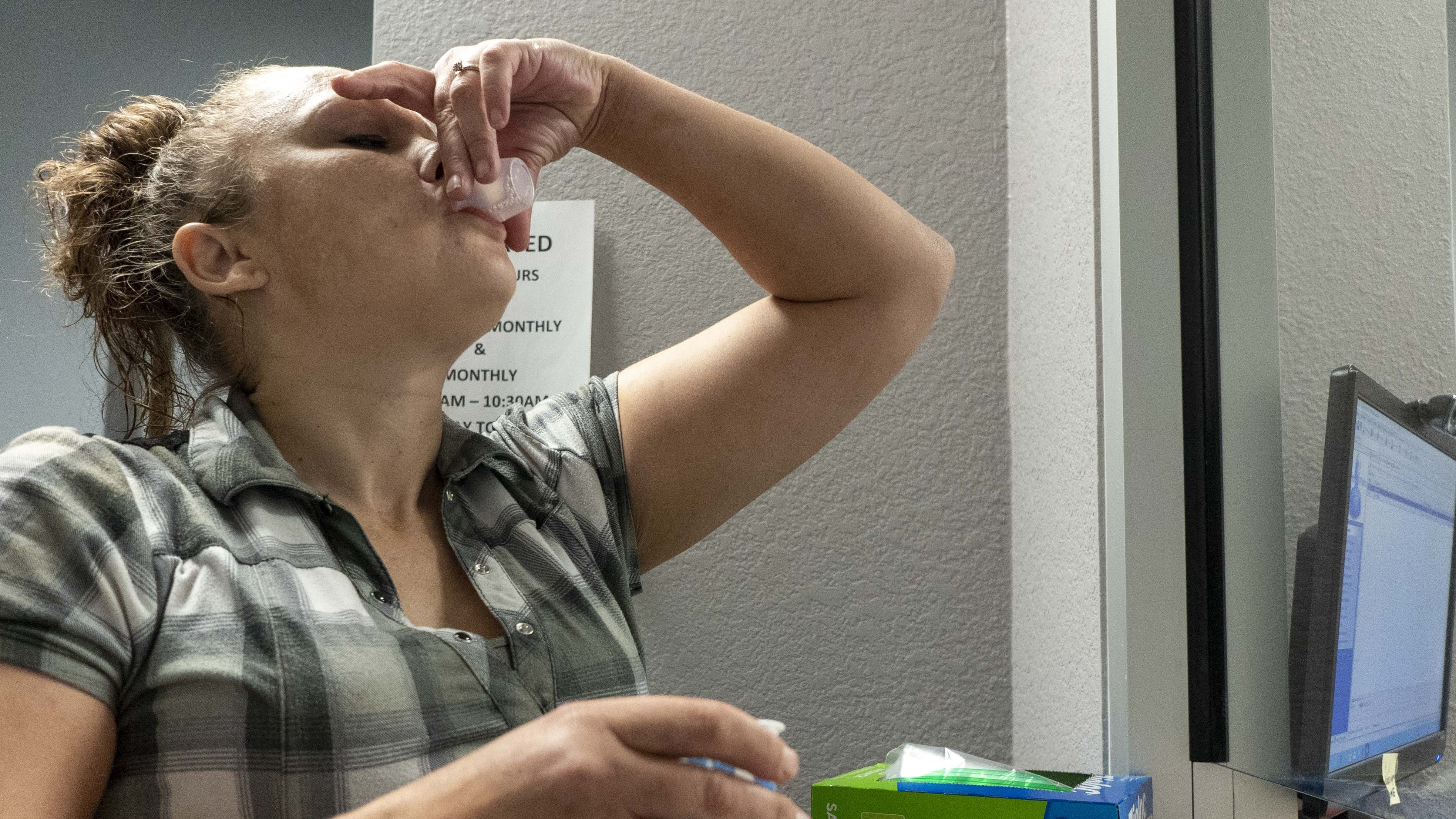
Opioid addiction is gripping America. It’s destroying lives, tearing apart families and devouring resources in policing and healthcare. As medical, mental health and addictions professionals look for solutions, often times accessible and public Opioid Treatment Programs, often known as a Methadone Clinic will open in communities. These clinics bring relief, treatment and support – but they also bring crowds, increased traffic and concern from local residents and the community. These concerns usually find their way to the media, where the attention can quickly turn negative. The solution to avoiding this scrutiny and making sure residents, business owners and community leaders are fully informed about the process, operation and security measures at these clinics are key to their success and integration. Questions such as: How was the site selected? How do you plan to control traffic flow and overcrowding? How will you manage parking and wait times? What are your measures to prevent diversion? Who can I speak to if I have questions or concerns about operations? CARF can speak to best practices, expectations, and requirements for when an opioid treatment program opens. Debbi Witham, Managing Director of Public Policy and is an expert in opioid treatment programs. Debbi is available to speak with media regarding this issue – simply click on her icon to arrange an interview.


It is time for national standards for addiction treatment in America?
America is in the midst of an epidemic, and it is losing. Opioid use often gets the headlines, but substance abuse and addiction is a wider issue with many levels of care and populations The discussion around the country often focuses on causes and criminal justice with less attention paid to the quality and standardization of treatment options and practices. Currently there is no standardized treatment plan in America and it is leaving serious doubts, unfairly, about the effectiveness of treating substance use disorder. “While there are nationally recognized standards for evidence-based care, treatment programs are not required to follow them, and many lack the resources to do so – leaving patients and loved ones with little assurance that a particular program is equipped to deliver high-quality addiction treatment.” Paul H. Earley, MD, DFASAM, MedPageToday.com But what would a standardized addiction treatment system look like? How would it increase transparency and consumer confidence? How would it ensure consistent expectations across the country? What are the costs; can America afford not to implement these strategies? There are a lot of questions and that’s where CARF International can help. Michael Johnson is Managing Director of Behavioral Health at CARF and is an expert in treatment strategies for mental health and substance use disorder. Michael is available to speak with media regarding this topic – simply click on his expert icon to arrange an interview.


Study: Discuss Religion, Spirituality When Treating Young Adults with Severe Mental Illness
Baylor researcher and expert says it’s “critical” that mental health providers be equipped to assess clients’ religion/spirituality A majority of young adults with severe mental illness – bipolar disorder, schizophrenia or major depression – consider religion and spirituality relevant to their mental health, according to a new study from Baylor University’s Diana R. Garland School of Social Work. Holly Oxhandler, Ph.D., associate dean for research and faculty development in the Garland School of Social Work, served as lead author on the study, which was published in the journal Spirituality in Clinical Practice. Researchers examined data from 55 young adults (ages 18-25) with serious mental illness who had used crisis emergency services. Of the 55 young adults interviewed, 34 “mentioned religion or spirituality in the context of talking about their mental health symptoms and service use with little-to-no prompting,” researchers wrote. The sample for the study was racially diverse and gender-balanced. Not all of those interviewed considered themselves religious, as 41 percent answered “other,” “I don’t know” or “none” when asked their religious preference. However, researchers found that religion and spirituality emerged as a unique way in which this sample was able to make sense of their difficult life situations and mental health struggles. “Not only did these young adults struggle with serious mental illness, but they had also experienced extreme adversity – including abuse, poverty, homelessness, addiction, near-death experiences, loss and an overwhelming lack of access to medical and mental health services,” researchers wrote. “Yet, many attempted to explain, make sense of or organize their circumstances through their religious/spiritual perspective and talked about God as a source of comfort and support.” The young adults expressed both positive and negative views of God, prayer and support from religious and spiritual communities. Regardless of their views, the important thing to note, Oxhandler explained, is that they’re talking about these topics – something social workers and counselors traditionally are not often equipped or trained to assess or discuss. “It’s the elephant in the room,” Oxhandler said of discussions of religion and spirituality. “If we continue to ignore it, we’re ignoring a huge component of peoples’ lives that may be tied to the clinical issue.” Oxhandler, who has researched this area extensively, said such discussions can help drive subsequent treatment options. “As mental health care providers discern what mental health services to provide or coping strategies to recommend, it’s especially important they understand the role of religion/spirituality in the lives of the vulnerable young adults they serve,” she said. Researchers also found that those surveyed described using positive religious coping, negative religious coping or experiences, discussed their relationship with God/Higher Power and unpacked the role of their support systems and faith. Positive religious coping included prayer, reading religious texts, support from their religious and spiritual communities and identifying religious and spiritual meaning in difficult situations. Negative religious coping or experiences included having a negative experience with a religious organization not being supportive or receiving hurtful messages from the religious community. “Those who discussed their relationship with God or a higher power discussed God providing a sense of comfort or protection, accepting them for who they are or positively intervening in their lives,” Oxhandler said. “Among those who unpacked the role of their support systems and faith, they often described family and friends referencing religion or God for support, and some even offered recommendations for others struggling with mental illness that involve religion and spirituality.” Some of those interviewed shared that they found the mention of God or religion by family and friends less than helpful. For example, a 22-year-old white female with no religious identification mentioned in her interview that a family member “tries to tell me that going to church will be better for me because it will help me find peace, and it really does quite the opposite.” Interestingly, researchers noted that nearly all participants who reported negative experiences with religion and spirituality also reported utilizing positive religious and spiritual coping or having a positive relationship with God. Oxhandler said such complexity highlights the importance of including religion and spirituality during the initial assessment with a client. “It’s critical that mental health care providers be well equipped and trained to assess for the complex role of religion and spirituality in the lives of young adults with serious mental illness, recognizing that it could appear to be a tremendous source of support and resilience and/or a source of pain and discomfort, if even a part of their lives at all,” she said. ABOUT THE STUDY “Religion and Spirituality Among Young Adults With Severe Mental Illness,” published in the journal Spirituality in Clinical Practice, is authored by Holly K. Oxhandler, Ph.D., L.M.S.W., assistant professor and associate dean for research and faculty development, Diana R. Garland School of Social Work, Baylor University; Sarah C. Narendorf, Ph.D., L.C.S.W., assistant professor, Graduate College of Social Work, University of Houston; and Kelsey M. Moffatt, M.S.W., Diana R. Garland School of Social Work, Baylor University. ABOUT BAYLOR UNIVERSITY Baylor University is a private Christian University and a nationally ranked research institution. The University provides a vibrant campus community for more than 17,000 students by blending interdisciplinary research with an international reputation for educational excellence and a faculty commitment to teaching and scholarship. Chartered in 1845 by the Republic of Texas through the efforts of Baptist pioneers, Baylor is the oldest continually operating University in Texas. Located in Waco, Baylor welcomes students from all 50 states and more than 80 countries to study a broad range of degrees among its 12 nationally recognized academic divisions. ABOUT DIANA R. GARLAND SCHOOL OF SOCIAL WORK Baylor University’s Diana R. Garland School of Social Work is home to one of the leading graduate social work programs in the nation with a research agenda focused on the integration of faith and practice. Upholding its mission of preparing social workers in a Christian context for worldwide service and leadership, the School offers a baccalaureate degree (B.S.W.), a Master of Social Work (M.S.W.) degree and three joint-degree options, M.S.W./M.B.A., M.S.W./M.Div. and M.S.W./M.T.S., through a partnership with Baylor’s Hankamer School of Business and George W. Truett Theological Seminary, and a Ph.D. program. Visit www.baylor.edu/social_work to learn more.


Can Hollywood help lift the stigma on mental health?
When A Star is Born was released to theatres – it had high expectations. It was a hit at international film festivals and Oscar buzz was already starting. Loaded with stars from stage, screen, and the music industry, it was guaranteed to bring in the audiences and pack theatres. While critics are raving about the performances, the message the film is bringing is also resonating with audiences as well. The story deals with characters attempting to overcome addictions as well as suicide. It’s a film that has people talking about serious issues. But is it Hollywood’s job to educate people about issues such as mental health? With the lines between education and entertainment blurring – is this a platform that could serve the wrong purposes? And with all things celebrity, is there a risk to glorifying acts of suicide or addiction? There are a lot of questions and that’s where the experts from CARF International can help. Michael Johnson is Managing Director of Behavioral Health at CARF and is an expert in mental health and substance use disorder. Mike is available to speak with media regarding this topic – simply click on his icon to arrange an interview.

Just how vulnerable are older Americans to getting hooked on opioids?
It’s a problem that most don’t commonly associate with seniors, retirees and older adults – being hooked on opioids. But it is a problem in America and it’s growing at a frightening pace. According the article attached: ‘Researchers involved with the University of Michigan’s National Poll on Healthy Aging polled a nationally representative sample of 2,000 Americans, aged 50 to 80, about what their health-care providers talked about when prescribing opioid medication to them. In the past two years, 589 said they filled an opioid prescription. This group knew how often to take the medication, but the majority didn’t recall their doctors or pharmacists talking about the risk of addiction, the risk of overdose, or what to do with leftover pills. About 40 percent said their doctors didn’t talk to them about the side effects of opioid use or guide them on when to cut back on pain medications.’ That is a staggering and scary scenario? But what can be done? Is it simply about better communication and information? Or do stronger restrictions and regulations need to be put in place to limit the opportunity for vulnerable seniors to become addicted? As America struggles to battle the opioid epidemic – are seniors another layer of addicts that could compound this situation? There are a lot of questions and that’s where the experts from can help. Dr. Marc Sweeney is the Founding Dean of the School of Pharmacy at Cedarville University and is an expert in the fields of drug abuse, prescription drug abuse and Opioid addiction. Marc is available to speak with media regarding this growing issue. Simply click on his icon to arrange an interview. Source: