
Experts Matter. Find Yours.
Connect for media, speaking, professional opportunities & more.

Aston Institute for Forensic Linguistics (AIFL) is part of the project to infer authorship of uncredited documents based on writing style AIFL’s Professor Tim Grant and Dr Krzysztof Kredens are experts in authorship analysis Applications may include identifying counterintelligence risks, combating misinformation online, fighting human trafficking and even deciphering authorship of ancient religious texts. Aston University’s Institute for Forensic Linguistics (AIFL) is part of the AUTHOR research consortium which has won an $11.3 million contract to infer authorship of uncredited documents based on the writing style. The acronym stands for ‘Attribution, and Undermining the Attribution, of Text while providing Human-Oriented Rationales’. Worth $1.3 million, the Aston University part of the project is being led by Professor Tim Grant and Dr Krzysztof Kredens, who both are recognised internationally as experts in authorship analysis and who both engage in forensic linguistic casework as expert witnesses. In addition to their recognised general expertise and experience in this area, Professor Grant has specific expertise in using linguistic analysis to enhance online undercover policing and Dr Kredens has led projects to develop authorship identification techniques involving very large numbers of potential authors. The AUTHOR team is led by Charles River Analytics and is one of six teams of researchers that won The Human Interpretable Attribution of Text Using Underlying Structure (HIATUS) programme sponsored by the Intelligence Advanced Research Projects Activity (IARPA). The programme uses natural language processing techniques and machine learning to create stylistic fingerprints that capture the writing style of specific authors. On the flip side is authorship privacy - mechanisms that can anonymize identities of authors, especially when their lives are in danger. Pitting the attribution and privacy teams against each other will hopefully motivate each, says Dr Terry Patten, principal scientist at Charles River Analytics and principal investigator of the AUTHOR consortium. “One of the big challenges for the programme and for authorship attribution in general is that the document you’re looking at may not be in the same genre or on the same topic as the sample documents you have for a particular author,” Patten says. The same applies to languages: We might have example articles for an author in English but need to match the style even if the document at hand is in French. Authorship privacy too has its challenges: users must obfuscate the style without changing the meaning, which can be difficult to execute.” In the area of authorship attribution, the research and casework experience from Aston University will assist the team in identifying and using a broad spectrum of authorship markers. Authorship attribution research has more typically looked for words and their frequencies as identifying characteristics. However, Professor Grant’s previous work on online undercover policing has shown that higher-level discourse features - how authors structure their interactions - can be important ‘tells’ in authorship analysis. The growth of natural language processing (NLP) and one of its underlying techniques, machine learning, is motivating researchers to harness these new technologies in solving the classic problem of authorship attribution. The challenge, Patten says, is that while machine learning is very effective at authorship attribution, “deep learning systems that use neural networks can’t explain why they arrived at the answers they did.” Evidence in criminal trials can’t afford to hinge on such black-box systems. It’s why the core condition of AUTHOR is that it be “human-interpretable.” Dr Kredens has developed research and insights where explanations can be drawn out of black box authorship attribution systems, so that the findings of such systems can be integrated into linguistic theory as to who we are as linguistic individuals. Initially, the project is expected to focus on feature discovery: beyond words, what features can we discover to increase the accuracy of authorship attribution? The project has a range of promising applications – identifying counterintelligence risks, combating misinformation online, fighting human trafficking, and even figuring out the authorship of ancient religious texts. Professor Grant said: “We were really excited to be part of this project both as an opportunity to develop new findings and techniques in one of our core research areas, and also because it provides further recognition of AIFL’s international reputation in the field. Dr Kredens added: “This is a great opportunity to take our cutting-edge research in this area to a new level”. Professor Simon Green, Pro-Vice-Chancellor for Research, commented: “I am delighted that the international consortium bid involving AIFL has been successful. As one of Aston University’s four research institutes, AIFL is a genuine world-leader in its field, and this award demonstrates its reputation globally. This project is a prime example of our capacities and expertise in the area of technology, and we are proud to be a partner.” Patten is excited about the promise of AUTHOR as it is poised to make fundamental contributions to the field of NLP. “It’s really forcing us to address an issue that’s been central to natural language processing,” Patten says. “In NLP and artificial intelligence in general, we need to find a way to build hybrid systems that can incorporate both deep learning and human-interpretable representations. The field needs to find ways to make neural networks and linguistic representations work together.” “We need to get the best of both worlds,” Patten says. The team includes some of the world’s foremost researchers in authorship analysis, computational linguistics, and machine learning from Illinois Institute of Technology, Aston Institute for Forensic Linguistics, Rensselaer Polytechnic Institute, and Howard Brain Sciences Foundation.


Researcher to build fuel database to improve nuclear reactor sustainability
Braden Goddard, Ph.D., assistant professor in the Department of Mechanical and Nuclear Engineering, has received a grant from the U.S. Department of Energy’s Nuclear Energy University Program (NEUP) to create a database for use in nuclear material control of pebble bed reactors (PBR). Advances in material science and technology have revitalized the nuclear energy industry, allowing for the design and construction of advanced nuclear reactors. New high-temperature materials developed by researchers allow ideas from as early as 1970, like pebble bed reactors, to be re-explored and make nuclear power more efficient and sustainable. Pebble bed reactors are one of many ideas from as early as 1970 that researchers are once again exploring to make nuclear power more efficient and sustainable now that science has developed new high-temperature materials. “Imagine a gumball machine,” said Goddard, “A pebble bed reactor functions similarly. The pebbles are the gumballs, which are fed into a reservoir. As they make their way through the reactor, heat generated from the radiation is removed by a gas which then spins an electrical turbine to generate electricity. The pebbles then exit from the bottom of the reservoir and those that can be reused are returned to the top of the reservoir.” Each pebble contains thousands of microscopic uranium particles encased in silicon-carbide cladding. As the pebble passes through the PBR, the path it follows affects how much fissioning occurs within the uranium. This means pebbles deplete at different rates based on how they travel through the reactor. Goddard’s database seeks to characterize the state of a pebble after it leaves the PBR by determining precisely how much plutonium and uranium remains in the pebble. This informs PBR operators if the pebble can be reused or if it needs to be sent off as waste. Better characterizing these pebbles improves the sustainability and security of PBRs while reducing the amount of waste generated. Measuring gamma radiation from the radioactive isotope cesium-137 created from the fission of uranium is the traditional method of determining how much nuclear fuel is still viable. However, this system does not work for PBRs because the correlation between the uranium fuel and the gamma radiation it emits is not consistent between pebbles. To remedy this, Goddard will measure both gamma and neutron radiation emitted by all radioactive isotopes in the pebble, which varies depending on the route the pebble takes through the reactor. Partners like Brookhaven National Laboratory and similar institutions within the United States will assist in the research by applying machine learning techniques to the gamma and neutron radiation signature. “Nuclear reactor operators have instruments that tell them what’s going on inside the reactor, but it’s not the same as knowing how much uranium mass you have in fuel going into or coming out of the reactor,” said Goddard. Goddard and his colleague, Zeyun Wu, Ph.D., will use computer modeling to run countless simulations and map every possible course a pebble can take through a PBR. The resulting catalog of data will allow PBR operators to characterize the state of any pebble leaving the PBR and assess if it can be reused or if it is ready to be stored at a nuclear waste facility. The catalog also serves as a material inventory, allowing nuclear facilities to better track waste material.


Sharing photos of your kids online? Here's what you should consider.
By Emma Richards Today’s parents are the first to raise children alongside social media and in this era of likes, comments and shares, they must also decide when to post images of their children online and when to hold off to protect their privacy. The practice of “sharenting” – parents posting images of their children on social media platforms — has drawn attention to the intersection between the rights of parents and the rights of their children in the online world. Stacey Steinberg, a professor in UF’s Levin College of Law, author and mother of three, says parents need to weigh the right to post their child’s milestones and accomplishments online against the right of a child to dictate their own digital footprint and maintain their privacy. Steinberg, like many parents, avidly posted photographs of her children online to document their childhoods. When she left her job as a child welfare attorney to become a professor, Steinberg also began writing about her motherhood experiences. She also began rethinking posting about her children online, realizing that it could be doing more harm than good. And yet, there was little guidance for parents on to consider when posting images and how to do so with their children’s safety in mind. Among the problematic issues: Machine learning and artificial intelligence allow for the collection of information about people from online posts but there is little control over or understanding of how that stored information is being used or how it will future impact on the next generation. According to Steinberg, a Barclays study found that by the year 2030, nearly two-thirds of all identity theft cases will be related to sharenting. There are also concerns pedophiles may collect and save photographs of children shared online. For example, one article she reviewed reported that 50% of pedophile image-sharing sites had originated on family blogs and on social media. Steinberg says parents should model appropriate social media behavior for their children, such as asking permission before taking and posting an image and staying present in the moment rather than living life through a lens or being fixated with what’s online. “I think it’s a danger that we’re not staying in the moment, that we’re escaping to our newsfeed or that we’re constantly posting and seeing who’s liked our images and liked what we’ve said instead of focusing on real connections with the people in front of us,” Steinberg said in an episode of the From Florida Podcast. While parents serve as the primary gatekeepers for children’s access to the online world, tech companies and policymakers also have roles to play in setting parameters and adopting law that protect children’s safety. Numerous European countries have already moved in this direction with such concepts as the “right to be forgotten,” which allows people to get information that is no longer relevant or is inaccurate removed to protect their name or reputation on platforms such as Google. “The United States really would have a hard time creating a right to be forgotten because we have really strong free speech protections and we really value parental autonomy Steinberg said. Google has, however, created a form that allows older kids to request that old photographs and content about them be removed from the internet, which Steinberg says is a promising step. Steinberg would love to see other mechanisms adopted to minimize the amount of data that is collected about children and ensure artificial intelligence is used responsibly and ethically when collecting online data. In the meantime, parents can proactively make online privacy issues a topic of discussion with their children and take proactive steps to limit their digital footprints, such as deleting old childhood photos. “One thing that I really want to encourage families to do is not to fear the technology, but to try to learn about it,” Steinberg said.


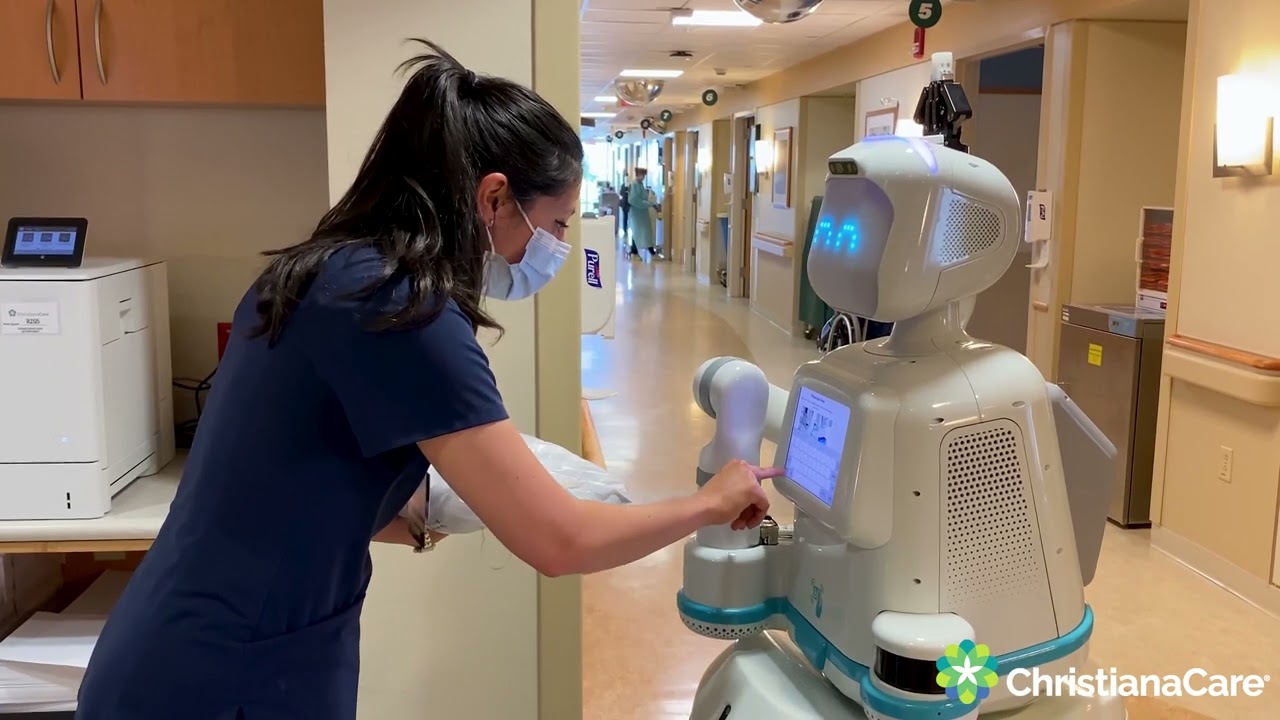
ChristianaCare is the first health system in the Philadelphia region piloting an innovative tool called Moxi, a collaborative robot — or “cobot”— that can assist in the hospital by making deliveries and performing other non-clinical tasks so that nurses and other clinical staff can spend more time focused on what they do best—caring for patients. With a landmark $1.5 million grant from the American Nurses Foundation, ChristianaCare will deploy a total of five Moxi cobots at Christiana Hospital. It is the largest single grant in the history of Nursing at ChristianaCare. Research published in the Journal of Nursing Management shows that nurses spend a significant amount of time — up to 33% of their shifts — on time-consuming but simple tasks such as dropping off lab specimens, collecting supplies or picking up medications from the pharmacy. By taking over these time-consuming but simple tasks, Moxi enables nurses to focus on patient care, where their skills are most needed. “Nurses need the time and space to deliver care and patient education at the top of their license,” said Ric Cuming, Ed.D., MSN, RN, NEA-BC, FAAN, chief nurse executive and president, ChristianaCare HomeHealth. “Moxi will be doing those hunting and gathering tasks such as getting equipment and supplies, which nurses are doing today but don’t need to be doing.” Cobots are designed to share workspace and interact directly with people. In ChristianaCare’s initiative, the Moxi cobots will be integrated with the Cerner Corporation electronic health record (EHR) platform and use artificial intelligence to proactively identify when nurses will need equipment, supplies, medications and lab tests. The Moxi cobots will be deployed to 11 inpatient units, partnering with more than 400 nurses. The American Nurses Foundation grant will enable ChristianaCare to evaluate the impact of cobots on nursing practice with the goal of scaling the technology if successful. “Moxi is not a replacement for a nurse or nursing position — or any position,” Cuming said. “It is an additional resource for nurses and their teams. “With robotic technology, we are using resources wisely and effectively, creating more efficient workflows, reducing repetitive tasks and freeing up nurses’ time for the complex clinical work that they excel at doing.” Reimagining Nursing ChristianaCare is one of 10 grant recipients from the American Nurses Foundation Reimagining Nursing (RN) Initiative. “We are proud that the American Nurses Foundation has the confidence in bold nurse-led ideas that will lead to large-scale, replicable change,” said Katherine Collard, MS, RN-BC, chief nursing informatics officer at ChristianaCare. “This grant will support nurses at ChristianaCare and our nursing colleagues across the nation in realizing their full potential, giving them the tools, resources and power to improve health care now and in the future.” With the American Nurses Foundation grant, ChristianaCare will conduct research on driving nursing outcomes through robotics. “We have a transformative opportunity to generate new knowledge and to move the science forward around robotics in nursing and in health care,” said Susan Birkhoff, Ph.D., RN, nurse scientist at ChristianaCare. “Through research, we will study Moxi’s impact to nursing caregivers that will have broad implications for nursing practice, workforce and education,” she said. ChristianaCare began exploring the potential of robotics to support Nursing with two Moxi cobots acquired in February, funded through the generosity of donors including Good Samaritan, Inc. and E.J. “Woody” Rice. With the grant, said Birkhoff, ChristianaCare will take Moxi to the next “bold frontier,” adding three more cobots with the goal of automating and optimizing nurses’ workflow without interrupting care. With five total cobots, ChristianaCare will be home to the largest number of Moxi robots in health care. The Little Bot That Can Before Moxi can become fully part of the care team, it must learn to navigate the hospital and respond to the nurses’ needs. Using artificial intelligence, Moxi is mapping out Christiana Hospital through sensors and other machine-learning technology so that the cobots can ultimately navigate and work autonomously. “When the Moxi cobots are fully integrated, we anticipate that they will complete up to 200 delivery tasks a day,” Collard said. “By making point-to-point deliveries, Moxi can save nurses hours of time and thousands of steps.” Designed to be compatible with the busy environments of hospitals, Moxi’s features include: Social intelligence: Moxi won’t bump into people or objects in hallways, waves when it sees someone new and happily poses for selfies. Mobile manipulation: Moxi can learn to use its robotic arm to operate existing automatic doors and elevator panels. Human-guided learning: The more Moxi is used, the more Moxi learns and adapts to the environment and specific ways of doing things. Friendly and safe design: With heart-shaped eyes and a friendly appearance, Moxi is designed to navigate safely and get the job done so nurses can focus on patient care. “What Moxi is doing in health systems like ChristianaCare is really transforming the way we think about health care and allowing staff to focus on the people in the hospital as opposed to the tasks,” said Dr. Andrea Thomaz, CEO and co-founder of Diligent Robotics, which created Moxi. “Robots are not something way in the future. Our robots work side-by-side with humans to ease the stress and workload of one of the most demanding jobs in society, nursing. The partnership between Diligent and ChristianaCare shows that the future is now.” Hospital Helper Directly from the Cerner EHR, Moxi will be able to anticipate clinician and patient needs and perform tasks without human involvement. Examples could include: Delivering items to patients based on nurses’ order requests. Making rounds across units to deliver lab samples on collections completed in the electronic health record. Making just-in-time deliveries of pharmaceuticals not stocked on the floor. Prioritizing tasks based on the nursing workload in a unit, so that the busiest nurses will get help first. “Connecting Moxi to the existing technology that clinicians use on a daily basis is key to making it easier to anticipate needs so clinicians can spend more time on patient care,” says Eva Karp, DHA, MBA, RN-BC, senior vice president, chief clinical and patient safety, Cerner. “Moxi could make a real difference in a nurse’s day — alleviating burnout and staffing shortages, which have become especially prevalent since the pandemic.” Incorporating the electronic health record into Moxi is part of the study funded by the American Nurses Foundation. “It’s absolutely in the best interest of our patients that Moxi can work alongside nurses so we can spend more time working directly with our patients to do what we do best,” said Pam Owen, MSN, RN-BC, nurse manager on 7E, one of the pilot units. “And Moxi brings a smile to people’s faces.” Fast Facts About Moxi Works in 22-hour shifts. Needs only two hours of charging time. Weighs about 300 pounds. Can carry a total weight of 70 pounds. Gender-neutral. Pronouns are “it” for a single Moxi cobot and “they” for more than one. Named one of America’s Greatest Disruptors in 2021 by Newsweek and one of the Best Inventions of 2019 by Time Magazine. About ChristianaCare Headquartered in Wilmington, Delaware, ChristianaCare is one of the country’s most dynamic health care organizations, centered on improving health outcomes, making high-quality care more accessible and lowering health care costs. ChristianaCare includes an extensive network of primary care and outpatient services, home health care, urgent care centers, three hospitals (1,299 beds), a freestanding emergency department, a Level I trauma center and a Level III neonatal intensive care unit, a comprehensive stroke center and regional centers of excellence in heart and vascular care, cancer care and women’s health. It also includes the pioneering Gene Editing Institute. ChristianaCare is nationally recognized as a great place to work, rated by Forbes as the 2nd best health system for diversity and inclusion, and the 29th best health system to work for in the United States, and by IDG Computerworld as one of the nation’s Best Places to Work in IT. ChristianaCare is rated by Healthgrades as one of America’s 50 Best Hospitals and continually ranked among the nation’s best by U.S. News & World Report, Newsweek and other national quality ratings. ChristianaCare is a nonprofit teaching health system with more than 260 residents and fellows. With its groundbreaking Center for Virtual Health and a focus on population health and value-based care, ChristianaCare is shaping the future of health care.



Studying glaciers . . . from Florida
By Emma Richards On the surface, the University of Florida seems an unlikely place to find cutting-edge research on ice sheets. But Emma “Mickey” MacKie says this is the perfect place for her work — thanks in large part to HiPerGator, one of the fastest supercomputers in higher education. MacKie, an assistant professor of geological sciences and glaciologist, joined UF in August 2021 and said her decision hinged largely on access to HiPerGator and the university’s focus on machine learning and artificial intelligence technologies. MacKie uses machine learning methods to study subsurface conditions of glaciers in polar regions and access to a powerful supercomputer is crucial given the large data sets her research generates. “I'm very happy to be in a place with lots of people who are working on different types of problems and are interested in developing these different tools,” MacKie said. “There are a number of members of my department in geology who are studying glacial geology through different lenses. And so, there's all of this complementary geological and machine learning knowledge at UF that I'm very excited to bring together.” MacKie has set up the Gator Glaciology Lab, where she and a team of seven undergraduate students from the fields of geology, computer science, physics, math and data science are using AI to analyze what lies beneath glaciers and how they are moving and melting. “Our work is part of a bigger effort in the glaciology community to start working on quantifying our uncertainty in future sea-level rise projections so that we can give policy makers this information.” It’s a very difficult challenge, MacKie said, because of limited access to polar regions and the miles-thick ice covering the ground. Then there is the scale of ice sheets; Antarctica, for example, is the size of U.S. and Mexico combined. Measurements of the topography below such glaciers are gathered using radars mounted on airplanes to “see” through ice. Her team then uses HiPerGator to simulate realistic looking topography in places where there are gaps or blank spots in the measurements. They generate hundreds of maps to represent different possible ice sheet conditions, which could be used to determine numerous possible sea level rise scenarios. “Our work is part of a bigger effort in the glaciology community to start working on quantifying our uncertainty in future sea-level rise projections so that we can give policy makers this information,” she said. Earlier this spring, MacKie swapped out her flip-flops for snow boots to study subsurface glacial conditions in Svalbard, which is next to northeastern Greenland. Visiting Svalbard will help her test and develop data collection and analysis techniques that could be applied to Antarctica or Greenland, which both contain large ice sheets that could have serious environmental impacts if they experience significant melting. In Svalbard, MacKie and Norwegian researchers from the University of Bergen and the University Centre in Svalbard took seismic and radar measurements of glaciers that will be used to make estimates about conditions beneath the ice. Among glaciers of concern is the Thwaites “Doomsday Glacier,” which is losing the most ice of any glacier in Antarctica. There are signs showing Thwaites’ ice shelf could start to break in the next few years. MacKie said it will likely be a few hundred years before the glacier could undergo significant collapse and jeopardize the West Antarctica Ice Sheet, leading to several meters of sea level rise. The effects of Thwaites and other ice sheet melts in Antarctica and Greenland will become apparent in decades to come, with the potential for a meter of sea level rise by the end of the century, which MacKie and other researchers hope to predict more accurately. “The state of Florida has the most to lose when sea level rises,” she said in an episode of the From Florida podcast. “And so, I think we have a lot of skin in the game and it’s really important to be studying this question here in Florida.” To hear more about MacKie’s work, listen to From Florida at this link.


Kelley professor’s M-Score model remains most viable means of predicting corporate fraud
BLOOMINGTON, Ind. — Enhanced oversight over the auditing profession and firms’ financial reporting has led to a proliferation of models to predict financial statement fraud. But one of the first forensic models, the M-Score, devised by an Indiana University Kelley School of Business professor in the late 90s, remains accurate and is the most economically viable for investors to use, according to a forthcoming paper in The Accounting Review — the official journal of the American Accounting Association. The article, “The Costs of Fraud Prediction Errors,” co-authored by M. Daniel Beneish, professor of accounting and the Alva L. Prickett Chair at Kelley, compares seven fraud prediction models with a cost-based measure that nets the benefits of correctly anticipating instances of fraud against the costs borne by incorrectly identifying non-fraud firms as fraudulent. Even though newer fraud models early doubled the success rate of M-Score, which Beneish developed, they did so at the cost of a much larger number of false positives. As a result, the other models are not used in practice by auditors because they are too costly to implement as all flagged firms must be carefully investigated. “I have long known from my experience consulting with Arthur Andersen — for whom my model detected Enron before the debacle — and other public accounting firms, that litigation concerns relating to false positives — firms incorrectly flagged as having fraudulent financial statements — created an unwillingness by auditors’ general counsel to use fraud prediction models in practice,” Beneish said. “My efforts back then to improve the M-Score in the context of auditing failed because I could not increase the model’s success rate without increasing the number of false positives. It seems that the new models cannot either,” he added. Interestingly, as early as 2017 the M-Score flagged Kangmei Pharmaceutical, a Chinese publicly traded company that was involved in financial reporting fraud between 2016 and 2018. Like the Enron scandal in the U.S., the Kangmei Pharmaceutical scandal helped trigger new regulation in China that increased regulatory penalties for financial fraud (effective March 2020) and last November became China’s first successful class-action lawsuit involving corporate fraud. Its chairman was sentenced to 12 years in prison. “The main purpose of our paper is to provide evidence on the costs and benefits of using fraud prediction models, and to show whether using these models is economically viable for auditors, investors and regulators,” Beneish said. “This is important because the traditional measures commonly used in recent research to justify new models are misleading about model performance in fraud samples as the proportion of fraud firms in the population is very small, and as they typically assume that the cost of a false positive and false negatives (missed detections) are equal.” For example, assume that among 10,000 publicly traded firms, there are about 60 fraud firms and 9,940 firms without misreporting. The newer models detected 42 frauds (70% of the total frauds), and incorrectly flagged 3,976 firms (40% of the non-frauds). The latter is too large a number for most decision makers to investigate. “Our evidence that a cost-based assessment of models is preferable to traditional model comparison measures (e.g., area under the curve), should become even more important as efforts by future researchers in the areas of data mining and machine learning intensify,” Beneish said. Patrick Vorst of Maastricht University, assistant professor in financial accounting and accounting & information management, co-authored the paper with Beneish.


On Rethink What’s Possible, a podcast by Milwaukee School of Engineering, MSOE students, faculty, staff, alumni and community partners share their inventions, research, industry trends, projects, experiences and how they’re rethinking what's possible. Artificial intelligence. Machine learning. High performance computing. Super computers. These terms have been around for quite a while now, but only in recent years the research has been put into practice and there are no signs of it slowing down. Episode Three, 'Humanizing Machine Learning,' Artificial intelligence (AI) is becoming prominent in more and more industries each day, including health care. Artificial intelligence (AI) is becoming prominent in more and more industries each day, including health care. Join Dr. Sheila Ross and Dr. John Bukowy, AI faculty experts from Milwaukee School of Engineering (MSOE) and student Ethan Hindes as they discuss the advancements of AI in “Humanizing Machine Learning,” part of the MSOE podcast, “Rethink What’s Possible.” They talk about its impact on their research with the Medical College of Wisconsin to identify and assess the severity of damage to blood vessels in kidneys. Hindes also discusses how he found his way to major in computer science. The podcast is available for download and well worth listening to. And, if you are a journalist interested in learning more or arranging an interview with Dr. Ross or Bukowy – simply click on either expert's icon now to arrange an interview today.




Emory Experts - Why Companies Invest in Local Social Media Influencers
Companies seek local influencers to pitch products. Even though most influencers amass geographically dispersed followings on social media, companies are willing to funnel billions of sponsorship dollars to multiple influencers located in different geographic areas, effectively creating sponsorships that span cities, countries, and in some cases even, the globe. The desire to work with local influencers has spawned advertising agencies that specialize in connecting companies with influencers and may soon redefine the influencer economy. This trend has merit, our research team finds. In a new Journal of Marketing study, we show a positive link between online influence and how geographically close an influencer’s followers are located. The nearer a follower is geographically to someone who posts an online recommendation, the more likely she is to follow that recommendation. To investigate whether geographical distance still matters when word of mouth is disseminated online, our research team examined thousands of actual purchases made on Twitter. We found the likelihood that people who saw a Tweet mentioning someone they follow bought a product would subsequently also buy the product increases the closer they reside to the purchaser. Not only were followers significantly associated with a higher likelihood to heed an influencer’s recommendation the closer they physically resided to the influencer, the more quickly they were to do so, too. We find that this role of geographic proximity in the effectiveness of online influence occurs across several known retailers and for different types of products, including video game consoles, electronics and sports equipment, gift cards, jewelry, and handbags. We show the results hold even when using different ways to statistically measure the effects, including state-of-the-art machine learning and deep learning techniques on millions of Twitter messages. We posit that this role of geographic proximity may be due to an invisible connection between people that is rooted in the commonality of place. This invisible link can lead people to identify more closely with someone who is located nearby, even if they do not personally know that person. The result is that people are more likely to follow someone’s online recommendation when they live closer to them. These online recommendations can take any form, from a movie review to a restaurant rating to a product pitch. What makes these findings surprising is that experts predicted the opposite effect when the internet first became widely adopted. Experts declared the death of distance. In theory, this makes sense: people don’t need to meet in person to share their opinions, reviews, and purchases when they can do so electronically. What the experts who envisioned the end of geography may have overlooked, however, is how people decide whose online opinion to trust. This is where cues that indicate a person’s identity, such as where that person lives in the real world, come into play. We may be more likely to trust the online opinion from someone who lives in the same city as us than from someone who lives farther away, simply because we have location in common. Known as the social identity theory, this process explains how individuals form perceptions of belonging to and relating to a community. Who we identify with can affect the degree to which we are influenced, even when this influence occurs online. Our findings imply that technology and electronic communications do not completely overcome the forces that govern influence in the real world. Geographical proximity still matters, even in the digital space. The findings also suggest that information and cues about an individual’s identity online, such as where he/she lives, may affect his/her influence on others through the extent to which others feel they can relate to him/her. These findings on how spatial proximity may still be a tie that binds even in an online world affirm what some companies have long suspected. Local influencers may have a leg up in the influence game and are worth their weight in location. For these reasons, companies may want to work with influencers who have more proximal connections to increase the persuasiveness of their online advertising, product recommendation, and referral programs. Government officials and not-for-profit organizations may similarly want to partner with local ambassadors to more effectively raise awareness of—and change attitudes and behaviors towards—important social issues. Goizueta faculty members Vilma Todri, assistant professor of Information Systems & Operations Management, Panagiotis (Panos) Adamopoulos, assistant professor of Information Systems & Operations Management, and Michelle Andrews, assistant professor of marketing, shared the following article with the American Marketing Association to highlight their new study published in the Journal of Marketing. To contact any of the experts for an interview regarding this topic, simply click on their icon to arrange a time to talk today.




Aston University – inspiring more women into engineering careers
• Aston University is celebrating International Women in Engineering Day • College of Engineering and Physical Sciences photography campaign of females as #EngineeringHeroes • Campaign aims to encourage girls into engineering careers A team of female engineering heroes from Aston University’s College of Engineering and Physical Sciences has banded together to encourage girls into STEM careers. As part of International Women in Engineering Day (INWED), the world’s largest initiative to celebrate the achievements of women in engineering, Aston University’s very own team of engineers have shown themselves to be the very best STEM superheroes. Aston University Mechanical Engineering Student and STEM Ambassador Olamide Olabode Dressed in capes and taking selfies for the event on Wednesday 23 June, female ambassadors from the College, in collaboration with the Greater Birmingham and Solihull Institute of Technology, have also put together video content to show off their engineering skills and become ‘heroes’ for girls wanting to do the same. Also launching on the day will be a competition for participating schools linked to Aston University. Girls are being challenged to come up with their own superhero gadget / gizmo idea. Professor Sarah Hainsworth OBE FREng, Pro-Vice Chancellor and Executive Dean of the College of Engineering and Physical Sciences at Aston University, said they were proud to be a part of INWED2021. “It is so important to us to encourage more girls into STEM subjects. Our hope is that through our teaching, and our partnership with the Greater Birmingham and Solihull Institute of Technology with its focus on technical skills for advanced manufacturing and giving students a clear route to technical employment, many will follow in the footsteps of our incredible team and be the STEM leaders of the future. “At Aston University, we work on sustainability for the environment, bioengineering, robotics, machine learning, sensors, communications, artificial intelligence, technologies for future vehicles and the issues that shape our future. On International Women in Engineering Day (INWED 2021), our College of Engineering and Physical Sciences celebrates the amazing contribution of our women colleagues who represent the cutting edge of engineering who are making vital contributions to our health and wellbeing, our society and our planet,” she added. Katy Lewis, marketing manager, said schools invited to take part were from the Aspire to Aston progressive programme, which works with 10 schools in and around Birmingham from areas of high deprivation. “At each of these schools there are up to 40 pupils per year group who have the academic ability to aim for university but lack the knowledge and confidence to do so and are selected for the programme. Our aim is to raise aspirations and normalise the idea of going into higher education, which is why us doing challenges like this one is so vitally important, so we can’t wait to help find the STEM female stars of the future,” she said. Currently the College of Engineering and Physical Sciences has 25% female academic staff (the UK STEM staff benchmark being 17 – 19%). The amount of female students studying the engineering subjects at Aston University has also grown over the past five years from 22% - 27%, above the UK STEM benchmark of 17% – 19%. To find out more about engineering at Aston University, visit ww.aston.ac.uk/eps For more details about the Greater Birmingham and Solihull Institute of Technology, visit this link: http://gbsiot.ac.uk/

Social Work is Advancing Addiction Science Research
Tens of thousands of Americans die from drug use and addiction every year, with overdoses killing over 63,000 people in America in 2016, according to the National Institute on Drug Abuse. Add in deaths linked to alcohol overuse and tobacco, and the number climbs above half a million Americans. The collective work of several researchers at the USC Suzanne Dworak-Peck School of Social Work, in collaboration with other USC faculty and outside organizations, is advancing knowledge of substance use disorders. Social work has become a hub where researchers and practitioners drive understanding and improve treatment for this disease that impacts millions of families each year. “Either as a cause or consequence, addiction relates to every problem we deal with in social work,” said John Clapp, professor and associate dean for research and faculty development at the USC Suzanne Dworak-Peck School of Social Work. Addiction’s complexity The social work field is uniquely poised to help effect change because of its holistic approach to individual well-being and the public good. According to Clapp, substance use disorder problems are inherently ecological, impacting and being impacted by individuals, families, peers, neighborhoods, communities and public policy in complex and dynamic ways. Untangling those causes and effects and interdependencies is one part of the solution. The other part is understanding that simple solutions may stay out of reach. “We will not find a one-size-fits-all answer,” said Clapp. Looking at addiction as a genetic, psychological or sociological issue only shows one piece of the overall cause. A comprehensive approach is essential, he said, especially when statistics from the National Institute on Alcohol Abuse and Alcoholism (NIAAA) show alcohol use disorders alone as the third leading cause of preventable death in the world. A hub for addiction science The need for a transdisciplinary response to this worldwide crisis was behind the 2018 creation of the USC Institute on Addiction Science (IAS), a joint venture between social work and the Keck School of Medicine of USC, with membership from 10 different schools, colleges and hospitals. Its vision is to strengthen the discipline of addiction science and improve the lives of those touched by the disease. Clapp is co-director of the institute and one of its founding architects. IAS is quickly becoming the foremost place for a broad effort focused on addiction that brings together researchers from the fields of public health, social work, law, public policy, mathematicians, computer engineers and others in recognition of the promise of new approaches to longstanding problems. The USC Suzanne Dworak-Peck School of Social Work has eight faculty making substantial contributions to the prevention of addiction-related disorders as members of the IAS: Professor Avalardo Valdez, associate professors Julie Cederbaum and Alice Cepeda, and assistant professors Jordan Davis, Shannon Dunn, Jungeun Olivia Lee, Danielle Madden, and Hans Oh. “Social work brings one of the broadest perspectives on the underpinnings and solutions to the addiction crisis,” said Adam Leventhal, director of IAS and professor of preventive medicine and psychology at Keck. “By approaching addiction as a health condition and a social justice issue, social work brings to the table the opportunity for high-impact, multi-modal intervention and social policy approaches, which are needed to address the addiction epidemic.” A holistic approach Social work faculty are raising the bar in addiction science research, developing new and novel approaches to improving outcomes for those affected by addiction. In a study recently published in Addiction, a multidisciplinary team lead by Davis and Clapp found gender differences in the risk factors for relapse following treatment for opioid use disorder. The study was the first in this field to use machine learning techniques to process large data sets and identify risk factors for relapse, said Davis, who also serves as associate director of the USC Center for Artificial Intelligence in Society (CAIS). The findings may result in more personalized treatment for opioid use disorder with lasting results. This dovetails with additional research Davis is conducting with computer science engineers at CAIS to collect and input neighborhood and census data into their models in an effort to better understand how these macro variables affect relapse. “We are finding that data points such as crime statistics, population density and concentrated poverty tend to be some of the most important predictors of relapse, over and above individual-level predictors such as impulsivity, motivation or gender,” Davis said. These findings echo Clapp’s description of addiction as ecological and point to the need for holistic solutions. “These machine learning techniques are helping us gain an apparent picture of what the most important factors are surrounding someone’s recovery,” Davis said. “Environment matters greatly.” Davis is also collaborating closely with Eric Pedersen, associate professor at Keck School of Medicine at USC, on several research efforts examining substance use among veterans. Most recently, they have assembled a survey group of approximately 1,200 veterans whom they survey quarterly about their well-being. A recently conducted survey of the group found that veterans with PTSD prior to the COVID-19 pandemic were now managing their symptoms with more frequent alcohol and cannabis use. Another joint research endeavor between the two is examining the use of mindfulness smart phone apps to help reduce substance use in Operation Enduring Freedom/Operation Iraqi Freedom veterans with PTSD and alcohol use disorder. Where well-being and inequalities intersect Jungeun Olivia Lee also seeks to decode the network of relationships between socioeconomic status, adverse childhood experiences and drug use. Her experience as a social work practitioner working directly with clients drives her motivation to demonstrate to policymakers what she sees as a linkage between unemployment, economic stress and substance use disorders. She is lead author on a paper published in Nicotine & Tobacco Research that found unemployment may advance nicotine addiction among young adults, rather than the idea that nicotine addiction may lead to unemployment. Lee’s research interests lie at the intersection of substance use and co-occurring mental health, social inequalities (such as poverty and low socioeconomic status), and adverse childhood experiences. She is interested in combining these three areas of inquiry to explore their influence on addictive behavior that can persist over generations of at-risk families, such as adolescent mothers and their children. Her memories of working directly with clients struggling with the impact of addiction remain clear in her mind. When Lee hears policymakers and others suggest that individual willpower will solve substance use disorder problems, she has a straightforward response: “People are not born with addiction.” In her view, many factors contribute to the triggered distress, including socioeconomic status and adverse childhood experiences. Lee is exploring an idea with other IAS researchers to investigate the relationship between financial strain and employment uncertainty and addiction. “Individual circumstances, such as losing a job, certainly influence substance use, but policy-level decisions, such as the generosity of unemployment insurance, can mitigate the impact,” she said. Transdisciplinary collaboration with social scientists, psychologists and medical researchers at IAS and across the USC campus enriches and amplifies her work. “We are breaking down discipline-specific silos and bringing new and valuable perspectives to this work,” she said. “The synergy is both useful and inspiring.” Looking ahead Researchers also hope to spark interest in the field among the next generation. A new minor for undergraduate students in addiction science was introduced at USC in Fall 2020. The minor is an interdisciplinary collaboration of the Keck School of Medicine, the USC Suzanne Dworak-Peck School of Social Work, the USC School of Pharmacy and the USC Dornsife College of Letters, Arts, and Sciences. It is designed to provide students with a transdisciplinary approach to understanding and treatment of the broad spectrum of addiction-related problems. The goal of addiction science research and education is to improve the long-term effect of addiction treatment and save lives. As society’s understanding of the cause of addiction grows, researchers like those in the school of social work and the IAS strive to bridge the gap between science, practice and policy to positively impact outcomes for those affected by addiction.
