
Experts Matter. Find Yours.
Connect for media, speaking, professional opportunities & more.
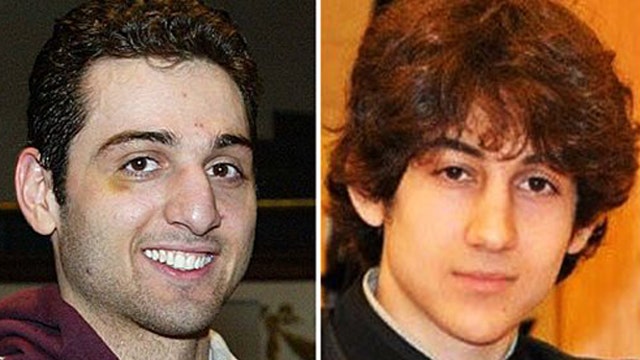
It was a news story that shook America and shattered the lives of many in Boston. Tamerlan Tsarnaev and Dzhokhar Tsarnaev set off two bombs at the Boston Marathon finish line. The ensuing manhunt and standoff had America on edge for days. Augusta University’s Dr. Craig Albert was front and center on national news during that time, helping journalists and audiences understand the motivation behind these horrible acts. His interview with Fox's Megyn Kelly is available below: Dr. Craig Albert is director of the Master of Arts in Intelligence and Security Studies at Augusta University. He is a leading expert on war, terrorism and American politics, and he testified before U.S. Congress regarding the threat from Chechnya following the deadly bombing. With this story now back in the headlines after a federal appeals court overturned the death sentence for Dzhokhar Tsarnaev, Albert is available to speak with media – simply click on his name to arrange an interview today.


Clarifying the electoral college before this November’s election – let our experts explain
With a divisive and hyper-charged election on the horizon in America, the Supreme Court may have done the country a favor and avoided a constitutional crisis before it happened. The court delivered a unanimous opinion on faithless electors and how those who represent states are to cast their votes in the electoral college. The Supreme Court ruled unanimously Monday that a state may require presidential electors to support the winner of its popular vote and may punish or replace those who don’t, settling a disputed issue in advance of this fall’s election. Justice Elena Kagan wrote for the court as it considered for the first time the issue of “faithless electors” and whether the Constitution sees members of the electoral college — whose votes ultimately elect the president — as representatives of the intent of their state’s voters or as independent thinkers. The Washington state law at issue “reflects a tradition more than two centuries old,” Kagan wrote. “In that practice, electors are not free agents; they are to vote for the candidate whom the State’s voters have chosen.” In layman’s terms, it simply means representatives to the electoral college are not casting a vote of conscience, but a vote that follows the will and intentions of the popular vote of each specific state. Popular votes and the electoral college have been hotly debated topics during this century’s elections, and if you are a journalist covering this Supreme Court decision or have questions about the upcoming elections – then let our experts help. Dr. Craig Albert is an expert in American politics and he is available to speak with media – simply click on his name to arrange an interview today.
Endorsements are in – but what will it mean for Joe Biden?
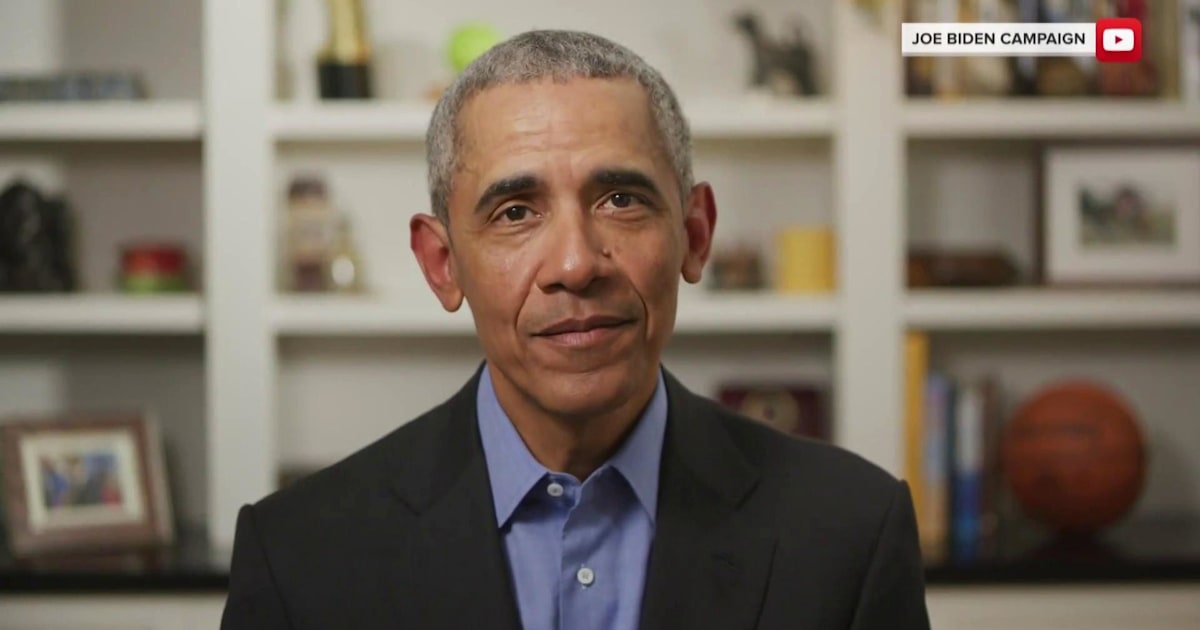
And suddenly, they’re all lining up behind Joe Biden. With the nomination in the bag, the former Vice President and now candidate for the presidency has been receiving ringing endorsements from former challengers like Elizabeth Warren and Bernie Sanders and even his former partner-in-chief, President Barack Obama. It’s been said that endorsements aren’t worth the paper they are printed on if no one reads them, so why are these suddenly so significant? Has the DNC finally learned that a divided party can’t beat Donald Trump? Are these done to curry favor for future Cabinet spots and potentially a VP nod? And what took Barack Obama so long to get on side with his former Vice President? There are a lot of questions to be asked – and if you are covering American politics – let our expert help. Dr. Stephen Farnsworth is a sought-after political commentator on subjects ranging from presidential politics to the local Virginia congressional races. He has been widely featured in national media, including The Washington Post, Reuters, The Chicago Tribune and MSNBC. He is author or co-author of six books on presidential communication. His latest work, "Late Night with Trump: Political Humor and the American Presidency" examines the role late night television has played in shaping the perception of presidential politics. Dr. Farnsworth is available to speak with media and help with your coverage – simply click on his icon to arrange an interview today.



FAU Experts Available to Speak on Coronavirus and its Impact Worldwide
Coronavirus has now earned global attention and Florida Atlantic University experts are available to speak with media about the impact of coronavirus on areas related to this worldwide epidemic, including hospitality, tourism, employment sick leave, and politics. If you are a journalist covering the progress of this virus and how it is impacting various sectors and segments of society – then let us help with your stories, questions and ongoing coverage. LeaAnne DeRigne, Ph.D., MSW, associate professor in FAU’s Phyllis and Harvey Sandler School of Social Work LeaAnne DeRigne is an expert on paid sick leave and its impact on the health and financial security of individuals, families and public health in general. Her recent research on the importance of paid sick leave benefits has received wide press coverage,and has been cited around the country by policy makers, lobbyists, and advocates pushing cities and states to mandate sick leave coverage. Key findings from the study, which are representative of the nation, showed that regardless of income, age, race, occupation, full-time or part-time work status, health status or health insurance coverage, workers without paid sick leave were three times more likely to delay medical care than were workers with paid sick leave. She also conducts research on other workplace benefits such as flexible work, vacation time and pensions. Peter Ricci, clinical associate professor and director of the Department of Marketing and Hospitality Management in FAU’s College of Business Peter Ricci is a hospitality industry veteran with more than 20 years of managerial experience in segments including food service, lodging, incentive travel, and destination marketing. While filling the role of hotel general manager for almost a decade, Ricci served as a part-time educator before entering academia full time as both a clinical associate professor and administrator. Kevin Wagner, Ph.D., professor and chair of FAU’s Department of Political Science in the Dorothy F. Schmidt College of Arts and Letters Kevin Wagner’s research and teaching interests include presidential and judicial politics, political behavior and legislative behavior. He is also a research fellow of the FAU Business and Economics Polling Initiative (BEPI). Wagner has lectured extensively on American politics and has served as an expert in many leading newspapers including the New York Times, Boston Globe, New York Newsday, the Dallas Morning News, and the Miami Herald. He has been featured as the political analyst for CBS 12 in West Palm Beach and on national television including NBC’s “Today.” All of the experts listed above are ready and available to speak with media. To arrange an interview simply click on an expert’s profile or email Lisa Metcalf at lmetcalf@fau.edu.


Truce with the Taliban - will it hold and is it possible?
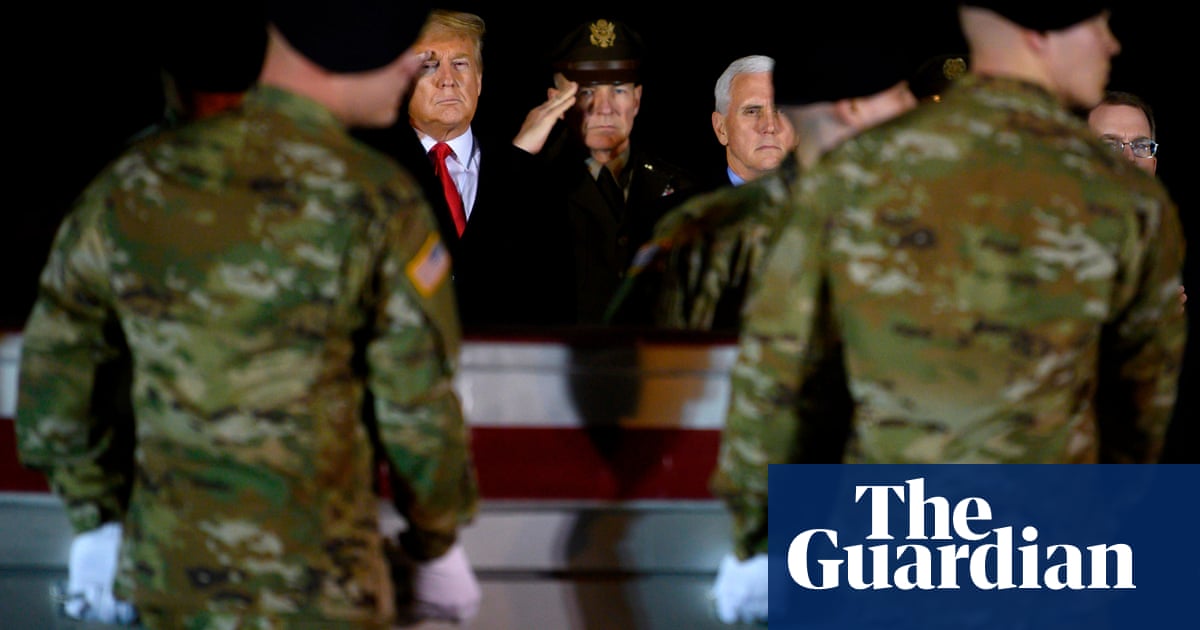
It’s been nearly two decades of war that has taken thousands of lives and cost American taxpayers trillions of dollars. And late last week, a temporary truce with the Taliban was finally reached after 18 years of fighting and if that holds, a more permanent resolution is expected to be signed on February 29. If successfully implemented, the weeklong “reduction in violence” agreement, which came into force at midnight Friday local time (1930 GMT, 2:30 p.m. EST), will be followed by the signing of the peace accord on Feb. 29, wrapping up America's longest-running conflict and fulfilling one of President Donald Trump's main campaign promises. Friday's announcement of an agreement on terms for a peace deal follows months of negotiations between the two sides that have broken down before. Yet both parties have signaled a desire to halt the fighting that began with the U.S. invasion after the September 11, 2001, attacks by Osama bin Laden's Afghanistan-based al-Qaida network. Should the truce stand, the U.S.-Taliban deal would be followed within 10 days by the start of all-Afghan peace talks that could result in the formation of a new government in Kabul, a pledge from the Taliban not to allow terrorist groups to operate in the country, and the phased withdrawal of U.S. and other foreign troops over 18 months. February 21 – US News and World Report It’s a historic moment for all involved, but there’s a lot of questions to be asked. Does an agreement like this have a chance of succeeding? What will happen to the area once all U.S. and other troops finally withdraw? Is this potentially the first sign of peace in the region? What protection does Afghanistan’s fragile government have if left to stand on its own? There are a lot of scenarios to consider, and if you are a journalist covering this vent, that’s where our experts can help with your questions, stories and ongoing coverage. Dr. Craig Albert is a leading expert on war, terrorism and American politics and has testified to the U.S. Congress on Islamic Extremism. He is also the Director of the Master of Arts in Intelligence and Security Studies at Augusta University. He has experience with all forms of local and national news organizations and is available to speak to media regarding this latest development between America and the Talban. Simply click on Dr. Albert’s icon to arrange an interview or to learn more about his expertise.

Unprecedented levels of partisanship vitriol threatens the health of democracy in U.S., globally
Voter-based political parties have played an integral role in American politics since their formation in the 1790s, yet it is difficult to remember any other time in history — other than perhaps the 1850s — when the level of divisiveness was this high and the polarity this profound between Republicans and Democrats. To add more fuel to the fire, the anti-democratic actions against the rule of law by President Donald Trump have become a primary threat to democracy in the U.S., said David Lynch, Ph.D., a professor of History and Social Sciences and Political Science program coordinator at Saint Mary’s University of Minnesota. The same action are also threatening how the government works and delegitimizing and undermining institutions that make and enforce laws,Lynch added. Those institutions include formal ones such as Congress and the political parties themselves, as well as less formal entities, such as the traditional news media. “You have to have free, fair, open media in order to have a democracy. If you do not have a free press, you do not have a democracy,” Dr. Lynch said. “And similarly, you need to have the rule of law where laws are carried out not for political ends, but based on the laws.” The recent impeachment proceedings were an attempt to curtail these actions, but the partisan response to the Senate’s impeachment trial allowed the violation of democratic norms to be rewarded, said Dr. Lynch. Furthermore, politicians who react strongly to anti-democratic actions threaten to further delegitimize the government, such as Trump’s refusal to shake the hand of House Speaker Nancy Pelosi, a Democrat, at his most recent State of the Union address and her subsequent action of tearing up his speech. “That helps both sides reinforce their own position that the other side is less legitimate and that we shouldn't cooperate with somebody like that,” Dr. Lynch said. Dr. Lynch pointed to how the indices that measure the health of democracy both in the U.S. and abroad have all gone down since Trump won the 2016 election. In addition, the most recent Economist Intelligence Unit’s Democracy Index reflected the worst registered global democracy score since its inception in 2006. In that report, the U.S. received a score of “flawed democracy.” Traditionally, the U.S. democratic system has been able to regulate such extreme partisanship before election day by not nominating candidates that violate democratic norms or are far from the ideological center. On election day, overly partisan candidates are vulnerable in swing districts and swing states. That ability for the public to express its collective voice, though, has eroded over the years as the number of swing districts has dwindled. "When people view through a partisan lens, it changes the incentives that elected officials have because they may be rewarded for partisan but anti-democratic actions,” Dr. Lynch said. “It also changes how average people view this whole debate.” To demonstrate the current political scene in the U.S., Dr. Lynch alluded to a 2017 study conducted by a group of political scientists at Yale University in which experimental surveys were sent to Venezuelans to see to what degree they would be willing to accept a less democratic candidate if he or she was a member of the political party they affiliated themselves with. The answer was quite a large degree. “The big message here is you can't necessarily rely on the public just to vote out an anti-democratic candidate because they might get a partisan advantage from that anti-democrat,” Dr. Lynch said. Are you a journalist covering this topic and interested in an interview? That’s where we can help. David Lynch, Ph.D., professor of History and Social Sciences and Political Science program coordinator, has taught political science at Saint Mary’s University of Minnesota since 1996. Dr. Lynch has also written over a dozen chapters on international relations, international political economy, and American foreign policy, including the chapter on trade in the United Nations Association of the USA’s “A Global Agenda” from 1996 to 2005. Dr. Lynch is an expert in political science, political economies, and international relations. He is available to speak with the media. To arrange an interview with him, simply click on his photo below to access his contact information.


Does the height of a person really matter? In America, if you are running for office, it might. Augusta’s Dr. Gregg Murray was on CNN this weekend discussing how height can play an advantage in American politics. Murray does confirm how a candidate’s height (or perception of) does make a difference in the minds of voters. "Yes, there does seem to be some sort of relationship between an elected leader's height and how her or she is perceived, "says Murray. Here’s the segment: As the long road to November winds and weaves along the campaign trail, there are going to be many, many different factors that candidates look to capitalize on to gobble up every available vote. And if you are a journalist covering the election – that’s where our media-ready experts can help. Dr. Gregg R. Murray, professor of political science at Augusta University, is available to talk about the upcoming election and all aspects surrounding each campaign. Murray’s research focuses on political behavior and psychology with specific interests in voter mobilization and turnout. He is also executive director of the Association for Politics and the Life Sciences.

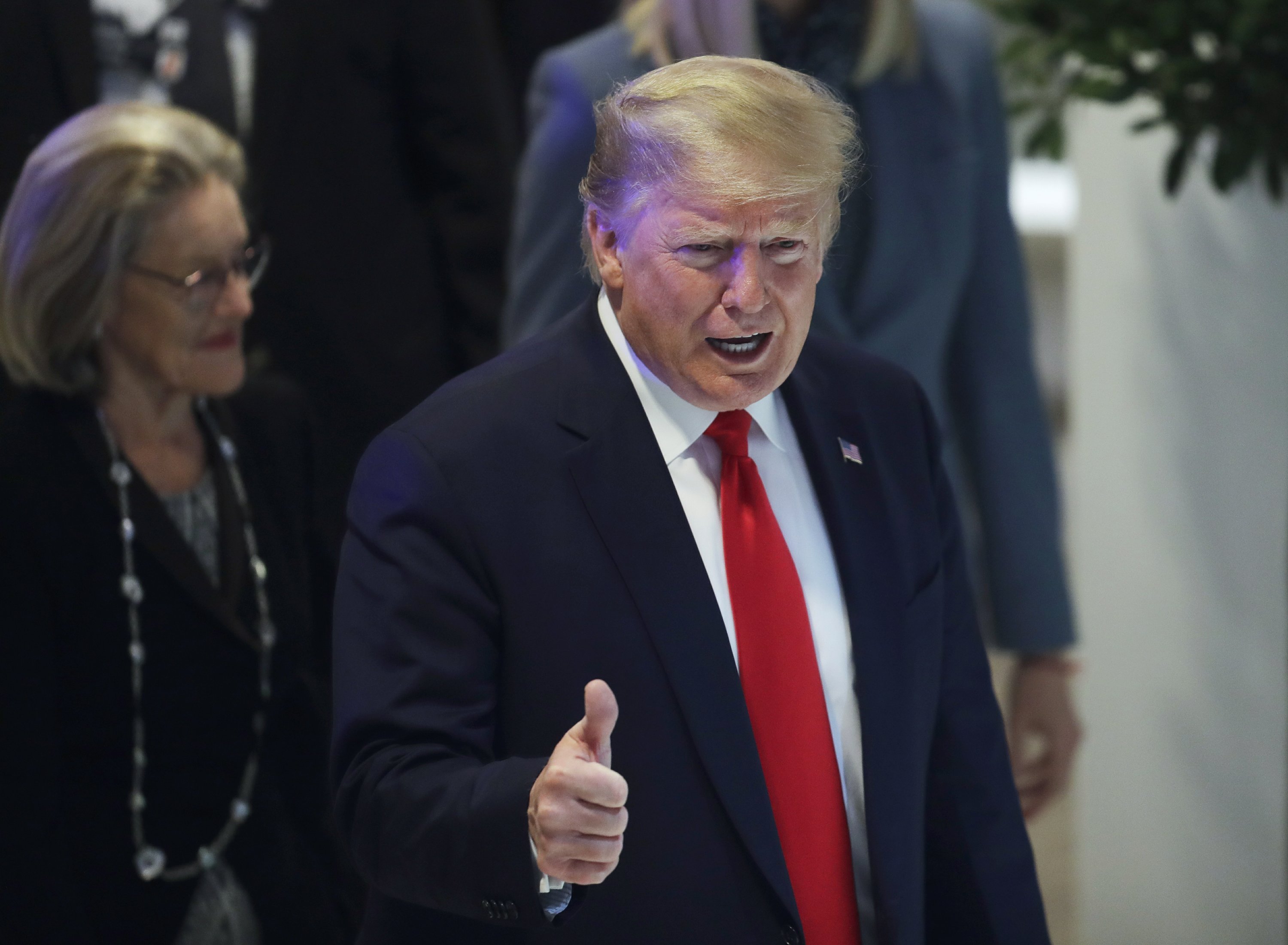
It’ll be early mornings and long nights for just about anyone involved in covering, watching or taking part in the impeachment hearings of President Donald Trump. With an impeachment trial, there is process, debate, strategy and rhetoric. The goal for Democrats will be a guilty verdict that will remove a sitting President from office. Some experts aren’t sure if this monumental event will have any troubling repercussions on Trump’s campaign for re-election this fall. “We did see some minor impacts of impeachment in the past,” says Matt Grossmann, professor of political science and director of MSU’s Institute for Public Policy and Social Research. “We’re talking pretty minor effects. It’s hard to see it making a big difference in what happens come November. I certainly don’t think you can either count him out or say that he’s going to cruise to victory. I think we’re going to see a competitive presidential election.” And when it comes to the details of removal from office and the difference between a criminal act and what an actual impeachable offence is according to the constitution - seems to be getting lost on most inside and outside of the Senate. “I wrote months ago that one side would argue that President Trump had to commit a crime to be removed from office while the other side would say the opposite,” says Brian Kalt, professor of law at Michigan State University. “This back-and-forth happens in every impeachment, and the parties switch sides depending on who’s on trial with little regard for what the Constitution really states. The Constitution and 200 years of precedent make it extremely clear that impeachment and removal do not require a crime to have been committed.” Are you a journalist covering the impeachment trials? Our experts can help explain every angle of this process, the potential outcomes and the consequences for both sides arguing for the removal of a sitting president and how it will impact the upcoming election in November. Brian Kalt is a professor of law and the Harold Norris Faculty Scholar at Michigan State University. He is an expert in constitutional law of the presidency, presidential pardons, impeachment, succession and the 25th Amendment. Matt Grossmann is an associate professor of political science and the director of the Institute for Public Policy and Social Research. His expertise includes American politics, political parties and campaigns and he has been featured in the New York Times, Washington Post and other media outlets commenting on these issues. Both Brian and Matt are available to speak with media regarding this topic – simply click on either expert’s icon to arrange an interview.


November has been a busy month for Cedarville University’s Mark Caleb Smith. As the Director of the Center for Political Studies at Cedarville, Smith has found himself doing double duty as both professor and the go-to person and pundit for local, state and national political coverage In November Smith was interviewed by TV, radio and print for issues pertaining to impeachment, Michael Bloomberg entering the presidential race and the DNC debates. Mark Caleb Smith averages approximately 160 media interviews a year – and for good reason. He teaches courses in American Politics, Constitutional Law, and Research Methodology/Data Analysis and has fast become a media-ready expert who provides accurate, objective and laser-cut insight to reporters and journalists covering politics. If you’re a journalist covering politics – let Mark Caleb Smith help with your stories. He’s available, simply click on his icon to arrange an interview today.


Election 2018: Wake Forest University experts
From state constitutional amendments to immigration, Wake Forest faculty experts can comment on a variety of 2018 midterm election-related topics. ___________________________________________________________________________________________ John Dinan, professor of political science and international affairs North Carolina Politics State Constitutional Amendments Congressional Redistricting Author of the book, “State Constitutional Politics: Governing by Amendment in the American States,” Dinan is available to comment on amendments appearing on the 2018 ballot in North Carolina and in 28 other states. From voter ID to judicial vacancies, he can place particular amendments in nationwide and historical perspective. Based on his research, he can also address the arguments and issues that routinely surface in campaigns supporting and opposing various amendments. Dinan closely follows North Carolina political races and teaches courses on campaigns and elections, state politics and Congress and policymaking. ___________________________________________________________________________________________ Allan Louden, professor of communication Political Campaigns and Advertising Political Debates Social Media and Politics From presidential debates to political advertising, Louden has provided expert commentary and analysis for a wide range of national and regional media outlets. He follows political advertising and candidates’ debates in presidential, Senate, gubernatorial and high-profile House races. Under Louden’s leadership, Wake Forest University’s debate team won the national debate tournament. He can comment on political advertising strategies and how social media, including viral videos, impacts races. ___________________________________________________________________________________________ John Llewellyn, associate professor of communication Political Speeches Political Scandals Public Apologies Llewellyn focuses on political speeches and rhetoric. He is a scholar of rhetoric whose work includes analyzing persuasive language from the nation’s most prominent politicians, coaches and civil rights leaders. A former speechwriter and public information officer, Llewellyn also specializes in crisis communication, having studied the intersection of politics and public relations for nearly 30 years. He can also comment on political scandals and public apologies. ___________________________________________________________________________________________ Betina Wilkinson, associate professor of political science and international affairs Latina/o/x Voters Wilkinson can offer insights and commentary on Latino voters for the midterm elections. She is an expert on Latino political behavior in the U.S., studies Latinos in U.S. politics, national and local immigration policy, and racial attitudes among Latinos and other ethnic groups. She can discuss the demographics and election-related priorities of Latinos. Wilkinson authored a chapter “North Carolina Latinos: And Emerging Influential Electorate in the South” in the book “The Pivotal Role of the Latino Electorate in the 2012 Election.” She is also the author of “Partners or Rivals? Power and Latino, Black and White Relations in the 21st Century.” ___________________________________________________________________________________________ Katy Harriger, professor of politics and international affairs Young Voters Federal Special Prosecutor/Robert Mueller U.S. Supreme Court A leading national expert on the federal special prosecutor, Harriger can address the influence the Mueller investigation may have on the 2018 elections. She is the author of The Special Prosecutor in American Politics and is regularly interviewed by national media outlets on the use of federal special prosecutors in American government. Harriger also studies political participation and voting among young people (including college students) and is the co-author of “Speaking of Politics: Preparing College Students for Democratic Citizenship through Deliberative Dialogue.” She can provide expert commentary on the latest Supreme Court developments and how they will likely impact midterm elections. She co-authored the book “American Constitutional Law” published in 2017. ___________________________________________________________________________________________ Michael Pisapia, assistant professor of politics and international affairs Gender and Politics Teacher Protests Political Parties and Education Reform Women Running for Congress Gender Equality and Constitutional Law Kavanaugh Hearings Pisapia studies American political development with a focus on women, gender and politics and can comment on tensions between liberal and conservative social groups and the unprecedented number of women who are engaged in political movements, and who are seeking elective office this year. He can also address partisan polarization around education policy, religious freedom and, sex and gender equality in constitutional law, including the significance of the Kavanaugh hearings in the context of the #metoo Movement. Pisapia is working on a book titled, “Educating a Nation: Women’s Empowerment and the Shape of American Federalism. He won the 2013 Carrie Chapman Catt Prize for scholarship on women and politics. He teaches courses on American politics and political thought. ___________________________________________________________________________________________ Hana Brown, associate professor of sociology and Gale Faculty Fellow Immigration Brown studies the effects of immigration and racial divisions on policy outcomes and the micro-level effects of state actions on the lives of racial minorities and immigrants. Her research also focuses on the political origins and political consequences of social inequalities. She teaches courses on political sociology, social inequality, and race and ethnicity in politics. ___________________________________________________________________________________________
