
Experts Matter. Find Yours.
Connect for media, speaking, professional opportunities & more.

DARPA awards VCU $4.875 million for development of modular drug manufacturing platform
The Defense Advanced Research Projects Agency (DARPA) is funding a $13M grant for a Rutgers University and Virginia Commonwealth University (VCU) partnership through the EQUIP-A-Pharma program, with $4.175 million to James Ferri, Ph.D., professor in the Department of Chemical and Life Science Engineering at VCU, to develop a modular manufacturing platform for sterile liquid drug products. The 24-month grant supports Ferri’s project, “Modular Manufacturing of Sterile Liquid Drug Products,” which develops a continuous manufacturing platform capable of producing highly potent drug substances such as albuterol sulfate and bupivacaine hydrochloride. These drug substances are for use in sterile liquid products, where compliance with purity of the active pharmaceutical ingredient (API) and impurity profiles are characterized and controlled in real time throughout the manufacturing process. “This work enables agile continuous manufacturing of drug substance and end-to-end drug product manufacturing of several highly potent drug substances with real time quality control,” Ferri said. “The combination of dynamic modular operation and real-time quality control will increase the supply of critical medicines in the United States.” Drug shortages continue to receive national attention, with albuterol sulfate and bupivacaine hydrochloride both appearing on the U.S. Food and Drug Administration drug shortage list within the past year. The project develops technologies that enable distributed manufacturing approaches to essential medicines currently in shortage in the United States. The platform incorporates several innovative features including continuous flow synthesis for improved process performance, online spectroscopy for real-time quality control, and modular unit operations that can be rapidly configured for different drug products. Key technologies include heterogeneous catalytic flow reactors, in-line purification systems and advanced process analytical technologies. The continuous manufacturing approach offers significant advantages over traditional batch manufacturing, including improved process control, reduced waste and the ability to produce medicines closer to the point of care. The modular design enables rapid deployment and flexible manufacturing of multiple drug products using the same platform. Ferri is collaborating with researchers from Rutgers University on the project, which began in August 2024. The platform is designed to fit within a standard shipping container, enabling distributed manufacturing capabilities. The research directly addresses national security concerns about pharmaceutical supply chain vulnerabilities while advancing the field of continuous pharmaceutical manufacturing. Students involved in the project gain experience in cutting-edge manufacturing technologies that are increasingly important in addressing global health challenges.


LSU AgCenter Research Enables Better Flood Protection for Homes
The American Society of Civil Engineers (ASCE) recently released its new standard for flood-resistant design and construction, ASCE/SEI 24-24, which provides new minimum requirements that can be adopted for all structures subject to building codes and floodplain management regulations. The new elevation standard was directly supported by LSU research and should help reduce flood risk and make flood insurance more affordable. “Without the research by the LSU AgCenter, the advancements made to the elevation requirements would not have been possible,” said Manny Perotin, co-chair of the Association of State Floodplain Managers’ Nonstructural Floodproofing Committee, who helped update the standard. “Dr. Carol Friedland’s research shows there are better ways to protect communities from flooding than adding one foot of additional freeboard.” The research team, led by Friedland, an engineer, professor, and director of LSU AgCenter’s LaHouse, showed how previous standards were failing to protect some homeowners. They mapped the impact of moving from a standard based on a fixed freeboard amount to being based on real risk in every census tract in the U.S. In response to these findings, they developed a free online tool to help builders, planners, managers, and engineers calculate the elevation required under the new standards. “Many on the committee said it would be too hard to do these complex calculations,” said Adam Reeder, principal at the engineering and construction firm CDMSmith, who helped lead the elevation working group for the new ASCE 24 elevation standards. “But the LSU AgCenter’s years of research in this area and the development of the tool makes calculations and implementation simple. This allowed the new elevation standard to get passed.” Flooding, the biggest risk to homes in Louisiana, continues to threaten investments and opportunities to build generational wealth. On top of flood losses, residents see insurance premiums increase without resources to help them make informed decisions and potentially lower costs. In response to this problem, Friedland is working on developing a whole suite of tools together with more than 130 partners as part of a statewide Disaster Resilience Initiative. When presenting to policy makers and various organizations, Friedland often starts by asking what percentage of buildings they want to flood in their community in the next 50 years. “Of course, we all want this number to be zero,” Friedland said. “But we have been building and designing so 40% will flood. People have a hard time believing this, but it’s the reality of how past standards did not adequately address flood risk.” Designing to the 100-year elevation means a building has a 0.99 chance of not flooding in any given year. But when you run that probability over a period of 50 years (0.99 x 0.99 x 0.99… 50 times, or 0.99 ^ 50), the number you end up with is a 60.5% chance of not flooding in 50 years. This means a 39.5% chance of flooding at least once. “We’ve been building to the 100-year elevation while wanting the protection of building to the 500-year elevation, which is a 10% chance of flooding in 50 years,” Friedland said. “Now, with the higher ASCE standard, we can finally get to 10% instead of 40%.” As the AgCenter’s research led to guidelines, then to this new standard, Friedland has also been providing testimony to the International Code Council to turn the stronger standard into code. In May, Friedland helped lead a workshop at the Association of State Floodplain Managers’ national conference, held in New Orleans. There, she educated floodplain managers about the new standard while demonstrating LSU’s web-based calculation tool, which was designed for professionals, while her team also develops personalized decision-making tools such as Flood Safe Home for residents. At the conference, Friedland received the 2025 John R. Sheaffer Award for Excellence in Floodproofing. More than two-thirds of the cost of natural hazards in Louisiana comes from flooding, according to LSU AgCenter research in partnership with the Governor’s Office of Homeland Security and Emergency Preparedness for the State Hazard Mitigation Plan. That cost was recently estimated to rise to $3.6 billion by 2050. “Historically, we have lived with almost a 40% chance of flooding over 50 years, which in most people’s opinion is too high—and the number could be even higher,” Reeder said. “Most building owners don’t understand the risk they are living with, and it only becomes apparent after a flood. The work done by the LSU AgCenter is critical in improving resilience in communities that can’t afford to be devastated by flooding.” “This may be the most significant upgrade in the nation’s flood loss reduction standards since the creation of the National Flood Insurance Program minimums in 1973, and it could not come at a better time as annual flood losses in the country now average more than $45 billion per year,” said Chad Berginnis, executive director of the Association of State Floodplain Managers. In addition to LaHouse’s work to prevent flooding, Friedland’s team is also working to increase energy efficiency in homes to help residents save money on utility bills. Their HEROES program, an acronym for home energy resilience outreach, education, and support, is funded by the U.S. Department of Agriculture and has already reached 140,000 people in Louisiana. Article originally posted here.
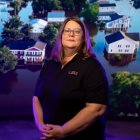


FAST nanotechnology unveiled at Rome Global Congress by AU scientist
Stephen Hsu, PhD, a professor at the Dental College of Georgia at Augusta University, unveiled his groundbreaking nanotechnology, known as FAST, during a keynote address at the 8th World Congress on Infectious Diseases in Rome, Italy. FAST, or Facilitated Self-Assembling Technology, offers a revolutionary way to convert compounds that are difficult to dissolve in water into stable nanoparticles. This innovation could transform drug development, viral infection prevention, hospital hygiene and more. “FAST takes a completely different approach from traditional nanotechnology,” Hsu explained. “Unlike methods that rely on polymers, metals, surfactants, fat-based carriers or complex engineering processes, FAST allows compounds to self-assemble into nanoparticles with minimal effort. This makes drugs that were once nearly impossible to formulate in water stable, effective and practical for medical and consumer use.” At the heart of this innovation is EC16, or EGCG-palmitate, a lipid-soluble compound derived from green tea. Known for its antioxidant, anticancer, anti-inflammatory and antimicrobial properties, green tea has long been studied but is challenging to use in clinical settings due to stability issues. FAST overcomes these limitations, transforming EC16 and other hydrophobic compounds into water-friendly nanoparticles. “You can’t even tell the particles are there,” said Hsu. “They look just like water. I made several different formulations in one afternoon in my lab. It’s that fast and simple.” A natural solution to global challenges Hsu’s work is the culmination of decades of research and a deeply personal journey. He credits green tea with helping him survive illness during his youth in a labor camp in China. Now, he’s turning its natural properties into cutting-edge therapies with the hope of helping more people. “I’ve been drinking green tea my entire life,” Hsu said. “Now, we’re turning its benefits into medical-grade treatments.” Supported by over $600,000 in NIH grants, Hsu’s team is developing applications like alcohol-free disinfectants and nasal sprays to prevent respiratory virus infections. One promising product is an EC16-based disinfectant that is natural, non-toxic and highly effective against tough pathogens, like norovirus and C. difficile, a bacterium that can cause severe diarrhea. “That’s a big deal for schools, hospitals and places like cruise ships, where these infections spread easily,” he said. Tackling long COVID and beyond Among FAST’s most promising applications is a nasal spray developed to prevent or treat long COVID and other respiratory illnesses. The spray, currently undergoing preclinical testing, targets viral entry points in the nasal mucosa, where infections often begin. “Our goal is to help immunocompromised patients and those with lingering symptoms like brain fog and loss of smell,” Hsu said. “We’ve already seen strong in vitro results against human coronavirus and norovirus.” In addition to nasal and topical treatments, Hsu’s team has developed oral formulations of EC16 that remain stable through the stomach’s acidic environment, critical for treating gastrointestinal viruses and potentially inflammatory bowel diseases like Crohn’s. “We found that even without direct contact with the virus, the EC16 nanoparticles taken by mouth can reduce infection,” Hsu explained. “That’s a major step forward in treatment of digestive tract viral infections.” A platform for the future of medicine FAST isn’t limited to green tea compounds. Hsu’s method can transform a wide range of hydrophobic compounds like cannabidiol, ivermectin, quercetin, procyanidin and retinoic acid, as well as hundreds of existing drugs, into nanoparticle suspensions that are stable and water-friendly. This has huge implications,” said Hsu. “Up to 90% of new drug candidates have poor water solubility and low bioavailability, which limits their effectiveness. With FAST, we can change that.” His lab is already exploring applications in Alzheimer’s research, cancer therapy, oral health and even anti-biofilm coatings to prevent hospital infections. These products, along with the nasal spray, are expected to hit the market this fall. Hsu is currently finalizing publications and preparing patent filings to protect and expand the reach of FAST. While optimistic, he remains cautious. “The results so far are phenomenal. FAST could be a new chapter in how we fight disease and deliver medicine,” Hsu said. Looking to know more about FAST nanotechnology and the research happening at Augusta University? To connect with Dr. Stephen Hsu - simply contact AU's External Communications Team mediarelations@augusta.edu to arrange an interview today.


Neutrons by the trillions: Using computational physics to understand nuclear reactors
Zeyun Wu, Ph.D., associate professor in the mechanical and nuclear engineering department at VCU Engineering, is reshaping the future of nuclear power. Nuclear reactors are among the most complex engineered systems on earth, with different physical processes interacting simultaneously across various scales. Even the world's most powerful computers cannot simulate every detail of an operating reactor at once. With a background in computational reactor physics, Wu’s research develops modeling and simulation techniques crucial to understanding next-generation nuclear reactors. By creating these advanced tools, his research eliminates the need for costly physical experimentation while ensuring the safety, efficiency and environmental sustainability of future nuclear power plants. Wu's research focuses on understanding reactor behavior through two aspects: multi-physics and multi-scale modeling. The multi-physics approach integrates various physical phenomena, such as nuclear physics reactions, fluid dynamics, heat transfer and structural mechanics, into a unified simulation framework. The multi-scale modeling technique addresses the vast range of physical scales involved, from subatomic neutron interactions to meter-sized reactor components. Wu’s research can simulate the complex phenomena within reactors at different scales. These models, developed using advanced numerical methods, help predict reactor behavior under various conditions. One of the models Wu uses tracks neutron behavior, a fundamental aspect to understand nuclear reactions. His simulations track trillions of neutrons as they move through various reactor materials, cause fission events and generate power. "What drives power is actually the neutron," explained Wu. "Once an atom splits, along with the nuclear energy release, lots of neutrons come out. We're talking about 1012 to 1013 neutrons per second. Our code tracks each neutron to understand where it comes from and where it goes." By understanding neutron distribution across space, time and energy domains, Wu's team can predict power distribution throughout the reactor core. This helps identify potential hotspots – areas of heightened thermal activity that could pose safety challenges. Beyond neutron behavior, Wu's research also explores how cooling fluids interact with neutrons and carry away thermal energy, a field known as thermal hydraulics, because how the reactor components are cooled significantly affects the neutron behavior as well. This also explains why the multi-physics modeling becomes essential for nuclear reactor simulations. Wu founded the Computational Applied Reactor Physics Laboratory (CARPL) to continue his research in nuclear reactor modeling and simulation. Undergraduate and master’s students learn to use established nuclear simulation codes to analyze reactor problems – skills highly valued in the industry and national labs. Ph.D. students build on theoretical foundations to deepen their understanding, enhance existing models, and develop new ones. “My area of research has been continually evolving for the past 60 years or so,” said Wu. “Most of the codes we use have been developed by national labs, like Oak Ridge National Lab, but these codes aren’t perfect. National labs hire Ph.D. level students with this niche to identify deficits in the code, correct errors and even add new functions and improve them.” Looking forward, Wu hopes his research will have a real-world impact on the upcoming shift in nuclear power in America. Over the next 20 to 30 years, the nation's approximately 90 light-water-cooled nuclear reactors reach the end of their operational lifetimes. Light water refers to ordinary water (H₂O), used in most existing reactors to both cool the system and slow down neutrons to sustain the nuclear reaction. To replace them, experts are looking toward advanced, non-light-water-cooled reactors, such as the Molten Uranium Breeder Reactor (MUBR) shown in the figure. Computational methods and tools like Wu’s research lab developed will be essential to their development and implementation. Non-light-water cooled reactors offer significant advantages over the older designs. Some can operate at higher temperatures while others produce substantially less nuclear waste, addressing one of the industry's persistent challenges. "Unlike traditional water reactors, where we have decades of operational experience and established analysis tools, these new designs present unique challenges," explained Wu. "Companies like Dominion employ large teams of analysts who use well-tested computational tools to maintain their existing reactors, but those same tools aren't calibrated for these next-generation reactors. Our research is developing the computational methods and simulations these advanced reactors will need. When these new reactors come online, the methodologies we're creating now can be quickly converted into production-level nuclear codes, providing immediate practical value to industry.”


Can AI save our oyster reefs? A team of scientists put it to the test
With global oyster populations having declined by more than 85% from historical levels, restoring and monitoring these critical ecosystems is more urgent than ever. But traditional monitoring methods aren’t cutting it. A team of researchers that included the University of Delaware's Art Trembanis have taken a new approach, testing an AI model designed to recognize live oysters from underwater images. The findings? The AI model, called ODYSSEE, was faster than human experts and non-expert annotators, processing in just 40 seconds what took humans up to 4.5 hours. But it wasn’t yet as accurate. In fact, the tool misidentified more live oysters than both groups of human annotators. Still, the team found that ODYSEE has real potential to monitor reefs in real time. Why does this matter? As climate change, pollution and overharvesting continue to pressure coastal environments, more precise and non-invasive monitoring tools like ODYSSEE could become essential to restoration efforts and environmental policy. Trembanis can discuss this new tool and its ability to identify live oysters without disturbing the reef. His expertise in oceanography, engineering and robotics expertise was key to the team's work. The results, published in the journal Frontiers, offer both caution and hope in the race to improve ocean monitoring with emerging technologies. To set up an interview with Trembanis, visit his profile and click on the contact button.


Masoud Davari, Ph.D., associate professor of Electrical and Computer Engineering in the Allen E. Paulson College of Engineering & Computing, was recognized for his achievements in the field of power electronics control and testing with the IEEE Region 3 Outstanding Engineer Award. He was also granted membership into Eta Kappa Nu (HKN), IEEE’s international honor society. IEEE, the Institute of Electrical and Electronics Engineers, is the world’s largest professional organization for electrical engineers, with its membership numbering over 486,000 in more than 190 countries. Davari has been a member of IEEE since 2008 and a senior member of IEEE’s Region 3 since 2019. The organization’s Region 3 encompasses the southeastern United States and has over 24,000 members. The Outstanding Engineer Award, given annually to one member per region, recognizes those who have advanced knowledge and improved humanity through any of the technical subjects covered by the IEEE societies, councils, and affinity groups. Davari was praised for “outstanding, technical, and professional contributions to synthesizing reinforcement learning optimal controls for power electronic converters, creating robust integration of power electronics considering the impact of cyberattacks on modern grids, and advancing IEEE standards for hardware-in-the-loop testing and education through impactful research and service.” This impactful research and service includes eight years of teaching at Georgia Southern. He currently teaches introductory courses on circuit analysis and power systems fundamentals. He has also served as a chapter lead of the IEEE Working Group (WG) P2004 for testing based on hardware-in-the-loop simulations in the IEEE Standards Association (IEEE SA) and that of the IEEE Power and Energy Society Task Force on innovative teaching methods for modern power and energy systems (TR 120). In addition to being an engaged educator, Davari is also a prolific researcher. He was selected as the finalist for the 2024 Curtis W. McGraw Research Award by the Awards Committee of the American Society for Engineering Education (ASEE); has also been awarded a research fellowship by Gulfstream Aerospace Corporation in 2024; was included in Stanford/Elsevier’s Top 2% Scientist Rankings list; and has received $1.17 million in grants from the National Science Foundation Davari’s work ethic and commitment to bridging the gap between industry and research led Rami Haddad, Ph.D., interim dean of the College of Engineering & Computing, to nominate him. “Dr. Davari’s recognition as the IEEE Region 3 Outstanding Engineer and his induction into IEEE-Eta Kappa Nu (HKN) are truly remarkable honors that reflect his outstanding contributions to electrical and computer engineering,” Haddad said. “Being recognized among more than 24,000 IEEE members across the Southeast is a testament to the impact and excellence of his work. We are proud to have Dr. Davari as a valued member of our college, and we celebrate his achievements as a shining example of the innovation and leadership that define our faculty.” This award marks the first time a Georgia Southern faculty member has received it in its 55-year history. It is a career milestone for Davari, who has published research on advanced technology integration into modern power and energy systems in high-impact-factor IEEE Transactions/Journal venues and has extensively researched the era of grid-edge technologies. “I’m deeply honored by this prestigious award,” Davari said. “Not only does it reaffirm my dedication to my research field, but it also fuels my passion for creating a technologically advanced future. Receiving this IEEE award on behalf of my outstanding team is a privilege. Their relentless commitment and hard work since 2015 have truly made this achievement possible.” Davari’s induction into HKN places him among the best in his field. The membership, which is received through invitation only from HKN’s Board of Governors and is based on the candidate’s record of contributions to the field, demonstrated leadership, and community service. “With a legacy that stretches over a century, IEEE-HKN represents the pinnacle of prestige and tradition in our profession, indicating academic achievements and dedication to research, potential leadership, exemplary character, and a positive attitude. Notably, many of our industry’s most influential leaders initiated their journeys through induction into IEEE-HKN as professional members, so receiving this honor is a privilege.” Davari received his award and was inducted into Eta Kappa Nu (HKN) in March at IEEE Region 3’s SoutheastCon 2025 in Charlotte, North Carolina. If you're interested in learning more and want to book time to talk or interview with Masoud Davari then let us help - simply contact Georgia Southern's Director of Communications Jennifer Wise at jwise@georgiasouthern.edu to arrange an interview today.


Sevki Cesmeci, Ph.D., associate professor of mechanical engineering in the Allen E. Paulson College of Engineering and Computing at Georgia Southern University, has been selected to take part in the 2025-2026 Governor’s Teaching Fellows (GTF) Academic Year Program in Georgia. This program is designed to provide Georgia’s higher education faculty with expanded opportunities for developing teaching skills and innovative pedagogies. “I am grateful to have been nominated by Provost Reiber as Georgia Southern University’s sole nominee,” Cesmeci said. “I have been deeply passionate about both research and teaching during my time at Georgia Southern, and I am grateful for the opportunity to contribute meaningfully to both.” GTF chose only 16 faculty members from across Georgia’s higher education institutions. Cesmeci’s innovative teaching strategies and methods were integral to his nomination. His work with leading textbook publisher McGraw Hill was one project that garnered recognition, as he worked with professors across the country to create an online, application-based activity (ABA) for fluid mechanics problems. “ABA is a next-generation learning method based on a storytelling-teaching strategy,” Cesmeci said. “Students are challenged with questions and guided through detailed feedback at each step of the solution.” In addition to research accolades, Cesmeci has been recognized for his teaching excellence at Georgia Southern with the 2022-2023 Georgia Southern University Award of Excellence in Student Success and the 2023-2024 Allen E. Paulson College of Engineering and Computing Faculty Award for Teaching. Through his participation in GTF, Cesmeci plans to integrate artificial intelligence tools into the mechanical engineering curriculum. “Unlike disciplines such as computer science and electrical engineering, mechanical engineering curricula have been slower to adopt contemporary and innovative tools,” Cesmeci said. “I hope to leverage this experience in the GTF program to enhance curriculum development at Georgia Southern, sharing insights and best practices to advance mechanical engineering education.” Hosted at the University of Georgia, GTF brings together faculty from accredited private and public institutions across the state for a series of interactive seminars focused on teaching practices, faculty development and course design. Throughout the program, fellows will work on a course design or instructional improvement project aimed at enhancing student learning. “I look forward to engaging with fellow educators, refining my teaching strategies and bringing new insights back to Georgia Southern students,” Cesmeci said. If you're interested in learning more and want to book time to talk or interview with Sevki Cesmeci then let us help - simply contact Georgia Southern's Director of Communications Jennifer Wise at jwise@georgiasouthern.edu to arrange an interview today.

When Luis Quiroga-Nuñez, Ph.D was appointed director of Florida Tech’s Ortega Observatory and its primary tenant – a non-functioning, 32-inch telescope – in 2023, he decided it was time to provide astronomy students and others a window to space. The observatory is already a base for research across a spectrum of cosmic exploration through disciplines such as astronomy and astrophysics, heliophysics, planetary science and astrobiology. However, current students have yet to see the stars up close, as the aging telescope, commissioned in 2008, has sat dormant for the last several years. With restoration, the telescope could be a powerful tool to train students to use professional telescopes and make observations – critical skills that will help prepare them for their future careers. It soon became apparent, however, that this was no simple task. The restoration would necessitate reverse engineering on a large scale to even understand how to fix and upgrade the telescope, much less actually repair it. It would also, as Quiroga-Nuñez wisely recognized, be its own powerful educational opportunity, providing unique hands-on learning opportunities for students in the College of Engineering and Science. “We are an institute of technology. We have perfectly capable people, like these young students, ready to join hands-on projects, get crazy and start to be creative.” Luis Quiroga-Nuñez With various issues to tackle and eager to support home-grown expertise, Quiroga-Nuñez and Lee Caraway, Ph.D, an instructor in the department of electrical engineering and computer science, recruited students with varied backgrounds, from astronomy to electrical engineering and computer science. Students could apply what they learned in class and grow their portfolios with a real-world project, the sort of experiential learning that is a hallmark of a Florida Tech education. Some improvements have been made, but the project remains an exciting puzzle for students and faculty alike. Here’s how they are doing it. An Interdisciplinary Project In January 2023, Quiroga-Nuñez partnered with Caraway to rebuild the telescope from the inside out. They say the conversation started over lunch, sketching ideas on a napkin. With various issues to tackle and eager to support home-grown expertise, Caraway and Quiroga-Nuñez recruited students with varied backgrounds, from astronomy to engineering to computer science. “This is about as real-world as you can get without leaving school. We have this giant piece of technology that is not working. Figure out why,” said recent graduate Adrianna Agustin ’24, who helped update the telescope’s communication system. “All of those problem-solving skills will directly translate to wherever we go in the future.” The project’s multidisciplinary nature also boosts collaboration between both sides of the college. “We keep integrating different parts of the university and involving students in a project that we were blinded by,” Quiroga-Nuñez says. “We sit between the scientists and the engineers.” And there’s no shortage of tasks. In addition to the refurbishment, Quiroga-Nuñez and Caraway are also completing routine telescope maintenance, with students taking on adjacent projects around the observatory. With the telescope repair, each student is given their own task, such as redesigning a small clip that supports the dome’s electric current, reviewing the conditions of the finder’s lens or understanding how analog devices control the telescope’s focus. This allocation allows each student to claim their own individual contribution to the greater telescope puzzle. Opening a Time Capsule The telescope’s biggest issues were mechanical and electrical, all exacerbated by age. Its motors were decades old and naturally failing, Caraway said. These motors controlled the telescope’s right ascension and declination – essentially, its ability to move. The chaotic interior also involved multiple individual systems with dozens of wires. And the circuits controlling the motors, which dated back to the 1980s, were also failing due to age. As Caraway noted, his students are sweeping off “dust older than them.” “The technology back then simply did not exist to control the motors, run the diagnostics and make it all happen,” Caraway explained. “They’re not designed to run 30 years.” Additionally, the computer program that controlled the motors was outdated and did not meet to the university’s security requirements. Given all this, the team needed to develop a new communication system for the telescope, starting with the computer software. They decided instead of purchasing an upgraded computer system, they could build and program their own in-house from scratch. Next, once the new computer was up and running, it needed motors to command. Marisa Guerra ’24 worked on a senior design project involving a robotic arm whose motor structure was the same as the telescope’s. She crafted a blueprint for the telescope’s new motors using what she learned for her capstone project. At the same time, Agustin worked on developing a cleaner communication system between the computer to the motors. Her senior design research focused on electric vehicles and their internal circuit systems, and she could replicate something similar within the telescope – but not without digging through the decaying electronics first. “We had to reverse engineer and actually redraw the circuits, which was good practice because a lot of the time, for senior design at least, you don’t really have to design a new circuit. You are just kind of puzzle-piecing it together,” Agustin said. “But with this circuit, all of them were bad.” Using Guerra’s and Agustin’s senior design research, the team reprogrammed the telescope’s circuits. What once took 20 wires to operate now only takes two. They also reduced the weight of the telescope’s motors from 40 pounds to just 2 pounds. Once the communication system was finished, the team was just waiting for mobility. And on a day in Spring 2024, thanks to the refurbished system, they were able to create movement within the telescope for the first time in years. “I didn’t even know if that device could move internally,” Quiroga-Nuñez says. The moment was celebrated, but the team knew this success triggered a new challenge. It was time to tackle high astrometric precision – a crucial element of properly tracking movement in space. “We are pointing to tiny points in the sky. If we do not track that properly, we are going to be lost in the universe,” Quiroga-Nuñez says. The Value of Time Perfecting precise movement is expected to take some time, but that’s not a bad thing, Quiroga-Nuñez says. He believes that a lengthy timeline will offer more value in the long run because it will give even more students a chance to get involved. Besides, its primary purpose will be to teach students how to use a telescope and allow them to make observations and prepare for their future careers. Ultimately, Quiroga-Nuñez predicts that the telescope could pick up its first image from space in about a year if everything stays on track. However, the team still has a lot of ground within the telescope to uncover, with an unpredictable number of potential troubleshooting challenges. For example, while rebuilding the motor, they discovered that the internal mirror that illuminates the telescope’s visuals was in poor condition – it needed cleaning and new aluminum to reflect enough light to see the telescope’s imagery, Agustin explains. So, the team had to remove the mirror and ship it to New York for refurbishment – a process that took several months. Once the mirror is reinstalled, they can return to their quest for better precision. The mirror is just one example of unpredictability in reverse-engineering. Ultimately, dedicating more time to understanding and solving the unforeseen challenges allows more students to participate in the telescope’s journey, Quiroga-Nuñez says. “This is like a big Lego for them,” he says. “They are learning the process, and the students, I think, will have found a very valuable life experience.” If you're interested in connecting with Luis Quiroga-Nuñez, director of Florida Tech’s Ortega Observatory - simply contact Adam Lowenstein, Director of Media Communications at Florida Institute of Technology at adam@fit.edu to arrange an interview today.

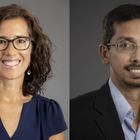
NASA Asks Researchers to Help Define Trustworthiness in Autonomous Systems
A Florida Tech-led group of researchers was selected to help NASA solve challenges in aviation through its prestigious University Leadership Initiative (ULI) program. Over the next three years, associate professor of computer science and software engineering Siddhartha Bhattacharyya and professor of aviation human factors Meredith Carroll will work to understand the vital role of trust in autonomy. Their project, “Trustworthy Resilient Autonomous Agents for Safe City Transportation in the Evolving New Decade” (TRANSCEND), aims to establish a common framework for engineers and human operators to determine the trustworthiness of machine-learning-enabled autonomous aviation safety systems. Autonomous systems are those that can perform independent tasks without requiring human control. The autonomy of these systems is expected to be enhanced with intelligence gained from machine learning. As a result, intelligence-based software is expected to be increasingly used in airplanes and drones. It may also be utilized in airports and to manage air traffic in the future. Learning-enabled autonomous technology can also act as contingency management when used in safety applications, proactively addressing potential disruptions and unexpected aviation events. TRANSCEND was one of three projects chosen for the latest ULI awards. The others hail from Embry-Riddle Aeronautical University in Daytona Beach – researching continuously updating, self-diagnostic vehicle health management to enhance the safety and reliability of Advanced Air Mobility vehicles – and University of Colorado Boulder – investigating tools for understanding and leveraging the complex communications environment of collaborative, autonomous airspace systems. Florida Tech’s team includes nine faculty members from five universities: Penn State; North Carolina A&T State University; University of Florida; Stanford University; Santa Fe College. It also involves the companies Collins Aerospace in Cedar Rapids, Iowa and ResilienX of Syracuse, New York. Carroll and Bhattacharyya will also involve students throughout the project. Human operators are an essential component of aviation technology – they monitor independent software systems and associated data and intervene when those systems fail. They may include flight crew members, air traffic controllers, maintenance personnel or safety staff monitoring overall system safety. A challenge in implementing independent software is that engineers and operators have different interpretations of what makes a system “trustworthy,” Carroll and Bhattacharyya explained. Engineers who develop autonomous software measure trustworthiness by the system’s ability to perform as designed. Human operators, however, trust and rely on systems to perform as they expect – they want to feel comfortable relying on a system to make an aeronautical decision in flight, such as how to avoid a traffic conflict or a weather event. Sometimes, that reliance won’t align with design specifications. Equally important, operators also need to trust that the software will alert them when it needs a human to take over. This may happen if the algorithm driving the software encounters a scenario it wasn’t trained for. “We are looking at how we can integrate trust from different communities – from human factors, from formal methods, from autonomy, from AI…” Bhattacharyya said. “How do we convey assumptions for trust, from design time to operation, as the intelligent systems are being deployed, so that we can trust them and know when they’re going to fail, especially those that are learning-enabled, meaning they adapt based on machine learning algorithms?” With Bhattacharyya leading the engineering side and Carroll leading the human factors side, the research group will begin bridging the trust gap by integrating theories, principles, methods, measures, visualizations, explainability and practices from different domains – this will build the TRANSCEND framework. Then, they’ll test the framework using a diverse range of tools, flight simulators and intelligent decision-making to demonstrate trustworthiness in practice. This and other data will help them develop a safety case toolkit of guidelines for development processes, recommendations and suggested safety measures for engineers to reference when designing “trustworthy,” learning-enabled autonomous systems. Ultimately, Bhattacharyya and Carroll hope their toolkit will lay the groundwork for a future learning-enabled autonomous systems certification process. “The goal is to combine all our research capabilities and pull together a unified story that outputs unified products to the industry,” Carroll said. “We want products for the industry to utilize when implementing learning-enabled autonomy for more effective safety management systems.” The researchers also plan to use this toolkit to teach future engineers about the nuances of trust in the products they develop. Once developed, they will hold outreach events, such as lectures and camps, for STEM-minded students in the community. If you're interested in connecting with Meredith Carroll or Siddhartha Bhattacharyya - simply click on the expert's profile or contact Adam Lowenstein, Director of Media Communications at Florida Institute of Technology at adam@fit.edu to arrange an interview today.


Name: Adrian Peter Title: Associate professor of mathematics and systems engineering and electrical engineering and computer science (joint appointment); director, Center for Advanced Data Analytics and Systems (CADAS) Department/College: Department of Mathematics and Systems Engineering and Department of Electrical Engineering and Computer Science/College of Engineering and Science Current research funding: $2.19 million General research focus: Our Multi-domain, Multi-sensor, Cyber-physical Tactical Exploitation (M2CTE) project addresses a critical need for a robust analytic processing framework capable of supporting autonomous sensing and analytics on the edge – where devices and sensors collect data – with the ability to reach back to the cloud for more improvement. Adrian Peter's research interests are in applying advanced analytics (e.g. machine learning, statistical modeling, optimization and visualization) to solve large-scale computing problems across a variety of domain areas (signal processing, geospatial, environmental, sensor fusion and enterprise intelligence). Q: What has you excited about your current research? We have built our entire infrastructure with the immensely talented graduate and undergraduate students at Florida Tech. Their tireless efforts have led to us delivering practical and operational real-world, machine-learning solutions that make us among the global leaders in machine learning at the edge. Q: Why is it important to conduct research? The objective of all research is to advance the frontiers of knowledge in a specific discipline. In my research, we are continually pushing state-of-the-art distributed sensing and edge analytics. Our results have helped transition conceptual ideas and customer requirements into operational solutions that improve situational awareness at tactical edge. Adrian Peter is available to speak with media. Contact Adam Lowenstein, Director of Media Communications at Florida Institute of Technology, at adam@fit.edu to arrange an interview today.