
Experts Matter. Find Yours.
Search experts on 50,000+ topics. Or browse by topic category.
- Recent Searches


Featured
Global experts with a broad range of areas of expertise.






Aparna Gupta
- Title
- Professor, Lally School of Management; Director, Center for Financial Studies
- Role
- Rensselaer Polytechnic Institute
- Expertise

Tim DeSchriver
- Title
- Associate Professor of Sport Management; Area Head - Sport Management
- Role
- University of Delaware
- Expertise


Jill Perry-Smith
- Title
- Professor of Organization & Management
- Role
- Emory University, Goizueta Business School
- Expertise


Connecting credible expert sources & academic research
ExpertFile is a trusted resource for journalists, industry, funding agencies and government policymakers looking for fresh perspectives and innovative academic research.


Spotlights
Read expert insights on a wide variety of topics and current events.

Companies Are More Committed to Sustainability Than Ever. So What's Holding Them Back?
Corporate commitments to sustainability have reached record levels, but a new report from the Massachusetts Institute of Technology (MIT) suggests that turning those promises into meaningful action remains a significant challenge. The 2026 State of Supply Chain Sustainability Report, based on a survey of 1,810 supply chain professionals across 91 countries, found that 83 percent consider sustainability important or very important to long-term business success, the highest level recorded in the report's seven-year history. Yet the research reveals a troubling disconnect between corporate ambition and the structures needed to achieve measurable results. Dr. Sreedevi Rajagopalan, Director of the MIT Sustainable Supply Chain Lab and lead author of the report, says the challenge is no longer simply convincing companies that sustainability matters. "Commitment is strong, measurement is expanding, and AI is accelerating," says Dr. Sreedevi Rajagopalan, director of the MIT Sustainable Supply Chain Lab and lead author of the report. "What comes next is harder: converting commitment into accountability, operational integration into strategic decision making, and incremental decarbonization into genuine transition." Rajagopalan cautions that the next challenge involves turning those commitments into accountability, integrating sustainability into strategic decisions and achieving more substantial reductions in emissions. Dr. Sreedevi Rajagopalan is a Research Scientist at the MIT Center for Transportation & Logistics and Director of the MIT Sustainable Supply Chain Lab. Her research focuses on sustainable logistics, circular supply chains, Scope 3 emissions and helping organizations translate sustainability commitments into practical strategies. View her profile The report identifies several important findings: Corporate accountability is lagging: Only 51 percent of companies with publicly stated sustainability goals have formal cross-functional sustainability teams, while just 33 percent have board-level oversight. Tariffs are disrupting progress: Sixty-eight percent of respondents say tariff uncertainty has forced them to delay, reduce or abandon sustainability strategies. AI offers promise, but also challenges: While 87 percent of organizations adopting AI for sustainability report positive impacts, improvements in operational efficiency do not necessarily translate into lower overall emissions. Transportation remains a challenge: Forty-three percent of freight fleets still operate mostly or entirely on conventional diesel, while only eight percent have fully transitioned to low-emission energy. Collaboration is increasing: Participation in joint supplier engagement and decarbonization programs has climbed from 31 to 58 percent in just one year. Perhaps one of the report's most important findings concerns how sustainability is managed inside organizations. Companies with formal cross-functional teams report integrating sustainability into decisions far more frequently than those assigning responsibility to a single department. The findings raise important questions for business leaders. Are sustainability commitments being supported by meaningful governance? Can AI deliver measurable environmental improvements? And how can companies maintain progress when tariffs, geopolitical uncertainty and changing policies disrupt long-term plans? For Rajagopalan, the research points to a critical distinction: making sustainability a corporate priority is not the same as making it part of how a business operates. If you're interested in speaking with Dr. Rajagopalan about corporate sustainability, supply chain emissions, artificial intelligence, environmental accountability and the challenges facing global businesses, simply click on her profile to arrange an interview today.


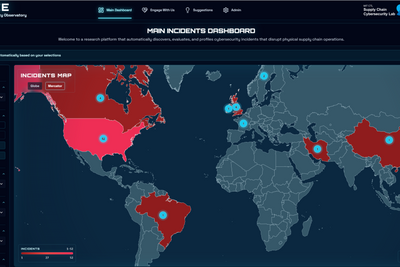
When Hackers Attack the Supply Chain, the Consequences Go Far Beyond Stolen Data
When cybercriminals target a business, the consequences can extend far beyond stolen data and compromised computer systems. Factories can shut down, shipments can be delayed, and disruptions can spread across entire supply networks, affecting businesses and consumers around the world. Recognizing these growing threats, the MIT Center for Transportation & Logistics has launched a new Supply Chain Cybersecurity Lab dedicated to helping organizations prevent, manage and recover from cyberattacks that threaten global operations. The initiative is co-founded by MIT researchers Dr. Miguel Rodríguez García and Dr. Camilo Mora, who are combining expertise in cybersecurity and supply chain management to address vulnerabilities that traditional IT security approaches may overlook. When a Cyberattack Becomes a Supply Chain Crisis The stakes are significant. A 2025 cyberattack against Jaguar Land Rover forced the manufacturer to suspend production at its UK facilities for five to six weeks, with an estimated economic impact exceeding $2 billion. Dr. Camilo Mora is a researcher at the MIT Center for Transportation & Logistics and Co-founder of the MIT Supply Chain Cybersecurity Lab. His research explores how ransomware, cyberattacks and digital vulnerabilities affect supply chain operations and resilience. View his profile And the risks are growing as manufacturers, warehouses and transportation networks become increasingly dependent on interconnected technologies, artificial intelligence, robotics and third-party software providers. For Dr. Camilo Mora, the importance of this research became clear after learning about a ransomware attack that disrupted a company's operations nationwide and required approximately three months to restore its systems. "That moment made me realize the enormous impact that a cyber-attack can have beyond the classic IT department, affecting the flow of goods, information, and money all at once, plus reputational damage across the entire network." The researchers are particularly concerned about smaller suppliers that lack the resources to defend themselves against sophisticated attacks, yet play critical roles in global supply networks. New Research to Identify and Prevent Disruptions The MIT lab is developing three research tools to help organizations understand and address these threats: TRACE: Tracks cyber incidents and their real-world consequences, including operational shutdowns, financial losses and disruptions to supply networks. RADAR: Identifies emerging cybersecurity risks associated with technologies such as autonomous systems, quantum computing and robotics. SCOUT: Helps smaller suppliers identify vulnerabilities and develop practical cybersecurity improvement strategies. The research also emphasizes that technology alone cannot protect supply chains. Employee awareness, leadership preparedness and coordination between IT and operational teams are essential to preventing disruptions and recovering when attacks occur. Protecting Global Supply Chains Before the Next Attack As global supply chains become increasingly interconnected, the work raises urgent questions for business leaders. How vulnerable are their suppliers? Could a cyberattack shut down their operations? And are organizations prepared to keep goods moving when critical technology fails? Dr. Miguel Rodríguez García is a Research Scientist at the MIT Center for Transportation & Logistics and Co-founder and Director of the Supply Chain Cybersecurity Lab. His research examines the cybersecurity risks associated with emerging technologies, automation, robotics and interconnected global supply chains. View his profile For Dr. Miguel Rodríguez García, addressing these challenges requires bringing together two disciplines that have traditionally operated independently. "We created this lab because supply chain and cybersecurity professionals have not been talking to each other. We're here to help companies continue operating even when technology fails, and we want to learn from companies that have suffered these attacks so we can bring those lessons back to the industry and make cybersecurity better for everybody." The lab's mission is straightforward: keeping supply chains moving even when technology fails. By combining research, industry collaboration and practical cybersecurity tools, MIT researchers hope to help organizations anticipate threats, strengthen resilience and recover more quickly when attacks occur. If you're interested in speaking with these MIT researchers about supply chain cybersecurity, ransomware, emerging technology risks, operational disruptions and protecting global commerce, simply click on the profiles of Dr. Miguel Rodríguez García or Dr. Camilo Mora to arrange an interview today.



Got Expertise to Share?
ExpertFile works with leading organizations with trusted experts. We help make their expertise more discoverable, structured, and actionable for AI-driven discovery, strategic outreach, and real-world opportunities.

Expert Insight: Tariff Turmoil Is Changing How Businesses Price Their Products
Tariffs are no longer simply a trade policy issue. They are becoming a significant challenge for businesses trying to manage costs, protect profits and remain competitive in an increasingly unpredictable global marketplace. A recent Reuters Plus feature, Why Tariff Volatility Makes Pricing a Forever Process, produced for global consultancy Simon-Kucher, examines how rapidly changing tariffs are forcing companies to continuously reassess their pricing strategies and supply chains. Among the experts featured is Anna Nagurney, Eugene M. Isenberg Chair in Integrative Studies at the Isenberg School of Management at the University of Massachusetts Amherst. View her profile Nagurney, an internationally recognized expert in supply chain networks and disruption management, points to the extraordinary pace of trade policy changes. She estimates that U.S. tariff regulations changed approximately 50 times during 2025, creating uncertainty for manufacturers, wholesalers, retailers and consumers. "The speed and uncertainty created a great deal of challenges for manufacturers, wholesalers, retailers and, of course, consumers." Why Even Domestic Businesses Are Vulnerable One of the article's central messages is that businesses do not have to import products directly to feel the impact of tariffs. Higher costs can spread throughout interconnected supply chains, affecting suppliers, transportation networks and ultimately consumers. Nagurney emphasizes the importance of viewing supply chains as networks rather than simple, linear systems. By identifying critical suppliers, examining vulnerabilities and preparing for potential disruptions, businesses can make better decisions before costs escalate. She also cautions that smaller companies may struggle to absorb tariff-related increases without jeopardizing their financial stability. As businesses face continued uncertainty, Nagurney can provide valuable perspective on how tariffs influence supply chains, consumer prices, business competitiveness and the broader economy. An experienced commentator on global supply chain disruptions, Nagurney has provided analysis to major news organizations, including The New York Times, Associated Press, NPR, The Washington Post, The Boston Globe and The Wall Street Journal. If you're interested in speaking with Anna Nagurney about tariffs, supply chain disruptions, pricing pressures, international trade and economic uncertainty, simply click on her profile to arrange an interview today.



What Marco Rubio's Speech on Ancient Greece Reveals About Leadership, Business and America's Future
What can ancient Greece teach modern America about leadership, economic success and the future of business? That question is at the center of a recent commentary by Rick Franza, PhD, professor at Augusta University's James M. Hull College of Business, published in Augusta Business Daily earlier this month. In his article, "Marco Rubio's Look Back to Move Us Forward: What He Nailed and What He Missed," Franza examines a speech delivered by U.S. Secretary of State Marco Rubio in Athens, Greece, and considers its implications for American businesses, leadership and international relations. Franza explores Rubio's emphasis on ambition, competition, innovation and risk-taking, connecting these themes to the characteristics that have historically contributed to economic development and business success. He also identifies two important considerations he believes deserved greater attention: the role of morality and ethics in leadership and the importance of international trade to economic prosperity. "I am not saying we should be driven by greed and vanity, but rather be willing to continue to strive rather than waiting for others to catch up." Franza's commentary offers a perspective on how lessons from history can inform contemporary discussions about business leadership, economic policy and America's relationships with its international partners. As political and economic debates continue, Franza can help journalists explore the intersection of government policy, business competitiveness, ethical leadership and international commerce. If you're interested in speaking with Dr. Rick Franza about business leadership, economic policy, international trade and the relationship between politics and business, simply click on his profile to arrange an interview today.



Credibility a Must for White House Press Secretary Role
Mark Lukasiewicz, dean of The Lawrence Herbert School of Communication, talked to Newsday about Katie Zacharia’s five-day tenure as White House press secretary. He explained that the person in that challenging role needs to have a high level of credibility with the press. “It is a tough job, but successful press secretaries – and there have been several in the two Trump administrations – I think take a different approach, which is not the kind of bumbling approach that this press secretary took,” Lukasiewicz said. “You have to have a very deep command of the facts and policies of the president … so we’ll see who’s next in line.”



Blood Clots Can Sideline Elite Athletes. Could Microrobots Offer a New Approach?
Blood clots have sidelined or ended the careers of several elite athletes, drawing attention to a potentially life-threatening condition. The University of Delaware's Sambeeta Das is part of a team that has developed tiny, magnetically guided robots that could offer a new approach to removing such blockages. The list of athletes affected by blood clots includes NBA champion Chris Bosh, whose career ended after recurring clots; tennis great Serena Williams, who survived two life-threatening pulmonary embolisms; San Antonio Spurs center Victor Wembanyama, who was shut down in February 2025 when deep vein thrombosis was discovered in his right shoulder; and Philadelphia Eagles quarterback Jalen Hurts, whose recent diagnosis of blood clots in his lungs has drawn national attention. In a published study, Das and her colleagues demonstrated that magnetic microrobots could mechanically break apart clusters of human liver cancer cells and clear them from narrow channels designed to model blood vessels. The robots used mechanical forces rather than drugs or chemicals to disperse the clusters. The research offers an early proof of concept for using microrobots to remove unwanted cellular material in confined spaces. Das can discuss how the technology works, its potential application to blood-clot removal, the challenges of targeting blockages inside the body, and what further research is needed to explore its use in patients. To contact Das and arrange an interview, visit her profile and click the “Contact” button. Reporters can also email MediaRelations@udel.edu.


Why the retirement plan that worked for your parents is failing millions of Canadians
Last month, I found a jar of mustard at the back of my fridge with a best-before date of 2019. It looked and smelled fine. My wife watched me unscrew the lid like I was about to eat gas-station sushi, and I threw the mustard away. I wish Canadians gave their retirement plans the same hard look, because most of the advice we hand people over 55 carries a best-before date of 1990, the year my parents' retirement began. They met at the grocery chain where they both worked, and each left with a defined-benefit pension: a monthly cheque that arrived for the rest of their lives, regardless of what the stock market did. Their employer bore the investment risk. Their job was to show up at the retirement party and eat the cake. That plan stood on three legs: a workplace pension, CPP and Old Age Security, and a paid-off house you would eventually sell to trade down. In 1991, a 65-year-old Canadian man could expect to live about 16 more years and a woman about 20. A plan built for that stretch did its job. Look at those legs today. Only 37.7 per cent of paid workers in Canada belonged to a workplace pension plan of any kind in 2023, according to Statistics Canada, and coverage has been declining for two decades. For most people, the cheque that used to arrive like the newspaper has been replaced by a statement that reads like a horoscope. CPP and OAS were never meant to carry anyone alone. That leaves the house. A 2023 CPP Investments survey found that only 45 per cent of Canadians have a financial plan for retirement, yet about three in four Canadians aged 55 to 74 own their homes. For millions of families, the house was the plan: buy it, pay it off, and burn the mortgage papers in a roasting pan. The old playbook still has one instruction for that asset, unchanged since 1990: sell, move, and hope the condo is cheaper. Most like to stay in their neighbourhood. In Toronto, they usually can't afford to. The calendar changed, too. My parents' plan was built for that 15-to-20-year stretch. Today, Canadian financial planning standards give a 65-year-old couple an even chance of one living to 94, a retirement closer to 30 years. That is about 10 extra years of groceries, property tax and dental work, and nobody gave the plan a raise to cover them. Larry Fink, who runs BlackRock, put his finger on it in his 2024 letter to investors: we have worked hard to help people live longer and much less hard to help them afford those extra years. Those years arrived just as the guaranteed pension cheque was disappearing, a change Fink called "a shift from financial certainty to financial uncertainty." When the man in charge of the world's largest pile of other people's money says so, I'd put down the mustard. Our system does a fine job of helping people pile up money, then goes quiet the moment they need that pile to become a paycheque. We hand people a savings target, a risk questionnaire and an RRSP deadline. On their last day of work, we hand them a bouquet. How much do you withdraw? Which account first? What happens to your OAS when your RRIF minimum pushes you past the clawback threshold? Where does the house fit? The old plan shrugs. The strain shows. Statistics Canada reports that among Canadians aged 65 to 74 who worked in 2022, almost half did so out of necessity. After a late-life divorce, my mother returned to part-time work at a grocery store. She had done everything the old plan asked of her. The usual reply is that people just need to save more. Telling a 72-year-old to save more is like telling a marathoner at kilometre 40 to train harder. An up-to-date plan opens with the question that matters at 65: how will this money cover the bills for 30 years? Home equity goes on the balance sheet at the first meeting, pulled from the drawer marked "emergencies and inheritance." Ninety-one per cent of Canadians say they want to live independently in their own homes for as long as possible, so a good plan offers ways to do that beyond a For Sale sign. And the industry that spent 40 years teaching people to save owes them the same energy in how to spend it. I have a modest proposal for the banks. Every February, you run RRSP season, complete with sailboat commercials. Give us an RRIF season to match, with the same budget, and put a drawdown plan in front of every client who turns 65. And while you are at it, switch the word "savings" to "spending" or "paycheque" on our bank account. Take your retirement plan out of the back of the fridge and check the date on the lid. If it says 1990, you know where it goes. My wife will be happy to show you the garbage. This Opinion Article was published in the Business Section of the Saturday Star and online Toronto Star on October 17, 2026,


Are Small-Dollar Political Donations Making American Politics More Divisive?
Small-dollar political donations have long been celebrated as a way to reduce the influence of wealthy contributors and give ordinary Americans a greater voice in elections. But new research suggests that the growing influence of these donors may also be contributing to political polarization and rewarding candidates who generate attention rather than build consensus. In an article published in The Atlantic, titled Small-Dollar Campaign Donors Are Hurting the Political System, journalist Idrees Kahloon examines how the explosion of grassroots political fundraising has changed American campaigns, drawing attention to research challenging the assumption that small donations necessarily produce healthier democratic outcomes. Among the researchers examining this trend is Ray La Raja, professor of political science and co-director of the UMass Amherst Poll at the University of Massachusetts Amherst. View his profile La Raja is co-author, with Zachary Albert of Brandeis University, of the 2026 book Small Donors in US Politics: Myth and Reality, which examines who contributes to political campaigns, what motivates their donations and how their growing influence affects elections and political representation. Their research finds that small-dollar donors are often more politically engaged, more partisan and more ideologically committed than the average voter. While these contributions can broaden participation in campaign financing, they can also encourage candidates to pursue national attention and emotionally charged fundraising appeals rather than focus on local concerns or legislative compromise. The findings raise important questions about whether the growing influence of small donors is strengthening political representation or creating new incentives for polarization. The issue is particularly relevant ahead of the 2026 midterm elections, as candidates and political parties compete for campaign contributions in an increasingly nationalized fundraising environment. La Raja's work also examines the role of political parties in campaign finance and whether reforms designed to reduce the influence of large donors have produced unintended consequences. With campaign fundraising, political polarization and democratic accountability increasingly connected, La Raja offers journalists a research-based perspective on one of the less understood forces shaping American elections. If you're interested in speaking with Ray La Raja about campaign finance, small-dollar political donations, political polarization, election reform and the influence of money on American democracy, simply click on his profile to arrange an interview today.


From Baseball to Business: The Science of Team Success
The ingredients that create a World Series team often mirrors how units achieve success in business. How did they get there? The University of Delaware's Kyle Emich says the answer goes beyond assembling a roster of star players. Emich, a professor of management, says that how players combine their strengths, respond to opponents and create opportunities together can be just as important as individual talent. The same is true in business, where a collection of talented employees doesn’t automatically translate into a high-performing team, he said. One example is the approach that the 2026 Milwaukee Brewers’ took during their postseason run. Rather than relying exclusively on home runs and individual star power, the team created opportunities through a combination of speed, patience at the plate, timely hitting and pressure on opposing defenses. A stolen base, a walk or a defensive mistake might seem like a small event on its own, but the effects can build as players’ actions interact. These interactions matter, he says, because teams are not simply collections of individuals; their performance emerges from how people and their activities affect one another within a larger environment. The same is true in business as well as baseball. Businesses may recruit exceptional employees or invest in promising technologies such as artificial intelligence, yet fail to realize their potential if their processes, team structures and working practices don’t support those strengths. Emich can discuss: • Beyond Moneyball: What baseball’s emphasis on statistics and individual talent reveals about the limits of evaluating people in isolation. • Building better teams: How coordination, complementary strengths and the interaction among team members contribute to performance. • Strategy and competition: What baseball teams’ adjustments to opponents can teach business leaders about responding to competitors and changing conditions. • Technology and the future of work: Why adopting artificial intelligence or other new technologies is not enough without considering how people, processes and technology work together. To reach Emich directly and arrange an interview, visit his profile page and click on the "contact" button. Interested reporters can also send an email to MediaRelations@udel.edu.
