Experts Matter. Find Yours.
Search experts on 50,000+ topics. Or browse by topic category.
- Recent Searches


Featured
Global experts with a broad range of areas of expertise.





Tim DeSchriver
- Title
- Associate Professor of Sport Management; Area Head - Sport Management
- Role
- University of Delaware
- Expertise

Aparna Gupta
- Title
- Professor, Lally School of Management; Director, Center for Financial Studies
- Role
- Rensselaer Polytechnic Institute
- Expertise

Jack Brouwer
- Title
- Professor: Mechanical & Aerospace Engineering, Civil & Environmental Engineering; Director: National Fuel Cell Research Center, Advanced Power and Energy Program
- Role
- UC Irvine
- Expertise

Kelly Welch, PhD
- Title
- Professor of Sociology and Criminology; Program Director, Criminology | College of Liberal Arts and Sciences
- Role
- Villanova University
- Expertise


Connecting credible expert sources & academic research
ExpertFile is a trusted resource for journalists, industry, funding agencies and government policymakers looking for fresh perspectives and innovative academic research.


Spotlights
Read expert insights on a wide variety of topics and current events.
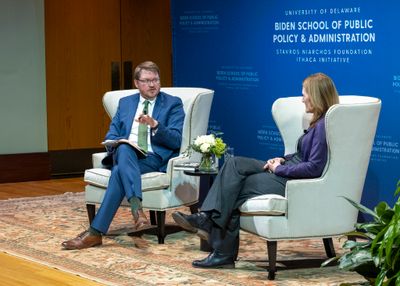
Two years after the 2024 election, where does civil discourse stand?
Election season has brought the expected vicious political campaign ads, heated online disagreements and difficult dinner table conversations with family and friends. But the University of Delaware’s Timothy Shaffer says there’s still room for civil discourse. Shaffer, UD’s inaugural Stavros Niarchos Foundation (SNF) Chair of Civil Discourse, studies how people can engage across significant differences while maintaining the relationships and democratic institutions that make disagreement possible. As chair of UD's SNF Ithaca Initiative, Shaffer works with students, educators and civic leaders to develop and practice constructive engagement across differences. He can comment on the following through the lens of the first midterm election since the vitriolic 2024 general elections. • What has changed since 2024: How have the past two years affected the way Americans talk about politics, disagreement and democracy? • Polarization and dialogue: Is political disagreement itself the problem, or is the greater challenge engaging constructively across differences? • The role of disagreement: Why civil discourse doesn't require consensus and how listening to competing perspectives can strengthen democratic engagement. • Politics and personal relationships: How to navigate political differences with family, friends, neighbors and colleagues without letting disagreements become personal. • Social media and the 2026 election: How online environments shape political conversations, what Shaffer expects as Election Day approaches, and how people can engage more constructively across differences. To reach Shaffer and arrange an interview, visit his profile page and click on the "contact" button. Interested reporters can also send an email to MediaRelations@udel.edu.


Expect a Warmer Winter Due to Super El Niño
A Newsday story on the forecast for a warmer and wetter winter features an interview with Dr. Jase Bernhardt, associate professor of geology, environment, and sustainability. “We expect it to be a wetter winter, but whether that’s big snowstorms or tilting more towards rain, that’s harder to say,” Bernhardt explained. “More precipitation could mean more snow, but then if it’s not cold, then you have more mixed precipitation or rain.”


Got Expertise to Share?
ExpertFile works with leading organizations with trusted experts. We help make their expertise more discoverable, structured, and actionable for AI-driven discovery, strategic outreach, and real-world opportunities.

For 90 years, generations of Manitoba students have stepped up to help their classmates get to and from school safely. This year, CAA Manitoba (CAA MB) is celebrating the 90th anniversary of the CAA School Safety Patrol® program and the thousands of young Manitobans who have been part of its history. The CAA School Safety Patrol program, CAA’s oldest traffic safety initiative, was developed to protect, educate and empower elementary school children on safe road-crossing practices. To mark the milestone, CAA School Safety Patrollers gathered today at the Manitoba Legislative Building for a special day-long itinerary that included a tour of the building, meetings with Ministers, participation in the Speaker's March, attendance at Question Period, and a commemorative 90th Anniversary photo on the steps of the building. This anniversary is about celebrating the generations of young Manitobans who have stepped up to help keep their classmates safe,” says Teresa Di Felice, assistant vice president, CAA Manitoba. “Today is a chance to recognize that legacy and the students who are carrying it forward.” From one Winnipeg school to 8,000 Patrollers The program began in Manitoba in 1936 at Greenway School in Winnipeg, where teacher Louise Staples organized Manitoba’s first CAA School Safety Patrol team. Within months, student Patrollers were introduced across the city to help promote pedestrian and road safety in school zones. Today, approximately 8,000 Patrollers at 250 schools participate in the program, working with police services to help deliver it. “For 90 years, this program has really been about students helping students,” says Di Felice. “Generations of young people have put on the patrol vest, learned about road safety and taken on the responsibility of helping their classmates get to and from school safely. That’s an incredible story, and it’s something worth celebrating.” Throughout 2026, CAA Manitoba has been marking the anniversary through activities that recognize current Patrollers and celebrate the program's history. The anniversary campaign includes Patroller recognition at sporting events and community engagement for the people who have been part of the program. Building student leadership and safer school communities CAA School Safety Patrollers receive annual training and are taught to model and encourage safe behaviour among their fellow students. The program also gives young people an opportunity to develop teamwork, volunteerism and leadership skills while playing an active role in their school community. Community partnerships have also been an important part of the program’s history. CAA works with schools, teachers and police, including Winnipeg Police, Brandon Police and Morden Police, to support the CAA School Safety Patrol program in Manitoba. “Our Patrollers may be young, but the contribution they make to their schools and communities is significant,” says Di Felice. “As we mark this achievement, we’re saying thank you to everyone who has been part of this program and especially to the students who continue that tradition today.” CAA School Safety Patrol by the numbers • 1936: Manitoba’s first CAA School Safety Patrol team was organized at Greenway School in Winnipeg. • 90 years: The milestone being celebrated by CAA Manitoba in 2026 • Approximately 8,000 Patrollers: Participate in Manitoba today. • Approximately 250 schools: Participate in the program across Manitoba. • Grades 5 to 8: The program is geared toward students in these grades. To learn more about the School Safety Patrol program, please visit: www.schoolpatrolmanitoba.com

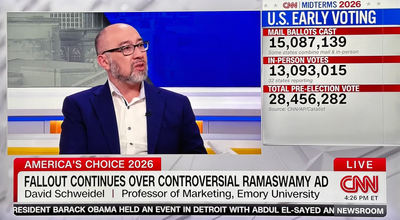
Why Negative Political Ads Work - And When They Backfire
With the U.S. midterm elections approaching, political campaigns are increasingly turning to negative advertising, emotional appeals and artificial intelligence to influence voters. But how effective are these tactics, and when might they do more harm than good? David Schweidel, Professor of Marketing and Roberto C. Goizueta Professor in Business Technology at Emory University's Goizueta Business School, joined CNN Newsroom anchor Fredricka Whitfield on October 25 to examine the psychology behind political attack ads and the growing influence of AI-generated campaign content. View his profile Schweidel, whose research includes political marketing, consumer behaviour and digital advertising, explained why negative messages often have a greater impact on voters than positive campaign advertising. The Power of Negative Advertising Research suggests that advertisements designed to provoke fear or anger can be particularly effective at capturing attention, influencing voter preferences and motivating people to cast their ballots. As Schweidel explained during the CNN interview: "That's what the research has shown, that negative ads tend to stick with people longer than positive ads, getting them more likely to show up at the polls. So increasing voter turnout and moving the needle when it comes to share of the vote." However, the effectiveness of negative advertising comes with risks. Campaigns that push emotional messaging too far may alienate the very voters they hope to persuade. Schweidel noted that economic frustrations, including rising costs for groceries, health care and gasoline, have created an environment in which political campaigns are eager to capitalize on voter anger. AI Adds a New Dimension The conversation also explored the increasing use of artificial intelligence in political advertising, particularly the ability to create realistic images and messages that may mislead audiences. Schweidel warned that voters who encounter these advertisements casually may not take the time to verify their accuracy. Even brief exposure to misleading content can leave a lasting impression, particularly when subsequent advertisements reinforce the same message. The emergence of AI-generated political advertising raises important questions about transparency, authenticity and the ability of voters to distinguish legitimate campaign messages from manipulated content. An Expert Perspective for Election Coverage As campaigns intensify ahead of Election Day, Schweidel's research offers valuable insight into why political advertisements resonate with voters, how emotional appeals influence political behaviour and the implications of AI for election communications. His expertise spans political marketing, artificial intelligence, social media analytics and consumer behaviour, making him a valuable resource for journalists examining the changing landscape of political advertising. David Schweidel is available to speak with media about negative political advertising, voter psychology, AI-generated campaign content and the effectiveness of political messaging. To arrange an interview or connect with David Schweidel, click on his profile below.


Midterm Campaigns Enter Their Final Full Week
The final full week before the November 3 midterm elections is bringing a surge of campaign appearances, advertising and voter outreach as Republicans and Democrats compete for control of Congress. President Donald Trump and prominent Democratic leaders are campaigning across key states, while competitive races in places such as Mississippi illustrate how the political battleground has expanded. Republicans are defending their congressional majorities as Democrats seek to turn dissatisfaction with the administration into electoral gains. The stakes extend beyond which party wins the most seats. Congressional control helps determine which legislation advances, how federal spending priorities take shape and how closely lawmakers investigate executive branch decisions. Continued Republican control could help the president advance his agenda, while Democratic gains could create additional obstacles and strengthen congressional oversight. Voters are also choosing governors and other state officials whose decisions directly affect schools, public services and local economies. For campaigns, the closing days present a challenge: persuading undecided voters while ensuring existing supporters cast their ballots. For voters, the election offers an opportunity to evaluate both candidates’ promises and their ability to govern. The results will help shape the direction of national policy during the remaining two years of the president’s term.


Augusta University Researchers Uncover New Clues to Dangerous Pregnancy Complication
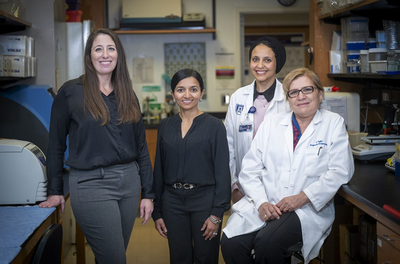
(From left) Jessica Faulkner, PhD, Champa Woodham, MD, Mona Elgazzaz, PhD, and Safia Ogbi (research manager in Faulkner’s lab) A significant discovery by researchers at Augusta University's Medical College of Georgia is shedding new light on preeclampsia, a potentially life-threatening pregnancy complication affecting an estimated 2% to 8% of pregnancies worldwide. Published in Arteriosclerosis, Thrombosis, and Vascular Biology, the research reveals that a protein commonly used to assess preeclampsia risk may also contribute directly to the disease by triggering excess production of the hormone leptin. The discovery establishes a previously unknown connection between two biological markers long associated with preeclampsia and could help researchers identify new approaches to treatment. Jessica L. Faulkner, PhD, associate professor in the Department of Physiology at the Medical College of Georgia and the study's lead author, explained the importance of the findings. “Preeclampsia patients have elevated levels of both sFlt-1 and leptin, but the relationship between those two factors has remained unclear. Our findings show that sFlt-1 directly increases leptin production and suggest that leptin may be an important link between placental dysfunction and the cardiovascular complications of the disease.” Using human placental tissue, cultured cells and animal models, the research team demonstrated that elevated levels of sFlt-1 increase leptin production, contributing to the blood vessel dysfunction characteristic of preeclampsia. When researchers blocked leptin signaling in pregnant mice, much of that dysfunction was reversed. The research was made possible through collaboration between Faulkner's laboratory and the Medical College of Georgia's Maternal-Fetal Medicine program, led by Champa Woodham, MD. Woodham emphasized the importance of connecting laboratory discoveries with clinical care. “Preeclampsia remains one of the most challenging conditions we manage in maternal-fetal medicine because patients can progress from appearing clinically stable to becoming critically ill very quickly. What makes this research particularly exciting is that it takes sFlt-1, a biomarker we are already using clinically to help assess a patient’s risk and gives us a deeper understanding of how it may actually contribute to the disease process.” Mona Elgazzaz, MD, PhD, a postdoctoral fellow in Faulkner's laboratory and the study's first author, highlighted the potential treatment implications. “Uncovering the crosstalk between sFlt-1 and leptin is crucial because it introduces new potential targets for treating preeclampsia by modulating the proteins that regulate leptin production.” The findings are especially significant because current treatment options remain limited, with delivery of the placenta remaining the only definitive cure. Although additional research is needed before these discoveries can translate into clinical treatments, the findings offer a promising new direction for understanding and potentially treating a condition that continues to threaten maternal and infant health worldwide. The study was supported by the National Institutes of Health and the American Heart Association. For journalists covering maternal health, pregnancy complications, cardiovascular disease and emerging medical research, Augusta University's research team offers important expertise on the science behind preeclampsia and the potential implications of this discovery. To learn more or arrange an interview with the researchers, contact AU's External Communications Team mediarelations@augusta.edu to arrange an interview today.


GLP-1 medications such as Ozempic, Wegovy and Zepbound are transforming treatment for obesity and diabetes, with some now being used to treat obstructive sleep apnea. But could these increasingly popular medications also affect your teeth and gums? A researcher at Augusta University's Dental College of Georgia is investigating that question, highlighting a potential connection between GLP-1 medications, sleep apnea treatment and oral health. John C. Comisi, DDS, DMD, interim chair and professor in the Department of General Dentistry, recently published a review in Clinical Oral Investigations examining how obstructive sleep apnea and GLP-1 medications may influence the oral microbiome — the complex community of bacteria that helps maintain healthy teeth and gums. A New Question About GLP-1 Medications Obstructive sleep apnea can affect oral health through repeated oxygen disruptions, inflammation, mouth breathing and dry mouth. Treating the condition could improve some of these problems, but GLP-1 medications may introduce additional considerations. “OSA affects much more than sleep,” Comisi said. “The changes that occur throughout the body can also change the environment in the mouth. As we increasingly use medications to treat OSA, we need to understand what those treatments may mean for oral health.” Comisi's review suggests that successful treatment of sleep apnea could improve the oral environment by reducing mouth breathing, acid reflux and other contributing factors. However, reports involving semaglutide have also raised questions about dry mouth and changes in saliva, which plays an important role in protecting against tooth decay and gum disease. “There are potentially competing effects happening at the same time,” Comisi said. “Treating sleep apnea could improve several conditions that contribute to an unhealthy oral environment, while the medication itself could potentially affect salivary function. We simply do not have the prospective human studies yet to know what the overall effect will be.” The review, featured in an Oct. 6 Augusta University Jagwire article, calls for additional research tracking patients using GLP-1 medications, including changes in saliva, oral bacteria, cavities and gum disease. It also highlights the importance of communication between dentists and other health care providers, particularly when patients taking GLP-1 medications require dental procedures involving sedation or general anesthesia. With GLP-1 medications becoming increasingly common, understanding their broader effects on oral health is an emerging area of research with important implications for patients and dental professionals. John C. Comisi, DDS, DMD, is interim chair and professor in the Department of General Dentistry at Augusta University's Dental College of Georgia. His expertise provides a valuable perspective on the intersection of dental health, medication use and emerging approaches to patient care. If you're interested in speaking with Dr. John Comisi about GLP-1 medications, sleep apnea, dry mouth, oral health and the implications of these treatments for dental care, contact AU's External Communications Team mediarelations@augusta.edu to arrange an interview today.

Companies Are More Committed to Sustainability Than Ever. So What's Holding Them Back?
Corporate commitments to sustainability have reached record levels, but a new report from the Massachusetts Institute of Technology (MIT) suggests that turning those promises into meaningful action remains a significant challenge. The 2026 State of Supply Chain Sustainability Report, based on a survey of 1,810 supply chain professionals across 91 countries, found that 83 percent consider sustainability important or very important to long-term business success, the highest level recorded in the report's seven-year history. Yet the research reveals a troubling disconnect between corporate ambition and the structures needed to achieve measurable results. Dr. Sreedevi Rajagopalan, Director of the MIT Sustainable Supply Chain Lab and lead author of the report, says the challenge is no longer simply convincing companies that sustainability matters. "Commitment is strong, measurement is expanding, and AI is accelerating," says Dr. Sreedevi Rajagopalan, director of the MIT Sustainable Supply Chain Lab and lead author of the report. "What comes next is harder: converting commitment into accountability, operational integration into strategic decision making, and incremental decarbonization into genuine transition." Rajagopalan cautions that the next challenge involves turning those commitments into accountability, integrating sustainability into strategic decisions and achieving more substantial reductions in emissions. Dr. Sreedevi Rajagopalan is a Research Scientist at the MIT Center for Transportation & Logistics and Director of the MIT Sustainable Supply Chain Lab. Her research focuses on sustainable logistics, circular supply chains, Scope 3 emissions and helping organizations translate sustainability commitments into practical strategies. View her profile The report identifies several important findings: Corporate accountability is lagging: Only 51 percent of companies with publicly stated sustainability goals have formal cross-functional sustainability teams, while just 33 percent have board-level oversight. Tariffs are disrupting progress: Sixty-eight percent of respondents say tariff uncertainty has forced them to delay, reduce or abandon sustainability strategies. AI offers promise, but also challenges: While 87 percent of organizations adopting AI for sustainability report positive impacts, improvements in operational efficiency do not necessarily translate into lower overall emissions. Transportation remains a challenge: Forty-three percent of freight fleets still operate mostly or entirely on conventional diesel, while only eight percent have fully transitioned to low-emission energy. Collaboration is increasing: Participation in joint supplier engagement and decarbonization programs has climbed from 31 to 58 percent in just one year. Perhaps one of the report's most important findings concerns how sustainability is managed inside organizations. Companies with formal cross-functional teams report integrating sustainability into decisions far more frequently than those assigning responsibility to a single department. The findings raise important questions for business leaders. Are sustainability commitments being supported by meaningful governance? Can AI deliver measurable environmental improvements? And how can companies maintain progress when tariffs, geopolitical uncertainty and changing policies disrupt long-term plans? For Rajagopalan, the research points to a critical distinction: making sustainability a corporate priority is not the same as making it part of how a business operates. If you're interested in speaking with Dr. Rajagopalan about corporate sustainability, supply chain emissions, artificial intelligence, environmental accountability and the challenges facing global businesses, simply click on her profile to arrange an interview today.


When Hackers Attack the Supply Chain, the Consequences Go Far Beyond Stolen Data
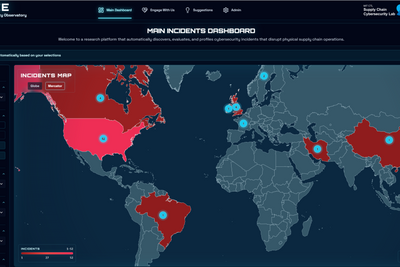
When cybercriminals target a business, the consequences can extend far beyond stolen data and compromised computer systems. Factories can shut down, shipments can be delayed, and disruptions can spread across entire supply networks, affecting businesses and consumers around the world. Recognizing these growing threats, the MIT Center for Transportation & Logistics has launched a new Supply Chain Cybersecurity Lab dedicated to helping organizations prevent, manage and recover from cyberattacks that threaten global operations. The initiative is co-founded by MIT researchers Dr. Miguel Rodríguez García and Dr. Camilo Mora, who are combining expertise in cybersecurity and supply chain management to address vulnerabilities that traditional IT security approaches may overlook. When a Cyberattack Becomes a Supply Chain Crisis The stakes are significant. A 2025 cyberattack against Jaguar Land Rover forced the manufacturer to suspend production at its UK facilities for five to six weeks, with an estimated economic impact exceeding $2 billion. Dr. Camilo Mora is a researcher at the MIT Center for Transportation & Logistics and Co-founder of the MIT Supply Chain Cybersecurity Lab. His research explores how ransomware, cyberattacks and digital vulnerabilities affect supply chain operations and resilience. View his profile And the risks are growing as manufacturers, warehouses and transportation networks become increasingly dependent on interconnected technologies, artificial intelligence, robotics and third-party software providers. For Dr. Camilo Mora, the importance of this research became clear after learning about a ransomware attack that disrupted a company's operations nationwide and required approximately three months to restore its systems. "That moment made me realize the enormous impact that a cyber-attack can have beyond the classic IT department, affecting the flow of goods, information, and money all at once, plus reputational damage across the entire network." The researchers are particularly concerned about smaller suppliers that lack the resources to defend themselves against sophisticated attacks, yet play critical roles in global supply networks. New Research to Identify and Prevent Disruptions The MIT lab is developing three research tools to help organizations understand and address these threats: TRACE: Tracks cyber incidents and their real-world consequences, including operational shutdowns, financial losses and disruptions to supply networks. RADAR: Identifies emerging cybersecurity risks associated with technologies such as autonomous systems, quantum computing and robotics. SCOUT: Helps smaller suppliers identify vulnerabilities and develop practical cybersecurity improvement strategies. The research also emphasizes that technology alone cannot protect supply chains. Employee awareness, leadership preparedness and coordination between IT and operational teams are essential to preventing disruptions and recovering when attacks occur. Protecting Global Supply Chains Before the Next Attack As global supply chains become increasingly interconnected, the work raises urgent questions for business leaders. How vulnerable are their suppliers? Could a cyberattack shut down their operations? And are organizations prepared to keep goods moving when critical technology fails? Dr. Miguel Rodríguez García is a Research Scientist at the MIT Center for Transportation & Logistics and Co-founder and Director of the Supply Chain Cybersecurity Lab. His research examines the cybersecurity risks associated with emerging technologies, automation, robotics and interconnected global supply chains. View his profile For Dr. Miguel Rodríguez García, addressing these challenges requires bringing together two disciplines that have traditionally operated independently. "We created this lab because supply chain and cybersecurity professionals have not been talking to each other. We're here to help companies continue operating even when technology fails, and we want to learn from companies that have suffered these attacks so we can bring those lessons back to the industry and make cybersecurity better for everybody." The lab's mission is straightforward: keeping supply chains moving even when technology fails. By combining research, industry collaboration and practical cybersecurity tools, MIT researchers hope to help organizations anticipate threats, strengthen resilience and recover more quickly when attacks occur. If you're interested in speaking with these MIT researchers about supply chain cybersecurity, ransomware, emerging technology risks, operational disruptions and protecting global commerce, simply click on the profiles of Dr. Miguel Rodríguez García or Dr. Camilo Mora to arrange an interview today.