Experts Matter. Find Yours.
Search experts on 50,000+ topics. Or browse by topic category.
- Recent Searches


Featured
Global experts with a broad range of areas of expertise.



Jeffrey Rosensweig
- Title
- Associate Professor of Finance; Director, The Robson Program for Business, Public Policy, and Government
- Role
- Emory University, Goizueta Business School
- Expertise

Marlene Neill, Ph.D.
- Title
- Professor of Journalism, Public Relations & New Media
- Role
- Baylor University
- Expertise

Professor Claire Surr
- Title
- Professor of Dementia Studies and Director of the Centre for Dementia Research
- Role
- Leeds Beckett University
- Expertise


Connecting credible expert sources & academic research
ExpertFile is a trusted resource for journalists, industry, funding agencies and government policymakers looking for fresh perspectives and innovative academic research.


Spotlights
Read expert insights on a wide variety of topics and current events.

Boston Globe Editorial on Data Centers
When the dust was still settling after November’s election, Elon Musk posted on X that “data centers in space looking pretty appealing right now.” This might sound like a crazy idea. But is it? The Boston Globe turned to Mohammad Hajiesmaili of UMass Amherst's Manning College of Information and Computer Sciences for perspective.

Who Will Lead the U.S. Senate? Gerald Gamm Can Explain the Stakes.
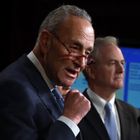
Sen. Chuck Schumer of New York is facing a challenge from Sen. Chris Van Hollen of Maryland for the position of Senate majority leader, setting up an unusual contest over who will lead Democrats as they prepare to take control of the chamber. University of Rochester political scientist and historian Gerald Gamm is uniquely positioned to lend insight on the negotiations, the gamesmanship, and what the outcome could mean for the Senate and the Democratic Party. Gamm is co-author of Steering the Senate (Cambridge University Press, 2025), a study of the history, evolution, and institutional power of Senate leadership. The book has been called “essential reading for all who care — or worry — about the past and future of institutional leadership and capacity on Capitol Hill” “the best book we have about the organizational development of the Senate,” and “a masterpiece . . . that unearths new information on the emergence of leadership institutions and the role of parties and showing their relevance for the Senate of today.” He can discuss: • What makes this leadership challenge historically unusual and what it reveals about the Democratic caucus. • The power and influence wielded by the Senate majority leader and how that power is exercised. • The competing political and ideological interests shaping the contest. • What the fight reveals about the Democratic Party’s priorities and its approach to governing. • How the outcome could affect the Senate’s legislative agenda and its relationship with the White House. Gamm’s research focuses on American politics, political parties, and institutional developments and historical change, legislatures, and political parties. Connect with him by clicking on his profile.



Got Expertise to Share?
ExpertFile works with leading organizations with trusted experts. We help make their expertise more discoverable, structured, and actionable for AI-driven discovery, strategic outreach, and real-world opportunities.

GTA VI Isn't Just a Video Game. It's a Cultural and Economic Juggernaut.
After more than a decade of anticipation, Grand Theft Auto VI has finally arrived, and gamers around the world are celebrating one of the biggest entertainment launches in history. As media across the planet are reporting, fans across the globe are diving into the latest installment of the enormously popular franchise, turning its release into an international cultural event. But the real story may be much bigger than the game itself. Michael Lewis, Professor of Marketing at Emory University's Goizueta Business School, studies fandom, consumer behaviour and the economics of entertainment. He believes the GTA VI launch offers a remarkable illustration of how video games are transforming both the entertainment business and the cultural experiences that connect generations. View his profile Covering? We can help. Lewis offers several compelling perspectives for journalists covering the launch: A multibillion-dollar opening act: Estimates for GTA VI's first-week revenue range from approximately $3 billion to more than $5 billion, placing the launch among the most significant commercial events in entertainment history. Rivaling the world's biggest entertainment properties: Projections of approximately $15 billion in lifetime revenue put GTA VI in extraordinary company. Lewis compares that potential with estimated revenues of $9 billion to $11 billion associated with the 2026 FIFA World Cup, illustrating the enormous commercial scale gaming has achieved. The changing face of fandom: Sports, movies and music have traditionally dominated popular culture. Gaming is increasingly competing for that same attention, loyalty and emotional investment, particularly among younger generations. A new cultural language for Gen Z: Understanding today's youth culture may require greater familiarity with Minecraft and Fortnite than with the latest Hollywood blockbuster. Gaming experiences are becoming central to how younger audiences connect, communicate and identify with popular culture. When entertainment worlds transcend categories: Lewis sees the rise of shared narrative universes, where characters and fictional settings move between video games, scripted entertainment and consumer products. In this evolving cultural landscape, GTA characters Lucia Caminos and Jason Duval could become recognizable reference points alongside Spider-Man, Darth Vader, Indiana Jones and Taylor Swift. The bigger question is no longer whether video games can compete with Hollywood or professional sports. It's whether gaming is becoming one of the defining cultural forces of a generation. For journalists exploring GTA VI's economic impact, the changing nature of fandom, Gen Z consumer behavior or the future of entertainment, Lewis offers a research-driven perspective on a story that extends well beyond the gaming industry. To arrange an interview or connect with Michael Lewis, see his ExpertFile profile below.

James Sample Discusses Congressional Oversight; ICE Tactics Under Miller
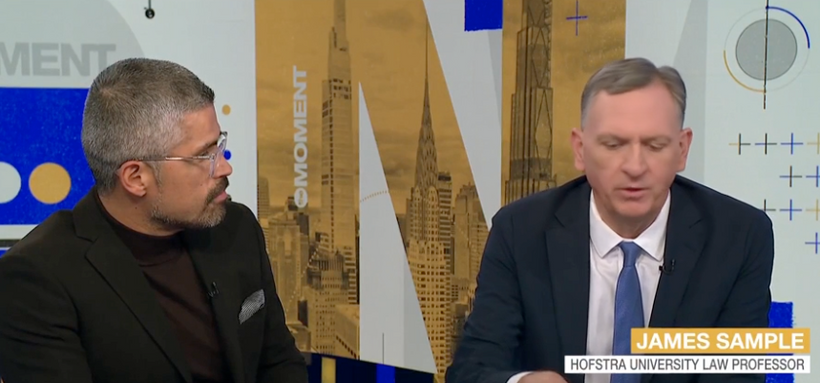
Professor James Sample of the Maurice A. Deane School of Law at Hofstra University appeared on MS Now’s “The Moment with Katy Tur” to discuss a letter sent by a federal prosecutor to Senator Elizabeth Warren, warning of legal consequences to Democrats’ oversight investigations.



Is Phone Addiction Real? The Science Is Split and the Courts Are Settling
Smartphone addiction is not a distinct disorder, argues a paper published Oct. 27 in the journal Addiction. Eli Singer, founder of Offline.now, says people worried about their phone use need a clear place to start more than a label. His two-question check takes about a minute. What the two reviews say The Addiction paper reviews the evidence and finds it does not support a separate diagnosis (Wegmann, Behrendt and Cousijn, Addiction, 2026). No diagnostic manual recognizes the condition. Estimates of how many people have it range from under 3% to about a third, depending on how it is measured. A review published Oct. 14 pulled together brain-imaging studies of people who use smartphones heavily (Liu and colleagues, Journal of Integrative Neuroscience, 2026). It found consistent differences in brain structure and activity. The authors note that the content, such as games or social media, may matter more than the phone itself. "Both reviews are useful. One asks whether this is a medical diagnosis. The other describes a habit that is hard to break. You can have a hard habit without a diagnosis." Eli Singer, founder of Offline.now What the courts have decided In March, a Los Angeles jury found Meta and YouTube negligent in the first social media addiction case to reach a verdict (AP). In August, Meta settled with 47 states and the District of Columbia for up to about $18 billion (CBS News). A second Los Angeles trial was set to open Nov. 4. TikTok, YouTube, Google, Meta and Snap all settled before it began (Tech Policy Press). Settlements are not admissions of fault. The companies say there is no clear link between social media use and addiction. "A jury can decide whether a product was designed to keep people hooked. Only you can decide whether your own phone use is a problem for you." Eli Singer What to do if you're worried Singer's check asks two questions: how much you want your phone habits to change, and how confident you are that you can change them. Your answers point to one of four starting places. He gives the short answer in a Q&A on this site. If your phone use is hurting your sleep, your work or a relationship, that is a good time to talk to a professional. Offline.now's directory lists therapists and coaches who work on this. "You don't need a diagnosis to make a change. Start with two questions. How much do you want to change, and how confident are you that you can?" Eli Singer Where to start Lasting change runs on confidence, not willpower. Two questions find your starting place: Find Your Starting Place. This is general information, not medical or psychological advice. If you are dealing with severe or persistent symptoms, consider seeking qualified support. Story angles for reporters The story: courts and scientists are giving people different answers. Platforms are settling lawsuits over addictive design, while researchers still disagree on whether smartphone addiction is a distinct disorder. People worried about their own phone use are caught in between. Measuring the problem. Why estimates run from under 3% to about a third of people, depending on how the problem is measured. What settlements can't answer. What the legal cases mean, and don't mean, for one person's phone use. Where people go for help. What local therapists and coaches see in clients who are worried about their phones, with or without a diagnosis. About the expert Eli Singer is the founder of Offline.now, a directory of therapists and coaches who work on screen and phone use. He created the Offline.now Matrix and wrote Offline.now: A Practical Guide to Healthy Digital Balance. He is available to comment on the social media trials and on phone habits: eli@offline.now, or the Contact button below. The reviews: Wegmann E, Behrendt S, Cousijn J. Does smartphone addiction exist? Addiction, Oct. 27, 2026. doi:10.1111/add.70688. Liu H, Li T, Hu R, Yang P, Lei Y, Liu X. Neural Mechanisms of Smartphone Addiction: A Systematic Review of Neuroimaging and Related Neurophysiological/Neurostimulation Studies. Journal of Integrative Neuroscience, Oct. 14, 2026. doi:10.31083/JIN52647



Do School Cellphone Bans Improve Learning?
Do school cellphone bans improve student learning? New research is adding evidence to a debate playing out in school districts across the country. A national study by researchers at Harvard University and Dartmouth College who analyzed data from 3.3 million students in 4,600 schools found that strict cellphone bans requiring students to lock their phones in pouches during the school day were associated with modest improvements in reading and math scores. They figured the rise was equivalent to one to two additional weeks of learning per year. University of Rochester economist David Figlio, whose research examines the effects of cellphone restrictions on student outcomes, can help put the findings in context. A study of Florida schools that Figlio co-authored with Umut Özek of the RAND Corporation, found that cellphone bans were associated with improved test scores in the second year of implementation, as well as reductions in unexcused student absences. Figlio offered his insights on the latest national research to reporters at The New York Times and Chalkbeat. He described the analysis of phone-pouch policies as persuasive while raising questions about the study’s findings on statewide restrictions. At the same time, he praised the study for being transparent about the challenges of analyzing differences between states. For journalists covering the issue, Figlio can discuss: • What research reveals about the relationship between cellphone restrictions and student achievement. • Whether school cellphone bans are likely to produce lasting improvements in learning. • The effects of cellphone restrictions on student attendance and discipline. • What schools and policymakers should consider when implementing cellphone restrictions. • What role smartphones may play in the broader decline in student academic performance. Figlio is the Gordon Fyfe Professor of Economics and Education at the University of Rochester’s School of Arts & Sciences and Warner School of Education & Human Development. Connect with him by clicking on his profile.


Trump Arrives in China With Trade and Ukraine on the Agenda
Chinese President Xi Jinping met President Donald Trump at the foot of Air Force One on Wednesday as Trump arrived in Shenzhen for the Asia-Pacific Economic Cooperation summit. The personal welcome returned a gesture Trump made when Xi visited Washington in September. On Thursday, Trump is scheduled to meet separately with Xi before the two sit down with Russian President Vladimir Putin for their first three-way meeting. Trade is one immediate test for Washington and Beijing. Xi used a speech in Shenzhen to call for more open trade, even as U.S. tariffs and restrictions on advanced American chips remain points of friction. For U.S. businesses, the two policies carry different stakes. Tariffs can raise the cost of importing goods, while chip restrictions limit what American companies can sell to Chinese customers. Any change in those policies could affect decisions about where businesses buy supplies, where they sell and how much they invest. The meeting with Putin brings a separate set of stakes. Trump has raised the prospect of discussing Russia’s war in Ukraine and limits on nuclear weapons. Putin, meanwhile, used his remarks in Shenzhen to criticize Western sanctions imposed after Russia’s full-scale invasion of Ukraine in 2022. The talks offer a chance to see whether the three governments can identify an issue on which they are prepared to keep negotiating. The most useful signs of progress may come after the meetings. On trade, businesses can look for specific changes to tariffs or export rules and a date for when they would take effect. On Ukraine, what role would Kyiv have in any talks that follow Shenzhen, and what commitments would Washington, Beijing and Moscow be prepared to make?



Grand Theft Auto VI (GTA 6): 5 Experts on the Hype and Impact
Grand Theft Auto VI (GTA 6) is more than just another blockbuster video game. Few franchises have had such a lasting influence on popular culture, combining immersive storytelling, social satire and a fiercely loyal global fan base. From the business of gaming to the ways virtual worlds reflect American society, GTA continues to raise questions that reach well beyond the gaming industry. What makes Grand Theft Auto such an enduring cultural phenomenon? How does Rockstar balance open-world freedom with compelling storytelling? Can its trademark satire still push boundaries? And what does research tell us about the relationship between violent video games and real-world behaviour? For journalists exploring these questions, five university experts offer perspectives drawn from academic research and firsthand industry experience. Connect with an expert below for your next story. Why does Grand Theft Auto command such strong fan loyalty? Michael Lewis Professor of Marketing — Emory University, Goizueta Business School Few entertainment franchises have built the kind of following enjoyed by Grand Theft Auto. GTA V sold more than 230 million units worldwide, and the extraordinary anticipation surrounding GTA VI demonstrates just how powerful the franchise has become. What keeps players engaged with a game series for years, and how do companies maintain that loyalty across generations? Lewis studies fandom, consumer loyalty and marketing, including research on how video game players engage with games and spend money. His published work has examined how expanding a game's availability across platforms affects playing habits and purchasing behaviour. His broader expertise in fandom and brand loyalty offers a perspective on what drives the commercial success of major entertainment franchises and how companies maintain consumer interest over time. How do you tell a great story when players control the action? Marianne Krawczyk Senior Lecturer, School of Film and Television — Loyola Marymount University Grand Theft Auto gives players an enormous amount of freedom, but memorable characters and compelling stories remain central to its appeal. As video games grow bigger and more complex, how do developers keep players invested in a story when they control so much of what happens next? Krawczyk is an award-winning video game writer whose credits include God of War, Far Cry, Prince of Persia and Driver. She won a BAFTA Games Award for her work on God of War II and has received Writers Guild Award nominations. Her experience writing for major gaming franchises offers an insider's perspective on creating memorable characters, developing stories and bringing interactive worlds to life. Has American culture become too outrageous for GTA to satirize? Paolo Pedercini Associate Professor — Carnegie Mellon University Grand Theft Auto has never been shy about mocking American society. From its obsession with money and celebrity to its portrayals of crime, consumerism and political corruption, the franchise has made social satire a central part of its identity. But in an era of viral Florida headlines, social media excess and increasingly polarized politics, can GTA VI still shock players or make them laugh at the absurdities of modern life? Pedercini is a game developer, artist and educator whose work explores the relationship between video games and ideology. Through his "molleindustria project", he has created games addressing issues including capitalism, labour and environmental justice. His experience creating politically and socially conscious games offers a perspective on how games use humour, exaggeration and interactive storytelling to comment on society. Do violent games like GTA 6 affect real-world behaviour? Patrick Markey, PhD Professor of Psychological and Brain Sciences — Villanova University Car chases, shootouts and criminal activity have been part of Grand Theft Auto since the franchise began. They've also made it a frequent target of criticism, particularly among those concerned about the influence of violent video games on younger players. Does playing a violent game actually make someone more aggressive? And what does the research say? Markey researches the relationship between violent video games and human behaviour, including aggression. He is co-author of Moral Combat: Why the War on Violent Video Games Is Wrong, which examines the scientific evidence behind claims about gaming and violence. His work offers journalists a research-based perspective on one of the longest-running controversies in the video game industry. Why is Vice City more than just a backdrop for GTA 6? Zachary N. Whalen Professor of English — University of Mary Washington For many GTA fans, the cities are just as memorable as the characters. Players have spent countless hours exploring the streets of Liberty City, Los Santos and Vice City, often doing little more than driving around and discovering what's there. GTA VI's return to its fictional version of Miami connects a new generation of players with a setting that longtime fans already know. Whalen studies video games, digital literature and storytelling, and has published scholarly work examining Grand Theft Auto itself. His chapter Cruising in San Andreas: Ludic Space and Urban Aesthetics in Grand Theft Auto explores the relationship between gameplay and virtual urban environments. He also co-edited Playing the Past: History and Nostalgia in Video Games. His research offers a perspective on why GTA's fictional cities are so memorable, how players experience these environments and the role nostalgia plays in returning to familiar game worlds. For journalists covering Grand Theft Auto VI and the broader gaming industry, these experts from Emory University, Loyola Marymount University, Carnegie Mellon University, Villanova University and the University of Mary Washington bring academic research and industry experience relevant to a wide range of stories. Explore their ExpertFile profiles for more information about their backgrounds, expertise and potential interview topics. Looking for additional sources? Visit ExpertFile's Find an Expert directory or use our mobile app for iOS and Android to discover experts on this and other topics.


What the U.S. Loss of Measles Elimination Status Means for Public Health
For more than 25 years, the United States maintained measles elimination status, a designation that reflects a country's ability to prevent imported cases from turning into sustained domestic transmission. University of Delaware epidemiologist Jennifer Horney says losing that status marks a reversal of that progress and raises questions about the strength of the nation's public health system. Horney can explain why measles elimination was such an important public health milestone, what its loss means for communities across the U.S. and what factors contributed to the resurgence of the disease. She says the United States' loss of elimination status in November 2026 is a critical indicator of the effects of rapid disinvestment in public health over the last several years. The change follows more than a year of sustained transmission involving the same measles virus lineage. Horney can address: • Why measles elimination mattered: What the U.S. achieved when it eliminated sustained domestic measles transmission in 2000, why that milestone was important and what it demonstrated about vaccination and public health infrastructure. • What losing elimination status means: The public health implications of sustained measles transmission, including increased risks to vulnerable populations and the possibility of more widespread outbreaks. • Why it happened: How declining vaccination coverage, gaps in community immunity and reduced investment in public health capacity have contributed to the resurgence of measles. • The cost of losing ground: The financial and operational burden of investigating outbreaks, conducting contact tracing and implementing vaccination and containment efforts. Investigating just 50 measles cases can cost state and local health departments up to $1 million. • The importance of federal leadership: Why coordination, sustained investment and strong federal support are essential to helping state and local health departments prevent and respond to public health emergencies. • The path to restoring elimination: What it will take to interrupt sustained transmission, rebuild public health capacity and regain the measles elimination status the country maintained for more than two decades. Horney is available for live or recorded interviews and can provide expert commentary on measles, vaccination trends, infectious disease outbreaks, public health investment, epidemiology and emergency preparedness. To arrange an interview, visit Horney's webpage and click on the "contact" button. Interested journalists can also email MediaRelations@udel.edu.