Experts Matter. Find Yours.
Connect for media, speaking, professional opportunities & more.
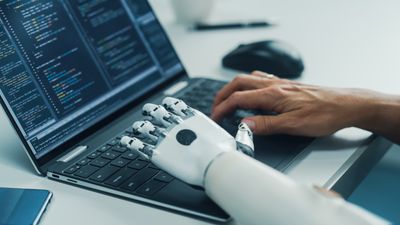
Detecting Fraud Using Emerging Technology: Innovating Beyond Traditional Controls
Fraud and financial crime are evolving at a pace that challenges even the most established detection systems. From cyber-enabled schemes and complex financial misappropriations to subtle internal manipulations, traditional audit and compliance methods are often too slow or too narrow to keep up. In a world where billions of data points can hide a single irregularity, the investigative advantage now lies in speed, intelligence, and technological adaptability. J.S. Held’s Ken Feinstein recently authored an article exploring how artificial intelligence, machine learning, and advanced data analytics tools are transforming how organizations uncover and prevent fraud. In his piece, “Detecting Fraud Using Emerging Technology: Don’t Be Afraid to Innovate,” Feinstein illustrates how the integration of digital investigation techniques — from automation to predictive analytics — is reshaping the fraud-detection landscape, helping companies not just react to wrongdoing but anticipate and deter it. Ken Feinstein specializes in investigative data analytics and has over 25 years of experience. He provides data analytics solutions spanning multiple sectors, including retail and consumer products, life sciences, technology, financial services, and industrial products. His clients include law firms and Fortune 500 legal and compliance teams for whom he delivers large-scale, complex investigations, regulatory response matters, proactive anti‐fraud efforts, and compliance programs. View his profile here Why This Matters As fraudsters exploit digital tools and globalized networks, detection efforts must evolve in kind. Regulators expect faster, data-driven investigations, and boards demand real-time risk visibility. Those who innovate with AI-enabled detection and forensic analytics are better positioned to protect assets, reputation, and shareholder trust. Looking to know more? Connect with Ken Feinstein today by clicking on his icon below.



Black Friday 2025: Earlier, Bigger and More Digital Than Ever
Black Friday is no longer just a day – it’s becoming an entire season. In 2025, shoppers are starting earlier, spending more and relying heavily on technology to find the best deals. With online shopping now the dominant force, an estimated 71% of consumers plan to browse and buy from their screens rather than stand in long lines. Baylor University consumer behavior expert James A. Roberts, Ph.D., said this year’s sales stretch well beyond Thanksgiving weekend. Top 5 Black Friday Trends from Dr. James A. Roberts Retailers have pushed promotions into early November – and in some cases, late October – creating what many now call “Black November.” And for the true procrastinators, “Desperate in December” is the new reality, with next-day delivery extending holiday shopping right up to the last minute. Even as shoppers plan to spend up to 10% more, they’re extremely price sensitive, Roberts said. Inflation, rising living costs and ongoing economic uncertainty – including concerns over tariffs – are prompting consumers to hunt for deeper discounts and compare prices more closely than ever. That caution is also fueling another trend: increased use of buy-now-pay-later plans. While convenient, Roberts urges shoppers to approach them carefully to avoid overspending. Technology also is accelerating the shift. AI tools and retail chatbots are helping customers track deals and make purchases, while influencers and social media ads continue to shape buying habits. Cost-conscious platforms like Temu and Shein are poised for another strong season. Clothing, electronics and home goods remain top categories, Roberts said, with gift cards still the go-to for last-minute buyers. Walmart, Target and Kohl’s are expected to be the most popular in-store destinations, while Amazon – unsurprisingly – continues to dominate Cyber Monday. Overall spending remains robust. Shoppers are expected to spend roughly $20 billion across online and in-store purchases, split almost evenly between the two. The best bargains will be toys discounted about 25 percent, phones and computers discounted around 30 percent and TVs discounted an average of 23 percent. The typical shopper will spend about $650 this holiday weekend. How to navigate the shopping frenzy Roberts offers some simple advice for navigating the frenzy: Set a budget, stick to it, choose thoughtful gifts and keep the season in perspective. After all, the most meaningful gifts are the ones that show how well you know the people you love. ABOUT JAMES A. ROBERTS, PH.D. James A. Roberts, Ph.D., is The Ben H. Williams Professor of Marketing at Baylor University’s Hankamer School of Business. A noted consumer behavior expert, he is among the Top 2% Most-Cited Researchers in a database compiled by Stanford University. In addition to journal citations, Roberts has often been called upon by national media outlets for his consumer expertise and latest research. He has appeared on the CBS Early Show, ABC World News Tonight, ABC Good Morning America, NBC’s TODAY Show and NPR’s Morning Edition, as well as in articles in The New York Times, USA TODAY, The Wall Street Journal, TIME and many others. Roberts’ research has focused on how individual consumer attitudes and behavior impact personal and collective well-being, including investigating the factors that drive ecologically and socially conscious consumer behavior, the impact of materialism and compulsive buying on well-being and the effect of smartphone and social media use on personal well-being. He is the author of “Shiny Objects: Why We Spend Money We Don’t Have in Search of Happiness We Can’t Buy” and “Too Much of a Good Thing: Are You Addicted to Your Smartphone?”



12 Days of Holiday Experts - Goizueta Business School Sources for the Season
It's that time of the year again! And as Americans get ready for another journey into the festive season, there are always opportunities for stories to be told about shopping, travelling, buying, returning, and making sure you don't get ripped off or scammed during all the hustle and bustle, Here's a stocking full of topics and expert sources who are here to help with your coverage this holiday! Gifts, Giving, and all the Costs That Come With It Economics of the Holiday Season A successful Q4 makes the difference between annual profitability and loss for many businesses. Professor Tom Smith is available to discuss seasonal hiring, retail expectations, the impact of tariffs, and the importance of the holiday season to retailers. View his profile here Black Friday & Using AI to find the Perfect Gift Professor Doug Bowman expects to see more Shoppers (esp. Gen Z) experimenting with GenAI for personalization, inspiration, product discovery, summarizing reviews, generating lists, and finding deals. Results may be mixed, depending on the data the AI was trained on. He also expects more purposeful and complex shopping, with fewer impulse purchases and more searching (both online and in brick-and-mortar stores), due to lower inventory levels/assortments at some retailers. View his profile here Food and Travel Pricing Professor Saloni Firasta Vastani can discuss the cost of this year’s holiday dinners. What’s gone up and what’s gone down? She can also discuss the cost of travel this holiday season and offer tips on how consumers can secure a better deal. View her profile here Avoiding Holiday Overspend Professor Usha Rackliffe can discuss how holiday shopping can expose consumers to credit products, such as store credit cards, that offer various incentives and often result in overspending. She can discuss the pros and cons of the buy now, pay later offers and how interest rates will play into this year’s holiday shopping and spending. View her profile here Gift Giving Professor Ira Bedzow says there are three ways gift-giving can promote both personal growth and professional development. View his profile here Gifts Express Relationship, Not Reciprocity. Contracts and transactions are about keeping score—I give, you give back. Gifts are about connection. A thoughtful gift doesn’t close a deal; it opens a door. Personally, it reframes love and friendship as ongoing commitments rather than conditional exchanges. Professionally, treating interactions as opportunities to build trust creates loyalty, sparks creativity, and builds a culture no contract can guarantee. The Art of Perspective-Taking in Choosing Gifts: The best gifts come from stepping outside yourself and asking: What would this person really want? This act of empathy is a skill worth practicing. Personally, it pulls us beyond ego; professionally, it sharpens our ability to anticipate needs, see through others’ eyes, and make decisions aligned with their values—a foundation for real leadership. Gifts as Lessons in Friendship and Human Connection: True friendship isn’t built on ideology, convenience, or self-interest. It’s rooted in caring for someone simply for who they are. Gift-giving is a rehearsal for that kind of connection. Personally, it reminds us that what we truly want typically comes through relationships, not rivalry. Professionally, it shows that lasting success rests less on shared advantage and more on genuine respect and human connection. Shopping for Sustainability Consumers are increasingly seeking eco-friendly products, and brands that emphasize sustainability are likely to see higher sales. Nearly 69% of shoppers prefer to buy from companies committed to ethical practices, such as those that use carbon-neutral shipping and offer recyclable packaging. Professor Dionne Nickerson focuses on how companies can integrate sustainability in their products and why it matters to consumers. View her profile here Pressure Purchasing As the days inch closer to the holidays, shoppers feel the pressure to find a gift. Professor Max Gaerth can discuss how stress, scarcity, and time pressure shape purchasing decisions. View his profile here Online Shopping and Influencing AI Changing How We Shop Professor David Schweidel examines how new AI tools are transforming the shopping experience and the ways brands utilize AI to engage with prospective customers and personalize product recommendations. He can also discuss OpenAI’s Atlas and how it puts ChatGPT directly into your browser. View his profile here Influencers Influencing Our Purchases How are creators impacting the economy, and are influencers impacting our purchasing decisions? Professor Marina Cooley looks at the creator economy and how TikTok and Instagram are impacting our holiday wish lists, and what it takes for a product to go from unknown to trending. She can also discuss TikTok Shop (something Instagram has struggled to execute). View her profile here How to Attract Customers to the Store this Holiday: Shopping looks different, and it is up to retailers to stand out not just in the brick-and-mortar world but also online. The success of a business can balance on the customer experience. Professor Reshma Shah can discuss the policies that brick-and-mortar retailers need to have in place to successfully merge online shopping and the in-person shopping experience. View her profile here Holiday Scams Tis The Season for Scams Bad actors are using AI to scam consumers. From phone calls to emails, Professor Tucker Balch can tell us how to spot a scam and what we can do to protect ourselves. View his profile here Holiday Returns Product Returns Professor Doug Bowman can discuss the retail strategy and the impact of holiday gift returns, comparing online returns to those in brick-and-mortar stores. View his profile here He can also weigh in on: Why are returns so expensive for retailers? Online returns vs. brick and mortar returns Predicting online returns - helping retailers understand how likely it is that a product will be returned. As well: Are retailers still offering free returns? What’s this costing them? Is this likely to continue? What will they do differently? If you’re a journalist covering the holiday season, our experts can help shape your story. Use the “Connect” button on any expert’s profile to send an inquiry — all inquiries are monitored by our media team to ensure a quick, timely response.


RPI Hosts Launch Event for New Center for Smart Convergent Manufacturing Systems
Rensselaer Polytechnic Institute (RPI) officially cut the ribbon on its new Center for Smart Convergent Manufacturing Systems (CSCMS) during an all-day launch event on October 23, 2025. A New York State Center for Advanced Technology, CSCMS will redefine the very nature of manufacturing by combining robotics, artificial intelligence, advanced processing, and human ingenuity to create systems that think, adapt, and evolve alongside human operators. “Today we mark the official opening of a center with a bold vision: a future where manufacturing systems are not simply automated, but truly intelligent,” said RPI President Martin A. Schmidt ’81 during the ribbon cutting. CSCMS will bring a wealth of opportunities not only to RPI, but across New York State. The new center will serve as a catalyst for economic growth, empowering innovators, driving new technologies, and strengthening the competitiveness of manufacturers. At RPI, students will gain hands-on experience in labs, real-world projects, and entrepreneurial pathways. Faculty and industry partners will gain the resources to translate cutting-edge research into commercial solutions. “Through simulation, prototyping, and translational research, our faculty and students will work side by side with industry and government to accelerate the development and deployment of smart manufacturing solutions,” said President Schmidt. “This is the RPI model at its very best: turning ideas into impact.” The launch event for CSCMS took place on RPI’s campus and featured keynote remarks, a ribbon cutting, industry panel, poster sessions, lab tours, and demonstrations of robotic manufacturing, human-machine collaboration, smart manufacturing testbeds, intelligent production systems, and data visualization spaces. Industry panel speakers included executives from FuzeHub, Ross Precision Manufacturing, GE Aerospace Research, and The Boeing Company. Interactive student poster sessions covered topics such as robotics, AI, advanced manufacturing, and New York’s future at the convergence of these topics. “The launch of CSCMS comes at a pivotal time for manufacturing,” said Johnson Samuel, Ph.D., director of CSCMS. “Across industries, we are seeing the convergence of AI, robotics, and data-driven design transforming how products are made. RPI’s long-standing strengths in engineering, computing, and innovation make it the perfect home for this next-generation center.” “The energy and collaboration we saw during this event are a reflection of the momentum behind the entire CSCMS initiative,” said Sandipan Mishra, Ph.D., associate director of CSCMS. “This launch is the start of a sustained effort to shape the future of intelligent manufacturing in New York and beyond.” "It's exciting that as students, we get to work with these cutting-edge technologies up close and be a part of something that’s pushing manufacturing forward,” said RPI graduate student Ammar Barbee ‘25, who recently completed his bachelor’s degree in mechanical engineering at RPI. “Perusing this kind of research and having access to such advanced equipment enables unique experiences that will really help accelerate our careers.” With the launch of CSCMS, RPI continues to advance its legacy of innovation and partnership, bringing together academia, industry, and government to drive progress in intelligent manufacturing and strengthen New York’s position as a hub for technological excellence.


Do the math: We’re awake roughly 16 hours a day. We spend 10 of those hours staring at screens – phones, tablets, computers, TV, gaming devices. That’s 63% of our waking life. The first platform dedicated entirely to digital balance launching today reveals something even more startling: It's not that we lack willpower to change our behavior. It's that we lack confidence. New proprietary research from Offline.now shows that 8 in 10 people are ready to change their relationship with technology, but more than half are so overwhelmed with their digital habits, they don’t know where to start. “If you don’t learn how to manage the screens in your life, they will manage you,” says Eli Singer, Founder of Offline.now and author of Offline.now: A Practical Guide to Healthy Digital Balance. “When people tell us they feel overwhelmed, it’s not laziness. It’s a crisis of confidence. And confidence is something that can be built.” Digital Wellness Experts Address the Struggles No One Else Will These insights come from digital wellness experts in the Offline.now Digital Wellness Directory – a growing community of licensed professionals across North America specializing in ADHD, relationships, family dynamics, high-achievers, and sustainable behavior change. They’re not offering generic advice. They’re addressing specific digital struggles that define contemporary life. Psychotherapist Harshi Sritharan, who specializes in modern anxiety and ADHD, explains: “The biggest mistake people make is reaching for their phone or turning on their computer first thing in the morning. It injects your dopamine full of uncertainty. You’ve essentially told your brain the most important thing you have to do today is put out fires. I tell clients to delay that first scroll as long as possible and never hit ‘snooze’. You’re fragmenting your REM sleep and making yourself more exhausted. These aren’t willpower issues; they’re about understanding how blue light disrupts your circadian rhythm, especially for those with ADHD who already struggle with sleep regulation.” According to Sritharan, the breakthrough happens when people understand the dopamine cycles driving their dependence and “reframe how they connect with all their screens, whether it’s their phone, gaming console, or streaming TV.” High Achievers Can’t Unplug. The ‘Always-On’ Trap is Killing Productivity, Not Boosting It “A lot of high performers think they need better time management,” says Executive Function Coach, Craig Selinger. “But what they actually need are boundaries. They’ve built empires by being available 24/7, and their phones have become permission slips to say yes to everything.” The difference between old and new technology matters,” he explains. “Back in the day with TV, there was a clear demarcation of beginning and end, right? The episode ends and you move on. Now it’s like Minecraft or TikTok – there’s no ending. And mobility makes it sticky, because you’re physically carrying the drug with you, versus a TV that stayed in one room.” The breakthrough happens when they realize being unavailable on purpose isn’t a weakness. “Things like turning off notifications during deep work, or setting ‘do not disturb’ windows? Those aren’t luxuries. They’re the competitive advantages they’ve been missing.” Digital Dependency as a Third Party in a Relationship Licensed Marriage and Family Therapist Gaea Woods says digital devices are killing interpersonal relationships, not because tech is evil, but because “we use it unconsciously at the moments when connection matters most. When you’re scrolling at dinner, you’re telling your partner ‘my phone is more interesting and important than you’.” The breakthrough happens when couples set explicit agreements: response times, when devices go off-limits – and even what’s it’s OK with AI companions. “We’ve exited the era of meaningful communication without realizing it, and now we must deliberately rebuild it. Nature isn’t ‘Nice to Have’. It’s the Antidote to Screen Fatigue No One is Talking About After running a tech-free camp for 25 years, Personal Development Coach Mark Diamond says he’s seen what happens when kids get genuine face-to-face time interaction outdoors. “Their brains reset. The beauty and physical activity provide perspective that screens can never replicate. Digital dependency has eroded our ability to develop real human connections across all ages, not just teenagers. Screens should not replace the moments that define our wellbeing.” Why This Matters Now The stakes extend beyond personal frustration. Unchecked screen dependency is linked to rising rates of anxiety, deteriorating sleep quality, relationship breakdown, and what mental health experts call “continuous partial attention”, a state where we’re always connected, but never fully present. The Data Reveals When Change is Possible Beyond the confidence divide, Offline.now’s research uncovers the precise moments when users are most open to shifting their digital habits: Evenings from 6 pm-11:59 pm emerge as the “Go Time” window. 40% of self-assessment responders peak readiness to act. Sunday is “Reset Day, when 43% want to set boundaries for the week ahead. Saturdays offer natural opportunities for self-compassion and rest. Afternoons become the “Overwhelm Window”, with 57% feeling consumed by their screens. Critically, Fridays – despite having the highest overwhelm factor – are the worst time for interventions. Users are depleted and change rarely sticks. The Framework That Powers the Platform At the platform’s core is the Offline.now Matrix, a behavioral framework that maps the confidence and motivation levels of users to reveal their starting point: Overwhelmed, Ready, Stuck, or Unconcerned. Based on Singer’s book, Offline.now: A Practical Guide to Healthy Digital Balance, the approach replaces willpower-based advice with microlearning strategies – each taking 20 minutes or less – that track emotional triggers rather than just screen time totals. It offers 100 real-world alternatives to scrolling, from reorganizing a drawer to visiting a thrift shop, and reframes slip-ups as data, not disasters. “The books shows that lasting change doesn’t require deleting Instagram or TikTok tomorrow,” says Singer. “You need to win one personal victory today, and then another tomorrow. That’s how confidence rebuilds.” Propelled by University of Toronto’s Innovation Ecosystem Offline.now is a University of Toronto-affiliated startup, leveraging one of the world’s most powerful innovation networks. U of T is ranked among the top five university-managed business incubators globally and has helped create more than 1,500 venture-backed companies and secured more than CAD$14 billion in investment over the past decade. How Offline.now Works For individuals and families: Take the free self-assessment quiz using the Offline.now Matrix to map your motivation and confidence levels in under three minutes. Receive instant access to practical strategies, curated resources, and a searchable directory of digital wellness experts organized by specialty, location, and insurance coverage. For digital wellness professionals: Join a growing community of licensed mental health practitioners, certified behaviorial coaches, and registered social workers by creating your profile at Offline.now. The platform provides new client leads, professional development opportunities, and visibility in a rapidly expanding market. About Offline.now Offline.now is the first global platform dedicated entirely to achieving digital balance. Founder and author Eli Singer built one of North America’s first social media agencies before seeing technology shift from community-building to attention-harvesting. As a parent, he experienced firsthand the struggle to maintain digital balance. The platform combines proprietary behavioral research, expert guidance and counselling from licensed professionals, and science-backed strategies to help individuals and families build healthier relationships with their screens. Visit Offline.now at https://offline.now Expert Interview Availability Offline.now can arrange interviews with: Eli Singer, Founder – Vision for digital wellness; behavioral data insights Harshi Sritharan, Psychotherapist – Dopamine cycles, ADHD, anxiety and intentional tech use Craig Selinger, Executive Function Coach – Digital distraction in high achievers, family dynamics, ADHD Mark Diamond, Personal Development Coach – Outdoor wellness, sustainable behavior change, happiness, connection Gaea Woods, Licensed Marriage and Family Therapist – Communication, digital third-party relationships, phubbing Additional Resources Free self-assessment quiz - The Offline.now Matrix: https://offline.now/quiz Expert directory and booking: https://offline.now/experts/ Join the directory: https://offline.now/join/ Order Offline.now: A Practical Guide to Healthy Digital Balance: https://offline.now/book/






Acing AI interviews: Career expert on strategies for job seekers
AI-conducted interviews are becoming a standard step in the hiring process, but many job seekers still aren’t sure how to handle them. University of Delaware career expert Jill Gugino Panté says candidates should treat these algorithm-driven interviews with the same seriousness as traditional ones and details how this can be done. Panté, director of UD’s Lerner College Career Services Center, can discuss what today’s AI interview platforms really measure – from confidence and tone to eye contact and facial expressions – and how job seekers can stand out. She can also explain what recruiters are looking for in the AI-generated summaries that often determine who moves to the next round. Panté’s expert tips include: • Check equipment to make sure everything is working and the software is updated; turn off all notifications to avoid distractions and set up the space with good lighting, a neutral background. • Smile and maintain your energy, as some AI software will assess your tone and engagement. • Prepare as you would for any other interview - review the job description, research the organization, use the STAR method (Situation, Task, Action, Result) when providing examples. • Be sure to look at the camera and not the screen. It might feel awkward but that’s technically where the "eye contact" will be. • Some platforms will allow you to review your recording before submitting. Use this opportunity to take notes about your body language, pacing and clarity. To contact Panté directly and arrange an interview, visit her profile and click on the connect button. Interested journalists can also send an email to MediaRelations@udel.edu.


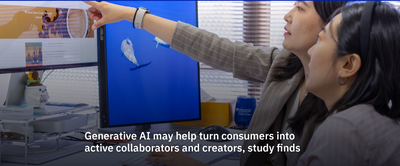
Generative AI may help turn consumers into active collaborators and creators, study finds
In the advertising world, generative AI is transforming the way brands connect with consumers, turning audiences from passive viewers into active creators who can shape and personalize campaign content. A recent study in the International Journal of Advertising, conducted by researchers at the University of Florida’s College of Journalism and Communications, determined that by letting people use AI tools to create images that fit a brand’s style, companies can invite customers to take part in their campaigns. This hands-on approach makes consumers feel more empowered, which can lead to more positive feelings about the brand and a higher likelihood of buying its products. “I came across the Coca-Cola and Heinz campaigns and was amazed by how AI can be used to transform and empower consumers,” said Yang Feng, Ph.D., an associate professor in artificial intelligence in the UF Department of Advertising, who co-conducted the study with assistant professor Yuan Sun, Ph.D. “This inspired me to reach out to Yuan to explore a potential collaboration.” The project began in 2023 following the success of Coca-Cola’s “Create Real Magic” campaign and Heinz’s “AI Ketchup” campaign, both of which allowed customers to engage directly with the brands using generative AI. To test the effectiveness of these types of campaigns, Feng and Sun set up two surveys. The first was given to participants to evaluate their familiarity with generative AI tools and the ways participants used them. This survey illuminated three areas that users felt were enhanced by generative AI: collaboration, creation and communication, which Feng and Sun refer to as the 3C framework. For the second survey, Feng and Sun mocked up a website for Harbor Haven Coffee, a fictional coffee brand committed to sustainability and ethical coffee bean sourcing. “We wanted a company that resonated with as many people as possible,” Sun said. “One of the other goals of the first survey was to find what participants cared about most, which is how we came up with the brand’s eco-friendly mission.” Along with the company’s description and mission statement, a generative AI tool was added to the homepage, encouraging participants to utilize it to produce images using prompts that fell within the brand’s guidelines. While participants were free to put whatever they wanted into the prompt box, each participant got back the same pre-generated image in order to reduce confounding factors. Participants were then asked a final round of questions to get a sense of how participating in this campaign made them feel. Findings from the surveys showed that incorporating generative AI into advertising campaigns increased the chances of turning potential customers into empowered consumers, or individuals who actively participate in brand development rather than passively receive ad content. Feng and Sun found that the reasons behind this empowerment were tied to their 3C framework. First, the collaborative nature of these campaigns fosters a sense of agency in the advertising process. Second, the reciprocal nature of human-generative AI communications boosts consumer confidence by making people feel more in control. Finally, directly engaging consumers and facilitating their creativity through AI builds stronger consumer relationships and reinforces positive brand associations. “This sense of empowerment can be further strengthened with a user interface that facilitates seamless human-generative AI interaction, which is my specialty,” Sun said. “It should prioritize user-friendly features, clear instructions for prompting GenAI and intuitive navigation to enhance the user experience.” However, among the benefits, the researchers also found a potential downside that could limit the success of these kinds of campaigns in the future. “Once AI’s creation capacity surpasses a certain point, consumers may start to feel overwhelmed and no longer view the output as their own creation but rather as the work of the AI, which ultimately diminishes their sense of empowerment,” Feng said. To this end, Feng intends to continue researching the 3C framework. Generative AI could play a big role in advertising going forward, and she hopes to explore its interpretive power in new contexts.



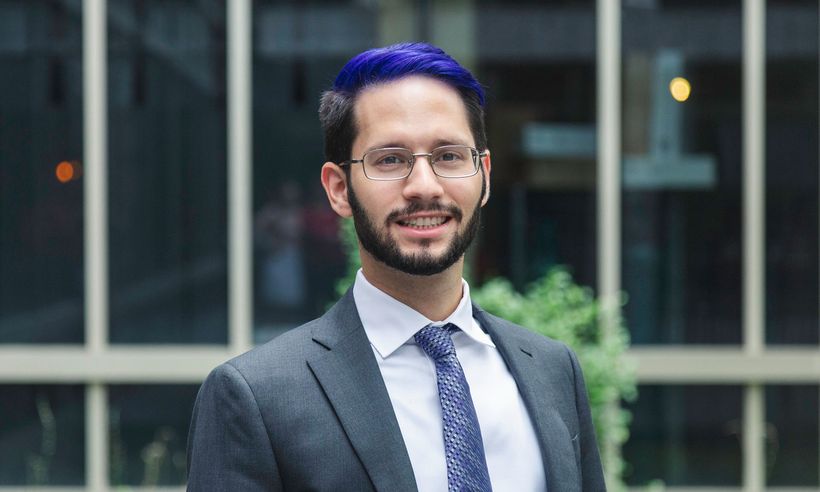
American Nuclear Society names Lane Carasik, Ph.D., as one of its “40 Under 40”
Recognized as an emerging leader in the nuclear science and engineering field, Lane Carasik, Ph.D., assistant professor in the Department of Mechanical and Nuclear Engineering, was recently acknowledged by the American Nuclear Society as one of its top “40 Under 40.” “It is a huge honor to receive this acknowledgement from my professional community,” said Carasik. “I feel it is a reflection of the amazing nuclear engineering activities I’ve gotten the opportunity to pursue before and during my time at the VCU College of Engineering.” The list, featured in the most recent issue of Nuclear News magazine, celebrates young professionals who are driving innovation and shaping the future of nuclear science and technology. Created to spotlight a new generation of nuclear professionals, the “40 Under 40” program highlights those who are advancing technical fields, from advanced reactor deployment to AI applications and national security, while actively engaging the public, mentoring peers and advocating for nuclear’s role to achieve energy independence and security. “Dr. Carasik’s research efforts, together with his support for students and their own research goals, exemplifies the best qualities of the VCU College of Engineering,” said Arvind Agarwal, Ph.D., chair of the Department of Mechanical and Nuclear Engineering, “integrating research and teaching at the core of everything he does, from classroom and lab work to community outreach.” Carasik was selected for the “40 Under 40” from hundreds of candidates across the United States. Mentoring his first three Ph.D. graduates, Arturo Cabral, Connor Donlan and James Vulcanoff, is one of Carasik’s proudest achievements. He was also honored by the American Society of Mechanical Engineers (ASME) as a rising star in mechanical engineering in 2024 This builds off Carasik receiving the highly competitive and prestigious Department of Energy (DOE) Early Career Research Award ($875k split over five years) in 2023 to support his work on molten salt based fusion energy systems similar to Commonwealth Fusion Systems’ ARC technology. Carasik’s Fluids in Advanced Systems and Technology (FAST) research group, is a computational and experimental thermal hydraulics group focused on enabling the development of advanced energy systems and critical isotope production methods. Legendary physicist Enrico Fermi was an early inspiration to Carasik during his undergraduate studies. Fermi’s expertise mirrored Carasik’s interests, and the physicist’s impact on the field of nuclear engineering was motivating. As an established nuclear engineering faculty member, Carasik seeks to make a lasting impact on the field and the people in it. His ’s long-term goal is earning membership in the National Academies of Sciences, Engineering and Medicine.



The missing AI revolution: Smarter leadership, not smarter machines, says workforce expert
Artificial intelligence has transformed industries, but its most overlooked potential lies in helping leaders themselves think more clearly and decide more effectively, according to Saleem Mistry, Associate Professor of Management at the University of Delaware’s Alfred Lerner College of Business & Economics. Mistry focuses on enabling leaders to be more productive, think clearly and make better decisions. Focusing on the leader, not just the organization Mistry’s work examines how leaders at every level can use AI to enhance productivity and decision-making. While most organizational conversations about AI focus on operational efficiency or customer service, he argues that the true frontier is leadership productivity. “Leadership productivity directly shapes organizational performance. AI can be transformative when it helps leaders think faster, decide better and regain the time they’ve lost to administration.” – Mistry As a professor of management and leadership, Mistry is often asked how AI will change the workplace. Those conversations usually revolve around automating workflows, not empowering leaders. Yet, as he notes, an MIT report found that 95 percent of generative AI pilots are failing — largely due to the absence of clear business use cases. That insight shaped his direction: leadership itself may be the missing use case. Having spent much of his earlier career in high technology, Mistry saw firsthand that innovation succeeds or fails based on how effectively leaders model new tools. Demonstrating practical applications Mistry recently analyzed the 2024-2025 U.S. Office of Inspector General reports on leadership challenges based. He analyzed each leadership challenge using three guiding questions: 1) Do the problems stem from leaders struggling with time, decisions or task management? 2) How might AI help? 3) Where could AI have the greatest impact? The results included: Executive Example (Amtrak): AI could power a real-time RACI dashboard to clarify accountability, track decisions and eliminate bottlenecks. Mid-Level Example (EPA): “Agentic AI” could cross-check allegations against verified data before termination decisions, preventing ethical and legal missteps. Supervisor Example (CISA): AI could scan incentive data for waste and anomalies, saving hours of manual review. Why it matters By automating repetitive, data-heavy tasks, AI gives leaders something they desperately need: time. Time to think strategically, coach teams and make better decisions. Mistry’s findings link AI adoption directly to mental well-being, arguing that improved decision productivity leads to improved organizational health. “Decision productivity is business productivity. Organizations that make faster, fairer and more informed decisions outperform those that don’t.” – Mistry Next steps: Building the framework for responsible AI leadership Mistry’s next milestone is to develop a set of leadership use cases that can be used by business leaders at all levels where AI can deliver the greatest impact. He is also developing frameworks for responsible AI adoption that help leaders determine when and how to deploy these tools ethically — across decision-making, communication, planning and task management. “AI won’t replace leaders,” Mistry concludes, “but leaders who learn to use AI effectively will outperform those who don’t.” ABOUT SALEEM MISTRY Associate Professor of Management Alfred Lerner College of Business & Economics Mistry’s research focuses on the future of work, with a particular emphasis on how individuals navigate workplace transitions. His research explores how people adjust to both minor and major changes in their careers, such as shifts in jobs, responsibilities, teams or entire organizations. A growing area of his expertise is the strategic use of artificial intelligence to enhance productivity for leaders, teams and human resource professionals. His research connects academic insights with practical applications, helping to shape how people and organizations adapt to an evolving professional landscape. Reporters who would like to speak to Mistry can click on his profile.

Multi-university AI research may revolutionize wildfire evacuation
As wildfires grow wilder, the University of Florida and two other universities are developing large language models to make evacuations safer and more efficient. Armed with a nearly $1.2 million National Science Foundation grant, UF, Johns Hopkins University and the University of Utah are creating these AI-based models to simulate human behavior during evacuations – information that will help emergency managers shape more effective evacuation plans. “Strengthening wildfire resilience requires accurate modeling and a deep understanding of collective human behavior during evacuations,” said UF project lead Xilei Zhao, Ph.D., an associate professor with the Engineering School of Sustainable Infrastructure and Environment. “There is a critical need for simulation models that can realistically capture how civilians, incident commanders and public safety officials make protective decisions during wildfires.” Xilei Zhao focuses on developing and applying data and computational science methods to tackle problems in transportation and resilience. View her profile here Existing simulation models face limitations, particularly with reliable predictions under various wildfire scenarios. New AI models can simulate how diverse groups of people behave and interact during the hurried scramble to seek safety. Zhao’s team is developing a convergent AI framework for wildfire evacuation simulations powered by psychological theory-informed large language models. The project will produce simulation methods to promote teaching, training and learning, and support wildfire resilience by allowing public safety officials to use open-access tools. “This research seeks to be a transformative step toward improving the behavioral realism, prediction accuracy and decision-support capability of wildfire evacuation simulation models,” Zhao said. Zhao partnered with John Hopkins professor Susu Xu, Ph.D., and University of Utah professors Thomas Cova, Ph.D., and Frank Drews, Ph.D. The preliminary results of the study were recently presented at the 63rd Annual Meeting of the Association for Computational Linguistics. “In that paper, we started to train the model on the survey data we collected to see how we can accurately predict people's evacuation decisions with LLMs,” Zhao said. Research objectives include extending the Protective Action Decision Model for civilians and public safety officials, developing psychological theory-informed large language model agents for protective modeling and generating a realistic synthetic population as input for the simulation platform. The team also plans to develop learning-based simulations and predict human behavior under scenarios such as fire spread, warning and infrastructure damage. This research comes at a critical time, as the number of wildfires has significantly increased globally. About 43% of the 200 most damaging fires occurred in the last decade leading up to 2023, according to a recent study in Science. The intensity, size and volume of wildfires are threatening more urban areas. “If you go into the urban area, many people do not have cars, or they need additional mobility support,” Zhao said. “For example, the LA fires impacted nursing homes with a lot of elderly people, many of whom are immobile or lack the ability to drive. That's a big problem. This would be very relevant to them.” The large language models will provide important context for evacuation planning as well as real-time decision making. “We envision this tool being used during planning,” Zhao said, “so emergency managers can test different kinds of scenarios to determine how to draw the evacuation zones, where to issue the orders first and how to design the communications messaging.” This is important research and critical as wildfires become more common across North America. If you're a reporter looking to connect and learn more - then let us help. Xilei Zhao is available to speak with media - simply click on her icon now to arrange an interview today.