
Experts Matter. Find Yours.
Connect for media, speaking, professional opportunities & more.

North Korea Rejects South Korea's Call For Talks: How High Will Tensions Escalate?
North Korea has been in the news a lot lately. Saber rattling, political posturing and missile testing by the hermit state have led to escalating tensions between the United States, South Korea and even neighbouring China. Earlier this month, Pyongyang claimed it successfully tested an ICBM, for the first time, of the type that experts believe could reach Alaska. But as the situation looked to boil over, tensions may have had a chance at simmering. Tongilgak - a North Korean building in the Panmunjom compound in the demilitarized zone between the two countries, which has been used for previous negotiations, was suggested by the South Koreans as a destination for talks between North and South Korea aiming to stop 'all hostile activities that raise military tension.' By early Friday morning, all intelligence indicated – that offer was rejected. The two countries that have been bitter enemies since 1950 remain opposed and unwilling to compromise. There’s a lot at stake – safety, the threat of global war and between the two countries, some families are still divided and incapable of meeting after more than half a century. So, is there a chance the two sides can find a diplomatic solution? Is this rejection just another tactic by North Korean leader Kim Jong Un to leverage more from the west in order to speak? Does North Korea have the ability to launch a missile that may reach American soil? There’s a lot more to this new alignment than a simple agreement and that’s where Missouri State University experts can help. Dr. Dennis Hickey is a global studies expert specializing in Asian politics and American foreign policy. He is a go-to source when media agencies require clear perspective and answers regarding this complex situation and region. Dr. Hickey is available for interviews. Click on his icon to contact him. Source:


James Kendrick, Ph.D., associate professor in Baylor's Film and Digital Media department, is a nationally known expert on horror films. He is available to speak to media about the contributions and legacy of legendary director George A. Romero, who died on Sunday. Kendrick said: "Although he will forever be remembered as the chief architect the modern zombie film with his groundbreaking, low-budget black-and-white thriller 'Night of the Living Dead,' George A. Romero’s impact on both the horror genre and filmmaking in general reached much farther than the lumbering undead. He was an artist with a genuine social conscience, dark sense of humor, and clear understanding of how the current zeitgeist can make horror both more unsettling and socially relevant, which was key to the genre’s reinvention in the late 1960s and early ’70s. He was also a pioneer of American independent cinema, creating some of his most important films—including 'Night of the Living Dead,' the offbeat vampire film 'Martin,' and the shopping-mall-set 'Dawn of the Dead' — largely on his own terms outside the Hollywood studio system." Kendrick teaches classes on film theory/aesthetics, the history of motion pictures, media and society, the films of Steven Spielberg, violence in the media, and horror film. His primary research interests are post-Classical Hollywood film history, violence in the media, cult and horror films, media censorship and regulation, the films of Steven Spielberg, action films, and cinema and new technologies. Source:



Baylor Presidential Rhetoric Expert Featured in USA TODAY re: Scalise, GOP shooting
Martin Medhurst, Ph.D., Distinguished Professor of Rhetoric and Communication, is featured in this USA TODAY story regarding the role of rhetoric in the shooting of House Majority Whip Steve Scalise (R-LA) and four others. Medhurst, a renowned expert on presidential rhetoric and political communication, helped put into historic context the role of violent and divisive rhetoric in American history. "You can go back to the election of 1800 between Jefferson and Adams and find a whole lot of quite outrageous statements made on both sides," he told USA TODAY. "The same is true throughout American political history. We had one guy, [Charles] Sumner, who was caned on the floor of the Senate and almost killed. We have a long history of violence in this country, both rhetorical and otherwise." "I think what has changed in the 21st century is the nature of the different media of communication and especially the rise of social media, where people apparently believe that they can pretty much say anything," he said. Source:

A Party Divided - Will Infighting Lead to a Government Shutdown in Washington Friday?
President Donald Trump will celebrate 100 days in office Saturday. But one day shy of that milestone, he may see Washington and the rest of America’s government grind to a halt. But with Republicans controlling Congress, the Senate and the Presidency – a standoff of this nature seems almost impossible. There is almost guaranteed to be negative consequences publicly and financially – and to follow it through just doesn’t make any political sense. So why? Is it President Trump’s demand for a funded wall that he promised to be built along the Mexican border? Are there left-over aspects to the Affordable Care Act that have some members of the GOP divided? Other issues that have the GOP at a boiling point? Or, is there a way out so each side can make a point but save face in the end? Politics is seldom simple and almost always confusing. That’s where the experts from Augusta University can help. Dr. William Hatcher is the director of the Master of Public Administration program and an associate professor of political science. He is an expert in politics, policy and the relationships between different levels of government. Dr. Craig Albert is an assistant professor of political science and an expert in American politics and political philosophy. Both are excellent speakers, have experience with all forms of national and local news organizations and are available to speak to media regarding this latest development in Washington. Click on Dr. Hatcher or Dr. Albert's icon to arrange an interview. Source:


As tension mounts between North Korea and America, it seems like China has become an unlikely ally of U.S. President Donald Trump. On Wednesday, President Trump spoke with Chinese President Xi Jinping about the issue. President Xi said China is willing to help the U.S. end North Korea’s nuke program. Trump has referenced the trade advantages China holds over North Korea and how working together, they may be able to rein in the rogue nation and its leader, President Kim Jong Un, who has threatened to use the country’s nuclear arsenal against any American advances. But is this new friendship or even partnership a reality? What will it mean in the long and short term? Will there be political and economic costs or even benefits with better U.S.-China relations? Or will America have to give something to get something? There’s a lot more to this new alignment than a simple agreement and that’s where Missouri State University experts can help. Dr. Dennis Hickey is a global studies expert specializing in Asian politics and American foreign policy. He is a go-to source when media agencies require clear perspective and answers regarding the complexity of Chinese politics and government. Dr. Hickey is available to speak regarding this increasingly escalating and important international issue. Click on his icon to arrange an interview. Source:

Payday loan rollovers do not harm some borrowers’ financial welfare
Research by a Kennesaw State University professor has found that there is a potentially limited adverse relationship between repeated refinancing and credit scores for those at the lowest end of the credit spectrum, casting doubt on the claims of payday loan critics that extended refinancing of these loans is universally harmful to consumers' financial welfare. Jennifer Priestley, a professor of applied statistics and data science and author of the 2014 study, says that "payday loans may not only fail to harm borrowers, but may actually contribute to an improvement in borrower welfare for some customers on the lower end of the credit continuum." Source:


Expect more terrorist attacks in Russia, political expert says
A deadly subway explosion in St. Petersburg, Russia, Monday morning has been declared a terrorist attack, and we can expect more of these kinds of incidents and threats, according to Augusta University political scientist Dr. Craig Albert. As a leading scholar in American politics and foreign affairs, Albert’s research focuses on Islamic extremism, Chechnya and the rise of ISIS. “As more Russians return from Syria fighting for ISIS, and as the Caucasus region remains in strife, especially Chechnya and Dagestan, we can expect more and larger terrorist attacks inside Russia's major cities,” Albert said. Albert teaches courses on war and terrorism, American politics and political philosophy; he also directs the Model United Nations Program. Albert is a political contributor to The Augusta Chronicle and he’s appeared on national media broadcasts, including a live interview with Megyn Kelly for Fox News Channel on the Boston Marathon bombing. He has also testified before the U.S. Congress on Islamic Extremism. Albert is available for Skype, email and phone interviews. Source:

Ten Types of Food Can Make or Break Your Health
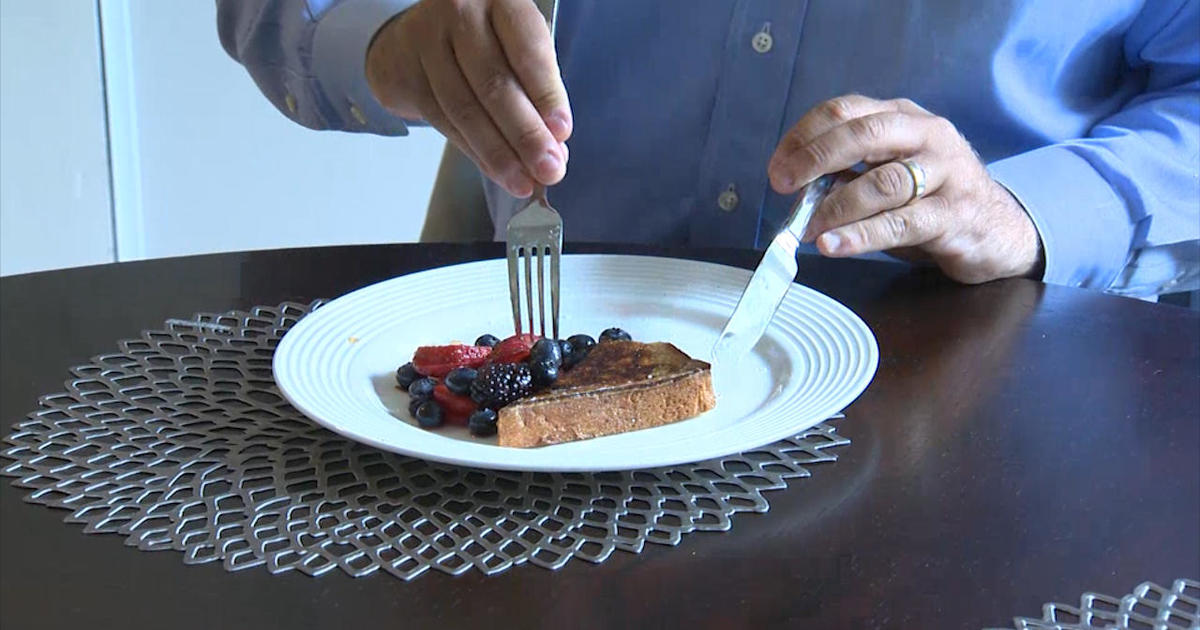
According to a new study published in the Journal of the American Medical Association, eating the right amount of certain types of food can help to reduce deaths from heart disease, stroke and type 2 diabetes in the U.S. by almost half. The researchers at Tufts Friedman School of Nutrition Science and Policy identified 10 dietary components closely tied to heart disease, stroke and type 2 diabetes - six of them (nuts and seeds, seafood rich in omega-3 fatty acids, fruits, vegetables, whole grains and polyunsaturated fats like soybean or corn oils) will help your health, while four of them (sodium, processed meats, sugar-sweetened beverages and red meat like steak) will hurt it. So how much of the good stuff should we eat more of? And how much of the bad stuff should we cut out? How should we alter our dietary habits to ensure we lower our risks of heart disease, stroke and type 2 diabetes? Natalie Allen, clinical instructor of dietetics in the biomedical sciences department at Missouri State University, can provide some insight. Allen has a background in clinical, community and sports dietetics, and is the team dietitian for MSU Athletics. She is an expert in this area and is available to speak to media. Click on her icon to arrange an interview. Source:
How to keep your heart healthy throughout life
As we age, heart health becomes a greater issue. Whether it’s due to a lax approach to dieting or a more sedentary lifestyle, the heart begins to work harder to continue basic functions. “One of the major concerns I see for women in mid-life and beyond is concern related to the heart,” said Dr. Barbara Bushman, professor of kinesiology at Missouri State University. “Heart disease is the number one killer of women, and unfortunately, 44 percent of women do not realize this.” During American Heart Month, Bushman hopes to give women tips for staying active, healthy and agile throughout the life cycle. Bushman is an expert in the area of women’s health – especially older women – and is the editor and contributing author of the American College of Sports Medicine’s “Complete Guide to Fitness and Health” (the second edition will be available in late February 2017). Source:

Since Jan. 20, 2017, America has seen a new style of leadership and authority under President Donald Trump. Trade agreements that were already in place are now under renegotiation, and even agreements like the Trans Pacific Partnership that were expected to be scrutinized by Congress have all but been abandoned. On the international stage, even long held reservations and hesitations to comment on sensitive topics like Taiwan and the ‘One China’ policy seem to be off the table when brought up in public conversation. So, what will this mean for the short- and long- term relationships between the world’s two most powerful countries? Can we expect conflict, military posturing, trade wars and currency battles? Or will the two sides have to simply ‘re-learn’ how to negotiate and cooperate in the new Trump era? But a new person in charge isn’t just an American issue. China too may see a change in leadership at its highest levels this fall. That is a factor that has many watching and wondering about that country’s future direction. For America’s economy, and the global economy – there is much at stake and many world leaders are watching. A recent discussion at the Brookings Institution explored the expectations for China’s leadership change and the prospects for U.S.-China relations in the interim. Dr. Dennis Hickey is a global studies expert specializing in Asian politics and American foreign policy at Missouri State University. His extensive experience and perspective have made him one of the leading opinions on this topic. Simply click of Dr. Hickey’s icon to arrange an interview. Source: