
Experts Matter. Find Yours.
Connect for media, speaking, professional opportunities & more.
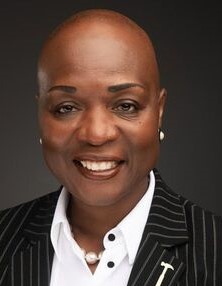
Georgia Southern University has been awarded a $1.6 million grant to help provide childcare subsidies for eligible student-parents over the next four years through the Child Care Access Means Parents In School (CCAMPIS) program. Written on behalf of the Office of Inclusive Excellence by Corine Ackerson-Jones, director of TRIO Student Support Services (SSS) on the Armstrong Campus in Savannah, the CCAMPIS grant will serve no less than 30 student-parents per year on the Armstrong Campus and the Liberty Campus in Hinesville by providing a maximum amount of $150 per week for childcare services to be paid directly to the childcare provider. Corine Ackerson-Jones The grant, a first of its kind at Georgia Southern, is fully funded by the Department of Education and will work with centers licensed and accredited through the Georgia Department of Early Care and Learning. To apply for CCAMPIS assistance student-parents must be PELL eligible. “According to recent data, the annual price of childcare can exceed the annual cost of in-state tuition at a public four-year university,” said Ackerson-Jones. “Without financial assistance, it is next to impossible for economically challenged student-parents to attend school and pay for quality, affordable childcare.” Amanda Brandmire, a student-parent studying natural resource and wildlife conservation on the Armstrong Campus, said balancing her role as a parent and a student can be challenging emotionally and financially, especially when it comes to childcare. “There have been several times where my husband and I had to get very creative with our funds to make it because of our childcare costs,” she said. “My husband and I may skip meals or go a week at a time without food because childcare is a necessity for us to work and go to school. In addition, I have to give up study time or time with my kids to go pickup a shift delivering for DoorDash just to get by. Right now we don’t have an income and we are a week behind on childcare expenses, but thankfully our daycare is working with us.” A subsidy for childcare would change the trajectory of Brandmire’s education. “For me this would be an amazing opportunity,” Brandmire said. “I am so close to finishing my undergraduate degree and plan on applying to grad school in March. Being a first-generation college student, my education is extremely important and this would help me make graduation a reality.” Brandmire feels this resource would appeal greatly to other student-parents in the greater Savannah area. “This is also a huge selling point for potential students and moms like me who want something better but can’t get over the childcare hurdle,” Brandmire said. “I appreciate Georgia Southern for taking the time to reach out and serve their non-traditional students.” Ackerson-Jones has worked on the Armstrong Campus for 17 years and assists low-income, first-generation students, and students with disabilities through the TRIO SSS program which is also funded 100% by the Department of Education. Through her role, she saw a need for student-parents like Brandmire and sought ways to make a difference in their educational journeys. “It has been evidenced in the data that the four-year graduation rate for Armstrong and Liberty campus PELL recipients falls below that of non-PELL recipients,” Ackerson-Jones said. “It has been my experience that a great number of these students are not graduating sooner due to financial hardship. They must work more hours, so oftentimes they cannot maintain a full course load. Taking less classes prolongs graduation. It was my goal to find some financial relief for these students because the threat of unaffordable childcare was a threat to them remaining in school. “There has never been a child care facility on either of these campuses nor has there been any access to financial support for student-parents to help pay for child care,” she continued. “The time seemed right to try to rectify this.” The objective of the program is that student-parents will persist from one academic year to the beginning of the next, or that they will earn a bachelor’s degree from Georgia Southern, Ackerson-Jones added. “I am excited about the addition of the CCAMPIS grant to the array of programs that serve underrepresented students, this one serving Pell-eligible students who are also parents, which complements our work in the Inclusive Excellence cluster,” said Dominique A. Quarles, Ph.D., associate vice president for Inclusive Excellence and chief diversity officer at Georgia Southern. “Mrs. Jones went beyond what’s required of her to respond to a need she saw on campus, which resulted in securing $1.6 million in grant funds to serve students in a way that will have a real and immediate impact on their ability to enroll and complete their degree at Georgia Southern.” The grant will be disbursed at $401,128.00 a year for four years for a total of $1,604,512. More information on student eligibility and the application process will be available soon. To learn more, contact the Office of Inclusive Excellence by emailing oie@georgiasouthern.edu. Interested in learning more or looking to talk with Corine Ackerson-Jones about this program? Contact Georgia Southern's Director of Communications Jennifer Wise at jwise@georgiasouthern.edu to arrange an interview today.


How Diverse Crop Mixes Can Help Solve the Water Scarcity Crisis
How exactly can alternative crop mixes come to our rescue in this water scarcity crisis? Different crops have different water needs in order to grow without stress. And it is often the case that the thirstiest crops are grown in places where little water is available. Shifting crop mixes to crops that require less water but still ensure farmer profits is a promising way to reduce the amount of water needed to irrigate crops and to avoid conditions of water scarcity. Kyle Davis, assistant professor in Geography and Spatial Sciences at the University of Delaware, can offer commentary on this. He is an expert in food systems, sustainability, global environmental change and geospatial data science among other things. Diverse crop mixes can save water, maintain economic output, and provide for the needs of aquatic ecosystems. Davis and others recently released a study that looks at issue. "These findings demonstrate strong opportunities for economic, food security and environmental co-benefits in irrigated agriculture and provide both hope and direction to regions struggling with water scarcity around the world," the study notes. Davis has been featured in publications such as Earth.com and Phys.org and was recently awarded an Early Career Award for pioneering global research in sustainable agricultural food systems. He can be contacted by clicking the "View Profile" button.


Where Will Millennials Take Us?
They’ve been described as entitled, self-centered and shallow. “Selfie-stick wielding, ‘KeepingUp with the Kardashians’-watching, soft-in-the-middle whiners” – Psychology Today. Worldwide, though, millennials (to whom also are attributed awesome characteristics like adaptability and creativity) are 1.8 billion strong, the most populated age group in modern history. And they’re soon to be our political, economic and social leaders. Where will they take us? How will their views shape our world? Jared McDonald’s new book, Citizens of the World, Political Engagement and Policy Attitudes of Millennials Across the Globe, uses data to examine this generation, born into technology, the “war on terror,” global interconnectedness and high unemployment. Published by Barnes & Noble in October 2022, the text looks at millennials’ attitudes about lifestyle, family life, gender roles, politics, religion and the future to better understand how governance might change under their leadership … and the influence they already wield. Millennials are a hot topic ... and for better or worse always in the news it seems as journalists, employers, parents and even professors work to figure this generation out. And if you'd like to know more - that where we can help. Published author and Assistant Professor of Political Science and International Affairs, Jared McDonald is available to speak with media - simply click on his icon now to arrange an interview today.



Expert Insight: Fake News, Fake Reviews: Building Trust with Online Shoppers
Online customer reviews have become a critically important cog in the sales conversion process in recent years. Studies show that 97 percent of consumers read product reviews and ratings, and that positive reviews can almost triple the likelihood of making a purchase. As customers do more and more of their shopping online, they are turning in droves to the likes of Yelp, TripAdvisor, and Google Reviews to seek out opinions, recommendations, and feedback from other users before pushing through the final part of the sales funnel. As a result, these third-party review sites have experienced exponential growth. But there’s a caveat: and it’s trust. The success of Yelp and its competitors is wholly contingent on how trustworthy their users perceive them to be; on the transparency and authenticity of the content published and the sources of that content. In an era of disinformation with fake reviews and AI mass-generated content precipitously on the rise, securing—and keeping—user trust is paramount. The Five Keys to Fighting Fakery Goizueta Business School’s Sandy Jap has some suggestions. Together with colleagues Ben Beck of Brigham Young University’s Marriott School of Business and Stefan Wuyts of Penn State’s Smeal College of Business, Jap, who is the Sarah Beth Brown Professor of Marketing, put together a series of studies to test the kinds of measures and mechanisms that platforms can deploy to win user confidence. And it turns out there’s one tactic that works more effectively than any other: actively monitoring the authenticity of user reviews. That and being open and transparent about doing so. Jap and her colleagues scoured the latest research and data on marketing, governance, and identity disclosure to pinpoint the mechanisms that best mitigate online fakery, while simultaneously building trust among platform users. They identified five. “We worked through the literature and were able to whittle these down to five core practices that are robustly effective at building trust,” says Jap. “They are monitoring, exposure, community building, status endowment and identity disclosure. Doing these five things can signal to your users that you are committed to being a guardian of their trust, so to speak.” Monitoring or evaluating reviews for their authenticity and exposing firms that pay for and propagate fake content are mechanisms directed at the rogue firms that spread fakery and misinformation, explains Jap. Meanwhile community building and status endowment focus on reviewers. Community building is about enabling authentic, transparent interactions between consumers and reviewers. An example of this might be allowing consumers to ask questions and reviewers to respond directly. “Status endowment is where a platform verifies and acknowledges the credibility or helpfulness of a reviewer in some way. Yelp and others use things like badges or reviewer ratings which are earned over time and which make it hard for fake reviewers to game their systems,” says Jap. Identity disclosure is the practice of having reviewers provide personal information—their name, picture, or location, for instance—before they can post content. And while this approach can keep fabrication and false profiles in check, it also raises certain tradeoffs, says Jap. “Anonymity online has long been understood as something of an un-inhibitor—a factor that enables users to speak more freely and openly. It can be democratizing in the sense that it removes or lessens prejudice and bias around things like race, social class, or physical appearance,” she says. “Of course, having people share personal data on your platform can also open up a can of worms around privacy and identity theft which are major considerations; so there’s a balancing act needed with this.” To test the efficacy of all five trust building policies, including identity disclosure, Jap and her colleagues ran a series of experiments and studies. They invited volunteers to rate how the presence or absence of these mechanisms impacted the trustworthiness of a platform. One study saw them parse things like domain authority and traffic across 25 online review sites against how many (or few) of the five mechanisms each deployed. Elsewhere, the team used surveys to assess how users ranked the different mechanisms in terms of platform trust, above and beyond other factors such as the quantity of reviews published say, or the expertise of different reviewers. The Bottom Line: Bust Bogus Reviews After crunching the data, Jap and her co-authors found that while all five trust-building mechanisms were valued and important to platform users, the practice of monitoring for fake reviews and reviewers—and broadcasting the fact clearly—was by far the most effective. “Doing all of these five things—monitoring, exposing, community building, status endowment and ID disclosure—are important if you want to earn and keep the trust of your users,” says Jap. “We found that the more of these mechanisms that platforms incorporate, the better their domain authority, Alexa site ranking, backlinks, and organic site traffic.” Based on our findings, monitoring your content and communicating that you’re doing this is by far the most powerful cue that you are trustworthy. So that’s where we’d say platforms might want to focus their spend. Many of the biggest review platforms have already taken note of these insights. Yelp recently shared a post to its official blog welcoming the finding that of the 25 sites analyzed in Jap’s study, theirs is one of two platforms that actively implement all five mechanisms. “After examining 25 review platforms, the study found that Yelp is one of two platforms that applies all five mechanisms and as the research states, has become a guardian of trust for review information.” Meanwhile, Jap stresses that these findings should be relevant to any business that is focused on “combating online review fakery.” “All businesses today face the challenge of managing their word-of-mouth reputation. Any firm interested in sharing and leveraging points of view around its products or services, be it a small online retail store or an Amazon, is going to want to go the distance—and be seen to do so—in going to war on fakery and disinformation.” Are you a journalist interested in learning more about the importance and trustworthiness of online reviews? Sandy Jap is available to speak with media - simply click on her icon now to arrange an interview today.



Think your city is ready for a cyber-attack? Think again according to our experts
There is no way around it; every day there are new cybersecurity threats to not only individuals, but governments at all levels as well. There have been some high-profile breeches that involve major cities like Atlanta and Baltimore. But those attacks are going to all levels, and recent research has shown most municipalities and cities are ill-prepared for cyberattacks. Research conducted by Donald Norris, PhD, and Laura Mateczun, JD, of the University of Maryland, Baltimore County along with William Hatcher, PhD, Wesley Meares, PhD, and John Heslen, PhD, of Augusta University, found various reasons why local governments struggle with cybersecurity. The research shows local governments recognize the need for cybersecurity but are not taking crucial next steps to ensure cybersecurity by integrating policies into daily management practices. Not just that, some local governments were unaware how often they were under cyberattack. Throw in budgetary constraints, and it leads local governments to be in a tough situation. That, unto itself, is a major sticking point, but the burden could be lessened. “Effective cybersecurity is expensive and too much of a strain on the budgets of many cities and counties,” said Hatcher, chair of the Department of Social Sciences in Pamplin College of Arts, Humanities, and Social Sciences at Augusta University. “This is why we suggest regional solutions to the program, so multiple governments carry the cost.” Meares, associate professor and MPA director in Pamplin College, added it’s not just the financial aspect, but said there’s a shortage of cybersecurity talent nationwide, which compounded with limited budgets, makes it tough to compete. In the quest for talent between private and public sector, usually the private sector can offer more to entice a cybersecurity expert to come work for them. There’s also an issue of many local governments using dated technologies, which may be easier for cyber criminals to attack. “Local government is increasingly being more digitally connected, with vital infrastructure, data and services connected which creates more opportunities for cyber-attacks. Additionally, local governments tend to lag in updating critical technology due to limited resources (both human and financial resources),” added Meares. None of this comes as a surprise in the lack of cybersecurity training. “It’s an expensive service for local governments to provide. This is why we suggest more budgetary support for the training,” said Heslen, assistant professor in Pamplin College. “We’re also unsurprised because local governments often struggle to fund professional training in other areas.” But researchers say there are ways to improve upon safety of critical data most notably adopting dedicated cybersecurity budgets funded at an appropriate level in all local governments. Those resources can help address many limitations in local government cybersecurity programs, from staffing and hardware and software deficiencies to awareness training for all parties in local governments. They also recommend the adoption and implementation of cybersecurity policies to manage and regulate actions taken by all that affect the organization’s cybersecurity. By taking the recommended actions, local governments will have a better chance to provide high levels of cybersecurity and protect their information assets more effectively. This is an important topic and if you are a journalist looking to know more about the importance of being ready and able to react if and when a municipality comes under threat from a cyber-attack - then let us help/. William Hatcher and John Heslen are both available to speak with media - simply contact them now to arrange an interview today.



'Shake it Off' - Do Grammy-Winning Pop Artists Take More Creative Risks Than Their Runners-Up?
Taylor Swift has had a career marked by an evolution in sound and style. Swift emerged into the industry a country star and was later rebranded a pop icon. She’s gone on to explore alternative rock and indie folk sounds. Research by Giacomo Negro, professor of Organization & Management and professor of Sociology (by courtesy), suggests Grammy award wins may be credited as the catalyst for these changes. Swift, who holds 11 Grammy awards, won her first in 2010, taking home Album of the Year for country album “Fearless,” then again for her first exclusively pop album “1989” and again in 2021 for her indie folk album “Folklore.” Each time she earned another Grammy, she tried something new. Swift is not the only one. After winning Album of the Year in 1988 for classic arena rock album “The Joshua Tree,” U2 released “Achtung Baby,” an album that dabbled with kraut rock and electronic music. Similarly, Fleetwood Mac’s “Rumours” won them Album of the Year in 1978, after which, they released their double album “Tusk,” an experimental record that incorporated punk-rock. Does Missing out on a Grammy Win Make Artists Timid? Negro’s research shows Grammy award winners tend to release albums that are more distinct from the work of other artists, whereas Grammy nominees who do not win create music that is more similar to other artists than they had prior to their nomination. Negro co-authored the research with Balázs Kovács from Yale University and Glenn Carroll from Stanford University–a culmination of more than five years of work. Negro says he has always been interested in cultural production, and he set out to study the patterns of differentiation in the music market. He chose the Grammys because these symbolic awards provide a situation similar to a natural experiment that is hard to find in real life or without a controlled environment. The Grammys are also unique because they share the names of both the award winners and the nominees, presenting a comparison among candidates of similar quality. To explore this question, Negro obtained data from four main sources: Grammy Awards Academy, online music database AllMusic, Spotify, and Billboard. From the academy information, he collected data for the Grammy nominated artists and winners from 1959 to 2018 in four “general” categories: Album of the Year, Record of the Year, Song of the Year,and Best New Artist. From AllMusic, they collected data based on the Grammy information that included artist name, recording name, year of release, record labels the artists released the music with, the production team they worked with, and the stylistic tags attached to each recording. Spotify holds a repository of popular songs; from here, they sourced data on the songs’ sonic features, which are the objective parameters of the music that qualify how the music sounds and is measured by algorithms, including tempo, genre, and key. Looking at the Billboard charts for the 2000s, they found the most albums that sold the most copies. “We combined all of this information coming from different sources, which was a challenge and an endeavor by itself, to attach information related to styles, sonic features, performance on the chart, and performance with the awards,” Negro says. They compared albums of Grammy winners with the albums of the nominees, then compared these with albums from a group of artists in the general market matched on a series of characteristics (such as genre and length of recording career). The researchers found that after artists win a Grammy, they become more experimental with their work, whereas the runners-up make music that is stylistically more conventional. This latter result was unexpected. Negro argues that there is value to be seen in the Grammys–even though it may be criticized for being too commercial or questioned for its relevance–because it has an impact on the music market and the careers of artists who are nominated and awarded. “These prizes celebrate creativity and innovation but may have unintended consequences in terms of their artists’ behavior,” he adds. “If more people become more conventional because of not receiving an award, one implication for cultural production is that awards have mixed impact. They benefit winners because they afford them more autonomy and, perhaps, confidence to explore new ideas, but they don’t necessarily benefit innovation in the field overall because more artists are just becoming more conventional.” He offers that, conversely, there may be a positive impact for artists who were not nominated at all. These artists may try to imitate the winners and try different things in the future. From this, it is clear that there is a benefit to mention who wins an award, but he says it is inconclusive whether there is a benefit to sharing the names of shortlisted candidates. What are the Greater Cultural Implications? “It’s interesting to observe how cultural production is sensitive to symbolic awards,” Negro says. “We tend to think that artists mainly follow their muse or their inspiration, but they respond to the stimuli around them.” Negro speculates that the results found in this study might apply to other industries in which producers or artists can combine different elements of styles to create their products, such as book publishing, visual arts, film, or television. He adds, these results may apply more generally to other markets and professional settings, in which employers create programs of rewards for employees. A bestowal of such awards may empower winners to continue with their behaviors, while discouraging those who were not recognized for their efforts, leading them to return to more typical behaviors. Negro is interested in following up this research by looking at the general impact of all Grammy Awards–not just the general ones–to see if specialized awards have a similar impact. He is also curious to investigate the patterns of collaboration between artists, and if stylistic changes are related to changes in the people artists work with. When Business Meets Research, What Can Students Take Away? Negro says this research also yielded findings that his team did not expect, as in the difference between winners and non-winning nominees. Where they thought they may see similarities, they, instead, saw differences, reiterating the importance of questioning how industries operate. To inquisitive students he advises, “Keep your eyes open and be curious about understanding why or how things work the way they do. Then, be persistent because it can take a long time to bring your idea to fruition.” Interested in knowing more or connecting with Giacomo Negro - simply click on his icon now to arrange an interview or time today.


Is too much of a good thing actually a bad thing? That’s what researchers in Georgia Southern’s Biodynamics and Human Performance Center aim to find out through a recent study of 75 ultramarathon runners during the 50th anniversary of the Western States 100-mile Endurance Run (WSER) in California. The study focuses on the benefits of physical activity beyond the typical recommended amount by examining the cardiovascular effects of extreme exercise in the WSER, a 100-mile trail race through the Sierra Nevada mountains that climbs more than 18,000 feet and descends nearly 23,000 feet before runners reach the finish. Drs. Grosicki and Babcock (University of Colorado, Anschutz Medical Campus) work through the night to collect cardiovascular measures on race finishers. “We know that exercise is beneficial for health, and national and international public health agencies, such as The American Heart Association, advise that adults get at least 150 minutes of moderate or 75 minutes of vigorous physical activity per week,” said Gregory Grosicki, Ph.D., associate professor in the Waters College of Health Professions Department of Health Sciences and Kinesiology. “Moreover, there is a dose-response relation between exercise and health, whereby an individual can gain even more health benefits by being active for up to 300 minutes per week,” he continued. “However, it is uncertain whether exercising for greater than 300 minutes will confer any additional health benefits, and importantly, excess exercise may actually detract from cardiovascular health.” It is important to note, Grosiciki said, that this apparent “partial loss of health benefits” from excess exercise is theoretical for the time being. “Studies such as ours will help to determine whether this hypothesis is valid, and if so, what can be done about it,” he said. This is the third year Grosicki and colleagues attended WSER to collect data on some of the world’s most extreme athletes. Previous studies focused on changes in gut health during exercise, which, believe it or not, may actually be linked to changes in cardiovascular health. Associate Professor Gregory Grosicki, Ph.D., and research colleagues stand at the start line of the Western States Endurance Run. Grosicki recruited 10 research faculty and students from Auburn University, Florida State University, San Francisco State University and the University of Colorado Anschutz to assist in the data collection. “We measured blood pressure, arterial stiffness, heart size and function and kidney blood flow, and we collected blood and urine from 75 athletes pre-race, 55 of which completed the race and returned for post-race measures,” stated Grosicki. “This is, without question, the largest and most comprehensive dataset ever to be collected at a single event like this.” WSER begins in Olympic Valley, California, and ends in Auburn, California, and is considered one of the oldest and most competitive ultramarathons in the United States. Participation is highly selective, and if chosen, athletes have only 30 hours to cover the distance. The Western States Endurance Run Research Foundation funded this project. This is exciting research and you are a reporter looking to contact Gregory Grosicki, Ph.D. from the Waters College of Health Professions Department of Health Sciences and Kinesiology - then let us help. Simply contact Georgia Southern's Director of Communications Jennifer Wise at jwise@georgiasouthern.edu to arrange an interview today.

New Goizueta Research: Fandom and the Republican Party and Why It Matters
When we think about “fans” we typically think about sports or entertainment … but new research from the Goizueta Business School shows that political figures are showing increased levels of fandom. Fans of political figures often support candidates, providing a very knowledgeable base for them. Political fans work to use their knowledge to influence others, raise money, attract volunteers and win elections. Professor Mike Lewis from Emory University’s Marketing Analytics Center looked at political fandom among Republicans and the current slate of presidential candidates. The survey of likely Republican voters found former President Donald Trump has a hold on Republican fandom that actually impacts the other candidates in a surprising way. Candidates who are openly anti-Trump see their fandom negatively impacted. The study found former New Jersey Governor Chris Christie has a 90% rate of anti-fandom followed by South Carolina’s Tim Scott at 56%. Both have had negative opinions of Trump. The survey can be found here: The survey is a must read for anyone interested in politics, it showed: Political Fandom by Generation: Millennial Republican voters had the strongest Trump fandom (63%) followed by Generation X (58%). Ramaswamy had the second highest fandom among Millenials while DeSantis was second among Gen X. Having a Beer with Trump: The survey of almost 1,000 Republican voters was asked which candidate would participants most likely meet to have a coffee or beer. Former President Trump was the overwhelming choice among respondents in all age groups. Vivek Ramaswamy was the second choice among most age groups. Christie was the last choice in most age groups. Voters and President Biden: A final question asked likely Republican voters how they feel about President Biden. The Biden Positive segment was 23.6% of those asked versus 76.4% in the Biden Negative segment. The largest Biden negative group was among Trump fans which because of the number of supporters was also the largest Biden positive group. The smallest Biden negative group was fans of former Governor Chris Christie. Campaigns and elections are won or lost on polling, market research and the data collected by surveys just like this. And if you are interested in knowing more about this survey and how fandom is becoming an essential piece of political campaigning - then let us help. Mike Lewis is an expert in the areas of analytics and marketing. This approach makes Professor Lewis a unique expert on fandom as his work addresses the complete process from success on the field to success at the box office and the campaign trail. Michael is available to speak with media - simply click on his icon now to arrange an interview today.


Promoting your expertise just got easier with a host of new platform features. Well the world’s best platform for Expertise Marketing just got even better! We’ve just released the latest release of ExpertFile and it’s huge. Our newly designed, mobile-ready platform provides the most intuitive, collaborative solution for creating, managing, and showcasing your experts and insights. Whether you are managing content directly on your website or promoting it through one of our powerful distribution channels like our expertfile.com search engine used by leading media outlets, you will find a lot of great new features packed into this release. With a host of new and enhanced features, streamlined workflows and more advanced analytics we’ve made showcasing your expertise, capturing valuable inquiries, and tracking your results easier than ever. You will see some exciting improvements that enable you to create highly customizable, searchable directories and media-rich profiles and content features to sharing valuable expert insights with detailed Posts and Q&A. Built for marketing and communications professionals and compatible with your current systems we continue to take the burden out of managing your expert content, and eliminate the need for ongoing, costly or time-consuming IT projects. The following highlights some of the great new features and functionality that can be found across the platform. We hope you take a moment to explore the new ExpertFile. And please let us know what you think! Cheers, Robert ------------ Robert Carter Co-Founder & VP Product | ExpertFile A Quick Tour of What's New with the ExpertFile Platform Home Screen Experience the power of the ExpertFile Platform from the moment you log in. The *NEW* Home Screen is your gateway to a wealth of essential information related to your account, key analytics, recent activities and more. With intuitive menus and a new universal search bar for easy discovery, the Home tab is your jumping off point for effortlessly exploring all your expert content and quickly connecting with valuable inquiries. Our refined layout features clear tab structures, quick action buttons and links making it a breeze to create and manage your experts and their insights, whether creating detailed media-rich profiles, insightful posts, Q&A or other featured content. Plus, gain valuable insights and optimize your expertise marketing strategy with convenient access to resource links and tools to grow your online presence both on your website, through Google or by one of our powerful distribution channels. New Home Screen features include: Quick action buttons to access all frequent activities Universal search capabilities for all your expert content User/license overview Analytics summary Recent content & login activity People Tab Manage your experts and your team through the People tab. Quickly add users and create captivating mobile-ready profiles that showcase their knowledge and thought-provoking content. Effortlessly update experts profiles using our user-friendly inline editor or take advantage of bulk actions to make changes across your entire team. Easily create and assign your experts to categories and tags enhancing discovery and building of custom directories and featured content. Transition profiles seamlessly from drafts to public visibility, or establish private password-protected viewing for exclusive restricted access directories and targeted profile outreach. Build the perfect support network. Manage your experts, their content, and inquiries with ease, while collaborating with diverse teams. With unlimited admins and agent users, we allow for more efficient management and better visibility across your entire roster of experts or within specific groups of experts. Easily add users from a diverse range of departments such as marketing communications, digital, research, analyst relations, and more to help maintain fresh and engaging expert content and ensure you never miss valuable inquiries. Assign agents to make edits or handle inquiries on an expert or multiple experts behalf. Extend your reach with access to leading tools for leveraging your experts, including easy export functionality and variety of integrations options for your website and with external platforms. New People Tab features include: New user setup enhancements Streamlined profile status options Advanced filtering capabilities People specific activity log Post Tab The Post tab is the starting point for sharing your organization’s insights on current news, trending topics and more by creating shareable Posts that connect back to your experts. Interactive and mobile-ready, Posts let you quickly deliver expert, SEO friendly content to your audiences on any device at any time. Quick links allow you to create drafts including using our new AI Brainstorming feature to help generate ideas and initial drafts. For more interaction with your expert Posts streamline content discovery and expand your content distribution capabilities by tagging your Posts. Whether you choose to publish immediately or schedule for future release, you have the flexibility to align your content with breaking news, important announcements, cyclical trends or your marketing calendar. Finally increase the power of Posts by assigning individual experts to each post to better connect your insights to your experts, driving more profiles views and valuable inquiries. New Post Tab features include: Quick create button with AI brainstorming Advanced filtering capabilities Bulk action management options Connected “experts” visibility Enhanced tag management Post specific activity log Q&A Tab The Q&A tab makes leveraging the power of Q&A easy. Deliver insights through expert curated Q&A, either with a single question and answer from an expert or organization, or allow for multiple experts to provide a variety of answers. By connecting your answer to your experts, you’ll drive profile views and capture valuable inquiries. Streamline content discovery and expand your content distribution capabilities by tagging your Q&A. New Q&A Tab features include: Quick create button Advanced filtering capabilities Bulk action management options Connected “experts” visibility Enhanced tag management Q&A specific activity log Analytics Tab Track your performance with the customizable features of the new Analytics Tab. Access current metrics across all important areas from your people to Posts, Q&A and inquiries. Define your view by type and time period. Quickly export your monthly PDF reports or create custom exports to allow for detailed reporting that matches your organization’s reporting cycles. Easily export all your metrics to create additional reports in other systems you currently use. New Analytics Tab features Include Content-type specific reporting Date range filtering Customizable graphing capabilities Enhanced data exports Downloadable monthly reports Bulk actions & Filtering Inquiries Tab The Inquiries tab provides access to all the capabilities you need for viewing, managing and responding to your opportunities. The layout lets you quickly understand the nature of your incoming inquiries whether they’re related to media, speaking, research, customer/business requests and more. Quickly view key details of all incoming inquiries including time-sensitive requests that require immediate follow-up. Activate only the type of inquiries you’re looking to receive through our inquiry type setup. At the same time keep unwanted messages away from your experts with our AI Quarantine function that monitors all your incoming inquiries and proactively blocks messages that can be reviewed later. Ensure total visibility with our mailing list functionality that enables inquiries to be seen by type beyond the specific setup for each expert. New Inquiry Tab features include: Enhanced AI Quarantine protection Organization wide blocking Network level blocking Enhanced inquiry filtering Inquiry specific activity log Settings The new Settings section provides easier more intuitive access to a wide variety of account customizations and system settings to tailor your implementation. This includes access to integration options from Custom API to Embeds and our WordPress plugin. New Settings Section features Include Enhanced brand management capabilities Improved asset uploader Refined layout New “Customer Success” resources


It's as if it has been the biggest love story since Grace Kelley married Prince Rainer or when Harry met Meghan for that matter. But as much as fans, media and even the play-by-play callers are giving an enormous amount of attention to Taylor Swift every time she shows up and cheers on her new beau Travis Kelce, experts wonder...will it have a lasting impact on attracting new fans to the NFL? Recently, Bloomberg News explored if an entertainment powerhouse like Taylor Swift can move the yard-stick of a generation that is seeing a shrinking fanbase and serious decline in viewership. For expert insight, Bloomberg contacted Goizueta Business School's Mike Lewis to offer his opinion and perspective on the situation. Historically, leagues didn’t worry much about the transmission of passion for a sport and team. Homes typically had one screen — the family television — and if a parent was watching the Chiefs game, so were the kids. Fandom at home drove fandom outside of it. Kids wore NFL merchandise to school and bonded with their classmates. Youth sports participation, partly inspired by what was on TV, amplified the community solidarity and enthusiasm for all levels of a given sport. Those traditional forms of fan development are breaking down. "We've evolved to this situation where kids are getting their content via the smartphone and everyone going off to their corner," explains Michael Lewis, director of the marketing analytics center at Emory University. The consequences are striking. In 2021, Lewis published data on sports fandom among different generations. Millennials overwhelmingly identified themselves as the most avid fans (42%), followed by Gen X and Baby Boomers. Gen Z was a striking outlier. Though 23% identified themselves as passionate spectators, 27% identified themselves as "anti-sports." No other generation came close to that level of sports antipathy. However, Gen Z isn’t uninterested in competition. Rather, its media consumption habits are pushing it to different outlets. Survey data that Lewis published in August reveals that esports (competitive video gaming) is now more popular than traditional sports. Professional sports is a multi-billion dollar business and appealing to multi-generational audiences is no easy task. If you're covering or interested in learning more - we can help. Mike Lewis’s work focuses on the intersection of sports analytics and sports marketing. He studies issues ranging from player performance analytics to brand equity in sports. This approach makes Professor Lewis a unique expert on fandom as his work addresses the complete process from success on the field to success at the box office. Michael is available to speak with media - simply click on his icon now to arrange an interview today.