Experts Matter. Find Yours.
Connect for media, speaking, professional opportunities & more.

Why Some Mannequins Are Turning Blue, Taking a Dive and Putting on Weight
Baylor University fashion expert and author explains new twists in 'silent selling' -- and why frustrated customers may be relieved Women have long griped about pencil-thin mannequins in clothing displays, saying they bear little resemblance to real women’s bodies and make shopping frustrating and depressing. But the criticism is beginning to make inroads, and some members of the apparel industry are introducing changes to stop idealizing thin bodies and make mannequins more inclusive — among them creating mannequins with curvier shapes, modeling the figures after disabled people and, in a very different approach, fashioning forms that are totally unrealistic, says Baylor University researcher Lorynn Divita, Ph.D., co-author of the textbook "Fashion Forecasting” and associate professor of apparel merchandising in Baylor’s Robbins College of Health and Human Sciences. And more change may be in the works, prompted by research. A 2017 study published in the Journal of Eating Disorders found that 100 percent of the female mannequins studied in two large English cities represented an underweight body size — one that would be “medically unhealthy.” (Note: While female mannequins look scrawny, many of their male counterparts are brawny. Only 8 percent of male mannequins represented an underweight body size — although many appeared “unrealistically muscular,” researchers said.) Divita, who conducts research on the apparel industry, tracks trends and makes fashion predictions, offers some observations in this Q&A: Q: If mannequins are supposed to be a “silent seller” and a strong method for attracting customers, why are they so skinny that it is discouraging to women who are average or bigger? Why can’t their makers pack a few extra plastic pounds on them? A: For one thing, mannequins are expensive. The material for one that’s larger is going to cost more, the same way it is for plus-size garments, because you use more material. Typical department store mannequins can cost on average $500 to $900, and it can cost $150 just to repair a joint on a broken mannequin. In New York, where the retail industry is widely unionized, in some stores the sales associates are not allowed to touch the store mannequins. That responsibility is solely for visual merchandisers as a means of protecting the store’s investment. Another reason smaller mannequins have been appealing to retailers is that smaller dimensions make it easier to put on and remove clothing. Q: Wouldn’t it be worth the investment to make them bigger to showcase more realistic or inclusive figures and attract those customers? A: I recently visited the corporate offices of plus-size design company ELOQUII in New York, and their creative director, Jodi Arnold (B.S.H.E. ’88), shared with me that 65 percent of U.S. women are over size 14. Yet they represent only 17 percent of apparel spending. It’s hard to determine cause and effect: are they not spending on apparel because a wide variety of options aren’t available? Or is it that a wide variety of options are not available because this market does not spend on apparel? ELOQUII is betting on the former. In addition to their online store, they’ve recently begun opening brick-and-mortar storefronts which, unlike their website, feature merchandise on mannequins. Hopefully as the plus-sized apparel market continues to grow, the increased demand for plus-sized mannequins will result in wider representation of mannequin body types overall. Q: If most mannequins don’t reflect the majority of women’s physiques, where does the inspiration come for their sizes and shapes? A: Many mannequins can be sculpted using the measurements of live models or even have their proportions based on a celebrity who has a widely admired figure. Just like there is no standard apparel sizing system for women, there is no standard sizing system for display mannequins. Q: Besides beginning to be a bit more realistic in size, how are mannequins evolving? A: We are used to traditionally seeing mannequins in static poses like standing or sitting. With the rise in popularity of activewear, stores are devoting more floor space to this merchandise category, and it only makes sense to put those mannequins in dynamic positions like doing yoga poses or running. Another great example of dynamic poses can be found in swimwear: there are some great displays of mannequins diving. The impact of dynamic poses such as these are heightened when mannequins are displayed in groups of five or seven. Dynamic poses are currently being taken to the next level by actually suspending mannequins from the ceiling, so who knows how far this trend can go? One way to address representation is to go in the opposite direction and make a mannequin that is totally unrealistic. The last time I was shopping, I saw an entire section merchandised with glossy light-blue mannequins. This is actually a very clever way of appealing to everyone by targeting no one. Another interesting thing is that new technology allows visual merchandisers to creatively alter a mannequin’s appearance without changing it permanently by printing vinyl stickers to affix to mannequins’ faces. Merchandisers can print out bold lips or dramatic eyelashes, affix them to the mannequin in the display and easily take them off when they are done, which gives visual merchandisers yet another way to attract our attention. ABOUT LORYNN DIVITA, Ph.D. Divita is the author of the textbook “Fashion Forecasting” (Fourth edition, Fairchild Books). Her publications have appeared in the Journal of the Textile Institute and Journal of Fashion Marketing and Management, both published in England; Clothing and Textiles Research Journal and Journal of Textile and Apparel Technology and Management. She is the United States editor for the Bloomsbury Fashion Business Case Studies project and is on the editorial board of the Journal of Fashion, Style and Popular Culture. Divita received her B.A. in French and B.S. in fashion merchandising from California State University Chico, her Master’s degree in apparel manufacturing management from University of Missouri, and her Ph.D. in textile products marketing from University of North Carolina at Greensboro.


Fundamental research hailed as new horizon in hypersonic flight
PHOTO Cutline: Mohamed Gad-el-Hak, Ph.D., professor emeritus in Virginia Commonwealth University’s Department of Mechanical and Nuclear Engineering. (Photo courtesy of the VCU College of Engineering) Mohamed Gad-el-Hak, Ph.D., Professor Emeritus in VCU’s Department of Mechanical and Nuclear Engineering, together with investigators at the University of Peking, China, has revealed an aerodynamic heating mechanism that sheds new light on the behavior of ultra-high-speed aircraft. Their discovery comes as news outlets including CBS, CNN and the Washington Post are reporting on the tightening race among China, the U.S. and Russia for dominance in hypersonic systems, aircraft and weapons that travel more than five times the speed of sound. Researchers previously thought sudden heat spikes, which make hypersonic flight impractical for many applications, occur when air flows reach maximum turbulence. However, Gad-el-Hak and his collaborators have demonstrated through theory, experiments and numerical simulations that temperatures actually jump just before turbulence sets in. The National Science Review has called their achievement “a major progression in hypersonic transition.” The American Institute of Physics said this investigation denotes “a new horizon” for future studies of hypersonic heating phenomena. The discovery is expected to accelerate applied military and commercial hypersonic research for the design of future spacecraft, intercontinental ballistic missiles and hypersonic vehicles. Gad-el-Hak emphasizes that such applications result from fundamental research. Unlike applied investigations, which set out to solve practical problems, fundamental research seeks to improve scientific understanding of the natural world. “I have two unflinching scholarly beliefs,” Gad-el-Hak said. “Fundamental science eventually, albeit in fits and starts, leads to a nation’s health, happiness and prosperity, and ‘walls’ between nations hinder that progress.”


On average, you will spend about a third of your life sleeping or attempting to sleep. For many, this means more than 25 years of your life will be spent in bed. Given this startling proportion, wouldn’t you like to know more about what helps, hinders and happens while you are asleep? Michael K. Scullin, Ph.D., director of the Sleep Neuroscience and Cognition Laboratory at Baylor University, spends the majority of his time researching and teaching about such topics. “One reason I am passionate about studying sleep is because you can't really introspect too much about it, as with nearly everything else in psychology,” Scullin said. “With sleep, you're unconscious at the time you are doing it. Sure, you can wake up and say ‘Oh, how did I sleep last night?’ but when you're actually engaging in the sleeping process, you can't do that. As a result, sleeping becomes an enigma. When you have the right equipment, you can begin to design experiments to figure out what exactly the brain is doing when we sleep and why is it important.” Below, Scullin addresses several common beliefs about sleep and the science that proves or disproves them. MYTH: If you die in a dream, then you die in real life. For a time, a rumor circled around that one’s brain cannot handle the mental strain of dying in a dream, and if you die in a dream, you will die. “That's just not substantiated because people report dying in their dreams, and they report it while they're still alive,” Scullin said. “Your brain can actually handle a lot, and there’s one theory that says nightmares are a functional adaptation to help us survive. It is potentially really functional for your brain to have those stressors in its offline state to help prepare you for situations. A lot of people think that nightmares are bad, and yes, they can be a clinical problem. But when they aren’t to that level, they can help us prepare for stressful situations.” FACT: Snoring is a sign of disease. Sleep apnea and snoring are linked, although not with a 1:1 ratio; some people snore without sleep apnea, but snoring is the biggest risk-factor of sleep apnea, Scullin said. Snoring is caused by an obstruction to one’s breathing pathways. In many cases, individuals who snore wake up gasping for air. That’s an observed sleep apnea, said Scullin. If someone is observing those things, he recommends visiting a clinical sleep physician. “What if you stopped breathing every few minutes while you were awake during the day?” asked Scullin. “Would you be okay with that? Not only are you not getting enough oxygen to regions of your body, but it puts a lot of stress on your heart. Untreated sleep apnea traumatically increases your risk for heart problems and heart disease. The great thing is, however, if you get treatment, those risk factors all drop down to normal.” FACT: If you cannot fall asleep in 20 minutes, you should get out of bed. Seems contradictory, right? In fact, research shows that getting out of bed can improve your ability to fall asleep. Why? “If you’re lying in bed and can’t fall asleep, you are forming a negative association between your bed and sleep,” Scullin said. “The solution is getting out of bed and going to do something boring without the lights on. Then when you feel sleepy, go back to bed. This way, you only associate your bed with the feeling of sleepiness.” MYTH: After a night of great “recovery sleep,” you fully restore damage from pulling an all-nighter. “A really interesting neuroimaging study has been able to show that that sleep deprivation significantly impairs the frontal lobes ability to function,” Scullin said. “Your frontal lobe is responsible for memory, decision-making, paying attention and more. The study took individuals who had pulled an all-nighter and then allowed them to get a full night of recovery sleep. When they put them back into the scanner, scientists found that the frontal lobe only partly recovered.” Most people skip on sleep during weekday nights and then oversleep on the weekend, but this throws off your circadian rhythms, your body’s natural sleeping patterns, said Scullin. This means that when Sunday night comes around, you may have “Sunday night insomnia” – trouble falling asleep because you've trained your body to go to bed later. MYTH: During a full moon, people have twice as many sleep problems. A few years ago, there was a big media ‘boom’ claiming that there were more sleep disturbances during a full moon. According to Scullin, the scientific community was skeptical, and labs across the world pooled their data to discover the truth. They found no association between full moons and sleep quality. Why, then, did this myth surface? “Those who claim they don’t sleep well during full moons probably don't sleep very well on other nights as well, but they only realize it or think about it happening when it is a full moon,” Scullin said. “There is something called the confirmation bias where an individual holds a hypothesis about how the world works, and then he or she will look for instances that confirm the hypothesis. Oftentimes they forget every other instance that contradicts their claim. We think that is what caused the moon-sleep phenomenon.” FACT: You can fall asleep while driving without realizing it. People swerve on the road for many reasons – texting, drinking, eating – but not many realize that some individuals swerve because of ‘micro-sleeps.’ According to Scullin, people often operate under the impression that this would never happen to them, but what they don’t realize is that this a frequent occurrence that one has no control over. “We have a similar biological need for sleep as we do hunger and thirst,” Scullin said. “For thirst, we have to have access to water; for hunger we have to have access to food. But for sleep our body can shut down whenever it needs to. If this happens, our brain will occasionally do this for 3 to 5 seconds if you're really tired – and especially if you're involved in some long monotonous task such as driving down a long highway.” FACT: Some people’s bodies are paralyzed for minutes whenever they wake up. Imagine waking up, seeing your biggest fear and being unable to move. Unfortunately, this is a reality for some individuals. Sleep paralysis occurs when brain functions get mixed-up, said Scullin. In rapid eye movement (REM) sleep the brain paralyzes the rest of the body so one doesn't act out his or her dreams, and this is very important. “The problem is that in some cases, your brain isn't fully coordinating with the other parts of it,” Scullin said. The part that controls consciousness wakes up, but the other part that controls your body paralysis is hitting the snooze button. So, while you can be fully awake, your body is paralyzed.” Some people experience this for a few seconds, others for a couple of minutes. Some people also hallucinate when the part of your brain that is dreaming “crosses over” into your consciousness. These hallucinations are triggered when one is so sleep deprived that the brain is trying to get deep sleep, but it cannot fully wake up immediately afterwards. According to Scullin, there does not seem to be any big clinical issue with sleep paralysis or hallucinations, and they seem to go away over time and in development. MYTH: Smartphone apps can reliably measure your sleep. Despite their popularity, sleep apps cannot effectively track sleep quality or quantity, Scullin said. The only way to reliably measure your sleep is to have electrodes attached to your scalp, measuring your brain waves in a sleep clinic. But sleep evaluations are expensive and usually only worth the cost for individuals with sleep apnea or other ongoing sleep problems. The good news? Baylor’s sleep lab pays volunteers to get their sleep analyzed, and scientists like Scullin are always looking for participants. FACT: The latest you should consume caffeine is six hours before bed. In a placebo-controlled study, scientists manipulated whether participants had caffeine one, two, four or six hours before bed, and for each of those conditions they had a placebo control. When the subject’s sleep was measured, they found that in every group, it was harder to fall asleep and sleep quality wasn’t as good as those without caffeine. “Even if you have caffeine six hours before bed, you not only have more difficulty falling asleep, but your sleep was also less deep,” Scullin said. “We actually don’t know if the results would extend to seven or eight hours before bed, but we know that six hours before bed is a ‘no-go.’ What I recommend is having your caffeine in the morning.” For those who think caffeine has no effect on the body, Scullin points out a bigger problem. “If you can sleep right after drinking a cappuccino, it probably means that you are so terribly sleep-deprived that even with drugs in your system that are intended to keep you awake, your brain is saying ‘I don’t care; I’m putting you to sleep.’” For more about Scullin and his research, visit the Baylor Psychology and Neuroscience website. by Brooke Battersby , student newswriter, (254) 710-6805 ABOUT BAYLOR UNIVERSITY Baylor University is a private Christian University and a nationally ranked research institution. The University provides a vibrant campus community for more than 17,000 students by blending interdisciplinary research with an international reputation for educational excellence and a faculty commitment to teaching and scholarship. Chartered in 1845 by the Republic of Texas through the efforts of Baptist pioneers, Baylor is the oldest continually operating University in Texas. Located in Waco, Baylor welcomes students from all 50 states and more than 80 countries to study a broad range of degrees among its 12 nationally recognized academic divisions. ABOUT BAYLOR COLLEGE OF ARTS & SCIENCES The College of Arts & Sciences is Baylor University’s oldest and largest academic division, consisting of 25 academic departments and seven academic centers and institutes. The more than 5,000 courses taught in the College span topics from art and theatre to religion, philosophy, sociology and the natural sciences. Faculty conduct research around the world, and research on the undergraduate and graduate level is prevalent throughout all disciplines. Visit www.baylor.edu/artsandsciences.

Baylor Researchers Awarded Grant to Develop Diabetes Mobile Health App for Use in India
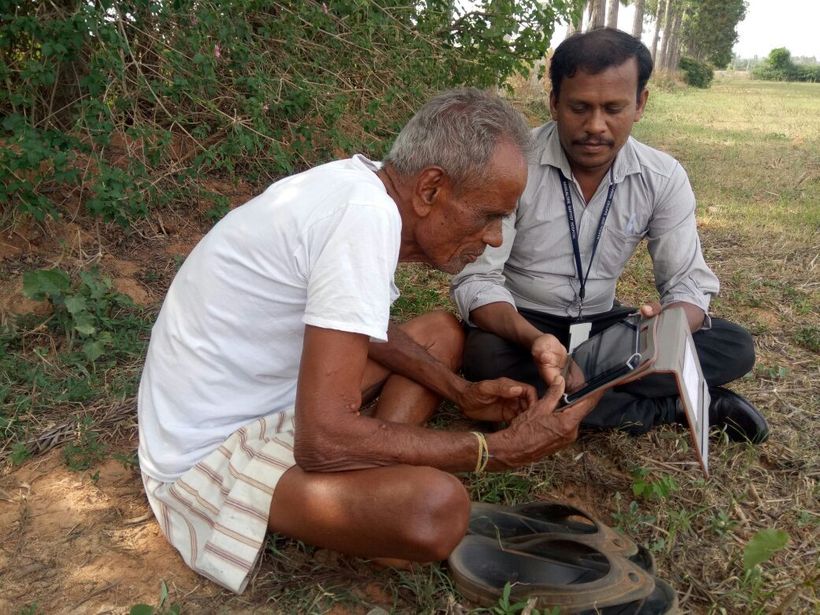
An interdisciplinary team of Baylor University researchers – from nursing and business information systems to art and video game design – and physicians from Bangalore Baptist Hospital in Bengaluru, India, were awarded a 21st Century Knowledge Initiative Grant from the U.S. India Education Foundation (USIEF) to develop a diabetes mobile health app to boost awareness and educate those in India who are most at risk for diabetes. The team is led by Shelby Garner, Ph.D., R.N., assistant professor in Baylor’s Louise Herrington School of Nursing, who has worked in India over the past six years to develop technological health resources. She cited statistics from the World Health Organization that show life expectancy in India is among the lowest in the South East Asian Region and is largely attributed to growing rates of non-communicable diseases, such as diabetes. Contextualized health education is one key to help raise awareness in the country, she said. “There is a need for culturally appropriate health education materials in India,” Garner said. “Our early research showed that technology, such as smartphones and internet accessibility, are widely available in India among health providers, but most technological educational resources were developed in the West and do not effectively translate to the Indian context.” Physicians from Bangalore Baptist Hospital will provide cultural context and help identify important medical content to be included in the app. “Our diabetes app will feature an interactive 3D animated video with gaming features to help educate patients at risk for diabetes,” Garner said. “Answers to questions addressed in the app include: What is diabetes? What happens if I have diabetes? How do I prevent and treat diabetes? What do I do now?” The app also serves as a data collection tool to help researchers determine if the video is improving participants’ knowledge on diabetes. Community health workers employed by Bangalore Baptist Hospital will use the app as they visit with people in rural villages and urban slums during door-to-door health education visits, Garner said. The research team will compare the app’s effectiveness with standard health educational resources previously used. Garner said the USIEF grant was awarded, in large part, due to the success of an earlier project that led to the development of a hypertension app. “Earlier this year, we tested the hypertension app among 346 people in one of the largest slums in Bengaluru, India, and in several rural villages surrounding Bengaluru,” she said. “The app was significantly effective in improving knowledge among participants. We used these results to justify the need to design more resources and applied for funding from the U.S. India Education Foundation.” From previous experience developing and employing the hypertension app, Garner said she knew this new project would require input from a variety of perspectives. “I’ve realized some of the ‘big picture’ challenges in health education, and it will take a team of experts to make this happen,” she said. Team members are: • Shelby Garner, Ph.D., R.N., assistant professor in Baylor’s Louise Herrington School of Nursing • Dr. Carol Elizabeth George, community health physician, Bangalore Baptist Hospital • Dr. Gift Norman, community health physician, Bangalore Baptist Hospital • Dr. Kingsly Victor, internal medicine physician, Bangalore Baptist Hospital • Hope Koch, Ph.D., associate professor of business information systems, Baylor’s Hankamer School of Business • Phil Young, Ph.D., assistant clinical professor of business information systems, Baylor’s Hankamer School of Business • Julia Hitchcock, M.F.A., associate professor of art, Baylor’s College of Arts & Sciences • Matthew Fendt, Ph.D., lecturer in computer science, Baylor’s School of Engineering and Computer Science The grant also will fund exchange teams of researchers and faculty from India to come to the U.S. and for Baylor team members to go to India to collaborate on the research for the next two years. The first team from India is due in late October. “We are really excited about the work we will do together with our Indian partners over the next two years,” Garner said. ABOUT BAYLOR UNIVERSITY Baylor University is a private Christian University and a nationally ranked research institution. The University provides a vibrant campus community for more than 17,000 students by blending interdisciplinary research with an international reputation for educational excellence and a faculty commitment to teaching and scholarship. Chartered in 1845 by the Republic of Texas through the efforts of Baptist pioneers, Baylor is the oldest continually operating University in Texas. Located in Waco, Baylor welcomes students from all 50 states and more than 80 countries to study a broad range of degrees among its 12 nationally recognized academic divisions. ABOUT LOUISE HERRINGTON SCHOOL OF NURSING The Baylor University Louise Herrington School of Nursing (LHSON) located in Dallas was established in 1909 as a diploma program within Baylor Hospital in Dallas, which is now Baylor University Medical Center, and in 1950 became one of the six degree-granting schools of Baylor University. The first Baccalaureate degrees were granted in 1950 establishing the school among the earliest baccalaureate nursing programs in the United States. In 1999, the School was renamed the Baylor University Louise Herrington School of Nursing after Louise Herrington Ornelas, a 1992 Baylor Alumna Honoris Causa, who made an endowment gift to the school. Accredited by the Commission on Collegiate Nursing, LHSON offers Bachelor of Science in Nursing (B.S.N.) degrees through a traditional program and FastBacc (one-year accelerated program). LHSON also offers an online Master of Science in Nursing (M.S.N.) Leadership and Innovation program, as well as Doctor of Nursing Practice (D.N.P.) programs to include Family Nurse Practitioner (F.N.P.), Nurse-Midwife (C.N.M.) and Neonatal Nurse Practitioner (N.N.P.). LHSON was featured in U.S. News & World Reportfor the 2018Best Graduate Schools ranking the D.N.P.program in the top 50 U.S.nursing schools at No. 46. The Baylor M.S.N.program is ranked at No. 56and the Nurse Midwifery Program ranked No. 10. Baylor’s M.S.N. in Nursing Leadership andInnovation Online Program ranked No. 39 in the 2018U.S. News Best Online Graduate Programs. For more information, www.baylor.edu/nursing.

Guinness World Record Holder Jon Bruney To Speak at Biohacker Summit in Toronto
(Toronto) Renowned Strongman and Fitness Expert to speak at Spark Biohacker Summit at Metro Toronto Convention Center on October 15th, 2018 Jon Bruney, creator of the “Pressing the Limits” motivational strength program, will appear in Toronto at the Spark Biohacker Conference. A devoted researcher in the pursuit of finding the edge in performance, Jon will speak about his experience using transcranial and intranasal light therapy. Jon, one of a number of elite athletes, has been working with Technology developed by Dr. Lew Lim, NMD, MBA and Founder & CEO of Vielight in Toronto. Dr. Lim will be on hand to answer questions about the broad base of international research behind photobiomodulation and what we know so far about it's mechanism. "With photobiomodulation, you can tap into the secrets of the nervous system, helping your body to push farther, to push harder, to push longer than you ever believed you could." Jon Bruney using Vielight photobiomodulation device at his Performance Training Center in Indiana Jon Bruney and Dr. Lew Lim, Founder and CEO of Vielight, will be available for questions at the Vielight exhibition booth held alongside the Biohackers Summit. For one-to-one interviews, please contact Edward D'Mello on 647-865-2803. Session Details Monday Oct. 15, 2018 1230PM - 130PM Metro Toronto Convention Centre South Building (Hall G) 222 Bremner Boulevard Toronto, Ontario M5V 3L9 About John Bruney John's work with competitive athletes includes Olympians and NFL players. He has been featured in Ripley’s Believe it or Not, The Guinness Book of World Records, shown nationwide on NBC’s America’s Got Talent, The Today Show, ABC’s To Tell the Truth, and TruTv’s Guinness World Records unleashed. A true renaissance man in the realm of strength-development, Jon Bruney is a best-selling author, world-class trainer, coach and motivational speaker. He is the author of the best-seller Neuro-Mass: The Ultimate System for Spectacular Strength and The Neuro-Grip Challenge: A Radical Program For Building Strength and Power in Your Upper Body. He also writes a training series called “Foundations”, featured in MILO, widely considered the world’s most prestigious strength training journal. Jon has been responsible for the design of numerous pieces of cutting-edge training equipment now in use around the world. Jon is a veteran of multiple trainer certification courses and was the first to achieve the grueling Battling Ropes Level 2 Certified status. He is also the co-owner of Submit Strength equipment. About the The Biohacker Summit The Biohacker Summit is the largest biohacking event in the world that connects well-being companies with medical professionals, technology experts, investors, entrepreneurs, health and nutrition enthusiasts, and other pioneers. Biohacking - better living through science, technology and nature - is a fast growing international trend. The aim of the conference is to make the world healthier and happier place, prevent disease, and extend human capabilities and lifespan. Media Contact Edward D'Mello M: 647-865-2803 E: edward@vielight.com #photobiomodulation #light #therapy #Toronto #Canada #Ontario #wellness #health #mentalhealth #quantifiedself #biohack #biohacker #mental #brain #body #sport #performance


Out of Office: New Baylor Management Study Examines Relationship Between Stress and Remote Work
Researchers say people with high emotional stability and autonomy are best suited for remote-work opportunities Many U.S. employees believe working from home – or at least away from the office – can bring freedom and stress-free job satisfaction. A new Baylor University study says, “Not so fast.” The study, published recently in the European Journal of Work and Organizational Psychology, examines the impact of remote work on employee well-being and offers several strategies to help managers provide remote-work opportunities that are valuable to the employee and the company. “Any organization, regardless of the extent to which people work remotely, needs to consider well-being of their employees as they implement more flexible working practices,” the researchers wrote. A total of 403 working adults were surveyed for the two studies that made up the research, said lead author Sara Perry, Ph.D., assistant professor of management in Baylor University’s Hankamer School of Business. The research team measured each employee’s autonomy (the level of a worker’s independence), strain (defined in this study as exhaustion, disengagement and dissatisfaction) and emotional stability. Emotional stability, Perry explained, “captures how even keeled someone is or, on the opposite end, how malleable their emotions are. An example would be if something stressful happens at work, a person who is high on emotional stability would take it in stride, remain positive and figure out how to address it. A person low on emotional stability might get frustrated and discouraged, expending energy with those emotions instead of on the issue at hand.” The research found that: • Autonomy is critical to protecting remote employees’ well-being and helping them avoid strain. • Employees reporting high levels of autonomy and emotional stability appear to be the most able to thrive in remote-work positions. • Employees reporting high levels of job autonomy with lower levels of emotional stability appear to be more susceptible to strain. Perry said the study contradicts past research that says autonomy is a universal need that everyone possesses. Per this research, those who are lower in emotional stability may not need or want as much autonomy in their work. “This lower need for autonomy may explain why less emotionally stable employees don’t do as well when working remotely, even when they have autonomy,” researchers wrote. In addition to their findings, the researchers offered several recommendations for managers who design or oversee remote-work arrangements. The research team advised managers to consider their employees’ behavior when deciding who will work remotely. “I would suggest managers look at employee behaviors, rather than for personality traits, per se,” Perry said. “For example, if someone does not handle stress well in the office, they are not likely to handle it well at home either. If someone gets overwhelmed easily, or reacts in big ways to requests or issues in the office, they are likely less well positioned to work remotely and handle that responsibility and stress.” Based on this study, individuals with high emotional stability and high levels of autonomy are better suited for remote work, but such candidates might not always be available. “If less emotionally stable individuals must work remotely, managers should take care to provide more resources, other than autonomy, including support to help foster strong relationships with coworkers and avoid strain,” they wrote. Managers might also consider providing proper training and equipment for remote work, including proper separation of work and family spaces, clear procedural and performance expectations and regular contact (virtual or face-to-face) with coworkers and managers. ABOUT THE STUDY “Stress in Remote Work: Two Studies Testing The Demand-Control-Person Model,” published in the European Journal of Work and Organizational Psychology, is authored by Sara Perry, Ph.D., assistant professor of management, Hankamer School of Business, Baylor University, Emily Hunter, Ph.D., associate professor of management, Hankamer School of Business, Baylor Univeersity, and Cristina Rubino, professor of management, David Nazarian College of Business and Economics, California State University Northridge. ABOUT BAYLOR UNIVERSITY Baylor University is a private Christian University and a nationally ranked research institution. The University provides a vibrant campus community for more than 17,000 students by blending interdisciplinary research with an international reputation for educational excellence and a faculty commitment to teaching and scholarship. Chartered in 1845 by the Republic of Texas through the efforts of Baptist pioneers, Baylor is the oldest continually operating University in Texas. Located in Waco, Baylor welcomes students from all 50 states and more than 80 countries to study a broad range of degrees among its 12 nationally recognized academic divisions. ABOUT HANKAMER SCHOOL OF BUSINESS Baylor University’s Hankamer School of Business provides a rigorous academic experience, consisting of classroom and hands-on learning, guided by Christian commitment and a global perspective. Recognized nationally for several programs, including Entrepreneurship and Accounting, the school offers 24 undergraduate and 13 graduate areas of study. Visit www.baylor.edu/business and follow on Twitter at www.twitter.com/Baylor_Business.



The State of Georgia wants to replace its 16-year-old voting machines with paper ballots for fear of Russian election hacking, but are paper ballots safe? “Safe from hacking? Perhaps. Safe from voter error? Not so much,” said Scott Thorp, a user-centered design expert and chair of the Department of Art and Design at Augusta University. “User-centered design for paper ballots is crucial for free and fair elections. Good design should never influence how people vote. A design mistake might actually have cost Al Gore the presidency in 2000. Who is to say it couldn’t cost the governorship in Georgia this year?” Thorp, who also worked as a professor and design coordinator at the Savannah College of Art and Design, is available to discuss: • What user-centered design is • How design can influence people’s behavior • How bad design can lead to human error • Why designing paper ballots with users in mind is crucial for free and fair elections Thorp, who is also associate vice president for research at Augusta University, has worked for more than a decade as an exhibiting artist. His research interests include user-centered design, design thinking, and the psychology of creativity. Contact us to schedule an interview with Scott Thorp or learn more about his expertise. Source:


Managing style and product design
Mobile phones look very different now than they did ten years ago. With access to all of the design patents available from the US Patent & Trademark Office (including ones from products in the telecommunications industry), Tian Heong Chan, assistant professor of information systems & operations management, and coauthors Jürgen Mihm (INSEAD) and Manuel E. Sosa (INSEAD) show how one can cluster them according to their visual similarities. The process results in an evolutionary timeline charting the successive styles of mobile phones from “clamshell” to “touchscreen slate” and everything in between. This approach creates a novel data platform from which researchers can start testing hypotheses about how product forms evolve. With the data, the authors show that there is increasing turbulence (or unpredictability in the change in product forms) across all product categories. In other words, it is much harder now than in the past to predict what the next hot style will be based on current trends. This is especially salient in non-tech categories, such as furniture and fashion. The authors conclude that companies with the capability to manage this increasing uncertainty will have a significant competitive advantage in the future. Source:



Pratt Institute's Experts Are Available to Talk About Emerging Illustration Technology
Pratt Institute has experts available to comment on emerging technology in the fields of design, illustration, and book binding. Source: