Experts Matter. Find Yours.
Connect for media, speaking, professional opportunities & more.

The Business of Youth Soccer and Youth Sports Participation
With the 2026 FIFA World Cup less starting this week, the University of Delaware's John Allgood is available to discuss the business of soccer, youth sports participation and the tournament's impact on communities and the economy. A former United Soccer League top executive and instructor of sport management, Allgood has firsthand experience in both the business and development sides of the sport. Through his experience as a USL franchise owner, Allgood can discuss the World Cup’s economic impact and why the sport is a unifying force. He can discuss how the World Cup will boost participation and fan interest in soccer, especially among youth players. Allgood can address the tiered structure of soccer in the U.S., including the pay-to-play system in youth soccer that is different from development models in other countries. To arrange an interview with Allgood, send an email to MediaRelations@udel.edu.



World Cup 2026: Former soccer executive analyzes tournament economics and youth soccer structure
With the 2026 FIFA World Cup days away, the University of Delaware's John Allgood is available to discuss the business of soccer, youth sports participation and the tournament's impact on communities and the economy. As a former United Soccer League (USL) top executive, Allgood brings firsthand experience and knowledge of the commercial operations and development sides of the sport. He also currently serves as an instructor of sport management at UD. Areas of expertise relevant to the World Cup include: • Economic impact: How the tournament will drive local revenue. • The business of soccer: Sports marketing and the commercialization of global sports entertainment. • U.S. youth soccer: The tiered structure of soccer in the U.S., including the pay-to-play system in youth soccer that is different from development models in other countries. • Participation and interest: How the World Cup will boost participation and fan interest in soccer, especially among youth players. • Soccer as a unifying force: The sports' social impact and how it brings people together. To reach Allgood directly and arrange an interview, click the "contact" button on his profile. Interested journalists can also send an email to mediarelations@udel.edu.

Hunter-Gatherer ‘Egalitarianism’ Is More Complicated Than We Thought
Hunter-gatherer societies are often portrayed as models of equality, cooperation and selfless food-sharing. However, Baylor University anthropologist Duncan N.E. Stibbard-Hawkes, Ph.D., and an interdisciplinary team of researchers have found that this familiar picture oversimplifies how egalitarianism actually functions in everyday life. Their research, published in the journal PNAS Nexus, examined the Hadza, a contemporary hunter-gatherer population in Tanzania, and found that relatively equal outcomes are often maintained not only by altruism, but through social pressure and what anthropologists call “demand sharing.” In a previous study, Stibbard Hawkes and co-author Chris von Rueden, Ph.D., professor of Leadership Studies at the University of Richmond, conducted a wide-ranging review of hunter-gatherer populations that are typically characterized by equality. They found that, although many of these societies did “function with relative equality, even the most egalitarian hunter-gatherer groups display inequality in one area or another.” To further understand this, Stibbard Hawkes and the research team tested their ideas of egalitarianism through a behavioral economic experiment employing a give-and-take behavioral economy game with Hadza participants. “We find that equality was achieved only under conditions of disadvantageous inequality – where the person playing the game had less than others – suggesting that taking is more important in achieving redistributive equality than giving,” Stibbard Hawkes said. “This mirrors real life – if someone has too much, there’s often a lot of demanding shares from other people.” “Looking at the actual motivations and mechanisms of redistribution and limiting power gives us a more realistic approach and a clearer view of what egalitarianism actually is." - D. Stibbard Hawkes, Ph.D. Behavioral economy games Many anthropologists and ethnographers investigate fairness in societies by employing behavioral economic games, such as the “dictator game.” By giving participants an endowment of tokens, researchers can understand how equality ideals function within that group based on how individuals keep or give away the tokens, Stibbard Hawkes said. “When you play these economic games, people are often more selfish in hunter-gatherer societies than they are in America or Europe,” Stibbard Hawkes said. “Which is surprising because these societies are well known for being egalitarian.” To better reflect real-world Hadza food-sharing practices, Stibbard Hawkes and team redesigned the experiment so participants could take resources as well as give them – and the results changed dramatically. “We changed the rules of these economic games and ended up with equality – but only in the condition where people could take from other people,” he said. “That resulted in a relatively equitable distribution.” Only 40.9% of participants shared when they had more food than others, while 30% claimed additional items. When starting with fewer resources, 58.8% took from their partner – often beyond what was necessary for balance. Across both conditions, taking everything was the most common behavior. Importantly, the motivations behind those outcomes were not always idealistic. “Though we saw a lot of generosity, the individual motivations underlying this equality were actually often quite self‑interested,” Stibbard Hawkes said. Equality without altruism Rather than reflecting an intrinsic desire to be fair, Hadza sharing behavior reflects asymmetric incentives and immediate needs. “If I have a big pile of food and I’m not sharing it,” Stibbard-Hawkes explained, “the people around me are going to say, ‘No, you need to share this, and you’re going to give this to me.’ And, when everyone does this, the result is equality.” He emphasized that these interactions are often personal and direct. “It’s not just a societal expectation,” he said. “It’ll often be a direct dyadic interaction. Someone in the room next to you might be like, ‘Well, you’ve got a lot – you should give me some.’” How egalitarianism works Hunter-gatherer societies have long been used to help explain humanity’s evolutionary history. But Stibbard-Hawkes said popular writing often turns these societies into an idealized moral example. “When this gets roughly translated into popular science books,” Stibbard Hawkes said, “the idea is very much like we lived in this Edenic garden of freedom and plenty where everything was good and there were no difficulties.” That framing, he said, misses how egalitarianism is actually maintained. “Egalitarian societies exist – they’re not mythical,” Stibbard Hawkes said. “But if you actually look at the mechanics of how egalitarianism and relative political equality are maintained, it’s often people who are arguing, demanding shares and even insulting people who have too much.” Market integration and changing norms The study also found that Hadza individuals with greater exposure over the last decade to Tanzania’s broader market economy and farming were slightly more accepting of unequal outcomes. “These are things with a very different resource base, and what I'm finding is that – while traditionally forage foods like hunted meats, people expect sharing – when you ask people about cash or grain, their notions of what should be shared are very different,” Stibbard Hawkes said. Egalitarianism is not a myth Egalitarianism is not a myth—but it is often misunderstood. Generosity is not uncommon – but nor are people in egalitarian societies uniquely altruistic. Rather than arising from innate altruism or a lost utopia, equality in hunter-gatherer societies is actively produced through social pressure, negotiation and demands that limit accumulation and power. “Looking at the actual motivations and mechanisms of redistribution and limiting power gives us a more realistic approach and a clearer view of what egalitarianism actually is,” Stibbard Hawkes said.

Pope Leo XIV Releases First Encyclical, "Magnifica Humanitas"
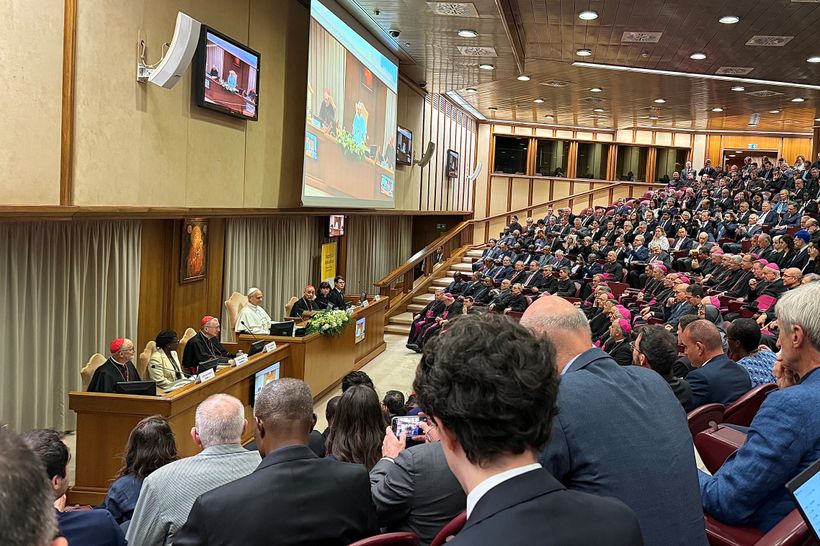
On May 25, 2026, Pope Leo XIV released his first papal encyclical, “Magnifica Humanitas: On Safeguarding the Human Person in the Time of Artificial Intelligence.” The letter—true to its title’s meaning of “magnificent humanity”—addresses how society, collectively, must preserve human virtues in a time of rapid technological advancement. The 42,000-word document features five distinct chapters, exploring various elements of the broader issue at hand and serving as a guidepost for moral and ethical use of technology, through the lens of Church teachings. It covers everything from the development and principles of Church social doctrine to technological responsibility, the culture of power, building civilization through love and preserving humanity through truth, work and freedom. “In recent years, it has become increasingly evident how rapidly and profoundly digitalization, artificial intelligence (AI) and robotics are transforming our world,” wrote Pope Leo in the encyclical’s introduction. “Technology should not be considered, in itself, as a force antagonistic to humanity. On the contrary… “Over the centuries, technological development has significantly improved the living conditions of humanity. At the same time, each phase of progress has also revealed the ambiguity of tools that can cause harm when not oriented toward the good… The power and prevalence of emerging technologies are interwoven into the fabric of daily life, shaping decision-making processes and deeply affecting the collective imagination: ‘Never has humanity had such power over itself.’ “[Most] people are watching and waiting, observing from afar and merely hoping for the best. For this very reason, crucial questions impose themselves on our conscience and can no longer be avoided: Where are we going? Toward what goal do we wish to orient ourselves? What direction should we choose as a people and as a human community?” What Is a Papal Encyclical? Popes have written more than 300 encyclicals—or “circulating letters”—since the mid-18th century. They were initially used to clearly communicate doctrine and guidance to priests throughout the world who were facing religious, political or social issues, which was especially useful as the world grew more interconnected and the Church grew larger. Beginning with Pope Leo XIII’s Rerum Novarum and continuing today, some papal encyclicals have been referred to as “social encyclicals” because they address a pervasive social issue through the lens of Catholic Social Teaching and are written not only for those within the Church, but laypeople as well. Some examples of those included Pope Saint John Paul’s 1987 Sollicitudo Rei Socialis on international inequality, and Pope Francis’ 2015 Laudato Si’ on environmental care and social justice. “[Pope Leo XIII and his successors] were developing a new way of teaching the world how to order itself according to Catholic principles, now translated into a vocabulary that would be intelligible to the larger world,” said Patrick Brennan, JD, Chair of Catholic Legal Studies at Villanova University Charles Widger School of Law, on LiveNow From Fox. “They try to address important social questions in ways that any person of goodwill can read and understand.” “Encyclicals contribute to our collective wisdom for how to live as community,” wrote Sally Scholz, PhD, professor of Philosophy at Villanova, in her recent contribution to Church Life Journal titled “What to Look For in Pope Leo XIV's First Social Encyclical.” “The principles and various themes they discuss offer guidance for day-to-day interpersonal interactions as well as for how to participate as a Catholic and as a “person of good will” at every level of social existence: in our families, our communities, our institutions, our states and in our ‘one human family.’” Observations From Magnifica Humanitas A New Twist on a Longstanding Issue While the types of technology being discussed in the letter—particularly artificial intelligence—are unique to our modern times, encyclicals addressing how to interact with contemporary technology are far from it. “Discussion of the relationship between humans and technology appears in many of the previous social encyclicals,” wrote Dr. Scholz in Church Life Journal. “It is a social phenomenon with so much promise but inspires so much fear for how it will change work and the workplace, communication, global trade, war and the family.” “Technology is integral to evolution. Understanding technology's relationship to human welfare means grasping its role within the flow of biological and human life,” wrote Sister Ilia Delio, OSF, PhD, the Josephine C. Connelly Endowed Chair in Christian Theology in the 2025 Global Sisters Report. What Pope Leo argues in his lengthy letter, boiled down to a few sentences, is that while technological advancements, and AI in particular, can be beneficial to society, they must never supersede human dignity, moral responsibility and the common good. A society that allows systems to replace human judgment, concentrate power or exploit workers risks dehumanization. For Jaisy Joseph, PhD, assistant professor of Theology and Religious Studies at Villanova University, particularly striking was something not written in the document itself, but rather spoken at the official promulgation of the letter in Rome. There, Pope Leo was joined in powerful reflection by Anthropic co-founder Christopher Olah. Olah analogized the current reality with bringing a fictional character to life, citing that while technical fields build the machinery of AI, “what character we choose, how it interacts with the world, how it ought to interact with the world— these are more clearly questions for the humanities, for religion, for philosophy, for society at large.” On that front, he then enlisted the help of the Church in addressing three pressing concerns related to AI and human flourishing, before ending with a request for the Church to continue to be an unyieldingly moral voice and informed critic. “The dynamic dialogue and discernment between Leo and Olah reflect a significant continuity with the Francis papacy,” Dr. Joseph said, referencing the late pontiff’s encouragement of “theology to adopt a transdisciplinary method that recognized how this discipline is part of a web of relationships among disciplines.” Technology Through the Lens of Augustinian Theology Throughout Magnifica Humanitas, Pope Leo’s ubiquitous thoughts and guidance on safeguarding humanity—particularly in the context of modern technology—are infused with references to the teachings of St. Augustine. “[Augustine’s teachings say] we need standards to guide our judgements and actions,” said Terence Sweeney, PhD, assistant teaching professor of Humanities at Villanova. “Pope Leo XIV, ‘a son of St. Augustine,’ offers us standards for how we judge our world in the age of AI. “One surprising standard in a document on Big Tech is that ‘a litmus test for social justice today is the treatment of migrants, refugees and those forced to move.’ Why this litmus test? Leo is shaped by Augustine’s rejection of communities of perfection where only the pure, powerful and perfect are welcome.” “Pope Leo beautifully aligns himself with traditional Catholic Social Teaching while grounding his vision in the theology of St. Augustine,” Dr. Joseph added. “The result is a groundbreaking defense of the human person in our new age of artificial intelligence.” Pope Leo, through a scriptural metaphor of the Tower of Babel, “resurrects Augustine’s famous warning that human history is a constant struggle between two loves fighting for our hearts,” Dr. Joseph said. He references how the builders of the tower tried to create “a single language, a single technology, a single direction” without reference to God. “The concluding paragraphs of chapter three highlight Pope Leo XIV’s distinctively Augustinian approach to evaluating the place of technology and scientific progress in the world,” said Emma Kennedy, PhD, assistant professor of Christian Ethics at Villanova University. “What we love, ‘both as individuals and as a society,’ will guide us to participate in ‘the rebuilding of Jerusalem’ or ‘the construction of Babel’––a contrast that hearkens back to Augustine’s ‘two cities.’” “Pope Leo [also] draws on an Augustinian spirituality that highlights fundamental desiring in the shared search for truth,” added Tim Hanchin, PhD, associate professor of Practical Theology at Villanova. “Our desire for truth, or wonder, reflects humanity’s transcendent origin and end. That we are created in the image and likeness of the Triune God (Genesis 1:26-27) distinguishes human knowing from mere data processing.” A Discussion on Slavery, Past and Present Intermixed with Pope Leo’s chapter four thoughts on modern slavery—such as various forms of human trafficking that he says are “directly linked to the digital economy”—he made an historic recognition and apology for the Church’s role in the transatlantic slave trade centuries ago. Tia Noelle Pratt, PhD, special assistant to the Vice President of Mission and Ministry at Villanova University, assistant professor of Sociology, and editor of the Journal of Catholic Social Thought, said that what makes this acknowledgement so important is how it differs from the way previous popes have addressed the issue, which have condemned slavery but remained at the individual level. “They spoke of their papal predecessors and those popes’ actions, but stopped short of invoking the institution itself and the institution's role in the promulgation of slavery,” Dr. Pratt said. Tying it back to current affronts on human dignity fueled by the digital age, Pope Leo penned his own papal version of the famous saying that “Those who cannot remember the past are condemned to repeat it.” “If we want to avoid the need to ask for pardon again in the future for having failed to respect the treasure of human dignity that is required by our faith, it falls to us today to denounce, clearly and firmly, trafficking in its many forms,” he wrote. “Pope Leo is telling us today that we cannot have detachment between the past and the present,” Dr. Pratt said. “We must see how these things are connected.” Inspired by Rerum Novarum, but Far From a Repeat Pope Leo XIV signed Magnifica Humanitas on May 15—the 135th anniversary of the release of Pope Leo XIII’s Rerum Novarum. That was the most famous social encyclical issued by the long-reigning pontiff and is considered to be a foundational text of modern Catholic Social Thought. It addressed numerous issues facing the working class during the time of the Industrial Revolution. On May 10, 2025—just two days after his election—Pope Leo referenced his namesake’s 1891 encyclical in an address to the College of Cardinals, foreshadowing the attention he intended to pay to the modern version of the same issue. “Pope Leo XIII in his historic encyclical Rerum Novarum addressed the social question in the context of the first great industrial revolution,” Pope Leo said in that address. “In our own day, the Church offers to everyone the treasury of her social teaching in response to another industrial revolution and to developments in the field of artificial intelligence that pose new challenges for the defense of human dignity, justice and labor.” Yet, while he was explicitly inspired by the 19th-century pontiff and his text, Pope Leo makes it clear early in Magnifica Humanitas that “While Leo XIII spoke in his time of ‘new things’ (rerum novarum), today we cannot limit ourselves simply to repeating his insightful teachings. “Instead, we must ask God for the wisdom to interpret the great trends of our time, particularly technological advances.”






Provincial Trunk Highway 34 is Named the Worst Road in Manitoba for the Second Year in a Row
Provincial Trunk Highway 34 (PTH 34) has been named Manitoba’s worst road for the second year in a row, according to the results of the 2026 CAA Worst Roads campaign. The Pembina Valley highway, located west of Winnipeg, has previously appeared on the provincial top ten list seven times, and this is the second consecutive year it has claimed the top spot. Manitobans who nominated PTH 34 did so because of potholes, poor maintenance, and uneven road surfaces. “The roads on this list reflect what Manitobans experience every day,” says Ewald Friesen, manager of government and community relations for CAA Manitoba. “Manitobans want roads that are safe, reliable and properly maintained, whether they live in Winnipeg or in a rural community. This year, 711 roads across 69 municipalities were nominated for the top spot. The most common concerns cited were potholes, poor maintenance and uneven road surfaces. “This year’s list shows that road issues are not just a Winnipeg problem or a rural problem, they’re a Manitoba problem,” Friesen said. “There is an even split between rural and urban roads on the provincial list.” Many of the roads identified are major commuter, trade and connector routes relied on by families and businesses. As governments focus on inter-provincial trade, congestion in Winnipeg and critical road safety issues, investments in the roads and highways are more important than ever. “When key routes fall into disrepair, it affects more than just convenience,” Friesen said. “Vehicle repair costs go up, fuel efficiency goes down, and delays increase. That adds pressure to already stretched household budgets and affects our economy.” Repeated nominations often signal that communities want long-term solutions, not temporary fixes. Several roads that have appeared on past lists are now under construction, resurfaced or scheduled for rehabilitation. “We’ve seen that sustained public input makes a difference,” Friesen said. “The CAA Worst Roads campaign gives governments a clear snapshot of where funding and attention are wanted most.” CAA Manitoba is urging provincial and municipal governments to continue prioritizing predictable, year-over-year investment in road maintenance and safety. “Stable funding allows governments to plan ahead, address safety concerns earlier and avoid higher costs later,” Friesen said. “It’s about keeping people safe and keeping Manitoba moving.” Top 10 worst roads in Manitoba for 2026 Provincial Trunk Highway 34 — Central Plains/Pembina Valley Provincial Road 307 — Whiteshell Kenaston Boulevard/Route 90 — Winnipeg Saskatchewan Avenue — Winnipeg Richmond Avenue — Brandon Gateway Road — Winnipeg Leila Avenue — Winnipeg 1st Street — Brandon Provincial Road 422 — Pembina Valley St. Mary’s Road — Winnipeg For more information and historical results, please visit: https://www.caamanitoba.com/advocacy/government-relations/worst-roads



U.S. National Debt: How to Stop the Bleeding
The U.S. national debt exceeding the size of the American economy is a dubious milestone that has sparked alarm and confusion among policymakers who are asking how worried they should be and what can be done to stop the bleeding. David Primo, a political scientist and professor of business administration at the University of Rochester and a fiscal policy expert who has testified before Congress on the national debt, says Americans should be very concerned about the debt and, at the same time, know there is a solution. “The federal budget outlook is grim and threatens the economic future of the United States,” says Primo, the author of Rules and Restraint: Government Spending and the Design of Institution (University of Chicago Press). “If Congress waits to act, Americans will need to give up a bigger piece of the nation’s economic pie to stabilize the country’s finances.” Primo says a solution lies in a constitutional amendment restraining the federal budget. Specifically, such an amendment would clearly define spending and revenue, set spending limits based on a multiyear period, and allow for waiving the limit only with a large supermajority in Congress. “As it stands, Congress is constitutionally incapable of tying its own hands, making it difficult for legislators to implement durable changes to the federal budget,” Primo says. Recent data show the national debt has crossed 100% of the GDP threshold — roughly $31.27 trillion versus $31.22 trillion in economic output — marking the highest peacetime level in U.S. history. The Congressional Budget Office has projected that debt levels, if left unchecked, could reach 181% of GDP in the next 30 years. Primo says delaying implementing a solution raises the risk of increased interest rates, which would, in turn, reduce investment and, ultimately, economic growth. For journalists covering deficits, tax policy, and the long-term economic outlook, Primo offers key expertise and a clear lens on: • The implications of national debt exceeding GDP • Constitutional and institutional approaches to fiscal reform • Fiscal policy and political incentives “The United States is in precarious fiscal health,” Primo told Congress in 2023. “In the absence of a constitutional amendment, I fear it will take a fiscal crisis before Congress acts. Nobody wants that.” Connect with Primo by clicking on his profile.



How the Class of 2026 can keep resumes out of the digital black hole
Students set to graduate this May are entering a job market where the rules of engagement are being rewritten in real-time. AI is both friend and foe, and ghosting has become the norm. University of Delaware career expert Jill Panté shares how college students can navigate these challenges in a rapidly shifting economy. Panté, director of the Lerner Career Services Center at UD, can apply her expertise to the following: The AI recruitment gap • How to prevent resumes from falling into the "digital black hole" of automated tracking systems. • Current recruitment in 2026 is heavily filtered by AI. If resumes don't mirror the language of the job description, a human might never even see it. • In 2026, AI is the gatekeeper. Students who aren’t using AI for assistance are working twice as hard for half the results. However, the goal is to use it as a co-pilot, not an autopilot. Beat the bots (tailor your content) • Use tools like Resume Worded or Generative AI like Microsoft Co-Pilot or Gemini to see how resumes stack up against specific job postings. • It is better to send five highly tailored, thoughtful applications than 50 generic ones that get auto-rejected by an algorithm. • Use AI to run a mock interview based on the job description and company. The "hidden” job market • If a "job search" consists solely of clicking "Easy Apply" on LinkedIn for six hours a day, it’s not searching; it’s just doom-scrolling with a resume. Roughly 80% of your time should be spent talking to humans. The other 20% should be spent on applications and research. • Find the recruiter or a department head on LinkedIn. Send a brief (2-3 sentence) note reiterating your interest. • Leverage alumni networks through LinkedIn. Narrative branding • Especially for Gen Z: Hiring managers don't just want to know what you did; they want to know the impact you made. • Instead of saying "Responsible for social media,” say "Increased engagement by 40% over 3 months by implementing a new video strategy." • Always lead with results (LinkedIn, resume, Interviews) to showcase the value you bring. Workforce anxiety • Managing the mental toll of the modern, high-speed job search and the professional "ghosting" epidemic. • Establish a personal "Board of Directors" to provide a balance of support, accountability and feedback. • Maintain momentum by volunteering, attending local networking events and learning new skills on platforms like LinkedIn Learning and Coursera. To reach Jill Panté directly and arrange an interview, visit her profile and click on the “contact” button.


Energy Shocks, Consumer Pullback, and the Long Road Back
As Americans scale back spending on luxuries and some necessities — from dining out and live entertainment to home and auto maintenance — the ripple effects are being felt across the broader economy. Daniel Burnside, clinical professor of finance at the Simon Business School, says the trend reflects more than just belt-tightening and signals deeper structural pressures tied to energy markets. “Higher energy prices push inflation up and growth down, putting monetary policymakers in a bind,” Burnside says, explaining the current situation as being beyond a typical price spike. “This isn’t just a price shock, it’s a capacity shock,” he says. “You can’t just flip a switch back to normal because a lot of energy infrastructure has been destroyed. That distinction matters. Because energy costs are embedded in nearly every good and service, rising prices squeeze consumers beyond the gas pump. The result is reduced discretionary spending at venues like sporting and live music events, restaurants, and leisure destinations. Looking ahead, Burnside says a rapid rebound in discretionary spending is possible but unlikely. “If, by some miracle, energy prices quickly return to prewar levels, you would see a sharp run-up in discretionary stocks,” he says. “But that’s precisely because expectations are so low.” For now, markets are signaling that a swift return to pre-crisis conditions isn’t on its way, Burnside says. Until energy supply stabilizes, the pressure on both consumers and the businesses that rely on it is likely to persist. Burnside regularly fields inquiries from journalists looking for his insight on personal money matters and investing. Contact him by clicking on his profile.


Covering Cuba? Augusta has one of the leading experts ready to help with your coverage
Cuba is facing one of its most severe crises in decades, as compounding economic and energy challenges continue to strain everyday life on the island. Persistent fuel shortages have led to rolling blackouts, transportation disruptions, and reduced industrial output, while inflation and shortages of basic goods have eroded purchasing power for ordinary Cubans. Tourism, once a critical source of foreign exchange, has struggled to fully recover, and the country continues to grapple with declining productivity and limited access to international capital. These pressures have contributed to rising public frustration, increased migration, and a government response that blends cautious economic reforms with efforts to maintain stability. Paolo Spadoni is an ideal expert for journalists covering this evolving situation. As a specialist in Cuba’s political economy, his work focuses on the island’s external sector, including foreign investment, remittances, tourism and the impact of international sanctions. He brings a rare ability to connect on-the-ground developments – such as energy shortages or policy changes, to the broader structural realities shaping Cuba’s economy. With deep academic research and ongoing analysis of current reforms, Spadoni offers clear, credible insight into whether Cuba’s latest measures signal meaningful transformation or simply short-term responses to a prolonged crisis. Paolo Spadoni, PhD, is a widely recognized expert on Cuba and its international relations. He is a tri-lingual political economist with a specialization in international relations and a focus on Latin America’s political and business environments. His research focuses on international relations theories, Cuba's economy and business market, foreign investment in Cuba and U.S.-Cuba relations. View his profile Since this crisis escalated, Spadoni has been the 'go-to' expert for reporters with media from across North America like Reuters, Bloomberg and The New York Times connecting with him for his expertise, input and perspective on the situation. LA TERCERA: “The Cuban tourism sector was already struggling before the Covid pandemic. The best year for international tourism in Cuba was 2017 in terms of foreign exchange earnings. That was the year in which $3.3 billion was collected, and tourism represented 10% of Cuba's GDP at that time. In terms of employment, it provided 120,000 direct jobs and roughly 500,000 indirect jobs. So it played a significant role. That was the best year for international tourism in Cuba, which coincidentally ended in November of that year with the sanctions imposed by the first Trump administration. From then on, tourism from North American visitors began to decline, but European and Canadian visitors were already decreasing,” Spadoni explained to La Tercera. CBC NEWS: "Most of those investments are real estate investments more than tourism investments, meaning the Cuban military has taken possession of prime locations in the best tourism areas of Cuba," said Paolo Spadoni, an associate professor at Augusta University in Augusta, Ga., and co-author of the 2025 book The Cuban Tourism Industry: Evolution, Challenges and Prospects. Columbia Law School: "While seeking to finalize an economic agreement with Cuba, the Trump administration could secure deals across various sectors of the economy. However, tourism holds the most promising opportunities in the short term." Global News (Canada):



Iran Conflict Intensifies Focus on Affordability
Professor of Finance Anoop Rai spoke to Newsday about economic fallout from the Iran campaign, which is refocusing attention on rising costs at a time when affordability was already a top concern, locally and nationally. If the economy cools down, it could reduce the state’s tax revenues, and any actions lawmakers take to further help with affordability could lead to greater deficits, said Dr. Rai. “Then it becomes more like a philosophy. Do you help now during bad times and then try to recover later, or stick to your principles and say ‘tough luck’?”