
Experts Matter. Find Yours.
Connect for media, speaking, professional opportunities & more.

Over 2850 people supported by eye health education and vision screening delivered by Villa Vision
“Aston University and Aston Villa Foundation have a strong social purpose and the successful delivery of Villa Vision in our local schools demonstrates this perfectly. Eyesight problems shouldn’t hold any child back.” Jack Dromey, MP for Birmingham, Erdington The Villa Vision initiative is raising awareness of the importance of eye health to children in schools and individuals in local community setting It is a joint project between the Aston Villa Foundation, Aston University’s Optometry School and optical lens supplier Essilor Vision for Life Jack Dromey, MP for Birmingham Erdington, visited Aston University campus to learn more about it Jack Dromey, MP for Birmingham Erdington, visited Aston University campus on Friday July 23 to learn about a unique initiative to deliver good eye health to communities in Birmingham. Villa Vision, a joint project between the Aston Villa Foundation, Aston University’s Optometry School and optical lens supplier Essilor Vision for Life, aims to benefit the local community through the provision of free eye care and to raise awareness of the importance of eye care for all. Pupils from the poorest backgrounds are more likely to suffer from uncorrected vision problems. Left untreated, vision problems may result in the need for more learning support at school and can lead to health and vision consequences in later life. Aston University worked alongside the Aston Villa Foundation and Citizens UK to listen to the local community, which identified that children and adults in the local area face a number of challenges when it comes to accessing eye care, including a lack of parental support, awareness, accessibility, language barriers and a misconception about cost. In addition, it has been shown that children from less affluent areas are nearly 30% less likely to have an eye test than children from more affluent areas, with this number significantly increasing among adults. Funded by the Premier League and the Professional Footballers’ Association (PFA), the project is designed to fill a crucial lack of knowledge surrounding the importance of having an eye test and how preventative measures can ensure, among a host of benefits, a lifetime of good vision. The Villa Vision team is delivering a programme of eye-health awareness lessons in the classroom, as well as free vision and colour vision screening, followed by a more comprehensive eye test and free glasses to those children who require them, using a fully operational custom-designed mobile eye care unit. So far, the initiative has engaged with over 1750 local children and adults through classroom workshops and have vision and colour vision screened around 1100 local primary aged children. Jack Dromey, MP for Birmingham, Erdington, said: “Aston University and Aston Villa Foundation have a strong social purpose and the successful delivery of Villa Vision in our local schools demonstrates this perfectly. Eyesight problems shouldn’t hold any child back.” “Poor vision can often go unnoticed, particularly amongst children so Villa Vision will provide the opportunity for children to have a free vision screening check at school. In addition to this, for those children requiring further investigation the initiative will also provide a full eye examination and glasses if required for free using a fully equipped mobile eyecare unit.” Nikhil Sonpal, Villa Vision project manager and optometrist said: “Children may not always recognise whether there is something wrong with their vision and it is particularly damaging if vision problems go undetected. “We understand that, particularly in more deprived communities, many children and adults may face a number of significant challenges and barriers when it comes to accessing eye care services,” Mr Sonpal added. Dr Angela Jeffery, director of regional strategy at Aston University, said: “Engaging with communities on Villa Vision has provided insights into the challenges local people face and helped to shape Aston University’s Civic Agreement.” “Our approach to public engagement draws on innovative community-facing activities across the University and we are constantly developing new and exciting ways of engaging with the public and look to the diverse communities around us to contribute, collaborate and coproduce initiatives with us.” Professor Leon Davies, professor of optometry and physiological optics and head of the School of Optometry at Aston University said: “We are delighted to be working with Aston Villa and Essilor to share our clinical and research expertise in providing evidence-based eye care. “Designed for our region, Villa Vision will benefit our local community through the provision of free eye care and by raising awareness of the importance of eye health for all.”



Aston University graduates among highest paid in the country, new data reveals
"We continue to regularly meet with industry to ensure that the content of our courses meets the needs of the labour market, which is reflected in these findings." Saskia Loer Hansen, Deputy Vice-Chancellor Engagement Median earnings of employed Aston University graduates are £33,400 five years after graduation - the 20th largest in the UK Range of subject disciplines offered at Aston University have high median salaries Graduates from allied health subjects had the 5th largest median salary five years after graduation at £37,200. Graduates of Aston University are among the highest paid in the country five years after graduating, according to new data released by the Department for Education. The 2021 Longitudinal Education Outcomes (LEO) data shows that employed Aston University graduates have the 20th largest median salary overall five years after graduation at £33,400, compared with £24,900 sector average Subject level data in the LEO reveals that graduates from allied health subjects at Aston University had the fifth-largest median salary five years after graduation at £37,200, which is over £11,000 more than the sector average. It’s also good news for sociology and social policy graduates, with the median earnings in those subjects at £32,500 five years after graduation, the fourth largest in the country. Graduates from the materials and technology courses at Aston University earn a median salary of £42,000 five years after graduation which reflects the performance of the University’s logistics graduates. Speaking on the LEO data, Saskia Loer Hansen, Deputy Vice-Chancellor Engagement at Aston University, said: “We are delighted to see this recognition that our graduates are highly employable and go on to secure fulfilling and well-paid jobs once they have graduated. “It is fantastic to see the University appearing in the top 20 when it comes to median salaries five years after graduating, with an increase of £200 compared to last year’s results. “This is the 5th year of LEO and Aston University has always fared well and is among the top 20 largest median salaries five years after graduation for the 2nd year in a row. “We continue to regularly meet with industry to ensure that the content of our courses meets the needs of the labour market, which is reflected in these findings. It once again shows Aston University offers great value for money when it comes to employability. “We also work hard to ensure that students have a positive learning experience when they study with us and I am confident that the quality of this experience contributes to the great longer-term employment outcomes for Aston University graduates as measured by LEO.” The LEO analysis also shows that the University’s new graduates quickly earn good incomes with a median salary of £23,000 one year after the end of their courses, which is £4,400 higher than the sector average of £18,600.

Experts explore the gap between research and practice in disaster management
The COVID-19 pandemic has attracted public attention to crisis management globally, writes Aston University's Oscar Rodriguez-Espindola. Although authorities and international organisations are still actively and diligently trying to mitigate the impact of the pandemic, some of the attention is shifting towards understanding the decisions made and learning from our experience. Indeed, this experience has inadvertently shown different areas for improvement for emergency management systems. The experience gained during the pandemic should lead governments and organisations to refine crisis management processes to prepare for challenges ahead. Leveraging research and specialist groups have been essential to support and inform decisions, as these can provide key insights guiding policy decisions. However, the integration of research and practice should not take place at the response stage only, but as part of the core crisis management system at every stage. It is crucial to maintain and strengthen the relationships between research and practice forged during the pandemic for different emergencies in the future. With the increasing number of different disasters happening and the threats stemming from climate change, it is not surprising that between 1994 and 2013 around 1.35 million lives have been claimed annually by natural disasters. Therefore, the value of partnerships between research and practice needs to be strengthened and implemented globally. Academics from Aston University in the UK and the Universidad Autónoma de Occidente in Mexico have investigated the current status of the integration of research and practice for crisis management. A systematic literature review of decision models for humanitarian logistics has been used to understand the way these models have reflected the real conditions experienced by decision-makers and catered to their priorities. Afterwards, interviews with two civil protection authorities of the state of Sinaloa, Mexico, have been undertaken to understand the conditions faced by them for crisis management, their processes and their view of decision models to support crisis management in the country. Next, a multicriteria decision analysis was used to capture their preferences regarding the objectives set for humanitarian operations to develop an analysis of their priorities. Practice needs to be informed by research, but for that guidance to be impactful, research needs to have a thorough understanding of the conditions and challenges faced by practice. The literature focused on models for humanitarian logistics has shown that the engagement of academics with practitioners in the design of solutions to support decision-making has been declared in less than a quarter of the contributions, as shown in Table 1. That means the design of solutions is based on prior secondary information or founded on a theoretical basis, which is not necessarily reflecting the current reality faced by authorities. It is noteworthy that there is an increasing trend in the number of articles involving practitioners in recent years, with more than half of them published in the previous three years. Despite that growth, however, the relative percentage of contributions incorporating practitioners has never been beyond 40% of all the models published in any year, which highlights that there is still a long way to go to support research development. Table 1: Involvement of practitioners in the design of models for humanitarian logistics Our interviews highlighted that authorities perceive the potential of systems to improve information management forecasting and decision-making, but they also unveiled the concerns about these systems providing unrealistic or unfeasible solutions. Optimisation models are formulations in which a metric is maximised or minimised subject to a series of constraints. If the objective does not reflect the objectives and priorities of decision-makers, then results can be less relevant for decision-makers. For instance, models solely aiming to minimise cost would struggle to give useful solutions to authorities focused primarily on providing support to all the victims equally. Therefore, the lack of involvement from decision-makers can lead practitioners to be cautious about using decision-making models. To examine the link between contributions in the literature and the objectives and priorities of authorities, data about them was gathered and analysed using a technique known as Fuzzy-TOPSIS. The purpose was to identify the importance given to different objectives by authorities for different activities in order to rank them based on importance as shown in Table 2. Although humanitarian logistics are characterised by a focus on the overarching ideas of saving lives and reducing suffering, it is still surprising to note that cost was the least important objective for authorities. Conversely, more than three-quarters of the models surveyed are using cost as the main objective function, which makes it the most prominent objective in humanitarian logistics. As preferences from authorities seem considerably more focused on maintaining a reliable flow of support, with high levels of service and ensuring to reach the most affected population, our findings suggest a misalignment between research and practice. Hence, neglecting to incorporate practitioners in decision-making models for humanitarian logistics can lead to omitting their needs and priorities, rendering the models less effective to provide workable solutions. Table 2: Ranking of objectives from civil protection authorities Additionally, it is important that research guides and influences practice in relevant aspects for further development. For instance, understandably, the chaotic and urgent conditions faced by authorities in humanitarian logistics force them to prioritise response over any other considerations. Our interviews confirmed this, as they mentioned that even though sustainability is becoming a crucial element in regular times, it is undermined by the urgency of the response and only included in recovery activities. This is an aspect worth looking into because research has shown that sustainability can be integrated into crisis management, even with the potential to provide improvements in terms of efficiency. Hence, a more thorough integration between research and practice would allow to positively influence activities on the field based on findings and results proposed and tested by cutting-edge investigations. Overall, our findings suggest that despite the increasing remarks about the intention of joining research and practice, there is still a significant divide between them. Reducing that divide can be beneficial for both sides. More practice-informed research can allow to development of feasible solutions that can enhance the support provided to disaster victims in practice, whereas more research-informed practice can provide stronger foundations for effective decision-making and guide research to focus on key aspects to make it more impactful. Therefore, it is essential to put more emphasis on integrating research and practice from the roots, to make their interaction more fruitful. Current trends seem to be going towards that direction, especially with the current focus on the impact on research, but further efforts are required to motivate researchers and practitioners to work together to improve crisis management. This article was co-written by Oscar Rodriguez-Espindola, Pavel Albores, Hossein Ahmadi, Soumyadeb Chowdhury, Prasanta Dey from Aston University and Diego Chavira and Omar Ahumanda from the Universidad Autónoma de Occidente. This work was supported by an Institutional Links grant, ID 527666998, under the Newton UK-Mexico partnership. The grant is funded by the UK Department for Business, Energy and Industrial Strategy and delivered by the British Council. For further information, please visit www.newtonfund.ac.uk

A new model of health care is coming to Wilmington’s Riverside neighborhood and the Kingswood Community Center. ChristianaCare Virtual Health is now available at The Coker Family Resource Center, inside Kingswood Community Center. It offers convenient, personalized, always-accessible care that makes it easier for people to connect with the care they need and stay well. “This is an entirely new model of health care powered by data and technology to make it easier for people to access care when they need it, and one that fosters strong relationships between patients and their care team,” said Janice E. Nevin, M.D., MPH, president and CEO of ChristianaCare. “In our commitment to make a positive impact on health for everyone in the communities we serve, we’re excited to bring this leading-edge model of care to our neighbors at Riverside. We’re grateful for the partnership of The WRK Group and Kingswood Community Center in this collaborative effort that will support the health and wellbeing of the people in this community.” At The Coker Family Resource Center, patients can connect to ChristianaCare Virtual Health for a virtual appointment with a primary care provider or a member of their care team and also receive access to medical services such as vaccines, blood pressure checks and in-person exams. But care doesn’t have to happen at Kingswood Community Center. Patients can have a virtual visit with their care team anytime and from anywhere they have access to the internet with a smartphone, tablet or laptop with a camera. “Throughout the pandemic, many people have learned the convenience of having a video visit with their doctor instead of coming in for an in-person appointment. At ChristianaCare, we’ve actually been developing this kind of care since the launch of our Virtual Primary Care practice for ChristianaCare caregivers in 2018, in addition to our CareVio data-powered care management platform,” said Sharon Anderson, RN, MS, FACHE, chief virtual health officer at ChristianaCare. “What we’re able to provide today is not just video visits, but an entirely new kind of care that’s always on—it enables patients to interact with their care team when they need support through video visits, secure text messages and other ways that provide care in ways that fit into each person’s lifestyle.” Sharon Anderson, RN, MS, FACHE, chief virtual health officer at ChristianaCare In addition to the on-site medical services provided at the Kingswood location, patients can also receive in-person help with the technology so that they can become comfortable with this new model of care, and ask questions or get help when they need it. Kingswood Community Center, a member of The WRK Group (The Warehouse, REACH Riverside, and Kingswood Community Center), has been a pillar of the Riverside community for 75 years and is located at 2300 Bowers St, Wilmington, DE 19802. In-person appointments are available every Tuesday and Thursday from 12:30 – 2:30 (times may vary). Information and appointments are available by calling 302-428-2400. Establishing easily accessible health care within the Riverside neighborhood marks a long-time goal of The WRK Group. “We are incredibly thankful for this partnership with ChristianaCare Virtual Health as they become the first primary care service provider that exists within Riverside,” said Logan S. Herring, Sr., CEO of The WRK Group. “ChristianaCare has created a nimble solution for our neighbors that includes valuable in-person services and care as well as virtual appointments. Creating this physical and virtual space is an achievement for our community and one in a series of initiatives The WRK Group plans to bring to the local area.” The WRK’s Group managing partner, REACH Riverside, is currently overseeing a $250M holistic revitalization project which includes building a new and improved community center, developing a mixed income housing community, and investing in physical capital to create a thriving and vibrant neighborhood. Introducing the Coker Family Resource Center The Coker Family Resource Center is a new addition to the Kingswood Community Center, made possible by the generous donation of the Coker family, a pillar in the Riverside and Wilmington community. From matriarch and civil rights leader Beatrice “Bebe” Coker and her activism efforts to daughters Dr. Joan Coker, Laurie Coker Reid, and Julie Coker's collective philanthropic and community work, the Coker family embodies the values of Kingswood Community Center and The WRK Group’s collective mission to empower the community to reach its full potential. “Thank you to the entire Coker family, who have dedicated themselves to bettering our community for decades, as well as for providing the needed funding to create the physical space that ChristianaCare Virtual Health inhabits,” Herring continued. “The Coker family has once again demonstrated the value of believing and investing in their community. As we look to the future and continue to dream big about the new Kingswood Community Center, I am excited by the prospect of what this space will evolve into and what additional services we can offer our community.” For more information about ChristianaCare Virtual Care at Kingswood Community Center, click here. About ChristianaCare Headquartered in Wilmington, Delaware, ChristianaCare is one of the country’s most dynamic health care organizations, centered on improving health outcomes, making high-quality care more accessible and lowering health care costs. ChristianaCare includes an extensive network of primary care and outpatient services, home health care, urgent care centers, three hospitals (1,299 beds), a freestanding emergency department, a Level I trauma center and a Level III neonatal intensive care unit, a comprehensive stroke center and regional centers of excellence in heart and vascular care, cancer care and women’s health. It also includes the pioneering Gene Editing Institute. ChristianaCare is nationally recognized as a great place to work, rated by Forbes as the 5th best health system to work for in the United States and by IDG Computerworld as one of the nation’s Best Places to Work in IT. ChristianaCare is rated by HealthGrades as one of America’s 50 Best Hospitals and continually ranked among the nation’s best by U.S. News & World Report, Newsweek and other national quality ratings. ChristianaCare is a nonprofit teaching health system with more than 260 residents and fellows. With its groundbreaking Center for Virtual Health and a focus on population health and value-based care, ChristianaCare is shaping the future of health care. About The WRK Group The WRK Group, which is comprised of three organizations and over 130 employees, shares a collective mission to empower the community to reach its full potential by eliminating the barriers of structural racism and revolutionizing teen engagement. REACH Riverside, overseeing a $250M holistic revitalization, also serves as the managing partner for Kingswood Community Center, a pillar of the Northeast Wilmington neighborhood for 75 years, and The Warehouse, an educational and recreational oasis for teens. The Warehouse: Developed "For Teens, By Teens" - Innovative, one-stop center serving ages 13 to 19 Teen-driven programming focused on recreation, education, arts, career, and health Collaborating with over 140 youth-serving organizations Three goals: safety, educational support, and workforce readiness REACH Riverside: Developed "With the Community, For the Community" Member of the national Purpose Built Communities Redevelopment: Up to 600 units of high quality, mixed-income housing Education: cradle-to-college and career readiness pipeline Community Health: health, wellness, safety services, and programming Kingswood Community Center Empowering the Community of Riverside and Northeast Wilmington since 1946 Early Learning Academy: high quality, evidence-based programming (ages one through five) School-age services (ages six through twelve): before, after-school, and summer programming Jimmy Jenkins Senior Center: activities to remain healthy and self-sufficient Kingswood Academy: alternative school, located at The Warehouse (seventh through twelfth grade) Preparing for the development of a new, state-of-the-art facility that will replace and enhance the current community center ####


Baylor Expert Shares Four Keys to Leadership from Ulysses S. Grant’s Reflections on Civil War
Near the end of his life, as he battled spiraling health and an empty bank account, former United States President – and iconic Civil War General – Ulysses S. Grant penned his memoirs and gave the world a glimpse into the mind of one of the nation’s most celebrated figures. The book, “Personal Memoirs of U.S. Grant,” was published in 1885 and has been pored over for more than 135 years. Peter Campbell, Ph.D., author, associate professor of political science at Baylor University and a nationally recognized scholar on military strategy and international security, recently wrote an essay about Grant and his memoirs for Classics of Strategy and Diplomacy. He said Grant’s personal reflections provide valuable insights into his view and practice of leadership, specifically as he led Union forces in the Civil War. Below, Campbell offers four keys to leadership that he found in Grant’s writings. 1. Know Yourself. Grant was a careful observer of himself. He was able to reflect on his experience, see where he had made errors and learn from them. In July 1861, moments before what Grant thought would be his first engagement as a commander in the Civil War, he was terrified. His heart was in his throat. When he and his forces crested a rise that they thought would reveal the enemy force, they saw that the enemy had fled. “My heart resumed its place,” Grant wrote. “It occurred to me at once that [the enemy] had been as much afraid of me as I had been of him. This was a view of the question I had never taken before; but it was one I never forgot afterwards.” Grant absorbed this lesson and it transformed him as a leader and planner. 2. Know Your Enemy. The great Chinese strategists counseled that commanders must know their enemies. Grant shows us what this looks like in practice. Rather than dwelling on his fears, those things that his opponent might do that would spell disaster, Grant put himself in the shoes of his adversary and asked himself: What would my gravest fears be, were I in his position? He then designed his plan of campaign to raise the specter of his enemy’s fears, knowing that this would compel the enemy to be blinded by fear and compel them to react. To be fair, this was easier for Grant because in the Civil War he was fighting against fellow graduates of West Point and veterans of the Mexican War, including Robert E. Lee. Grant was not in awe of Lee. “I had known [Lee] personally,” Grant wrote, “and knew that he was mortal; and it was just as well that I felt this.” This does not diminish, but rather reinforces, the importance on studying one’s adversary carefully in any kind of competition. 3. Know Your People. As Grant rose in the ranks of the Union Army, he was pulled away from the sound of the guns and the command of troops in battle. This is true in any organization – the higher one rises the further one gets from the ground truth, whether in an army or a Fortune 500 company. Grant recognized that to influence the battles he could no longer superintend, he had to select the right subordinates for the job and then give them the authority to exercise the initiative in their area of responsibility. This meant that Grant also had to be a careful observer of the strengths and weaknesses of his subordinates. Even a hero of the Battle of Gettysburg like Major General Gouverneur Warren was not spared Grant’s penetrating character assessments. Warren’s weakness, Grant wrote, was that he could not trust his subordinates to carry out his orders, which meant that he could not be give a large command. “[Warren’s] difficulty was constitutional and beyond his control,” Grant wrote. “He was an officer of superior ability, quick perception, and personal courage to accomplish anything that could be done with a small command.” When you know your people, you know where to place them where their strengths will reinforce success and their weaknesses will be least disastrous. 4. Unleash the Power of Humility. The most decisive virtue that Grant practiced was humility. As a leader he did not allow pride in his own designs to blind him to the wisdom of his subordinates. Late in the war, Grant wrote up a campaign plan for attacking the Shenandoah Valley, the key source of supply to the Confederacy. He brought the plan to General Philip Sheridan for execution. However, when he met with Sheridan, the cavalry officer presented Grant with his own plan. Grant wrote that Sheridan “was so clear and so positive in his views and so confident of success, I said nothing about [my campaign plan] and did not take it out of my pocket.” When you lead, don’t let pride get in the way of the best ideas bubbling up from your subordinates. ABOUT PETER CAMPBELL, PH.D. Peter Campbell, Ph.D., is an associate professor of political science in Baylor University’s College of Arts & Sciences. He is the author of two books: “Military Realism: The Logic and Limits of Force and Innovation in the U.S. Army” and “Farewell to the Marshal Statesman: The Decline of Military Experience Among Politicians and its Consequences.” Campbell studies international security, civil-military relations, strategy and national security decision-making, international relations scholarship and policy relevance, insurgency and counterinsurgency, the just war tradition, unconventional warfare and advanced military technology, military culture, and the effects of cyber capabilities on conflict escalation. ABOUT BAYLOR UNIVERSITY Baylor University is a private Christian University and a nationally ranked research institution. The University provides a vibrant campus community for more than 19,000 students by blending interdisciplinary research with an international reputation for educational excellence and a faculty commitment to teaching and scholarship. Chartered in 1845 by the Republic of Texas through the efforts of Baptist pioneers, Baylor is the oldest continually operating University in Texas. Located in Waco, Baylor welcomes students from all 50 states and more than 90 countries to study a broad range of degrees among its 12 nationally recognized academic divisions. ABOUT THE COLLEGE OF ARTS & SCIENCES AT BAYLOR UNIVERSITY The College of Arts & Sciences is Baylor University’s largest academic division, consisting of 25 academic departments and eight academic centers and institutes. The more than 5,000 courses taught in the College span topics from art and theatre to religion, philosophy, sociology and the natural sciences. Faculty conduct research around the world, and research on the undergraduate and graduate level is prevalent throughout all disciplines. Visit baylor.edu/artsandsciences.


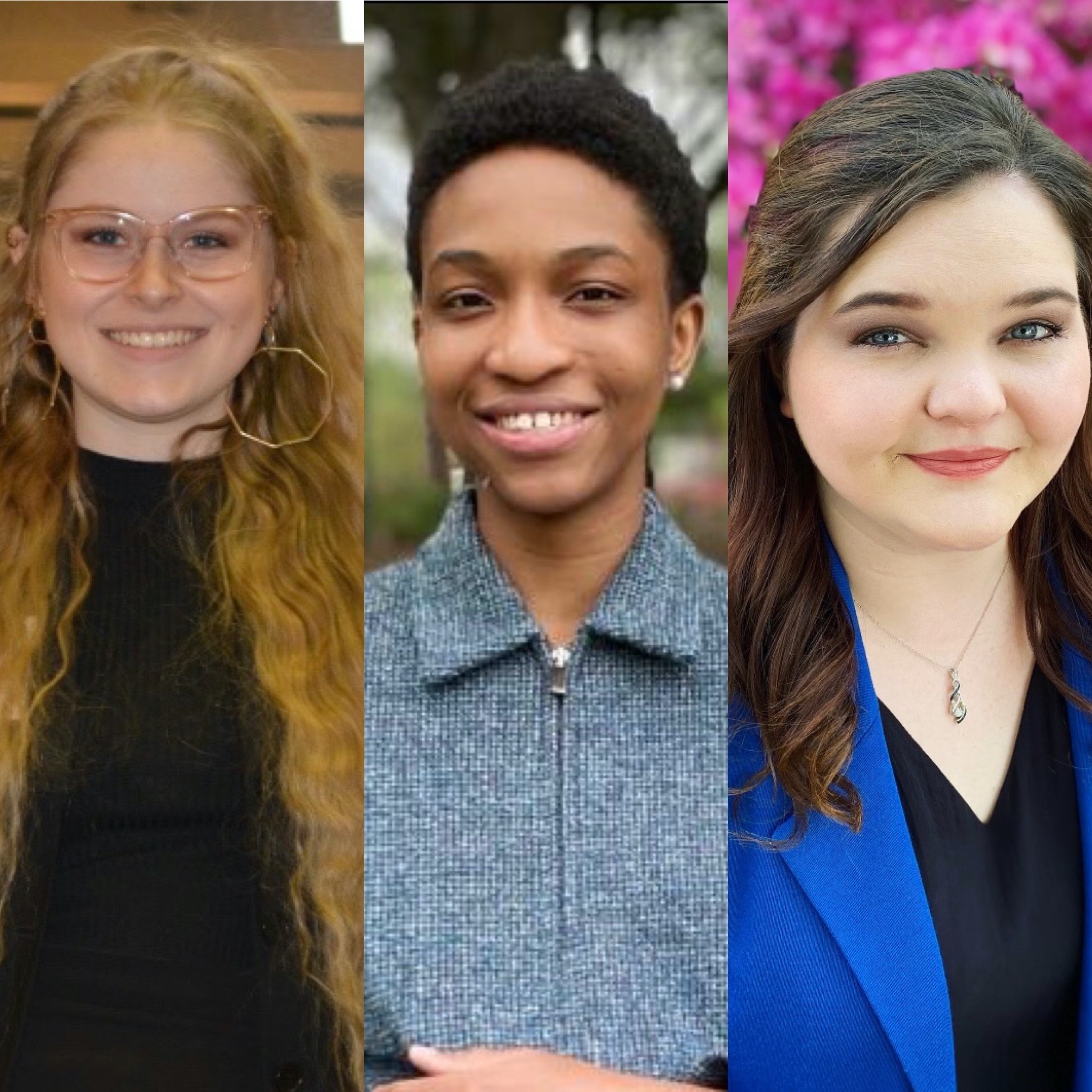
Ambitious student research collaborations with faculty members often lead to much more than good grades. The mentorships encourage professional growth, confidence and creativity, even in the midst of a pandemic. Georgia Southern University’s Spring 2021 Honors Research Symposium, which is being held virtually April 26 through April 30, will showcase faculty-student partnerships through a broad range of scholarly and creative research projects produced by more than 100 honors students across multiple disciplines on the Statesboro and Armstrong campuses. A few of the presenters include: Chelsea Riley, a triple major in international studies, political science and Spanish, worked with political science and international studies professor Srobana Bhattacharya, Ph.D., on her thesis, “The Culture Gap: The Role of Culture in Successful Refugee Settlement.” History and English major Jacey Thomas, mentored by associate professor of history Alan Downs, Ph.D., will present, “Irish Rock Music amid a Time of Troubles: Thin Lizzy and U2 as a Bridge During a Time of Division.” Biology major Susan Ihejirika’s presentation, “A Forward Genetic Screen to Identify Human Genes of Interest and Their Roles in Ovarian Cancer,” was guided by biology assistant professor Dongyu Jia, Ph.D. The Honors College, as the university-wide center for excellence in undergraduate education, plays a crucial role with undergraduate research at Georgia Southern. Since the beginning of the College, students have been required to complete honors theses or capstone projects. The faculty-mentored projects have spanned traditional research models, applied research and creative activities in all academic colleges and majors. “Through faculty-mentored research and scholarly activities, honors students create new knowledge and the Honors Research Symposium is the venue where we share it with the broader scholarly community,” said Honors College Dean Steven Engel, Ph.D. “ I am proud of the fact that they have been able to complete these projects despite the challenges of the past year.” Presentations will be posted on YouTube and the comments section will be open for audience engagement with presenters. If you're a journalist looking to learn more about this year’s Honors Research Symposium — simply reach out to Georgia Southern Director of Communications Jennifer Wise at jwise@georgiasouthern.edu.


ChristianaCare also ranks as No. 1 overall employer for diversity and inclusion in Delaware, No. 14 among U.S. health systems (WILMINGTON, Del. – April 23) magazine ranked ChristianaCare as one of the best employers for diversity and inclusion in the United States in its list of Best Employers for Diversity 2021. ChristianaCare also ranked as the No. 1 employer for diversity in Delaware and the No. 14 health system for diversity in the nation. ChristianaCare ranked 121st out of the 500 employers that were recognized. “At ChristianaCare, our mission is simple, but profound – we take care of people,” said Janice Nevin, M.D., MPH, president and CEO of ChristianaCare, which is Delaware’s largest private employer. “And caring for people means that we work together, guided by our values of love and excellence, to bring equity and inclusion to everyone we serve, including our own caregivers. We are committed to building a workforce that reflects the diverse communities we serve, as we aspire to deliver high-quality, accessible care and achieve health equity.” ChristianaCare has committed to being an anti-racism organization and works to ensure that commitment is reflected through the organization’s policies, programs, and practices. (Read more about ChristianaCare’s anti-racism commitment here.) ChristianaCare’s inclusion efforts also include the launch of 10 employee resource groups, which connect caregivers who have a common interest or bond with one another. Formed by employees across all demographics – such as disability, gender, race, military status, national origin, sexual orientation, etc. – these voluntary grassroots groups work to improve inclusion and diversity at ChristianaCare. More than 750 caregivers at ChristianaCare participate in employee resource groups. ChristianaCare also recently launched LeadershipDNA, a new leadership development program that is specifically targeted to underrepresented, diverse populations and is designed to foster professional and career development. “We are grateful for this recognition, which affirms that our organization is committed to taking on the meaningful work to help our caregivers be exceptional today and even better tomorrow,” said Pamela Ridgeway, chief diversity officer and vice president of Inclusion and Diversity at ChristianaCare. “The fact that our caregivers can see the value and feel the impact of our inclusion and diversity efforts illustrates the importance for us to continue to push onward.” Forbes’ Best Employers for Diversity were identified from an independent survey of more than 50,000 U.S. employees working for companies employing at least 1,000 people in their U.S. operations. The employees were asked to give their opinion on a series of statements surrounding the topic of age, gender equality, ethnicity, disability, LGBTQ+, and general diversity concerning their own employer. The survey also gave survey participants the chance to evaluate other employers in their respective industries that stand out with regard to diversity. Only the recommendations of minority groups were considered. Also factored in was diversity engagement amongst managers and diversity among leadership. About ChristianaCare Headquartered in Wilmington, Delaware, ChristianaCare is one of the country’s most dynamic health care organizations, centered on improving health outcomes, making high-quality care more accessible and lowering health care costs. ChristianaCare includes an extensive network of primary care and outpatient services, home health care, urgent care centers, three hospitals (1,299 beds), a freestanding emergency department, a Level I trauma center and a Level III neonatal intensive care unit, a comprehensive stroke center and regional centers of excellence in heart and vascular care, cancer care and women’s health. It also includes the pioneering Gene Editing Institute. ChristianaCare is nationally recognized as a great place to work, rated by Forbes as the 5th best health system to work for in the United States and by IDG Computerworld as one of the nation’s Best Places to Work in IT. ChristianaCare is rated by HealthGrades as one of America’s 50 Best Hospitals and continually ranked among the nation’s best by U.S. News & World Report, Newsweek and other national quality ratings. ChristianaCare is a nonprofit teaching health system with more than 260 residents and fellows. With the unique CareVio™ data-powered care coordination service and a focus on population health and value-based care, ChristianaCare is shaping the future of health care. ####

Much like the cherry blossoms that are reaching peak in DC and are just starting to bloom here in NYC, U.S.-Japan relations seem set to hit their peak with Prime Minister Yoshihide Suga set to become the first world leader to meet with President Biden at the White House this week. This marks the first time a Japanese leader—or any Asian leader—is the first to meet with a U.S. president, since traditionally this honor has been reserved for a neighboring country like Canada or Mexico, or a European ally such as the UK. What does this mean for geopolitics? How does this shift our relationship with Japan and other allies? What does this mean for the balance of global power in a world of ever-shifting alliances? According to Joshua Walker, President & CEO of Japan Society, this historic visit indicates the following: This visit highlights the shift from a Western Transatlantic to an Eastern Transpacific Asian century, where Japan plays a critical role as a frontline security ally of the United States against China as this competition dominates geopolitics. It emphasizes the importance of democratic allies like Japan, specifically the Quad formation of Australia, India, Japan, and the U.S. as a new multilateral framing of America’s engagement in Asia. Japanese leadership inaugurated this concept in the last decade, which has now been embraced by the Biden administration. Brings into focus the 70 years of security treaty alliance between the United States and Japan, where Biden and Suga have been key players for the last half century—since the opening to China that changed the character of U.S.-Japan relations. Represents a key bilateral opportunity for both new administrations to get to know each other on the world stage in advance of the G7 summit in England this summer, and a time to coordinate strategies between the first and third largest economies, from domestic COVID responses and infrastructure investment to global responses to climate change and authoritarian regimes from North Korea and Myanmar to Iran. As host of the Summer Olympics in Tokyo, Japan elevates global aspirations and hopes for a successful, albeit different, competition of the human spirit that, through its resiliency, can overcome COVID. America represents the largest Olympic delegation and TV market, while Japan is the only Asian country to host two Summer Olympics even as China plans for its own Winter Games in 2022.


Lann Le, a senior in the Betty Foy Sanders Department of Art at Georgia Southern University, is drawing inspiration from public response to the COVID-19 pandemic for her senior thesis exhibition, “Good Without.” The interactive exhibition will explore what items people can live without, a choice many people have had to make due to the pandemic. Oct. 20th, a panel discussion related to the project took place over Zoom, featuring Professor of Art Rachel Green, Associate Professor of Education Katie Brkich, Ph.D., and Professor of Economics Richard McGrath, Ph.D. Audio from the discussion will be recorded and played throughout the exhibition. Le said she got the idea for the exhibition after seeing how society reacted to COVID-19 at the beginning of the pandemic in the U.S. “In March, I was told to stock up all necessities and saw shelves being emptied in hours,” she said. “I heard stories of struggles and issues associated with stores being closed, businesses paused, unemployment, stress, food shortage and boredom to name a few. I also saw some drop-off items at donation centers and also more online shopping. Here I question what we need and what we’re conditioned to need.” After getting approval from her professor, Bridget Conn, Le wanted to showcase items people believe they can live without. She approached students, professors and strangers on the internet and in person to ask what their choices would be. She also made a website and Instagram account to keep a log of images of the items. Both will continue to be updated until next August. Le’s exhibition, which will run from Nov. 9 to Dec. 4 in the Fine Arts Gallery on the Armstrong Campus, will feature physical items, photographs, audio and collages installed in an interactive environment. It has also been getting the attention of local media and was recently profiled in the Savannah Morning News. “Lann’s project is unique in that she is really embracing the practices of conceptual and interactive art,” Conn said. “This means that unlike traditional art media, where the artist is in control of making their own paintings or sculptures or the like, she is inviting strangers to direct the project by asking them to submit photographs or items that they have learned they are good without.” To learn more about the exhibition - simply visit the site below: If you are a journalist looking to learn more about this project or if you would like to arrange an interview - simply reach out to Georgia Southern Director of Communications Jennifer Wise at jwise@georgiasouthern.edu to set and time and date.

BLOOMINGTON, Ind. -- During the pandemic, the amount of screen time for many people working and learning from home as well as binge-watching TV has sharply increased. New research finds that wearing blue-light glasses just before sleeping can lead to a better night's sleep and contribute to a better day's work to follow. "We found that wearing blue-light-filtering glasses is an effective intervention to improve sleep, work engagement, task performance and organizational citizenship behavior, and reduced counterproductive work behavior," said Cristiano L. Guarana, assistant professor of management and entrepreneurship at the Indiana University Kelley School of Business. "Wearing blue-light-filtering glasses creates a form of physiologic darkness, thus improving both sleep quantity and quality." Most of the technology we commonly use -- such as computer screens, smartphones and tablets -- emits blue light, which past research has found can disrupt sleep. Workers have become more dependent on these devices, especially as we navigate remote work and school during the coronavirus pandemic. The media have recently reported on the benefits of blue-light glasses for those spending a lot of time in front of a computer screen. This new research extends understanding of the circadian rhythm, a natural, internal process that regulates the sleep-wake cycle and repeats roughly every 24 hours. "In general, the effects of wearing blue-light-filtering glasses were stronger for 'night owls' than for 'morning larks,' said Guarana, who previously has studied how lack of sleep affects business decisions, relationships and other behaviors in organizations. "Owls tend to have sleep periods later in the day, whereas larks tend to have sleep periods early in the day. "Although most of us can benefit from reducing our exposure to blue light, owl employees seem to benefit more because they encounter greater misalignments between their internal clock and the externally controlled work time. Our model highlights how and when wearing blue-light-filtering glasses can help employees to live and work better." The findings appear in the paper, "The Effects of Blue-Light Filtration on Sleep and Work Outcomes," published online by the Journal of Applied Psychology. Guarana is the corresponding author; his co-authors are Christopher Barnes and Wei Jee Ong of the University of Washington. The research found that daily engagement and performance of tasks may be related to more underlying biological processes such as the circadian process. "Our research pushes the chronotype literature to consider the relationship between the timing of circadian processes and employees' performance," the researchers wrote. A good night's sleep not only benefits workers; it also helps their employers' bottom lines. "This study provides evidence of a very cost-effective means of improving employee sleep and work outcomes, and the implied return on investment is gigantic," said Barnes, professor of management and the Evert McCabe Endowed Fellow at the University of Washington's Foster School of Business. "I personally do not know of any other interventions that would be that powerful at that low of a cost." Across two studies, researcher collected data from 63 company managers and 67 call center representatives at Brazil-based offices for a U.S. multinational financial firm and measured task performance from clients. Participants were randomly chosen to test glasses that filtered blue light or those that were placebo glasses. "Employees are often required to work early mornings, which may lead to a misalignment between their internal clock and the externally controlled work time," the researchers said, adding that their analyses showed a general pattern that blue-light filtration can have a cumulative effect on key performance variables, at least in the short term. "Blue-light exposure should also be of concern to organizations," Guarana said. "The ubiquity of the phenomenon suggests that control of blue-light exposure may be a viable first step for organizations to protect the circadian cycles of their employees from disruption." Researchers received no financial support or compensation for this research. The glasses were donated by the Austin, Texas-based company Swanwick.
