
Experts Matter. Find Yours.
Connect for media, speaking, professional opportunities & more.

North Korea Rejects South Korea's Call For Talks: How High Will Tensions Escalate?
North Korea has been in the news a lot lately. Saber rattling, political posturing and missile testing by the hermit state have led to escalating tensions between the United States, South Korea and even neighbouring China. Earlier this month, Pyongyang claimed it successfully tested an ICBM, for the first time, of the type that experts believe could reach Alaska. But as the situation looked to boil over, tensions may have had a chance at simmering. Tongilgak - a North Korean building in the Panmunjom compound in the demilitarized zone between the two countries, which has been used for previous negotiations, was suggested by the South Koreans as a destination for talks between North and South Korea aiming to stop 'all hostile activities that raise military tension.' By early Friday morning, all intelligence indicated – that offer was rejected. The two countries that have been bitter enemies since 1950 remain opposed and unwilling to compromise. There’s a lot at stake – safety, the threat of global war and between the two countries, some families are still divided and incapable of meeting after more than half a century. So, is there a chance the two sides can find a diplomatic solution? Is this rejection just another tactic by North Korean leader Kim Jong Un to leverage more from the west in order to speak? Does North Korea have the ability to launch a missile that may reach American soil? There’s a lot more to this new alignment than a simple agreement and that’s where Missouri State University experts can help. Dr. Dennis Hickey is a global studies expert specializing in Asian politics and American foreign policy. He is a go-to source when media agencies require clear perspective and answers regarding this complex situation and region. Dr. Hickey is available for interviews. Click on his icon to contact him. Source:


Higher Education - A matter of national security?
With increasingly sophisticated and widespread cyberattacks in the news, what role must higher education play in developing the future cyber workforce? Located at the center of federal cybersecurity assets, the city of Augusta is already growing into a global cyber hub. Now, a new school at Augusta University will prepare the next generation of cyber professionals — right here in Augusta. Augusta University President Brooks Keel announced a new School for Computer and Cyber Sciences that will provide opportunities for students to work with the state cybersecurity professionals. The announcement comes just days after breaking ground on a new state-owned 168,000-square-foot, $60 million cyber innovation and training center at Augusta University's Riverfront Campus. "With hands-on research and internship opportunities not found anywhere else, we have the opportunity to revolutionize cybersecurity education in Georgia and make Augusta a leading hub for cybersecurity innovation," Keel said of the new statewide effort, dedicated to develop the workforce and infrastructure needed to protect our nation from cyberthreats. Augusta University's new school launches July 1, but will move into the Hull McKnight Georgia Cyber Innovation and Training Center upon completion in 2018. "The school will benefit more than 300 current computer science and information technology students, who will have the opportunity to work hand-in-hand with industry, the departments of industry and defense, and state cybersecurity professionals and tech startups," Keel said. How else is Augusta University responding to the need to develop highly skilled, technical workers? How can academia, government and industry partner to develop educational opportunities that are critical to enhancing the nation's cybersecurity? Dr. Brooks Keel is available for interviews on the future of cybersecurity education. Click on his icon to arrange an interview. Source:


On Thursday, President Donald Trump announced that the U.S. would abandon the Paris climate accord. During his speech, Trump cited disputed numbers showing that the accord would result in a minimal change in temperature over time. Daniel Peppe, Ph.D., associate professor of geosciences in Baylor University's College of Arts & Sciences, studies ancient terrestrial ecosystems and how they have been influenced by environmental perturbations, such as long- and short-term climate change events. He works to recreate those ecosystems. Peppe argues that one goal of the Paris accord -- developing a strategy to keep the average increase in global temperatures to less than 2 degrees Celsius above pre-industrial levels -- is integral to warding off future disaster. He said: "The Paris Agreement represents a really significant moment in history in which the countries of the world agreed that reducing greenhouse gas emissions was fundamentally important to help reduce the most significant effects of climate change around the world. The agreement developed a strategy to keep the average increase in global temperatures to less than 2 degrees Celsius above pre-industrial levels. Crossing that threshold of temperature increase is likely the point where warming will push the Earth to a climate state that last existed millions of years ago -- one that is fundamentally different from today. Reconstructions of climate, the Earth, and its biota from the last time Earth was in a similar climate state indicate that sea level was dramatically higher, which would mean that many major cities around the world would be flooded; and many places on Earth were hotter and drier and the distributions of plants and animals on the landscape were very significantly different, which would have catastrophic effects on modern agriculture, water use and society." Source:


One Child Dies Every Two Minutes from Malaria – VCU Experts Are Working to Stop Statistics Like This
Did you know 91 countries reported ongoing malaria transmission in 2015? In fact, in that year, according the World Health Organization there were 429,000 malaria deaths and 212 million new cases. While the numbers are astounding – some progress is being made. In fact, according to the World Malaria Report 2016, the rate of new malaria cases fell by 21% globally between 2010 and 2015. Malaria death rates fell by 29% in the same period. However, malaria still claims one child every two minutes. At the Virginia Commonwealth University School of Engineering, the Medicines for All Initiative is helping address the crisis of diseases like malaria by increasing global access to lifesaving medications. Medicines for All develops processes that reduce the cost of active pharmaceutical ingredients (APIs) - a major cost driver in treating infectious diseases in the developing world. VCU is helping find solutions that utilize the lowest-cost raw materials and most efficient tools available. Medicines for All is bringing essential drugs to patients who need them most. VCU’s experts are available to speak regarding the devastating consequence of disease around the world and how VCU's Medicines for All Initiative is saving lives, promoting health and transforming pharmaceutical engineering. B. Frank Gupton, Ph.D., is a professor and the chair of the Department of Chemical and Life Science Engineering at the VCU School of Engineering. He leads the Medicines for All project and is an award-winning researcher and an expert in his field. Simply click on his icon to arrange an interview. Source:



As tension mounts between North Korea and America, it seems like China has become an unlikely ally of U.S. President Donald Trump. On Wednesday, President Trump spoke with Chinese President Xi Jinping about the issue. President Xi said China is willing to help the U.S. end North Korea’s nuke program. Trump has referenced the trade advantages China holds over North Korea and how working together, they may be able to rein in the rogue nation and its leader, President Kim Jong Un, who has threatened to use the country’s nuclear arsenal against any American advances. But is this new friendship or even partnership a reality? What will it mean in the long and short term? Will there be political and economic costs or even benefits with better U.S.-China relations? Or will America have to give something to get something? There’s a lot more to this new alignment than a simple agreement and that’s where Missouri State University experts can help. Dr. Dennis Hickey is a global studies expert specializing in Asian politics and American foreign policy. He is a go-to source when media agencies require clear perspective and answers regarding the complexity of Chinese politics and government. Dr. Hickey is available to speak regarding this increasingly escalating and important international issue. Click on his icon to arrange an interview. Source:

Globe and Mail: After raising $17-million, Toronto fintech firm eyes global expansion
Sensibill Inc., a Toronto-based startup that offers digital receipt technology for banks, has raised $17.3-million to supercharge its global expansion and dig deeper into artificial intelligence. Source:


Since Jan. 20, 2017, America has seen a new style of leadership and authority under President Donald Trump. Trade agreements that were already in place are now under renegotiation, and even agreements like the Trans Pacific Partnership that were expected to be scrutinized by Congress have all but been abandoned. On the international stage, even long held reservations and hesitations to comment on sensitive topics like Taiwan and the ‘One China’ policy seem to be off the table when brought up in public conversation. So, what will this mean for the short- and long- term relationships between the world’s two most powerful countries? Can we expect conflict, military posturing, trade wars and currency battles? Or will the two sides have to simply ‘re-learn’ how to negotiate and cooperate in the new Trump era? But a new person in charge isn’t just an American issue. China too may see a change in leadership at its highest levels this fall. That is a factor that has many watching and wondering about that country’s future direction. For America’s economy, and the global economy – there is much at stake and many world leaders are watching. A recent discussion at the Brookings Institution explored the expectations for China’s leadership change and the prospects for U.S.-China relations in the interim. Dr. Dennis Hickey is a global studies expert specializing in Asian politics and American foreign policy at Missouri State University. His extensive experience and perspective have made him one of the leading opinions on this topic. Simply click of Dr. Hickey’s icon to arrange an interview. Source:
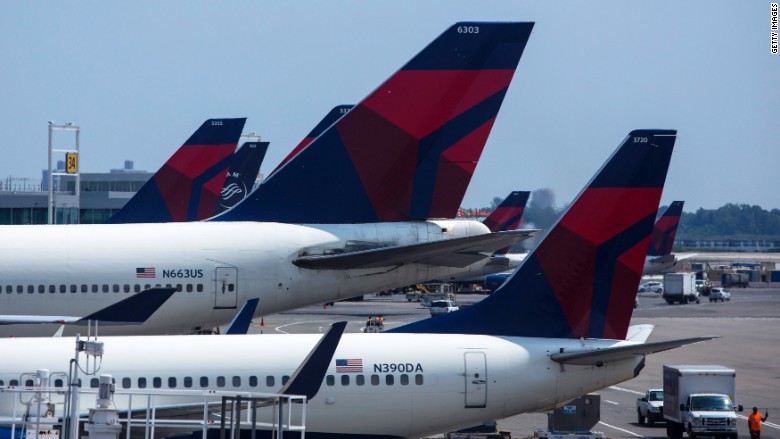
Grounded: Impact of Delta Glitch
Goizueta professor Ram Chellappa has extensive research on the airline industry paired with an expertise in all things digital -- including cybersecurity and networks. While the Delta problem is a "glitch" it can spell big trouble for one of the world's largest airlines. Source:

