
Experts Matter. Find Yours.
Connect for media, speaking, professional opportunities & more.

Worth Longest research on more targeted aerosol drug delivery systems
Michael Hindle, Ph.D., a professor in the VCU Department of Pharmaceutics, and P. Worth Longest, a professor in the VCU Department of Mechanical and Nuclear Engineering, have invested years of time and millions of dollars to address challenges found in the field of medical aerosols. In particular: While smaller particles are more effective in delivering drugs into the lungs and airways, these tiny particles are often exhaled out immediately when taking a dose. Current aerosol delivery systems — think asthma inhalers — effectively deliver just 10 percent of an aerosolized dose. That’s fine for most asthma and COPD sufferers who use standard inhalers with existing medications, as these patients only need a small amount of the potent drugs to reach the lungs and have an effect. “But the medical world wants to use the lungs for delivery of other drugs, whether it’s locally to the airways or systemically to the body, and for that, you need more efficient devices,” Hindle says. To effectively use inhaled drugs for complex medical conditions requires more of the aerosol to reach the airways and to potentially target different regions of the airways — plus the devices to get them there. “Our work is about doing something different — changing that ballgame from having 90% of the drug wasted and 10% make it to the lungs, and flip it so that we get just 10% lost and 90% in the lungs,” Hindle says. “That’s always been our goal.” Taking aerosols from lab to lung Over more than a decade, the duo and their teams have created the three keys to making aerosol drug-delivery work: “developing the strategy, developing the device, and developing the formulation,” says Longest, the College of Engineering’s Louis S. and Ruth S. Harris Exceptional Scholar Professor. “When you see inhalation of aerosols fail, or a new pharmaceutical aerosol product fail, one of these areas has often been neglected. Between my lab and the Hindle lab, we have expertise in each of these different areas.” The fourth component — commercializing their inventions — is underway through a partner in Quench Medical in a deal signed in 2020 thanks to VCU Innovation Gateway. The Minnesota-based company, led by founder and CEO Bryce Beverlin II, Ph.D., has identified lung cancer, severe asthma, and cystic fibrosis as potential initial applications using VCU’s intellectual property, the licensing of which covers both the aerosols and the delivery devices. “It’s very difficult for an academic institution to develop a drug product,” says Hindle, the Peter R. Byron Distinguished Professor in Pharmaceutics. “So Bryce has moved forward with a team of manufacturers, clinical testing plans, and is talking to the Food and Drug Administration.” The VCU researchers had not previously pursued lung cancer as a possible application until Quench came along, Hindle says. “The idea that you could deliver a chemotherapy locally to the lungs is obviously very advantageous, because you don’t get the systemic side effects through the body like with traditional chemotherapy,” he says. “You’re just delivering drugs direct to that site of action for targeting the metastases in the lung.” In May, Quench presented data using the VCU technology to the Respiratory Drug Delivery conference in Florida showing that using a chemotherapeutic dry powder aerosol in rats was highly effective. It significantly reduced tumor burden but used half of the standard IV-delivered chemo dose. “This approach also aims to decrease the total drug delivered with reduced systemic drug levels in the circulation to decrease systemic toxicity,” the report read. It noted the efforts “solve a critical unmet medical need to develop new strategies to improve treatment outcomes in patients with lung cancer.” Heavy interest nationally Hindle and Longest have millions of dollars in funded projects underway, backed by the National Institutes of Health, U.S. Food & Drug Administration, and the Bill & Melinda Gates Foundation. Their work is building on the reputation of VCU’s Aerosol Research Group, founded in 1988 by emeritus professor Dr. Peter Byron (the name on Hindle’s professorship). The group’s work spans a wide variety of research areas in aerosol formulation and delivery. Hindle and Longest have worked together since 2006. While Hindle is focused on drug formulations, Longest is the engineering and computer modeling expert. His background is in biological fluid flow, and prior to joining VCU in 2004 had worked in the area of blood flow in vascular disease. But he wanted to differentiate his work, and found VCU’s reputation in medical aerosols was the place he could, in his words, “make an impact.” Through computer models, Longest and his team can understand how powders or liquids will turn into aerosol particles and the behaviors they will undertake when delivered into the body. “The lung is an area of the body where we have all these complex phenomena occurring with airflow and moving walls,’” he says. “It really takes high performance computers to understand it.” Drs. Longest and Hindle have developed a series of technology platforms that produce particles that are tiny when entering the lungs to minimize deposition losses in the mouth and throat — but grow in size as they travel down the warm, humid airways. One of the devices uses a mixer-heater to produce tiny particles, other technologies use a pharmaceutical powder or liquid containing a simple hygroscopic excipient such as sodium chloride; it is this excipient that attracts water from the lungs and makes the particles grow and deposit in the lungs with high efficiency. Eyes on infants Lately, the pair have been working on a method of aerosol drug delivery to newborns and prematurely born babies. “It’s a different set of challenges when you’re trying to deliver aerosols to infants who are born prematurely, and don’t have the ability to breathe on their own due to the lack of airway surfactant,” Hindle says. “And that’s something that, academically, we thought we were in a position to try and make a contribution to the field.” The group is working with funding from the NIH and the Bill and Melinda Gates Foundation to develop a method of delivering an aerosol surfactant to infants that will hopefully remove the need to intubate these fragile babies. In addition to striking licensing deals with Quench and building relationships with additional partners, Innovation Gateway has backed the pair’s work with an initial $25,000 from VCU’s Commercialization Fund as well as a just-awarded additional $35,000. “We turned that into a series of intellectual property that has resulted in three licensed patents and a whole family of IP in relation to both formulations and devices,” Hindle says. “There’s been lots of interest in delivering drugs to the lungs, it’s just been very difficult to institute any sea change, because the pharmaceutical industry is relatively risk averse.” And so their research continues, as Quench moves forward to bring their inventions to the bedside. “What I’m doing, I don’t really consider it work — it’s an opportunity to interact with great colleagues and contribute to a mission that will be very helpful to a broad range of people,” Longest says. “I also see it as a big responsibility. We want to do this in the right way. Because people’s health and lives are at stake. We want to make sure we approach this with a large sense of responsibility, and do our best.”



Privacy implications of contact tracing for COVID-19
Contact tracing is the process of identification of persons who may have come into contact with an infected person and subsequent collection of further information about these contacts Contact tracing is a key public health response to battle infectious diseases such as COVID-19. Mobile technologies offer robust options for contact tracing through the use of GPS, Bluetooth, cellular information and AI-powered big data analytics. Together, this information can help manage the spread of COVID-19. Several countries have rolled out contact-tracing apps and solutions, such as the UK, Israel and South Korea among others. However, preserving personal privacy is critical toward maintaining public trust and protecting users during this crisis. Kurt Rohloff, assistant professor of computer science at New Jersey Institute of Technology and co-founder of Duality Technologies, is an expert in areas concerning privacy and the implications of contact tracing, and how technologies exist to both protect private information and support contact tracing. Duality Technologies has developed a prototype solution for privacy-preserving contact tracing that uses the open-source PALISADE homomorphic encryption library that Rohloff developed at NJIT with funding from DARPA. To speak with Rohloff directly on issues related to privacy and contact tracing, click on the button below to arrange an interview.



Aston University wins share of £118m funding to accelerate its research impact
The Impact Acceleration Account (IAA) investment over three years focuses on maximising impact, knowledge exchange, translation and commercialisation potential within research organisations Funding allows researchers to unlock the value of their work, including early-stage commercialisation of new technologies The University will receive over £580,000 ‘to accelerate UK bright ideas into global opportunities'. Aston University has won a share of £118m in UK Research and Innovation (UKRI) funding. The Impact Acceleration Account (IAA) investment over three years focuses on maximising impact, knowledge exchange, translation and commercialisation potential within research organisations. Funding allows researchers to unlock the value of their work, including early-stage commercialisation of new technologies and advancing changes to public policy and services such as NHS clinical practice. UKRI, a government body responsible for delivering £8bn research and innovation funding each year, is investing £118 million in the latest round of IAAs to translate research across 64 universities and research organisations. Aston University was successful in gaining both Engineering and Physical Sciences Research Council (EPSRC) and Biotechnology and Biological Sciences Research Council (BBSRC) IAA funding – the latter one of only 15 IAA full awards nationally. Luke Southan, technology transfer manager at Aston University, said: “This funding will be transformational for Aston University’s capacity to get the best good from the research it carries out. “We have a pipeline of world-changing inventions, medical treatments, net-zero initiatives and spinout companies that we can give the greatest chance of success through these highly prestigious pots of funding.” UKRI director of commercialisation, Tony Soteriou, said: “The UK is home to some of the brightest, most innovative and creative research teams in the world. They have the ideas and they have the entrepreneurial energy to create businesses and services that could turn sectors on their head. “What they need, what every great commercial idea needs, is support in the critical early stages. The Impact Acceleration Account is the catalyst that allows projects to grow to the next level, attracting investment, forging partnerships and creating jobs. “The breadth of UKRI allows us to work right across the UK’s world-class research and innovation system to ensure it builds a green future, secures better health, ageing and wellbeing, tackles infections, and builds a secure and resilient world.”


Unattainably Perfect: Idealized Images of Influencers Negatively Affect Users’ Mental Health
Filters, Adobe Photoshop, and other digital tools are commonly used by social media “influencers.” These celebrities or individuals have a large follower base and “influence” or hold sway over online audiences. This digital enhancement of images is well-documented anecdotally. Instagram, in particular, has come under growing scrutiny by the media in recent years for promoting and popularizing unattainably perfect or unrealistic representations of its influencers. What’s less understood is the appeal and the actual effect that these digitally enhanced images have on followers–particularly in terms of people’s feelings of self-worth and their mental wellbeing. A ground-breaking study by Goizueta Business School’s David Schweidel and Morgan Ward sheds new light on the real-world impact of digital enhancement, and what they find should be cause for significant concern. Downstream Consequences: Impressions Have Lasting Impact Across a series of five studies with a broad sample of participants and using AI-powered deep learning data analysis to parse individuals’ responses, Schweidel and Ward have unearthed a series of insights around the lure of these kinds of idealized images, and the negative “downstream consequences” that they have on other users’ self-esteem. “Going into the research, we hypothesized that micro-influencers who digitally manipulate their images, offering unrealistic versions of themselves, would be more successful at engaging with other users–getting more follows, likes, and comments from them. And we do find this to be the case, but that’s not all,” says Schweidel. He and Ward also discover that when users are exposed to these kinds of images, they make comparisons between themselves and the enhanced influencers; comparisons that leave them feeling lacking, envious, and often inadequate in some way. In terms of mental health and wellbeing, this is alarming, says Ward. Our research shows unequivocally that when followers consume idealized versions of popular figures on social media there is a social comparison process that results in these users experiencing negative feelings and a substantial decline in their state of self-esteem. On the basis of these insights, is Meta–the owner of Facebook and Instagram–likely to take action to limit the use of digital enhancement on its platforms and apps any time soon? Unlikely, say Schweidel and Ward. “Meta seems to be fully aware of the deleterious effects that Instagram has on its users. However, the success of Instagram–and that of the brands and influencers that appear on the app–is fueled by increased consumer engagement: the very engagement that this kind of digital enhancement of images drives. So the incentive is there to maintain the practices that keep users engaged, even if there’s a trade-off in their emotional and mental health.” This is a fascinating and important topic - and if you're a reporter looking to know, then let us help. David A. Schweidel is professor of marketing at Emory University’s Goizueta Business School. He is an expert in the areas of customer relationship management and social media analytics. Morgan Ward is an assistant professor of marketing at Emory University’s Goizueta Business School and is an expert in consumer behavior. Both experts are available to speak with media - simply click on an icon to arrange a discussion today.
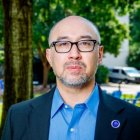


There's some important research taking place by an expert at Georgia Southern University - and the findings could result in serious and positive changes to nutrition for those living in rural, remote and under-served communities in Latina America and around the world. Ana Palacios, Ph.D., assistant professor in the Department of Public Policy and Community Health in the Jiann Ping Hsu College of Public Health, is working on a clinical trial with a community in Honduras to find out whether giving eggs to kids between the age of 6 to 24 months will help them in terms of growth, food security and dietary diversity. Her work was recently featured in Forbes Magazine. "My heart, of course is in Latin American populations, and I have a community-based trial in Honduras that is assessing the effectiveness of an egg intervention," she says, adding that this community-based participatory research project is covering about 600 young children from more than 30 rural under-served communities in the Honduras Highlands. "Some evidence has shown that eggs can improve linear growth in some populations of Latin America," she says, "We are passionate in that this will provide a replicable, inexpensive, scalable and sustainable alternative to improve young children's nutrition, dietary diversity, food insecurity, economic development and overall reduce disparities." Palacios hopes the study will provide a solution that can be used in a wide variety of contexts in under-served rural areas throughout Latin America and the Caribbean, and other regions around the globe. June 16 - Forbes It's a fascinating topic - and research that could truly be impactful on a global scale. The full article about Palacios' work is attached. If you are a journalist looking to know more about this research - then let us help. Palacios' research is focused on addressing disparities in access to nutrition, health, and education in under-served populations. She is available to speak with media - simply reach out to Georgia Southern Director of Communications Jennifer Wise at jwise@georgiasouthern.edu to arrange an interview today.


Looking for a 'real' expert to explain the latest advances in virtual reality? We're here to help!
Virtual reality is quickly becoming an actual necessity in all facets of technology, education, entertainment and the workplace. It's a popular topic, and Augusta University's Lynsey Steinberg sat down to answer a few questions about how far VR has come and where it's going. VR is changing everyday life for many. What are the biggest advances you've seen in VR use? Virtual reality is rapidly evolving and expanding. It wasn’t too long ago we were excited for the idea of a wireless head set. Now there are companies such as Virtuix creating 360-degree treadmills to interact with your experience in VR and Hypnos VR (a product which releases scents in the air based on the experience in VR). There have been advances of adaptive and stress response simulations based on pupillometry measurements or even integration of physiological sensors for behavioral research. The biggest advancements are solutions that have been unimaginable before that are now entirely possible. It seems the medical field has been a big benefactor of VR. Is this giving students a better way to "learn" about anatomy and other aspects of the field? I believe all experience is valuable to learning. VR is unique in allowing an individual to view as if from their own perspective for virtual experiential learning. We often hear the phrase, “If you could imagine walking a mile in someone else’s shoes,” and now we can provide perspective, allowing another person to view the world as someone with a particular disease or simulate training in a low-risk environment. One example, Fire in the OR, is a VR simulation allowing medical professionals to train safely on how to remove fire danger in the operating room. I believe simulations like these are remarkable examples of how valuable VR can be in education, to remove elements of danger in everyday life. Their research showed 250% improvement rate on fire safety in the OR. A huge industry leader in surgical simulations is Osso VR, creating surgical training procedures for surgeons and hiring some of our Augusta University medical illustration graduates. How is this being applied at Augusta University? The Center for Instructional Innovation created modules with the Medical College of Georgia on handwashing hygiene health and end-of-life care scenarios with the College of Nursing. We encourage faculty to develop multiple methods of interactive modules for the benefit of all learning styles. VR certainly provides engaging and enriching materials for a low-risk environment in instruction. The Center for Instructional Innovation is currently working with the Academic Student Success Center to implement Oculus Quest head sets for anatomy and physiology students to benefit from application use in VR. Augusta University student Henry Oh and his 3D printed pottery from VR sculpture. How else has VR and its use changed the way we go about our daily lives? VR head sets are known in robotics, manufacturing, therapeutic modalities, gaming capabilities, technology in research and education. Any scene you can film in 360 degrees you can now watch in a headset and be fully immersed in the scene (ie: a theater production, a museum tour, an art exhibit, a temple historically preserved, etc). We have gone from telling a story to being immersed in a story. We have been able to utilize VR technology integration and innovation on campus to create enriching learning experiences. We collaborated with our Ceramics department (with Brian McGrath and Raoul Pachecho) to support students in virtual clay sculpting with Adobe Medium. Students 3D printed their works of art after exporting the files from the VR simulation. Where do you see the future of VR? The future developments for integrating systems for haptic feedback will be remarkable integrations. The continued development of behavioral research and integration of gamification is an exciting opportunity in VR as well as the continued development for protocols and appropriate safety procedures. The cross-platform and cross-disciplinary possibilities will allow for creativity to blossom in new world solutions. It is clear, the ongoing need for technical workforce required to create and support more VR and other high-impact technology is rapidly growing. VR is a fascinating topic and if you're a journalist looking to know more by speaking with Steinberg, then let us help. Steinberg is one of the 300 board-certified medical illustrators with experience in hands-on surgery in the operating room, utilizing development in virtual reality, 3D printing, animation, gamification and graphic design while working directly with students, faculty and physicians. Steinberg is available to speak with media -- simply click on her icon now to arrange an interview today.


Lecturer Carol Jordan, left, and student Anna Bryan assist with a vitamin D assay as part of a study on racial disparities and cardiovascular health. Researchers in the Waters College of Health Professions (WCHP) at Georgia Southern University are studying why Black adults in America are 30% more likely to die from cardiovascular disease (CVD) than white adults through a study on racial disparities and cardiovascular health. Faculty and graduate students in the University’s Biodynamics and Human Performance Center and Medical Laboratory Sciences program have teamed up to examine the biological basis for these racial differences to aid in the development of effective prevention and treatment strategies. “More than half of this racial disparity may be attributed to substantially greater rates of high blood pressure and vascular dysfunction in Black adults,” said Greg Grosicki, Ph.D., principal investigator on the study and assistant professor in WCHP). The team is examining the difference in skin pigmentation, which can influence cardio preventive vitamin D levels. Through the use of an enzyme-linked immunosorbent assay (ELISA), a biochemical test to measure antibodies, antigens, proteins and glycoproteins in biological samples, the team is able to measure vitamin D levels in plasma samples. By pairing vitamin D values with measures of skin pigmentation and the team’s comprehensive assessments of cardiovascular health, they are able to determine whether low vitamin D levels may be contributing to higher blood pressure and vascular dysfunction in Black adults, which will help inform future interventions and therapeutic strategies seeking to alleviate racial disparities in CVD. The ELISAs were purchased using a Graduate Student Organization grant awarded to Josiah Frederic, a graduate student studying sports medicine. The research team consists of both faculty and students from the Department of Health Sciences and Kinesiology as well as the Department of Diagnostic and Therapeutic Sciences. Team members include the following: Brett Cross, graduate sports medicine student Joe Vondrasek, graduate sports medicine student Josiah Frederic, graduate sports medicine student Zoe Lincoln, undergraduate health science student Peter Gaither, graduate sports medicine student Wesley Blumenburg, graduate sports medicine student Andrew Flatt, Ph.D., assistant professor Greg Grosicki, Ph.D., principal investigator and assistant professor Amy Frazier, lecturer Carol Jordan, clinical coordinator and senior lecturer Anna Bryan, undergraduate medical laboratory sciences student If you're a reporter looking to know more about this important research - then let us help. Greg Grosicki, Ph.D., is available to speak with media - simply reach out to Georgia Southern Director of Communications Jennifer Wise at jwise@georgiasouthern.edu to arrange an interview today.

For two years during the COVID-19 pandemic, U.S. public schools have been able to provide free meals for all students, including to-go meals in the summer. But on June 30, 2022, the federal waivers that expanded the school lunch program will expire. In a recent Q&A published by The Conversation, Marlene Schwartz, a professor of Human Development and Family Sciences at the University of Connecticut and the director of the Rudd Center for Food Policy & Health, discusses how these changes will affect children and families and how food pantries can help: What are the effects of making school meals free for all students? The findings are pretty clear that when students have universal free meals, participation in school meals programs goes up, so more children eat them. And research shows that the meals that are provided through the school meal program are of higher nutritional quality than the meals that children bring from home or get from other places. Some studies have found that when you provide universal free meals, you have improvements in academic performance, particularly for students who are at higher risk. There is also evidence in some studies that universal free school meals help improve family food insecurity rates. When a family knows that their child can get breakfast and lunch every day at school, it really allows them to save their food budget to purchase other foods for the house. And that helps them be more food-secure. What is the role of food banks and pantries in shaping the diet and health of vulnerable children and families? Within the charitable food system, there’s been a real shift in thinking that has been a change from giving away as many pounds of food as possible to really looking at the nutritional quality of those pounds. That’s thanks in part to Feeding America, which is a national network of food banks, and Partnership for a Healthier America, which is part of Michelle Obama’s Let’s Move initiative. Both of them are working with food banks around the country to really help them track the nutritional quality of their food and set goals for themselves in terms of maximizing the most nutritious foods they are able to distribute. Dr. Schwartz is an expert on school wellness and nutrition programs and food insecurity. She's available to speak with media - simply click on her icon now to arrange a time today.


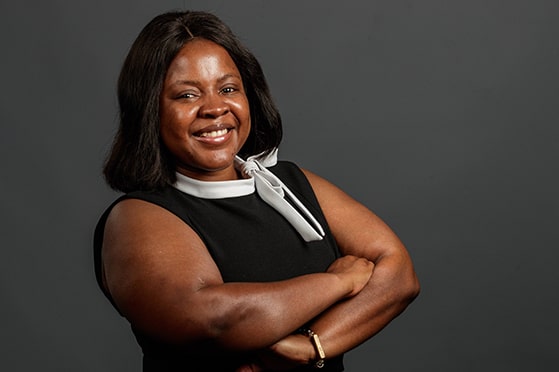
‘Rising star’ graduate: Sylvia Ofori’s journey from Ghana to Georgia Southern to Harvard
On her first flight from Ghana to the United States, Sylvia Ofori arrived in Atlanta, Georgia, at 1 a.m. By 4 o’clock the next afternoon, Ofori was in her first American classroom in Georgia Southern University’s Jiann-Ping Hsu College of Public Health on the Statesboro Campus. Jet-lagged and attempting to absorb a foreign campus and classroom procedures, Ofori was out of sorts when her professor, Isaac Chun-Hai Fung, Ph.D., encouraged her to apply for a student research position following class introductions. Within days, she’d interviewed and earned the spot, supported by funding from the Centers for Disease Control and Prevention. In their first meeting, Fung challenged Ofori to publish 10 papers by the end of her public health doctoral program. “I wasn’t familiar with publications, but he threw that challenge at me from the beginning,” Ofori remembered. “Wow. His plan was for me to start working on dissertation-related projects immediately.” Ofori’s first project was a scoping review on the use of digital technology to improve and monitor handwashing in children. Following a presentation of her review at the University’s 2019 Research Symposium, her work was published in an academic journal, and many more followed as co-author with Fung and another mentor, Kamalich Muniz-Rodriguez, DrPH. By the end of her doctoral training, Sylvia had published 11 papers with Fung, and three more manuscripts will be submitted. On May 13, Ofori earned a DrPH in public health with a concentration in epidemiology as she crossed the stage in one of two Savannah commencement ceremonies. In June, she’ll begin as a Postdoctoral Fellow in the Department of Epidemiology at Harvard University to continue global public health research she began at Georgia Southern. There's a full article detailing Sylvia's amazing story - and her success to date. It's attached here: If you're a reporter looking to know more about Sylvia's story, or how Georgia Southern has students from around 100 countries across the world currently studying on both the Statesboro Campus and the Armstrong Campus in Savannah. Simply reach out to Georgia Southern Director of Communications Jennifer Wise at jwise@georgiasouthern.edu to arrange an interview today.

Dignitaries help University officials break ground on Jack and Ruth Ann Hill Convocation Center
State and local dignitaries help break ground on the new Jack and Ruth Ann Hill Convocation Center on Georgia Southern’s south campus in Statesboro. L-R: Georgia Southern Men’s Basketball Coach Brian Burg, Chair of the Georgia Southern Foundation Mike Sanders, University Foundation Board Member Leonard Bevill, University Provost Carl Reiber, Ph.D., Georgia Southern Athletics Director Jared Benko, Regent Everett Kennedy, Majority Leader Jon Burns, USG Chancellor Sonny Purdue, University President Kyle Marrero, Mr. Lance Hill, Congressman Buddy Carter, Chairman Terry England, Congressman Rick Allen, Student athlete Hannah Fuller, Waters College of Health Professions Dean Barry Joyner Ph.D. The opportunity to memorialize the late Sen. Jack Hill and wife Ruth Ann brought an impressive list of state and national leaders to Statesboro on Thursday to help break ground on a new Georgia Southern University Convocation Center that will bear their names. New University System of Georgia (USG) Chancellor Sonny Perdue, state legislators, congressmen and Georgia Southern University President Kyle Marrero – all of whom had worked extensively with Hill over the last several decades – headlined a team of speakers who lauded Hill and his impact on Georgia while helping to kick off a project that will change the face of Statesboro. “I’ve never known a more dedicated public servant than Jack Hill,” said Perdue, who shared an office with Hill and lived with him for a time while they both served in the Georgia Legislature. “It’s an honor to be here today to remember my best political friend in the world.” At 95,000 square feet, the Jack and Ruth Ann Hill Convocation Center will be the largest event venue space between Savannah and Macon and will serve as the signature building on Georgia Southern’s south campus, fronting Veterans Memorial Parkway (US 301 bypass). With an estimated total cost of $64.4 million, the center will be a multi-story complex that provides approximately 7,000 square feet of additional instructional space for the Waters College of Health Professions and provides more than a 50% increase in seating capacity in an arena that will be the new home court for Georgia Southern Eagles NCAA basketball games. The building is named for Jack Hill (‘66), who was the longest-serving Georgia senator when he died in April 2020. He was a senator for 30 years, serving as chairman of several crucial committees, including Appropriations, which has broad jurisdiction over legislation involving budgeting and spending state and federal funds. With Hill’s support, Georgia Southern reached new heights as an institution serving the southeast region and the state of Georgia. Hill was instrumental in helping the University expand its programs and build several new state-of-the-art facilities, including the Engineering and Research Building, which opened for classes in January 2021. His wife of 48 years, Ruth Ann, focused her life on public education and retired as principal of Reidsville Elementary School. She was a triple Eagle, earning degrees from Georgia Southern in 1973, 1990 and 1991. The media release announcing this historic event is attached here: If you're a journalist looking to know ore about this event or Georgia Southern University - simply reach out to Georgia Southern Director of Communications Jennifer Wise at jwise@georgiasouthern.edu to arrange an interview today.