Experts Matter. Find Yours.
Connect for media, speaking, professional opportunities & more.

Researchers warn of rise in AI-created non-consensual explicit images
A team of researchers, including Kevin Butler, Ph.D., a professor in the Department of Computer and Information Science and Engineering at the University of Florida, is sounding the alarm on a disturbing trend in artificial intelligence: the rapid rise of AI-generated sexually explicit images created without the subject’s consent. With funding from the National Science Foundation, Butler and colleagues from UF, Georgetown University and the University of Washington investigated a growing class of tools that allow users to generate realistic nude images from uploaded photos — tools that require little skill, cost virtually nothing and are largely unregulated. “Anybody can do this,” said Butler, director of the Florida Institute for Cybersecurity Research. “It’s done on the web, often anonymously, and there’s no meaningful enforcement of age or consent.” The team has coined the term SNEACI, short for synthetic non-consensual explicit AI-created imagery, to define this new category of abuse. The acronym, pronounced “sneaky,” highlights the secretive and deceptive nature of the practice. “SNEACI really typifies the fact that a lot of these are made without the knowledge of the potential victim and often in very sneaky ways,” said Patrick Traynor, a professor and associate chair of research in UF's Department of Computer and Information Science and Engineering and co-author of the paper. In their study, which will be presented at the upcoming USENIX Security Symposium this summer, the researchers conducted a systematic analysis of 20 AI “nudification” websites. These platforms allow users to upload an image, manipulate clothing, body shape and pose, and generate a sexually explicit photo — usually in seconds. Unlike traditional tools like Photoshop, these AI services remove nearly all barriers to entry, Butler said. “Photoshop requires skill, time and money,” he said. “These AI application websites are fast, cheap — from free to as little as six cents per image — and don’t require any expertise.” According to the team’s review, women are disproportionately targeted, but the technology can be used on anyone, including children. While the researchers did not test tools with images of minors due to legal and ethical constraints, they found “no technical safeguards preventing someone from doing so.” Only seven of the 20 sites they examined included terms of service that require image subjects to be over 18, and even fewer enforced any kind of user age verification. “Even when sites asked users to confirm they were over 18, there was no real validation,” Butler said. “It’s an unregulated environment.” The platforms operate with little transparency, using cryptocurrency for payments and hosting on mainstream cloud providers. Seven of the sites studied used Amazon Web Services, and 12 were supported by Cloudflare — legitimate services that inadvertently support these operations. “There’s a misconception that this kind of content lives on the dark web,” Butler said. “In reality, many of these tools are hosted on reputable platforms.” Butler’s team also found little to no information about how the sites store or use the generated images. “We couldn’t find out what the generators are doing with the images once they’re created” he said. “It doesn’t appear that any of this information is deleted.” High-profile cases have already brought attention to the issue. Celebrities such as Taylor Swift and Melania Trump have reportedly been victims of AI-generated non-consensual explicit images. Earlier this year, Trump voiced support for the Take It Down Act, which targets these types of abuses and was signed into law this week by President Donald Trump. But the impact extends beyond the famous. Butler cited a case in South Florida where a city councilwoman stepped down after fake explicit images of her — created using AI — were circulated online. “These images aren’t just created for amusement,” Butler said. “They’re used to embarrass, humiliate and even extort victims. The mental health toll can be devastating.” The researchers emphasized that the technology enabling these abuses was originally developed for beneficial purposes — such as enhancing computer vision or supporting academic research — and is often shared openly in the AI community. “There’s an emerging conversation in the machine learning community about whether some of these tools should be restricted,” Butler said. “We need to rethink how open-source technologies are shared and used.” Butler said the published paper — authored by student Cassidy Gibson, who was advised by Butler and Traynor and received her doctorate degree this month — is just the first step in their deeper investigation into the world of AI-powered nudification tools and an extension of the work they are doing at the Center for Privacy and Security for Marginalized Populations, or PRISM, an NSF-funded center housed at the UF Herbert Wertheim College of Engineering. Butler and Gibson recently met with U.S. Congresswoman Kat Cammack for a roundtable discussion on the growing spread of non-consensual imagery online. In a newsletter to constituents, Cammack, who serves on the House Energy and Commerce Committee, called the issue a major priority. She emphasized the need to understand how these images are created and their impact on the mental health of children, teens and adults, calling it “paramount to putting an end to this dangerous trend.” "As lawmakers take a closer look at these technologies, we want to give them technical insights that can help shape smarter regulation and push for more accountability from those involved," said Butler. “Our goal is to use our skills as cybersecurity researchers to address real-world problems and help people.”




UF water researchers develop prediction system for harmful algae
The slimy algae topping Florida’s waterways are more than just unsightly. They are often toxic to humans, animals and the environment. To mitigate those risks, University of Florida researchers are collaborating with North Carolina State University and University of South Florida scientists on a next-day prediction model to warn and inform water managers about harmful algal blooms. The research is funded by two U.S. Army Corps of Engineers grants for two phases, totaling $4.4 million. The project is led by David Kaplan, Ph.D., a professor with the Engineering School of Sustainable Infrastructure and Environment in the Herbert Wertheim College of Engineering and director of the Howard T. Odum Center for Wetlands, and Mauricio Arias, Ph.D., an associate professor at USF. In a paper published recently in the Journal of Environmental Management, Kaplan, UF assistant professor Elise Morrison, Ph.D., and NCSU’s Maria Menchu Maldonado, Ph.D., chronicled their work with harmful algal blooms in the Caloosahatchee River and Estuary, the environmentally sensitive link between Lake Okeechobee and Florida’s southwestern coast. Maldonado performed the work under the guidance of NCSU collaborator Natalie Nelson. In a collaboration between multiple colleges, organizations, departments and universities, the paper’s other authors are Eric Milbrandt of the Sanibel-Captiva Conservation Foundation, Edward Phlips of UF and Natalie G. Nelson of NCSU. The project’s facilitators include Darlene Velez, research coordinator with the UF Water Institute, and Lisa Krimsky, Ph.D., a water resources regional specialized agent with IFAS. Using water samples and computer algorithms, the team developed prediction models based on two water sources feeding the river: Lake Okeechobee and the river’s watershed – the water run-off from the surrounding land. The models determine levels of chlorophyll-a, which is a pigment in algae that is indicative of algal bloom conditions. “For watershed-dominated conditions, the model was able to predict 49% of the variation in next-day chlorophyll-a, which isn’t bad, but for lake-dominated conditions, the model was much better, explaining 78% of the variation in next-day chlorophyll-a in the water,” Kaplan noted. Unlike traditional forecasting models for algal blooms, which are often complex and require much computing power, these models are designed to be practical for daily decision-making, particularly for the Southwest Florida Water Management District (SWFWMD), which has made improving the health of the Caloosahatchee Estuary a state priority. Ultimately, researchers want to develop an algae-prediction system and tools for water managers to reduce risks in all freshwater bodies. “Definitely, this model could be expanded with the use of more data,” said Maldonado. “The same procedure could be applied in other lakes that are highly managed. And this could be done around the world.” Algal blooms in Florida’s lakes, rivers and estuaries have caused significant environmental and economic damage in recent years, UF researchers contend. Blooms are becoming more frequent and longer lasting. The initial project – called Coupling Lake, Estuarine, and Watershed Models for the Caloosahatchee River and Estuary (CLEW) – designed data- and model-driven guidance for Lake Okeechobee water releases. “The overall motivation is that Lake Okeechobee is a challenging natural resource to manage, particularly deciding when and how much water to discharge from the lake to either estuary,” Kaplan said. “There are many competing needs surrounding management of the lake, which has only so much volume. We don't want to cause flooding or other ecological harm.” The follow-up project is UF’s collaboration with USF to develop tools for end users, meaning agencies and managers to make better decisions. The team wants to deliver a system where water managers press the button to get the one-day risk forecast. The study was organized to predict whether the algae-toxin risk is low, medium or high. “In this case, there is a threshold of algal organisms that is considered harmful,” Maldonado said. “Those waters carry phytoplankton species, a microscopic algae that produce toxins. They can be dangerous to swim in, and they can be harmful to the environment. It can be a liver toxin.” Beginning in the late 19th century, the Caloosahatchee River and its watershed underwent extensive modifications that significantly altered the hydrology of the region, according to SWFWMD. The once-shallow river was deepened and widened into a regulated waterway that was connected to Lake Okeechobee and the Kissimmee Chain of Lakes for navigation, water supply and flood control purposes. “Water quality is a challenge in Lake Okeechobee, including sometimes pretty bad harmful algal blooms,” Kaplan said. “And then, of course, the downstream recipients of whatever water is discharged are very sensitive to the amount of water they're getting and what's in it. They’d prefer it to be only the right amount at only the right times with the best quality."


A team of researchers from ChristianaCare and the University of Delaware has uncovered a key early step in how colorectal cancer begins. Their new study shows that a common genetic mutation in colorectal cancer disrupts the colon’s normal tissue renewal process, causing immature cells to build up, tissue structure to break down and early tumors to form. Their findings were published in the journal Cancers. “This finding changes how we think about the very first steps of colon cancer,” said Bruce Boman, M.D., Ph.D., senior author of the study and a senior researcher at the Cawley Center for Translational Cancer Research at ChristianaCare’s Helen F. Graham Cancer Center & Research Institute. “Instead of cancer starting because cells grow too fast, we found that it may start because the normal tissue renewal process slows down, creating a backup of cells that should have moved on. That backup sets the stage for tumors to grow.” The study was led by a multidisciplinary team of engineers, mathematicians, pathologists and tumor biologists from four research institutions. Colorectal cancer is one of the most common and deadly cancers worldwide. According to the World Health Organization, more than 1.9 million people are diagnosed each year, and about 930,000 people die from the disease annually. How healthy colon tissue renews itself The lining of the colon is constantly renewing itself. Every day, billions of cells are shed and replaced to keep the tissue healthy and working properly. This process depends on a steady cycle. New cells form at the base of tiny pockets called crypts, mature as they move upward, and are eventually shed. The new study shows how this natural process breaks down when a mutation occurs in a gene called APC, which is altered in about 90 percent of colorectal cancers. Rather than speeding up cell growth, the APC mutation creates a slowdown, or bottleneck, in the colon tissue’s renewal cycle. According to Boman, this slowdown causes dividing cells to pile up instead of moving through the system as they should. The result is a kind of tumor cell “traffic jam” that leads to distorted tissue and the formation of adenomas, early growths that can become cancerous. What APC-mutant tissue looks like To see these changes up close, the team compared healthy colon tissue with tissue from patients who have familial adenomatous polyposis, or FAP, an inherited condition caused by APC mutations. The differences were clear: APC-mutant crypts contained more immature, rapidly dividing cells. Fewer cells matured into specialized cells needed for healthy tissue. The zone where cells divide extended higher than normal. The overall renewal cycle took longer. “These findings are significant because they show how cancer-driving mutations change tissues that normally renew themselves nonstop,” Boman said. Pairing patient tissue with computer modeling To see how these changes happen over time, the researchers studied patient tissue and used a computer model that shows how colon cells normally grow and renew. When they slowed this renewal process in the model, it matched what they saw in tissue with the APC mutation. Cells became crowded, the structures lost their normal shape, and early tumor-like growths, known as adenomas, began to form. This confirmed that delayed renewal alone can trigger the earliest changes linked to colon cancer, even before cells appear abnormal under a microscope. “Our findings show that APC mutation does more than turn on growth signals,” Boman said. “It changes the timing of renewal. Once that timing is off, the tissue becomes vulnerable to structural damage and early tumor growth.” Building on earlier research This study builds on earlier work by the same team that mapped how healthy colon tissue renews itself. In prior studies, the researchers identified five basic biological rules that guide how colon cells grow, move and replace one another in a steady, organized way. The new findings show what happens when that system breaks down. A common mutation called APC slows the normal renewal process. Young, stem-like cells begin to build up before they can mature. Over time, that imbalance creates the conditions for early tumor growth. To pinpoint how these changes unfold, researchers Gilberto Schleiniger, Ph.D., and Christopher Raymond, Ph.D., from the University of Delaware’s Department of Mathematical Sciences paired mathematical models with real patient tissue data. Their work shows that even small delays in cell renewal can push healthy tissue toward cancer. “This gives us a clearer picture of how cancer can start long before a tumor is visible,” said Schleiniger. “By understanding the rules that keep healthy tissue in balance, we can see where and how things begin to go off track.” A possible path toward future treatments The findings also point toward a potential new approach to treatment. The researchers found evidence that the disrupted renewal process may trigger a chain reaction that allows pre-cancerous cells to keep copying themselves and fueling tumor growth. By targeting this process, it may be possible to restore normal renewal timing and healthier tissue structure before cancer becomes established. “This study shows that cancer isn’t just about rogue cells, but about a system that’s fallen out of rhythm,” said Bruce Boman, M.D., Ph.D. “If we can reset that renewal process, we may be able to prevent or slow early tumor growth before it gains momentum.”


CPP, OAS, and the Retirement Timing Tango — The Most Important Dance of Your Life
You’ve been contributing to it your whole life—now let’s get it right. Every retiree dreams of mastering one crucial dance: the Retirement Timing Tango. And here’s the truth—next to good health, guaranteed, predictable income (GPI) sits at the top of every retiree’s wish list, mind list, and need list. Enough income opens the door to independence, autonomy, dignity, and the most sought-after prize of all: aging in place. Not enough income? That will rob you of sleep and enjoyment, creating a non-stop loop of 3 a.m. worry sessions that no melatonin can fix. A badge of a successful retirement starts with enough income to meet all your obligations. This matters far more than leaving an inheritance or making sure your ungrateful nephew gets the cottage. But here’s the thing about this particular tango: you need proper footwear. Orthopedic dance shoes, folks. Not slippers. Not boots. And definitely not Crocs (no shade here). Think support, stability, and a sole that won’t let you down over a long retirement. Here’s the sobering reality: 61% of Canadians fear running out of money in retirement. Women experience this anxiety even more—66% compared to 56% of men (CPP Investments, 2024). Meanwhile, 57% of working Canadians feel unprepared for retirement, and 13% don’t believe they’ll ever retire at all (HOOPP, 2024). Many overlook this, but two powerful government programs—the Canada Pension Plan (CPP) and Old Age Security (OAS)—can form the foundation of retirement income. The CPP fund holds over $675 billion in assets and is expected to remain sustainable for at least 75 years. Nearly three in four Canadians depend on it. The key is timing. Get it wrong, and you could leave serious money on the dance floor. Get it right, and your decisions could result in over $100,000 more in lifetime income. That’s not small change—that’s peace of mind. Think of CPP and OAS as your retirement dance partners—two leads working together to keep you steady and confident. But timing is crucial. When you decide to claim these benefits can mean the difference between a smooth glide across the dance floor and a financial stumble. How Much Money Do OAS and CPP Pay Out? Canadian Pension Plan (CPP): The maximum CPP retirement pension at 65 is $1,433 per month, though most Canadians receive between $830 and $899 based on their contribution history. Old Age Security (OAS): Payments for OAS are up to $740 monthly for ages 65–74 and $999 monthly for those 75 and older—these benefits can support your retirement if used strategically. You cannot start OAS before age 65. How to Calculate Your OAS Monthly Benefit The maximum monthly OAS payment for someone aged 65 to 74 is around $740–$742 per month in 2026, assuming you qualify for the full amount and do not have a clawback due to high income. If you defer OAS till Age 70, the monthly payments increase. Here's the formula. For each month you defer past age 65, your monthly OAS pension increases by 0.6%. That’s 7.2% per year. Over 5 years (age 65 → 70), this adds up to a maximum increase of 36%. Note: There’s no additional benefit to waiting past age 70; the 36% maximum applies at age 70. The Monthly OAS amount you receive depends on a Number of Factors: The age you start receiving benefits (see above) Your residency history in Canada (minimum of 10 years after age 18 to qualify; to reach the full payment amount generally requires 40 years). Income can reduce or eliminate your OAS benefit, even if you defer, due to an income-related “clawback”. Please note these amounts are subject to change. For updates, check the Government of Canada website here. Let’s be crystal clear: CPP and OAS are not handouts CPP is your deferred earnings—your money, matched by your employer. OAS is your citizens’ dividend, earned through residency in Canada. As Grant Roberts, CFP, a financial planner with the accounting firm Welch LLP, says, “OAS is a security blanket. Society is better when people aren’t impoverished at the end of life.” Lose the stigma. You earned this. This is where the choreography becomes tricky. You must make lifetime decisions without knowing how long you'll live (fun, right?). According to Statistics Canada, a 65-year-old Canadian can expect to live another 20 years on average, and if you’re already 65 in good health, your personal runway might be even longer. Taking CPP at 60 lowers benefits by 36%. Waiting until 70 increases benefits by 42%. Using average benefits, deferring can result in more than $100,000 extra in lifetime income. If you live long enough. Fred Vettese, a former chief actuary of Morneau Shepell (now Telus Health) and a national thought leader on retirement issues who has published the bestseller, Retirement Income for Life (ECW Press) has some important insights to share on how age impacts these OAS and CPP payouts. Vettese explains, “Approximately 75% of people win by deferring CPP to age 70 because they live past the break-even point.” His research indicates that about 75% of retirees benefit from delaying CPP until 70, while around 25% do not. Most people underestimate their longevity, but the odds are actually in favour of living long enough for the deferral to pay off. This is where inaction becomes dangerous. As Grant Roberts warns, “Inaction isn’t neutral—it’s a decision by default. While CPP does not start automatically at 65, OAS generally does for most people. The government won’t call to ask if you want to delay OAS for a higher payment—or remind you to apply for CPP at all. You have to ask, and you have to act.” And this isn’t theoretical. Roberts has seen seniors in their 70s who had never started CPP, simply because no one told them they had to apply. We’ve spent our entire adult lives being trained to save, so it’s unreasonable to think we can just flick a switch and suddenly become confident spenders the day we retire. As Grant Roberts puts it, “We teach saving for 50 years—no one teaches spending.” So here’s the real question: what’s your money brand? Saver? Spender? A hybrid in sensible shoes? Retirement requires a rebrand. Lifelong savers often need permission to spend—on experiences, joy, and yes, even dance lessons. Lifelong spenders may need to learn how to waltz with a budget (spoiler alert: let the budget lead). Either way, retirement isn’t about changing who you are—it’s about adjusting your rhythm so your money finally works for the life you’re living now. What About OAS Clawbacks? If your income exceeds about $90,000, the OAS clawback is 15 cents for every dollar. OAS clawbacks often discourage people unnecessarily. As I always say, "don’t let a dime stand in the way of a dollar." Strategic RRSP withdrawals between ages 65 and 70 can greatly reduce future clawbacks and enhance long-term results. This is choreography, not chaos. CPP and OAS planning should begin in your 50s, not at 64½. Ask yourself whether you intend to work past 65, whether you’re healthy enough to delay, and what income sources will fill the gap. Waiting for someone else to lead this dance is a sure way to step on your own toes. Proactively Managing Your OAS and CPP Benefits While most Canadians are automatically enrolled for Old Age Security (OAS) and will receive an enrollment letter around their 64th birthday, you may need to take action if you want to delay your start date to receive higher monthly payments. If you wish to delay, change your start date, or correct any information in your enrollment letter, you'll need to contact Service Canada directly. You can manage these choices in one of three ways: Go Online: Visit "My Service Canada Account" By Telephone: Call 1-800-277-9914 In-Person: Visiting a Service Canada Centre near you Don't assume automatic enrolment means the timing is right for you—review your options carefully, as the decision to delay could significantly increase your retirement income. The Last Dance (Remember the Poorly Lit High-School Gym?) Because the Retirement Timing Tango isn’t a sprint—it’s a 30-year dance marathon, and you are both the dancer and the charity you’re raising money for. CPP and OAS, timed well, aren’t about financial flash; they’re about stamina, balance, and staying upright long after the music changes. Get the timing right and your later years won’t feel like a frantic scramble under flickering gym lights—they’ll feel like a slow, confident final song where you know the steps, trust your footing, and aren’t worried about collapsing halfway through. That’s the point. Not just surviving retirement, but staying on the floor until the very last dance—with dignity, confidence, and enough income to enjoy the moment instead of counting the minutes until it’s over. Sue Don’t Retire… ReWire! Know someone who’s about to leave serious money on the dance floor? Forward this blog before the music stops. Consider it a public service announcement disguised as friendship. And if you want regular doses of retirement clarity, confidence, and choreography (no leotards required), subscribe here.


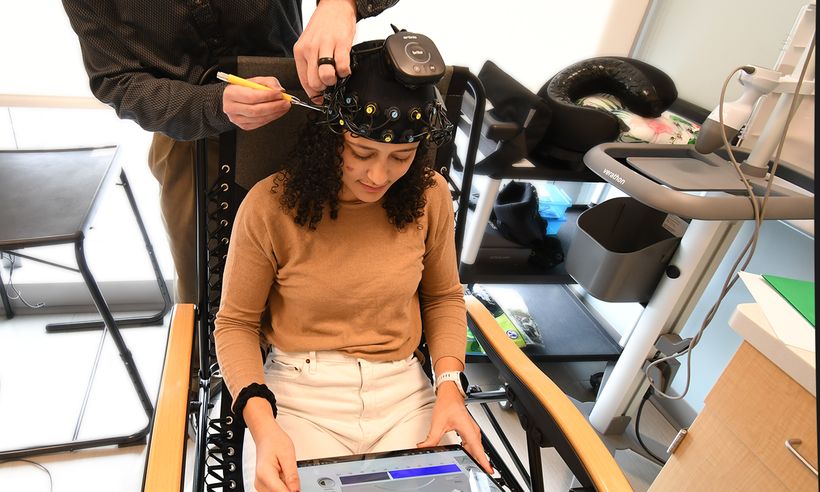
The year was 2003, and John Speich, Ph.D., professor in the Department of Mechanical & Nuclear Engineering, felt like he had a clear sense of the direction his burgeoning career was heading in. Speich had recently completed his doctorate in mechanical engineering from Vanderbilt University, where he concentrated on robotics. Following Vanderbilt, Speich went on to become an associate professor at the Virginia Commonwealth University (VCU) College of Engineering, working with students in the Department of Mechanical & Nuclear Engineering. Leveraging his robotics expertise, Speich planned to continue his work developing robotics for medical surgery and rehabilitation. Then Speich got a call from Paul Ratz, Ph.D., a professor at the VCU School of Medicine, asking for assistance that would change the entire focus of Speich’s career. Ratz used a small robotic lever that moved up and down just a few millimeters to stretch tiny strips of bladder muscle and rings of artery, trying to determine how different chemical compounds changed the mechanical properties of the muscle. Speich was intrigued—this was a form of mechanical engineering. “In mechanical engineering, we pull on things to determine the mechanical properties,” says Speich. “Here, Dr. Ratz was pulling on pieces of bladder instead of the typical substances mechanical engineers are known to work with, like steel, aluminum or plastic.” Speich and Ratz began working together in 2003, and now, because of that unique partnership, nearly all of the research Speich does is about the bladder. “Before I started working with Dr. Ratz, I had never even heard the words neurourology or urodynamics,” says Speich. “Now, Neurourology and Urodynamics is the name of the journal I publish in the most.” Today, Speich collaborates on bladder biomechanics with two doctors at VCU Health. Adam Klausner, MD is a urologist and the interim chair of the new Department of Urology at VCU. Linda Burkett, MD is a urogynecologist from the Department of Obstetrics and Gynecology; prior to medical school, Burkett completed her bachelor’s degree in Biomedical Engineering from the VCU College of Engineering. Together, Speich, Klausner and Burkett aim to find non-invasive methods to characterize and diagnose overactive bladder, with the goal of allowing doctors to precisely match patients with the most effective treatments. A number of students across the VCU College of Engineering and VCU School of Medicine have aided in their research, including recent Biomedical Engineering graduate Mariam William. Speich’s primary methods of research involve Near-Infrared Spectroscopy (NIRS)—a non-invasive technology that uses light to measure tissue oxygenation and brain activity—and ultrasound imaging. By using NIRS to study the brain activity associated with the sudden urge to urinate, Speich and his team are working to pinpoint the brain’s role and determine whether it or the bladder is the primary cause of an individual’s condition. “There are a lot of potential causes of overactive bladder,” says Speich. “Some people may have more than one cause. Individual responses to these treatments vary; what works well for one patient may not work at all for the next. We want to give doctors better tools for quantifying information about their patients so they can make better decisions and more optimized treatments.” Thanks to research grants, including a National Institutes of Health (NIH) grant from 2015-2025, Speich has been able to make a number of important findings in his bladder research. His team has closely examined the bladder’s dynamic elasticity, investigating the biomechanical mechanisms that allow the bladder muscle to fill and expand. Another recent focus asks, “Bladder or Brain. Which is it?” Speich and his team developed a tool called a sensation meter that they use to help determine what an individual is feeling as their bladder is filling over time. All this groundbreaking research and medical school collaboration, and to think—Speich nearly missed the opportunity to enter this field entirely. “When I tell students about how I came to be involved in bladder biomechanics, I tell them, you will always keep learning throughout your entire career,” says Speich. “You never know where you’re going to end up. If you’re an engineer, you’re a problem solver, and there are all kinds of problems in areas like business and medicine—beyond the traditional areas people think of when they think of mechanical engineering.”



Affordability is Key Issue for NYS Lawmakers
Lawrence Levy, associate vice president and executive dean of the National Center for Suburban Studies, talked to Newsday about New York State lawmakers returning to session with a mandate to address affordability, specifically childcare and rising utility and health care costs.


Sleep Is the First Casualty of Your Screen Habit
Everyone says they want to “sleep better” in the new year. Most start with new pillows, supplements or blackout curtains while the biggest sleep disruptor in the room is still glowing inches from their face. Digital wellness platform Offline.now, founded by author and strategist Eli Singer, has found that we now spend about 10 of our 16 waking hours on screens, roughly 63% of our day. Psychotherapist Harshi Sritharan, MSW, RSW, who specializes in ADHD and modern anxiety, says sleep is often the first system to collapse under that load. Harshi explains that phones and screens emit blue light that hits the retinal ganglion cells in our eyes and tells the brain it’s time to be alert, the opposite of what we need at night: “When we’re leaning towards using our phones right before bed, that blue light hits our system and says, ‘We should be awake.’ It disrupts our circadian rhythm. For people with ADHD or other neurodiversity, whose rhythms are already fragile, adding late-night screen exposure completely throws things off.” She notes that exposure between roughly 11 p.m. and 4 a.m. is particularly damaging for stress and sleep regulation, leaving people “tired all the time throughout the day.” Morning habits can be just as destructive. Sritharan warns that checking your phone first thing essentially programs your brain to chase distraction: “Don’t be on your phone first thing in the morning — it hijacks your attention and your dopamine for the rest of the day. After that kind of stimulation, everything else feels harder and less interesting.” She also calls the snooze button “a pattern that’s making us more tired,” because it fragments REM sleep instead of helping us feel rested. The good news: the data suggests you don’t need a perfect digital detox to see real benefits. A JAMA Network Open study on young adults found that reducing social media use for just one week, not quitting entirely; led to about a 24.8% drop in depression, 16.1% drop in anxiety, and 14.5% improvement in insomnia symptoms. Singer argues that the real barrier isn’t willpower, it’s confidence. Offline.now’s research shows 8 in 10 people want a healthier relationship with tech, but more than half feel too overwhelmed to know where to start. “When people tell us they feel overwhelmed, it’s not laziness. It’s a crisis of confidence,” says Singer. “Lasting change doesn’t require deleting Instagram or TikTok tomorrow. You need to win one personal victory today, and then another tomorrow. That’s how confidence rebuilds.” For journalists covering sleep, mental health, or digital dependency, this story connects the dots between phones, dopamine and insomnia and offers a realistic alternative to the all-or-nothing “digital detox.” Featured Experts Harshi Sritharan, MSW, RSW – Psychotherapist specializing in ADHD, anxiety, insomnia and digital dependency. She explains how blue light, dopamine cycles and “doomscrolling before bed” undermine sleep, especially for neurodivergent clients. Eli Singer – Founder of Offline.now and author of Offline.now: A Practical Guide to Healthy Digital Balance. He speaks to the behavioral data behind digital overwhelm, the confidence gap, and the Offline.now Matrix that turns vague resolutions into actionable micro-steps. Expert interviews can be arranged through the Offline.now media team.




Georgia Southern University’s Institute for Health Logistics & Analytics (IHLA) has launched the Care Station project to address barriers to accessing over-the-counter health products. Care Stations are standalone kiosks open 24/7 that allow users to purchase a range of over-the-counter health products. Items can be paid for using a digital wallet on a mobile phone; cash is not accepted. The first Care Station is located in the alleyway behind Georgia Southern’s City Campus, located at 58 E. Main Street in Statesboro. The project team, led by Jennifer Drey, IHLA community outreach coordinator, and Jill Johns, project manager, prioritized the specific needs of the local population when developing the idea. “By understanding the unique needs of the community, we can offer customized health products and tests in easily accessible locations,” said Drey. Because many of the products are personal in nature, the team designed the kiosks to provide users with privacy. “These kiosks are easy to use, safe and completely confidential,” said Johns. “Whether someone is purchasing pain relievers or sexually transmitted infection tests, their privacy is protected.” To help ensure the Care Stations meet community needs, IHLA encourages Statesboro and Bulloch County residents to share anonymous feedback through an online form at bit.ly/CareStation_Statesboro. To expand access, a second Care Station will open soon in Vidalia, Georgia. Drey said the project serves as a pilot initiative, with the long-term goal of replication statewide. “Rural communities often experience difficulty accessing essential health care supplies and testing compared to their metropolitan counterparts,” she said. “We hope our pilot machines serve as a model for expansion of the program to other rural communities across Georgia.” The Care Station project builds on IHLA’s recently completed Community Health Resource Project (CHRP), which identified key health disparities across rural counties and strengthened partnerships with local stakeholders. A public ribbon-cutting ceremony will be held on Jan. 5, 2026. IHLA uses an integrated One Health approach that aims to sustainably balance and optimize the health of people, animals and ecosystems. Its mission is to transform the health and well-being of communities through applied evidence-based practices and technology integration. Products and tests currently available at the Statesboro Care Station: General Health Allergy medication Bandages Condoms Eyeglass repair kit Hand sanitizer wipes Hygiene kit Pain Relief and Wound Care Ibuprofen Urinary pain relief tablets Rinse-free bath wipes Wound care kit Children’s Health and Wellness Children’s Tylenol Diaper changing kit Menstrual Products Pads Tampons Diabetes Care Glucose tablets Testing Test My Drink sheets Pregnancy tests HIV and syphilis tests Looking to know more about Georgia Southern University's Care Station? Simply contact Georgia Southern's Director of Communications Jennifer Wise at jwise@georgiasouthern.edu to arrange an interview today.


The H³ Plan: How to Retire Without Losing Your Mind & How You Can Support Older Relatives
MEDIA ADVISORY Retirement planning expert Sue Pimento introduces her H³ Plan — a research-backed framework for maintaining mental and emotional health in retirement that goes beyond financial planning. The framework identifies three essential pillars — Hope, Help, and Horizon — that help combat the emotional flatness many retirees experience after leaving structured work. Drawing on neuroscience research and clinical insights, Pimento offers a practical "emotional pension plan" for the growing population of Canadians navigating this life transition. Sue Pimento is available for interviews on retirement wellness, healthy aging, and the psychology of life transitions. Retirement doesn't arrive with a crash. It arrives quietly. One day, you stop setting alarms, stop racing against the clock, stop feeling urgently needed—and no one gives you the mental and emotional playbook for what comes next. There should be a chapter titled: How to Keep Your Brain Engaged, Regulated, and Not Mildly Irritated by Everyone. Instead? 404 page not found. (Translation: the system is actively seeking guidance… and coming up empty.) And if you're nodding along thinking "yes… exactly" — IYKYK. (If You Know, You Know. And if you don't yet, give it time.) Understanding Your Emotional Pension Plan After years of writing, researching, listening, and living through this stage myself, three factors consistently emerge as essential to maintaining mental and emotional health as we age. I call it H³: Hope, Help, and Horizon. Here's why each one matters—and why neglecting any of them leaves you emotionally drained. Think of them as your emotional pension plan — not optional, not fluffy, but essential. 1. Hope: Not Just Wishful Thinking — Agency, Clarified In her reflective New York Times article, "Your Hopes," journalist and believing host Lauren Jackson examines increasing cynicism, waning trust, and—most importantly—what research indicates truly can turn the tide. One line sums up the difference perfectly: Optimism is believing the future will improve. Hope is believing you can make it so. Here's why that matters. Optimism versus Hope (Plain-English Edition) Optimism is passive: "Things will probably work out." Hope is active: "I can influence what happens next." Optimism awaits. Hope takes part. From a psychological perspective, hope is based on: • Agency (I am able to act) • Pathways thinking (I can find a way) Research from the University of Oklahoma's Hope Research Center indicates that hope is one of the strongest predictors of well-being, often surpassing income, education, and even past success. For retirees, this distinction is important because aging narratives often aim to gently remove us from the driver's seat. Hope replies with something more like: Back off, sister. I refuse to buy into outdated stereotypes. I've upgraded to a more modern version of aging—like a new iPod model. (Stereos are out of style. Keep up.) Hope maintains the nervous system in an engaged state rather than resignation. In fact, some see hope as far more nuanced. Frank O’Dea, best known for his personal comeback story — from being homeless to later becoming a very successful coffee entrepreneur as the co-founder of the Second Cup shares his thoughts in his book, “Hope is Not a Strategy.” His personal narrative reinforces a deep belief in hope as a powerful emotional engine, but never as a substitute for action. O’Dea, who later went on to be a co-founder of the Second Cup Coffee Company and is a recipient of the Order of Canada for his philanthropy and humanitarian work, speaks to the human tendency to confuse optimism with preparation — people often wish their way into opportunity, rather than work their way into readiness. I love this line from his book: “Hope is important — it gives us purpose. But without a strategy, it leaves us vulnerable. We win not by wishing, but by working.” — Frank O’Dea 2. Giving Back: Your Brain's Favourite (Unpaid) Job Giving back isn't about virtue. Or virtue signalling on social, for that matter. (It's not a branding exercise. No hashtag required.) It's about nervous system regulation. Over the holidays, I was listening to an interview on CBC Radio and found myself doing that thing where you stop playing Vita Mahjong mid-game because someone said something so logical but also completely fascinating. Gloria Macarenko’s episode with Vancouver-based psychologist and therapist Lawrence Sheppard explored in detail how giving back influences us and what he has personally observed in his practice. The message? Giving back is a key factor for mental health. Certainly, we've all heard the well-known phrase "tis better to give than receive"—or a version of it. But Sheppard wasn't referring to virtue or being kind. He was discussing what truly happens in the brain when we give. Here's the short version: Helping others shifts the brain out of threat mode and into meaning mode. So what's Happening Neurologically? Building on Sheppard's clinical work and broader neuroscience: • Chronic stress forces the nervous system to stay hyper-vigilant. • Rumination shifts inward and intensifies the sense of threat. • Contribution shifts focus outward • Helping activates reward pathways and emotional regulation. Giving back restores balance. • purpose • structure • connection • competence Giving back reminds your brain it's still engaged—just not earning money. (My definition of volunteering. Not Webster's.) And many retirees miss that feeling more than the salary. They also miss the tangibles: vinyl records, 99-cent bread, and the quiet satisfaction of being needed somewhere at 9 a.m. Importantly, giving back—like hope—helps regulate the nervous system by decreasing feelings of isolation and restoring a sense of predictability. Your brain prefers knowing where it belongs. 3. Something to Look Forward To: Anticipation Is Medicine This one is sneaky powerful—and well documented. Having something to anticipate generates excitement. And excitement is not merely a feeling. It's a nervous system event. Here's the connective tissue: All three pillars—hope, giving back, and anticipation—work because they shift the nervous system away from threat and stagnation, and toward engagement, reward, and regulation. The Science (Why Anticipation Works) Research by neuroscientist Wolfram Schultz showed that dopamine spikes most strongly before a reward—not during it. Later studies in affective neuroscience confirmed: • Anticipation boosts motivation and positive emotions. • Future-oriented thinking diminishes depressive rumination. • Predictable positive events enhance mood regulation. In plain English: Your brain lights up when it knows something good is coming. In many instances, anticipation offers more emotional uplift than the event itself. Think: • first date • first kiss • first solo trip • first "I can't believe I'm actually doing this" moment You cannot buy that feeling in a bottle. (Not even the little blue pill will do it.) Why This Matters in Retirement Work used to provide: • deadlines • milestones • future orientation • purpose • feedback • connection • a sense of accomplishment And yes—before anyone writes me a letter—stay-at-home moms, caregivers, and volunteers: that is work. Don't get me started. When structured work concludes, those inputs aren't automatically replaced. Without things to look forward to: • time flattens • mood dulls • life becomes emotionally beige Something—anything—on the calendar restores forward motion. What Giving Back Looks Like in Real Life My friend Janet retired at 63 with a solid financial plan and no emotional plan. Six months in, she was climbing the walls—bored, restless, wondering why she felt so flat when she "should" be enjoying herself. Then she started tutoring at the library (Help), signed up for a pottery course (Horizon), and realized she could actually shape this chapter however she wanted (Hope). Different person. Same retirement account. Completely different nervous system. Big Things Are Overrated Waiting for something big to look forward to is often just perfectionism wearing a sensible cardigan. We tell ourselves the next big milestone will fix everything, when in reality, progress usually happens in a game of inches. Small choices, taken consistently, create big shifts. Direction beats intensity every time. As I wrote in my last blog about my Everest Base Camp and MBA journey: Even Cs get degrees. And I'll add: Consistent B- work wins most races. Small counts: • weekly plans • standing dates • tickets bought months ahead • regular commitments Anticipation is hope with a calendar invite. The H³ Framework for a Happy Retirement (Hope. Help. Horizon.) All three regulate the nervous system and keep us engaged. Hope — I can still shape things Help — I'm useful and connected Horizon — My life has forward motion If life feels flat, add one from each column. That's the prescription. Retirement isn't just about slowing down. It's about re-wiring. In plain English: You are not done yet! Remember, hope keeps you engaged. Giving back keeps you grounded. Looking forward keeps you light. Or, translated: A happy retirement isn't passive. It's practiced. A Note for Those Supporting Older Relatives If you have aging parents, relatives, or friends in your life, be on the lookout for signs of depression, resignation, or apathy. The signs are obvious if you're paying attention: flat affect, repetitive complaints, withdrawal, that vague sense they're just going through the motions, or their smile doesn't reach their eyes. Here's what not to do: point it out directly or suggest they "find a hobby" or "volunteer somewhere." Here's what does work: create Hope and Horizon by scheduling regular outings—lunch, a walk, a movie, anything with a date attached. Sometimes we underestimate how much seniors look forward to our visits and connections. It's better than any tonic or medication to lift spirits, young and old. In this scenario, action speaks louder than words. Talking about depression often brings up shame and further withdrawal. Instead, think of love as a verb, not a noun. You don't need to fix anything. Just show up. Regularly. Predictably. No grand gestures. No reinvention required. Just presence with a pulse - and notifications on mute! Be that person! Don't retire. Re-wire. — Sue Want more of this? Subscribe for weekly doses of retirement reality—no golf-cart clichés, no sunset stock photos, just straight talk about staying Hip, Fit & Financially Free. Subscribe Here

Mental health providers may have trouble detecting bulimia in patients, study finds
When presented with a vignette describing the behaviors and characteristics of a patient with disordered eating, only a quarter of mental health providers who participated in a new study were able to correctly diagnose bulimia nervosa. The findings from researchers at the University of Florida College of Public Health and Health Professions, part of UF Health, appear in the journal Eating Disorders. Two common, yet less-recognized, patient factors may have led to the misdiagnoses, said Dakota Leget, a doctoral student in the college’s Ph.D. program in clinical and health psychology, who conducted the study with her mentor, Rebecca Pearl, Ph.D., an associate professor in the Department of Clinical and Health Psychology. The providers who participated in the study reviewed vignettes about a fictitious patient who was described as either having healthy weight or obesity and who used excessive exercise to compensate for overeating. Many patients with bulimia have average or higher body weight, yet misconceptions persist about the “typical” patient with bulimia, Leget said. “Unfortunately, we have stereotypes that someone with an eating disorder will look ‘very lean’ or ‘sickly,’ but we know that’s not the case for a lot of eating disorders,” she said. The study findings also suggest that providers may not associate excessive exercise with bulimia, despite the fact that it is listed in the Diagnostic and Statistical Manual of Mental Disorders as one of multiple compensatory strategies used by people with bulimia. “I think my biggest takeaway is that excessive exercise may not be on mental health providers’ radar and may be overlooked when patients are presenting for care,” Leget said. For the study, the researchers recruited a nationwide sample of more than 200 mental health providers to read two patient vignettes and then select a diagnosis and recommended number of treatment sessions from a dropdown list of options. The vignettes described fictitious patients who met full diagnostic criteria for their respective disorders, according to the Diagnostic and Statistical Manual of Mental Disorders. Three-quarters of participants correctly diagnosed major depressive disorder in the first patient vignette, which served as a control. Participants were randomly assigned to receive one of two versions of the second vignette. In one version, the patient was described as having a healthy weight; in the second, the patient was described as having obesity. The other patient details were the same for both versions. The patient in the vignette reported she followed a strict diet a few days a week and engaged in a cycle of binge eating accompanied by excessive exercise. The vignette also described the patient’s thoughts and feelings about her appearance and how they affected her activities and relationships. Only 27% of providers correctly diagnosed the patient as having bulimia nervosa, and 38% of providers incorrectly diagnosed the patient with binge eating disorder. Correctly distinguishing between bulimia, binge eating or any other eating disorder is critical, the authors say, not only to ensure patients receive the right treatment, but also to appropriately monitor for other health effects, such as dangerously low sodium levels caused by excessive exercise. “If you are treating the wrong eating disorder, you might not be using the best evidence-based strategy,” Leget said. The findings also point to the need for more continuing education on eating disorders for mental health providers who may not have specialized training, Leget said. “Many people with eating disorders will probably be seen in outpatient settings and they may not be seen by someone with expertise in this area,” Leget said. “Early detection and treatment are crucial. If the community provider is able to detect an eating disorder they can treat that person or guide them to someone with the appropriate expertise so the patient gets the treatment they need sooner rather than later.”