
Experts Matter. Find Yours.
Connect for media, speaking, professional opportunities & more.
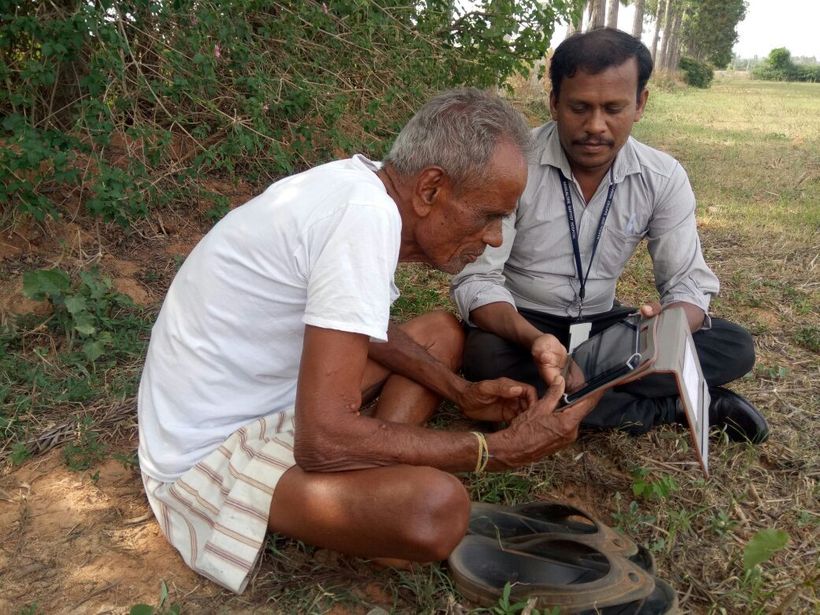
Baylor Researchers Awarded Grant to Develop Diabetes Mobile Health App for Use in India
An interdisciplinary team of Baylor University researchers – from nursing and business information systems to art and video game design – and physicians from Bangalore Baptist Hospital in Bengaluru, India, were awarded a 21st Century Knowledge Initiative Grant from the U.S. India Education Foundation (USIEF) to develop a diabetes mobile health app to boost awareness and educate those in India who are most at risk for diabetes. The team is led by Shelby Garner, Ph.D., R.N., assistant professor in Baylor’s Louise Herrington School of Nursing, who has worked in India over the past six years to develop technological health resources. She cited statistics from the World Health Organization that show life expectancy in India is among the lowest in the South East Asian Region and is largely attributed to growing rates of non-communicable diseases, such as diabetes. Contextualized health education is one key to help raise awareness in the country, she said. “There is a need for culturally appropriate health education materials in India,” Garner said. “Our early research showed that technology, such as smartphones and internet accessibility, are widely available in India among health providers, but most technological educational resources were developed in the West and do not effectively translate to the Indian context.” Physicians from Bangalore Baptist Hospital will provide cultural context and help identify important medical content to be included in the app. “Our diabetes app will feature an interactive 3D animated video with gaming features to help educate patients at risk for diabetes,” Garner said. “Answers to questions addressed in the app include: What is diabetes? What happens if I have diabetes? How do I prevent and treat diabetes? What do I do now?” The app also serves as a data collection tool to help researchers determine if the video is improving participants’ knowledge on diabetes. Community health workers employed by Bangalore Baptist Hospital will use the app as they visit with people in rural villages and urban slums during door-to-door health education visits, Garner said. The research team will compare the app’s effectiveness with standard health educational resources previously used. Garner said the USIEF grant was awarded, in large part, due to the success of an earlier project that led to the development of a hypertension app. “Earlier this year, we tested the hypertension app among 346 people in one of the largest slums in Bengaluru, India, and in several rural villages surrounding Bengaluru,” she said. “The app was significantly effective in improving knowledge among participants. We used these results to justify the need to design more resources and applied for funding from the U.S. India Education Foundation.” From previous experience developing and employing the hypertension app, Garner said she knew this new project would require input from a variety of perspectives. “I’ve realized some of the ‘big picture’ challenges in health education, and it will take a team of experts to make this happen,” she said. Team members are: • Shelby Garner, Ph.D., R.N., assistant professor in Baylor’s Louise Herrington School of Nursing • Dr. Carol Elizabeth George, community health physician, Bangalore Baptist Hospital • Dr. Gift Norman, community health physician, Bangalore Baptist Hospital • Dr. Kingsly Victor, internal medicine physician, Bangalore Baptist Hospital • Hope Koch, Ph.D., associate professor of business information systems, Baylor’s Hankamer School of Business • Phil Young, Ph.D., assistant clinical professor of business information systems, Baylor’s Hankamer School of Business • Julia Hitchcock, M.F.A., associate professor of art, Baylor’s College of Arts & Sciences • Matthew Fendt, Ph.D., lecturer in computer science, Baylor’s School of Engineering and Computer Science The grant also will fund exchange teams of researchers and faculty from India to come to the U.S. and for Baylor team members to go to India to collaborate on the research for the next two years. The first team from India is due in late October. “We are really excited about the work we will do together with our Indian partners over the next two years,” Garner said. ABOUT BAYLOR UNIVERSITY Baylor University is a private Christian University and a nationally ranked research institution. The University provides a vibrant campus community for more than 17,000 students by blending interdisciplinary research with an international reputation for educational excellence and a faculty commitment to teaching and scholarship. Chartered in 1845 by the Republic of Texas through the efforts of Baptist pioneers, Baylor is the oldest continually operating University in Texas. Located in Waco, Baylor welcomes students from all 50 states and more than 80 countries to study a broad range of degrees among its 12 nationally recognized academic divisions. ABOUT LOUISE HERRINGTON SCHOOL OF NURSING The Baylor University Louise Herrington School of Nursing (LHSON) located in Dallas was established in 1909 as a diploma program within Baylor Hospital in Dallas, which is now Baylor University Medical Center, and in 1950 became one of the six degree-granting schools of Baylor University. The first Baccalaureate degrees were granted in 1950 establishing the school among the earliest baccalaureate nursing programs in the United States. In 1999, the School was renamed the Baylor University Louise Herrington School of Nursing after Louise Herrington Ornelas, a 1992 Baylor Alumna Honoris Causa, who made an endowment gift to the school. Accredited by the Commission on Collegiate Nursing, LHSON offers Bachelor of Science in Nursing (B.S.N.) degrees through a traditional program and FastBacc (one-year accelerated program). LHSON also offers an online Master of Science in Nursing (M.S.N.) Leadership and Innovation program, as well as Doctor of Nursing Practice (D.N.P.) programs to include Family Nurse Practitioner (F.N.P.), Nurse-Midwife (C.N.M.) and Neonatal Nurse Practitioner (N.N.P.). LHSON was featured in U.S. News & World Reportfor the 2018Best Graduate Schools ranking the D.N.P.program in the top 50 U.S.nursing schools at No. 46. The Baylor M.S.N.program is ranked at No. 56and the Nurse Midwifery Program ranked No. 10. Baylor’s M.S.N. in Nursing Leadership andInnovation Online Program ranked No. 39 in the 2018U.S. News Best Online Graduate Programs. For more information, www.baylor.edu/nursing.


Can Hollywood help lift the stigma on mental health?
When A Star is Born was released to theatres – it had high expectations. It was a hit at international film festivals and Oscar buzz was already starting. Loaded with stars from stage, screen, and the music industry, it was guaranteed to bring in the audiences and pack theatres. While critics are raving about the performances, the message the film is bringing is also resonating with audiences as well. The story deals with characters attempting to overcome addictions as well as suicide. It’s a film that has people talking about serious issues. But is it Hollywood’s job to educate people about issues such as mental health? With the lines between education and entertainment blurring – is this a platform that could serve the wrong purposes? And with all things celebrity, is there a risk to glorifying acts of suicide or addiction? There are a lot of questions and that’s where the experts from CARF International can help. Michael Johnson is Managing Director of Behavioral Health at CARF and is an expert in mental health and substance use disorder. Mike is available to speak with media regarding this topic – simply click on his icon to arrange an interview.


Guinness World Record Holder Jon Bruney To Speak at Biohacker Summit in Toronto
(Toronto) Renowned Strongman and Fitness Expert to speak at Spark Biohacker Summit at Metro Toronto Convention Center on October 15th, 2018 Jon Bruney, creator of the “Pressing the Limits” motivational strength program, will appear in Toronto at the Spark Biohacker Conference. A devoted researcher in the pursuit of finding the edge in performance, Jon will speak about his experience using transcranial and intranasal light therapy. Jon, one of a number of elite athletes, has been working with Technology developed by Dr. Lew Lim, NMD, MBA and Founder & CEO of Vielight in Toronto. Dr. Lim will be on hand to answer questions about the broad base of international research behind photobiomodulation and what we know so far about it's mechanism. "With photobiomodulation, you can tap into the secrets of the nervous system, helping your body to push farther, to push harder, to push longer than you ever believed you could." Jon Bruney using Vielight photobiomodulation device at his Performance Training Center in Indiana Jon Bruney and Dr. Lew Lim, Founder and CEO of Vielight, will be available for questions at the Vielight exhibition booth held alongside the Biohackers Summit. For one-to-one interviews, please contact Edward D'Mello on 647-865-2803. Session Details Monday Oct. 15, 2018 1230PM - 130PM Metro Toronto Convention Centre South Building (Hall G) 222 Bremner Boulevard Toronto, Ontario M5V 3L9 About John Bruney John's work with competitive athletes includes Olympians and NFL players. He has been featured in Ripley’s Believe it or Not, The Guinness Book of World Records, shown nationwide on NBC’s America’s Got Talent, The Today Show, ABC’s To Tell the Truth, and TruTv’s Guinness World Records unleashed. A true renaissance man in the realm of strength-development, Jon Bruney is a best-selling author, world-class trainer, coach and motivational speaker. He is the author of the best-seller Neuro-Mass: The Ultimate System for Spectacular Strength and The Neuro-Grip Challenge: A Radical Program For Building Strength and Power in Your Upper Body. He also writes a training series called “Foundations”, featured in MILO, widely considered the world’s most prestigious strength training journal. Jon has been responsible for the design of numerous pieces of cutting-edge training equipment now in use around the world. Jon is a veteran of multiple trainer certification courses and was the first to achieve the grueling Battling Ropes Level 2 Certified status. He is also the co-owner of Submit Strength equipment. About the The Biohacker Summit The Biohacker Summit is the largest biohacking event in the world that connects well-being companies with medical professionals, technology experts, investors, entrepreneurs, health and nutrition enthusiasts, and other pioneers. Biohacking - better living through science, technology and nature - is a fast growing international trend. The aim of the conference is to make the world healthier and happier place, prevent disease, and extend human capabilities and lifespan. Media Contact Edward D'Mello M: 647-865-2803 E: edward@vielight.com #photobiomodulation #light #therapy #Toronto #Canada #Ontario #wellness #health #mentalhealth #quantifiedself #biohack #biohacker #mental #brain #body #sport #performance


Women often don't label their sexual assaults as rape. Our experts can explain.
Many sexual violence survivors do not label their experiences as rape but instead use more benign labels, such as “bad sex” or “miscommunication.” Laura C. Wilson, an assistant professor of psychology at the University of Mary Washington, led a review of 28 academic studies to estimate how often women who’ve been sexually assaulted do not label their experience as rape. Across the studies, the researchers find that 60.4 percent of women, on average, did not recognize their experience as rape even though it fit the definition — an unwanted sexual experience obtained through force or the threat of force or a sexual experience they did not consent to because they were incapacitated. “This finding has important implications because it suggests that our awareness of the scope of the problem may underestimate its true occurrence rate, depending on the type of measurement,” the authors write. “This impacts policy reform, allocations of mental health services, survivors’ perceptions of their experiences, and society’s attitudes toward survivors.” For more information on this study, visit: http://journals.sagepub.com/doi/abs/10.1177/1524838015576391 Laura C. Wilson is available to speak with media regarding this topic and study. To contact her, simply click on her icon to arrange an interview.



Cities value cybersecurity but budget prevents investment
Although city governments increasingly rely on software programs to provide services such as 911 calls, service delivery and online bill payment, they may not have the proper cybersecurity policies in place to protect their systems, according to a recent nationwide survey of cities by Augusta University researchers. “We’re concerned first with the human factor of all issues,” said Dr. William Hatcher, director of Augusta University’s Master of Public Administration program and one of the survey’s authors. “Having trained employees is necessary to stop attacks or even make sure organizations are not tricked through phishing type schemes.” Almost 30 percent of surveyed cities have no formal cybersecurity policy, which would include rules on password creation, guidelines for employee training on computer security and procedures for reviewing the list of employees with access to sensitive systems, according to the survey. Of the cities that have a formal policy, the survey found that: - 17 percent don’t require in-depth background checks when employees are granted access to sensitive systems. - 18 percent don’t teach employees to recognize breaches. - 37 percent don’t provide ongoing training to employees on new computer security procedures. - 47 percent don’t review the list of employees who have security access on a regular basis. - 54 percent don’t work with an outside auditor to review their policies on an annual basis. The survey looked into cities nationwide with more than 10,000 people and received responses from 193 local governments. Based on the results of the survey, Hatcher says most cities understand the importance of cybersecurity but are not investing in vulnerable areas due to financial constraints. “Providing effective cybersecurity protection is expensive, and many municipalities have financial issues paying for the service,” Hatcher said. Hatcher ‘s research focuses on the connection between public administration and the development of local communities. Through his research, he tries to understand why public administration scholars and practitioners often have different views about the efficacy of certain administrative practices. His research has appeared in journals such as American Journal of Public Health, Journal of Public Affairs Education, Public Administration Quarterly and The Review of Regional Studies. Contact us to schedule an interview with Dr. Hatcher or learn more about his expertise. Source:



Community is key for those recovering from a mass shooting
The man accused of killing 17 people and injuring 14 more at Marjory Stoneman Douglas High School in February is set to appear in court Wednesday. Meanwhile, survivors of the mass shooting are still grappling with the aftermath of that day. Laura Wilson, co-author and editor of "The Wiley Handbook of the Psychology of Mass Shootings" and an assistant professor of psychology at the University of Mary Washington in Fredericksburg, recently talked about that struggle in an American Psychological Association article. "Simply by definition, mass shootings are more likely to trigger difficulties with beliefs that most of us have, including that we live in a just world and that if we make good decisions, we'll be safe," she is quoted as saying. According to the article: "The National Center for PTSD estimates that 28 percent of people who have witnessed a mass shooting develop post-traumatic stress disorder (PTSD) and about a third develop acute stress disorder. "Research also suggests that mass shooting survivors may be at greater risk for mental health difficulties compared with people who experience other types of trauma, such as natural disasters. A study led by former Northern Illinois University (NIU) graduate student Lynsey Miron, PhD, after the 2008 shootings on NIU's campus, found that although a large percentage of mass shooting survivors were either resilient or displayed only short-term stress reactions, about 12 percent reported persistent PTSD, a number that's higher than the average prevalence of PTSD among trauma survivors as a whole (Behavior Therapy, Vol. 45, No. 6, 2014). "What's critical, psychologists' research suggests, is to ensure that victims feel connected to their communities in the aftermath of mass violence and that they have ongoing support available to them." Dr. Wilson is available to speak with media regarding this subject. Simply click on her icon to arrange an interview. Source:

Just how vulnerable are older Americans to getting hooked on opioids?
It’s a problem that most don’t commonly associate with seniors, retirees and older adults – being hooked on opioids. But it is a problem in America and it’s growing at a frightening pace. According the article attached: ‘Researchers involved with the University of Michigan’s National Poll on Healthy Aging polled a nationally representative sample of 2,000 Americans, aged 50 to 80, about what their health-care providers talked about when prescribing opioid medication to them. In the past two years, 589 said they filled an opioid prescription. This group knew how often to take the medication, but the majority didn’t recall their doctors or pharmacists talking about the risk of addiction, the risk of overdose, or what to do with leftover pills. About 40 percent said their doctors didn’t talk to them about the side effects of opioid use or guide them on when to cut back on pain medications.’ That is a staggering and scary scenario? But what can be done? Is it simply about better communication and information? Or do stronger restrictions and regulations need to be put in place to limit the opportunity for vulnerable seniors to become addicted? As America struggles to battle the opioid epidemic – are seniors another layer of addicts that could compound this situation? There are a lot of questions and that’s where the experts from can help. Dr. Marc Sweeney is the Founding Dean of the School of Pharmacy at Cedarville University and is an expert in the fields of drug abuse, prescription drug abuse and Opioid addiction. Marc is available to speak with media regarding this growing issue. Simply click on his icon to arrange an interview. Source:


America needs a million more nurses – Cedar Crest College is working to fill the void
The United States is facing a critical nursing shortage. According to the American Nurses Association, the U.S. will need to produce more than one million new registered nurses by 2022 to fulfill its health care needs. Cedar Crest College believes its upcoming Nursing Orientation Bootcamp is a critical step on the path to creating nursing leaders, which is the goal of the School of Nursing. This Thursday, Cedar Crest College’s School of Nursing will welcome dozens of students to campus for Nursing Orientation Bootcamp. The purpose of the bootcamp is to prepare students and get them excited about starting the undergraduate nursing program at Cedar Crest College. Nursing faculty and staff will host a number of activities, from exam prep to a scavenger hunt. Approximately 60 students entering their junior year are expected to attend and will be wearing their nursing uniforms for the first time. “If we can start these students off on the right foot, they will have a better chance of succeeding in the program,” said Dr. Wendy Robb, Dean of the Cedar Crest College School of Nursing. “We are confident that in two years, these students will be prepared to enter the workforce to help combat the nursing shortage.” Nursing Orientation Bootcamp Hamilton Boulevard Building Cedar Crest College 100 College Drive, Allentown, Pa. 18104 Thursday, August 16 8:30 a.m.-2 p.m. *The best opportunity for photos and video will be during the scavenger hunt and handwashing demonstration from 12:30-1:45 p.m. Media Contact: Katie Kennedy, 610-740-3790 or katie.kennedy@cedarcrest.edu Source:


Being homeless negatively impacts health in diverse ways, especially for those experiencing chronic homelessness.1 Such persons are at higher risk for multiple infectious diseases, traumatic injuries, interpersonal violence, conditions related to extreme heat or cold, and death due to alcoholism and drug overdoses. They are more likely than housed persons to use hospital emergency departments for health care and to be admitted to the hospital for health problems, because they are less likely to have health insurance and because their conditions cannot be appropriately cared for without safe and secure housing. Thus, there are compelling reasons to know whether interventions aimed at reducing homelessness also reduce the adverse health consequences associated with it. Source:


What can the Big Mac tell us about our economy?
McDonald’s is celebrating Big Mac’s 50th anniversary by giving away MacCoins, which customers can use to buy a Big Mac in 50 countries. The idea of creating this burger currency, according to the company, originated from the “Big Mac Index,” which The Economist has used since 1986 to compare real currencies across the globe. Because McDonald’s has more than 36,000 restaurants in more than 100 countries, the price of its top-selling burger, locally produced in more than 80 countries, has been used to indicate the purchasing power of a country’s economy. What does burgernomics tell us about our economy? Dr. Simon Medcalfe is a professor of economics and finance at Augusta University and is available to discuss: • How the Big Mac Index is calculated • What the latest Big Mac Index says about the U.S. dollar and the U.S. economy • Why the Big Mac has been called the nearly perfect commodity for currency comparison Medcalfe has published academic articles in the areas of sports and health economics and economic education as well as contributed to labor economics and entrepreneurial finance textbooks. Contact us to schedule an interview with Dr. Medcalfe or learn more about his expertise. Source:
