
Experts Matter. Find Yours.
Connect for media, speaking, professional opportunities & more.

Musculoskeletal disorders are the number one reason for soldier evacuation and account for almost 25 percent of all military injuries compared to combat injuries, which account for 14 percent in the armed forces. It was with that knowledge that students from Georgia Southern University’s Department of Rehabilitation Sciences met up with soldiers from the Army’s 3rd Infantry Division at Fort Stewart-Hunter Army Airfield in Georgia to gear up and better understand soldiers’ unique physical challenges and how they can help better prepare them for combat. “The event provided our students with a much better insight as to the physical demands of soldiers at Fort Stewart,” said Nancy Henderson, DPT, assistant professor of rehabilitation sciences on Georgia Southern’s Armstrong Campus in Savannah . “This added knowledge will help them to better tailor their education while working with soldiers.” As technology and equipment change and adjust between each theatre of operation it is imperative that the America’s soldiers stay fit and have all the knowledge and resources, they require to achieve their assigned task. But why were so many soldiers suffering from musculoskeletal disorders? Is the issue easily solved? And how can every branch of the armed forces adopt and adapt how they’re operating on the ground to avoid these issues? There are a lot of questions to be answered and that’s where our experts can help. Dr. Nancy Henderson is an assistant professor in the Department of Rehabilitation Sciences at Georgia Southern University. She is an expert in injury prevention, running form and assessing meaningful change of interventions. Nancy is available to speak with media regarding this topic – simply click on her icon to arrange an interview.


Do the religious really have a right NOT to vaccinate? Contact our experts to find out.
As measles, mumps and other once easily controlled and previously eradicated diseases are now spreading across states and communities in America – the great vaccination debate is once again in full swing. The fact is – vaccinations work. The world’s leading health organizations have proven that beyond a shadow of a doubt. But these days, more and more people are opting out of vaccinating themselves and their children – for a variety of reasons. The most recent is in Florida where children can opt out for necessary medical or religious reasons. This year, more than 25,000 students have claimed religion as their reason not to be inoculated. And, it’s a number that’s increasing every year. There are concerns among public health experts in Florida that this decision-making is being empowered by the online and well funded anti-vaccination groups who can reach massive amounts of people with its misinformation. And outbreaks are occurring as a result. Medically compromised people are at risk. So, is it time for states to reconsider religion when allowing children not to be vaccinated? Is there a way to prevent the system from further abuse? And what are the consequences to the greater population if this continues to grow at the near exponential pace it is? Or … is this a right that is protected and beyond question? There are a lot of questions and that’s where the experts from Cedarville University can help with multiple angles regarding this topic. Dr. Marc Sweeney is the Founding Dean of the School of Pharmacy at Cedarville University. Dan DeWitt, Ph. D. is the Director of the Center for Biblical Apologetics and Public Christianity at Cedarville University. Both experts are available to speak with media regarding this growing issue – simply click on either of their icons to arrange an interview.

The amazing story of General Casimir Pulaski and the secret the war hero took to the grave
He’s a person who has intrigued Americans for centuries and will be the subject of a documentary airing Monday. Scientists have confirmed that legendary Revolutionary War hero and famed General Casimir Pulaski took a secret to the grave. The General was intersex. News of this was enough to inspire an episode in Smithsonian Channel's "America's Hidden Stories" documentary series. Georgia Southern University’s Virginia Hutton Estabrook, Ph.D., assistant professor of anthropology, was recently contacted by media for expert perspective and comment. In the documentary — “The General Was Female?” — which premieres Monday, scientists use skeletal remains and DNA testing to make a case that the skeleton was Pulaski’s and that the Polish-born general was intersex, or what used to be known as a hermaphrodite.“That’s pretty much the only way to explain the combination of features that we see,” said Estabrook, who participated in the most recent effort to identify the bones, and appears in the documentary.“He was so important as a touchstone for the Polish community. And it’s kind of cool that in the 21st century, Pulaski can be a touchstone for a different group of people: That, hey, there were intersex people in history, too, and here’s this one who had this really amazing life: heroic, resourceful, all of the features in the American narrative that we value and treasure.” – Chicago Tribune This discovery unearths questions about what this might mean as we all look back at history and the real people who helped write it. Are you covering this story and need to expert perspective, insight and information? That’s where the experts from Georgia Southern University can help. Virginia Hutton Estabrook is an assistant professor of anthropology and played an integral role in this discovery. She is available to speak with media – simply click on her icon to arrange an interview.

Phasing out opioids – can it be done?
It’s a crisis that’s gripped America and has hit epidemic levels. More and more Americans are hooked on prescription painkillers, in fact, in 2017 close to 50,000 people in the United States died due to overdose from pills. And recently, it’s been suggested that perhaps phasing out and replacing these pills with less addictive and dangerous options is the only way to solve this issue? “FDA Commissioner Scott Gottlieb, who plans to leave his job at the agency next week, wants companies to develop pain drugs that could eventually allow older opioids to be restricted or to come off the market entirely. “Given the public health crisis we face, and that American families are still being destroyed by the opioids epidemic, I believe that the FDA should treat opioids, as a class, differently from other drugs,” Gottlieb told a Senate appropriations subcommittee on Thursday.” - Denver Post It's a bold statement from a bureaucrat leaving his post – but is it possible? · Will big pharma comply? · Is it a matter of money over morality or are more rigids rules required? · Or is the only aspect left legal and government intervention? There are a lot of questions to be answered and that’s where an expert from Cedarville University help. Dr. Marc Sweeney is the Founding Dean of the School of Pharmacy at Cedarville University and is an expert in the fields of drug abuse, prescription drug abuse and Opioid addiction. Marc is available to speak with media regarding this growing issue. Simply click on his icon to arrange an interview.

Same Ole’ Song, Different Chorus
Within the President’s 2020 education budget request, Secretary of Education, Betsy DeVos gave testimony to a House appropriations subcommittee last week in Washington DC. Within a short back and forth between Devos and Katherine Clark, United States Representative for Massachusetts's 5th congressional district, DeVos unapologetically stood behind non-black research used within a recent report justifying the removal of Obama-era school discipline guidance. The Obama guidance was beseeched to not only inhibit the national disproportionate Black v. White suspension rate, but it also attempted to curtail the school-to-prison pipeline countless education researchers, such as myself, have studied. The report DeVos submitted is nothing but a product that essentially is a reproduction of systemic racism. In order for a reproduction of systemic racism to transpire, and “subsequent measures of control to be not only in place but legitimized, an entrenchment of inferiority directed toward the marginalized is needed.” The use of systemic reproduction of racism is what created and maintains the establishment of two separate worlds—one White and one deemed Black. DeVos and the research she used as the foundation for her misguided justification for the removal of said guidance dates back much further than DeVos can count. During the late 19th and early 20th century, White so-called intellectuals William Shockley to Charles Murray have attempted to depict Blacks as less intelligent, more violent, immoral, sexual monsters, and on and on. DeVos and her findings are nothing but 21st-century scientific racism. https://www.usnews.com/news/education-news/articles/2019-04-01/rep-katherine-clark-calls-for-betsy-devos-to-resign-citing-racist-research

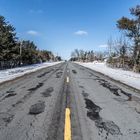
A study conducted ahead of CAA’s Worst Roads campaign underscores how Ontarians feel about the state of their roads. Seventy-one per cent of those surveyed say they are concerned about the condition of roads, while 60 per cent of respondents don’t believe that roads are being repaired in a timely manner. The data reinforces the campaign’s importance, says Raymond Chan, government relations specialist for CAA South Central Ontario (CAA SCO). “The simple act of participating in the CAA Worst Roads campaign can help various levels of government understand what roadway improvements are top of mind for road users, and where improvements could be prioritized.” The study also found that while most regularly see roads in need of repair, 67 per cent of respondents stated they took no action to get them repaired. The CAA Worst Roads campaign is designed to be an easy forum for Ontarians to engage and take action on issues that impact them. “We want to know what roads are seen as pain points for Ontarians. Whether the issue is congestion, potholes, road signage or challenges around pedestrian and cycling safety, CAA wants to hear from you," says Chan. Investing in infrastructure improvements, including the proper maintenance of roads and bridges, is important to the vitality of local communities. CAA continues to advocate for longer-term dedicated infrastructure funding to help municipalities prepare, plan, budget and execute on repair backlogs and capital projects. Repaving and repair work has been completed on many of the roads that have appeared on Ontario’s CAA Worst Roads list. Some examples include: Burlington St. E., Hamilton This Hamilton road has appeared on the annual list since 2008. It received the dubious honour of Ontario's Worst Road in both 2017 and 2018, thanks in part to potholes and crumbling pavement. A total of $3.3 million has been allocated to resurface and replace the lower part of Burlington St. E. with fresh pavement in 2018/2019. Duckworth St., Barrie This Barrie roadway claimed the third spot in the 2018 campaign. The first phase of a $10.3M reconstruction of Duckworth St. began last fall and the second phase will begin this spring. Improvements of Duckworth St. between Melrose Ave. and Bell Farm Rd. are planned for completion in 2020. Dufferin St., Toronto Topping the list from 2012 to 2014, Toronto’s Dufferin St. has continued to appear on the Top 10 list of Ontario’s Worst Roads. As part of the City of Toronto’s Capital Works Program, Dufferin St. from Dundas St. W. to Bloor St. W. was repaved and sections of damaged curb and sidewalk were replaced. CAA SCO is calling on Ontarians to vote for their Worst Road today and join the community of drivers, cyclists and pedestrians committed to improving Ontario’s roads. Nominations for CAA’s Worst Roads can be cast at caaworstroads.com until April 26. To encourage participants to act on their concerns, they will be entered into a grand prize draw to win free gas for a year, or one of 10 secondary prizes. Once voting closes, CAA will compile a list of the 10 worst roads in Ontario, along with the worst roads in regions across the province. The regional top five lists will help shine further light on the state of local roads in municipalities across Ontario. CAA will present the list of 2019 Worst Roads to local and provincial officials to help inform future funding and planning decisions. About the Survey This study was conducted online by Campaign Research between February 15-20, 2019 among a sample of 1,515 Ontario residents who were 18 years of age or older. A probability sample of this size would have a margin of error of +-2.5% 19 times out of 20. About CAA South Central As a leader and advocate for road safety and mobility, CAA South Central Ontario is a not-for-profit auto club which represents the interests of 2 million members. For over a century, CAA has collaborated with communities, police services and government to help keep drivers and their families safe while travelling on our roads.

Deal or no deal – is Britain about to go bust with Brexit?
It’s pretty much deal or no deal. After a couple of years on negotiating, glad-handing, spinning and voting – Britain is now looking down the barrel of leaving the European Union with no deal in place. With two years to figure things out, it seems infighting and politics have help Theresa May and Britain in a stagnant stalemate when it comes to agreeing on any sort of term for the U.K. to leave the E.U with some semblance of a trade agreement in place. So, what can we expect in the days before April 12? What’s the hold-up now? Is the economy really in jeopardy and what will that mean globally? And is it a big deal? Is it a matter of renegotiating after the deadline or does Britain risk leaving an enormous amount of trade leverage on the table? There’s so much up in the air right now with Brexit - and that’s where the experts from Cedarville University can help. Dr. Glen Deurr's research interests include nationalism and secessionism, comparative politics, and international relations theory. Glen is available to speak to media regarding the rise of extremism – simply click on his icon to arrange an interview.

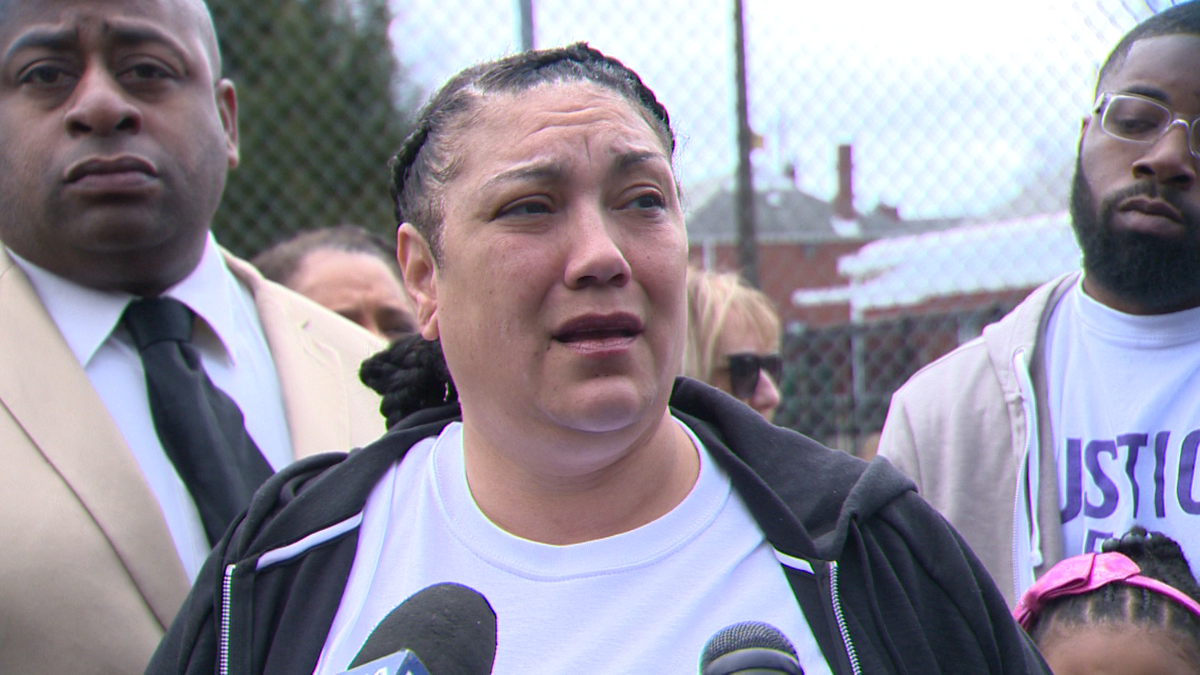
It is time to finally change the laws regarding use of force? Let our experts explain.
It’s a recurring subject that is dividing parts of society. What is the proper amount and when can and should police use force? With increased media coverage, very public trials and a country that is seeing deep divisions between law enforcement and the people it is intended to protect – each case of an officer using force now comes with an enormous amount of scrutiny. So, what are the laws pertaining to the proper use of force? What deems an action an improper use of force? How are officers trained and are they properly equipped when confronting a situation? Do these laws need updating? There are a lot of questions to be asked and that’s where the experts from Cedarville University can help. Dr. Patrick Oliver serves as Director of the Criminal Justice Program at Cedarville University. He has over 27 years experience in law enforcement and is an expert in the areas of proper and improper use of force. He was also he chief of police in Cleveland and suburban Columbus, Ohio. Patrick is available to speak with media regarding this issue – simply click on his icon to arrange an interview.


After the admissions scandal – Otterbein’s President lends his perspective and pledge
It was a scandal that seemed to rip through some of the top-rated universities and schools in America. The very institutions that portray and image of integrity, ethics and higher expectations had failed in a very public manner. Universities and colleges are supposed to be beyond reproach and in this case some of the best-known names in higher learning were now subject to accepting bribes and admitting students who may have had wealthy parents and worthy-pocket books - but lacked the essential grades to attend. Mix in a few well-known celebrities and this allowed the story to show that America’s elite have access to the levers of academia that most do not. But out of every mistake, there comes a lesson. And ideally a way to find the right way to do things. That’s how the President of Otterbein University, John Comerford sees it. He was recently published when asked about his views on the issue as it played out. “We should use the scandal as a moment to open our eyes to this long-standing inequity, because higher education is still the best door to social mobility our nation has to offer. Some institutions, like Otterbein University, are trying to provide opportunity to all students. We are investing more in need-based aid. We are setting transparent, inflationary 2 percent increases in tuition for the next four years. We are intentionally recruiting in underserved areas, expanding the diversity of our student body and providing student support services on campus. Family income will never be considered in who gets into Otterbein.” – The Columbus Dispatch John Comerford is an expert in higher education, regional and national topics. He is the President of Otterbein University and is available to speak with media regarding this issue and how higher-education needs to be made available to everyone in America regardless of income, family name or background. Simply click on his icon to arrange an interview.

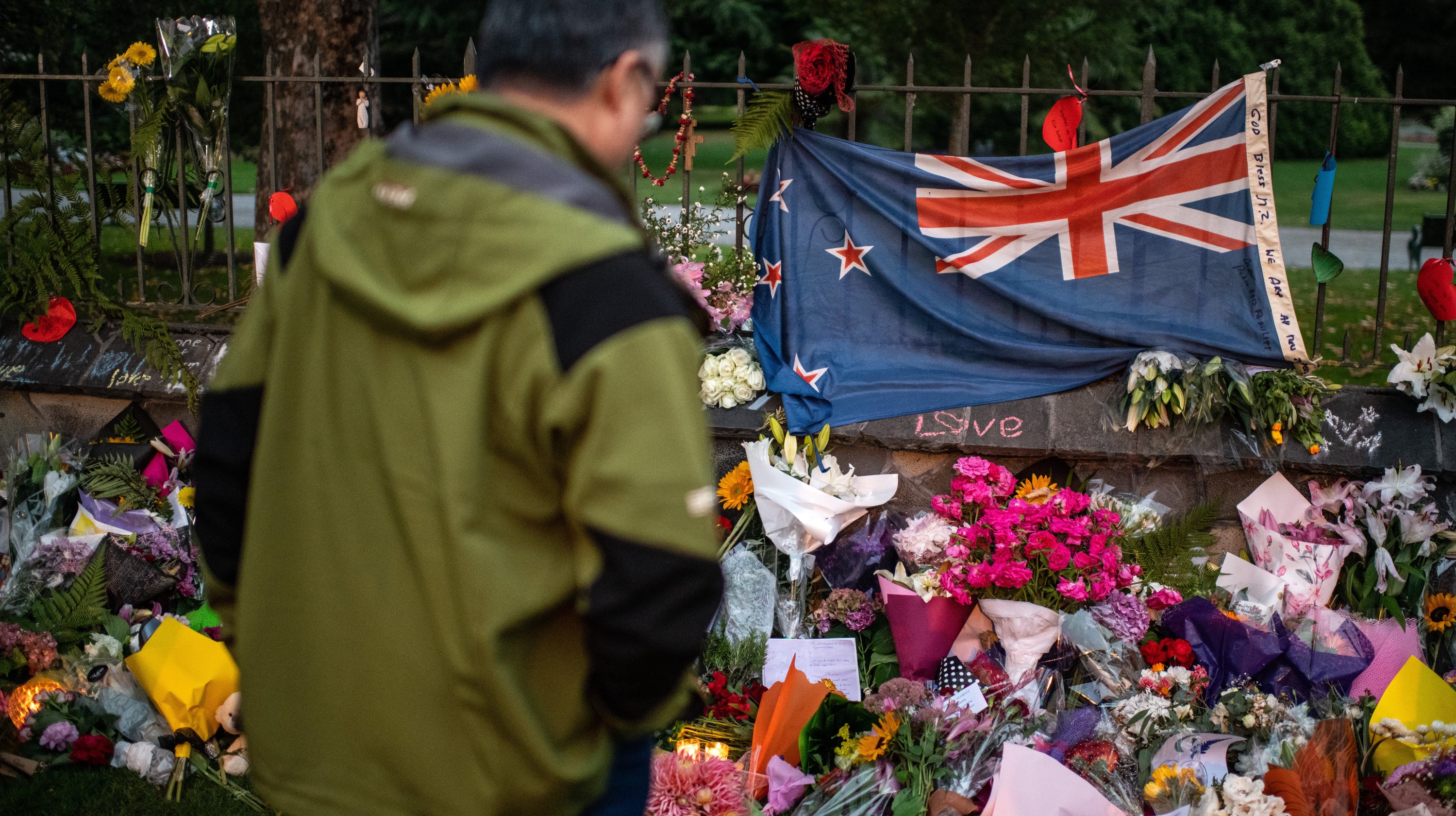
Extremism on the rise – Let our experts tell you just how concerned you need to be
Incidents across America and the planet are happening regularly. Protests are turning ugly with damage, violence and even death. Shootings and attacks on mosques, churches and public institutions are now happening at such a pace that the public is barely only one tragedy and another one strikes. Extremism is on the rise. The calls for thoughts and prayers are now common. The world, it seems, is fraying. What can be done about the rise of extremism? Is extremism being driven by economic, political or other factors? What role is social media and the Internet playing in fanning the flames of hatred and extremism? What can be done to police, prevent and ideally extinguish extremism? To begin with – we probably need to understand what’s actually going on and what’s the root of the issue? And that’s where the experts from Cedarville University can help. Dr. Glen Deurr's research interests include nationalism and secessionism, comparative politics, and international relations theory. Glen is available to speak to media regarding the rise of extremism – simply click on his icon to arrange an interview.