
Experts Matter. Find Yours.
Connect for media, speaking, professional opportunities & more.

Baylor Expert: Don't Lose Focus on Spiritual and Mental Well-being
Baylor Social Work professor shares tips and resources during stressful half-way mark of semester Holly Oxhandler, Ph.D., LMSW., associate dean for research and faculty development and associate professor in the Diana R. Garland School of Social Work. October marks the halfway point to the fall semester and can carry all the excitement, stress and anxiety of another academic term winding to a close. The month also typically marks one of the busiest times of the year for university counseling centers across the nation. With unique challenges in 2020 related to COVID-19, the University has acknowledged those hardships for all in the Baylor Family by taking the initiative to focus on mental health throughout October. Baylor University’s Holly Oxhandler, Ph.D., LMSW, associate dean for research and faculty development and associate professor in the Diana R. Garland School of Social Work, is an expert on mental health, primarily anxiety and depression, as well as religion and spirituality in clinical practice. In this Q&A, she shares tips and resources to students, faculty and staff who are facing all of the typical challenges of another mid-term while also navigating a global health crisis. Q: The 2020 fall semester provided challenges and obstacles never seen before in higher education. Why has COVID-19 been a uniquely stressful influence on the mental and spiritual well-being of students, faculty and staff? There are a number of reasons COVID-19 has been a uniquely stressful influence on the mental and spiritual well-being of those in higher education. First, there are the unanticipated layers and learning curves of new considerations and adjustments to course delivery, safety protocols, dining, campus activities and communication, to name a few, on top of the typical adjustments and emotions we all navigate at the beginning of each fall semester. Second, those in higher education entered fall 2020 without the “typical” summer that’s needed to reset, make adjustments and plan for the upcoming year’s activities. For example, many administrators, faculty and staff spent the summer not only planning for the usual upcoming academic year but also reconfiguring classes to be hybrid or online or simultaneously include both in-person and online students, in addition to modifying student activities and faculty research project timelines and plans. For degree programs that include internships, like social work, there have also been additional layers of consideration in order to comply with our professional accreditation standards. Third, we recognize that many students, their family members, as well as Baylor faculty and staff members’ loved ones, have been affected by the economic impact of COVID-19, adding a layer of financial stress. Fourth, many within the Baylor community – staff, faculty and students – have needed to juggle childcare and homeschooling their children as they continue to engage in their own work and/or educational expectations. Finally, the fear of contracting COVID-19, especially among the most vulnerable and high-risk populations, has been constantly present. Not only are we adjusting to this academic year with new ways of being and new protocols that keep us and one another safe, we’re also facing unexpected waves of fear and layers of grief for the missed events, opportunities and connections we had hoped to experience. As resilient as our community is, I think it’s important to remember we cannot “operate as usual” because things aren’t usual. Instead, we must allow ourselves and one another the time, margin, flexibility and grace needed to sit with and move through the rising emotions, grief, stress, loneliness, fear and uncertainty as they come. We cannot skip or bypass these emotions, but instead, must move through them, often with the support of loved ones and/or a trained mental health care provider. Q: Mental and spiritual health are challenging during even a typical semester experience. What are some of the effects and reactions you’ve witnessed to these circumstances among students, faculty and staff compared to a non-COVID-19 semester? As human beings navigating a global pandemic to the best of our ability, our mental and spiritual health have all been impacted to some degree this semester as we have individually and collectively faced a number of unexpected difficulties. I have also seen a beautiful response to the reality of this collective struggle in my interactions with Baylor faculty, staff and students that includes deep empathy for one another and an increase in valuing authenticity as we engage in the high-quality, meaningful work we each do. It has been a gift to witness Baylor community members holding space for colleagues’ and students’ vulnerability as we admit this is hard for various reasons and recognize that we cannot just push our way through this season. When we admit this isn’t easy and that we are all juggling so much to the best of our ability through thick layers of uncertainty, it gives those around us permission to admit their experiences, too. In fact, I think when we create space for that shared vulnerability and empathy in our interactions with others, we can better assess the current situation, remain present to one another and discern what steps are needed to move forward together, particularly because we’re not carrying an additional layer of effort pretending that everything is fine. That said, the Garland School of Social Work conducted a couple of well-being surveys since this summer to internally check in on how our faculty and staff are coping with this season and identify the biggest stressors they’re facing and sources of support. Our faculty and staff have also been continually checking in on our students through this season. Not only do we see many noting the same stressors that we’re all facing these days, normalizing how difficult this is for each of us, but the act of nonjudgmentally holding that space for ourselves and one another has been a tangible step of offering the care we know is uniquely woven into the Baylor experience. Q: How can individuals within the campus community tend to their spiritual health to close out the semester? I would invite readers to take a moment to pause and identify a few spiritual practices that uniquely support them well, even if that means thinking back to less stressful seasons. The key to note here is that these are practices which require regular engagement, similar to if we were to practice a new instrument or sport. Spiritual practices can vary based on our faith tradition and may include praying; meditating; centering prayer; reading our religious text; walking a labyrinth; journaling; practicing gratitude; listening to a sermon or faith-based podcast; praying over and contemplating scripture; engaging in creativity; practicing daily examen; or listening to spiritual music. Some practices may involve other individuals that can be done safely, including seeking spiritual direction, participating in a Bible or faith-based book study with others or engaging in worship (even virtually!). These practices can offer a sense of groundedness and a reminder that God is with us, including through this season. As we continue to navigate this season of uncertainty, it is critical that we intentionally weave in spiritual practices that offer rhythms, routines and a grounded faith that can support us well through the waves of difficulty. Especially on campus, I would encourage Baylor community members to follow along with Spiritual Life’s resources and events, or check out Better Together BU, a partnership supported by both Spiritual Life and Multicultural Affairs. Q: How can individuals within the campus community tend to their mental health to close out the semester? Tending to our mental health in this last stretch of the semester will be so important as we move into the stress of finals, the complex emotions tied to the holidays, grief with upcoming celebrations looking different this year (including how we celebrate holidays, who we celebrate with and the reality of many having lost loved ones to COVID-19) and the reality of seasonal affective disorder on the horizon. In fact, in a typical year, about 5% of U.S. adults have seasonal affective disorder (SAD), with another 10-20% having mild forms of it. In light of all of the added transition, uncertainty, complexity of caregiving and homeschooling while working/studying at home, layers of loneliness and grief, I do hope our Baylor students, staff and faculty will actively prioritize taking good care of their mental health and supporting others’ mental health care, too. One way I highlight this with my social work students is by recommending creating a self-care plan that pays attention to our physical health, mental health, social support and spiritual health. If we can identify some strategies to holistically care for ourselves well and be mindful of potential barriers to navigate, we may have more resilience and practices to draw from to cope with challenges and stressors that arise. Finally, although NAMI highlights that 1 in 5 of us are currently facing a mental health struggle, some studies have shown that over 80% of us will meet criteria for a mental illness by young adulthood or middle-age. Therefore, I highly recommend that anyone who is noticing any changes in their mood, diet, sleep habits, behaviors or overall well-being immediately reach out for help. Students are encouraged to reach out to Baylor’s Counseling Center, CARE team or the BARC. Faculty and staff also have resources available through Baylor’s employee assistance program. Other resources for finding a mental health provider include HelpPRO, Psychology Today, Low Cost Help or these additional resources. For those who are deeply struggling, please reach out to the Suicide Prevention Lifeline at 1-800-273-8255 or text ‘HOME’ to 741-741 for the Crisis Text Line. As part of my faith and my social work values, I believe that each of us are worth caring for ourselves, including caring for our mental health alongside our spiritual and physical health. Q: What successes or bright spots have you seen within your campus experience that offer encouragement to how the Baylor Family has handled the crisis throughout the semester? I am regularly amazed by the Baylor students, faculty and staff, the ways we have navigated the crisis together this semester, and I am especially grateful for President Livingstone’s and Provost Brickhouse’s leadership since March. This semester, some bright spots have included Dr. Deborah Birx’s reflections on Baylor’s efforts to keep everyone safe from COVID-19, the Fall Faculty meeting and Dr. Peter Hotez’s appreciation of how Baylor leaders have kept the Baylor and Waco community safe and following along when Baylor students take over Baylor’s Instagram account (like Brandon Nottingham’s takeover on World Mental Health Day!). As the Garland School of Social Work’s associate dean for research and faculty development, I have also loved learning about the ways so many Baylor faculty are offering their unique research expertise and wisdom to serve others through this difficult time, such as Dr. Emily Smith’s “Friendly Neighbor Epidemiologist” Facebook page to explain COVID-19 information. I’ve also been reminded of what a gift it is to be a part of the Garland School of Social Work (GSSW) and this community of faculty, staff and students. The resilience, creativity, love for serving others, dedication to the social work profession and care for our students is so apparent within the GSSW. I have especially seen how my faculty and staff colleagues have adapted courses and assignments, creatively considered students’ needs and juggled their research responsibilities while extending grace to themselves and one another as we navigate this season together as a school to the best of our ability. Similarly, seeing our students’ resilience, flexibility, support of one another, commitment to the profession and heart for the clients and communities they serve is truly inspiring. Finally, Dean Jon Singletary’s servant-leader heart for the GSSW and the ways he has supported our school through so much transition over the last five years has been a gift. One example of this includes the two hours of weekly well-being time he extends for all GSSW staff and faculty to use in support of our spiritual and mental health care. Q: What gives you hope for the spring semester and beyond as students continue through their academic endeavors? Truthfully, our students’ presence and their enthusiasm over the fields of study they are dedicating their lives to gives me hope. As a professor, there is nothing like watching a student become fully alive in the work they are passionate about and feel as though they were made to do. Our students’ willingness to fully participate in the transformational education that Baylor offers, especially in this difficult season of COVID-19, is an honor to witness as a professor and certainly gives me hope. Further, seeing the ways our students are empathically caring for their neighbor by following Baylor’s safety guidelines, growing in their faith, checking in on one another, understanding faculty and staff are doing their very best and continuing to demonstrate their determination to learn and grow is an inspiration. My hope and prayer for our students as well as our staff and faculty colleagues as we move through the remainder of the fall semester and into the spring is that they rest as they need to and prioritize taking good care of their mental and spiritual health. I also pray that we recognize as a community that by caring for our spiritual and mental health, by taking this season one day at a time, by trusting we are doing our best and by reaching out for help when needed, we give others permission to do the same.


Leap year: Tips for using extra day on career and professional development
Having an extra day in a leap year provides you with a unique opportunity to invest time in your career and professional development. Jill Gugino Panté, director of the Lerner Career Services Center at the University of Delaware, offers six ideas to maximize the day. Dedicate time to enhance your skills. It is easy to find free courses, workshops and training videos on just about anything. Take five minutes to reflect on a skill you wish you had or were better, such as, say, Excel. YouTube, TikTok and LinkedIn Learning have hundreds of thousands of videos that can teach shortcuts, visual design, formulas and more. Use the day for networking. Reach out to professionals in your industry and schedule informational interviews. Reconnect with old classmates, former bosses or colleagues from another department and invite them to meet for coffee or lunch. Spend the day talking with someone about your career/professional development goals. Reflect on your career goals. Many of us do not take the time to articulate where we want to be this time next year or even four years from now. Start with three months, then move to six months, then a year. Do you want to learn a new skill? Meet with someone whose career you’ve admired? Change jobs? Ask for a raise? Career development can be thought of as a series of projects because thinking four years ahead can seem a little daunting. However, making goals for the next six months makes the process more manageable and tangible. Update your career documents. This means not only your resume but your LinkedIn profile and professional bio. If you don’t have access to a Career Coach, use Generative AI (like Chat GPT) to help you write better bullet points or update your “About” section on LinkedIn. Keep in mind that AI should be viewed as a supportive tool rather than a replacement for your active involvement in the process. Maintain a personal touch and let your unique personality shine through in your application materials and interviews. Focus on your well-being. How often do we get an extra day to focus on ourselves? And on this particular leap year, you may be feeling stressed and overwhelmed so focusing on career goals isn’t an option. Take the opportunity for self-care – go for a leisurely walk, engage in meditation or stretching exercises, or schedule an online session with a therapist or counselor. Investing time in personal wellness is important to address before you leap into professional development. Make deliberate choices that not only contribute to your career growth but also foster a sense of well-being. Here's a pro tip: mark a "professional/personal development boost" block on your calendar for each leap year, ensuring you fully capitalize on the extra day. This strategic scheduling will serve as a reminder to prioritize both your professional growth and personal wellness. To set up an interview with Gugino Panté, visit her profile and click on the contact button.


New Aston University spin-out company will develop novel ways to treat non-healing wounds
EVolution Therapeutics (EVo) has been founded on the work of Professor Andrew Devitt into the causes of inflammatory disease A failure to control inflammation in the body, usually a natural defence mechanism, can cause chronic inflammation, such as non-healing wounds Non-healing wounds cost the NHS £5.6bn annually, so there is a vital need for new treatments. Aston University’s Professor Andrew Devitt, Dr Ivana Milic and Dr James Gavin have launched a new spin-out company to develop revolutionary treatments to treat chronic inflammation in patients. One of the most common inflammatory conditions is non-healing wounds, such as diabetic foot ulcers, which cost the NHS £5.6bn annually, the same cost as managing obesity. Such wounds are generally just dressed, but clinicians say there is a vital need for active wound treatments, rather than passive management. The spin-out, Evolution Therapeutics (EVo), will aim to create these vital active treatments. Inflammation in the human body helps to fight infection and repair damage following injury and occurs when the immune system floods the area with immune cells. Normally, this inflammation subsides as the damage heals, with the immune system signalling to the immune cells to leave. However, in some cases, the usual healing mechanism is not triggered and the inflammatory response is not turned off, leading to chronic inflammation and so-called inflammatory diseases. EVo is based on Professor Devitt’s work on dying cells in the body, known as apoptotic cells, and how they contribute to health. Dying cells release small, membrane-enclosed fragments called extracellular vesicles (EVs), which alert the immune system to the death of cells, and then trigger the body’s natural repair mechanism and remove the dead cells. It is estimated that 1m cells die every second. Professor Devitt and his team have identified the molecules within the EVs which control the healing process and are engineering new EVs loaded with novel healing enzymes, to drive the body’s repair responses to actively heal wounds. Much of the research has been funded by the Biotechnology and Biological Sciences Research Council (BBSRC) with additional support from the Dunhill Medical Trust. Professor Devitt, Dr Milic and Dr Gavin received Innovation-to-Commercialisation of University Research (ICURe) follow-on funding of £284,000 to develop the vesicle-based therapy with EVo. Most recently, in December 2023, Professor Devitt and Dr Milic were awarded £585,000 from the BBSRC Super Follow-on-Fund to develop engineered cells as a source of membrane vesicles carrying inflammation controlling cargo. The team, together with Professor Paul Topham, also received funding from the National Engineering Biology Programme (£237,000) to support polymer delivery systems for vesicles. EVo is one of the 12 projects being supported by SPARK The Midlands, a network which aims to bridge the gap between medical research discoveries of novel therapeutics, medical devices and diagnostics, and real-world clinical use. SPARK The Midlands is hosted at Aston University, supported by the West Midlands Health Tech Innovation Accelerator (WMHTIA), and was launched at an event on 31 January 2024. Professor Devitt, EVo chief technical officer, said: “Inflammation is the major driver of almost all disease with a huge contribution to those unwelcome consequences of ageing. We are now at a most exciting time in our science where we can harness all the learning from our research to develop targeted and active therapies for these chronic inflammatory conditions.” Dr Gavin, EVo CEO, said: “The chronic inflammation that results in non-healing wounds are a huge health burden to individuals affecting quality of life as we age but also to the economy. Our approach at EVo is to target the burden of non-healing wounds directly to provide completely novel approaches to wound care treatment. By developing a therapy which actively accelerates wound healing, we hope to drastically improve quality of life for patients, whilst reducing the high cost attached to long term treatment for healthcare systems worldwide.”


A diverse teacher workforce is crucial for creating an inclusive learning environment for students. It brings a unique range of perspectives into the classroom, which enriches the learning experience for all students and teachers. Gary T. Henry is dean of the University of Delaware’s College of Education and Human Development and professor in the School of Education and the Joseph R. Biden, Jr. School of Public Policy & Administration. He is able to lend his expertise on this topic thoroughly. One of the key benefits of a diverse teacher workforce is the ability to connect with students from various backgrounds on a deeper level. Students feel represented and understood when they see teachers who look like them and come from similar backgrounds. This sense of connection can significantly impact their engagement and motivation to learn. As dean of the education department, Henry can discuss impacts teacher diversity can have on both students and the greater student environment. He can be reached by clicking on his profile.

Aston University establishes Design Factory Birmingham as a global innovation hub for Midlands
• Birmingham becomes the latest city to join a global network of design and digital consultancies • Based at Aston University, expertise in areas such as 3D printing will be shared to boost the local economy • It will include a space named after the late Dame Margaret Weston, former director of the Science Museum. Birmingham has become the latest city to join a global network of design and digital consultancies set up to solve real world challenges through effective problem-solving. Design Factory Birmingham will be based at Aston University, one of just two hubs in the UK outside of London. The city officially joined the Design Factory Global Network on Wednesday 14 February and as a result Aston University will open the doors to its state-of-the-art facilities to other organisations. Shared understanding and common ways of working enable Design Factories in the network to collaborate efficiently across cultures, time zones and organisational boundaries fostering radical innovations. Businesses, industry partners, entrepreneurs, staff and students will be able to collaborate on projects that will involve technologies such as 3D printers and design software. The University will be sharing its expertise in artificial intelligence, additive manufacturing, data science and web, app and graphic design to boost the local economy. Currently there are 39 innovation hubs in 25 countries across five continents based in universities and research organisations. The Design Factory will include a space named after the late Dame Margaret Weston, former director of the Science Museum. Dame Margaret had studied electrical engineering at one of Aston University’s predecessor institutions and went on to be the first woman appointed to lead a national museum. She left a generous gift to Aston University in her will, which will be commemorated in the Birmingham Design Factory in honour of her engineering background. (l-r) Felipe Gárate, Professor Aleks Subic, Professor Stephen Garrett The Vice-Chancellor and Chief Executive of Aston University, Professor Aleks Subic said: “The Design Factory Birmingham is another key milestone in our ambition to be a leader in science, technology, and innovation, driving socio-economic transformation in our city and region. It is important to the Midlands because it will make a direct contribution to innovation led growth in partnership with industry and businesses. However, this is not only a local launch but also a global launch as Design Factory Birmingham is a global innovation hub, and an integral part of the Design Factory Global Network involving 39 innovation hubs around the world.” The head of the Design Factory Global Network Felipe Gárate from Aalto University in Helsinki, Finland attended the official launch in Birmingham. He said: “I am delighted to welcome Aston University as our latest member. “We are on a mission to create change in the world of learning and research through passion-based culture and effective problem-solving. “Shared understanding and common ways of working enable Design Factories in the network to collaborate efficiently across cultures, time zones and organisational boundaries fostering radical innovations.” The launch event was used to showcase design projects that are already running and companies attending were given the chance to meet placement students who could boost their existing expertise. Associate Pro-Vice-Chancellor and Deputy Head of the College of Engineering and Physical Sciences, Professor Tony Clarke said “This unique space on campus will bring together multi-disciplinary teams of hands-on innovators, collaborative thinkers and creators. “We will be delivering a wide range of services including software application development, product design, creating protypes using a variety of technologies including laser and water cutting, digital and design training courses, and helping companies obtain innovation grants for projects.” As a member of the global network the Birmingham Design Factory at Aston University will participate in two global design challenges - one run by McDonalds and the other run by the Ford Motor Company. ENDS Notes to Editors There are 39 Design Factory hubs around the world https://dfgn.org/ In the UK there are three; London, Birmingham and Manchester. About Aston University For over a century, Aston University’s enduring purpose has been to make our world a better place through education, research and innovation, by enabling our students to succeed in work and life, and by supporting our communities to thrive economically, socially and culturally. Aston University’s history has been intertwined with the history of Birmingham, a remarkable city that once was the heartland of the Industrial Revolution and the manufacturing powerhouse of the world. Born out of the First Industrial Revolution, Aston University has a proud and distinct heritage dating back to our formation as the School of Metallurgy in 1875, the first UK College of Technology in 1951, gaining university status by Royal Charter in 1966, and becoming The Guardian University of the Year in 2020. Building on our outstanding past, we are now defining our place and role in the Fourth Industrial Revolution (and beyond) within a rapidly changing world. For media inquiries in relation to this release, contact Nicola Jones, Press and Communications Manager, on (+44) 7825 342091 or email: n.jones6@aston.ac.uk

Countdown To the Big Game: Dr. Tyrha’s Top Five Super Bowl Commercials for the Past Five Years
Advertising executive and multicultural media expert Tyrha M. Lindsey-Warren, Ph.D., clinical assistant professor of marketing at Baylor University's Hankamer School of Business, , is a sought-after media commentator on the brands who win big during the game's commercial breaks. Commercials always are the most anticipated and talked-about aspect of the Super Bowl, but the expanding digital landscape requires advertisers to use more authentic and nuanced strategies to reach consumers. Advertising executive and multicultural media expert Tyrha M. Lindsey-Warren, Ph.D., clinical assistant professor of marketing at Baylor University’s Hankamer School of Business, is a sought-after media commentator on the brands who win big during the game’s commercial breaks. How do companies break through the noise and make a lasting impression on viewers? Lindsey-Warren – or Dr. Tyrha, as she is known – says the key is empowered storytelling. As a consumer behavior scholar, Dr. Lindsey-Warren’s research is rooted in narrative transportation theory – in other words, storytelling – that exudes the emotion of empowerment and its impact on consumer attitudes, behaviors, purchase intention and message recall. “There is a growing space for cleverly crafted and positive storytelling that can break through the clutter and competition and get the attention of Millennials, Gen Z and Alpha generations in an authentic and meaningful manner,” Lindsey-Warren said. At the top of every year, Dr. Tyrha always enjoys exposing the juniors and seniors in her advertising class to the joys of storytelling in advertising by way of the Super Bowl commercials. By leveraging the Super Bowl as an “edutaining” entry point for student learning, Dr. Lindsey-Warren finds it to be a fun and wonderful way to bring many advertising lessons to life for her students, including branding, consumer targeting and segmentation, social media campaign analysis, and more. To that end, here are Dr. Tyrha Lindsey-Warren’s top picks for the best Super Bowl commercials over the past five years. COUNTDOWN TO THE SUPER BOWL: DR. TYRHA’S TOP 5 SUPER BOWL COMMERCIALS FOR THE PAST 5 YEARS #5: Company/Brand: AMAZON Title of the commercial: “#BeforeAlexa” (With Ellen Degeneres and Portia de Rossi) Year it ran in the Super Bowl: 2020 Link to the commercial: https://www.youtube.com/watch?v=PLUwmnPJIGk Ad Agency that produced the commercial: Droga5 Dr. Tyrha’s rationale as to why this ad is so good: In my opinion, this was a wonderfully creative and clever introduction of the Alexa product by Amazon. The nostalgic storytelling in the spot humorously does make you wonder and realize how “did” we all live “before Alexa?” The commercial is multigenerational, incorporates women extremely well, and is so funny! #4. Company/Brand: NFL Title of the commercial: “Bring Down the House!” Year it ran in the Super Bowl: 2022 Link to the commercial: https://www.youtube.com/watch?v=8PhfMtZce1k Ad Agency that produced the commercial: Co-directed by Peter Berg of Film 47 and Arthur Mintz of Swaybox Studios Dr. Tyrha’s rationale as to why this ad is so good: In 2022, the NFL creatively leveraged the power of animation to get our attention with this wonderfully told story with children as the lead Talent and set in a situation that all families can relate to! The spot is so much fun and keeps you guessing as well as laughing with Grandma saving the day in the end. The commercial is multigenerational, multicultural, and incorporates women and girls extremely well. #3. Company/Brand: MOUNTAIN DEW & DORITOS (OWNED BY PEPSICO) Title of the commercial: “Doritos Blaze vs. Mountain Dew Ice” (with Morgan Freeman and Peter Dinklage) Year it ran in the Super Bowl: 2018 Link to the commercial: https://www.youtube.com/watch?v=C2tyVjEuqcY Ad Agency that produced the commercial: Goodby, Silverstein & Partners Dr. Tyrha’s rationale as to why this ad is so good: The “in your face” storytelling of this commercial – performed exquisitely by acclaimed actors, Peter Dinklage and Morgan Freeman, and accompanied by the perfect voiceover narrators in Rappers Missy Elliot and Busta Rhymes – is so much fun and truly unforgettable! The commercial also cleverly makes you pay attention to the presentation of the products being promoted as well as compels you to wonder as to “when did you last have a Mountain Dew and some Doritos?” This commercial is multicultural, multigenerational, multibodied, and incorporates women well and UBER memorable! #2. Company/Brand: NFL Title of the commercial: “The 100-Year Game” Year it ran in the Super Bowl: 2020 Link to the commercial: https://www.youtube.com/watch?v=tJjiIuH1VnY Ad Agency that produced the commercial: 72 and Sunny Dr. Tyrha’s rationale as to why this ad is so good: If you love the game of football, you have to love this ad that celebrates the fun and contagious spirit of the game. Truly, this commercial has something for everyone who loves the game of football! The unassuming opening of the ad’s storytelling set at an awards banquet and led by NFL Commissioner Roger Goodell quickly evolves into a fun and rambunctious game of football with NFL players of all ages in their tuxedos destroying the ballroom with their play. The musical hip-hop soundtrack alone for the spot is amazing, current, and supports the action of the storytelling extremely well. This spot is multigenerational, incredibly diverse in age ethnicity and more, as well as weaves women and girls into the spot ever so cleverly. A truly memorable ad and so much fun! #1. Company/Brand: Mr. Clean (OWNED BY P&G) Title of the commercial: “Cleaner Of Your Dreams” Year it ran in the Super Bowl: 2018 Link to the commercial: https://www.youtube.com/watch?v=ozuWoZITX3Y Ad Agency that produced the commercial: Leo Burnett Dr. Tyrha’s rationale as to why this ad is so good: Every year I show this commercial to my Advertising students at Baylor University and they absolutely LOVE this ad! The storytelling of this commercial leverages the animated Mr. Clean in such a clever manner, while showing the product benefits at the same time, and not being “in your face” with the product’s selling proposition. The music and the dancing accompaniment to the storytelling all help to bring an emotional connection to the viewer, especially the female audience. Plus, the spot is just super funny and so much fun! Every time I see this ad, I want to run and buy Mr. Clean. And, I tell my female students every year that when they get older, they are going to LOVE a man who can clean a house!!!! Additionally, this was an incredibly smart move by P&G to put this ad in the Super Bowl. This is due to the fact that the “current and future market power of women – as a whole and by segments – is undeniable and truly cannot be ignored by marketers, especially the NFL.” Today, women influence more than 80% of all consumer spending; 89% of the financial decisions are made by women; and globally, women control more than $20 trillion in worldwide spending. In addition, nearly 24.3 million African American women are brand loyalists and cultural trendsetters who have influence over the $1.2 trillion in Black spending power. And, Forbes reported in 2018 that “women constituted about 49 % of the 108 million-plus people who watched” that year’s Super Bowl – and they paid closer attention to the ads!


Exploring the Depths: How AI is Revolutionizing Seafloor Research
In recent years, there has been a significant shift in the way seafloor research is conducted, all thanks to the groundbreaking advancements in artificial intelligence (AI) technology. The depths of our oceans have always been a mystery, but with the use of AI, scientists and researchers are now able to explore and uncover the hidden secrets that lie beneath the surface. With funding from the Department of Defense, University of Delaware oceanographer Art Trembanis and others are are using artificial intelligence and machine learning to analyze seafloor data from the Mid-Atlantic Ocean. The goal is to develop robust machine-learning methods that can accurately and reliably detect objects in seafloor data. “You can fire up your phone and type dog, boat or bow tie into a search engine, and it's going to search for and find all those things. Why? Because there are huge datasets of annotated images for that,” he said. “You don't have that same repository for things like subway car, mine, unexploded ordnance, pipeline, shipwreck, seafloor ripples, and we are working to develop just such a repository for seabed intelligence.” Trembanis is able to talk about this research and the impact it could have on our day to day lives. He can be contacted by clicking his profile. “You have commercial companies that are trying to track pipelines, thinking about where power cables will go or offshore wind farms, or figuring out where to find sand to put on our beaches,” said Trembanis. “All of this requires knowledge about the seafloor. Leveraging deep learning and AI and making it ubiquitous in its applications can serve many industries, audiences and agencies with the same methodology to help us go from complex data to actionable intelligence.” He has appeared in The Economic Times, Technical.ly and Gizmodo.


Aston University AI project aims to make international health data sharing easier
Project to improve sharing data while complying with general data protection regulation (GDPR) guidelines Aston Institute of Photonic Technologies awarded almost £300k to work on European-wide project Will develop secure data sharing system to allow access to large sets of multi-source health data via tailor-made AI tools. Aston University is to explore the use of AI to improve sharing health data internationally. Dr Sergei Sokolovski of the University’s Aston Institute of Photonic Technologies has been awarded €317,500 to work on a European-wide project. Called BETTER (Better real-world health data distributed analytics research platform) the spans16 academic, medical and industrial partners. Although data-driven medicine is currently used to improve diagnosis, treatment and medical research ethical, legal and privacy issues can prevent sharing and centralising data for analysis. The research at Aston University’s involvement in the BETTER project aims to overcome these challenges so health data can be shared across national borders while fully complying with the general data protection regulation (GDPR) guidelines. Dr Sergei Sokolovski will lead the development of a secure data sharing system which will allow access to large sets of multi-source health data via tailor-made AI tools. Scientists and healthcare professionals will be able to compare, integrate and analyse data securely at a lower cost than current methods to improve people’s health. The BETTER project will focus on three health conditions; childhood learning disabilities, inherited degenerative retina diseases and autism, involving seven medical centres across the European Union and beyond. Dr Sergei Sokolovski said: “Data protection regulations prohibit data centralisation for analysis purposes because of privacy risks like the accidental disclosure of personal data to third parties. “Therefore, to enable health data sharing across national borders and to fully comply with GDPR guidelines this project proposes a robust decentralised infrastructure which will empower researchers, innovators and healthcare professionals to exploit the full potential of larger sets of multi-source health data. “As healthcare continues to evolve in an increasingly data-driven world projects like BETTER offer promising solutions to the challenges of health data sharing, research collaboration, and ultimately, improving the well-being of citizens worldwide. “The collaboration between multiple stakeholders, including medical centres, researchers, and innovators, highlights the importance of interdisciplinary efforts in addressing these complex issues.” The research will last 42 months. ENDS Better Real-World Health-Data Distributed Analytics Research Platform, Grant agreement 101136262 https://www.better-health-project.eu/ Research Universities taking part are: Aston University, Klinikum der Universitaet zu Koeln, Universiteit Maastricht, Universitat Politecnica de Valencia, Universitetet i Tromsoe, About Aston University Founded in 1895 and a university since 1966, Aston University is a long-established university led by its three main beneficiary groups – students, business and the professions, and the West Midlands region and wider society. Located in Birmingham at the heart of a vibrant city, the campus houses all the University’s academic, social and accommodation facilities for our students. Professor Aleks Subic is the Vice-Chancellor & Chief Executive. In 2022 Aston University was ranked in the top 25 of the Guardian University Guide, based on measures including entry standards, student satisfaction, research quality and graduate prospects. The Aston Business School MBA programme was ranked in the top 100 in the world in the Economist MBA 2021 ranking. For media inquiries in relation to this release, contact Nicola Jones, Press and Communications Manager, on (+44) 7825 342091 or email: n.jones6@aston.ac.uk

CorpusCast with Dr Robbie Love: Professor Laurence Anthony on AntConc
CorpusCast is the podcast about corpus linguistics and what it can do for society. Join Dr Robbie Love as he speaks with top researchers in the field to find out more about how corpus linguistics – the study of linguistic patterns in large samples of language – is applied to a diverse range of areas including health, social justice and education. To mark the 25th episode and second anniversary in 2024, this episode reflects on the incredible two-year journey, expressing gratitude to exceptional guests and listeners spanning over 30 countries. In this milestone episode, the spotlight is on Professor Lawrence Anthony, the brilliant mind behind AntConc, a widely used and freely available corpus tool. Listeners are invited to join a profound exploration into AntConc's story, development, and its impact on corpus linguistics. Professor Lawrence Anthony, based at Waseda University in Japan, directs the Center for English Language Education in Science and Engineering. With over two decades of expertise in educational technology, natural language processing, and genre analysis, he has been a pioneer in developing educational software for corpus linguistics enthusiasts. Listeners can anticipate a captivating conversation as CorpusCast delves into the world of AntConc, gaining insights into its significance in the field. The third season kicks off with Professor Lawrence Anthony, promising a knowledge-packed episode. A heartfelt thank you goes out to all CorpusCast listeners for their continuous support. Here's to more discoveries, learning, and growth in 2024! Happy New Year, and welcome to another exciting episode of CorpusCast! Dr Robbie Love ? https://bit.ly/3Zcgo36 Professor Laurence Anthony ? https://www.laurenceanthony.net/ Aston Centre for Applied Linguistics ? https://bit.ly/3QKHcSF School of Social Sciences and Humanities ? https://bit.ly/3JCRAd1 Find out more about courses related to this show ? https://bit.ly/3pR705k #corpuslinguistics #BusinessCommunication #AstonUniversity #RobbieLove #MatteoFuoli #SocietalImpact #corpuslinguistics #AntConc #PodcastAnniversary #EducationTechnology
Georgia Southern University launches ‘Together We Soar’ Campaign
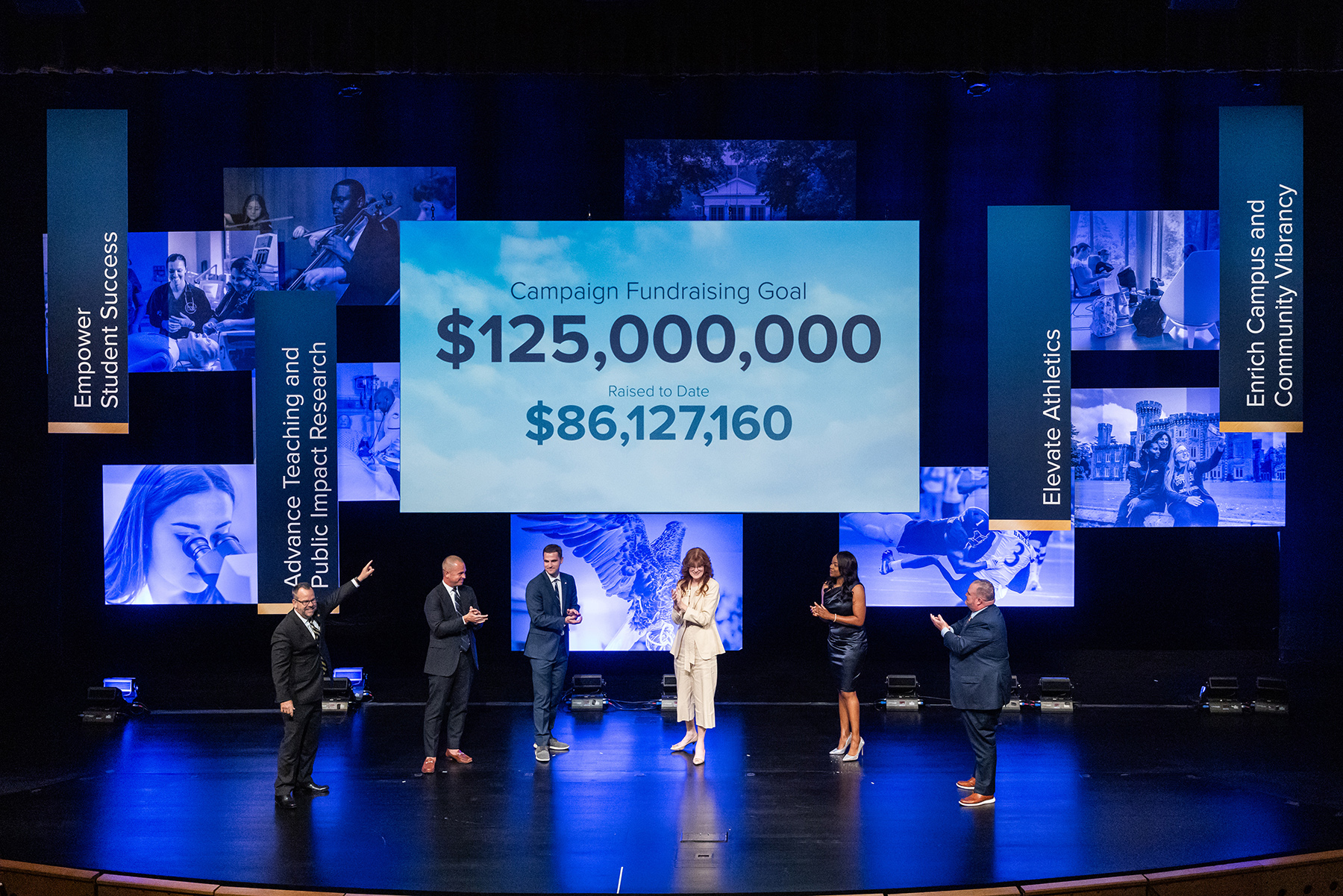
Georgia Southern University proudly announces the launch of its comprehensive campaign, “Together We Soar: The Campaign for Georgia Southern University.” This transformative initiative aims to elevate the University’s impact on students, faculty, research, athletics, and the communities it serves. Georgia Southern, renowned for its majestic campuses adorned with southern live oaks and towering pines, symbolizes not just American freedom but also the promise, achievement and boundless potential of its students. The University’s trajectory is on the rise, reaching for greater heights in education and community impact. Central to this momentum is the unwavering support from alumni, friends and the community. Publicly launched last Friday evening, Together We Soar: The Campaign for Georgia Southern University aims to raise $125 million by 2026. More than $86 million has already been secured. Dr. Kyle Marrero, President of Georgia Southern, expressed his gratitude and vision for the University. “Georgia Southern is on the move, in motion, and soaring to new heights. The ‘Together We Soar’ campaign—fueled by the generous support of our alumni, friends, and partners—will ensure our ability to drive innovation, develop talent, transform lives, and propel the economic development of a growing region.” (L-R) Georgia Southern President Kyle Marrero, Vice President for University Advancement Trip Addison, Deputy Athletics Director of Development Davis Hendrickson, Executive Director of Development Julie Gerbsch, Director of Alumni Relations Ava Edwards, and University Campaign Co-chair Leonard Bevill on stage at the Oct. 20 launch event for Together We Soar: The Campaign for Georgia Southern University. The campaign has identified four primary objectives: Empower Student Success: The campaign aims to stimulate learning by recruiting high-achieving students, increasing student access, and promoting inclusive excellence and career readiness. Advance Teaching and Public Impact Research: The focus is on meeting regional economic needs, increasing faculty expertise, and enhancing research capacity. Elevate Athletics: The campaign seeks to attract and retain elite student-athletes, provide top-notch facilities, and boost the Competitive Excellence Fund. Enrich Campuses and Community Vibrancy: The goal is to improve the communities surrounding the campuses and teach about local wildlife, among other initiatives. Campaign co-chairs Mike Sanders and Leonard Bevill shared their excitement for the campaign and what it will mean for Georgia Southern. “I could not be more excited about Georgia Southern and its possibilities. Opportunities abound for our University and the Together We Soar Campaign is the catalyst. It is time to do ‘more with more.’” - Mike Sanders “‘Together We Soar’ is spot on. From across campus to athletics and throughout our community, we’re perfectly aligned and equipped to launch to historic heights. I’m very blessed and excited to be involved.” Leonard Bevill The campaign also highlights the significant economic impact of Georgia Southern, with a regional economic contribution of $1.1 billion in fiscal year 2022. The University plays a critical role in the economic growth and transformation of Southeast Georgia. Marrero said Georgia Southern invites all its supporters, alumni and the community to join this transformative journey. With collective support, there’s no limit to how high Georgia Southern can soar. For more information or to contribute to the “Together We Soar” campaign, visit GeorgiaSouthern.edu/TogetherWeSoar.
