
Experts Matter. Find Yours.
Connect for media, speaking, professional opportunities & more.
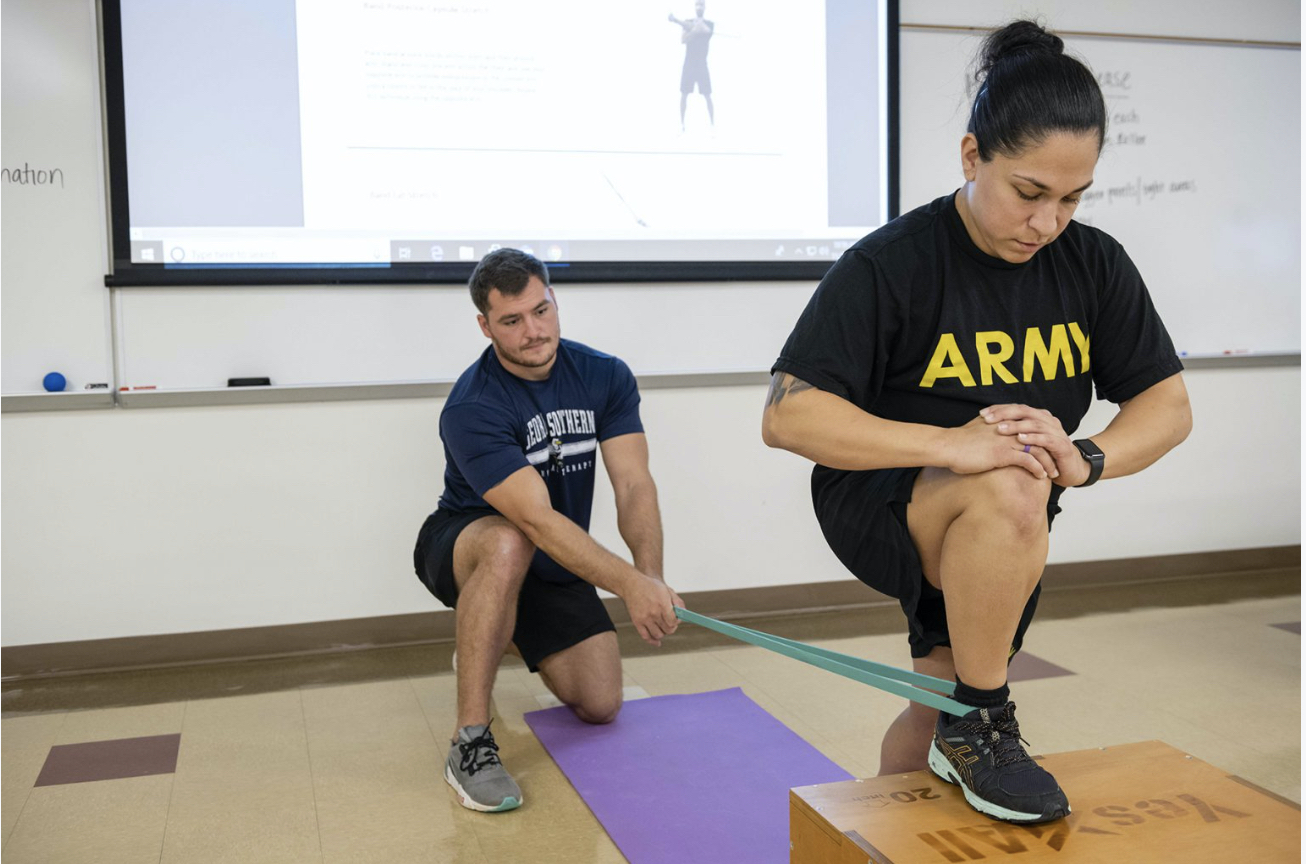
The Georgia Southern University Soldier Performance and Readiness (SPAR) program received a $1.5 million, two-year grant from the Department of Defense’s U.S. Army Medical Research and Development Command (USAMRDC). The grant will expand Georgia’s Southern research and programming capacity in injury prevention techniques that ensure force readiness for the Army. “Through this large-scale research study, Georgia Southern doctoral students have opportunities to be involved in the research process and work directly with soldiers,” said Nancy Henderson, Ph.D., assistant professor in the Doctor of Physical Therapy (DPT) program. “Additionally, the grant will fund graduate assistant positions in the Doctor of Physical Therapy program.” USAMRDC’s mission is to provide solutions to medical problems for American service members at home and abroad, as well as to the public at large. The scope of this effort and the priorities attached to specific projects are influenced by changes in military and civilian medical science and technology, operational requirements, military threat assessments and national defense strategies. Extramural research and development programs play a vital role in the fulfillment of the objectives established by the organization. Research and development funded through this are intended to benefit both military and civilian medical practices. “The grant investigates different physical training programs to identify those practices that best prevent non-combat injuries,” said Henderson. “Faculty on the research team will seek to advance the body of literature by determining the best educational models to educate soldiers on injury-prevention topics.” This is the first time that Georgia Southern will act as lead investigator on a collaborative research project with an Army research institute. However, SPAR has long been involved in multiple branches of research with community impact. “Georgia Southern has several initiatives underway to help improve the health, fitness and performance of military service members, law enforcement personnel and firefighting and rescue personnel,” said Joseph Kardouni, Ph.D., director of the Tactical Performance Group. “The Tactical Athlete Certificate (TAC) program is one of these initiatives that teaches service members exercise fundamentals to help mitigate training-related injuries. The funding coming through Medical Research and Development Command will improve evidence-based teaching methods and inform similar efforts to teach service members within this field. Leaders from health and human performance programs within the Army understand the importance of leveraging partnerships with academic institutions to work toward improving the quality of life, health and occupational performance of soldiers.” Faculty and students in the DPT program have educated soldiers on injury prevention topics since 2016 and this grant further provides students with the opportunity to assess effectiveness while learning how to improve educational methods with military service members. “This research is an important next step in delivering on the promise of the SPAR program and Georgia Southern’s close working relationship with Army research partners,” said Interim Vice President for Research and Economic Development Christopher Curtis, Ph.D. Curtis also noted that funding was made possible by the advocacy of U.S. Rep. Buddy Carter and the strong support of Georgia’s legislative delegation in Washington D.C. Interested in learning more or looking to talk with Nancy Henderson? Simply click on her icon now or Contact Georgia Southern's Director of Communications Jennifer Wise at jwise@georgiasouthern.edu to arrange an interview today.


Georgia Southern launches new merchandise line to benefit ‘Freedom’ and the Wildlife Center
“Freedom” merchandise is now available for purchase at Southern Exchange in Statesboro. Items will be available soon at the University Store on the University’s Armstrong and Statesboro campuses and in the gift shop at the Center for Wildlife Education located on the Statesboro Campus. Proceeds will benefit the Wildlife Center and Freedom’s care. Georgia Southern University is launching a new brand and merchandise line that will benefit and honor Freedom, the University’s live bald eagle mascot that flies before each home game in what many call the “most exciting 30 seconds in college football.” Unable to survive on his own because of an injury to his beak as a newborn, Freedom came to Georgia Southern in 2004 and now lives at the University’s Center for Wildlife Education in Statesboro alongside other eagles, raptors, reptiles and waterfowl. He will celebrate his 20th birthday this December. As an ambassador for Georgia Southern and symbol of our nation, Freedom has inspired thousands annually at the Center for Wildlife Education, Georgia Southern football games, the St. Patrick’s Day parade in Savannah, commencements, community events and other appearances, such as at the Charles Swab Classic PGA tour event earlier this year in Texas. To support Freedom and the Wildlife Center, University Communications and Marketing, Georgia Southern’s office of Athlete Brand Management and Licensing, the Wildlife Center and the university’s retail partners are collaborating to launch a new line of merchandise featuring Freedom. One shirt includes “Freedom’s Ride,” and depicts Freedom perched in the back of a 1977 International Scout often seen around town as it’s owned and driven by handler and Wildlife Center Executive Director Steve Hein. “Freedom belongs to Georgia Southern students, faculty, the Statesboro community and all those he encounters” Hein said. “It’s natural to want to express a unique relationship spanning 20 years and what better way to do this than by making his image available for people to wear and promote. I’m excited about this program, honored to be his plus-one, and greatly appreciate everyone’s support for Freedom, his care and his future.” The Freedom merchandise is designed to be both inspirational and stylish. Items are in development, but initial offerings could include: Hats T-Shirts Hoodies Posters Postcards Proceeds will benefit the Wildlife Center and Freedom’s care. Items will be available starting this week at Southern Exchange near the Georgia Southern campus in Statesboro and will be available soon at the University Store on the University’s Armstrong and Statesboro campuses and in the gift shop at the Wildlife Center located on the Statesboro Campus. Interested in learning more or looking to talk with Wildlife Center Executive Director Steve Hein? Simply click on his icon now or Contact Georgia Southern's Director of Communications Jennifer Wise at jwise@georgiasouthern.edu to arrange an interview today.

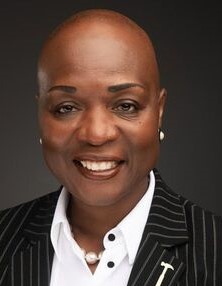
Georgia Southern University has been awarded a $1.6 million grant to help provide childcare subsidies for eligible student-parents over the next four years through the Child Care Access Means Parents In School (CCAMPIS) program. Written on behalf of the Office of Inclusive Excellence by Corine Ackerson-Jones, director of TRIO Student Support Services (SSS) on the Armstrong Campus in Savannah, the CCAMPIS grant will serve no less than 30 student-parents per year on the Armstrong Campus and the Liberty Campus in Hinesville by providing a maximum amount of $150 per week for childcare services to be paid directly to the childcare provider. Corine Ackerson-Jones The grant, a first of its kind at Georgia Southern, is fully funded by the Department of Education and will work with centers licensed and accredited through the Georgia Department of Early Care and Learning. To apply for CCAMPIS assistance student-parents must be PELL eligible. “According to recent data, the annual price of childcare can exceed the annual cost of in-state tuition at a public four-year university,” said Ackerson-Jones. “Without financial assistance, it is next to impossible for economically challenged student-parents to attend school and pay for quality, affordable childcare.” Amanda Brandmire, a student-parent studying natural resource and wildlife conservation on the Armstrong Campus, said balancing her role as a parent and a student can be challenging emotionally and financially, especially when it comes to childcare. “There have been several times where my husband and I had to get very creative with our funds to make it because of our childcare costs,” she said. “My husband and I may skip meals or go a week at a time without food because childcare is a necessity for us to work and go to school. In addition, I have to give up study time or time with my kids to go pickup a shift delivering for DoorDash just to get by. Right now we don’t have an income and we are a week behind on childcare expenses, but thankfully our daycare is working with us.” A subsidy for childcare would change the trajectory of Brandmire’s education. “For me this would be an amazing opportunity,” Brandmire said. “I am so close to finishing my undergraduate degree and plan on applying to grad school in March. Being a first-generation college student, my education is extremely important and this would help me make graduation a reality.” Brandmire feels this resource would appeal greatly to other student-parents in the greater Savannah area. “This is also a huge selling point for potential students and moms like me who want something better but can’t get over the childcare hurdle,” Brandmire said. “I appreciate Georgia Southern for taking the time to reach out and serve their non-traditional students.” Ackerson-Jones has worked on the Armstrong Campus for 17 years and assists low-income, first-generation students, and students with disabilities through the TRIO SSS program which is also funded 100% by the Department of Education. Through her role, she saw a need for student-parents like Brandmire and sought ways to make a difference in their educational journeys. “It has been evidenced in the data that the four-year graduation rate for Armstrong and Liberty campus PELL recipients falls below that of non-PELL recipients,” Ackerson-Jones said. “It has been my experience that a great number of these students are not graduating sooner due to financial hardship. They must work more hours, so oftentimes they cannot maintain a full course load. Taking less classes prolongs graduation. It was my goal to find some financial relief for these students because the threat of unaffordable childcare was a threat to them remaining in school. “There has never been a child care facility on either of these campuses nor has there been any access to financial support for student-parents to help pay for child care,” she continued. “The time seemed right to try to rectify this.” The objective of the program is that student-parents will persist from one academic year to the beginning of the next, or that they will earn a bachelor’s degree from Georgia Southern, Ackerson-Jones added. “I am excited about the addition of the CCAMPIS grant to the array of programs that serve underrepresented students, this one serving Pell-eligible students who are also parents, which complements our work in the Inclusive Excellence cluster,” said Dominique A. Quarles, Ph.D., associate vice president for Inclusive Excellence and chief diversity officer at Georgia Southern. “Mrs. Jones went beyond what’s required of her to respond to a need she saw on campus, which resulted in securing $1.6 million in grant funds to serve students in a way that will have a real and immediate impact on their ability to enroll and complete their degree at Georgia Southern.” The grant will be disbursed at $401,128.00 a year for four years for a total of $1,604,512. More information on student eligibility and the application process will be available soon. To learn more, contact the Office of Inclusive Excellence by emailing oie@georgiasouthern.edu. Interested in learning more or looking to talk with Corine Ackerson-Jones about this program? Contact Georgia Southern's Director of Communications Jennifer Wise at jwise@georgiasouthern.edu to arrange an interview today.
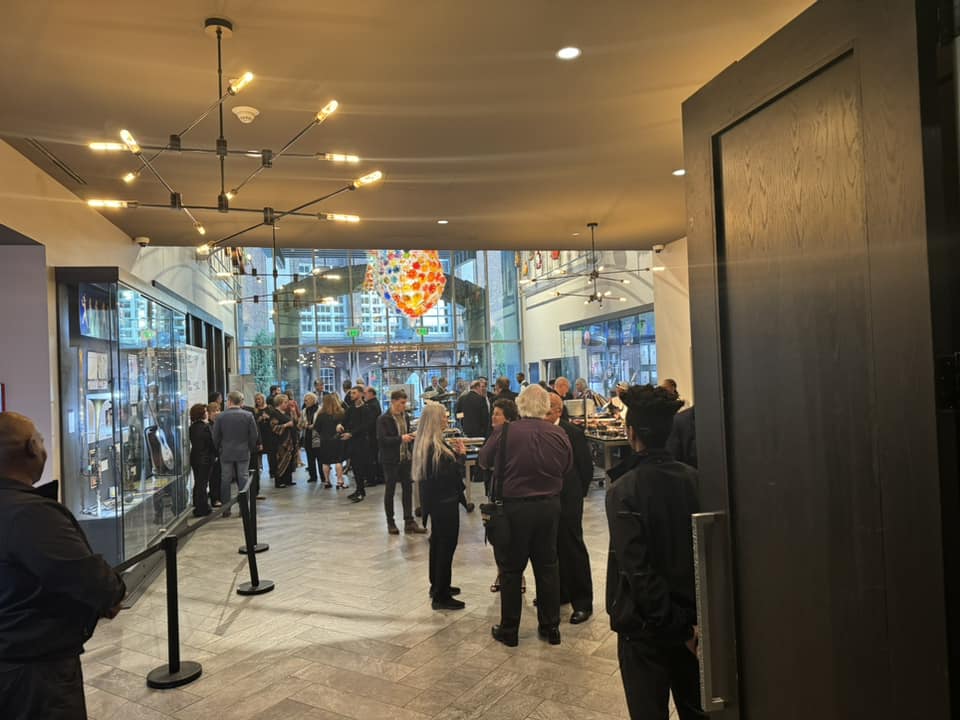
Celebrating 140 years of the Gretsch Company
Georgia Southern University helped Fred and Dinah Gretsch – and a roomful of other supporters and musical friends – celebrate 140 years of the Gretsch musical instruments company and “that great Gretsch sound” at a recent anniversary celebration at Savannah’s Plant Riverside district. Benefitting the Georgia Music Foundation, the event was held in a space that is a living testament to the partnership between Georgia Southern and the Gretsches, whose name are on the University’s school of music. “That Great Gretsch Sound!” Museum is a spotlight destination in the heart of downtown Savannah that tells the rich history of the Gretsch family and company. The space celebrates Gretsch’s ever-growing worldwide musical community, honors the Gretsch family commitment to music education, and showcases hundreds of Gretsch’s most storied instruments. In addition to the instruments and artifacts on display in Savannah, Georgia Southern is working to build one of the most comprehensive digital document collections of music industry history, thanks to decades of resources collected by Fred and Dinah and donated to our University Libraries. Together, through innovative pathways, Gretsch and Georgia Southern are creating renewed interest in performance and music education amongst K-12 students throughout our region. And, this fall at Georgia Southern, the Fred and Dinah Gretsch School of Music saw a 25% increase in enrollment – with nearly 20% of the school’s students focused on our Music Industry program. “Fred and Dinah, we thank you for your tireless efforts to make Georgia Southern a more musical place,” Georgia Southern University President Kyle Marrero said. “Your guidance, resources, and imagination have helped us soar to new heights, and we look forward to our future together. “ The evening included performances by Georgia Southern Gretsch School of Music students, and Tony Arata, a member of the Nashville Songwriters Hall of Fame who grew up on Tybee Island and studied at Georgia Southern University. Interested in learning more about the Gretsch's involvement with Georgia Southern or the Gretsch School of Music? Contact Georgia Southern's Director of Communications Jennifer Wise at jwise@georgiasouthern.edu to arrange an interview today.
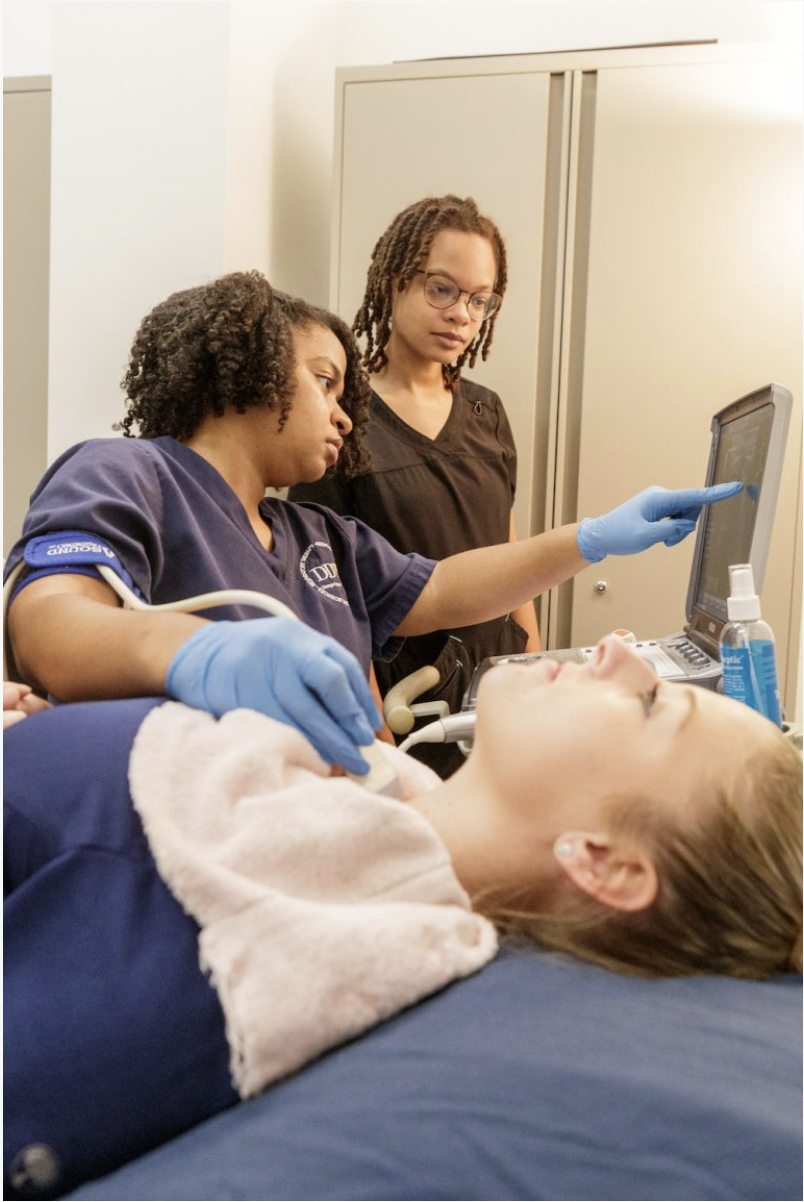
Georgia Southern’s public health center receives $4 million to assist rural hospitals nationwide
Georgia Southern University’s Center for Public Health Practice and Research at the Jiann-Ping Hsu College of Public Health (JPHCOPH) received a $4 million grant from the Health Resources and Services Administration (HRSA) to provide targeted technical assistance to rural hospitals nationwide. The funding will support the team’s implementation of the Targeted Technical Assistance for Rural Hospitals Program over a five-year period (2023-2028). “Many rural hospitals are struggling financially across the U.S.,” said JPHCOPH Dean Stuart Tedders, Ph.D. “Long-term, the primary program goal of this grant is to ensure that all rural hospitals are financially viable and positioned to serve their communities with the essential health care services that we all need and expect. A viable health care system is essential for assuring that all communities and their residents thrive. I am very proud of the Center for Public Health Practice and Research at the JPHCOPH and the commitment they have made to improving the quality of life of rural and underserved populations across the country.” Bettye Apenteng, Ph.D., and Charles Owens, both professors of health policy and management, serve as the co-principal investigators for the grant. “We are proud to be selected to work cooperatively with rural hospitals across the U.S. to strengthen their viability so they can continue to provide essential health care locally so the residents, the local hospital and the community may thrive,” said Owens. As part of this cooperative agreement, the team will work in partnership with HRSA and rural health stakeholders to provide in-depth and tailored technical assistance to rural hospitals at risk of financial distress nationwide. Technical assistance delivered as part of this program will help rural hospital communities implement a prioritized strategy for maintaining essential services locally through capacity building in evidence-based decision-making, operational and financial improvement, strategic management, community partnership, project implementation and evaluation. “We are excited to extend the work we have done in Georgia with rural hospitals, for close to a decade, to the rest of the nation,” said Apenteng. “We look forward to building strong collaborative relationships with rural hospital communities nationwide.” The grant activities will be executed by a multidisciplinary team that includes additional JPHCOPH faculty Angie Peden; Andrew Hansen, DrPH; Linda Kimsey, Ph.D.; William Mase, DrPH; Tilicia Mayo-Gamble, Ph.D., and Samuel Opoku, Ph.D.; and Parker College of Business’ Kwabena Boakye, Ph.D.; and the College of Arts and Humanities’ Jason Murdock. Interested in learning more or looking to talk with Bettye Apenteng, Ph.D., and Charles Owens about this grant? Simply click on an expert's icon or contact Georgia Southern's Director of Communications Jennifer Wise at jwise@georgiasouthern.edu to arrange an interview today.


In a new study funded by the Institute of Education Sciences, University of Delaware Associate Research Professor Leigh McLean and her co-authors found a strong connection between teachers’ math and science anxiety and the respective math and science anxiety of their low socioeconomic status (SES) students. When a teacher was more anxious in these content areas, their low-SES students were also more anxious; and, when teachers were less anxious, so were their low-SES students. Teachers play a significant role in shaping students' experiences and attitudes towards learning. When teachers themselves exhibit anxiety or stress about specific subjects, it can inadvertently send signals to students that these subjects are difficult or intimidating. McLean can speak more broadly about this phenomenon and discuss the interesting pattern of associations that emerged from their analysis. She has been featured in multiple publications including The Associated Press and Education Week. Click the "View Profile" to connect with her.


The National Science Foundation awarded nearly $3 million to Georgia Southern University to launch the Research and Mentoring for Postbaccalaureates (RaMP) program. At each university, RaMP supports approximately 10 students per year in gaining full-time research experience, mentoring for potential career paths and building a network of professional contacts. Georgia Southern’s project, “Mentoring and Research Opportunities for Careers in Coastal Science (MROC2S),” aims to aid those with little to no exposure to research or the resources to do so. Checo Colón-Gaud, Ph.D., associate dean of the Jack N. Averitt College of Graduate Studies and principal investigator for a National Science Foundation grant, totaling almost $3M, that will be used for a research and mentoring program. “The target is to benefit underrepresented minority students to increase diversity in the STEM (science, technology, engineering and mathematics) fields,” said Checo Colón-Gaud, Ph.D., associate dean of the Jack N. Averitt College of Graduate Studies and the project’s principal investigator (PI). Beginning in August 2024, participating students will be given an annual stipend. The postbaccalaureate fellows will have the opportunity to learn regional-specific natural resource science and participate in meaningful training with their peers before entering the field. “It would benefit those who are not yet sure if they want to pursue careers in natural resource science or graduate studies after earning their undergraduate degree,” Colón-Gaud added. Georgia Southern’s awarded fund will extend through 2027, and with 10 participants at a time, Colón-Gaud anticipates that this “significant and transformative” experience should strengthen the workforce. Interested in learning more about the Research and Mentoring for Postbaccalaureates (RaMP) program or looking to talk with Checo Colón-Gaud? Contact Georgia Southern's Director of Communications Jennifer Wise at jwise@georgiasouthern.edu to arrange an interview today.

An interdisciplinary team from Georgia Southern University was awarded more than $465,000 from the National Academies of Sciences, Engineering, and Medicine to foster the development of scientific and environmental skills that are critical to solving complex issues in the Gulf of Mexico region now and into the future. The award is part of an initiative with the Gulf Research Program (GRP) that awarded $2 million to eight projects that engage children and youth in place-based educational activities. The funded project, “Suwannee Watershed: Assessment and Monitoring of Place to Gain Understanding of Local Flow (SWAMP to GULF),” is led by principal investigator (PI) Lacey Huffling, Ph.D., associate professor of science education, and co-PIs Heather Scott, Ed.D., and Regina McCurdy, Ph.D., both assistant professors of science education. (l-r) College of Education’s Lacey Huffling, Ph.D., Regina McCurdy, Ph.D., and Heather Scott, Ed.D., are part of an interdisciplinary team awarded $465k to train science teachers in the Gulf of Mexico. “I am honored that we were selected to receive funding from the Gulf Research Board,” said Huffling. “Over the past four years, we have developed a strong network of Georgia middle and high school teachers who are dedicated to developing the science and environmental literacy of their students through watershed citizen science, specifically focused on areas of Georgia that flow into the Gulf of Mexico. We are excited to continue to grow this network of teachers in Florida further to foster scientific and environmental literacy of future generations to monitor and advance scientific and community understanding of the Lower Suwannee Watershed.” The group will train and support teachers in Florida to implement place-based learning through citizen science using communities as classrooms to deepen teachers’ and students’ sense of place and connection to local watersheds; research how teachers and students address local issues and solve problems by using and developing their critical environmental agency; and increase participation of rural populations in science, which have historically been underrepresented. This initiative, along with the seven other GRP projects, will help connect young learners across the Gulf of Mexico region with local environmental issues and work toward the betterment of the region at large. “The goal of these grants is to empower young learners through place-based education, an interdisciplinary, student-centered, inquiry-driven teaching and learning practice situated in the local community and environment,” said Karena Mary Mothershed, senior program manager for the GRP’s Board on Gulf Education and Engagement. “These eight projects have a high potential to create long-lasting impacts on underserved students in grades K-8 across the Gulf of Mexico region, enabling them to consider and address environmental challenges impacting their own communities.” Additional SWAMP to GULF project members include Georgia Southern staff and faculty: Mary Thaler, senior administrative assistant for the Center for STEM Education; J. Checo Colón-Gaud, Ph.D., professor of biology and associate dean of the Jack N. Averitt College of Graduate Studies; Shainaz Landge, Ph.D., assistant professor of chemistry, Luke Roberson, coordinator of Community Engagement and Outreach for the Institute of Water and Health; and Asli Aslan, Ph.D., director of the Institute of Water and Health. Interested in learning more? Contact Georgia Southern's Director of Communications Jennifer Wise at jwise@georgiasouthern.edu to arrange an interview today.
/cloudfront-us-east-1.images.arcpublishing.com/gray/AYBAAIIRXNAI7DF4F3YUO6E3XM.jpg)
Georgia Southern Libraries celebrates grand opening for Patent and Trademark Resource Center
Patenting an invention and trademarking a product name can be challenging, yet protecting intellectual property is vital. To that end, Georgia Southern University Libraries celebrated the grand opening of its Patent and Trademark Resource Center (PTRC) with ribbon-cutting events at the Armstrong Center in Savannah this past September. The PTRC is part of a nationwide network of 84 public, state and academic libraries designated by the United States Patent and Trademark Office (USPTO) to support the public with trademark and patent assistance. Georgia Southern Libraries is one of two designated PTRCs in Georgia. “With the recent economic development of Hyundai’s Motor Group Metaplant America, associated suppliers and regional commerce, our PTRC cultivates a culture of innovation and entrepreneurship,” stated Georgia Southern’s PTRC librarian representative John Schlipp. “Innovators and creative colleagues utilizing the PTRC service at Georgia Southern University Libraries will be able to determine the potential for their patent applications and federal registration for a trademark on their inventions, products or services.” Georgia Southern’s PTRC partners with the University’s Business Innovation Group (BIG) and other regional, like-minded organizations to foster innovation and creativity. Dignitaries from the USPTO, including Deputy Under Secretary of Commerce for Intellectual Property and Deputy Director Derrick Brent, and Georgia Southern President Kyle Marrero attended the ribbon-cutting in Savannah. Both events acted as workshops for inventors, entrepreneurs and business startups. The PTRC at Georgia Southern can assist patrons in conducting their own free patent and trademark searches on specialized USPTO databases. Additionally, patrons can receive one-on-one instruction on the application process, improve awareness of a product field, determine application feasibility and prepare for consulting with an attorney. Interested in learning more? Contact Georgia Southern's Director of Communications Jennifer Wise at jwise@georgiasouthern.edu to arrange an interview today.

Expert Insight: Fake News, Fake Reviews: Building Trust with Online Shoppers
Online customer reviews have become a critically important cog in the sales conversion process in recent years. Studies show that 97 percent of consumers read product reviews and ratings, and that positive reviews can almost triple the likelihood of making a purchase. As customers do more and more of their shopping online, they are turning in droves to the likes of Yelp, TripAdvisor, and Google Reviews to seek out opinions, recommendations, and feedback from other users before pushing through the final part of the sales funnel. As a result, these third-party review sites have experienced exponential growth. But there’s a caveat: and it’s trust. The success of Yelp and its competitors is wholly contingent on how trustworthy their users perceive them to be; on the transparency and authenticity of the content published and the sources of that content. In an era of disinformation with fake reviews and AI mass-generated content precipitously on the rise, securing—and keeping—user trust is paramount. The Five Keys to Fighting Fakery Goizueta Business School’s Sandy Jap has some suggestions. Together with colleagues Ben Beck of Brigham Young University’s Marriott School of Business and Stefan Wuyts of Penn State’s Smeal College of Business, Jap, who is the Sarah Beth Brown Professor of Marketing, put together a series of studies to test the kinds of measures and mechanisms that platforms can deploy to win user confidence. And it turns out there’s one tactic that works more effectively than any other: actively monitoring the authenticity of user reviews. That and being open and transparent about doing so. Jap and her colleagues scoured the latest research and data on marketing, governance, and identity disclosure to pinpoint the mechanisms that best mitigate online fakery, while simultaneously building trust among platform users. They identified five. “We worked through the literature and were able to whittle these down to five core practices that are robustly effective at building trust,” says Jap. “They are monitoring, exposure, community building, status endowment and identity disclosure. Doing these five things can signal to your users that you are committed to being a guardian of their trust, so to speak.” Monitoring or evaluating reviews for their authenticity and exposing firms that pay for and propagate fake content are mechanisms directed at the rogue firms that spread fakery and misinformation, explains Jap. Meanwhile community building and status endowment focus on reviewers. Community building is about enabling authentic, transparent interactions between consumers and reviewers. An example of this might be allowing consumers to ask questions and reviewers to respond directly. “Status endowment is where a platform verifies and acknowledges the credibility or helpfulness of a reviewer in some way. Yelp and others use things like badges or reviewer ratings which are earned over time and which make it hard for fake reviewers to game their systems,” says Jap. Identity disclosure is the practice of having reviewers provide personal information—their name, picture, or location, for instance—before they can post content. And while this approach can keep fabrication and false profiles in check, it also raises certain tradeoffs, says Jap. “Anonymity online has long been understood as something of an un-inhibitor—a factor that enables users to speak more freely and openly. It can be democratizing in the sense that it removes or lessens prejudice and bias around things like race, social class, or physical appearance,” she says. “Of course, having people share personal data on your platform can also open up a can of worms around privacy and identity theft which are major considerations; so there’s a balancing act needed with this.” To test the efficacy of all five trust building policies, including identity disclosure, Jap and her colleagues ran a series of experiments and studies. They invited volunteers to rate how the presence or absence of these mechanisms impacted the trustworthiness of a platform. One study saw them parse things like domain authority and traffic across 25 online review sites against how many (or few) of the five mechanisms each deployed. Elsewhere, the team used surveys to assess how users ranked the different mechanisms in terms of platform trust, above and beyond other factors such as the quantity of reviews published say, or the expertise of different reviewers. The Bottom Line: Bust Bogus Reviews After crunching the data, Jap and her co-authors found that while all five trust-building mechanisms were valued and important to platform users, the practice of monitoring for fake reviews and reviewers—and broadcasting the fact clearly—was by far the most effective. “Doing all of these five things—monitoring, exposing, community building, status endowment and ID disclosure—are important if you want to earn and keep the trust of your users,” says Jap. “We found that the more of these mechanisms that platforms incorporate, the better their domain authority, Alexa site ranking, backlinks, and organic site traffic.” Based on our findings, monitoring your content and communicating that you’re doing this is by far the most powerful cue that you are trustworthy. So that’s where we’d say platforms might want to focus their spend. Many of the biggest review platforms have already taken note of these insights. Yelp recently shared a post to its official blog welcoming the finding that of the 25 sites analyzed in Jap’s study, theirs is one of two platforms that actively implement all five mechanisms. “After examining 25 review platforms, the study found that Yelp is one of two platforms that applies all five mechanisms and as the research states, has become a guardian of trust for review information.” Meanwhile, Jap stresses that these findings should be relevant to any business that is focused on “combating online review fakery.” “All businesses today face the challenge of managing their word-of-mouth reputation. Any firm interested in sharing and leveraging points of view around its products or services, be it a small online retail store or an Amazon, is going to want to go the distance—and be seen to do so—in going to war on fakery and disinformation.” Are you a journalist interested in learning more about the importance and trustworthiness of online reviews? Sandy Jap is available to speak with media - simply click on her icon now to arrange an interview today.

